


 Claim Ownership
The Thoughts on Selling™ Podcast
Subscribed: 1Played: 6
Subscribe

© Lee Levitt
Description
The Thoughts on Selling™ podcast explores the missing link between strategy and execution. We move beyond standard "best practices" to uncover what it really takes to drive enterprise revenue—combining disciplined enablement and management activities with the resilient mindset required to win in today’s complex market.
Hosted by industry veteran Lee Levitt, this podcast features raw, unfiltered insights from the sales leaders and innovators shaping the future of the profession. Join us to learn not just what to sell, but how to become the kind of leader who wins consistently.
Hosted by industry veteran Lee Levitt, this podcast features raw, unfiltered insights from the sales leaders and innovators shaping the future of the profession. Join us to learn not just what to sell, but how to become the kind of leader who wins consistently.
91 Episodes
Reverse

Javier Lozano Jr. on Sales and Marketing Alignment, AI, and Fixing Leaky PipelinesIf your sales and marketing teams aren't aligned on revenue, you don't have a pipeline problem — you have a structural problem. In this episode I talk with Javier Lozano Jr., a fractional CMO and CRO who helps founder-led tech companies build the foundation for predictable pipeline. Javier has lived on both sides of the revenue equation, and he brings a rare clarity to why these teams need to be tied at the hip — not just collaborating, but sharing the same revenue goals.We cover a lot of ground. Why customer success is really a piece of the marketing puzzle — because those customer stories become your most powerful sales enablement. How AI is already changing the game for teams that feed sales transcripts into language models and come out with sharper messaging, shorter sales cycles, and higher conversion rates. Why the feedback loop between sales, marketing, and operations is a closed system that breaks when any piece gets ahead of the others. And why saying yes to the wrong big opportunity — like a Grainger stocking order that would crush your operations — can be the smartest no you ever make.One of my favorite moments is Javier walking through his HIRO pipeline metric — High Intent Revenue Opportunities — which tells you whether marketing is delivering quality leads or just noise. If your team is closing above 25%, you're in HIRO territory. Below that, either your sales team needs help or your leads aren't good enough.KEY TAKEAWAYSSales and marketing must align on revenue goals. Not MQLs, not butts in seats — revenue. When both teams champion closed-won deals instead of their own metrics, the finger-pointing stops and the pipeline becomes predictable.Customer success is a marketing function. The words your happiest customers use are your best positioning, your best ad copy, and your best sales enablement. Kill the CSM function and you kill your brand's storytelling engine.AI is already transforming sales enablement. Feed a hundred call transcripts into an LLM and you'll find out what's actually closing deals — often things your own reps can't articulate. Use that to rewrite your emails, refine your messaging, and shorten your sales cycle.Use the HIRO metric to measure pipeline quality. High Intent Revenue Opportunities above a 25% close rate means marketing is delivering. Below that, you've got a targeting or lead quality problem that no amount of sales effort will fix.Diagnose your leaky pipeline before you try to scale. Javier's free predictable pipeline diagnostic surfaces the two or three priorities that matter most — typically rev ops gaps and positioning problems — so you stop trying to fix everything and focus on what moves the needle.FIND JAVIERLinkedIn: linkedin.com/in/javierlozanojrWebsite: boldermediasolutions.com (free pipeline diagnostic)Share this episode. Reach out at podcast.thoughtsonselling.com or book time at meet.aceleragroup.com
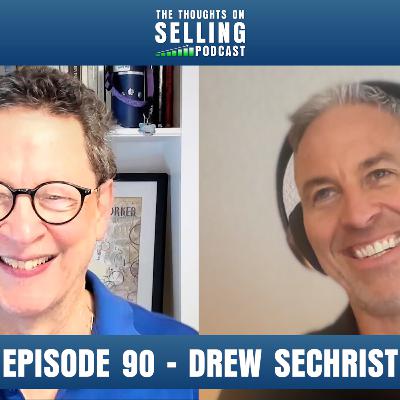
In this episode, I sit down with Drew Sechrist, the former Salesforce veteran who helped take the company from zero to $1 billion. Now the CEO of Connect the Dots, Drew is on a mission to kill the cold call forever.We discuss the "Osmosis Deficit" facing remote sales teams, why you can't close enterprise deals over Zoom, and the "LL Bean" lesson on solution selling that I learned in a shoe department. Drew explains why your network is the only moat you have left against AI, and how to transition from being a "contact collector" to a true "connector."Key Findings:The "Osmosis" Effect: Junior sellers in remote environments are missing out on the passive learning that created the superstars of the 90s and 00s. Leaders need to manufacture these "hallway moments."The Deposit/Withdrawal Ratio: Successful networking requires a 99:1 ratio of giving help to asking for favors. If you try to "monetize" every interaction, your network will dry up.The "Dinner" Metric: Technology can get you the meeting, but it can't close the 7-figure deal. High-stakes sales still require high-touch, in-person trust building.Network Visibility: The biggest waste in sales is cold calling a prospect that your colleague (or board member) already knows. Tools like Connect the Dots are solving the "visibility" problem of relationship capital.Memorable Quotes:"I wouldn't want to start my career now... I survived because of osmosis." — Drew Sechrist"I get paid in dopamine hits when I connect two people." — Drew Sechrist"You can't sell something you aren't interested in... I wasn't selling shoes; I was selling an experience." — Lee Levitt"If you are just an information kiosk, AI will replace you." — Drew Sechrist (Paraphrased)Resources Mentioned:Connect the Dots: ctd.ai (Free for individuals to map their network)Book: The Third Door by Alex BanayanBook: The Tipping Point by Malcolm GladwellConcept: "The Jolt Effect" (Dixon/McKenna)Call to Action:Map Your Network: Sign up for a free account at ctd.ai to see who you really know.Connect with Drew: Find Drew Sechrist on LinkedIn or email him at drew@ctd.ai.Subscribe: If you want to future-proof your sales career against AI, hit subscribe on Thoughts on Selling.
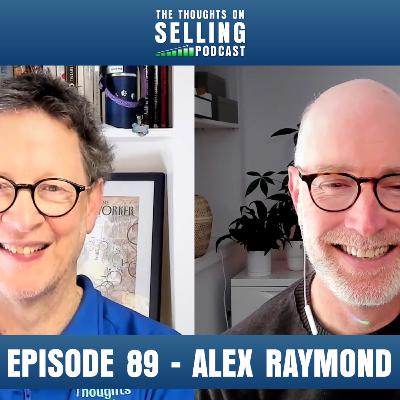
I've been saying for years that B2B selling is broken. Alex Raymond — founder of AMplify, author of The Growth Department, and host of Account Manager Secrets — thinks account management is broken too. So naturally we had a lot to talk about.Alex has spent the last decade figuring out how companies can grow faster and more profitably through the customers they already have.And the data he brings to this conversation is staggering.73% of revenue comes from existing customers.52% of net new revenue comes from existing customers.And nearly all profit — sometimes more than 100% — is generated post-sale.Yet most companies treat their post-sales teams like the JV squad. An inexperienced coach, ratty uniforms, smelly locker rooms. Then they wonder why things aren't working.We get into why "recurring revenue" is a dangerous myth that gives executives a false sense of security, and why the handoff from sales to account management is where customer relationships go to die.Alex shares his Keep, Grow, No Surprises framework and makes a compelling case that the real job of account management isn't running QBRs or chasing NPS scores — it's helping your company win.One of my favorite parts is Alex's concept of "relentless curiosity" — meeting your customer as a human being, asking great questions without fishing for a specific answer, and staying in the question long enough to find what's really going on. We also get into Greg Daines's research showing that even $1 of measurable improvement is enough to get a customer excited about renewing — and that reporting negative results retains customers twice as long as not reporting at all.If you're in sales, account management, customer success, or revenue leadership, this one will make you rethink where you invest.KEY TAKEAWAYSThe math is wildly lopsided. 73% of revenue and nearly all profit come from existing customers, but most companies pour their investment into new business sales. Every point of NRR increase drives 13-16% in valuation growth over five years. The path to durable growth runs through the customers you already have.Recurring revenue is a myth. Subscription doesn't mean automatic. That assumption leads companies to underinvest in the people doing the hardest work — hiring less experienced people, giving them fewer tools, then wondering why retention suffers. In the early days of SaaS, we knew we had to earn it every month. That mindset needs to come back.Keep, Grow, No Surprises. Alex's framework: keep the customers sales brings in, grow the ones with the most potential, no surprises. NPS and CSAT are trailing indicators. The real job of account management is helping your company win.Relentless curiosity changes everything. Customers are inured to our discovery — they know the checklist is coming and give us the minimum to get off the phone. Instead, figure out what the world looks like through their eyes. What's on their boss's mind? Their board's mind? Ask without fishing. That's where expansion and real risks surface.Show even $1 of improvement. Greg Daines's data shows the threshold for renewal excitement isn't a massive ROI number — it's basically a dollar. Once customers see measurable progress, they imagine the path forward. Be precise about value. Don't let yourself or the customer off the hook with vague statements.BOOKS MENTIONEDThe Growth Department — Alex RaymondThe JOLT Effect — Matthew Dixon & Ted McKennaThe Meaning Revolution — Fred KofmanThink Better — Tim HursonThe Four Agreements — Don Miguel RuizThe Fifth Agreement — Don Miguel Ruiz & Don Jose RuizTogether We Win — Lee Levitt (forthcoming)FIND ALEXLinkedIn: linkedin.com/in/afraymondWebsite: amplifyam.comShare this episode with a coworker. Reach out at podcast.thoughtsonselling.com or book time at meet.aceleragroup.com
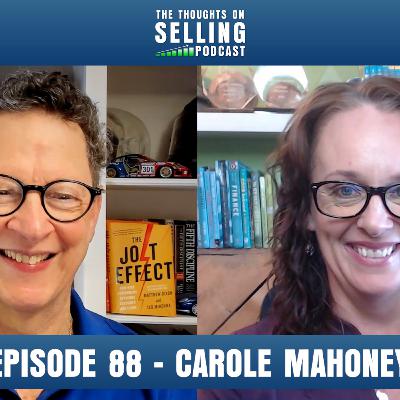
I recently sat down with Carole Mahoney, a self-described "hot nerd," author of Buyer First, and a woman on a mission to redeem the sales profession. Carole didn't start out loving sales; in fact, she started in marketing specifically to make salespeople obsolete. But she realized that to help small businesses grow, she had to embrace selling—not as a manipulation, but as a mechanism for change.In this episode, we explore how she uses neuroscience and psychology to help sellers get out of their own way. We geek out on the similarities between hiking and sales (you can pack all the gear you want, but you still have to pivot when the trail changes), and why she believes the only difference between a good salesperson and a con man is intent.Key Highlights & Takeaways:From Sheet Music to Improv: Carole shares her transition from being a musician who needed "sheet music" (a script) to embracing the "Yes, And" mentality of improv. We discuss why being present in the moment is more valuable than having the perfect answer prepared.The "Not About Me" T-Shirt: Carole literally made t-shirts for HubSpot reps that said "Not About Me" upside down, so they would be reminded every time they looked down that the sales call isn't about their product—it's about the buyer.How You Buy is How You Sell: We discuss the "cognitive behavioral" side of sales. If you are a shopper who needs to "think it over" and hunt for discounts, you will inevitably accept those same excuses from your prospects.The Manager Impact: Carole drops a massive stat from her analysis of 500,000 managers: Managers with negative beliefs about sales are 355% more likely to pass those on to their team, while those with supportive mindsets are 1,000% more likely to build high-performing teams.Hiring "Kristen" from the Restaurant: We bond over our shared love of hiring hospitality staff for sales roles. They know how to ask questions, read the room, and (like Kristen at Atlantic Fish Company) confidently recommend the tuna over the salmon.Memorable Quotes:"I’m a nerd who likes to see constant growth... I love to leave things in a better state than I found them." — Carole Mahoney"The only difference between a good salesperson and a con man is intent." — Carole Mahoney"If you buy that way as a salesperson, you will sell that way as a salesperson." — Carole Mahoney"We share the sheet music, but we play the jazz." — Lee LevittThe Bottom Line:Sales isn't about tricking people into doing things; it's about helping them make a change. Whether you are a "hot nerd" reading neuroscience papers or a waiter recommending the special, success comes down to curiosity, authenticity, and the ability to listen.Call to Action:Read the Book: Pick up a copy of Buyer First to understand the psychology behind modern selling.Connect with Carole: Find her at UnboundGrowth.com or connect with "Carole (with an E) Mahoney" on LinkedIn.Subscribe: If you enjoyed this conversation, hit subscribe on Thoughts on Selling so you never miss an episode!
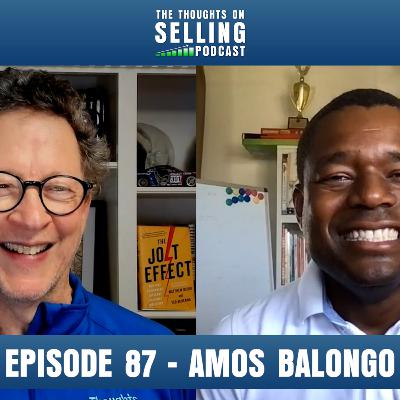
Episode SummaryIn this episode of Thoughts on Selling, Lee Levitt sits down with Amos Balongo—a leadership expert joining us from Hawaii who is in the business of "manufacturing leaders." We dig into a critical failure point in most organizations: the gap between Strategy and Communication. Amos argues that many leaders rely on "Positional Leadership" (people follow you because they have to), which yields the bare minimum effort. The goal is to shift to "Influential Leadership," where collaboration drives results. We also explore the Three Pillars of Transformation (Motivate, Inspire, Transform), why simplicity mobilizes teams better than complexity, and how to apply Situational Leadership to ensure you aren't sending 5:00 AM texts to the wrong people. Memorable Quotes:"The bigger you're thinking, the smaller your problems." — Amos Balongo "Motivation is an outside job; Inspiration is an inside job." "Complexity impresses, but simplicity mobilizes. If your team can't understand the plan, they can't act on it." Three Actionable Takeaways for Leaders:Audit Your Leadership Style: Are you Positional or Influential? Positional leaders issue directives ("I told you to do this"). Influential leaders invite participation. If you find yourself saying, "Didn't I tell you to do this?" too often, you are relying on position, not influence. The "Motivate-Inspire-Transform" Framework: Don't stop at motivation. Amos explains the progression: Motivate (get them interested), Inspire (evoke internal drive), and Transform (give them actionable steps to multiply results). Leaving them just "inspired" without a plan is a wasted opportunity. Be Bold, Brief, & Strategic: If you struggle to get executive buy-in for your ideas (or if people keep stealing them!), change your delivery. Executives are time-poor. Cut the stories and focus on being bold, brief, and strategic to land your message. Key Topics & Timestamps:(00:00) – Introduction: Manufacturing Leaders in Hawaii. (06:30) – Positional vs. Influential: Why authority doesn't equal leadership. (11:00) – Simplicity vs. Complexity: Why complex plans fail to mobilize. (13:30) – The 3 Pillars: Motivate (External) vs. Inspire (Internal). (20:00) – Growth Mindset: Why "Goal-Oriented" thinking limits potential. (26:00) – Situational Leadership: Tailoring your communication style (and medium) to the person. (43:30) – Stolen Ideas: How to handle it when someone else takes credit for your work. About Our Guest:Amos Balongo is a leadership expert, speaker, and author of A Voice Empowered. He helps executives and organizations bridge the gap between "strategy" and "action" by manufacturing leaders who are exceptional communicators. Amos is also the host of the Journeys of Inspiration podcast. About the Host:Lee Levitt is a seasoned sales performance consultant, sales coach and the Principal of The Acelera Group.With decades of experience in Sales, Sales Leadership, Sales Enablement, Revenue Operations, and Sales Performance Management, Lee helps emerging and enterprise organizations build disciplined, replicable sales operating systems.He is the voice behind the Thoughts on Selling™ brand, covering the intersection of deal mechanics and the "Inner Game" of selling.Resources & Links:The Book: Transforming Your Life by Amos Balongo. The Podcast: Journeys of Inspiration. Connect with Amos: Visit AmosBalongo.com. Subscribe: Get the Thoughts on Selling newsletter at thoughtsonselling.com.Keywords:Leadership Communication, Situational Leadership, Amos Balongo, Organizational Strategy, Positional Authority, Growth Mindset, Employee Engagement, Executive Presence, Sales Leadership, Team Motivation.
Episode SummaryAre your enterprise sales reps drowning in tools but starving for insight? In this episode of Thoughts on Selling, Lee Levitt sits down with Pete Smith, founder of SpotLogic and veteran sales leader, to discuss the "Cognitive Load" crisis in modern selling.We explore why 84% of enterprise deals stall after the first meeting and how Sales Enablement leaders can help reps stop "winging it" and start winning. From his days at NCR’s legendary "Sugar Camp" to building deal intelligence software, Pete reveals how to earn the status of a "Trusted Insider" rather than just another vendor.Memorable Quotes:"Customers buy from the reps who understand them best." — Pete Smith"Discovery is the most important part of the job in complex sales... No, it IS the job.""I've got three critical meetings today... and I'm going to have to wing two of them." — The reality of the modern rep.3 Actionable Takeaways for Leaders:Audit Your "Cognitive Tax": Look at your tech stack. If a tool requires data entry but doesn't give the rep immediate insight for their next call, it is a tax, not a tool. Remove or consolidate it to lower burnout.The "Insider" Test: Ask your champion, "If we weren't in the room, how would you describe our value to the CFO?" If they can't answer, you haven't crossed the threshold from "Vendor" to "Partner."Stop "Event-Based" Discovery: Discovery isn't a stage in Salesforce; it's a continuous loop. Train reps to re-validate pain points in every meeting, not just the first demo.Key Topics & Timestamps:(00:00) – Introduction: The crisis of the Sales Treadmill.(03:45) – The Cognitive Load Problem: Why more tools often equal less productivity for reps.(10:20) – The "Insider" Threshold: Moving from "column fodder" to trusted partner.(16:50) – The Goldman Sachs Lesson: Why deals die due to organizational risk, not feature gaps.(24:15) – Discovery as a Mindset: Why treating discovery as a "phase" is a death sentence.(32:30) – The "Pajama" Problem: Navigating the shift from NCR suits to Zoom casual.(39:00) – SpotLogic Demo: How to prep for a critical meeting in minutes, not hours.About Our Guest:Pete Smith is the Founder and CEO of SpotLogic, a deal intelligence platform designed to reduce cognitive load for enterprise sellers. A veteran of the industry, Pete began his career at NCR Corporation (attending the famous "Sugar Camp" sales academy) and has spent decades leading sales organizations. He built SpotLogic to solve his own problem: needing a "force multiplier" to manage complex, multi-stakeholder deals without burning out.About the Host:Lee Levitt is a seasoned sales performance consultant, sales coach and the Principal of The Acelera Group.With decades of experience in Sales, Sales Leadership, Sales Enablement, Revenue Operations, and Sales Performance Management, Lee helps enterprise organizations build disciplined, replicable sales operating systems.He is the voice behind the Thoughts on Selling™ brand, covering the intersection of deal mechanics and the "Inner Game" of selling.Related Episodes You Might Like:Ep 25: When Sales People Do Their Homework w/ Deb Berman: A masterclass in deep preparation and discovery.Ep 76: Who Are You? w/ Gerhard Gschwandtner: Exploring the mindset required to lead in high-pressure sales environments.Resources & Links:Reduce Rep Burnout: See how SpotLogic helps reps prep for meetings in minutes.Connect with Pete: Email pete@spotlogic.com or find Pete Smith on LinkedIn.Subscribe: Get the Thoughts on Selling newsletter at thoughtsonselling.com.Keywords for Search:Sales Productivity, Cognitive Load, Complex Sales, Deal Risk Management, Sales Enablement, Enterprise Selling, Discovery Skills, Buyer Psychology, SpotLogic, Sales Tech Stack, Sugar Camp, B2B Sales Strategy, Revenue Operations, RevOps, Sales Leadership, Mental Health in Sales, Burnout Prevention, SaaS Sales, Pipeline Generation, Account Planning.
Episode SummaryIs your organization guilty of the "T-Word"? In this episode of Thoughts on Selling, Lee Levitt sits down with Tom Kiernan, a veteran sales enablement practitioner (formerly of APC and Schneider Electric), to debate the critical difference between "Sales Training" (an event) and Sales Enablement (a process).We dive into the neuroscience of selling, exploring how the Reticular Activating System (RAS) filters information and how you can trigger it to cut through the noise. Tom also challenges leaders on the "Practice Deficit"—asking why professional athletes spend 90% of their time practicing, while sales reps practice only when they are live in front of a customer.Memorable Quotes:"Motive is transparent. It's written right up on that yellow sticky note on your forehead." — Tom Kiernan"The best swing is the one that I didn't think about... I practiced to get there, but I just hit the ball.""If you don't have a defined process, there's nothing to practice." — Lee Levitt3 Actionable Takeaways for Leaders:Kill the "Event" Mindset: Stop treating enablement as a one-time "bootcamp." Adopt the Toyota Way (Kaizen) approach: small, continuous process improvements integrated into the daily workflow.Hack the Buyer's RAS: Your buyer's brain is designed to ignore you. To trigger their Reticular Activating System, you must shift to "Other Centered Selling." Stop pitching "our solution" and start speaking "their problem."Schedule "Safe Failure": If your reps are only practicing on live calls, you are burning leads. Create safe, internal role-play environments where failure is free. As Tom notes, amateurs play the game; professionals practice the drill.Key Topics & Timestamps:(00:00) – Introduction: The forbidden "T-Word" (Training).(04:15) – Process vs. Event: Lessons from APC and Schneider Electric on building global enablement engines.(11:30) – The Neuroscience of Attention: What is the RAS and why does it block your sales pitch?(19:45) – The Practice Deficit: Comparing the NFL/Broadway preparation model to corporate sales.(27:00) – The "Toyota Way": Applying manufacturing rigor to the sales process.(33:20) – Commission Breath: Why motive is transparent and how to align with the buyer's success.(41:00) – Lumpy Bones: Tom’s "Books as a Service" non-profit for children facing difficult life challenges.About Our Guest:Tom Kiernan is a seasoned Sales Enablement leader with a career spanning major global enterprises like American Power Conversion (APC) and Schneider Electric. Known for his process-driven approach to performance, Tom is also the founder of Lumpy Bones, a 501(c)(3) non-profit. Through "Books as a Service," Lumpy Bones creates and distributes humorous, inspiring books to help children navigate difficult topics like cancer and illness.About the Host:Lee Levitt is a seasoned sales performance consultant, sales coach and the Principal of The Acelera Group. With decades of experience in Sales, Sales Leadership, Sales Enablement, Revenue Operations, and Sales Performance Management, Lee helps enterprise organizations build disciplined, replicable sales operating systems.He is the voice behind the Thoughts on Selling™ brand, covering the intersection of deal mechanics and the "Inner Game" of selling.Related Episodes:Ep 74: Listen, Don’t Think w/ Kevin Hubschmann: Using improv rules to practice active listening.Ep 43: The Inner Game of Selling w/ Jeff Lipsius: How internal coaching drives results.Resources & Links:Tom’s Non-Profit: Visit LumpyBones.com to support "Books as a Service."Connect with the Guest: Find Tom Kiernan on LinkedInSubscribe: Get the newsletter at thoughtsonselling.comKeywords for Search:Sales Enablement, Sales Training, Neuroscience of Selling, Reticular Activating System, RAS, Sales Coaching, Practice Drills, Toyota Way, Kaizen, Process Management, Buyer Psychology, Trust Based Selling, Commission Breath, Lumpy Bones, CSR, Corporate Social Responsibility, B2B Sales Strategy
Episode SummaryAre you part of the 82% of leaders who feel like "Accidental Managers"? In this episode of Thoughts on Selling, Lee Levitt talks with Ben Perreau, a former music journalist turned leadership expert and founder of Parafoil.We discuss the most dangerous leap in any career: the transition from Individual Contributor (IC) to Team Leader. Ben explains why companies set new managers up to fail by promoting them for technical skills but ignoring the emotional intelligence required to lead. We also geek out on photography as a metaphor for management (moving from "Auto" to "Manual Mode") and why ignoring the fact that we are all "emotional meat sacks" leads to burnout and high Employee Churn.Memorable Quotes:"There's a reason why 82% of early career managers consider themselves accidental... and a reason why a third of their teams leave within a year." — Ben Perreau"We are all just 'emotional meat sacks' trying to be professional.""Never doubt that a small committed group of people can change the world." — Quoting Margaret MeadKey Topics & Timestamps:(00:00) – Introduction: The crisis of the Accidental Manager.(04:30) – The Promotion Trap: Why high-performing salespeople fail when promoted to management.(12:15) – The "Man in the Arena": Lessons on resilience from the BBC newsroom to the boardroom.(18:45) – Photography & Leadership: Moving from "Auto Mode" (reacting) to "Manual Mode" (vision and composition).(24:20) – Emotional Intelligence (EQ): Why suppressing emotion at work leads to burnout.(31:00) – Listening Circles: How Parafoil uses AI-driven peer groups to build psychological safety.(38:50) – The "Manual Mode" Challenge: Practical steps for new managers to take control.About Our Guest:Ben Perreau is the founder of Parafoil, a leadership development platform designed to stop the churn of new managers. A former music journalist and media executive, Ben has led teams at large organizations and consulted for Fortune 50 C-Suite executives. He specializes in Organizational Behavior, Leadership Development, and the intersection of technology and human connection.About the Host:Lee Levitt is a seasoned sales performance consultant, sales coach and the Principal of The Acelera Group. With decades of experience in Sales, Sales Leadership, Sales Enablement, Revenue Operations, and Sales Performance Management, Lee helps enterprise organizations build disciplined, replicable sales operating systems.He is the voice behind the Thoughts on Selling™ brand, covering the intersection of deal mechanics and the "Inner Game" of selling.Resources & Links:New Manager Training: Explore how Parafoil uses AI-driven listening circles.Connect on LinkedIn: Find Ben Perreau here.Subscribe: Get the Thoughts on Selling newsletter at thoughtsonselling.com.Keywords for Search:Leadership Development, New Manager Training, Employee Retention, Sales Management, Emotional Intelligence, Corporate Culture, Accidental Manager, Imposter Syndrome, Ben Perreau, Parafoil.
Episode SummaryIs the "growth at all costs" era over? In this episode of Thoughts on Selling, Lee Levitt sits down with Amos Bar-Joseph, a third-time entrepreneur joining from Tel Aviv, to dismantle the broken "Unicorn Playbook."Amos describes himself as an "Anti-Capitalist Capitalist," rejecting the traditional VC model of raising massive rounds to hire bodies. Instead, he is building Swann, an Autonomous Business designed to scale with Artificial Intelligence, not headcount. We explore why Sales is a Zero-Sum Game, why traditional CRMs are becoming obsolete "reporting burdens," and how the next generation of software won't just record data—it will adapt to your workflow to create the 100x Employee.Memorable Quotes:"I’m an anti-capitalist capitalist... The playbook of 'growth at all costs' is not for me." — Amos Bar-Joseph"The future belongs to organizations that turn each person into the 100x version of themselves.""We need to understand... it's not the AI replacing the AE, it's the AI taking the review process... formalizing it and repeating it."3 Actionable Takeaways for Leaders:Stop Hiring for Scale: The old playbook was "raise money, hire 40 reps." The new playbook is "hire 4 reps and give them the AI infrastructure to do the work of 40." Scale intelligence, not payroll.Audit Your "Static" Software: Traditional CRMs are just databases you have to feed. If your software isn't Adaptive (learning your habits and re-tailoring itself to you daily), it is a productivity drain. Demand tools that reduce "system interactions" to zero.Find Your "Zone of Genius": AI should handle 100% of the rote work (research, entry, scheduling) so your humans can focus 100% on the Zero-Sum Game of winning buyer attention. If your humans are doing robot work, you are losing.Key Topics & Timestamps:(00:00) – Introduction: The Anti-Capitalist Capitalist.(05:20) – The Death of the Unicorn: Why raising massive capital before Product-Market-Fit is a broken model.(12:45) – The Autonomous Business: Building a company that scales via code and AI, not bodies.(19:30) – The 100x Employee: How Human-AI Collaboration actually works (augmentation vs. replacement).(26:15) – Sales is Zero-Sum: Why spamming buyers with AI SDRs is a race to the bottom.(34:00) – The End of "Record and Report": Why the future of CRM is adaptive systems that require zero data entry.(41:50) – Swann & The Big Shift: Amos’s vision for the future of work.About Our Guest:Amos Bar-Joseph is a serial entrepreneur, thought leader, and the founder of Swann. Based in Tel Aviv, Amos is a leading voice on the concept of the Autonomous Business. He writes the popular newsletter The Big Shift, where he explores how AI is reshaping the fundamental economics of SaaS and scaling. His digital clone, "Autonomous," is also available in the ChatGPT store.About the Host:Lee Levitt is a seasoned sales performance consultant, sales coach and the Principal of The Acelera Group. With decades of experience in Sales, Sales Leadership, Sales Enablement, Revenue Operations, and Sales Performance Management, Lee helps enterprise organizations build disciplined, replicable sales operating systems.He is the voice behind the Thoughts on Selling™ brand, covering the intersection of deal mechanics and the "Inner Game" of selling.Resources & Links:Join the Movement: Subscribe to Amos’s newsletter, The Big Shift.Try the AI: Interact with Amos’s digital clone, "Autonomous", in the ChatGPT store.Connect with the Guest: Follow Amos Bar-Joseph on LinkedIn (30k+ followers).Subscribe: Get the Thoughts on Selling newsletter at thoughtsonselling.com.Keywords for Search:Autonomous Business, AI Sales, Future of Work, SaaS Growth Strategies, Unicorn Playbook, Venture Capital, Human-AI Collaboration, CRM Trends, Adaptive Software, Sales Productivity, RevOps, Artificial Intelligence in Sales, Swann, Amos Bar-Joseph, 100x Employee.+1+2
Episode SummaryIs your top sales rep fully caffeinated at 5:00 PM? In this episode of Thoughts on Selling, Lee Levitt sits down with Garth Fasano, an ETA (Entrepreneurship Through Acquisition) leader running a high-growth autonomous sales startup.We discuss the massive shift from traditional "Inside Sales" (humans navigating decision trees) to Agentic AI—autonomous agents that think, adapt, and sell 24/7. From sailing mishaps in Long Island Sound to the math of Erlang Models, Garth explains why small businesses are adopting this tech faster than enterprises, and why the future of commerce is "Bot-to-Bot" (your AI negotiating with Google's AI).Memorable Quotes:"They want [the agent] at their 9am fully caffeinated self... not their 5pm, 175 calls deep self." — Garth Fasano"A sales call that's scripted... That's not how sales work. That's not how people buy.""Google knows how you search... we're going to start to know why customers are buying."3 Actionable Takeaways for Leaders:The "Best Day" Standard: The ROI of AI isn't just cost savings; it's Consistency. An AI agent never has a bad day, never gets tired after 175 calls, and never forgets to ask for the close.Visibility as a Service: Stop guessing why revenue is down. Autonomous agents provide real-time data ("Conversion dropped 10% due to price objection"), turning the sales function into a strategic headlight for the business owner.Prepare for Bot-to-Bot Commerce: The future is already here. Google's AI is calling businesses to check inventory. If your sales process requires a human to pick up the phone to answer a bot, you are already obsolete.Key Topics & Timestamps:(00:00) – Introduction: From Sailing to Sales Automation.(04:30) – The Evolution of Inside Sales: Moving beyond the "Scripted Robot" human.(11:15) – Agentic AI vs. Chatbots: Why autonomous agents don't need decision trees.(18:40) – The SMB Advantage: Why local businesses (like plumbers) are adopting AI faster than the Fortune 500.(26:00) – The "Typing While Talking" Problem: How AI removes the friction of CRM data entry.(33:50) – Bot-to-Bot Commerce: What happens when the buyer is also an AI?(41:00) – Visibility as a Service: Using AI to diagnose business health, not just close deals.About Our Guest:Garth Fasano is an ETA (Entrepreneurship Through Acquisition) entrepreneur and the leader of a high-growth startup focused on Autonomous Sales. With a background that spans complex call center modeling (Erlang C) and hands-on business leadership, Garth is at the forefront of the Agentic AI revolution, helping businesses deploy "always-on" revenue teams.About the Host:Lee Levitt is a seasoned sales performance consultant and the Principal of The Acelera Group. With decades of experience in Sales Leadership, Enablement, and Revenue Operations, Lee helps enterprise organizations build disciplined, replicable sales operating systems.He is the voice behind the Thoughts on Selling™ brand, covering the intersection of deal mechanics and the "Inner Game" of selling.Related Episodes:Ep [Next]: Building the Autonomous Business w/ Amos Bar-Joseph: A deep dive into scaling companies with code, not headcount.Ep 46: Will AI Replace Sales People? w/ Steven Werley: The foundational debate on human vs. machine selling.Resources & Links:Connect with the Guest: Follow Garth Fasano on LinkedIn or Twitter/X (@GarthFasano).Subscribe: Get the Thoughts on Selling newsletter at thoughtsonselling.com.Keywords for Search:Agentic AI, Autonomous Sales, Inside Sales, Call Center Automation, ETA, Entrepreneurship Through Acquisition, Sales Automation, Small Business Growth, SMB Sales, Artificial Intelligence, Bot-to-Bot Commerce, Future of Work, Sales Consistency, Erlang Models.
Episode SummaryWhat do selling gum in the 5th grade and playing defense in hockey have in common with high-stakes Enterprise Sales? According to Nina Iannuzzi, absolutely everything.In this episode of Thoughts on Selling, Lee Levitt sits down with Nina, a sophomore at the Isenberg School of Management (UMass Amherst) and a top-tier finalist at the recent National Intercollegiate Sales Competition (NISC).If you think the next generation of sales talent is "soft," you haven’t met Nina. We relive the chaos of "Speed Selling"—a gauntlet held in a gym filled with 1,000 suits—and dissect the exact moment she won over the judges. From handling a curveball question from a CFO about "scope creep" to sliding a contract across the table, Nina shows poise that many veteran account executives lack. We also laugh about the moment Lee interrupted her final pitch with a "fake phone call" to test her resilience.Memorable Quotes:"I started my first business in 5th grade, just selling slime and gum... I’m a very big talker. I’m competitive." — Nina Iannuzzi"Suck it up, buttercup, or move on to bigger and better things." — Nina quoting her coach."You get in that room and you sit down and you're like, 'I am SpotLogic'... I almost wanted to act like we were friends."3 Actionable Takeaways for Leaders:The "Hockey Defense" Mindset: Nina treats a sales meeting like a puck drop. You can't control the other team, but you can control your positioning. Leaders need to hire for this "athlete's resilience"—someone who doesn't call an Uber when a lace breaks, but fixes it and keeps skating.The "Clarify" Reflex: Nina shares a vulnerable moment where she stumbled on a question about "scope." The lesson? Don't fake it. Teach your SDRs that asking "Can you clarify what you mean by that?" is a power move, not a weakness. It builds trust and prevents you from answering the wrong objection.Physicality in a Digital World: In her final roleplay, Nina physically slid a contract across the table at the 4-minute mark. In an era of Zoom, we often forget the power of tangible "props" to anchor a conversation and force a decision.Key Topics & Timestamps:(00:00) – Introduction: From 5th Grade Gum Dealer to NISC Finalist.(04:20) – The Slime Economy: Early indicators of entrepreneurial DNA.(09:15) – Defense Wins Championships: How 16 years of hockey prepares you for objections.(15:30) – Inside the NISC: Reliving the pressure of the National Intercollegiate Sales Competition.(21:45) – The "Scope" Stumble: How to handle terminology you don't understand.(28:10) – The "Fake Phone Call": Lee’s stress test during the final round.(34:50) – Suck It Up, Buttercup: Why Gen Z isn't "soft."(40:00) – The Contract Slide: The art of the physical close.About Our Guest:Nina Iannuzzi is a rising star in the sales world and a student at the Isenberg School of Management at UMass Amherst. A competitive athlete and natural entrepreneur, she recently placed as a Top-5 Finalist at the National Intercollegiate Sales Competition (NISC), proving that instinct and preparation can outperform years of experience.About the Host:Lee Levitt is the Principal of The Acelera Group and a seasoned sales consultant. With decades of experience in Sales Enablement, RevOps, and Performance Management, Lee helps enterprise organizations build disciplined, replicable sales operating systems. He is the voice behind the Thoughts on Selling™ brand.Related Episodes:Ep 46: Will AI Replace Sales People? w/ Steven Werley: Why human instincts are still the competitive advantage.Resources & Links:Recruit Top Talent: Learn more about the National Intercollegiate Sales Competition (NISC).Connect with the Guest: Follow Nina Iannuzzi on LinkedIn.Subscribe: Get the newsletter at thoughtsonselling.com.Keywords:Gen Z Sales, Sales Recruiting, NISC, Collegiate Sales Competition, UMass Amherst, Isenberg School, Sales Development, Women in Sales, Resilience, Sales Coaching, Entrepreneurship, Roleplay,

Episode SummaryIn this episode of Thoughts on Selling, Lee Levitt sits down with Sean Gannon, founder of GTMPPL (GTM People), to answer the "unanswerable" question: Who is Sean Gannon?We dive into a refreshing (and controversial) take on Sales Leadership: why the best managers strive to make themselves obsolete. If your team can't function without you, you aren't leading—you're hovering. From the trenches of EdTech to the nuances of Sandler Training, Sean shares candid stories about the transition from "spreadsheet inspection" to true coaching. We also share a hilarious cautionary tale about what happens when a salesperson sticks to the script even after the customer has said "yes."Memorable Quotes:"I view my role as a sales manager to make myself obsolete. I should be relatively invisible." — Sean Gannon"Your job is to sell the meeting... not to sell the company, not to sell the solution." — Sean Gannon"The best sales enablement... you don't know what's being done to you. You don't know what's being done for you." — Lee Levitt3 Actionable Takeaways for Leaders:The "Obsolete" Standard: Your goal is to build a team so competent they don't need you to close the deal. If you are constantly swooping in to save the quarter, you are failing at scale.Stop "Spreadsheet Inspection": Sean shares how shifting his focus from inspecting metrics to coaching behaviors increased his team's retention from 18 months to 36 months. Stop asking "What's the number?" and start asking "How can I help you get there?"Read the Room (The Sandler Trap): We discuss a painful example of a rep who kept running the "Sandler Pain Funnel" even after the buyer said they were ready to sign. Lesson: When you get the "Yes," stop selling and start contracting.Key Topics & Timestamps:(00:00) – Introduction: Who is Sean Gannon?(05:15) – The "Obsolete" Manager: Why the best leaders strive to become invisible.(12:30) – Sales vs. Marketing: Dismantling the "throw it over the wall" lead mentality.(19:45) – Coaching vs. Inspection: How to double your team's tenure through mentorship.(27:00) – The "Script" Horror Story: Why you must stop the process when the customer says "Yes."(34:10) – Everyone Sells: Why CSMs, SDRs, and even internal staff need sales skills.(41:00) – Authenticity Wins: Why "I don't know" is a powerful trust-builder.About Our Guest:Sean Gannon is the Founder of GTMPPL (GTM People), a community and consultancy focused on the people side of Go-To-Market strategy. With a deep background in EdTech sales and leadership, Sean is an advocate for human-centric management. He specializes in helping organizations move from rigid "command and control" structures to coaching cultures that drive long-term revenue and retention.About the Host:Lee Levitt is a seasoned sales performance consultant, sales coach and the Principal of The Acelera Group. With decades of experience in Sales, Sales Leadership, Sales Enablement, Revenue Operations, and Sales Performance Management, Lee helps enterprise organizations build disciplined, replicable sales operating systems.He is the voice behind the Thoughts on Selling™ brand, covering the intersection of deal mechanics and the "Inner Game" of selling.Related Episodes:Ep [Prev]: The Accidental Manager Crisis w/ Ben Perreau: More on the transition from rep to leader.Ep [Prev]: Why Sales Training Fails w/ Tom Kiernan: The difference between "events" and "process."Resources & Links:Build Your Revenue Engine: Visit GTMPPL.com.Connect with the Guest: Find Sean Gannon on LinkedIn for his latest industry observations.Subscribe: Get the newsletter at thoughtsonselling.com.Keywords:Sales Leadership, Sales Management, GTM Strategy, GTMPPL, Sandler Training, Sales Coaching, Employee Retention, RevOps, Sales vs Marketing, Go-to-Market, EdTech Sales, B2B Sales Strategy, Deal mechanics, Sales Psychology
Episode SummaryIn this episode of Thoughts on Selling, Lee Levitt geeks out with Maeve Ferguson, an ex-steeplechase jockey turned Big Four consultant and data expert. We dive deep into why the "Quiz Funnel" is dead and how Diagnostic Assessments are the new gold standard for generating high-quality leads.Maeve explains the "Delulu Factor"—how data exposes the gap between perception and reality—and how to leverage that gap to close deals. We also explore Agentic AI: agents that run continuously to analyze buyer behavior and optimize your funnel in real-time.Memorable Quotes:"Data hates nature and never lies. It removes the emotion and shows you exactly where the gap is." — Maeve Ferguson"We are moving beyond simple quizzes. A diagnostic tells you if a lead is a Platinum buyer or a Bronze browser before you even pick up the phone.""Agentic AI is the new sales manager. It reviews transcripts, flags missed opportunities, and celebrates wins while the human is sleeping."3 Actionable Takeaways for Leaders:Kill the "Generic" Lead Magnet: Stop giving away PDFs. Use a Diagnostic Assessment to give prospects immediate value (a score) while gathering proprietary data on their budget and readiness.Segment via "Investment Ability": Use data to categorize leads (e.g., Platinum vs. Bronze). Don't waste closers' time on Bronze leads; route them to nurture and send Platinum leads straight to a call.The "Delulu" Leverage: Use diagnostic results to show clients the objective truth. If they think they are a 10/10 but data says 3/10, that gap is your leverage. You aren't selling a product, but the bridge to close that gap.Key Topics & Timestamps:(00:00) – Intro: From Steeplechase Jockey to Big 4 Consultant.(05:15) – Diagnostics vs. Quizzes: Why you need robust data, not just contact info.(11:30) – The "Ulta" Framework: Understanding the Visionizer, Strategizer, and Mobilizer personality types.(18:45) – Agentic AI in Sales: How autonomous agents optimize ad copy based on "High-Ticket" vs. "Low-Ticket" buyer data.(26:20) – The "Delulu" Factor: Using data to shatter false perceptions and drive urgency.(33:10) – Automated Sales Coaching: Using AI to review call transcripts against frameworks for instant feedback.(41:00) – Passion & Curiosity: Lee challenges Maeve with his 3-part sales diagnostic.About Our Guest:Maeve Ferguson is a data expert, consultant, and creator of the Impact Score Assessment. With a background as a competitive steeplechase jockey and a Big Four consultant, Maeve brings a disciplined approach to marketing. She helps experts build data-driven sales funnels that leverage Agentic AI to scale revenue without guesswork.About the Host:Lee Levitt is a seasoned sales performance consultant, sales coach and the Principal of The Acelera Group.With decades of experience in Sales, Sales Leadership, Sales Enablement, Revenue Operations, and Sales Performance Management, Lee helps enterprise organizations build disciplined, replicable sales operating systems.He is the voice behind the Thoughts on Selling™ brand, covering the intersection of deal mechanics and the "Inner Game" of selling.Resources & Links:Take the Assessment: Try Maeve’s Impact Score Assessment.Books mentioned: Surrounded by Idiots by Thomas Erikson.Connect: Find Maeve Ferguson on LinkedIn or subscribe to her Substack.Subscribe: Get the newsletter at thoughtsonselling.com.Keywords:Data Diagnostics, Lead Generation, Sales Funnels, High Ticket Sales, Agentic AI, Big 4 Consulting, Quiz Funnels, Segmentation, Sales Coaching, Customer Psychology, RevOps.
Episode SummarySales is human work. And humans run on purpose, energy, and trust. Lee Levitt sits down with Lester Sidney, a 17-year tech sales veteran and "brother from another mother," for a raw and authentic conversation.Lester opens up about his battle with depression after leaving a company he helped build and his journey to rediscovering his "Why" through the Ikigai Framework. We discuss why Vulnerability is a sales superpower, why walking away from a bad deal is the ultimate credibility builder, and how to apply Jocko Willink’s concept of Extreme Ownership to sales leadership.Memorable Quotes:"Sales is human work. And humans run on purpose, energy, trust, and honesty.""Walking away from a deal can be the single biggest credibility builder you’ll ever have.""I help people see the potential inside themselves that they can’t yet see." — Lester Sidney on his core purpose.3 Actionable Takeaways for Leaders:Hire for Coachability: When Lester hires, he looks for one non-negotiable trait: Coachability. You can teach product knowledge and territory management, but you cannot teach an ego to listen.The "Walk Away" Power Move: Trust isn't built when you sell; it's built when you don't sell because the fit isn't right. Teach your team that "No" is a complete sentence that earns you the right to ask for the next "Yes."Apply the Ikigai Framework: If your top reps are burning out, it’s likely a misalignment of purpose. Use the Ikigai model (What you love, What you're good at, What the world needs, What you can be paid for) to help them reconnect their daily grind to a larger mission.Key Topics & Timestamps:(00:00) – Introduction: A "Brother from Another Mother."(05:30) – The Crash: Lester’s candid story of depression and finding purpose after a career exit.(12:15) – The Ikigai Framework: How to find the intersection of passion, mission, vocation, and profession.(19:40) – Energy as a Magnet: Why the energy you project determines the opportunities you attract.(26:00) – Trust & Credibility: Why walking away from a deal is the ultimate sign of integrity.(33:20) – Extreme Ownership: Taking full responsibility for your team's failures (and giving away credit for their wins).(40:15) – Vulnerability in Sales: Why "armored" leadership fails and authentic leadership scales.(48:00) – Hiring the "Coachable": The #1 trait Lester looks for in top performers.About Our Guest:Lester Sidney is a dynamic sales leader with a 17-year career in the technology sector. Known for his "human-first" approach to revenue, Lester specializes in mentoring and coaching sales professionals to unlock their hidden potential. He is a passionate advocate for Mental Health in Sales, Servant Leadership, and the power of a growth mindset.About the Host:Lee Levitt is a seasoned sales performance consultant, sales coach and the Principal of The Acelera Group.With deep experience in Sales, Sales Leadership, Sales Enablement, Revenue Operations, and Sales Performance Management, Lee helps enterprise organizations build disciplined, replicable sales operating systems.He is the voice behind the Thoughts on Selling™ brand, covering the intersection of deal mechanics and the "Inner Game" of selling.Related Episodes:Ep 43: The Inner Game of Selling w/ Jeff Lipsius: Exploring the mindset required to win.Ep 76: Who Are You? w/ Gerhard Gschwandtner: Why self-awareness is the precursor to sales success.Resources & Links:Framework Mentioned: Explore the Ikigai Concept for purpose-finding.Book Mentioned: Extreme Ownership by Jocko Willink.Connect with Lester: Find Lester Sidney on LinkedIn.Subscribe: Get the Thoughts on Selling newsletter at thoughtsonselling.com.Keywords:Sales Leadership, Mental Health in Sales, Ikigai, Extreme Ownership, Trust Based Selling, Servant Leadership, Sales Mindset, Vulnerability, Coachability, Hiring Sales, Personal Development, Emotional Intelligence
Episode SummaryIs your "Pipeline Problem" actually a "Data Problem"? In this episode of Thoughts on Selling, Lee Levitt sits down with Torquil Thomson, founder of The Conversion Architects, to explore a hard truth that most revenue leaders ignore: Your Go-to-Market engine is only as good as the data beneath it.Joining from Barcelona, Torquil shares astonishing stats from the field—like companies with 40–50% duplicate records or databases with 2 million accounts but only 1 million contacts. We discuss why "Frankenstein Tech Stacks" are stalling growth and why you cannot bolt AI onto a broken system. As Torquil puts it, "If your CRM is full of mud, your revenue engine runs on mud."Memorable Quotes:"You can’t build AI on chaos. AI isn’t magic—it’s a learning model." — Torquil Thomson"If your CRM is full of mud, your revenue engine runs on mud.""Automation should eliminate admin work, not connection, nuance, or judgment."3 Actionable Takeaways for Leaders:The "Mud" Audit: Before you buy another AI tool, audit your foundation. Torquil notes that many companies have 5-10% of contacts with no name. If you feed this "mud" into an AI agent, you will get hallucinations, not revenue. Clean, dedupe, and structure your data first.Fix the "Bowtie" Middle: Most companies obsess over the funnel (acquisition) but lose value in the middle of the Bowtie Model (handoffs and renewals). Use automation to flag role changes and renewal risks, ensuring no momentum is lost between Sales and CS.Confidence > Information: We discuss The JOLT Effect and why modern buyers don't need more information—they need more confidence. Your reps shouldn't use AI to drown clients in data; they should use it to anticipate risks and make the buyer feel safe moving forward.Key Topics & Timestamps:(00:00) – Introduction: From Scotland to Barcelona.(04:30) – The Data Reality Check: Why 40-50% of your CRM might be duplicate records.(11:15) – AI & The "Frankenstein" Stack: Why adding AI to bad processes creates faster chaos.(18:40) – The Bowtie Model: Finding leverage in handoffs, renewals, and expansion.(26:00) – Humans > Machines: Why automation should handle admin, not relationships.(33:20) – The JOLT Effect: Why customers want confidence, not just more data.(41:00) – Product-Triggered Outreach: Moving from cold blasts to behavioral signals.About Our Guest:Torquil Thomson is the founder of The Conversion Architects, a consultancy helping B2B SaaS companies fix the operational foundations that stall growth. With 20+ years of experience in Sales Ops and Country Leadership, Torquil specializes in cleaning, restructuring, and optimizing CRM data to support the modern, AI-driven revenue engine.About the Host:Lee Levitt is a seasoned sales performance consultant, sales coach and the Principal of The Acelera Group. With decades of experience in Sales, Sales Leadership, Sales Enablement, Revenue Operations, and Sales Performance Management, Lee helps emerging and enterprise organizations build disciplined, replicable sales operating systems. He is the voice behind the Thoughts on Selling™ brand, covering the intersection of deal mechanics and the "Inner Game" of selling.Related Episodes:Ep [Prev]: Death of the "Static" Account Plan w/ Ulrik Monberg: More on fixing CRM processes.Ep [Prev]: The Unicorn Model is Dead w/ Amos Bar-Joseph: Scaling with intelligent systems.Ep [Prev]: Agentic AI & The End of Inside Sales w/ Garth Fasano: The future of automation.Resources & Links:Fix Your Foundation: Visit The Conversion Architects.Connect with Torquil: Find Torquil Thomson on LinkedIn.Subscribe: Get the Thoughts on Selling newsletter at thoughtsonselling.com.Keywords:RevOps, CRM Data Hygiene, Data Quality, AI in Sales, Sales Operations, Bowtie Model, Customer Success Handoffs, The JOLT Effect, B2B SaaS Growth, Tech Stack Optimization, Revenue Engineering, Sales Strategy.
Episode SummaryIn this special episode of Thoughts on Selling, Lee Levitt sits down with Gerhard Gschwandtner, founder of Selling Power Magazine.Gerhard’s story is extraordinary—from growing up in Austria to creating one of the most influential media platforms in sales history. We discuss how Curiosity, Creativity, and Courage shape every career, and why the most important question isn't "What do you want to buy?" but "Who are you?"Gerhard shares lessons from giants like Zig Ziglar and Marc Benioff, breaking down his framework for the Three Mindsets. We even touch on his imaginative "time-travel" interviews with historical icons like Abraham Lincoln and Aristotle. This is a masterclass in the "Inner Game" of selling.Memorable Quotes:"The bigger the why, the bigger the try — and the easier the how." — Gerhard Gschwandtner"Who are you? You can’t sell authentically until you know the answer to that question.""Authenticity builds trust faster than persuasion."3 Actionable Takeaways for Leaders:Audit Your "3 Mindsets": Gerhard outlines three lenses: Implanted (given by parents), Imprinted (learned through experience), and Inspired (created through purpose and self-actualization). Great leaders help teams move to "Inspired" possibilities.The "Pre-SaaS" Enablement Lesson: Long before CRMs, Gerhard invented enablement by taking prospects on physical tours. The takeaway? Enablement is about Experience, not software.AI as a "Thinking Partner": Gerhard warns that AI is a trap if it replaces thinking. Use it to elevate preparation, but never let it script your soul. Authenticity is the only moat left in an age of synthetic content.Key Topics & Timestamps:(00:00) – Introduction: Meeting a Sales Industry Pioneer.(05:15) – From Austria to America: The origin of Selling Power.(11:30) – The "Who Are You?" Question: Self-knowledge as a precursor to success.(18:45) – The 3 Mindsets: Deconstructing Implanted, Imprinted, and Inspired thinking.(26:20) – Inventing Enablement: Creating "User Groups" before the internet.(34:00) – Interviews with Legends: Lessons from Zig Ziglar, Mary Kay, and Aristotle.(42:10) – The Future of AI: Why technology should amplify humanity.About Our Guest:Gerhard Gschwandtner is the Founder of Selling Power, the leading digital magazine for sales leaders since 1981, and creator of the Sales 3.0 Conference. A globally recognized thought leader, he has dedicated his life to elevating the sales profession.About the Host:Lee Levitt is a seasoned sales performance consultant, sales coach and the Principal of The Acelera Group. With decades of experience in Sales, Sales Leadership, Sales Enablement, Revenue Operations, and Sales Performance Management, Lee helps enterprise organizations build disciplined, replicable sales operating systems.He is the voice behind the Thoughts on Selling™ brand, covering the intersection of deal mechanics and the "Inner Game" of selling.Related Episodes:Ep [Prev]: The Human Side of Sales w/ Lester SidneyEp 43: The Inner Game of Selling w/ Jeff LipsiusEp 76: Who Are You? w/ Gerhard GschwandtnerResources & Links:Magazine: Selling Power.Event: Sales 3.0 Conference.Connect: Find Gerhard Gschwandtner on LinkedIn.Subscribe: thoughtsonselling.com.Keywords:Sales Mindset, Selling Power, Gerhard Gschwandtner, Sales Enablement History, Authenticity, Sales Leadership, Zig Ziglar, Inner Game, Sales 3.0, AI in Sales, Personal Development, Sales Psychology, Growth Mindset.
Episode SummaryIn this episode of Thoughts on Selling, Lee Levitt sits down with Lauren Bailey, one of the most dynamic voices in modern sales leadership. She is the founder of Factor 8 (inside sales training), #GirlsClub (empowering women in revenue), and Legacy VIP.What starts as a conversation about sales tactics quickly turns into something deeper—a raw, funny, and inspiring dialogue about purpose. Lauren shares how losing her best friend became the catalyst for launching Legacy VIP, a space where executives show up as their whole selves, not just their résumés.From the nuances of Landmark Forum to the practical magic of "The Pause Game" for coaching reps, this episode bridges the gap between the "Inner Game" of mindset and the tactical execution of closing deals.Memorable Quotes:"Perfectionism kills confidence; authenticity builds it." — Lauren Bailey"Leadership is a 'we' sport. True leadership is about creating space—not taking it.""Show up and say yes. These two rules change everything."3 Actionable Takeaways for Leaders:Play "The Pause Game": Stop reviewing calls just to grade them. Lauren’s favorite coaching technique is to play a recorded call and pause it every 10 seconds. Ask the rep: "What is the customer thinking right now?" and "What would you do next?" This builds empathy and situational awareness faster than any script.Celebrate the "3 F's": To build psychological safety, normalize the Fears, Failures, and F-ups. Vulnerability builds confidence. If leaders don't share their "F-ups," reps will hide theirs—and you can't fix what you can't see.Be Impeccable With Your Word: A nod to The Four Agreements. In sales, trust is binary. If you say you will follow up at 2:00 PM, do it. If you can't commit, say less. Authenticity wins over perfection.Key Topics & Timestamps:(00:00) – Introduction: Meeting a Force of Nature.(05:20) – The Catalyst: How tragedy birthed Legacy VIP.(12:15) – Show Up & Say Yes: Two rules for life and leadership.(19:40) – The 3 F's: Why discussing Fears, Failures, and F-ups builds revenue teams.(27:30) – Tactical Coaching: How to play "The Pause Game" to fix call reluctance.(35:10) – Me vs. We: The difficult transition from "Top Seller" to "Servant Leader."(42:00) – Women in Sales: The mission behind #GirlsClub.About Our Guest:Lauren Bailey is a serial entrepreneur and founder of Factor 8, #GirlsClub, and Legacy VIP. Known for her high energy and practical "truth bombs," Lauren has been voted a Top Sales Influencer by Salesforce and LinkedIn, dedicated to getting more women into sales leadership.About the Host:Lee Levitt is a seasoned sales performance consultant, sales coach and the Principal of The Acelera Group.With decades of experience in Sales, Sales Leadership, Sales Enablement, Revenue Operations, and Sales Performance Management, Lee helps emerging and enterprise organizations build disciplined, replicable sales operating systems.He is the voice behind the Thoughts on Selling™ brand, covering the intersection of deal mechanics and the "Inner Game" of selling.Related Episodes:Ep [Prev]: The Human Side of Sales w/ Lester SidneyEp [Prev]: The Invisible Manager w/ Sean GannonEp 76: Who Are You? w/ Gerhard GschwandtnerResources & Links:Training: Check out Factor 8.Community: Learn about #GirlsClub and Legacy VIP.Book: The Four Agreements by Don Miguel Ruiz.Connect: Find Lauren Bailey on LinkedIn.Subscribe: thoughtsonselling.com.Keywords:Inside Sales Training, Sales Leadership, Women in Sales, Lauren Bailey, Factor 8, GirlsClub, Sales Coaching, Call Reviews, The Four Agreements, Executive Presence, Sales Management, Mental Health in Sales, Authentic Leadership.
Episode SummaryIs your sales pitch a rehearsed monologue or a collaborative improv scene? In this episode of Thoughts on Selling, Lee Levitt sits down with Kevin Hubschmann, former enterprise rep turned comedian and founder of Laugh.Events.We dig into the fascinating parallels between stand-up comedy and enterprise sales. Kevin shares his story of balancing daytime sales calls with nighttime open mics, realizing that skills like Presence, Timing, and Curiosity are missing from modern playbooks.From the improv rule of "Yes, And..." to using "Callbacks" to close deals, Kevin breaks down why humor isn't just about jokes—it’s the ultimate signal of shared understanding.Memorable Quotes:"F your good idea. In improv and sales, the goal isn’t to deliver your rehearsed pitch—it’s to respond to the moment."* — Kevin Hubschmann"Laughter isn't just a reaction; it's a sign of shared understanding.""Most sales calls fail because reps talk too much. Mastering silence is the first step to earning trust."3 Actionable Takeaways for Leaders:The "Callback" Technique: In comedy, a callback connects the end of the set to a joke from the start. In sales, this is a superpower. Train reps to note a personal detail or pain point from the first 5 minutes and explicitly "call it back" at the close. It proves active listening and creates an instant bond.*"F Your Good Idea":** A core improv rule. If you enter a demo obsessed with your "great idea" (script), you miss the reality of the room. Teach your team to drop the script if the customer takes the conversation left. Adaptability beats memorization.Deliberate Practice: You don't get funny by reading a book; you get funny by getting on stage. Leaders must create "safe stages" (roleplays) for reps to bomb, adjust, and improve before facing a paying customer.Key Topics & Timestamps:(00:00) – Intro: Enterprise Software to Open Mics.(05:30) – Laughter as a Service: Corporate events need dopamine.(11:15) – Listening > Talking: Why the "Pause" is profitable.(18:40) – "Yes, And..." in Sales: Collaborating vs. Negotiating.(26:00) – The "Callback": Using narrative threads to prove you care.(33:15) – *F Your Good Idea:** Kill the script to save the deal.(41:00) – Curiosity: Earning referrals through interest.About Our Guest:Kevin Hubschmann is the Founder of Laugh.Events, delivering "Laughter as a Service" to corporate teams. A former enterprise sales pro, Kevin blends performance skills with business strategy to create memorable client connections.About the Host:Lee Levitt is a seasoned sales performance consultant, sales coach and the Principal of The Acelera Group.With decades of experience in Sales, Sales Leadership, Sales Enablement, Revenue Operations, and Sales Performance Management, Lee helps emerging and enterprise organizations build disciplined, replicable sales operating systems.He is the voice behind the Thoughts on Selling™ brand, covering the intersection of deal mechanics and the "Inner Game" of selling.Related Episodes:Ep [Prev]: "Show Up & Say Yes" w/ Lauren BaileyEp [Prev]: The Human Side of Sales w/ Lester SidneyEp 43: The Inner Game of Selling w/ Jeff LipsiusResources & Links:The Company: Laugh.Events.Connect: Find Kevin Hubschmann on LinkedIn.Subscribe: thoughtsonselling.com.Keywords:Sales Improv, Stand-up Comedy, Soft Skills, Active Listening, Presentation Skills, Corporate Events, Team Building, Kevin Hubschmann, Sales Psychology, Storytelling, Pattern Interrupt, Authentic Selling.
Episode SummaryIs sales a science or a performance art? In this episode of Thoughts on Selling, Lee Levitt sits down with Jake Isham, a filmmaker, creative director, and founder of Creative Minds Agency.Jake’s story is pure art-meets-entrepreneurship. He started as an actor, moved behind the camera to direct, and eventually became what he calls an "accidental marketer." We dig deep into the intersection of Storytelling and Revenue—exploring how the best salespeople are actually performers. Not in a fake way, but in the sense that they possess Presence, they listen to the "scene," and they improvise based on the customer's reaction.From the value of expertise (the "Knowing Where to Tap" parable) to the myth of viral fame, this conversation challenges the idea that sales is just about metrics. It’s about creating a feeling that sticks.Memorable Quotes:"The right views matter more than viral views. You don’t need a million followers—you need the right audience." — Jake Isham"Be interested, not interesting. Shift the spotlight to the customer; that’s where trust begins.""Sales is an art form. The goal isn’t to pitch harder... it’s to create an effect."3 Actionable Takeaways for Leaders:Sales as "Improv": Scripted sales calls kill deals. Jake explains that great acting (and great selling) is about Presence. Leaders need to train reps not just to memorize lines, but to "listen to the scene" and adapt. Authenticity beats polish every time.The "Right Views" Metric: Stop obsessing over vanity metrics. In B2B, a video with 50 views from the right decision-makers is worth infinitely more than a viral video with 100k views from teenagers. Focus your personal brand on relevance, not reach.The $10,000 Tap: We discuss the classic story of the mechanic who charges $10,000 to tap a machine with a hammer. You aren't charging for the tap; you're charging for the years of mastery that taught you where to tap. Teach your team to sell their expertise, not their time.Key Topics & Timestamps:(00:00) – Introduction: The "Accidental Marketer."(05:15) – Acting vs. Selling: Why presence is the core skill for both.(11:30) – Be Interested, Not Interesting: Flipping the script on ego.(18:45) – The Business of Creativity: Blending craft with commerce.(26:20) – The "Right" Views: Why viral content is a trap for B2B sellers.(33:10) – Knowing Where to Tap: Valuing your own expertise.(41:00) – Personal Branding: How documenting your story builds long-term leverage.About Our Guest:Jake Isham is a Filmmaker, Creative Director, and the Founder of Creative Minds Agency. With a background in acting and directing, Jake helps brands tell authentic stories that drive revenue. He specializes in video marketing, personal branding, and helping businesses bridge the gap between "Corporate" and "Creative."About the Host:Lee Levitt is a seasoned sales performance consultant, sales coach and the Principal of The Acelera Group. With decades of experience in Sales, Sales Leadership, Sales Enablement, Revenue Operations, and Sales Performance Management, Lee helps emerging and enterprise organizations build disciplined, replicable sales operating systems. He is the voice behind the Thoughts on Selling™ brand, covering the intersection of deal mechanics and the "Inner Game" of selling.Related Episodes:Ep [Prev]: Improv for Sales w/ Kevin Hubschmann: More on the "Yes, And" mindset.Ep [Prev]: The Human Side of Sales w/ Lester Sidney: Authenticity and trust.Ep 76: Who Are You? w/ Gerhard Gschwandtner: The role of self-awareness in success.Resources & Links:The Agency: Check out Creative Minds Agency.Connect with Jake: Find Jake Isham on LinkedIn.Subscribe: Get the Thoughts on Selling newsletter at thoughtsonselling.com.Keywords:Storytelling in Sales, Personal Branding, Video Marketing, Sales Performance, Jake Isham, Creative Minds Agency, Improv for Sales, Authentic Selling, B2B Marketing Strategy, Content Creation, Sales Psychology, Acting and Sales
Episode SummaryIs sales a business process or a psychological one? In this episode of Thoughts on Selling, Lee Levitt sits down with Laura Keith, CEO of Hive Perform and Hive Learning (and self-proclaimed "Chief Entertainment Officer" to three kids).Laura’s journey is fascinating: she never planned to work in sales. She studied psychology. But she quickly realized that the traits required to understand the human mind—Curiosity, Empathy, and Motivation—are the exact same traits required to close enterprise deals.We discuss how the industry lost touch with its human side (obsessing over features and process) and how, ironically, AI might be the key to bringing humanity back. As automation handles the "Science" of sales, the "Art"—listening deeply and reading buyer behavior—becomes the ultimate competitive advantage.Memorable Quotes:"Sales is psychology. Understanding what makes buyers tick—their motivations, fears, and goals—is at the heart of effective selling." — Laura Keith"AI can’t replace empathy. The best reps use AI as a tool but rely on human insight to create connection.""Curiosity beats scripts. Great sellers ask one more question instead of firing back a pre-rehearsed answer."3 Actionable Takeaways for Leaders:Define "What Good Looks Like": You cannot coach what you haven't defined. Laura argues that most enablement fails because leaders haven't built a clear framework for success. If your reps don't know the standard, they can't practice it.Data = Objectivity: Performance reviews often devolve into debates over opinions. Laura explains how using data makes coaching objective. When the numbers are visible, the conversation shifts from "defending the rep's ego" to "solving the problem together."The "Science" Frees the "Art": Don't fear AI; leverage it. Let the machines handle the data entry, the research, and the scheduling. This frees up your reps to focus 100% of their brainpower on the psychological aspect of the sale: Empathy and Connection.Key Topics & Timestamps:(00:00) – Introduction: From Psychology Major to CEO.(05:15) – The Psychology of Selling: Why understanding behavior beats product knowledge.(11:30) – Human-Centric Enablement: Moving beyond "Training" to "Learning."(18:45) – AI & Empathy: Why automation makes human connection more valuable, not less.(26:20) – Defining "Good": The prerequisite for effective coaching.(33:10) – Curiosity vs. Scripts: The power of asking one more question.(41:00) – The Future of Enablement: Data-driven, AI-supported, and Human-led.About Our Guest:Laura Keith is the CEO of Hive Perform and Hive Learning, where she helps organizations build high-performance cultures through peer learning and data-driven enablement. With a background in psychology and a passion for human behavior, Laura is reshaping how modern sales teams learn, practice, and perform.About the Host:Lee Levitt is a seasoned sales performance consultant, sales coach and the Principal of The Acelera Group. With decades of experience in Sales, Sales Leadership, Sales Enablement, Revenue Operations, and Sales Performance Management, Lee helps emerging and enterprise organizations build disciplined, replicable sales operating systems. He is the voice behind the Thoughts on Selling™ brand, covering the intersection of deal mechanics and the "Inner Game" of selling.Related Episodes:Ep [Prev]: The Human Side of Sales w/ Lester Sidney: Discussing the role of empathy in leadership.Ep 43: The Inner Game of Selling w/ Jeff Lipsius: Mastering the mental side of the sale.Resources & Links:The Company: Check out Hive Learning.Connect with Laura: Find Laura Keith on LinkedIn.Subscribe: Get the Thoughts on Selling newsletter at thoughtsonselling.com.Keywords:Sales Psychology, Sales Enablement, Sales Coaching, AI in Sales, Buyer Behavior, Hive Perform, Laura Keith, Sales Leadership, Emotional Intelligence, Data Driven Coaching, Revenue Operations, B2B Sales Strategy.

Comments

Download from Google Play

Download from App Store
 United States