


Recovery Daily Podcast
Subscribed: 10Played: 27
Subscribe

© Rachel (Miller) Abbassi
Description
Recovery Daily Podcast is hosted by Rachel (Miller) Abbassi, a recovering alcoholic and stroke survivor. With 9 years of sobriety, Rachel regressed into severe post-stroke chronic daily migraines, vision impairment due to vestibular disorder, and mild vascular neurocognitive disorder. The first episode starts only days after recognizing that she must start her journey of rehabilitation again and pull herself away from a career she loves. She believes that the greatest healing comes from sharing her experience, strength, and hope with others in recovery. Follow the podcast to join the journey!
806 Episodes
Reverse
This week is the VEDA (Vestibular Disorders Association) Conference, Life Rebalanced Live 2026. It’s become one of my favorite weeks of the year because it’s the one time I’m immersed into a fellowship of hundreds of people who get it. The dizziness, brain fog, nausea, visual intolerance, migraines, and fatigue are shared along with solutions for how we live well when we don’t even feel comfortable in our own bodies. For me, it starts with daily, repetitive acceptance. Before my feet even hit the floor, I remind myself that this is the current version of me, and there’s no going backward. “Once a pickle, always a pickle,” as we say in sobriety. Acceptance is the key to unlock my morning. It opens the door to willingness and allows me live well despite the symptoms. I got to learn slowly, and sometimes stubbornly, that I’m the expert on my body, and no doctor can chose the right healing path for me. I’ve had to participate in making those decisions, weighing what’s available with what helps and what hurts. I kept a symptom-and-joy journal where I wrote down what I did, when I did it, how bad my symptoms got (0–10), and how much joy I felt (1–10). That journal turned my chaos into patterns. And over time, these practices of acceptance, tracking, fellowship, rest, and small brave repetitions built confidence, purpose, and hope amidst uncertainty.Listen and subscribe wherever you get your podcasts and YouTube. Rather listen on Apple Podcasts? https://podcasts.apple.com/us/podcast/recovery-daily-podcast/id1693924779 Visit my Etsy shop, and join my creative journey at Recovery Upcycling. https://www.etsy.com/shop/RecoveryUpcycling#vestibulardisorder #liferebalanced #acceptance #livingwithchronicpain #healthjournal #recoverypodcast
Even when our painful circumstances don’t move, our emotions around them do. My disability is permanent, but my emotional experience is fluid. You may have heard before that our emotions move like weather, and it’s our job not to attach ourselves to them. But, my character defects tell me that whatever hurts today will hurt like this forever. I don’t have to drag my pain through a hard season. I can acknowledge it without letting it run my life. The way I create that distance between me and the pain is getting honest about what’s happening, out loud, with safe people.I tend to feel more comfortable in pain than I am in joy. Pain feels familiar and predictable. Joy requires vulnerability and needs me to participate. Almost ten years ago, someone threw me a life raft. It took several throws before I caught it. Life rafts come in a thousand forms: AA, support group, therapist, sponsor, friend, faith community, or rehab program. Anyone can throw you one, but it’s our job to reach for it, catch it, and keep holding on long enough for the rescue to unfold. We need each other to process pain, and together we learn how to float.Listen and subscribe wherever you get your podcasts and YouTube. Rather listen on Apple Podcasts? https://podcasts.apple.com/us/podcast/recovery-daily-podcast/id1693924779 Visit my Etsy shop, and join my creative journey at Recovery Upcycling. https://www.etsy.com/shop/RecoveryUpcycling#PainIsAProcess #OneDayAtATime #EmotionalSobriety #StrokeRecovery #VestibularDisorder #peerrecoverysupport #peerrecovery
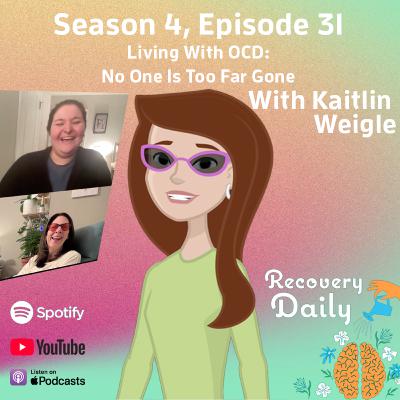
I sat down with Kaitlin Weigle to discuss what it’s like to live with OCD, and what misconceptions exist, like “all OCD’rs are clean.” Kaitlin breaks down how OCD is the obsessive loop and compulsions that try to neutralize fear, including mental compulsions like arguing with your thoughts, seeking reassurance, and avoiding triggers. We talked about intrusive thoughts, why they feel so convincingly real, and the shift that happens when you learn that the content of the thought isn’t the problem. Instead, the solution is in the relationship you have with the thought. Along the way, we laugh a lot and, not surprisingly, we connect the dots between OCD, anxiety, and the universal experience of “the conversation between our ears.”We discussed practical recovery concepts, like exposure and response prevention (ERP), accepting uncertainty, and the idea that “possible doesn’t mean probable.” Kaitlin shares what it looks like to do one uncomfortable thing a day and pair it with self-care, plus how loved ones can be supportive without feeding the reassurance trap. From there, we pivot into peer recovery support, what it is, and how it’s different from traditional talk-therapy. We close with rapid-fire takeaways, resources like Sharewell and HeyPeers, and a clear message for anyone struggling quietly with OCD: you’re not alone, you’re not your thoughts, and you deserve a life that isn’t driven by fear.Listen and subscribe wherever you get your podcasts and YouTube. Rather listen on Apple Podcasts? https://podcasts.apple.com/us/podcast/recovery-daily-podcast/id1693924779 Visit my Etsy shop, and join my creative journey at Recovery Upcycling. https://www.etsy.com/shop/RecoveryUpcycling#ocd #intrusivethoughts #ocdrecovery #obsessivecompulsivedisorder #ocdawareness
Yesterday I heard the phrase, “gratitude is action,” and it gave me pause. What does that really mean? In early recovery, my sponsor and sponsees shared three “gratefuls” with each other every day. Not autopilot answers, but three gifts that positively affected my life that day. It took time to build the habit, but I began scanning for strengths, assets, and connection. That training mattered when my life changed after my stroke. The shift toward noticing what is available, what is working, and what is possible became a practiced skill. Gratitude moved from a feeling to something I did on purpose.Gratitude becomes action when I use what I’ve been given. Recovery communities work because each of us brings something different to the table. I don’t have to be everything to everyone. I just bring my gifts. If I’m grateful for my voice, I speak. If I’m grateful for creativity and steady hands, I make things for people. If I’m grateful for connection, I show up to meetings, support groups, and my world-famous 💃🏻 podcast. Hope is transmitted through example, and participation is how I express gratitude. So, gratitude asks two questions: what have I received today, and what can I offer today? Listen and subscribe wherever you get your podcasts and YouTube. Rather listen on Apple Podcasts? https://podcasts.apple.com/us/podcast/recovery-daily-podcast/id1693924779 Visit my Etsy shop, and join my creative journey at Recovery Upcycling. https://www.etsy.com/shop/RecoveryUpcycling#gratitudeinaction #gratitude #gratitudeisaction #grateful #threegratefuls #gratefulforgifts
After my stroke, I began experiencing vision problems and headaches that I couldn’t clearly explain. Over time, I realized the core issue wasn’t my eyesight itself but my inability to tolerate motion, especially seeing things move. Walking through a grocery store felt overwhelming, like everything was rushing toward me. I saw multiple eye doctors and completed extensive testing, yet I was repeatedly told my vision system was normal. Some tests were painful, particularly visual convergence exercises, but the only explanation I was given was a minor convergence issue. I lived with symptoms that didn’t match the test results.I tried vision therapy, but it consistently triggered nausea and worsened my symptoms without improvement. Vestibular therapy, however, helped me function better. It didn’t remove my symptoms, but it reduced my fear and gave me practical strategies, such as focusing on a stable object while walking or moving my eyes intentionally instead of scanning. I still manage headaches, light sensitivity, and motion intolerance daily, but I’ve learned how to pace myself, identify triggers, and adapt. My vestibular disorder is permanent, but with the right tools and acceptance, I’m building a joyful life around it.Listen and subscribe wherever you get your podcasts and YouTube. Rather listen on Apple Podcasts? https://podcasts.apple.com/us/podcast/recovery-daily-podcast/id1693924779 Visit my Etsy shop, and join my creative journey at Recovery Upcycling. https://www.etsy.com/shop/RecoveryUpcycling#vestibulardisorder #vestibularmigraines #vestibularsystem #visionchallenges #strokerecovery #visiontherapy #vestibulartherapy
I’ve been wrestling with self-inflicted pressure that turns choices into requirements. I’m typically intrinsically motivated but can still get tripped up by extrinsic forces like approval, guilt, fear of disappointing people, and that inner “should’a” self-talk.I’ve actually found a way to put pressure on myself to live the perfect recovery life, trying to build a perfect routine going to AA, church, trying social groups, hobbies, and even walking my dog. How easily I start to measure my recovery by how many things I can commit to and be perfectly consistent. Protecting my sobriety and my stroke recovery must factor in what supports my brain and body, not what fills my calendar. Recovery is building a life I can comfortably live inside where serenity is a valid metric. I challenge anyone who relates to “should’a” self-talk to try one small experiment this week: pick one thing you’ve labeled as a requirement for yourself and relabel it as a choice. Instead of saying “I need to” say “I get to.” Notice if what started out as an obligation gets promoted into something fun.Listen and subscribe wherever you get your podcasts and YouTube. Rather listen on Apple Podcasts? https://podcasts.apple.com/us/podcast/recovery-daily-podcast/id1693924779 Visit my Etsy shop, and join my creative journey at Recovery Upcycling. https://www.etsy.com/shop/RecoveryUpcycling#EmotionalSobriety #StrokeRecovery #MentalHealth #SoberLiving #Recovery
My expectations are resentments under construction. Learned in sobriety, praying for someone I’m resentful toward helps me move toward forgiveness by remembering we’re all flawed and “sick in some way.” I realized, however, it can still carry an underlying tone of “I forgive you for not being what I wanted you to be.” A friend suggested to me that praising the other person can move us further into acceptance. Praise removes the expectation entirely as well as the need to control someone’s character or rewrite who they are. Praising is choosing to see the value in another person’s temperament and God’s design, and even recognizing that what irritates me might be a strength in their life. This same practice of praise can be turned inward too. Learning to praise myself, accept my own wiring, and remembering that the parts of me that I sometimes judge harshly, like my anxiety and sensitivity, can be my superpowers.Listen and subscribe wherever you get your podcasts and YouTube. Rather listen on Apple Podcasts? https://podcasts.apple.com/us/podcast/recovery-daily-podcast/id1693924779 Visit my Etsy shop, and join my creative journey at Recovery Upcycling. https://www.etsy.com/shop/RecoveryUpcycling#EmotionalSobriety #resentments #radicalacceptance #expecations #ego
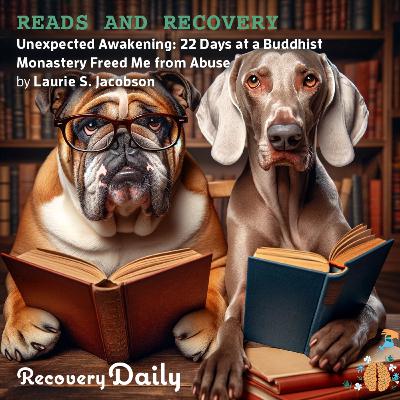
Yesterday I finished an amazing book! It’s called Unexpected Awakening: 22 Days at a Buddhist Monastery Freed Me from Abuse by Laurie S. Jacobson (Available on Amazon here: https://a.co/d/09rqj0Ln)It’s a MUST READ for anyone who’s ever stayed too long in a relationship that was breaking you. While this book tells a story, it is a testimony of resilience of the human spirit. There is a beautiful series of synchronicities throughout the book that inspire the reader to look beyond what’s in front of you to the hope we can cultivate within ourselves in our darkest seasons.I was able to relate to the main character on so many levels, from quietly enduring emotional abuse to the restitution of her identity she found at the monastery. I, as a grateful recovering alcoholic and stroke survivor, recognized the deeply familiar feeling of detoxing from the chaos and finding that I’d not yet given up on myself. The mercy and silence at the beginning of a structured recovery journey is uncomfortable but necessary to start rebuilding one’s self-worth.The psychological toll of emotional abuse is a self-constructed prison, and the author nails articulating her inner battle, fears, and the journey of her awakening. Her journey is not ordinary, in fact, it leaves the reader inspired that there is more going on in this life than what we see with our eyes. The story shows us how small choices and inner dialogue can lead us to freedom, just as it has in my recovery. Noticing, staying, and feeling the hard stuff is the imperfectly human pathway to living a new beautiful life. That ending? I wasn’t prepared for it, and it absolutely undid me.On my world famous Reads and Recovery Readometer scale it came in at 5 TAIL WAGS! https://recoverydailypodcast.com/reads-and-recovery/Listen and subscribe wherever you get your podcasts and YouTube. Rather listen on Apple Podcasts? https://podcasts.apple.com/us/podcast/recovery-daily-podcast/id1693924779 Visit my Etsy shop, and join my creative journey at Recovery Upcycling. https://www.etsy.com/shop/RecoveryUpcyclingLink my low impact Recovery Exercise Program Week 1: https://recoverydailypodcast.com/wp-content/uploads/2026/02/Exercise_Week1.pdf#emotionalabuse #spiritualawakening #freedomfromabuse #recoveryjourney #abusivemarriage
I’m exercising while I podcast, because my commitment to the show is solid and I’m hoping I can “borrow” a little of that and apply it to building a new exercise routine. It’s odd, but it works! 💃🏻As I move through an upper-body-and-posture routine today, I talk about an amazing quote I heard: “Some of the worst things in my life never happened.” - Mark Twain. Wow! Doesn’t that just speak volumes about the terrifying stories we tell ourselves, especially during the slow collapse of my life when I felt trapped yet feared change. Chronic headaches and winter isolation has blurred the line between fatigue and depression lately. It’s important during the winter months to notice if I still feel gratitude and look forward to things. These are signs that I’m experiencing fatigue instead of depression. Recognizing that they feel similar and learning how to distinguish them within me is a big step in stroke recovery.If you’d like to join my low impact Recovery Exercise Program Week 1, listen to todays episode, and click here for your copy: https://recoverydailypodcast.com/wp-content/uploads/2026/02/Exercise_Week1.pdfListen and subscribe wherever you get your podcasts and YouTube. Rather listen on Apple Podcasts? https://podcasts.apple.com/us/podcast/recovery-daily-podcast/id1693924779 Visit my Etsy shop, and join my creative journey at Recovery Upcycling. https://www.etsy.com/shop/RecoveryUpcycling #StrokeRecoveryExercises #VestibularRecovery #PostStrokeRehab #GratitudeInRecovery #AdaptiveFitness
Exercise used to be second nature for me before my stroke. I used to do flow yoga at 4pm daily, 4-mile walks with Autumn daily, and frequent outdoor runs. Now my vestibular symptoms, headaches, and stubborn back pain turned movement into a whole new negotiation.So I outsmarted the resistance by pairing exercise with the one routine I never abandon — my podcast! As I demonstrate Day 1 of a 7-day, 30-minute, low-impact exercise plan ✨SEE LINK TO EXERCISE PLAN BELOW ✨ (sit-to-stands, supported lunges, calf raises, weight shifts, heel-to-toe walking), I also share what’s been rattling around in my head: self-imposed crisis, expectations, ego, motives, and the tension between showing up for others versus showing up for myself. As the inner debate built a verdict, I landed on the role of gratitude in my life after stroke. Link to Recovery Exercise Program Week 1: https://recoverydailypodcast.com/wp-content/uploads/2026/02/Exercise_Week1.pdfListen and subscribe wherever you get your podcasts and YouTube. Rather listen on Apple Podcasts? https://podcasts.apple.com/us/podcast/recovery-daily-podcast/id1693924779 Visit my Etsy shop, and join my creative journey at Recovery Upcycling. https://www.etsy.com/shop/RecoveryUpcycling #StrokeRecoveryExercises #VestibularRecovery #PostStrokeRehab #GratitudeInRecovery #AdaptiveFitness
An unscripted check-in about enjoying the Super Bowl without looking at the TV, navigating vestibular limits, sober traditions, and the quiet mental load of noticing what affects symptoms.Listen and subscribe wherever you get your podcasts and YouTube. Rather listen on Apple Podcasts? https://podcasts.apple.com/us/podcast/recovery-daily-podcast/id1693924779 Visit my Etsy shop, and join my creative journey at Recovery Upcycling. https://www.etsy.com/shop/RecoveryUpcycling #vestibulardiscorder #vestibular #sobersuperbowl #soberlife #vestibularmigraine
Practicing Step 1 in stroke recovery is the activation point of building a psychological immune system. By accepting that my stroke changed my life forever, I could then begin adapting to the injury without exhausting myself in a constant fight against reality. Admitting powerlessness and unmanageability over my neurological injury took two years. In both alcoholism and stroke recovery, denial delayed healing. No matter how hard I tried to act normal, I was only making things worse. Step 1 interrupted that pattern. Once I accepted my disability, I could start healing physically and psychologically.Each day I make decisions based on today’s brain, not yesterday’s. I must accept my fatigue, visual overload, and pacing as reality not failures. This is the same muscle I built in sobriety, accepting that alcohol was not an option and building a life around that truth. Acceptance stabilized life, strengthening my psychological resilience allowing for healing, adaptation, and hope.Listen and subscribe wherever you get your podcasts and YouTube. Rather listen on Apple Podcasts? https://podcasts.apple.com/us/podcast/recovery-daily-podcast/id1693924779 Visit my Etsy shop, and join my creative journey at Recovery Upcycling. https://www.etsy.com/shop/RecoveryUpcycling #strokeRecovery #StepOneAA #AcceptanceInRecovery #PsychologicalResilience #LivingInAcceptance #lifeafterstroke
Step 1 in my stroke recovery started the same way Step 1 did in my sobriety. I had to admit that I’m powerless over my disability just as I did my alcoholism, and that my life had become unmanageable. I was in denial prior to the moment of admission in both situations. No one could see what was wrong with me, and with both, all the pain was between my ears. I could describe symptoms, explain the pain, but I dismissed the severity with both. I tried to function normally while the pain gradually got worse each time. I pushed through and convinced myself the pain would go away. It never did. Step One taught me to become self-aware. Stroke recovery took that lesson I learned in sobriety and turned the volume all the way up. Now I’m conscious of my eye movement, my pace, my gaze, the tiny shifts that most people don’t even notice but trigger pain for me. I see the same pattern in my addiction cravings and my impulse in stroke recovery to push beyond the limits of what my brain can do. My biggest challenge isn’t knowing what I can’t do, it’s accepting it. Listen and subscribe wherever you get your podcasts and YouTube. Rather listen on Apple Podcasts? https://podcasts.apple.com/us/podcast/recovery-daily-podcast/id1693924779 Visit my Etsy shop, and join my creative journey at Recovery Upcycling. https://www.etsy.com/shop/RecoveryUpcycling #StrokeRecovery #AcceptingUnmanageability #RecoveryJourney #RadicalAcceptance #LifeAfterStroke #step1
What are you afraid of, and would you be willing to expose your fears? I used to be afraid to leave the house, talk to people, and even answer the phone. Now, at 9.5 years sober, many of my fears have been addressed, while a few are still very much alive. The biggest thread for me, abandonment, was exposed the first time I did my Step 4 in 2017. I have some irrational fears that I work on with my psychiatrist weekly, and although they aren’t reasonable they are very real and scary for me.Sobriety has grown my confidence and shifted my perspective on so much. I encourage you to get out a piece of paper and a pen (remember what those are?) and listen to this list of fears. This is a great opportunity to learn about yourself and build a life where fear doesn’t drive the bus. You might not even notice the fears you return to most often.Listen and subscribe wherever you get your podcasts and YouTube. Rather listen on Apple Podcasts? https://podcasts.apple.com/us/podcast/recovery-daily-podcast/id1693924779 Visit my Etsy shop, and join my creative journey at Recovery Upcycling. https://www.etsy.com/shop/RecoveryUpcycling #EmotionalSobriety #StepFour #FacingFear #InnerWork #RecoveryDaily
Everything in my head feels like a five-alarm fire. How do I take my emotional emergencies and right-size my thoughts and emotions so they match the situation I’m actually in. I tend to treat discomfort like it’s urgent, permanent, and catastrophic. Not every uncomfortable feeling requires an immediate action, and sometimes no response at all is the wisest.I’ve always had big emotions, but big feelings don’t require big actions. The majority of my time is spent emotionally time-traveling. I’m either reliving the past or panicking about the future. If I can sit with discomfort long enough to see where it took root, I can choose a response that matches the size of the situation, and build new habits of self-awareness and emotional regulation. I’m not a victim of my emotions.Listen and subscribe wherever you get your podcasts and YouTube. Rather listen on Apple Podcasts? https://podcasts.apple.com/us/podcast/recovery-daily-podcast/id1693924779 Visit my Etsy shop, and join my creative journey at Recovery Upcycling. https://www.etsy.com/shop/RecoveryUpcycling #EmotionalRegulation #MentalHealthAwareness #EmotionalWellness #MindfulnessPractice #selfawareness
When I’m pissed at someone, I played a role in the communication breakdown. I must stop fixating on what the other person did to me and look honestly at where I’ve been selfish, dishonest, self-seeking, or afraid (without turning it into a shame-fest).It’s humbling to set aside the emotional inner retaliation and ask, “What was my part?” So in today’s episode, I admit some of my real-life mistakes 😬 and those character defects I still battle, like wanting things my way, jealousy, wanting to be the best, and wanting to be liked. Gratitude is the best antidote. Listen and subscribe wherever you get your podcasts and YouTube. Rather listen on Apple Podcasts? https://podcasts.apple.com/us/podcast/recovery-daily-podcast/id1693924779 Visit my Etsy shop, and join my creative journey at Recovery Upcycling. https://www.etsy.com/shop/RecoveryUpcycling #StepFour #AARecovery #SobrietyJourney #gratitude #step4
Long-held resentments are the trickiest. Sobriety removes the anesthesia that kept old pain muted, so these resentments start peeking out of the chaos as the numbing wears off. Time fossilized them into the foundation of my life. Step Four gives those resentments a voice. What do I do with resentments when I can’t talk to the person? When they’re unreachable, unavailable, or no longer alive, closure doesn’t have to be a conversation. It can be an internal shift.Step Four pulls me out of a mental courtroom. In my head, every resentment turns into a trial with a judge, jury, prosecutor, and defendant trying to prove who’s guilty. But Step Four acknowledges what was threatened: my safety, identity, self-worth, etc. And then I get to notice my behavioral patterns. Holding on to a resentment simply re-injures myself, repeating the same wound. The “magical” part of Step Four is asking what my role was when my brain keeps insisting I’m only the victim. Step Four lets me look back just long enough to extract the lesson, put it in my pocket, and walk forward. That’s where serenity is born. I’m loosening my grip on what no longer serves me, freeing up the energy I need for recovery, and rewiring my reactions.Listen and subscribe wherever you get your podcasts and YouTube. Rather listen on Apple Podcasts? https://podcasts.apple.com/us/podcast/recovery-daily-podcast/id1693924779 Visit my Etsy shop, and join my creative journey at Recovery Upcycling. https://www.etsy.com/shop/RecoveryUpcycling #StepFour #AARecovery #SobrietyJourney #OneDayAtATime #step4
I’m working on Step Four for the second time. That means I think about it and procrastinate, because yes, I have a spreadsheet and avoid actually filling it out.When I list my character defects for Step Four, I’m supposed to focus on the ones I have now that I’m sober. Still, I like to look at what sobriety itself has removed from my life, like lying, recklessness, and insecurity, because it reaffirms my commitment to not picking up a drink. The character flaws that linger, like fear, competitiveness, judgment, and internal conflicts, are the ones I get to bring to my sponsor and into meetings.As I went through the list today, it was easy to see how drinking had been my attempt to numb fear, anxiety, and depression. Decades of my behavior were rooted in chaos. No wonder I did things I’m ashamed of. I was building my life on a cracked foundation.In sobriety, I walk toward what scares me instead of avoiding it, and that’s helped me rebuild my self-esteem. I still work every day on doing the next right thing, even if it’s just folding the laundry that’s been sitting there long enough to qualify as a roommate.Listen and subscribe wherever you get your podcasts and YouTube. Rather listen on Apple Podcasts? https://podcasts.apple.com/us/podcast/recovery-daily-podcast/id1693924779 Visit my Etsy shop, and join my creative journey at Recovery Upcycling. https://www.etsy.com/shop/RecoveryUpcycling #StepFour #AARecovery #SobrietyJourney #OneDayAtATime #step4
The first thing I do I the morning when my eyes open is remember that I’m a grateful recovering alcoholic and stroke survivor. I need to accept that before my feet hit the floor, so that I don’t fight what’s in front of me that day. Acceptance simplifies things. It clears my mind and quiets obsessive thinking, giving me the freedom to think instead of being held hostage by my own mind. Each day offers a new opportunity to begin again, but only if I practice that acceptance first.Listen and subscribe wherever you get your podcasts and YouTube. Rather listen on Apple Podcasts? https://podcasts.apple.com/us/podcast/recovery-daily-podcast/id1693924779 Visit my Etsy shop, and join my creative journey at Recovery Upcycling. https://www.etsy.com/shop/RecoveryUpcycling #Acceptance #Serenity #RecoveryJourney #MentalWellbeing #strokesurvivor
Being wrong can make me feel unworthy, as if it says something about me as a person. We learn early on that being right equals competence, so we cling to that at the cost of curiosity and connection with others. But, being wrong is not a personal failure, it’s a part of learning. Every huge lesson I’ve learned came from being very very wrong. When I allow myself to be wrong, I am open to new information and a more honest relationship with myself and others.Letting go of the need to be right softens everything. Conversations become less about winning and more about understanding. You can change your mind without betraying yourself. It’s okay to be wrong. Listen and subscribe wherever you get your podcasts and YouTube. Rather listen on Apple Podcasts? https://podcasts.apple.com/us/podcast/recovery-daily-podcast/id1693924779 Visit my Etsy shop, and join my creative journey at Recovery Upcycling. https://www.etsy.com/shop/RecoveryUpcycling #PersonalGrowth #SelfAwareness #EmotionalIntelligence #MindsetShift #GrowthOverPerfection

Comments

Download from Google Play

Download from App Store
 United States