


 Claim Ownership
Liquid Assets
Subscribed: 0Played: 3
Subscribe

© Ravi Kurani
Description
From policy to profit, Liquid Assets uncovers the business and technological implications of water in a changing world.
58 Episodes
Reverse

What does it actually take to do charity work that lasts?Ravi Kurani sits down with Dhwani Bhatt, a fourth-year chemical engineering student at Northeastern University and President of Engineers Without Borders, who grew up in Uganda and returned as a student engineer to build a solar-powered water distribution system for the village of Nakyenyi.In this episode:→ Why EWB surveys 50+ households before touching a shovel→ The 3-phase build: hand pump → solar pump → gravity-fed distribution→ The borehole siltation crisis that forced the team back to the drawing board→ The 5% community contribution model that creates real ownership→ Why broken, abandoned NGO boreholes line the same village roads→ Imposter syndrome as a second-year student presenting designs to a community in need→ Book pick: "Not the End of the World" by Hannah RitchieThis episode is sponsored by HASA, the leader in water treatment solutions. Learn more at hasa.comConnect with Dhwani Bhatt on LinkedIn: linkedin.com/in/dhwanikalbhattEngineers Without Borders USA: ewb-usa.orgFollow Ravi Kurani:→ LinkedIn: linkedin.com/in/kuraniravi→ Website: liquidassets.cc
A working prototype means nothing if you can't manufacture it at scale.Brad Augustine — VP of Hardware Engineering at Inspiren, former VP of Hardware at Lululemon — is the engineer who scaled the Mirror connected fitness device from startup to a $500M acquisition. In this episode, he shares the product development playbook that water tech founders and engineers need to hear.Brad spent 20 years in hardware product development: building LED lighting and ergonomic furniture at Humanscale, leading the engineering team that cut Mirror's production costs by 40% before the pandemic supply chain crisis, and now building AI-powered senior care hardware at Inspiren.We cover:→ Why "hardware is hard" is actually "hardware is fun"→ The real gap between a working prototype and mass production→ How Brad's team cut 40% of Mirror's BOM cost — and why that saved them when the pandemic hit→ Why water industry engineers need to think like product managers→ The PFAS trap: are you building for wastewater or drinking water? Two very different customers.→ How AI is finally helping engineers navigate tangled regulatory requirements (UL, IEC, FCC, SCADA)→ Why "me-too" products die in hardware — you can't pivot a mold→ What's next: AR beauty tech, AI inside physical products, and solving problems in your own communityGuest: Brad Augustine→ VP, Hardware Engineering at Inspiren→ Former VP, Hardware at Lululemon (Mirror)→ Former Design Engineering Manager at Humanscale→ LinkedIn: https://www.linkedin.com/in/brad-augustineHost: Ravi Kurani, LiquidAssetsThis episode is sponsored by HASA — the leader in water treatment solutions. Keeping communities safe one drop at a time for over 60 years. Learn more at hasa.com.

Ravi Kurani sits down with Josh Dorfman, CEO and host of Supercool, to trace his journey from sustainable furniture startups to co-founding Plantd, a carbon-negative building materials company using renewable grass to replace plywood in homebuilding. Josh shares how Plantd landed a relationship with D.R. Horton (America's largest homebuilder) for 90,000 homes, why he left the CEO role to launch Supercool—a B2B media platform spotlighting real-world climate solutions—and the innovations he's most excited about, from AI-powered HVAC to recycling rare earth magnets.The conversation explores how two former SpaceX engineers moved to North Carolina to grow miscanthus grass and turned it into structural boards that are stronger than plywood in all directions—yet feel identical in a construction worker's hands. Josh breaks down three macro trends proving the low-carbon economy is scaling, spotlights companies like BrainBox AI (cutting building HVAC costs by 25% and carbon by 40%) and Zum (using AI to cut Oakland's school bus fleet from 140 diesel buses to 72 electric ones), and shares the remarkable story of Aeroseal—a 1990s duct-sealing technology shelved for a decade that became a $400M+ company when the right founder came along.In this episode, we discuss:From Furniture to Carbon-Negative Building Materials: Josh's path from running sustainable furniture companies in Brooklyn to co-founding Plantd with two former SpaceX engineers, a company that replaces plywood with boards made from renewable grass, grown by former tobacco farmers in North Carolina.Making Sustainability a Drop-In Replacement: Plantd's boards are designed to feel identical to traditional plywood for construction workers, same density, same nail behavior, so adoption requires zero behavior change. The result: a partnership with D.R. Horton across 90,000 homes.The Low-Carbon Economy is Scaling: Nearly 2,000 climate tech startups have raised Series B or beyond, the world's largest companies are investing heavily in the clean energy transition, and cities are becoming laboratories for climate innovation.AI as a Climate Solution: From BrainBox AI (cutting building HVAC costs by 25% and carbon by 40%, now acquired by Trane) to Zum (using AI to cut Oakland's school bus fleet from 140 diesel buses to 72 electric ones), Josh highlights how AI is accelerating decarbonization across industries.The Rare Earth Recycling Breakthrough: Cyclic Materials is the only company in the world to crack rare earth magnet recycling, attracting investment from Amazon, Microsoft, BMW, and Jaguar, critical for reducing dependence on China's 90% supply chain control.Timing is Everything: The story of Aeroseal: a duct-sealing technology invented in the 1990s, shelved by Carrier for a decade, then revived by a product manager who turned it into a $400M+ revenue company.Connect with the Guest:Josh DorfmanSupercoolFollow Liquid Assets:Website: https://liquidassets.cc/Full Blog Post & Transcript: https://liquidassets.cc/building-houses-from-grass-and-the-rise-of-climate-tech-media-2Host: Ravi KuraniThis episode is sponsored by Hasa, the leader in water treatment solutions for over 60 years. Learn more at https://hasa.com.
Ravi Kurani sits down with Rich Sloan, CEO of WAVR Technologies, to discuss a sobering reality: the era of abundant, subsidized water is officially over. From the "bathtub rings" of Lake Mead to the massive water footprint of the AI revolution, Rich explains why the next decade will be defined by the shift toward high-tech, point-of-use water harvesting.The conversation explores the biomimicry behind Waiver's tech—inspired by the skin of an Australian tree frog—which allows for the passive collection of high-purity water from thin air, even in the most arid climates. Whether it's cooling the data centers that power ChatGPT or providing ultra-pure water for kidney dialysis, Rich and Ravi map out a future where we stop relying on aging pipelines and start manufacturing our most critical resource at the source.The End of Abundance: We have exited the period where fresh water is abundant, free, and pure; it is now a tech-driven numbers game.The AI Thirst: Generating AI images consumes a staggering amount of water—roughly 10,000 Bellagio Lakes worth of evaporative cooling for daily GPU power.Frog-Inspired Tech: How Waiver uses a hypersaline solution and a proprietary membrane to "wick" moisture from the atmosphere.Industrial Point-of-Use: Why the first million dollars in revenue is coming from high-purity industrial needs like medical applications and semiconductor manufacturing.The Warrior's Flow: Rich’s philosophy on staying "fierce" but in a state of "flow" to drive world-class innovation.Links:Full Blog Post & Transcript: liquidassets.cc/the-end-of-free-water-in-las-vegas/WAVR Technologies: wavrtechnologies.com
Most of us don’t think twice about what happens after we flush, but Jay Bernas spends every waking hour thinking about it. As the CEO of the Hampton Roads Sanitation District (HRSD), Jay oversees a "quasi-state" regional powerhouse that treats wastewater for nearly 2 million people. But this isn't your grandfather’s utility—HRSD is a world-class R&D incubator that holds global patents and collects royalties on its innovations.In this episode, Ravi and Jay pull back the curtain on the "invisible" infrastructure that keeps our communities safe. They dive into how HRSD is using Anammox bacteria and hydrocyclones to save hundreds of millions of dollars in construction costs, and why they are currently partnering with a National Particle Accelerator Lab to destroy "forever chemicals" (PFAS) using electron beams. Whether you’re a tech investor or just curious about the massive machine running beneath your feet, this conversation proves that wastewater is one of the most exciting frontiers in climate tech.In this episode, we discuss:The "Quasi-State" Advantage: Why independent governance is the secret sauce for innovation.Process Intensification: How to grow a utility's capacity without pouring more concrete.The Silver Tsunami: Why we need a new generation of "Engineer MBAs" to lead the sector.PFAS Destruction: Using particle physics to solve the world’s toughest chemical problem.Connect with the Guest:Jay Bernas: LinkedInHRSD: hrsd.comFollow Liquid Assets:Website: liquidassets.ccHost: Ravi KuraniThis episode is sponsored by Hasa, the leader in water treatment solutions for over 60 years. Learn more at hasa.com.
Sivan Zamir is the VP of Innovation & Venture at Xylem, a Fortune 500 leader in water technology. In this episode, Ravi Kurani and Sivan pulls back the curtain on the massive, invisible machine that keeps the modern world running. Sivan challenges the abstract concept of "the cloud," revealing that every data center, semiconductor chip, and cup of coffee relies on a complex, physical water infrastructure that operates "behind the fence." Her mission is to transform water from a silent, overlooked utility into a visible, investable asset, proving that the resilience of the Fortune 1000 depends entirely on the management of this finite resource.The conversation dives deep into the cultural psychology of water, contrasting the "scarcity mindset" of Israel, where Sivan witnessed traumatic drought campaigns, with the "invisibility" of water in the US. They explore the critical "Silver Tsunami" facing the industry as experts retire, and how Xylem is turning to Augmented Reality (AR) and AI to download "tribal knowledge" to a new generation. From the struggles of pitching water tech to VCs to the future of flood prediction, Sivan and Ravi map out why water is the ultimate unpriced asset in business resilience.Key Takeaways:The Invisible Backbone of Tech: Sivan dispels the myth of a purely digital economy. She explains that the "cloud" is actually a physical infrastructure of data centers requiring massive amounts of water for cooling and power, arguing that tech companies are just as water-dependent as agriculture.The 3% Investment Gap: Despite water being essential for life, only ~3% of climate tech venture capital flows into the sector. Sivan shares her past struggles as a founder having to rebrand water startups as "IoT" or "Climate Tech" just to get meetings, and how funds like Burnt Island Ventures are finally changing that landscape.Bridging the "Silver Tsunami": The industry faces a massive vacuum as operators with decades of experience retire. Sivan discusses using AI and AR tools—like smart glasses—to capture this institutional knowledge and guide Gen Z workers through complex, dangerous repairs in real-time.Cultural Visceralism: Sivan contrasts the American experience of water (out of sight, out of mind) with the Israeli experience, where drought awareness is culturally ingrained. She argues that to solve our water crisis, we must make infrastructure "visible" again.Innovation for Extremes: Xylem’s innovation strategy is categorized into "Too Much Water" (using AI for flood prediction) and "Too Little Water" (advanced reuse and digital twins), highlighting how extreme weather patterns are forcing utilities to become proactive rather than reactive.
Would you swap your fine wine for a bottle of water?In this episode, Ravi Kurani sits down with Ana Livi, Partner at O Amazon Air Water, to discuss a water source you’ve likely never heard of: the "breath" of the Amazon trees.Deep in the rainforest, O Amazon uses Atmospheric Water Generators (AWG) to harvest humidity from the "Flying Rivers" of the Amazon, creating a luxury water that sells for over €100 a bottle. Ana explains how this unique business model allows them to operate off-grid without cutting down a single tree, turning the preservation of the forest into a high-end asset.We also dive into Ana’s unique role as an "Energy Consultant" for the company, where she uses her background in humanitarian aid and spirituality to align business decisions with the invisible "energetics" of the rainforest.We cover:The Technology: How to make water from air in the middle of the jungle.The Design: The rescue jaguar that inspired their iconic bottle.The Market: Why water sommeliers call this the "celebration" water.The Energy: Managing a company through spiritual alignment and "corporate energetics".Movie Recommendation:Ana recommends Symphony of the Soil (referenced as the film about the "30cm layer of soil") for anyone interested in the fragility of our planet’s life support systems.LiquidAssets: liquidassets.ccAmazon Air: https://www.oamazonairwater.com/
Is climate mitigation just an expensive burden for water utilities? Alexis de Kerchove (Senior Director, Client Sustainability at Xylem) argues the opposite: the path to Net Zero is actually the key to operational efficiency and cost savings.In this episode, Ravi Kurani and Alexis de Kerchove break down how digital tools and machine learning are revolutionizing the water sector. We explore the "invisible" emissions of wastewater, fugitive nitrous oxide and energy-intensive pumping, and how AI is solving these problems without requiring massive new infrastructure.We discuss:The "Burden" Myth: Why sustainability is actually an efficiency strategy.Sponge Cities: Using data to optimize existing networks instead of building concrete.Fugitive Emissions: Tackling the silent climate impact of biological treatment.Smart Assets: How self-cleaning pumps and digital twins prevent failure.The Silver Tsunami: Turning the workforce shortage into a recruiting advantage.Sponsored by HASA: The leader in eco-friendly water treatment. Learn more at hasa.com.Links:Connect with Alexis de Kerchove on LinkedInVisit Xylem.comSubscribe to the Liquid Assets Newsletter at liquidassets.cc
Is there a safe level of "forever chemicals" in your water?PFAS are everywhere: from the non-stick pans in your kitchen to the contact lenses in your eyes, and even 92% of strawberries. They are the "super chemistry" that modern society relies on, but they are also a toxic legacy that refuses to break down.In this episode, Ravi Kurani sits down with Henrik Hagemann, the potato farmer turned deep-tech entrepreneur who is solving this crisis at the molecular level. As the CEO and Co-founder of Puraffinity, Henrik is engineering smart materials that target and capture PFAS with sniper-like precision, preventing them from entering our waterways and bloodstreams.In this episode, we cover:The PFAS Reality Check: Why "forever chemicals" are found in everything from pesticides to waterproof jackets.Beyond Activated Carbon: How Puraffinity’s "Lego-like" material science outperforms traditional filtration by 7x.From Farm to Founder: Henrik’s journey from processing potatoes in Denmark to leading a Series A deep tech company in London.The Business of Water: Navigating the "Valley of Death" in hardware and selling to risk-averse industries.Diversity as a Superpower: Why international, diverse teams are statistically safer and more profitable in engineering.🔗 Links & Resources:Learn more about Puraffinity: https://www.puraffinity.com/Connect with Henrik on LinkedIn: https://www.linkedin.com/in/henrikhagemann/Read the "Engine Plus" Report: https://raeng.org.uk/policy-and-resources/equity-diversity-and-inclusion-research-and-resources/edi-engine-benefits-of-equality-diversity-and-inclusion-in-engineering/Liked this episode? Hit the "Follow" button so you never miss a drop.

Ravi Kurani sits down with Gregory Holliday, Director of the 50 Liter Home Coalition, to explore how global brands and cities are redesigning the way we live — creating homes that use just 50 liters of water a day, yet feel like 500. Gregory unpacks how companies like Procter & Gamble, Kohler, IKEA, and Electrolux are uniting to make sustainability invisible — embedding efficiency into every shower, dishwasher, and faucet without asking people to sacrifice comfort.He shares the coalition’s origins in the wake of Cape Town’s “Day Zero,” his own journey from U.S. diplomat to water advocate, and how behavior, design, and technology intersect to make conservation intuitive. The conversation dives into the data behind 50L’s pilot homes in Los Angeles, the lessons from real families living efficiently, and the long-term vision for water- and energy-smart homes worldwide.This episode is sponsored by HASA (hasa.com).Liquid Assets
Ravi Kurani sits down with Ramzi Bouzerda, founder and CEO of Droople, to explore how the Internet of Water is turning everyday plumbing into a data-driven network. Ramzi explains how sensors measuring flow, temperature, and pressure can map “water signatures” for toilets, faucets, and filters, revealing human behavior, maintenance needs, and efficiency opportunities.He shares Droople’s origin story, born at 3 a.m. while preparing a baby bottle, and his journey from banking and IT to building a company tackling global water scarcity. The conversation dives into how data transforms buildings into living systems, why the water industry is slow but lucrative, and how Droople’s vision could make “water inside” as common as “Intel Inside.”This episode is sponsored by HASA (hasa.com).Liquid AssetsInstagram
In this episode of Liquid Assets, host Ravi Kurani sits down with Jose Castro, founder and CEO of Segura, to unpack how rapid diagnostics complement (not replace) lab confirmation, where multi-analyte testing pays off first—Lead & Copper Rule triage, treatment optimization, remote mining, beverage networks—and what validation and manufacturing at scale will take to make field diagnostics the new default.This episode is sponsored by HASA (hasa.com).Liquid AssetsInstagram
In this episode of Liquid Assets, we dive deep into the pressing issues facing the water industry with Clara Hallgarth, an environmental engineering student. As the workforce ages and a significant number of professionals near retirement, we explore the urgent need for new talent in this vital sector. Clara shares her insights on climate resilience, the importance of education, and how technology can shape the future of water management. Join us for a thought-provoking discussion that reveals why the water industry is at a critical crossroads and what it means for all of us. Tune in now!This episode is sponsored by HASA (hasa.com).Liquid AssetsInstagram

Is Your Water Safe? In this episode, water engineer and SimpleLab Tap Score CEO Johnny Pujol joins host Ravi Kurani to expose what most people get wrong about tap water. From lead pipes to hidden contaminants, we dive into why government reports fall short—and how modern at-home testing is transforming the way we trust (or don’t trust) our water. Learn how Tap Score is empowering thousands to take control of their drinking water safety with science-backed diagnostics, and get practical tips on choosing the right filter for your home.🔍 A must-listen for homeowners, renters, and anyone who drinks water.This episode is sponsored by HASA (hasa.com).Liquid AssetsInstagram
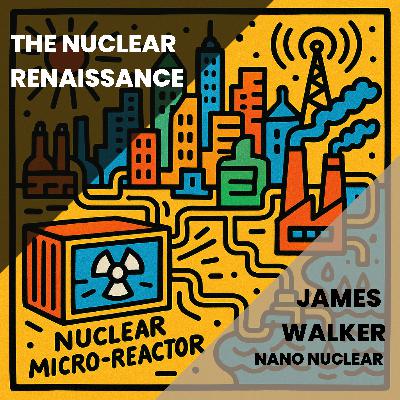
Could the future of clean, reliable energy fit inside a shipping container? We sit down with nuclear physicist James Walker, CEO of Nanonuclear Energy, to explore the fascinating world of microreactors and small modular reactors (SMRs). Discover how this technology aims to power remote locations, potentially fuel AI data centers, enable desalination, and why James believes nuclear is far safer than you think. Dive into the nuclear renaissance.This episode is sponsored by HASA (hasa.com).Liquid AssetsInstagram
In this episode of Liquid Assets, host Ravi Kurani dives into a game-changing approach to sustainable desalination with guest Bruce Crawford, CEO and co-founder of Nona Technologies. An MIT spinout backed by the U.S. Army, Nona is pioneering a new way to turn saltwater into fresh water at any scale. At a time when many countries are investing in large-scale desalination megaprojects to combat water scarcity – for example, Saudi Arabia’s ambitious Vision 2030 program – Bruce’s vision is radically different: bring Desal to the people via small, flexible systems that can work anywhere.From decentralized water treatment units that fit on a pallet to innovations in reusing cooling tower water, Bruce’s story exemplifies how water tech startups are driving the future of water. This conversational yet insightful discussion explores how Nona’s novel Ion Concentration Polarization (ICP) technology makes desalination portable, efficient, and adaptable – unlocking resilient water solutions for a thirsty world.What you'll hear in this episode:A breakthrough in desalination technology: How ICP (Ion Concentration Polarization) works to separate salt from water without high pressure or heat, and why it’s a leap beyond traditional reverse osmosis.Decentralizing water treatment: Why moving desalination from massive plants to modular, on-site systems can bring water to remote communities, disaster relief operations, and even military field camps.Water reuse in cooling towers: How Nona’s compact desal units can recycle blowdown from industrial cooling towers (like those in data centers and power plants), saving huge volumes of water amid the booming demand for AI and cloud computing.Challenges and rewards for water tech startups: Insight into Nona’s journey from an MIT lab project to an award-winning startup, and how it fits into a larger wave of innovation in the water industry.The future of sustainable water innovation: Bruce’s vision of a world using less water – from household-sized desalination appliances to industry-scale water savings – and how physical technologies and digital water solutions together can secure our water future.Check out the episode's sponsor, the leader in water treatment solutions - HASAConnect with Us:Liquid AssetsInstagram
What if the secret to cleaner water isn’t more chemicals, but smaller bubbles? In this episode of Liquid Assets, host Ravi Kurani chats with Natsumi Ito, co-founder of Water Design Japan, about a breakthrough in nano bubble technology. This innovative approach transforms the air already in your water into microscopic cleaning agents—cutting chemical use by up to 60% without a single additive. Discover how these tiny, vibrating bubbles are revolutionizing cleaning in hospitals, semiconductor factories, and even your home. Natsumi also shares her inspiring journey—from her global roots to spearheading one of Japan’s most innovative water startups, and how a technology born from Hiroshima’s oyster farms might soon render traditional chemical cleaning obsolete. Tune in for a deep dive into the future of safe, sustainable water cleaning.Check out the episode's sponsor, the leader in water treatment solutions - HASAConnect with Us:Liquid AssetsInstagramConnect With Natsumi Ito LinkedIn
Every second, our oceans undergo rapid transformation due to climate change, pollution, and human intervention. While coral reefs may seem like distant, beautiful ecosystems, they play a crucial role in protecting our coastlines, regulating marine biodiversity, and supporting economies across the world.In this episode of Liquid Assets, we sit down with Patrick Clasen, co-founder of Ecotech Marine, an innovator in marine technology and coral reef restoration. From his early days as an engineering student designing aquarium equipment to leading advancements in coral restoration technology, Patrick shares his journey into the world of marine conservation and innovation.We discuss the dire state of coral reefs, the growing threat of ocean acidification, and how cutting-edge technology is being leveraged to protect and restore marine ecosystems. Patrick also dives into the intersection of entrepreneurship and sustainability, sharing lessons from scaling Ecotech Marine and collaborating with research institutions to tackle some of the ocean’s biggest threats.What You'll Hear in This Episode:The importance of coral reefs – Why they matter beyond aestheticsWhy 98% of Florida’s reefs are nearly dead – And what’s being done about itThe role of ocean acidification – How pH levels are affecting marine lifeHow DARPA and marine institutions are working – Efforts to reverse coral declineThe fascinating technology behind reef restoration – Innovations in coral farmingHow Ecotech Marine developed groundbreaking tech – Advancements in aquarium and ocean monitoringWhat individuals and businesses can do – Steps to support ocean sustainabilityCheck out the episode's sponsor, the leader in water treatment solutions - HASABook Recommendation: The Rational OptimistConnect with Us:Liquid AssetsInstagramConnect With Patrick ClasenLinkedIn
With water scarcity becoming an ever-growing challenge across the globe, many countries are turning to desalination, wastewater treatment, and sustainable water management as solutions. But how viable are these technologies? Can desalination truly provide affordable, large-scale drinking water? And how does Saudi Arabia’s ambitious Vision 2030 plan factor into the future of water innovation?In this episode of Liquid Assets, we sit down with Ramon Rubio, founder of The Water MBA, who has spent over a decade in the water sector, specializing in desalination, wastewater treatment, and infrastructure development. Ramon shares his insights on the global water crisis, the economics behind desalination, and the future of water sustainability in the Middle East and North Africa.Having worked extensively in Saudi Arabia, Ramon also provides an inside look at the country’s massive investment in water infrastructure, its push toward renewable energy, and how sustainability is shaping the future of water access across the region. With Vision 2030 driving innovation in smart cities, desalination plants, and water reuse projects, Saudi Arabia is setting a global precedent for water management. But are these projects truly sustainable?We also explore how Ramon’s personal journey in engineering led him to create The Water MBA, a program dedicated to educating water professionals on project management, business development, and technical expertise.What You'll Hear in This Episode:Why desalination is a crucial but controversial solution to water scarcityThe real cost of desalination and whether it can scale affordablyHow Saudi Arabia’s Vision 2030 is revolutionizing water managementThe challenges of implementing large-scale water infrastructure projectsWhat makes sustainable water solutions actually sustainable?Ramon’s journey from engineer to water industry leader and why education is key to fixing global water issuesCheck out the episode's sponsor, the leader in water treatment solutions - HASABook Recommendation: Skin in the GameConnect with Us:Liquid AssetsInstagram
Every year, California faces a brutal cycle of wildfires, but this time, the stakes are higher than ever. The Palisades and Eaton Fires have destroyed over 12,000 homes, burned 40,000 acres, and displaced 100,000 people. But beyond the visible destruction, there’s another crisis unfolding—one that remains largely unseen: the failure of our water infrastructure.In this episode of Liquid Assets, we sit down with Reuben Vollmer, CEO and Co-Founder of Spout Water, to discuss how California’s water mismanagement played a pivotal role in fueling these wildfires—and how it’s now impacting the drinking water of thousands. With fire hydrants running dry, plastic pipes melting into the water supply, and entire communities left with "do not drink" advisories, we explore the connection between fire, climate change, and water security.Reuben shares his personal experience of being evacuated due to the fires and the devastating loss of not just homes but the memories tied to them. He explains how a decade in the water industry led him to develop Spout, an innovative device that pulls clean drinking water from the air, offering an alternative for those who can no longer rely on traditional water infrastructure.We also dive into the controversial use of fire retardants—why they're necessary, but how they may also be accelerating the growth of invasive species, setting the stage for even bigger fires in the future. And, as bottled water shortages rise, Reuben unpacks why one in five Americans already rely on bottled water and what that means for our environment.What you'll hear in this episode:Why LA’s fires arebookended by water mismanagement—from drought-driven fuel loads to water contamination post-fireThe shocking reality offire hydrants running dry and themelting water system polluting local drinking waterHowfire retardants may be unintentionally fueling future firesThehidden costs of bottled water and why its overuse is creating an environmental crisisThescience behind Spout, a device that generatespure drinking water from the airHow Reuben’spersonal story of water scarcity inspired his mission to make clean water accessible to allBook Recommendation:Cutting Through Spiritual MaterialismConnect with Us:Liquid AssetsInstagram

Comments

Download from Google Play

Download from App Store
 United States