


 Claim Ownership
Wild and Well
Subscribed: 3Played: 54
Subscribe

© 2026 Dr Hilary Claire
Description
Here we delve into the big and little things that move the needle for children’s health and mental wellness in a modern world that doesn’t make it easy to do so.
87 Episodes
Reverse
In this episode, I am joined by clinical psychologist, yoga instructor, and meditation teacher Dr Kaitlin Harkess to explore how somatic practices, nervous system regulation, and body awareness can support mental health, especially anxiety and overwhelm.
Dr Kaitlin and I chat about:
How yoga and somatic practices support the nervous system
The role of interoception (listening to internal body signals)
Practical tools for managing anxiety and overwhelm
Supporting kids in emotional awareness and regulation
The importance of values-based living over external expectations
Self-compassion, parenting, and realistic approaches to self-care
Simple nervous system tools like the dive reflex, movement, and breathwork
Dr Kaitlin Harkess, host of the Wisdom for Wellbeing podcast and founder of the holistically oriented therapy practice of the same name, is an award-winning Clinical Psychologist and Senior Yoga Instructor who helps burnt-out individuals develop the psychological skills they need to change their lives for the better.
Kaitlin’s research on the psychoneuroimmunological impact of a yoga practice for chronic stress has been featured in Time, while her expertise on the therapeutic use of mindfulness and meditation has seen her featured in The Holistic Approach television series. As a result of her scientific research and clinical practice, Kaitlin understands how to maximize the healing and performance enhancing benefits of integrating mindful wisdom practices with modern psychological interventions.
Episode Links:
Say hi to Dr Kaitlin on Instagram
Read her book The Somatic Workbook
Find out more about Dr Kaitlin on her website
Come say hello to me on Instagram
Read my books The Motherhood Reset, Nourished Mama and Mama Let It Go
Grab my Picky Eating Guide
Unburdening Motherhood: How Mothers Can Heal Trauma and Become Self-LedWhy Motherhood Triggers Us - and How to Heal Using Parts Work From Perfectionism to Self-Compassion: Healing Motherhood with Dr Angele Close Healing Trauma and Reparenting Yourself Through Motherhood
Breaking Generational Cycles in Motherhood with Clinical Psychologist Dr Angele Close.
In this episode, I’m joined by psychologist, motherhood coach, and author Dr Angele Close to explore motherhood, self-compassion, and what it really takes to move out of exhaustion and overwhelm in motherhood.
Dr. Angele shares how her own journey through motherhood - and the profound challenges of matrescence, led her to shift her work toward supporting mothers’ mental and emotional wellbeing. Together, we explore how unhealed childhood patterns, cultural expectations of “good motherhood,” and internalized perfectionism can leave mothers feeling exhausted, overwhelmed, and disconnected from themselves.
We discuss Internal Family Systems (IFS) and parts work, which provide a compassionate approach that supports mothers in understanding their inner world, easing self-criticism, and responding more calmly and authentically in parenting.
Dr Angele and I chat about:
What matrescence is and why it’s such a vulnerable, transformative time
How cultural myths of “good motherhood” shape our inner critic and perfectionism
What parts work and Internal Family Systems are (and why they’re so helpful for moms)
Common “mom parts” like the perfectionist, inner critic, worrier, and mama bear
How to respond more calmly to your child’s big emotions by doing your own inner work
What it really means to break generational cycles
How self-compassion and reparenting support both mothers and children
Practical ways to begin parts work, even with limited time
This episode is an invitation to move out of survival mode, reconnect with your inner wisdom, and become more self-led in motherhood.
Dr Angele Close is a psychologist, motherhood coach, and author with nearly 20 years of clinical experience. Her work centers on supporting mothers in moving out of exhaustion, depletion, and overwhelm, and reclaiming a healthy, thriving identity in motherhood. Her approach is shaped not only by professional training, but by her own lived experience navigating the challenges of early motherhood. Dr Angele specializes in maternal mental health, Internal Family Systems, and cycle-breaking work for mothers.
Her book, Unburdening Motherhood: A Guide to Breaking Cycles, Healing Trauma, and Becoming a Self-Led Mom, offers practical tools, reflections, and guided practices to support mothers in deep inner healing.
Episode Links:
Say hi to Dr Angele on Instagram
Read Unburdening Motherhood
Try out some of Dr Angele’s meditations on Insight Timer
Find out more about Dr Angele on her website
Come say hello to me on Instagram
Read my books The Motherhood Reset, Nourished Mama and Mama Let It Go
Grab my Picky Eating Guide

Have you ever found yourself holding your breath at the dinner table? Watching what your child will (or won’t) eat.
Counting bites. Wondering if you’re doing something wrong.
Mealtimes can quietly become one of the most stressful parts of parenting, especially when selective or “picky” eating enters the picture.
But what if it’s not just about the food?
When we zoom out, we see that eating is connected to emotional safety, nervous system regulation, sensory processing, modelling, and the overall parent–child relationship. Pressure, praise, rewards, and even our own food hang-ups can unintentionally make things harder.
The good news? There are practical, compassionate ways to shift the dynamic.
This is what we discuss in this episode. This episode is a little different as dietitian Atheana Brown is the one asking the questions and I am answering.
Atheana and I chat about:
Why labeling kids as “picky eaters” can reinforce the behaviour
The powerful role of parental modelling and nervous system regulation at mealtimes
How pressure, praise, rewards, and punishment can backfire
The importance of prioritizing connection over control at the table
When selective eating may signal something deeper (sensory challenges, tongue ties, gut health, nutritional deficiencies, ARFID, growth concerns)
Red flags that may indicate it’s time to seek professional support
Practical ways to reduce stress around food and strengthen your relationship with your child
If you’re feeling stuck, stressed, or overwhelmed by your child’s eating, this episode might just get you looking at it from a fresh perspective.
You don’t have to stay stuck and neither does your child.
Episode Links:
Come say hello to me on Instagram
Read my books The Motherhood Reset, Nourished Mama and Mama Let It Go
Grab my Picky Eating Guide
Say hi to Atheana on Instagram
Listen to Diet Culture Dropout podcast
In this episode, I chat with Erin Bury, Co-Founder and CEO of Willful, to explore the intersection of entrepreneurship, motherhood, and financial wellbeing.
Erin shares her unconventional path into entrepreneurship, from journalism to tech startups, and what she’s learned about taking risks, validating ideas, and building a business without being a “born entrepreneur.”
She opens up about the realities of running a company while raising two young children, including time constraints, invisible labour, and the importance of supportive partnerships, all while rejecting the myth of perfection.
Erin and I chat about:
Balancing leadership, parenting, and personal wellbeing
Why modeling values matters more than doing it “all”
The mental and emotional load mothers carry, even in supportive households
Teaching kids about money, financial literacy, and entrepreneurship
Practical steps parents can take to support their children’s financial futures
Why estate planning is an act of care, and how it can bring peace of mind, not fear
This episode is a conversation for parents who are building careers, raising children, and trying to navigate it all with intention, without burning out.
Named one of The Globe & Mail’s Changemakers in 2025, Erin Bury is an entrepreneur, startup advisor. and a former marketer and technology journalist. Erin is the co-founder and CEO at online estate planning platform Willful, where she drives the company’s mission to ensure every Canadian has a will. Erin secured a deal for the company on TV’s Dragons’ Den in December 2021 Erin is also a columnist at The Globe and Mail, where she writes about parenting and personal finance. She is also a board member for Save the Children Canada. She lives in Prince Edward County, Ontario with her husband and two young daughters.
Episode Links:
Say hi to Erin on Instagram
Check out Willful on Instagram and on their website
Come say hello to me on Instagram
Read my books The Motherhood Reset, Nourished Mama and Mama Let It Go
Grab my Picky Eating Guide
As parents, we are all desperate for our babies to sleep.
Yet we’re often unsure how to support our infants to sleep in a way that feels right. Harsh sleep training methods don’t sit well, but neither does chronic exhaustion.
The good news is that there is an alternative: one that is attachment-focused, keeps us connected to our babies even during the night, and importantly, supports the whole family.
In this episode, I am joined by Gabrielle Ferrara, a nurture neuroscience practitioner, infant sleep coach, and licensed clinical social worker with training in perinatal mental health.
Gabrielle shares a neuroscience-informed look at infant and toddler sleep, challenging common myths around independence, self-soothing, and sleep training. Together, we explore what’s developmentally normal for babies, why frequent night waking is protective, and how connection and responsiveness support healthy brain development.
Gabrielle and I chat about:
What biologically normal infant sleep really looks like
Why babies need closeness to feel safe – day and night
The impact of parental stress on baby sleep
Common but overlooked sleep disruptors (reflux, iron, airway issues)
Co-sleeping vs. bed sharing and how to do it safely
Why sleep is a biological function, not a behavior to be trained
Gabrielle is a Licensed Clinical Social Worker in New Jersey and Florida, Certified in Perinatal Mental Health and a Nurture Neuroscience Practitioner trained through The Nurture Revolution by Dr Greer Kirshenbaum. She supports parents using a nurturing, neuroscience-informed approach to infant sleep, emotional regulation, and maternal mental health.
Gabrielle’s own transition into motherhood deeply shapes her work. After relocating from New Jersey to Tampa, Florida during her third trimester, she became the primary caregiver to a high-needs baby, navigating reflux, feeding challenges, and significant sleep struggles. This lived experience informs her compassionate, non–sleep-training approach to supporting families.
She offers 1:1 sleep support for parents of babies ages 0–3, pregnancy and parent circles, and nurturing sleep and parenting workshops. She is passionate about helping parents feel supported, regulated, and less alone in early motherhood.
Resources that Gabrielle mentioned:
The Nurture Revolution – Dr Greer Kirshenbaum
Safe Infant Sleep – Dr James McKenna
How Babies Sleep – Dr Helen Ball
Instagram: @cosleepy
Episode Links:
Say hi to Gabrielle on Instagram
Learn more about Gabrielle and how to work with you on her website
Grab Tiffany from @cosleepy’s Bedsharing Beginner’s Guide
Come say hello to me on Instagram
Read my books The Motherhood Reset, Nourished Mama and Mama Let It Go
Grab my Picky Eating Guide
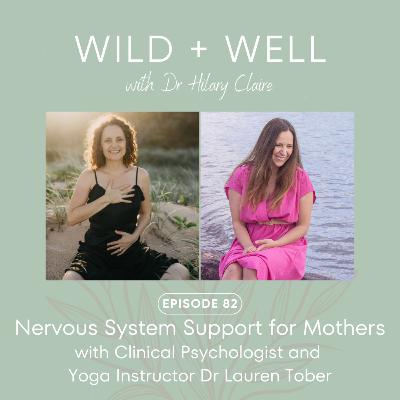
How can yoga and psychology support our nervous system and our mental health in everyday life?
In this episode of Wild & Well, I’m joined by Dr Lauren Tober, a clinical psychologist, yoga teacher, and founder of the Yoga Psychology Institute, to explore how yoga and psychology can work together to support mental health, nervous system regulation, and emotional wellbeing.
We discuss accessible, practical tools for navigating stress, anxiety, and overwhelm, especially during motherhood and busy seasons of life.
Dr Lauren and I talk about:
How yoga and psychology complement one another in mental health care
The role of breathwork in nervous system regulation
Understanding the window of tolerance
How body awareness supports emotional wellbeing
What “mental health–aware yoga” means
Simple grounding practices for overwhelm
Supporting kids’ emotional regulation through breath and play
How to anchor nervous system practices into everyday life as a parent
The importance of self-compassion and checking in with yourself
Dr Lauren Tober is a clinical psychologist, yoga teacher, and author of Mental Health Aware Yoga, who bridges psychology and yoga to support mental health and nervous system regulation. Her work is evidence-based yet soulful, grounded in the belief that happiness is our true nature and can be cultivated through practices like breath, compassion, creativity, and community.
Episode Links:
Say hi to Dr Lauren on Instagram
Learn more about the Yoga Psychology Institute or on Instagram
Grab her book Mental Health Aware Yoga
Listen to Dr Lauren’s podcast A Grateful Life Podcast
Get her free Yoga Nidra
Come say hello to me on Instagram
Read my books The Motherhood Reset, Nourished Mama and Mama Let It Go
Grab my Picky Eating Guide
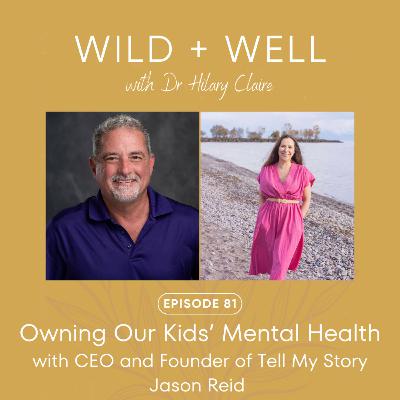
It is our responsibility as parents to care for our children’s mental health just as we do their physical health. We nourish them with food, support healthy sleep, and make space for time outdoors in fresh air. Tending to our kids’ mental health matters just as much. This can be as simple as opening up conversation with them.
In this episode, I’m joined by Jason Reid, an entrepreneur, father, and founder of Tell My Story, an organization dedicated to transforming how families, schools, and communities talk about mental health.
Jason shares the heartbreaking story that changed his life forever – the loss of his 14-year-old son – and how that experience led him to dedicate his life to helping parents better understand, recognize, and support their children’s mental health.
Jason reminds us that mental health is not something to react to once there’s a crisis. It’s something we must actively take responsibility for, just like our kids’ physical health.
Jason and I chat about:
Why mental health struggles often go unseen, even in “happy” kids
The difference between fixing vs listening, and why listening matters most
How depression and anxiety can begin as early as ages 6–7
Why today’s kids carry far more emotional weight than previous generations
Subtle signs that your child may be struggling emotionally
How screens, global news, and social pressure impact young nervous systems
Creating safe, non-threatening spaces for meaningful conversations
Why kids often open up more in the car, on walks, or during shared activities
The importance of family dinners and everyday connection
How hobbies, passions, and purpose can support mental health at any age
Why our own mental health and joy matter deeply as parents and role models
Jason Reid is the founder of TellMyStory.org and a leading advocate for youth mental health. After losing his 14-year-old son to suicide in 2018, Jason made it his mission to help parents have the conversations that can save lives. Through documentaries, school programs, talks, and resources, Tell My Story equips parents to take ownership of their children’s mental health with compassion and awareness.
A serial entrepreneur and executive coach, Jason brings a practical, grounded approach to prevention rooted in lived experience. Above all, he is a husband and father of four, committed to turning personal loss into meaningful change.
Episode Links:
Say hi to Jason on Instagram or Facebook or LinkedIn
Learn more about Tell My Story and check out his documentaries and resources
Come say hello to me on Instagram
Read my books The Motherhood Reset, Nourished Mama and Mama Let It Go
Grab my Picky Eating Guide

Food sensitivities are more common than ever. But they’re rarely just about the food.
In this episode, I’m joined by dietitian and functional health nutritionist Christa Biegler to unpack what food sensitivities really are, why restriction often backfires, and what your symptoms may actually be trying to tell you. We explore the roles of stress, digestion, the nervous system, and environmental factors like mold, and where to start if you’re feeling reactive to everything.
Christa and I talk about:
What food sensitivities actually are (and how they differ from allergies and intolerances)
Why food sensitivity testing can be misleading — and when it may (or may not) be helpful
How stress and the nervous system impact digestion and immune responses
Why restriction can create more reactivity and food fear
The connection between gut health, digestion, and food reactions
Why symptoms are signals, not problems to suppress
How toxic burden (including mold exposure) can drive hypersensitivity
Why reacting to “everything” is a sign the body is overwhelmed
Simple, practical starting points if you suspect mold or environmental triggers
How nervous system support plays a critical role in healing food sensitivities
Why expanding, not shrinking, is often part of true recovery
Christa Biegler, RD is an award-winning dietitian and root-cause nutritionist, and the owner of Less Stressed Life Nutrition. She helps people resolve food sensitivities, inflammation, and eczema without unnecessary restriction, endless supplementation, or costly testing. She lives with her unicycling husband & kids in the Midwest.
Episode Links:
Say hi to Christa on Instagram
Learn more about Christa and how to work with you on her at Less Stressed Life Nutrition
Listen to the Less Stressed Life podcast
Come say hello to me on Instagram
Read my books The Motherhood Reset, Nourished Mama and Mama Let It Go
Grab my Picky Eating Guide
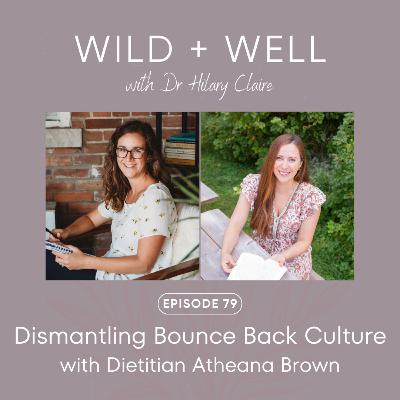
Have you ever felt pressure to “bounce back” after having a baby?
When we become mothers, our identity, brain, values, priorities and bodies shift. Yet, there is immense societal pressure to be the same as we were before having children including looking like we never gave birth. This is what we cover in this episode.
I am joined by Dietitian Atheana Brown to talk about mom bod pressure and how to drop out of diet culture.
We dive deep into the concept of ‘mom bod pressure’ – the unrealistic societal expectations placed on mothers to “bounce back” after birth – and unpack how this pressure is rooted in broader systems of oppression, diet culture, and body shaming.
Atheana sheds light on how these harmful ideals manifest in everyday life, the impact they have on mothers’ mental and emotional wellbeing, and how we can begin dismantling these norms both personally and collectively. She explains how harmful body ideals show up in everyday life, how they affect mothers’ wellbeing, and what we can do – both individually and as a society – to start breaking them down.
Atheana and I talk about:
What mom bod pressure
How bounce back culture shows up in our day-to-day lives as mothers
How body shame shows up for mothers in both subtle and overt ways
The deep ties between body shame, patriarchy, and systemic injustice
How to push back against diet culture and reconnect with body trust
Raising body-confident children in a world obsessed with appearance
Reclaiming the word “fat” and reframing it without stigma
Practical tools for moms to resist harmful body narratives
Why intuitive eating can be a revolutionary act of selfcare
Atheana Brown is a trauma-informed, fat-positive, and body-inclusive Registered Dietitian who practices through a Health at Every Size lens. As a Certified Intuitive Eating Counsellor, she helps people of all ages heal their relationship with food and body. With over a decade of experience in primary and long-term care, Atheana is passionate about breaking the cycle of dieting and body shame through a compassionate, collaborative approach.
Episode Links:
Say hi to Atheana on Instagram
Learn more about Atheana and how to work with you on her at Peacefully Nourished
Listen to Diet Culture Dropout podcast
Books Atheana recommended:
Fearing the Black Body
The Body is Not an Apology
Come say hello to me on Instagram
Read my books The Motherhood Reset, Nourished Mama and Mama Let It Go
Grab my Picky Eating Guide
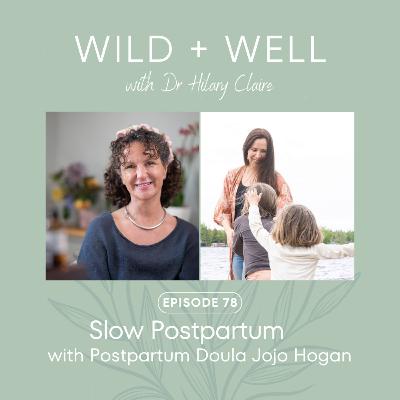
What if postpartum wasn’t something to “bounce back” from, but a sacred window of deep rest, healing, and care?
A time to slow down and transform.
In this episode, I am joined by Jojo Hogan, a postpartum doula, massage therapist, and the founder of the Slow Postpartum Movement. Together, we explore how new mothers can reclaim rest, support, and sacredness during the early weeks after birth.
Jojo shares her journey into postpartum work, the philosophy behind ‘mothering the mother,’ and why so many new parents feel overwhelmed and unsupported in today's “WEIRD” (Western, Educated, Industrialized, Rich, Democratic) culture.
From redefining the postpartum experience to practical strategies for preparing in advance, this episode offers a wealth of insight for expectant parents, birth workers, and anyone passionate about maternal wellbeing.
Jojo and I chat about:
What a postpartum doula really does
Why mothers were never meant to raise
The origins and philosophy of the Slow Postpartum Movement
How traditional cultures nurture postpartum mothers and what we’ve lost
Planning for postpartum like we plan for birth
Mindset shifts including asking for help and investing in services over stuff
Co-regulation, nervous system care, and how maternal wellbeing shapes infant development
Creating a postpartum “village” even without local family
Preparing emotionally, physically, and practically for postpartum life
Why slow living isn’t just for mothers
Jojo Hogan is a UK-based postpartum doula, massage therapist, and founder of the Slow Postpartum Movement. With a background that includes running a pregnancy and postpartum wellness spa in New Zealand, Jojo brings a deeply holistic and caring approach to supporting new mothers – focusing on nourishing the mother first through rest, gentle childcare, nourishing meals, and emotional support. She guides families to reclaim postpartum as a sacred, intentional healing period rather than something to be rushed through, blending traditional wisdom with slow living philosophy.
Episode Links:
Connect with Jojo on Instagram
Learn more from Jojo at Slow Postpartum
Listen to The Slow Postpartum Podcast
Read Jojo’s free ebook The Six Secrets to a Slow Postpartum
Come say hello to me over on Instagram
Read my books The Motherhood Reset, Nourished Mama and Mama Let It Go
Read my Picky Eating Guide

Do you ever wonder if your money mindset is helping or holding you back?
Our financial health is a big part of our overall wellbeing. Yet many of us carry money beliefs and patterns passed down through generations, often without realizing it.
If you want to break unhelpful cycles and model healthy money habits for your kids, this episode is for you.
Here, I chat with Certified Financial Counsellor and money expert Jessica Moorhouse about how to let go of unhelpful money stories, reframe limiting beliefs, and build lasting financial confidence.
Jessica explains why awareness alone isn’t enough. Real change comes from continuous practice, self-reflection, and understanding how our environment and upbringing shape our relationship with money.
Jessica and I chat about:
Changing your money beliefs from limiting to helpful
The impact of our family and environment on our behaviour and money habits
Breaking intergenerational money patterns
Why we must learn about ourselves and our beliefs before we can expect to be good with money
The very real barriers holding women back from being confident in their careers and finances
The positive impact of understanding your patterns and emotions around money on all areas of your life
How to become truly confident when it comes to finances
Raising kids with healthy money beliefs
Tips for those wanting to start a business or become an entrepreneur
Jessica Moorhouse is a Certified Financial Counsellor, award-winning money expert, and host of the chart-topping More Money Podcast (4+ million downloads). With over 13 years of experience as a personal finance educator, she’s been featured by CBC, CTV, BNN Bloomberg, Forbes, and USA Today. Her debut book, Everything but Money, became a national bestseller and Indigo Staff Pick.
Episode Links:
Connect with Jessica on Instagram or Facebook
Learn more from Jessica at Jessica Moorhouse
Listen to the More Money Podcast
Read Everything But Money
Come say hello to me over on Instagram
Read my books The Motherhood Reset, Nourished Mama and Mama Let It Go
Read my Picky Eating Guide
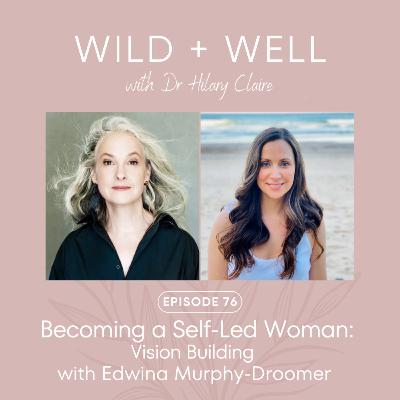
Years ago, I took part in one of Edwina Murphy-Droomer’s vision-building workshops, and it was truly transformational. It helped me get clear on what I wanted and, more importantly, taught me to focus on who I am being before worrying about what I do or have. So having Edwina on the podcast all these years later to talk about vision building and becoming a self-led woman felt like such a full-circle moment.
In this episode, I sit down with mentor, mother of four, and embodiment of audacious feminine leadership, Edwina Murphy-Droomer. Together we explore manifestation, vision building, self-trust, intuition, gratitude, motherhood, and the lifelong journey of becoming who we truly are.
Edwina and I chat about:
Manifestation and noticing when you're already living the life you once wanted
Edwina’s journey through motherhood, divorce, single parenting, and rebuilding
Following gratitude through the hard, the beautiful, and the ordinary
Vision Building and getting honest about what you want vs what society expects
Returning to your authentic self after drifting away from it
Parenting with integrity
The be, do, have framework for creating the reality you desire
Living audaciously and what this means
How we can each start showing up as the main character of our own stories every day
Why we all need to read more fairy tales
Edwina Murphy-Droomer is a transformation mentor, mother of four, motivational speaker, and the founder of a soulful movement helping women reclaim their power, vision, and voice. After weathering heartbreak and loss, she remade her life: from single mom with no income to flourishing as a flower-farmer, mother, mentor and creative force.
Edwina guides women to step beyond conditioning and reconnect to their deepest inner knowing, helping them discover what they truly want, define who they want to be, and design lives rooted in presence, gratitude, and intention.
She believes that life is not just about “doing” or “having,” but about “being.” Through one-on-one mentorship, workshops, and conversations, Edwina helps women live with audacity and purpose, embracing both the journey and the manifestation.
Episode Links:
Connect with Edwina on Instagram or Facebook
Read The Eudaimonia on Substack
Work with Edwina by booking a free Vision Building Call
Come say hello to me over on Instagram
Read my books The Motherhood Reset, Nourished Mama and Mama Let It Go
Read my Picky Eating Guide

We all want to create the healthiest homes and lives for our kids. Low tox living plays a big part in that, especially when it comes to selfcare products.
Getting kids and teens to make low tox choices isn’t always easy, but thankfully, better options are becoming more available.
In this episode, I sit down with Farzana Spiro, founder of Ellie’s Earth, to talk about helping our kids build healthy selfcare habits, body confidence, and boundaries, long before they hit the tween years.
Farzana shares her experience as a mom and entrepreneur, and how her mission to create a better deodorant for kids turned into a movement about empowerment, education, and modelling low tox living.
Farzana and I chat about:
How to start early conversations about hygiene, body odor, and selfcare before kids feel embarrassed or ashamed
Why modelling the change works better than forcing it. Our kids learn through observation, not pressure
How to make low tox living feel doable by taking it slow, swapping one product at a time, and involving kids in the process
Teaching healthy boundaries and helping kids recognize when they’re drained, set limits kindly, and express their needs clearly
Modelling boundaries as parents: being honest about needing space, turning off work calls during family time, and showing balance in real life.
The emotional reality of entrepreneurship
The bigger mission of Ellie’s Earth: shifting the conversation around body care and confidence from reactive to proactive
Farzana Spiro is a sustainability advocate, innovation leader, and mother of three with over 20 years in financial services and product development. She founded Ellie’s Earth, a Canadian all-natural personal care brand for pre-teens and teens. Beyond products, Ellie’s Earth supports confidence-building and donates $1 from every sale to Toronto’s Hospital for Sick Children. Farzana is passionate about helping kids feel confident through clean products and smart habits.
Farzana has offered listeners 20% off purchases at Ellie’s Earth with the coupon code wildwell20.
Episode Links:
Connect with Farzana at Ellie’s Earth on Instagram and Facebook
Check out Ellie’s Earth and the discount code for 20% off use the wildwell20
Come say hello to me over on Instagram
Read my books The Motherhood Reset, Nourished Mama and Mama Let It Go
Read my Picky Eating Guide
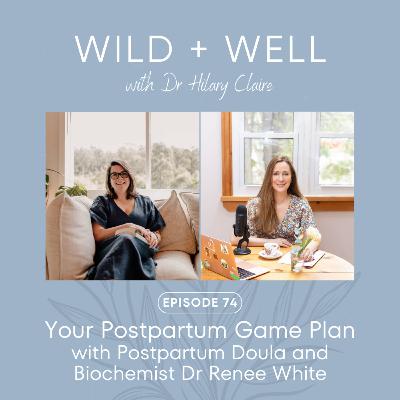
The fourth trimester is getting more and more attention, and for good reason. How we move through this transformative time impacts the rest of our motherhood journey and our health for decades to come. Luckily there is so much we can do to make it a supportive experience.
If you are well past the fourth trimester, remember that postpartum is forever. It is never too late to create the village, support and nourishment into our life that you need to thrive.
Speaking of the fourth trimester, Dr. Renee White joins me in the latest podcast episode of Wild and Well to talk all things postpartum – how to prepare for the fourth trimester, build your village, and ditch the myth of the selfless, burnt-out mother.
Dr Renee is a Postpartum Doula, Biochemist, mother, and the founder of Fill Your Cup – Australia’s first doula village. She shares so many practical ways to have an empowering start to motherhood.
Dr Renee and I chat about:
How to prepare for the fourth trimester
What is really needed for postpartum and what is not
How to start creating a supportive village around you
What your partner can do to support you during postpartum
How to engage the village that you do have
The five key things to plan for a great postpartum
Why being a selfless, martyring mother isn’t serving anyone
The four pillars to thriving in motherhood
Dr Renee White is a Postpartum Doula, Biochemist, mother, and the founder of Fill Your Cup – Australia’s first doula village. She also hosts The Science of Motherhood podcast, where she interviews leading researchers and thought leaders in pregnancy, postpartum, and parenthood. With over 16 years of experience in health and medical education, Dr. Renee is a passionate advocate for building supportive villages where mothers and families can truly thrive through pregnancy, birth, and beyond.
Episode Links:
Connect with Dr Renee on Instagram
Check out all that Fill Your Cup offers
Listen to The Science of Motherhood podcast
Grab a free copy of The Quickie – Postpartum Planning Guide
Come say hello to me over on Instagram
Read my Picky Eating Guide
Read my books The Motherhood Reset, Nourished Mama and Mama Let It Go
Read my Picky Eating Guide
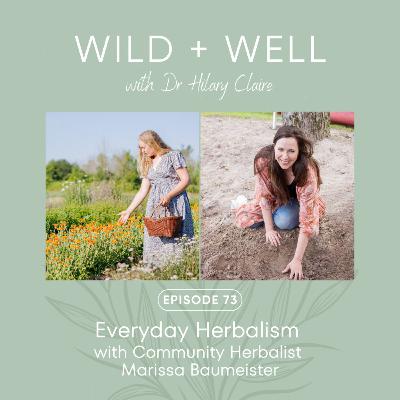
I’ve been fascinated with herbs ever since a high school project on calendula. Though truthfully, my love for them probably started even earlier when I would mix herbs and spices in the kitchen at every opportunity and imagine what magical and medicinal powers they had. Today, that passion continues as I make my own medicinal teas, grow several, and explore the endless ways herbs can enhance our lives.
So, I was thrilled to connect with community herbalist Marissa Baumeister, whose herbal products are beautiful and workshops are inspiring. In this episode Marissa shares her expertise on using herbs in first aid, daily wellness routines, kitchen creations, and even skincare.
Marissa and I chat about:
How Marissa got started as a community herbalist and her journey into herbalism
Common misconceptions about herbal remedies and how to use them safely
Simple first aid solutions using herbs
Skincare tips using herbal oils, salves, and hydrosols
Kitchen herbalism: incorporating herbs into everyday meals with infused vinegars, honeys, and salt
Fire cider and its role in supporting the immune system during cold and flu season
How we can all start incorporating more herbs into our daily lives
Marissa is a community herbalist and herb farmer in Cobourg, Ontario, in the beautiful Northumberland hills. She has a passion for working with the plants and creates products with the rhythm of the seasons using bioregional herbs and flowers grown in her garden. The plants are lovingly tended throughout the growing season, then harvested and dried to make vibrant skin care products, artisanal hydrosols, delicious tea blends, magical elixirs, infused vinegars, and elderberry syrup. This process is a tender labour of love and makes her products truly unique.
As a community herbalist, Marissa teaches a range of workshops on various topics related to herbalism, ranging from how to start an herb garden, to herbal syrups and honeys, fire cider, herbal tinctures, and more. Her most popular workshop to date is on the topic of herbal oils and balms, teaching members in her community how to create their own natural skin care by harnessing the beneficial virtues of herbs such as calendula, chamomile, lavender, rose, and others. Her aim is to make herbalism accessible by blurring the line between food and medicine and teaching simple ways of making herbal preparations at home to support one's health and the health of loved ones naturally.
Episode Links:
Connect with Marissa on Instagram
Check out Marissa’s herbal products and workshops
Learn more about natural health product protection in Canada at NHPPA
Come say hello to me over on Instagram
Read my books The Motherhood Reset, Nourished Mama and Mama Let It Go
Read my Picky Eating Guide
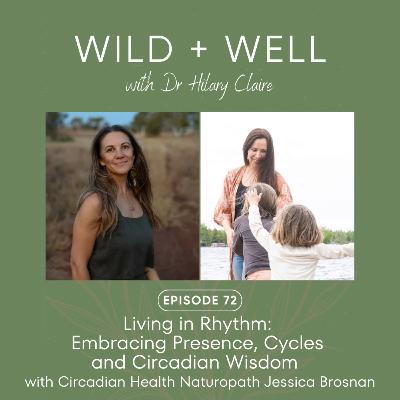
So many of us are living out of sync with our natural inclinations, leaving us exhausted, unwell, and disconnected. But it doesn’t have to be this way. Each of us has the ability to realign with our innate rhythms.
In this episode, Circadian Health Naturopath Jessica Brosnan and I explore how tuning into our natural cycles can transform the way we live and mother.
Jess shares her own journey from disconnection to a life shaped by presence, peace, and surrender, and how these simple yet powerful practices have reshaped her wellbeing.
We dive into the relationship between menstrual and lunar cycles, and how embracing these rhythms cultivates compassion, clarity, and energetic flow, especially in motherhood. We also explore circadian rhythms, and the profound role natural light plays in our physical, mental, and spiritual health.
Jess and I chat about:
The power of presence, peace, and surrender as daily intentions for a more grounded life.
How menstrual and moon cycles influence energy, mood, and productivity, and how to mother or live in harmony with them
Why the moon’s phases matter for letting go, setting intentions, and maintaining energetic flow
How modern lifestyles and indoor living can confine our nervous systems and create stagnation
What the circadian rhythms are
The role of natural morning light in regulating hormones like serotonin and melatonin for mood, metabolism, and sleep.
Practical tips for evening routines including using blue-blocking lamps, dimmed lighting, and connection to nature to wind down effectively
Meditation for presence and grounding
Jessica is a Circadian Health Naturopath, founder of The Circadian Way, and mother of three. She is devoted to supporting mothers and their families as they reconnect with their spiritual truth and divine self, helping them feel grounded, calm, and attuned to the simple joys of life. Jess loves educating mothers about circadian rhythms, spirituality, the healing power of nature, and meditation, and she is deeply passionate about children’s health as well.
Episode Links:
Connect with Jess on Instagram
Ge Jess’s free guided mother grounding meditation
Come say hello to me over on Instagram
Read my books The Motherhood Reset, Nourished Mama and Mama Let It Go
Read my Picky Eating Guide

If you've ever felt frustrated by skin issues that don’t respond to products, the real answers might be hiding deeper in your gut, your hormones, and your stress levels.
In this episode, I’m joined by Functional Medicine Practitioner and Chiropractor Dr Michelle Solomon. We dive into the real root causes of skin issues. It’s not just about what you’re putting on your face. Specifically, we explore the powerful link between gut health and skin health.
We talk about how inflammation, stress, and dysbiosis can all play a role in acne, dermatitis, dryness and more.
Dr Michelle shares practical tips for improving gut function, how your hormones and detox pathways impact your skin, and why functional testing like the GI Map can uncover hidden contributors to chronic skin issues. Whether you’re dealing with stubborn breakouts, dryness, or mystery flare ups, this conversation will help you shift from surface solutions to deeper answers.
Dr Michelle and I chat about:
The gut-skin connection (and what it really means)
Root causes of acne, dermatitis, and dry skin
How to support your skin from the inside out
Functional medicine approaches to testing and treatment
The impact of stress on gut and skin health
Practical steps you can take today no matter your budget
Dr Michelle Solomon earned her Doctor of Chiropractic degree from the Canadian Memorial Chiropractic College in Toronto, following a Bachelor’s Degree in Kinesiology from the University of Western Ontario. She has completed Functional Integrated Acupuncture training, which applies a biomedical approach to treating pain and sports injuries. She also has advanced training in upper and lower extremity Active Release Techniques (ART), Osteo-Articular Pumping of the Lower Limbs, and the Webster Technique for prenatal care.
Episode Links:
Connect with Dr Michelle Solomon on Instagram
Work with Dr Michelle at The Movement Boutique
Come say hello to me over on Instagram
Read my books The Motherhood Reset, Nourished Mama and Mama Let It Go
Read my Picky Eating Guide

There’s a piece of the child development puzzle that almost no one is talking about, but it could be the key to understanding your child’s movement, attention, and even behaviour.
They're called primitive reflexes – automatic, early-life movements that should integrate as a child grows.
But when they don’t? They can quietly affect everything from coordination to emotional regulation to how well your child focuses at school.
In this episode, I’m joined by Paediatric Physiotherapist Jenn Evans, who is passionate about helping parents and caregivers understand these often-missed reflexes and their big role in brain development.
We talk about what primitive reflexes are, why they’re so important, how modern life is impacting their integration, and what you can do if your child (or even you) still has them.
If your child struggles with attention, sensory challenges, or coordination – or if you’ve just got that gut feeling that something developmental might be off – have a listen.
Jenn shares her journey into this work, how she assesses and supports children with retained reflexes, and the real transformations she’s seen. We also get into advice for parents and adults who suspect these reflexes might be affecting their lives.
Jenn and I chat about:
What primitive reflexes are and why they matter
How modern lifestyles may be contributing to retained reflexes
The impact of retained reflexes on conditions like ADHD, dyslexia, and sensory processing challenges
Why our kids might be stuck in fight or flight
A simple fix for bed wetting
How to support our children with their learning and sports skills
How to identify if your child might still have retained reflexes
Why it is important to integrate primitive reflexes
Jenn Evans is a registered physiotherapist with the College of Physiotherapists of Ontario, specializing in paediatrics and neurodevelopmental conditions. She holds a Master’s in Physiotherapy (with distinction) from Leeds Beckett University in the UK and is the founder of TheraBounce, a trampoline-based therapy program for individuals with disabilities.
With over five years of experience in a multidisciplinary paediatric clinic, Jenn has completed advanced training in areas like Dynamic Movement Intervention, developmental orthopaedics, and primitive reflex integration. Her energetic, hands-on approach is tailored to each child, and she offers paediatric physiotherapy at the Well Body Group in Bobcaygeon.
Episode Links:
Connect with Jenn on Instagram
Check out The Well Body Group and TheraBounce
Learn more about primitive reflexes from Harkla
Say hello to me on Instagram
Read The Motherhood Reset and Nourished Mama
Read my Picky Eating Guide
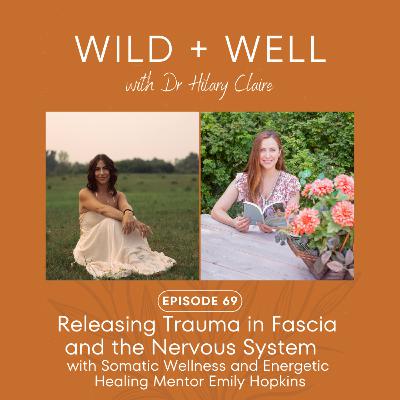
Have you ever felt like your body is holding on to something long after your mind has moved on?
It just might be!
In this episode, I am joined by Emily Hopkins, a Somatic Wellness and Energetic Healing Mentor, to explore the fascinating world of fascia, the nervous system, and how trauma lives in the body.
Emily shares how fascia - our body’s connective tissue - plays a key role in storing unresolved emotions and protective patterns. Through gentle, embodied practices like myofascial release, somatic movement, and slow, safe touch, she explains how we can begin to soften, release, and rebuild trust in our bodies.
Emily and I chat about:
What fascia is – and how it impacts both our physical and emotional health
How trauma and stress get stored in the body as protective holding patterns
Why slow, safe touch is essential for healing and nervous system regulation
The powerful connection between fascia and the nervous system
How to begin tuning into your body’s messages when life feels overwhelming
The role of interoception and proprioception in chronic pain, emotional healing, and embodiment
Simple daily practices to reconnect with yourself – even when you’re short on time or energy
Emily Hopkins is a Somatic and Energetic Leadership Mentor, nervous system educator, and the creator of Nourish Your Soul and The Nourished Soul Method; a multidimensional framework guiding women from survival to soul-led, embodied, feminine leadership.
With a background in Psychology, trauma-informed somatic training, and certifications in Yoga, Reiki, and Breathwork, Emily bridges nervous system science, somatics, and multidimensional energy healing to help people reconnect with their bodies, reclaim their truth, and lead from embodied wholeness.
Her work is rooted in lived experience; with a childhood that wasn't forgiving, that resulted in anxiety, burnout, and self-abandonment to her own deep nervous system healing and embodied feminine power. Through her signature programs, mentorship, and in-person experiences, Emily helps women unmask their protective patterns, reconnect with their body’s innate wisdom, break generational cycles for good; and create lives from a place of regulation; that feel both revolutionary and soul-aligned.
Episode Links:
Connect with Emily on Instagram
Emily is currently accepting application to work together in her 1-1 Mentorship, Group Mentorship and six month group journey Unleashed
Find out more about Emily and her offerings here
Learn about fascia and the nervous system by taking the Myofascial Release Training
Come say hello to me over on Instagram
Read my books The Motherhood Reset, Nourished Mama and Mama Let It Go
Read my Picky Eating Guide
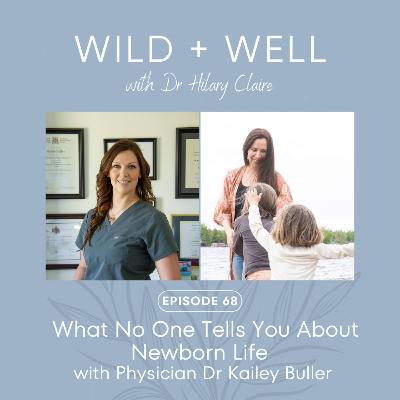
Becoming a parent can feel like stepping into a world no one warned you about.
It is messy, magical and completely overwhelming. For many of us one filled with so many newexperiences that we don’t feel prepared for.
In this episode, physician Dr Kailey Buller joins me to share what she really wishes she’d knownbefore baby, and how even a doctor can feel totally unprepared for motherhood.
We discuss the first year of parenting and the challenges that come up throughout it.
Dr Kailey and I talk about:
The shock of becoming a first-time parent – even as a doctor trained in infant care
How her personal struggle led to writing a book and launching parent education classes
Feeding basics: Why we need more honest conversations around formula, breastfeeding, andcombo feeding
Mental health and postpartum recovery: What’s normal, what’s not, and when to seek help
Sleep: What “sleep training” really means (and why it’s not one-size-fits-all)
Colic: What it is, what it isn’t, and how to manage the overwhelm
Relationship dynamics after baby: Navigating communication, intimacy, and the evolving partnership
Letting go of perfectionism and unrealistic “supermom” expectations
What real self-care looks like – beyond the shower and bubble bath clichés
Dr. Buller is a local physician and mother of two, specializing in Emergency Medicine and Low RiskObstetrics at Norfolk General Hospital in Southern Ontario. She is the author of “Surviving TinyHumans: The Messy Truth About Parenthood and Your Guide to Baby’s First Year”.
Inspired by the terrifying realization that her professional life had not prepared her for the realitiesof motherhood, Dr. Buller launched herself on a new mission: making parenting less daunting.
Her unfiltered, unapologetic approach to parenting offers any caregiver a humorous yet practicalguide to stepping in to their new roles as Keepers of the Tiny Humans.
Episode Links:
o Say hi to Dr Kailey on Instagram or TikToko Learn more about Dr Kailey and her workshops at Vitals with Bullero Read Surviving Tiny Humans
o Come say hello to me on Instagram
o Read my books The Motherhood Reset, Nourished Mama and Mama Let It Goo Read my Picky Eating Guide

Comments

Download from Google Play

Download from App Store
 United States