


 Claim Ownership
Battleground
Subscribed: 3,391Played: 313,735
Subscribe
© Goalhanger Podcasts
Description
A history podcast that explores the narratives, turning points, and characters that shape conflicts, encompassing a blend of social and military history. Following on from the series on the Falklands War, best-selling military historians Patrick Bishop, Saul David, and Roger Moorhouse turn their attention every Friday to the war in Ukraine, and every Wednesday look back at the significant wars, events, and figures from conflicts around the world.
405 Episodes
Reverse
If you would like to watch this podcast you can watch it on Spotify or you can find it on YouTube here: https://www.youtube.com/@BattlegroundUkraine
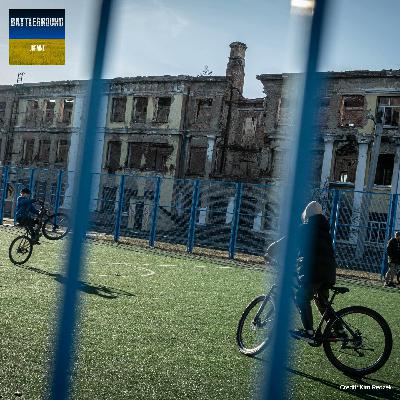
In this special on-the-ground edition of Battleground Special Forces, Saul David and Julius Strauss travel to the outskirts of Kharkiv and Kyiv to examine the catastrophic opening hours of the 2022 Russian invasion.
Through eyewitness accounts and visits to the sites of intense urban combat, they reconstruct how Russia’s most elite units—the GRU-trained Spetsnaz and the VDV Airborne—faced fierce resistance that derailed the Kremlin’s "two-day" victory plan.
This episode features:
• The Siege of School 134: A detailed look at the 13-hour gun battle in Kharkiv where dozens of elite Spetsnaz soldiers made a final, hubristic stand before the building was destroyed by a gas explosion.
• The Battle for Hostomel (Antonov) Airport: The strategic "linchpin" operation involving helicopter assaults and a desperate back-and-forth struggle for the gateway to Kyiv.
• The Human Cost in Bucha: A somber visit to the Bucha cemetery, where the rows of civilian victims bear witness to the 32-day Russian occupation.
Join Saul and Julius as they explore the "battlefield detritus" and the layers of history in a region still caught between recovery and the ongoing realities of war.
Julius Strauss writes the blog Back from the Front and also owns and runs Wild Bear Lodge, a bear-viewing lodge, in Canada. Here are the hyperlinks:
Substack: https://backfromthefront.substack.com/
Wild Bear Lodge: https://wildbearlodge.ca/
Join the Conversation: If you have a question about the war in Ukraine or any of the conflicts we cover, email us at podbattleground@gmail.com
Follow us on:
X - @PodBattleground
Instagram - podbattleground
Producer: James Hodgson
A Goalhanger Podcast
Learn more about your ad choices. Visit podcastchoices.com/adchoices
The Battleground team returns to Ukraine to witness how a whirlwind year of shifting geopolitics and a brutal winter have transformed the nation.
On our first day in Odesa, hosts Saul David and Julius Strauss explore a city that remains a stunning architectural gateway to the country, despite being a primary target for Russian drones and missiles.
In this episode, we sit down with friend of the podcast, Boldizsar Gyori, to discuss Odesa’s complex history and its critical role as the port that keeps the Ukrainian economy afloat through the grain corridor.
We also hear two deeply moving firsthand accounts from two young Ukrainian women, Katerina and Tatyana, who share their harrowing experiences living under occupation in Kherson and Bucha.
If you would like to watch this podcast you can watch it on YouTube here: https://www.youtube.com/@BattlegroundUkraine
Julius Strauss writes the blog Back from the Front and also owns and runs Wild Bear Lodge, a bear-viewing lodge, in Canada. Here are the hyperlinks:
Substack: https://backfromthefront.substack.com/
Wild Bear Lodge: https://wildbearlodge.ca/
Join the Conversation: If you have a question about the war in Ukraine or any of the conflicts we cover, email us at podbattleground@gmail.com
Follow us on:
X - @PodBattleground
Instagram - podbattleground
Producer: James Hodgson
A Goalhanger Podcast
Learn more about your ad choices. Visit podcastchoices.com/adchoices
As the war between America, Israel, and Iran escalates, the ripple effects are being felt acutely in Ukraine.
In this episode, Patrick and Saul analyse the "extraordinary diplomatic developments" emerging from the White House, where President Trump appears to be equating Western support for Ukraine with Russian support for a repressive Iranian theocracy.
Meanwhile, Saul provides a firsthand update following his recent trip to the front lines, and on the ground in Ukraine, we separate fact from fiction regarding General Gerasimov’s latest claims of Russian breakthroughs, contrasting them with the reality of "kill zones" and the successful liberation of territory in Zaporizhzhya.
Finally, we answer your questions on the persistent rumours of Yevgeny Prigozhin’s survival, whether the West can truly bankrupt Russia’s "shadow fleet" as oil prices soar, and more.
Join the Conversation: If you have a question about the war in Ukraine or any of the conflicts we cover, email us at podbattleground@gmail.com
Follow us on:
X - @PodBattleground
Instagram - podbattleground
Producer: James Hodgson
A Goalhanger Podcast
Learn more about your ad choices. Visit podcastchoices.com/adchoices
In this episode of Battleground, Saul David and Patrick Bishop dive into a packed mailbag to answer your thoughts and questions on the elite units and daring raids that defined 20th-century special operations.
Among the topics of discussion in today's episode are: operations by Norwegian SOFs during WW2, the daring Italian manned-torpedo raids on the British fleet at Alexandria in 1941, and Operation Jaywick - the audacious 1943 raid on Singapore Harbour.
Join the Conversation:
If you have a question about the history of special forces or any of the conflicts we cover, email us at podbattleground@gmail.com or follow us on X @PodBattleground.
Producer: James Hodgson
A Goalhanger Podcast
Learn more about your ad choices. Visit podcastchoices.com/adchoices
Recording from an overnight train traveling across Ukraine, Saul David and Julius Strauss reflect on an intensive week-long journey from Odesa to Kyiv. In this episode, they bear witness to the jarring dualities of a country at war—reporting directly from the site of a devastating missile strike on a Kharkiv apartment block.
They also share insights from Odesa on the repair of the electrical grid and the ongoing struggle against infrastructure attacks. And do an analysis of the ongoing dispute with Hungary and Ukraine’s growing diplomatic influence in the Gulf.
Join Saul and Julius for an atmospheric debrief on the endurance of the Ukrainian spirit, captured in transit as they head toward the final leg of their tour.
Join us as we conclude our deep dive into one of the most significant Special Forces operations in British history.
If you would like to watch this podcast you can watch it on YouTube here: https://youtu.be/uaEu09gbu5k
Julius Strauss writes the blog Back from the Front and also owns and runs Wild Bear Lodge, a bear-viewing lodge, in Canada. Here are the hyperlinks:
Substack: https://backfromthefront.substack.com/
Wild Bear Lodge: https://wildbearlodge.ca/
If you have any thoughts or questions, you can send them to - podbattleground@gmail.com
Producer: James Hodgson
X (Twitter): @PodBattleground
Learn more about your ad choices. Visit podcastchoices.com/adchoices
At 7:07 p.m. on May 5, 1980, the Metropolitan Police officially handed control of the Iranian Embassy siege to the SAS. What followed were seventeen minutes of high-stakes drama that would change the reputation of the Special Air Service forever.
In this episode, Patrick Bishop and Saul David break down the frantic tactical reality of Operation Nimrod. We explore the "Blue" and "Red" team assaults, the infamous moment an operative became entangled in his abseil rope, and the live television broadcast that captivated millions across the globe.
Beyond the flashbangs and the smoke, they tackle the difficult questions:
The Controversy: Was there a "shoot-to-kill" policy? We examine the accounts of hostages and the fate of the surviving terrorists.
The Global Impact: How Margaret Thatcher used the success of the raid as diplomatic leverage to try and free American hostages in Tehran.
The Legacy: How a "textbook" assault on the edge of Hyde Park transformed the SAS from a shadowy unit into a world-renowned anti-terrorist force.
Join us as we conclude our deep dive into one of the most significant Special Forces operations in British history.
If you have any thoughts or questions, you can send them to - podbattleground@gmail.com
Producer: James Hodgson
X (Twitter): @PodBattleground
Learn more about your ad choices. Visit podcastchoices.com/adchoices
If you are interested in reading more from Julius Strauss, you can find his substack here: https://backfromthefront.substack.com/
In a bonus edition of Battleground Ukraine, Saul David and Julius Strauss are joined by Boldizsar Gyori to discuss the recent surge in tensions between Hungary and Ukraine and assess why recent developments could be very significant for Ukraine going forward.
Additionally, they discuss the implications of the latest developments in the ongoing conflict in Iran and the wider Middle East region and weigh up the potential impact they might have on Ukraine.
If you have any thoughts or questions, you can send them to - podbattleground@gmail.com
Producer: James Hodgson
X (Twitter): @PodBattleground
Learn more about your ad choices. Visit podcastchoices.com/adchoices
 1
1While the world’s gaze is fixed on the "mega-drama" unfolding across Iran and the Middle East, the tremors are being felt on the battlefields of Ukraine. In this episode, Roger Moorhouse and Patrick Bishop dive into the high-stakes geopolitical fallout of a widening Middle Eastern conflict and what it means for Kyiv.
As the U.S. and Israel burn through interceptor stocks, we ask the critical question: Is there enough room in the American arsenal for both the Middle East and Ukraine? With Donald Trump’s priorities shifting and production lines struggling to keep pace, Ukraine finds itself slipping further back in the queue for life-saving air defence.
In this episode, we discuss:
The Arsenal Drain: How the deployment of Patriot batteries across the Gulf and Israel’s "nitty-gritty" need for ammunition is creating a global scarcity that threatens Ukrainian airspace.
The Shaheed Shift: Why the disruption of Iranian exports might not be the win for Ukraine it seems, as Russia ramps up domestic production of the Geran-2 drone.
Trump’s "Forever War" Dilemma: The diplomatic consequences of a potential stalemate in Iran and why the U.S. President appears "out of the picture" regarding the Ukraine story.
Europe’s Exposed Weakness: A look at the "divided and hesitant" response from the EU’s Big Three and the conspicuous silence of Kaja Kallas and Ursula von der Leyen.
The Force de Frappe: France’s bold move to evolve its nuclear doctrine as Europe begins the painful process of weaning itself off U.S. dependency.
Is Putin the ultimate beneficiary of the chaos in Tehran? Join us as we unpack a week where the sidelines of the conflict have never felt more consequential.
If you have any thoughts or questions, you can send them to - podbattleground@gmail.com
Producer: James Hodgson
X (Twitter): @PodBattleground
Learn more about your ad choices. Visit podcastchoices.com/adchoices
In 1980, the SAS was a shadowy unit few had heard of. Six days at the Iranian Embassy changed that forever.
In the spring of that year, the eyes of the world turned to a quiet corner of South Kensington, London. Six armed gunmen had stormed the Iranian Embassy, taking 26 hostages and sparking a high-stakes standoff that would change the face of counter-terrorism forever.
In the first of a special two-part series, hosts Saul David and Patrick Bishop trace the origins of the crisis, exploring the geopolitical tinderbox that led the gunmen to 16 Princes Gate and the desperate "strategy of patience" employed by the British government.
They also look at how the 1972 Munich Olympics massacre forced Britain to create a dedicated counter-terrorist capability within the SAS. The moment the gunmen struck, the secret weapon hidden on a British police officer, and the agonising deliberations inside COBRA and the "bluff" that finally triggered the order to send in the SAS.
As the sun sets on Day Six, the order is given: "Go in."
The hostage-takers think a coach is coming to take them to the airport. They are wrong. Don't miss Part 2, where we break down the legendary SAS raid itself: the room-by-room clearance, the near-disasters, and the legacy of the most famous special forces operation in British history.
If you have any thoughts or questions, you can send them to - podbattleground@gmail.com
Producer: James Hodgson
X (Twitter): @PodBattleground
Learn more about your ad choices. Visit podcastchoices.com/adchoices

As we pass the fourth anniversary of Putin’s full-scale invasion, Patrick Bishop and Saul David explore whether the tide of the war is finally turning in Ukraine's favour. Following a winter of stasis, Ukrainian forces have reclaimed 400 square kilometres in mere weeks—outpacing Russia’s entire December gains.
In this episode, we dive into the factors driving this sudden shift:
The Starlink Effect: How Elon Musk’s decision to block Russian access has been exploited to the maximum by Ukrainian forces.
The Personnel Crisis: With Russian casualties reaching a critical watershed, we discuss the "contract-niki" system and the ominous new legislation that could see Russian reservists deployed for "special tasks."
Economic "Death Zone": We analyse the state of the Russian economy—where military spending is consuming the country faster than it can be repaired.
The "Zero Line": A chilling look at a recent BBC documentary detailing Russian commanders executing their own men.
In the second half, Patrick and Saul tackle listener questions from across Europe. We discuss the vulnerability of the Baltic states, the potential for a UK independent nuclear deterrent in a post-Trump NATO landscape, and a heated debate over the BBC’s controversial decision to scale back its Ukraine coverage.
If you have any thoughts or questions, you can send them to - podbattleground@gmail.com
Producer: James Hodgson
X (Twitter): @PodBattleground
Learn more about your ad choices. Visit podcastchoices.com/adchoices
In the latest instalment of our Battleground: Special Forces series, Saul David and Patrick Bishop deconstruct one of the most ambitious and ill-fated missions in modern military history: Operation Eagle Claw.
In April 1980, with 53 American diplomats held captive in the US Embassy in Tehran and President Jimmy Carter’s political future hanging by a thread, the newly formed Delta Force was called upon for its first-ever mission. The plan was a daring, multi-stage rescue involving clandestine desert airstrips, sea-stallion helicopters, and CIA agents. But between the sandstorms of the Great Salt Desert and a series of mechanical failures, the mission spiralled into a tragedy that would leave eight servicemen dead at the site known as Desert One.
As Saul notes, while the mission was a devastating blow to American prestige, it provided the hard-won lessons that would later enable the success of operations like the raid on Osama bin Laden.
If you have any thoughts or questions, you can send them to - podbattleground@gmail.com
Producer: James Hodgson
X (Twitter): @PodBattleground
Learn more about your ad choices. Visit podcastchoices.com/adchoices
In this episode of Battleground Ukraine, Saul David and Roger Moorhouse break down a week of high-stakes diplomacy and unexpected battlefield shifts as the war approaches its four-year anniversary.
The duo discusses the rapid collapse of the latest trilateral peace talks in Geneva, which ended in acrimony after just two hours as Russian negotiators refused to budge on territorial demands. Meanwhile, Kyiv sees a "gleam of sunshine" on the ground: Ukrainian forces have retaken 78 square miles of territory near Zaporizhzhia—the most significant gain in such a short window since 2023—thanks in part to a strategic communications blackout involving Starlink terminals.
Finally, we tackle the "disgraceful" Olympic disqualification of a Ukrainian athlete, Marco Rubio’s diplomatic tour of Eastern Europe, and the history of WWII German Special Forces.
If you have any thoughts or questions, you can send them to - podbattleground@gmail.com
Producer: James Hodgson
X (Twitter): @PodBattleground
Learn more about your ad choices. Visit podcastchoices.com/adchoices
In this gripping episode of Battleground, Patrick Bishop and Saul David explore one of World War II's most daring commando raids: Operation Frankton, better known as the Cockleshell Heroes mission. In December 1942, twelve Royal Marines volunteers led by Major "Blondie" Hasler embarked on a near-impossible mission to paddle canoes 60 miles up the Gironde estuary to sabotage German blockade runners in the port of Bordeaux.
Against brutal Atlantic conditions, freezing temperatures, and constant threat of discovery, these men demonstrated extraordinary courage and determination. But the mission came at a devastating cost—only two of the twelve would survive. Patrick and Saul examine the meticulous planning, the catastrophic setbacks, and the ultimate question: was the strategic gain worth the human sacrifice?
If you have any thoughts or questions, you can send them to - podbattleground@gmail.com
Producer: James Hodgson
X (Twitter): @PodBattleground
Learn more about your ad choices. Visit podcastchoices.com/adchoices
In our weekly round up of the latest news from Ukraine, Roger Moorhouse and Patrick Bishop examine a week of "salient moments" that may signal a turning point in the war.
They discuss the Kremlin’s risky move to throttle Telegram, the deepening recession across 21 sectors of the Russian economy, and the high-profile assassination attempt on Lieutenant-general Vladimir Alexeyev.
The duo also breaks down the latest friction in the Abu Dhabi peace talks and the mounting pressure on President Zelensky to hold wartime elections.
If you have any thoughts or questions, you can send them to - podbattleground@gmail.com
Producer: James Hodgson
X (Twitter): @PodBattleground
Learn more about your ad choices. Visit podcastchoices.com/adchoices
In this episode of Battleground: Special Forces, Saul David is joined by Julius Strauss to dive into the brutal history and mixed legacy of one of Russia’s elite units: Spetsnaz.
Julius provides a unique reporter’s perspective on the ground, reflecting on his own experiences embedded with these units during some of their most controversial deployments.
The episode focuses on two of the most infamous and tragic missions in Spetsnaz history, both of which Julius was present at: the 2002 Nord-Ost theatre siege in Moscow and the 2004 Beslan school siege. Together they examine the tactics, the hardware, and the devastating human cost of these operations, asking whether the Spetsnaz's "victory at any cost" doctrine remains their greatest liability.
If you have any thoughts or questions, you can send them to - podbattleground@gmail.com
Producer: James Hodgson
X (Twitter): @PodBattleground
Learn more about your ad choices. Visit podcastchoices.com/adchoices
This week Patrick Bishop and Saul David examine a the latest news in week of deadly limbo in Ukraine as Donald Trump’s promised "energy truce" is shattered by a record-breaking Russian bombardment in -20°C temperatures.
We analyse why Moscow’s advances are now slower than the Battle of the Somme and discuss Elon Musk’s latest move to block Starlink from Russian drones.
Later in the episode, we are joined by friend of the pod Julius Strauss, who discusses the crumbling of the post-imperial space in the South Caucasus's. Fresh from a recent trip to Azerbaijan, we explore the waning Russian influence in the region, and how the Kremlin is losing its grip on a key strategic partner.
If you have any thoughts or questions, you can send them to - podbattleground@gmail.com
Producer: James Hodgson
X (Twitter): @PodBattleground
Learn more about your ad choices. Visit podcastchoices.com/adchoices
While the 1942 Dieppe Raid was a catastrophic failure for the Allies, one unit achieved a flawless tactical victory against the odds. In part one of this special series, Patrick Bishop and Saul David explore the origins of the British Commandos—Winston Churchill’s "hunter class" of soldiers.
From the brutal training bogs of the Scottish Highlands to the clifftops of Varengeville, we follow No. 4 Commando’s mission to silence the Hess Battery. Led by the legendary Lord Lovat, this operation became a masterclass in Special Forces planning, featuring daring cliff climbs, the first US Army Rangers in action, and a bayonet charge that provided the only bright spot in an otherwise disastrous day.
If you have any thoughts or questions, you can send them to - podbattleground@gmail.com
Producer: James Hodgson
X (Twitter): @PodBattleground
Learn more about your ad choices. Visit podcastchoices.com/adchoices
In this episode of Battleground Ukraine, Saul David and Roger Moorhouse explore the terrifying reality of modern warfare and the unexpected heroes of the resistance.
Journalist and friend of the show Askold Krushelnycky recounts his harrowing experience surviving a drone strike in Odesa, describing the "screaming banshee" sound of a Shahed drone on its final approach.
We also hear from Boldizsár Győri about a "peculiar unit" in Zaporizhzhia—a Ukrainian "dad’s army" made up of men over the age of 60 who were turned away from the official draft but found their own way to fight for their country.
If you have any thoughts or questions, you can send them to - podbattleground@gmail.com
Producer: James Hodgson
X (Twitter): @PodBattleground
Learn more about your ad choices. Visit podcastchoices.com/adchoices
In the dramatic conclusion of this two-part special, Saul David and Patrick Bishop deconstruct the chaotic 99 minutes on the ground at Entebbe. The episode tracks the high-stakes assault from the moment the first Hercules landed in a tropical storm to the black Mercedes decoy and the controversial firefight that followed.
Together they examine the tactical blunders and friendly fire tragedies that nearly jeopardised the mission, while featuring rare eyewitness accounts—including a startling claim that the German terrorists may have ultimately spared the hostages they were ordered to kill.
Beyond the military feat, we explore the heavy price of the raid and its enduring political legacy. While the rescue of 101 hostages restored Israel’s national pride and catapulted figures like the Netanyahu family into the political spotlight, it also left a trail of unanswered questions. From the secret diplomacy required to refuel the planes to the debate over whether this victory made regional peace harder to achieve, we analyse how a single hour in Uganda changed the face of special operations and Middle Eastern politics forever.
If you have any thoughts or questions, you can send them to - podbattleground@gmail.com
Producer: James Hodgson
X (Twitter): @PodBattleground
Learn more about your ad choices. Visit podcastchoices.com/adchoices
In this episode, Patrick Bishop and Roger Moorhouse explore a week of geopolitical upheaval that marks a potential "1938 moment" for the modern world.
One year into Donald Trump’s imperial presidency, the duo discusses the stunning ultimatum issued to eight European NATO allies: accept a massive tariff hike or facilitate the American purchase of Greenland.
Roger weighs in on whether NATO can survive this direct threat to member sovereignty and the unprecedented refusal of the U.S. to rule out conflict with Denmark.
The conversation shifts to the "Donroe Doctrine" and the strategic importance of the High North. Patrick explains why this obsession with the Arctic might inadvertently pit Trump against Putin, potentially shifting the Kremlin from an admired friend to a strategic foe—a rare "bright spot" for a struggling Ukraine.
Meanwhile, they report on the worsening humanitarian crisis in Kyiv, where a million residents remain without power in sub-zero temperatures.
Interested in supporting Insulate Ukraine? Check them out here: https://www.insulate-ukraine.org/ourwindow
If you have any thoughts or questions, you can send them to - podbattleground@gmail.com
Producer: James Hodgson
X (Twitter): @PodBattleground
Learn more about your ad choices. Visit podcastchoices.com/adchoices


Download from Google Play

Download from App Store
 United States
🔴✅📺📱💻ALL>Movies>WATCH>ᗪOᗯᑎᒪOᗩᗪ>LINK>👉https://co.fastmovies.org
'Trump would never succeed in European politics...' That's what we Americans thought too...until he did. The thing about mindless fear and hate is well, that mindless part. He peppered his first term with not-so-veilled comments on rescinding Presidential term limits much like he seeded the ground with voter fraud paranoia long before his 2020 defeat. If he gets power again he will not suffer the humiliation of it slipping from his grasp again. :(
The relationship described between the Ottoman Empire and their subjects of differing faiths here is too over simplified, so much as to be misleading. The Ottoman Turks followed the tried and true policies established by other Caliphates following the initial Islamic expansion, when they suddenly found themselves very much the minority ruling over vast swathes of territory populated by potentially hostile non-Muslim peoples. They used the Jizya, a tax on non-Muslims (but Abrahamic) as an alternative to conversion or death, to cement a patron/client relation between the new ruling class and the conquered. At first the tax on the dhimmi wouldn't be to burdensome, however, as time went on the tax would be increased, while rights and status would decrease. Eventually, many of these denizens would convert to Islam as it was the only real path towards upward social mobility. Its probably not a great idea to get into the later relationship between the Ottoman and the Armenian Christians, bu
Vancouver, WA is down on the border between Washington and Oregon, in the vicinity of Portlan, OR.
that guy sounds fake
absolutely brilliant podcast