


 Claim Ownership
Changing Academic Life
Subscribed: 133Played: 1,997
Subscribe

© Copyright 2026 Geraldine Fitzpatrick
Description
What can we do, individually and collectively, to change academic life to be more sustainable, collaborative and effective? This podcast series offers long-form conversations with academics and thought leaders who share stories and insights, as well as bite-size musings on specific topics drawing on literature and personal experience.
For more information go to https://changingacademiclife.com
Also see https://geraldinefitzpatrick.com to leave a comment.
NOTE: this is an interim site and missing transcripts for the older podcasts. Please contact me to request specific transcripts in the meanwhile.
For more information go to https://changingacademiclife.com
Also see https://geraldinefitzpatrick.com to leave a comment.
NOTE: this is an interim site and missing transcripts for the older podcasts. Please contact me to request specific transcripts in the meanwhile.
147 Episodes
Reverse
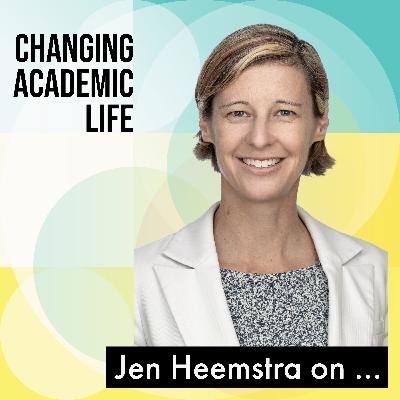
Prof. Jen Heemstra from Washington University in St. Louis in the US shares her journey from a research-focused bimolecular engineer to accidental leader and now author of the insightful book 'Lab Work to Leadership.' Jen speaks about the challenges faced by academics moving into leadership, recognisning that we are often untrained and unprepared for these roles. She shares insights from her book focusing on self-leadership, leading others, and coaching future leaders. Jen talks about the importance of building trust, creating a positive lab culture, giving and seeking feedback, and the significance of modeling behavior for emerging leaders. Jen also reflects on her personal experiences, including her struggles to get tenure and maintaining a work-life balance.00:29 Introduction and Welcome03:09 The Birth of 'Lab Work to Leadership'05:43 Navigating Academic Challenges08:29 The Worst Day: Tenure Rejection12:14 People Showing Up and Getting Tenure15:49 Embracing Leadership in Academia That We Are Not Trained For21:26 Building a Collaborative Lab Culture30:35 The Importance of Self-Leadership and Self-Awareness33:27 The Role of Coaches and Mentors35:02 The Importance of Feedback37:01 Challenges in Giving and Receiving Feedback38:46 Understanding Individual Needs in a Lab Environment43:59 Building Trust and Psychological Safety49:37 Coaching Future Leaders56:50 Balancing Professional and Personal Life58:11 Conclusion and Final Thoughts58:56 OutroRelated Links:About Jen: Heemstra Lab at Washington Univ in St. LouisJen’s webpage and LinkedIn ProfileBook:Jen Heemstra, Labwork to leadership: a concise guide to thriving in the science job you weren’t trained for, 2025, Harvard University PressPeople:Troy ChampResources: Edwin Catmull and Amy Wallace, Creativity, Inc.: Overcoming the Unseen Forces That Stand in the Way of True Inspiration, 2014, Penguin.Liz Wiseman and Greg McKeown, Multipliers: How the Best Leaders Make Everyone Smarter, 2010, Harper Collins.Birkman Personality Inventory
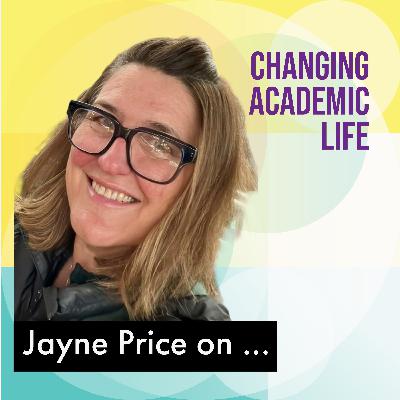
Jayne Price is all about making work work better. She is the Transformation Director and Head of Continuous Improvement at the Science and Technology Facilities Council (STFC). Jayne discusses her journey to her current role in UK Research and Innovation (UKRI), and the strategies she employs to foster human-centered, purpose-led change in the organization. She emphasizes the importance of leadership that is grounded in trust, accountability, and psychological safety, and the role of experimental and agile approaches in driving systemic transformation. Jayne also shares practical examples, including the implementation of Holacracy and continuous improvement initiatives. The conversation highlights the challenges and successes in transforming our traditionally bureaucratic research culture into a more effective and innovative environment. Jayne offers valuable insights for leaders at all levels and showcases the value of empowering teams to do their best work.00:29 Introduction to the Episode03:41 Introducing Jayne and her Career Journey06:52 Understanding Project versus Program Management07:59 From Change to Transformation12:14 Implementing Experiments and Measuring Change14:10 Challenges in the Academic and Research Sector19:54 Innovative Approaches to Leadership and Management27:21 Designing Alternative Promotion Routes29:21 Challenges to Identity and Developing Leaders35:50 Moving from 'I' to 'We' as a Leader37:53 The Mindset to Move to 'We'40:13 Humility, Vulnerability and Authenticity in Leadership43:26 Shadow Sides, Blind Spots and Experimenting with Different Approaches47:31 Starting to See the Benefits50:53 Creating Workplaces For People to Flourish53:04 The Holacracy Experiment - Creating Clarity55:42 Doing Meetings Differently59:22 Empowerment and Autonomy with Accountability01:01:47 Corporate Rebels and Other Inspirational Resources01:06:31 The Critical Importance of Leadership Buy-In01:08:01 Everyone Can Choose Leadership Behaviours at Any Level01:09:51 Encouragement for Change Agents01:11:39 OutroAbout Jayne:Jayne Price https://www.linkedin.com/in/jayne-price71/UKRI https://www.ukri.orgSTFC https://www.ukri.org/councils/stfc/Related links:Cynefin framework for making sense of complexityCorporate RebelsDiederick Janse and Marc-Peter Pijper from Corporate Rebels supported the Holocracy TrialsGlassFrog: “the cutting-edge self-management platform that empowers teams with clarity and autonomy”Tuff Leadership TrainingBooks:Aaron Dignan, Brave New Work, Portfolio, 2019Daniel Pink, Drive: The surprising truth about what motivates us, Riverhead Books, 2011Joost Minnaar and Pim de Morree, a...
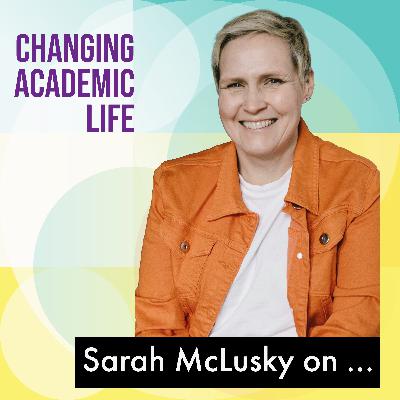
Dr. Sarah McLusky, is an advocate and role model for research-adjacent careers. As an advocate Sarah hosts the 'Research Adjacent' podcast, which showcases career opportunities beyond traditional academic and industry roles. She talks about why started the podcast and also talks about her four main categories of research adjacent roles, emphasising the importance of recognising the many contributors to successful research. As a role model, Sarah shares her own experiences moving into a research adjacent role post-PhD, now working as a freelancer who supports research organisations through events and communications. Some of her key insights are around how to prepare participants for meaningful engagement at events and the value of effective research communication. She encourages us to rethink career possibilities and the significance of culture in research environments.00:29 Intro to the Episode02:49 Introducing Sarah McLusky04:33 The Concept of Research Adjacent08:00 Research As a Team Sport12:02 Career Paths Beyond Academia20:10 Four Main Categories of Research Adjacent Roles24:22 Sarah McLusky's Journey to a Research Adjacent Role29:36 Balancing Passion and Pragmatism33:17 Navigating Freelance Work34:51 The Importance of Gathering with Purpose45:54 Supporting the Communication of Great Research48:49 Final Thoughts and Resources51:25 OutroRelated Links:About Sarah and her workWebsite https://sarahmclusky.com/Newsletter https://sarahmclusky.com/gathering-with-purposeLinkedIn https://www.linkedin.com/in/sarahmclusky/Research Adjacent Podcasthttps://researchadjacent.com/podcast/https://pod.link/1663857550

For this last episode of the year I revisit the Long Play (LP) template, inspired by vinyl records, as a way to intentionally reflect on and celebrate this past year and to be more intentional about how we move into our new year. The Ps of the template are personal, people, play, and projects and we use the Ls to reflect across there: what did you land, love, labor on, and learn this past year review, and what do you want to look forward to, let go, let grow, and let be for the next year. You can download a template to create your own personalised reflections and plans, individually or within groups, to help you shape your good academic life.Overview:00:29 Setting up the LP03:34 LP Replay05:05 Introducing the LP Table Template08:59 Taking Time to Savour and Celebrate12:06 Looking forward to the 2026 LP16:12 Wrapping Up and Summary19:09 Final Pointers19:49 OutroYou can download your LP template here. Feel free to tailor it to what works best for you! And I'd love to hear back how you used it and evolved it.
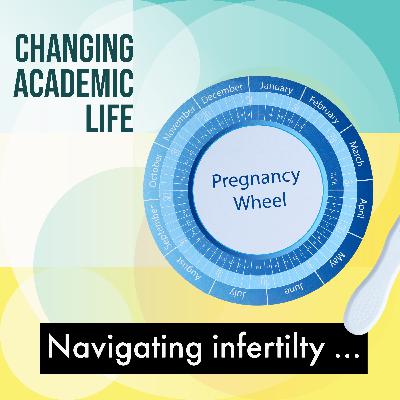
In this very personal solo episode, I share my journey through infertility and the impact it had on my academic and personal life. Inspired by Susan Dray's story, I decided to share our challenges of trying to start a family while managing a career in academia. I discusses the physical and emotional toll of infertility treatments, the loneliness of not sharing my struggles with colleagues, and the moral dilemmas we faced. Mine is just one story, and we can be sure that many of the people we work with are dealing with their own challenges or carrying their own sadnesses so this is a call for more empathy, kindness, and support in academic environments, emphasizing the importance of recognizing the human side of our lives. I conclude with a message of support for those facing similar challenges and a reflection on how my career path, though unintended, brought its own form of fulfillment.00:29 Introduction: A Personal Journey01:05 The Inspiration Behind This Episode03:58 Opening Up About Women's Health Issues07:23 The Struggles of Infertility12:15 Navigating the Moral Dilemmas14:51 Navigating Our Journey17:43 Navigating Career and Personal Life22:44 Moving On and Finding New Paths26:48 Things Coming Together in the Move to London30:13 Reflecting on an Academic Career Without Children33:53 Final ReflectionsRelated LinkCHI Stories @CHI2017: Midwifery, Babies, HCI: “Doktormutter”hood and Sustainable Academic Life
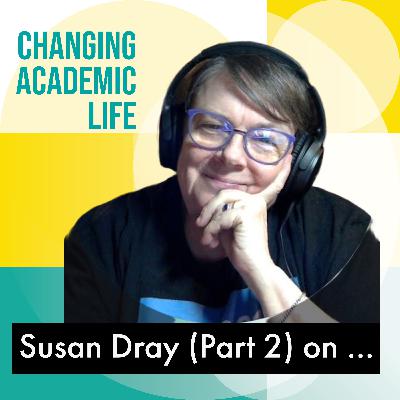
In Part 2 of our conversation, Susan Dray continues to share deep insights about the importance of self-awareness and authenticity, empathy and listening with heart, and dealing with professional discomfort and personal adversity. She discusses her mentoring style, centred around being empathetic and supportive. And she talks about the importance of service and community, as well as the current challenges faced by early career researchers. Susan also shares deeply personal challenges and losses, and the accompanying emotional journey of accepting and learning from setbacks, the value of honouring people's experiences, and the importance of collaborative support. She reminds us, paraphrased here, that few people understand how special they are, and that what really matters is who you are. Because this is going to mean that what you do is important and makes a difference. Susan has certainly made a difference. Overview:00:29 Introduction to Part Two with Susan Dray02:18 Navigating Discomfort and Deep Learning05:47 Mentoring and Community Support08:51 HCI in Africa and Global Recognition13:28 Supporting Early Career Researchers19:12 Mentoring and the Joy of Service22:11 Reflections on Mentoring and Authenticity26:08 Evolving Roles, Willingness to be a Beginner29:40 Postscript - Personal Reflections and Adversities30:55 Lessons from Sailing32:21 Coping with Loss and Finding Positivity35:08 Final Reflections on Life and Legacy36:50 Wrap up38:27 EndRelated Links:Susan Dray's webpage and LinkedIn profile
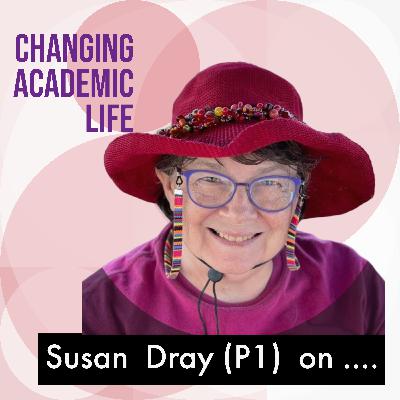
The wonderful Dr Susan Dray shares her journey from obtaining a PhD in experimental and physiological psychology at UCLA to becoming a pivotal figure in the field of Human-Computer Interaction (HCI). Susan recounts her transition from academia to industry, including roles at Honeywell and American Express, and her eventual shift to independent consulting. She discusses the evolution of HCI and human factors, the significance of ethnographic studies, and the importance of listening with one's heart in diverse cultural contexts. Susan also reflects on the birth of SIGCHI, organizational challenges, and her expansive international work. Her insights provide a rich, historical perspective on the ongoing interplay between technology, human behavior, and organizational dynamics, and on the contextual and cultural nuances in technology adoption. She also demonstrates the power of curiosity, self reflection and a service mindset. Overview00:29 Episode Introduction02:49 Susan's Background03:52 Transition from Academia to Industry05:37 Early Challenges at Honeywell06:56 Gaithersburg Conference and SIGCHI Formation10:15 Human Factors and Computing Systems13:34 Human Technology Impacts at Honeywell16:40 The Mindset of a Scientist22:59 Mentorship and Career Advice26:30 Career Transitions and Reflections28:06 Early Challenges in Consulting30:12 Setting Up a Consulting Business31:59 International Projects and Usability Studies38:22 Navigating Cultural Differences and Lessons in Challenges45:24 Innovative Research in Korea and South Africa49:26 Embracing Discomfort Curiousity and Self Reflection52:17 Wrap upRelated LinksSusan Dray webpage and LinkedInACM SIGCHI Special Interest Group On Computer-Human Interaction
Building on the last episode’s topic of meetings, the focus here is on our one-on-one meetings. In his book, 'Glad We Met: The Art and Science of One-to-One Meetings,' Steven Rogelberg discusses how these meetings can be practical, personal, and developmental. We can also think of these as the four Ps of care—process, progress, product, and person. Drawing on insights from Rogelberg’s book, along with some timely recent posts, I draw attention to the role of empathy, authentic communication, and regular, intentional meetings in supporting PhD students, postdocs, and research assistants. Practical tips include setting regular meeting cadences, being attentive and present, and ensuring a respectful and effective meeting environment. These are all skills we can work on to better support the practical, personal and developmental in our 1-1 meetings.Overview:00:29 Introduction to Effective Meetings01:55 The Importance of One-on-One Meetings03:25 The Four Ps of Care in Meetings04:14 Practical Aspects of Supervisory Meetings05:06 Caring for the Person in Meetings05:35 Skills for Effective Meetings09:12 Student Contributions to Meetings11:01 Preparation and Presence in Meetings12:18 Time Management and Respect in Meetings13:23 Listening and Asking Good Questions14:25 The Cadence of Meetings17:55 Practical Suggestions for Meeting Environments19:14 Career Conversations and Resources20:20 Conclusion: The Art, Heart, and Science of Meetings24:02 EndRelated links:Steven Rogelberg's webpage, LinkedIn profile, and Meeting resources and previous CAL episode on Transforming Academic MeetingsBook: Rogelberg, S. G. (2024). Glad We Met: The Art and Science of 1: 1 Meetings. Oxford University Press.Recent posts mentioned:#116 - 6 Communication Strategies to Get What You Need From Your PhD Advisor (Without Being Annoying), Emmanuel Tsekleves , PhDtoProf Newsletter 1 Oct 2025A toolkit to foster great career conversations, Rachel Chin and Rachel Herries, Auditorium Blog, 7 Oct 2025Related Changing Academic Life episodes:Oscar Trimboli (Part 1) on being better listeners Oscar Trimboli (Part 2) on how to listen deeply Michael Bungay Stanier on the power of curiosity and
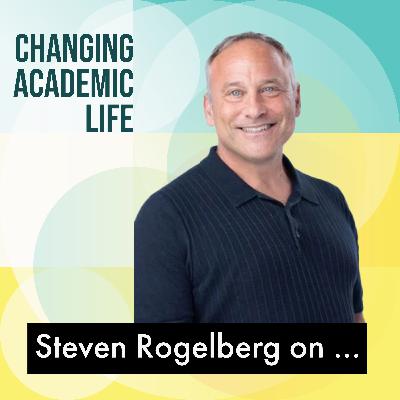
Dr. Steven Rogelberg, an organisational psychologist from the University of North Carolina, Charlotte, draws on his extensive research on workplace meetings to share how we might make acadmic meetings better. We discuss the inefficiencies of academic meetings, with Steven suggesting academics suffer from particularly ineffective meeting practices. He offers practical advice on improving meeting productivity, particularly for Faculty meetings, such as using targeted agendas and smaller group discussions, and stresses the value of bringing scientific rigour to meeting management. He also critiques the hybrid meeting format, advocating instead for fully virtual or in-person meetings. If you are looking for more insights about evidence-based meeting practices, I can highly recommend his books 'The Surprising Science of Meetings' and 'Glad We Met: The Art and Science of One-to-One Meetings' . Overview:00:29 Introduction: The Meeting Dilemma01:42 Introducing Dr. Steven Rogelberg03:56 The Academic Meeting Problem09:23 Common Mistakes in Leading Meetings11:06 Strategies for Effective Meetings13:12 Having a Meeting About Meetings14:34 The Importance of Feedback and Audits15:55 The Faculty Meeting18:15 Challenges of Large and Hybrid Meetings19:21 More Inclusive Alternatives to Large Meetings22:20 Hybrid Meetings and Virtual Meetings23:54 Final Takeaways and Resources25:46 Postscript30:16 EndRelated links:Steven's web page, LinkedIn page and online meeting resourceshttps://www.stevenrogelberg.comSteven's books:Rogelberg, S. G. (2019). The surprising science of meetings: How you can lead your team to peak performance. Oxford University Press.Rogelberg, S. G. (2024). Glad We Met: The Art and Science of 1: 1 Meetings. Oxford University Press.And his academic publications, for example the two we mentioned:Rogelberg, S., Kreamer, L. M., & Gray, J. (2025). Thirty Years of Meeting Science: Lessons Learned and the Road Ahead. Annual Review of Organizational Psychology and Organizational Behavior, 13.Rogelberg, S. G., King, E. B., & Alonso, A. (2022). How we can bring IO psychology science and evidence-based practices to the public. Industrial and Organizational Psychology, 15(2), 259-272.And here is a a...
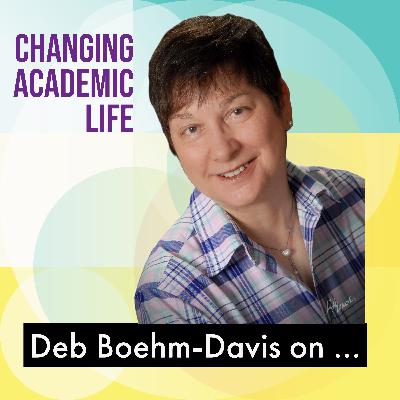
Professor Emeritus Deborah Boehm Davis, George Mason University in the US, is one of the pioneers of the CHI conference. Deborah discusses her varied career building from her psychology background and spanning roles in human factors at Bell Labs, NASA, and General Electric. She then talks about her extensive tenure at George Mason University in both faculty and administrative/leadership roles, eventually becoming the dean of a college. Deborah shares reflections on career transitions, the importance of making a difference, effective leadership, the significance of collaborative work, and the challenges and strategies for navigating academic leadership, as well as managing academic responsibilities alongside family life. She also talks about her last industry role at Oculus Research and offers insights into the skills and approaches necessary for effective academic and industry leadership. The conversation also touches on the importance of interdisciplinary work and mentorship in academia.Overview:00:00 Introduction 00:29 Deborah Boehm-Davis: Career Overview03:24 Early Career and Human Factors04:54 Transition to Academia, Balancing Faculty and Administration Roles09:38 Reflections on Career and Impact17:39 Navigating Academic Leadership25:14 Collaborations, Interdisciplinary Work and Collegiality28:18 Interdisciplinarity and Being Strategic32:57 Transitioning to Leadership Roles, Developing Leadership Skills33:53 Handling Difficult Conversations36:39 Balancing Decisions and Stakeholder Concerns40:29 Engaging Faculty and Effective Communication44:51 Leadership in Industry vs. Academia46:54 Mentorship and Support Systems50:24 Proudest Achievements and Work Skills Course56:28 Reflections on Women in Academia59:37 Conclusion and Final Thoughts01:00:46 EndRelated links:Video of a 2024 talk to the Uni of Virginia HFES Student Chapter: “A Career in Human Factors: A Lifetime of Change” [40:51 mins]LinkedIn: https://www.linkedin.com/in/deborah-boehm-davis-05b50Website: https://psychology.gmu.edu/people/dbdavis
In the first episode of season seven, the 10th year the Changing Academic Life podcast, I invite us to reflect on the theme of being intentional about what we want for ourselves at the beginning of this new academic year for many of us in the northern hemisphere, or for any temporal landmark that is relevant for you. As example and inspiration, Anna Cox from UCL shortly shares her strategies for setting clear priorities, maintaining work-life balance, and managing her remaining 'available time to promise', recognising every yes entails a no to something else. This is a great example of the 'fresh start effect', using the temporal landmark of a new academic year, as talked about by Katy Milkman and colleagues, and reminds us of the importance of creating pauses for reflection. So how will you be more intentional about your fresh start?00:34 Introduction01:27 Starting With Intention05:28 Anna's Fresh Start 07:05 Thinking About Priorities09:01 Available Time to Promise10:56 Creating Pauses to Think12:20 Re-iterating Anna's Key Questions16:29 Wrapping Up 17:57 Pointers to Other Related Episodes19:24 Wrapping up20:31 EndRelated links:eWorkResearch group at UCL and Anna’s webpage and WLB definition Dai, H., Milkman, K. L., & Riis, J. (2014). The fresh start effect: Temporal landmarks motivate aspirational behavior. Management Science, 60(10), 2563-2582.Loleen Berdahl, How to quit promising time and energy you don’t haveSee www.changingacademiclife.com for an easy search for the related podcasts: Anna Cox, Marta Cecchinato, Johanna Stadlbauer, Amy Ko, Carmen Neustaedter, Katherine Isbister, Vikki Wright

In this final episode of the 2024-2025 season, I reflect on key themes emerging from the past 20 episodes of 'Changing Academic Life.' These are around creating supportive and inclusive cultures in academia, the role of leadership, career transitions, wellbeing and self-care, and the importance of community. It reminds us to engage in reflection, value our own and others' wellbeing, and contribute to positive changes in academic environments. Cultivating a good academic life for all is a collective effort.00:00 CAL127 Season reflections02:44 Supportive cultures06:35 Career transitions, choices11:39 Wellbeing & self care13:56 Community16:00 Closing18:29 End
If you are curious about how to set up your own peer support group, inspired by what Johanna Stadlbauer shared about what Uni Graz are doing, then this episode might get you started. I walk through some of the ‘things to think about’ when setting up peer groups such as the group’s purpose, the focus, and who that would involve, also the group size, meeting frequency and commitment, and choosing between structured or informal formats and related roles. I then walk through two examples of more structured formats: action learning sets which take more of a coaching approach, and peer mentoring models that take more of a consulting or advising approach. I also give some examples of more informal peer groups. Regardless of approach, good listening, confidentiality and a commitment to genuine participation are key. I also refer to some resources and links for further reading and more detailed overview of steps, as well as some related podcasts. Whether you're looking for mutual support, expert guidance, or simply a sense of belonging, there's a group format that can work for you. Give it a try!00:00 CAL126 Exploring Peer Group Support Models00:29 Introduction01:36 Purpose03:03 Focus05:03 How Many06:17 How Often07:45 Format08:24 Roles09:44 Critical Ingredients11:38 Walking Through Some Examples12:35 Example: Peer Coaching Groups - Action Learning Set20:39 Example: Peer Mentoring Groups25:04 Example: Informal Peer Support Groups28:23 Recap30:07 Do What Works for You - Suggestions33:07 Closing Call and Pointers36:36 EndRelated LinksAction Learning Sets guidance by Caroline Doherty via the UK NHS Action Learning Sets pageAction Learning Sets at Uni of St Andrews as example in an academic contextGraz Call for participation in their Collegial Development ProgrammeKollegiale Beratung in sechs Phasen (Collegial Advising in 6 Phases) Descriptive Consultancy with protocol descriptionBalint Group MethodThe No Club book and No Club GuidanceRelated PodcastsMichael Bungay Stanier on the power of curiosity and taming your advice monster
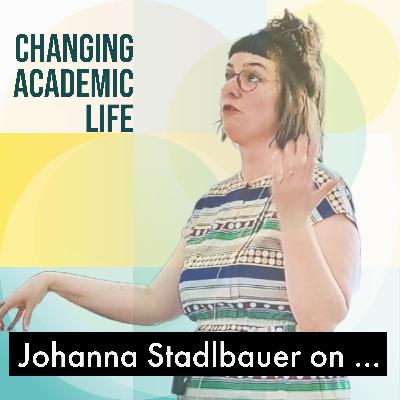
Johanna Stadlbauer is an anthropologist working in researcher development at the University of Graz, recently made Head of Research Careers Campus Graz. Her mission is a more fun and kind academia. Johanna shares the experiences and challenges of her journey from a PhD to quitting a postdoc in anthropology, to doing NGO work part-time, and then coming back to academia for a researcher development role. Her work now is focused on creating a supportive and kind academic environment, with the aim to improve researcher well-being and foster a sense of community. She discusses establishing structures for postdoctoral researchers' support and community, and highlights initiatives like the writing retreat, Fiasco Fest, and peer mentoring, which aim to improve researcher well-being and foster a sense of community. Johanna is a role model for how to navigate a career path and your work role on your own terms. She is really clear on her own boundaries, and what she needs to feed herself and look after her work-life balance. She also reminds us the value of peer support, of telling people their contributions matter, and of taking the time to savour the good. She reminds us of the significance of agency, community support, and the need for transparency and understanding in academia.00:00 CAL125 Johanna Stadlbauer03:03 Introduction and Guest Background03:56 Journey from Anthropology to Research Development06:18 Postdoc Experience and Challenges07:42 Deciding to Quit the PostDoc12:05 Transition to NGO Work15:57 Finding Balance and Setting Boundaries19:47 Messaging in Academia23:35 Permanent Contract and Current Role29:27 Towards a Fun and Kind Academia and Experiences of Power Abuse31:26 Finding Solutions and Positive Structures33:31 Balancing Critique and Support in Academia35:58 Empowering Postdocs and Addressing Structural Issues40:12 The Importance of Community, Peer Support and Mentoring49:39 Promoting Good Working Environments for Researcher Wellbeing52:03 Personal Reflections and Final Thoughts56:53 End Related LinksJohanna's web page (English version)Head of Research Careers Campus Graz Researcher Development in Graz Blog LinkedIn pages for Johanna, the PostDoc Office, and Research Careers Campus GrazThe Coalition for Advancing Research Assessment (CoARA) Max Planck PhD Net Balint Group Method
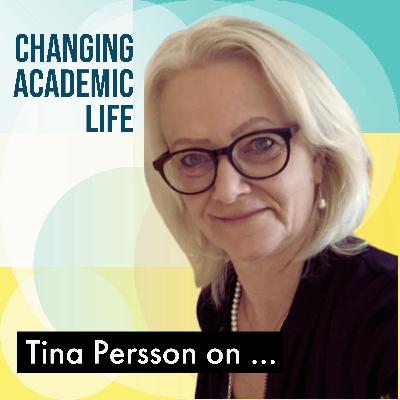
Tina Persson shares her journey from chemistry and nearly 20 years in academia, to recruiting and then career coaching. Tina discusses the challenges she faced in academia, including struggles with energy-draining tasks and political landscapes, and how she pivoted to a career in recruitment and coaching. She emphasizes the importance of understanding natural talents, emotional intelligence, and honest communication in career development. The conversation covers valuable tips for professors on recruiting and supporting early-career researchers, the impact of AI on career skills, and the cultural differences in career transitions. Tina also highlights the significance of lifelong learning and being open to unseen opportunities, offering practical advice for academics, those seeking an academic position, and those considering a career pivot. Overview:00:29 Episode Introduction03:02 Introducing Tina and her Academic Journey10:18 Transition to Industry12:24 Becoming a PhD Recruiter15:25 Coaching and Career Development25:24 Recruitment Tips for Professors36:00 Startup Mentality in Academia38:43 Evaluating Candidates Beyond Technical Skills40:35 Innovative Interview Techniques43:09 Filtering Candidates Efficiently50:57 Cultural Differences in Recruitment52:50 The Role of AI in Recruitment54:25 Human-Centric Skills in Academia01:00:13 Building a Supportive Academic Culture01:03:23 The Importance of Career Pivoting01:05:52 Conclusion and Contact InformationRelated linksRelated to Tina:About Tina and her LinkedIn profile and Passage2ProPhD Career Stories Podcast and upcoming bookPeople: Sarah Blackford , Fritz Eckstein Holland’s Theory of Career Choice
This is a replay of an episode about our strengths as our superpowers and it is a useful precursor to the next podcast discussion where my guest will talk about them as natural talents. This replay episode was triggered by two interactions that made me think more about the importance of knowing our own unique superpowers (as Aaron Quigley discussed), ie our strengths, and also our kryptonite (thanks Lewis Chuang), and how this can help us work out what is our good academic life. And to recognise that we can all have different superpowers. Before getting to the replay I also report on some lovely feedback from the episodes with Graham McAllister.00:29 Introduction01:39 Update from episodes with Graham McAllister05:21 Replay - Strengths as Superpowers06:49 Kyrptonite and Superpowers08:19 What are your superpowers?14:29 Other notes about strengths as superpowers17:21 Summary and pointer to ways to explore strengths19:25 Additional Pointers22:05 OutroRelated Links:The twitter thread started by Lewis ChuangAaron Quigley podcast conversationMike Twidale podcast conversationVIA Character Strengths SurveyStrengthscope Strengths assessment toolsRelated Work:Michelle McQuaid, 2014, Ten Reasons to Focus on Your Strengths No matter what your job description says, Psychology Today.Jeremy Sutton, 2021, Cultivating Strengths at Work: 10+ Examples and Ideas, PositivePsychology.com.Ryan M. Niemiec, 2020, Coronavirus Coping: 6 Ways Your Strengths Will Help You Turn to your best qualities for prevention, safety, and health. Psychology Today.
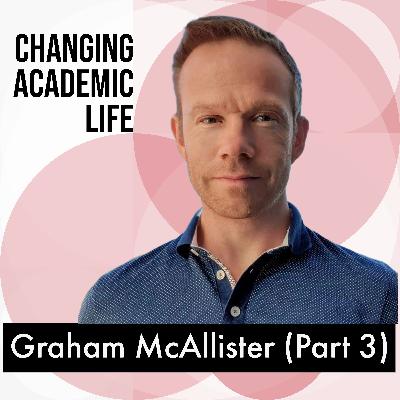
”Writing is thinking, I love thinking, I love working on problems, I love thinking through the problems…. So the whole writing thing is a thinking thing.” says Graham McAllister in this final part of our conversation. His foray into writing a book on Games Usability after he sold his company was also a foray into exploring the process of writing, asking himself questions like "How do you write a book? What's my voice? How do I write? What fits in with my life?” Graham unpacks his experiences about the art and craft of writing that worked for him in answer to these questions. He starts with reflections on publishing challenges in academia and his commitment to making knowledge freely accessible. He also talks about the process of discovering his writing voice, the iterative writing process, setting up a writing routine and setting achievable goals. Graham also reflects on the broader implications of his work within academia and industry, the pursuit of clear communication for your audience, and his future aspirations in writing and consulting. The conversation highlights themes of personal growth, the importance of thoughtful work-life integration, and the impact of past mentors and opportunities.Overview00:00 Introduction02:50 Introduction to the Book Writing Journey03:28 The Philosophy of Free Knowledge04:51 The Writing Process and Idea Generation07:12 Structuring and Refining the Book10:08 Finding Your Voice and Writing Routine11:51 Future Writing Projects and Reflections20:09 Balancing Work and Personal Fulfillment26:04 Final Reflections and GratitudeRelated Links:Graham’s Home page and LinkedIn Profile and his booksCAL120 Part 1 episode with Graham on his previous career pivotsCAL121 Part 2 episode with Graham on team vision alignment
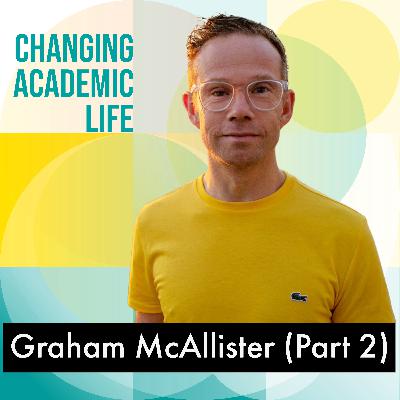
In this second part of my conversation with Graham McAllister, we explore Graham's next pivot to studying organizational psychology at the London School of Economics. After selling his startup, Graham decided to do an MSc to help him answer what he now saw as the core problem in game development teams and that was lack of a unified vision. He shares his insights into shared mental models, vision alignment, shared values, diversity in hiring, and building resilient teams. He also discusses how these principles can be applied to other creative and research collaborations. Keep an eye out for the final episode in this series with Graham where he shares practical tips on the art and practice of writing.Overview:00:00 Intro00:29 Episode Introduction02:30 The Turning Point: Leaving the Company and Writing a Book04:54 Discovering Organizational Psychology05:44 The Journey to London School of Economics07:16 The All-Consuming Feeling of Vision11:07 The Importance of Education and Luck16:26 Reflections on Lifelong Learning19:22 Applying Mental Models Beyond Games20:42 Understanding Alignment and Values in Organizations23:39 Rethinking Hiring Practices and Leadership26:46 Setting a Vision and Mission29:01 Building a Mental Model32:19 Operationalizing Shared Values36:26 Detecting and Addressing Cultural Beliefs38:15 Preview of Part 3 on Writing40:38 End Related Links:Graham’s Home page and LinkedIn ProfileCAL120 Part 1 episode with Graham on his previous career pivotsKotter’s Change Model https://www.kotterinc.com/methodology/8-steps/Edgar Schein’s three layer of organizational culture - see variousdiscussions: https://psychsafety.com/psychological-safety-edgar-scheins-three-layers-of-organisational-culture/https://mitsloan.mit.edu/ideas-made-to-matter/5-enduring-management-ideas-mit-sloans-edgar-scheinhttps://www.managementstudyguide.com/sigma/edgar-schein-model.htmOriginal 1983 paper
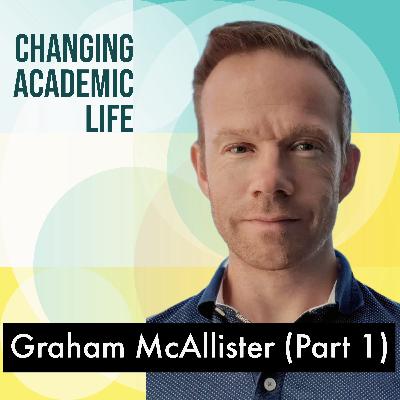
Graham McAllister reflects on his various career pivots, starting with a PhD in computer graphics in Belfast, transitioning through roles in academia and industry and then forming and later selling his games usability start-up. In the process Graham provides a masterclass on how to navigate and negotiate career pivots, how to articulate clear problems and solutions. The conversation highlights the value of bridging practical and theoretical domains, the role of luck and other people, and the need for continuous learning, reflection and adaptation in your career journey while being very clear about the strengths and passions that underpin this. Overview:00:00 Episode Introduction03:01 Welcoming Graham03:43 Early Career and PhD Journey04:49 Transition to Industry06:01 Straddling Academia and Industry07:54 Return to Academia and Music Technology13:34 Influence of Gary Marsden17:41 Joining University of Sussex21:18 Starting a Spin-Out Company21:52 Balancing Academia and Startup25:24 Challenges and Reflections31:37 Academic vs. Industry Conferences32:32 Critical Thinking in Video Game Development33:28 Startup Challenges and Team Building34:32 Marketing Through Education40:56 Leadership Reflections and Authenticity48:35 Selling the Company and Moving Forward56:20 EndRelated Links:Graham’s Home pageand LinkedIn pagePeople he mentions: Ricardo Climent and Gary Marsden
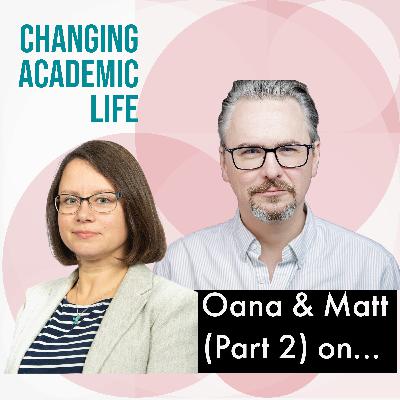
This is Part 2 of my discussion with Matthew Barr and Oana Andrei who work together in the Education and Practice Section in the School of Computing Science at the University of Glasgow. Oana and Matt each share their personal experiences with mental health challenges. Oana shares her journey from postdoctoral research to becoming a lecturer, highlighting how she dealt with burnout by taking up Taekwondo. Matthew discusses his long-term management of depression and the importance of normalizing such conversations in academic settings. We also talk about their learning, teaching and scholarship career paths, the significance of reflective practice and how it has been integrated into their teaching methods. They also discuss their commitment to inclusion and diversity in education, alongside their passion for teaching and the innovative graduate apprenticeship degree program they have implemented that widens access by enabling work-based learning and student support. The episode offers valuable insights into the importance of personal wellbeing, the role of supportive workplace environments, and what a teaching-focussed path can involve.Overview00:29 Episode Introduction02:00 Picking up on the question about mental health02:46 Oana Shares Her Experiences With Burnout08:05 Matt Shares His Experiences With Depression12:45 Choosing Teaching Focussed Career Paths16:36 Oana Moving From Research To Teaching Track19:06 Promotion Criteria in a Learning, Teaching and Scholarship Track24:14 Apprenticeship Degree Program31:50 Doing a Master in Education34:39 A Framework for Reflection38:52 Wrapping Up39:18 Revisiting Belonging44:09 Thanks For The Podcast46:27 EndRelated LinksOana Andrei, Lecturer (Ass Prof) Uni of Glasgow webpage and LinkedIn profile Matthew Barr (Senior Lecturer) Uni of Glasgow webpage and LinkedIn profile The reflective writing resources Matt mentioned:Manchester’s Academic Phrasebank: http://www.phrasebank.manchester.ac.uk/The guidance here on Portsmouth’s website: https://myport.port.ac.uk/study-skills/written-assignments/reflective-writing-introductionTheir paper on how the apprenticeship degree program might widen access to HE:M. Barr, O. Andrei and M. Kallia, "Widening Access to Higher Education through Degree-level Apprenticeships in Software Engineering," 2023 IEEE Frontiers in Education Conference (FIE), College Station, TX, USA, 2023, pp. 1-8, doi: 10.1109/FIE58773.2023.10343199.

Comments

Download from Google Play

Download from App Store
 United States