


Autistic and ADHD Kids Parenting Strategies: Every Brain is Different
Subscribed: 42Played: 586
Subscribe

© 2022
Description
Welcome to Every Brain is Different, the podcast designed for parents raising kids with Autism, ADHD, and other neurodiverse conditions. Discover practical parenting strategies, expert insights, and real-life stories that highlight the strengths and challenges of neurodivergent individuals. Join us to connect with a supportive community of parents, gain tools to help your child thrive, and celebrate the unique ways every brain works. If you're looking for inspiration, effective parenting strategies, or simply a sense of connection, tune into Every Brain is Different and join a community that truly understands.
Website: www.everybrainisdifferent.com
Instagram: www.instagram.com/everybrainisdifferent
TikTok: www.tiktok.com/everybrainsidifferent
YouTube: www.youtube.com/@everybrainisdifferent
Website: www.everybrainisdifferent.com
Instagram: www.instagram.com/everybrainisdifferent
TikTok: www.tiktok.com/everybrainsidifferent
YouTube: www.youtube.com/@everybrainisdifferent
197 Episodes
Reverse
Get the Parenting Guide: https://everybrainisdifferent.com/
Samantha and Lauren continue their discussion on why autistic and ADHD kids may seem like rigid thinkers, focusing on their need for clear rules and consistent expectations to feel regulated and safe.
They explain how inconsistent enforcement or differing rules across households can create confusion, dysregulation, and even meltdowns, and suggest strategies like clearly explaining why rules differ, writing down major house rules for caregivers, and building routines that allow exceptions without breaking the “system.”
They reframe “rigid” as a misunderstanding of neurodivergent needs for structure, predictability, and clarity, noting that different processes can still lead to the same outcome. The hosts emphasize supporting structure with advance notice, clear expectations, predictable routines, and choice within structure, while teaching flexibility and coping skills when calm.
00:00 Podcast Intro Recap
01:02 Rules Need Consistency
02:04 Different Houses Different Rules
03:49 Make Rules Clear and Written
08:01 Rigid vs Structured Reframe
10:51 Trust Their Process
13:32 When Change Triggers Meltdowns
16:23 Organization Systems That Work
19:16 Support Structure Not Flexibility
20:15 Closing Thoughts and Wrap Up
Connect with Samantha Foote!Website: https://everybrainisdifferent.com/Instagram: https://www.instagram.com/everybrainisdifferentYouTube: https://www.youtube.com/@everybrainisdifferent
Get the Summit Replay: https://www.everybrainisdifferent.com/summit
Connect with Samantha: https://everybrainisdifferent.com/
Samantha and Lauren begin a two-part discussion on why autistic people are often labeled “rigid.” They argue the label frequently reflects a neurotypical expectation that others should do things “the correct way,” while autistic people may rely on predictability for clarity, structure, and safety.
Using a “manual vs. automatic transmission” analogy, they explain how unclear expectations increase cognitive load and anxiety, which can look like inflexibility or lead to meltdowns.
They reframe routines (same breakfast, clothes, routes) as regulation and efficiency, emphasize giving kids autonomy where possible, and suggest strategies like alternating choices in therapy or “sandwiching” hard tasks between preferred ones.
They note most environments are built for neurotypical processing, so routines act as scaffolding for navigating sensory and social unpredictability, and they will continue the remaining segments next week.
00:00 Introduction
00:32 Why Rigid Gets Misused
02:09 Safety Through Structure
03:22 Manual vs Automatic Brain
05:38 Clear Expectations Reduce Anxiety
08:32 Routines as Self-Regulation
11:28 Giving Kids Control Back
14:02 Modeling Flexibility at Home
16:02 World Built for Neurotypicals
18:15 Wrap Up and Part Two Tease
Connect with Samantha Foote!Website: https://everybrainisdifferent.com/Instagram: https://www.instagram.com/everybrainisdifferentYouTube: https://www.youtube.com/@everybrainisdifferent
In this episode, Samantha and Lauren talk about one of the most common and controversial questions parents ask when raising neurodivergent kids: whether children with ADHD, anxiety, or executive functioning challenges should take medication. They discuss why medication decisions can feel so heavy for parents and emphasize that every brain is different, so what works for one child may not work for another. Samantha and Lauren explain how medication can sometimes help regulate an overwhelmed nervous system and act as a “pattern interrupter,” allowing kids to better learn coping, emotional regulation, and executive functioning skills.
They also talk honestly about the downsides, including potential side effects and the trial-and-error process of finding the right medication and dosage. Throughout the conversation, they remind parents that medication is not a magic fix and should be viewed as one tool in a larger toolbox that also includes supportive parenting, environmental supports, therapy, and skill-building. Ultimately, the goal is not to tell parents what decision to make, but to help them feel informed and confident as they work with medical professionals to choose what’s best for their child.
00:00 Introduction
02:00 Why Parents Ask About Medication and Why One Medication Doesn’t Work for Everyone
03:05 Medication Shame: Why Taking Medication Isn’t the “Easy Way Out”
05:00 Nervous System Overwhelm in Neurodivergent Kids + A Child’s “Quiet Brain” Moment
08:05 Pros of Medication: Nervous System Regulation and Skill Building
09:00 Improved Quality of Life: Focus, Less Anxiety, and Fewer Meltdowns
10:05 Breaking the Shame Cycle from Constant Negative Feedback
12:00 Medication Isn’t Risk-Free: Trial and Error and Possible Side Effects
14:25 Finding the Right Medication and Dosage Can Take Time
16:00 Medication Isn’t a Magic Fix: Kids Still Need Skills and Support
17:05 Medication Raises the Threshold So Kids Can Handle Life
19:00 No Right Answer: Some Kids Benefit from Medication, Some Don’t
20:00 Parenting Confidence: Making Decisions Without Outside Pressure
21:55 Final Thoughts
Register for the Summit: https://everybrainisdifferent.com/summit
Connect with Samantha Foote!Website: https://everybrainisdifferent.com/Instagram: https://www.instagram.com/everybrainisdifferentYouTube: https://www.youtube.com/@everybrainisdifferent
Samantha and Lauren share Samantha’s experience competing for Mrs. Idaho to encourage parents, especially those raising neurodivergent kids, not to feel guilty for doing something for themselves with the right support.
They then discuss choosing “real connection” with a child over society’s idea of “right connection,” emphasizing that behavior improves when children feel connected, safe, and understood, and that a dysregulated nervous system can’t learn or be reasoned with.
They explain how typical expectations like eye contact, loud praise, adult-led conversation, or insisting on “proper” responses can backfire, and encourage observing needs (hunger, tiredness, overstimulation, anxiety, masking) before correcting.
They suggest supporting regulation through reduced demands, co-regulation, sensory-aware environments, predictability, and joining a child’s interests, and invite listeners to a free Parenting the Child You Have online summit on March 13.
Register for the Summit: https://www.everybrainisdifferent.com/summit
Connect with Samantha: https://everybrainisdifferent.com/
00:00 Welcome and Hosts
00:07 Samantha’s Pageant Story
00:28 Self-Care Without Guilt
02:20 Pageant Connections and Confidence
03:59 Real Connection vs Right Connection
05:00 Connection Before Correction
06:34 Why Safety Comes First
08:01 When Typical Connection Backfires
10:53 Check Basic Needs First
12:55 Body Clues and Misreads
15:17 Co-Regulation Over Consequences
16:18 Create a Supportive Environment
17:54 Predictability and Shared Interests
19:52 Join Their World in Practice
22:49 Trial and Error Mindset
23:38 Parenting Summit Invitation
24:59 Register and Closing
Connect with Samantha Foote!Website: https://everybrainisdifferent.com/Instagram: https://www.instagram.com/everybrainisdifferentYouTube: https://www.youtube.com/@everybrainisdifferent
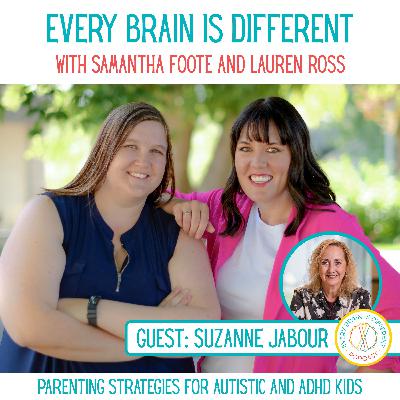
Samantha and Lauren welcome certified grief educator and coach Suzanne Jabour to the podcast to discuss grief beyond bereavement, particularly the grief parents may feel after a child’s diagnosis. They explore how grieving the loss of an imagined future does not reflect a lack of love for a child, and how acknowledging emotions can help parents more fully accept and support their kids. Suzanne shares her perspective that diagnoses and labels can be embraced as practical tools to access educational and government systems, resources, and advocacy leverage, even when the label may evolve over time; she also describes her own experience advocating for her son Ben’s needs in school and the importance of being emotionally clear when entering challenging meetings like IEPs.Suzanne offers strategies for moving through ongoing and situational grief, including allowing “hot mess” moments, using a feelings wheel to name nuanced emotions so they can move, finding spaces to be witnessed, and preparing emotionally before difficult conversations to show up empowered. They also discuss the ongoing grief parents feel when neurodivergent children are excluded or mistreated, and Suzanne suggests balancing vigilance with intentionally noticing “glimmers” or micro-joys, small moments of acceptance and safety. 00:00 Introduction00:48 Why This Episode: Grief After a Diagnosis (Not Just Death)02:40 Grieving the ‘Expected’ Life Helps You Show Up for Your Child05:21 Accepting the Diagnosis: Using Labels to Access Support09:47 Staying Open to Possibility While Parenting Differently11:51 How to Move Through Diagnosis Grief: Name the Feelings14:16 Advocacy & IEP Meetings: Regulating Emotions to Go ‘Mama Bear’17:20 Ongoing Daily Grief: When the World Mistreats Your Kid20:26 Glimmers & Micro-Joys: Balancing the Negativity Bias22:20 Resources, Where to Find Suzanne, and Final Takeaways24:12 Fun Question + Hosts’ Highlights, Summit Invite & Wrap-Up Sign up for the Summit: https://www.everybrainisdifferent.com/summitJoin the Community: https://www.everybrainisdifferent.com/membership Connect with Suzanne!https://www.suzannejabour.comhttp://www.linkedin.com/in/suzanne-jabourhttps://www.facebook.com/SuzanneJabour
Connect with Samantha Foote!Website: https://everybrainisdifferent.com/Instagram: https://www.instagram.com/everybrainisdifferentYouTube: https://www.youtube.com/@everybrainisdifferent
In this episode, Samantha and Lauren discuss strategies for parenting neurodivergent children, particularly focusing on issues related to clothing. They share personal anecdotes and emphasize the importance of giving children autonomy over their clothing choices. This can help build their identity, confidence, and ability to navigate the world more successfully.Samantha and Lauren provide practical tips such as buying multiples of favorite clothing items, prioritizing sensory comfort over aesthetics, and involving kids in the shopping process while managing their overwhelm with choices.They also advocate for allowing children to wear unconventional outfits as a way to foster self-expression and emotional regulation. 00:00 Introduction00:41 Solidarity for Struggling Parents + A PDA Morning Story02:12 Clothing Beyond Sensory: Identity, Autonomy & Confidence04:13 Let Them Choose: Regulation, Confidence & Less People-Pleasing05:50 When Choices Overwhelm: Shopping Strategies That Work07:54 Sensory Checklists, Repeat Outfits & Buying Duplicates09:29 Autonomy & Self-Advocacy: Dress for the Nervous System11:27 Declutter Without Guilt: Keep What Works, Donate the Rest13:51 Parent Takeaways: Outfit Routines, Comfort First, Acceptance17:25 Reflection Questions + Share Wild Outfits + Summit Invite Register for the Summit: https://everybrainisdifferent.com/summit
Connect with Samantha Foote!Website: https://everybrainisdifferent.com/Instagram: https://www.instagram.com/everybrainisdifferentYouTube: https://www.youtube.com/@everybrainisdifferent
In this episode, Samantha and Lauren talk about the patterns of clothing preferences in children with autism and ADHD. They discuss common scenarios where children suddenly favor previously ignored clothes and share insights from an occupational therapist on managing these behaviors.The conversation encompasses practical strategies from other parents, the importance of sensory safety, and the impact of new clothing on a child's nervous system.Emphasizing the need for comfort over social expectations, they address the pressures parents face and offer solutions for creating a stress-free clothing environment for neurodivergent children. 00:00 Introduction00:40 Clothing Choices for Neurodivergent Kids03:14 Strategies for Encouraging Kids to Wear New Clothes06:10 Understanding Sensory Sensitivities06:56 Personal Experiences and Reflections08:30 Balancing Comfort and Social Expectations17:17 Conclusion and Upcoming Topics18:19 Invitation to the SummitJoin the Summit! https://everybrainisdifferent.com/
Connect with Samantha Foote!Website: https://everybrainisdifferent.com/Instagram: https://www.instagram.com/everybrainisdifferentYouTube: https://www.youtube.com/@everybrainisdifferent
Samantha and Lauren talk with Ryan Miele, the creator of the Tubrbobo Relief. Ryan describes how Turbobo features five clinically-proven elements to reduce anxiety by targeting physiological symptoms, including a weighted body, fidget tail, tactile ear patches, and customizable sensory inserts.The conversation highlights the product's success in over 400 schools across the US and positive testimonials, such as its calming effect on students. He also emphasizes the importance of using stress-relief tools proactively and shares insights into his foundational research, mentorship experiences, and how Turbobo can help individuals of all ages find calmness and focus in their daily lives. 00:00 Introduction00:40 Meet Our Special Guest: Ryan Miele01:11 The Inspiration Behind Turbobo03:04 How Turbobo Helps with Anxiety05:58 Success Stories and Testimonials07:36 The Science and Research Behind Turbobo11:29 Tips for Managing Anxiety13:29 Where to Find Turbobo and Final Thoughts16:41 Closing Remarks and Personal Reflections Get the Turbobo: www.Turbobo.coFollow Ryan: www.instagram.com/TurboboRelief
Connect with Samantha Foote!Website: https://everybrainisdifferent.com/Instagram: https://www.instagram.com/everybrainisdifferentYouTube: https://www.youtube.com/@everybrainisdifferent

Jessica Frew is back with her book, 'Shove Your Shoulds,' focusing on the unique challenges faced by neurodivergent parents.Samantha, Lauren, and Jessica discuss the emotional struggles of navigating family dynamics and the societal expectations of parenting.Jessica introduces the concept of 'mini grief' and the importance of acknowledging and processing these emotions without guilt. Emphasizing the need to release unhelpful stories and pressures, she encourages parents to let relationships develop naturally and on their own terms, fostering a safe and empowering environment for their children.Jessica also highlights the significance of redefining success and happiness for both parents and children, breaking away from conditional programming and societal benchmarks. She reassures parents that they are doing enough and underscores the importance of grace, love, and acceptance, both for themselves and their children. 00:00 Introduction00:37 Extended Conversation with Jessica Fru00:51 Struggles of Neurodivergent Parents01:52 Understanding and Accepting Grief03:42 Releasing Expectations and Stories06:02 Real-Life Examples of Relationships08:10 Letting Relationships Blossom Naturally15:02 Final Thoughts and Encouragement Join the Neurodivergent Parenting Community: https://www.everybrainisdifferent.com/membershipConnect with Jessica: https://www.instagram.com/heyjessicafrew/Get the book: https://shoveyourshoulds.com/freebook
Connect with Samantha Foote!Website: https://everybrainisdifferent.com/Instagram: https://www.instagram.com/everybrainisdifferentYouTube: https://www.youtube.com/@everybrainisdifferent
Dr. Temple Grandin is a renowned animal behaviorist, autism advocate, and professor of animal science at Colorado State University. Diagnosed with autism at a young age, she has used her unique perspective to revolutionize livestock handling systems, designing humane facilities that are used worldwide. Dr. Grandin is also a best-selling author and a leading voice in the neurodiversity movement, advocating for early interventions and supportive environments for individuals on the autism spectrum. Her groundbreaking work has earned her numerous accolades, including being named one of Time magazine’s 100 most influential people. A sought-after speaker, she inspires countless people with her story of turning what others saw as challenges into her greatest strengths. Join the Neurodivergent Parenting Community: https://www.everybrainisdifferent.com/membership
Connect with Samantha Foote!Website: https://everybrainisdifferent.com/Instagram: https://www.instagram.com/everybrainisdifferentYouTube: https://www.youtube.com/@everybrainisdifferent
In this episode, Samantha and Lauren continue their discussion on how to communicate positively with neurodivergent children, ensuring your child receives more positive than negative feedback.They explore various strategies such as praising effort over outcome, naming invisible skills like regulation and flexibility, and using descriptive feedback instead of generic praise to help neurodivergent kids feel understood and appreciated.Samantha and Lauren emphasize the importance of catching small, neutral moments and separating behavior from identity to avoid feelings of shame. They also discuss the significance of building positive feedback into daily routines and reflecting strengths during hard moments to establish a predictable, supportive environment.They wrap up by offering practical questions parents can ask themselves to evaluate their feedback practices and promoting resources available on their website for further support. 00:00 Introduction00:40 Recap of Last Week's Episode01:22 The Importance of Positive Feedback04:17 Strategies for Giving Positive Feedback04:51 Praising Effort Over Outcome07:18 Naming Invisible Skills09:37 Using Descriptive Feedback12:20 Catching Small Moments14:43 Separating Behavior from Identity18:59 Reflecting Strengths During Hard Moments19:30 Building Positive Feedback into Routines21:23 Recap and Final Thoughts Get the Questions for Self-Reflection: https://www.everybrainisdifferent.com/reflectionJoin the Neurodivergent Parenting Community: https://www.everybrainisdifferent.com/membership
Connect with Samantha Foote!Website: https://everybrainisdifferent.com/Instagram: https://www.instagram.com/everybrainisdifferentYouTube: https://www.youtube.com/@everybrainisdifferent
Samantha and Lauren discuss the negative impact of constant corrective feedback and emphasize the importance of recognizing children's efforts rather than just their outcomes.They share personal experiences and research findings that show how neurodivergent kids often receive more negative feedback than their neurotypical peers. They highlight the importance of creating a supportive home environment that counterbalances the critical feedback children might receive from schools and other settings.The episode ends with a promise to provide practical tips on giving meaningful positive feedback in the next discussion. 00:00 Introduction00:39 New Year Resolutions and Positive Feedback02:05 The Impact of Negative Feedback on Neurodivergent Kids05:18 Effort vs. Outcome: Recognizing the Invisible Work06:50 Personal Stories and Examples10:25 The Role of Parents and Positive Reinforcement17:15 Conclusion and Next Week's Topic Join the Neurodivergent Parenting Community: https://www.everybrainisdifferent.com/membershipNo, David Book: https://amzn.to/3LjsRzX
Connect with Samantha Foote!Website: https://everybrainisdifferent.com/Instagram: https://www.instagram.com/everybrainisdifferentYouTube: https://www.youtube.com/@everybrainisdifferent

In this final episode of the year, Samantha and Lauren discuss the societal pressures of New Year's resolutions and advocate for a more realistic approach, especially for neurodivergent individuals and parents of neurodivergent children.They highlight the overwhelming nature of setting too many goals and emphasize the importance of focusing on one or two manageable objectives at a time to avoid burnout and shame.They also stress the importance of self-compassion and creating a supportive environment for personal growth and effective parenting. 00:00 Introduction00:51 New Year, No Pressure02:30 The Reality of New Year's Resolutions05:18 Understanding Burnout and Stress08:18 Setting Realistic Goals13:24 Reflection and Self-Compassion18:32 Final Thoughts and Community Support Join the Neurodivergent Parenting Community: https://www.everybrainisdifferent.com/membership
Connect with Samantha Foote!Website: https://everybrainisdifferent.com/Instagram: https://www.instagram.com/everybrainisdifferentYouTube: https://www.youtube.com/@everybrainisdifferent
In this episode, Samantha and Lauren talk about the importance of taking a break during the holiday season, particularly for families with neurodivergent members.They discuss the challenges that arise from the busy holiday schedules and emphasize the necessity of rest for mental health and overall well-being.Samantha and Lauren share personal experiences and provide insights on how to manage holiday stress, suggesting that prioritizing rest and downtime can mitigate meltdowns and enhance the holiday experience for both parents and children. They also touch upon the societal expectations to be constantly productive and how this goes against the natural cycles of rest observed in nature. 00:00 Introduction00:36 Hosts' Personal Updates and Reflections01:17 The Importance of Rest During Breaks02:22 Managing Holiday Stress and Expectations06:01 Adapting Family Traditions10:30 The Natural Cycle of Rest and Productivity14:51 Why Downtime is Essential for Neurodivergent Kids16:15 Parents' Need for Downtime and Managing Triggers19:28 Final Thoughts and Community Support Join the Neurodivergent Parenting Community: https://www.everybrainisdifferent.com/membership
Connect with Samantha Foote!Website: https://everybrainisdifferent.com/Instagram: https://www.instagram.com/everybrainisdifferentYouTube: https://www.youtube.com/@everybrainisdifferent

Anneke (pronounced UH-nuh-kuh) is a coach with a background in both corporate and clinical settings, having worked as a clinical director, supervisor, and behavior analyst. Based in Pittsburgh, PA, she supports clients worldwide through phone and video conferencing. Anneke specializes in coaching professionals with ADHD, autism, and related neurodivergent experiences. She brings personal insight to her practice, as she has been diagnosed with ADHD, depression, anxiety, and PTSD. Website: www.Anneke-Elmhirst.comInstagram: www.instagram.com/allforlovecoaching Join the Neurodivergent Parenting Community: https://www.everybrainisdifferent.com/membership
Connect with Samantha Foote!Website: https://everybrainisdifferent.com/Instagram: https://www.instagram.com/everybrainisdifferentYouTube: https://www.youtube.com/@everybrainisdifferent
In this episode, Samantha and Lauren discuss strategies for effectively parenting children with Pathological Demand Avoidance (PDA). They emphasize the importance of collaboration over direct demands to help children feel more in control and safe, which mitigates reactive behaviors.They explain how giving children choices and involving them in decision-making can prevent the activation of their parasympathetic nervous system, which is linked to anxiety and defensive behaviors.Practical examples like offering options instead of direct commands are given and the importance of flexibility and patience in parenting, particularly for neurodivergent families is discussed.Samantha and Lauren also highlight the significance of co-regulation and maintaining a calm demeanor to support a child's sense of autonomy and safety.A PDA cheat sheet with useful scripts and strategies is available for listeners. 00:00 Introduction00:39 Understanding Pathological Demand Avoidance (PDA)03:00 Collaborative Parenting Strategies06:08 Practical Examples and Scripts09:37 Managing Parental Expectations and Flexibility21:30 Maintaining a Regulated Nervous System24:30 Conclusion and Resources Join the Neurodivergent Parenting Community: https://www.everybrainisdifferent.com/membershipGet the PDA Cheat Sheet: https://www.everybrainisdifferent.com/pda-cheat-sheet
Connect with Samantha Foote!Website: https://everybrainisdifferent.com/Instagram: https://www.instagram.com/everybrainisdifferentYouTube: https://www.youtube.com/@everybrainisdifferent
In this episode, Samantha and Lauren engage in a compelling conversation with Jessica Frew, the author of 'Shove Your Shoulds,' a pivotal book aimed at helping ambitious women shed societal conditioning and make bold decisions without guilt or fear. Throughout the discussion, Jessica shares insights into the importance of setting personal boundaries, trusting one's intuition, and the role of parents in modeling behavior for their children.Jessica’s teachings are for everyone, particularly those raising neurodivergent children, advocating for a parenting approach free from societal 'shoulds'. She provides real-life examples of navigating difficult relationships, establishing firm boundaries, and making aligned decisions. 00:00 Introduction to Every Brand Is Different Podcast00:39 Meet Jessica Fru: Author and Bold Decision Coach01:36 The Concept of 'Shove Your Shoulds'02:17 Releasing the Shoulds and Trusting Your Gut06:32 Setting Boundaries and Silencing the Noise13:40 Building a Support System20:12 Raising Kids Without Shoulds26:20 Where to Find Jessica Fru and Her Book27:34 Jessica Fru's Fun and Family Life28:30 Conclusion and Final Thoughts Get the book: https://shoveyourshoulds.com/freebookConnect with Jessica: https://www.instagram.com/heyjessicafrew/ Join the Community: https://www.everybrainisdifferent.com/membership
Connect with Samantha Foote!Website: https://everybrainisdifferent.com/Instagram: https://www.instagram.com/everybrainisdifferentYouTube: https://www.youtube.com/@everybrainisdifferent
In this episode, Samantha and Lauren discuss autistic burnout, especially prevalent during the holiday season. They explain the difference between stress and burnout, and share personal experiences to illustrate the impact of prolonged masking and sensory overload on neurodivergent children.Samantha and Lauren provide detailed signs of burnout, including increased irritability, emotional outbursts, and physical symptoms, along with practical advice on how to support recovery through reduced demands, predictability, sensory rest, and encouraging autonomy.They emphasize the importance of parental regulation and offer strategies to prevent future burnout, such as prioritizing recovery time, practicing energy accounting, and teaching children to advocate for their needs. 00:00 Introduction00:39 Discussing Autistic Burnout During the Holidays02:58 Understanding Autistic Burnout09:22 Early Warning Signs of Burnout12:10 Common Triggers of Burnout14:59 Supporting Recovery from Burnout20:48 Preventing Future Burnout24:28 Conclusion and Community Support Join the Neurodivergent Parenting Community: https://www.everybrainisdifferent.com/membership
Connect with Samantha Foote!Website: https://everybrainisdifferent.com/Instagram: https://www.instagram.com/everybrainisdifferentYouTube: https://www.youtube.com/@everybrainisdifferent
In this episode, Samantha and Lauren dive talk about of gratitude. They share personal anecdotes and practical strategies for incorporating gratitude into daily life, especially for parents of neurodivergent children.The discussion covers how gratitude can serve as a tool for self-regulation, helping both parents and kids navigate challenging moments by shifting focus from problems to solutions.Additionally, they explore various sensory and creative methods to make gratitude a concrete and engaging practice for children, thereby fostering emotional well-being and resilience. 00:00 Introduction to Every Brain Is Different Podcast00:43 Today's Topic: The Power of Gratitude01:44 Real-Life Example: Halloween Gratitude Story04:21 The Science Behind Gratitude06:14 Practical Gratitude Tips for Parents13:20 Modeling Gratitude for Kids15:17 Sensory and Creative Gratitude Activities21:22 Conclusion and Support Resources Join the Neurodivergent Parenting Community: https://www.everybrainisdifferent.com/membership
Connect with Samantha Foote!Website: https://everybrainisdifferent.com/Instagram: https://www.instagram.com/everybrainisdifferentYouTube: https://www.youtube.com/@everybrainisdifferent
In this episode, Samantha and Lauren talk about the significant role that play has in children's development. They discuss how play is not only about having fun, but it actually changes brain structure and function, aiding in the learning process. They explain that play releases dopamine, helping with motivation, focus, and learning, especially for children with ADHD.Samantha and Lauren highlight the importance of engaging in play to teach social skills, problem-solving, emotional regulation, and cognitive flexibility. They also share personal anecdotes and professional experiences to emphasize the profound impact play has on building trust and connection with children. 00:00 Introduction00:39 The Importance of Play for Adults and Kids02:36 Neuroscience Behind Play04:49 Play and Emotional Regulation06:09 Building Trust and Perspective Through Play10:11 Connecting with Kids Through Play15:35 Effective Therapy Through Play20:15 Practical Tips for Incorporating Play22:49 Conclusion and Final Thoughts Join the Neurodivergent Parenting Community: https://www.everybrainisdifferent.com/membership
Connect with Samantha Foote!Website: https://everybrainisdifferent.com/Instagram: https://www.instagram.com/everybrainisdifferentYouTube: https://www.youtube.com/@everybrainisdifferent

Comments

Download from Google Play

Download from App Store
 United States