DiscoverPsychology of the Strange
Psychology of the Strange
Claim Ownership

Psychology of the Strange

Author: Tara Perreault

Subscribed: 16Played: 13
Share

Description

Folklore. Fear. Dark Psychology.


Psychology of the Strange is a narrative psychology podcast that explores the eerie, the uncanny, and the deeply human. Every episode begins with an original atmospheric story rooted in dark folklore, superstition, or real events and then shifts into a psychological analysis that unpacks why these tales grip the human mind. From winter-born omens and skeletal visitors to fearlessness, moral ambiguity, and the monsters we create to explain uncertainty, this show lives in the spaces where folklore and psychology overlap.


If you like stories that linger… and explanations that cut deeper… you’re in the right place.


ABOUT THE HOST


Hosted by Tara Perreault, a doctoral student in psychology at the University of South Florida. Her research focuses on the darker edges of human nature: fearlessness, Dark Triad traits, moral ambiguity, recreational fear, and the meanings people draw from the strange and the supernatural. Tara blends academic insight with myth, atmosphere, and psychological storytelling. Her approach is part folklore study, part dark psychology, part narrative experiment. She has presented research at multiple conferences, published empirical work, and spent years studying how people make sense of fear — in haunted houses, on screen, and in the stories we pass down through generations. Psychology of the Strange is her creative extension of that work: a place where the uncanny becomes meaningful, and where every monster is really a metaphor for something we haven’t faced yet.
24 Episodes
Reverse
What happens when the rules stop working? In this episode of Psychology of the Strange, we step into thin places, liminal spaces in Celtic lore where the boundary between worlds weakens, identity destabilizes, and moral certainty begins to fracture. These are places of power, not comfort. Places where choice carries weight, and where survival often demands more than virtue can offer. At the center of this episode is The Morrigan, a shapeshifting figure of war, prophecy, and sovereignty who appears at thresholds: river fords, battlefields, borders, and moments of irreversible decision. Often misunderstood as a goddess of death, the Morrígan is better understood as a witness to transformation appearing where people are no longer who they were, and not yet who they will become. Through immersive mythic storytelling grounded in Celtic tradition, this episode explores how thin places function psychologically as environments of uncertainty, threat, and transition. We examine why ambiguity heightens vigilance, how identity shifts under constraint, and why being seen during moments of moral rupture can be more unsettling than judgment or punishment. This episode builds toward a deeper examination of how humans navigate the blurred line between good and evil when moral categories begin to collapse. If you’re interested in: Celtic mythology and folklore Liminal spaces and thin places The psychology of uncertainty and moral decision-making Dark psychology, identity under threat, and choice without certainty Myth as a way to understanding human behavior…this episode invites you to stand at the threshold and notice what it reveals. Because thin places don’t change who you are. They show you what remains when certainty disappears.   psychology of the Strange is part of the Darkcast Network
What happens when the line between good and evil stops being clear? Season 3 is about thresholds the thin places where fear, folklore, and morality blur. In this new season of Psychology of the Strange, I explore the psychology behind liminal spaces, dark myths, and the figures who live between good and evil. From ancient folklore to modern horror, each episode uses story and psychological science to ask why we’re drawn to the uncanny and what those fears reveal about us. If you’re fascinated by horror, mythology, urban legends, and the mind behind it all, this season is for you. New episodes every two weeks, with bonus psychological deep-dives in between. Follow Psychology of the Strange and step into the in-between.
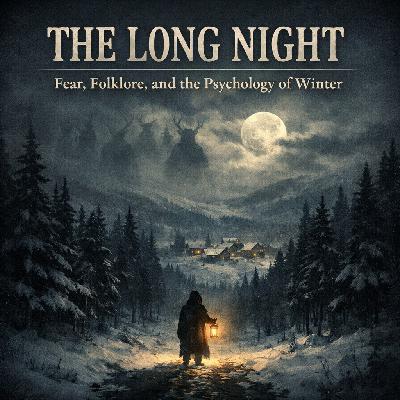
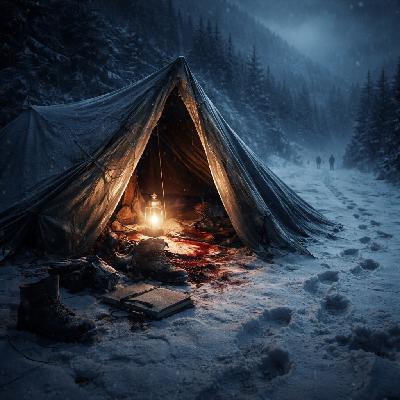
Why do winter myths across cultures share the same psychological patterns? In this closing episode of Psychology of the Strange Season Two, we explore how fear functions as a social force—shaping morality, identity, and survival during prolonged darkness, scarcity, and isolation.   This episode brings together the core themes of the season: winter folklore, psychological fear responses, moral regulation, ritual, and what happens when fear breaks containment. From watchful spirits and moral enforcers to hunger-driven transformation myths, winter stories reveal how the human mind adapts under sustained threat.   Drawing from folklore, social psychology, and real-world survival psychology, this episode examines how fear organizes communities, enforces cooperation, and—when left uncontained—fractures empathy and identity. Winter myths are not just stories about monsters; they are psychological maps of survival, morality, and meaning during extreme conditions.   This episode serves as a thematic conclusion to Season Two’s exploration of winter folklore, fear psychology, ritual behavior, and belief systems—revealing why these stories endure, and what they continue to teach us about the human mind.
In this episode of Psychology of the Strange, we explore one of the most disturbing and enduring mysteries of the 20th century: the Dyatlov Pass Incident.   In February 1959, nine experienced hikers vanished in the Ural Mountains under conditions they were fully trained to survive. What rescuers found weeks later defied logic— a tent cut open from the inside, bodies scattered across the snow, fatal hypothermia, unexplained blunt force trauma, missing soft tissue, and traces of radiation on clothing.   But this episode isn’t about monsters, conspiracies, or solving the mystery once and for all.   It’s about what happens to the human mind in extreme environments.   We examine Dyatlov Pass through the lens of psychology, cognitive science, and survival behavior, focusing on how winter, isolation, darkness, and sensory ambiguity can fracture perception and override even the strongest survival instincts.   This episode dives into:   Extreme cold and its effects on decision-making and cognition How whiteout conditions disrupt perception and spatial awareness Why fear alone can’t explain why the group left their shelter Group psychology under uncertainty and collective threat perception Cognitive overload, perceptual collapse, and threshold failure Why experienced hikers sometimes make fatally irrational choices The psychology behind anomalies like radiation, and why certain details haunt us more than others     Rather than asking what killed them, this episode asks a harder question: What happens when the environment itself becomes psychologically uninhabitable?   Dyatlov Pass may not be a story about an external attacker at all—but about the moment human cognition breaks under sustained stress, when perception turns against survival, and logic arrives too late.   This is a deep psychological analysis of fear, ambiguity, and the fragile limits of human judgment in extreme winter conditions.   If you’re fascinated by true crime psychology, unsolved mysteries, survival psychology, cognitive failure, extreme environments, and the science behind fear, this episode is for you.
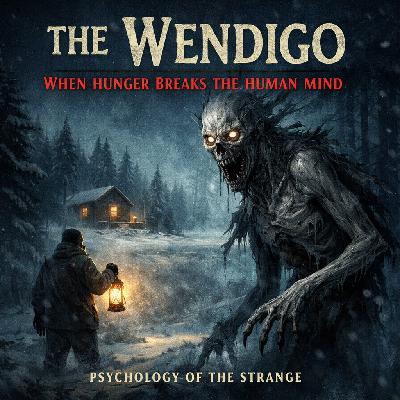
What happens to the human mind when hunger becomes unbearable, winter cuts off all escape, and survival demands the unthinkable?   In this episode of Psychology of the Strange, we explore the Wendigo—one of the most haunting and psychologically complex winter legends in North American folklore. Often depicted as a supernatural monster stalking frozen forests, the Wendigo is rooted in Indigenous Algonquin and Cree traditions as a warning about starvation, isolation, cannibalism, and the collapse of moral identity under extreme conditions.   The episode begins with a chilling original winter horror story set during a brutal famine, where a search for a missing child leads to an encounter with something far more dangerous than the cold. From there, we break down the psychology behind the legend, examining starvation psychosis, voice mimicry, dissociation, moral injury, and trauma-induced changes in perception.   We discuss how prolonged hunger alters the brain, why extreme deprivation can lead to hallucinations and identity fragmentation, and how winter itself functions as a form of psychological pressure. The Wendigo emerges not just as a folklore creature, but as a symbolic representation of what happens when the human mind is pushed beyond its limits.   This episode connects folklore, horror psychology, survival psychology, and moral psychology to ask an unsettling question: under the right conditions, what could any human become?   Topics include: Wendigo folklore and mythology, winter horror stories, starvation psychosis, survival psychology, moral injury, dissociation, trauma, voice mimicry in folklore, Indigenous winter legends, psychological symbolism in monsters, and the dark side of human nature.   If you’re interested in the psychology of monsters, folklore analysis, horror as a window into the human mind, or why ancient winter legends still resonate today, this episode walks slowly into the cold—and doesn’t look away.
In this episode of Psychology of the Strange, we journey into the cold, liminal nights of winter Wales to meet Mari Lwyd...the eerie Grey Mare who knocks at the door with a horse’s skull, snapping jaws, and a song that demands an answer. Through immersive storytelling and psychological insight, this episode explores the Mari Lwyd folklore, its origins in Welsh winter traditions, and why rituals involving fear, chaos, and misrule appear across cultures during the darkest time of year. Rather than treating Mari Lwyd as superstition or spectacle, we examine her as a psychological tool. As a way communities learned to engage fear safely, regulate uncertainty, and survive the long winter nights together. This episode blends folklore, psychology, ritual behavior, and recreational fear, asking what happens when we don’t banish the dark, but invite it inside, on our own terms. What This Episode Explores The folklore and history of Mari Lwyd, the Welsh “Grey Mare” Winter rituals, liminality, and the psychology of uncertainty Why fear rituals often involve play, mockery, and controlled chaos The role of doors, thresholds, and consent in fear-based traditions How communal fear strengthens social bonds Why fear that leaves is different from fear that lingers Connections between Mari Lwyd, haunted houses, and modern recreational fear   Why Mari Lwyd Still Matters Mari Lwyd isn’t just a relic of Welsh folklore. She’s a reminder that humans have always needed structured ways to face fear especially when the future feels uncertain. By turning fear into ritual, song, laughter, and shared experience, traditions like Mari Lwyd reveal a deep psychological wisdom: fear doesn’t disappear when it’s ignored—but it becomes manageable when it’s invited in, named, and allowed to leave.   This episode was sponsored by Fix Coffee. Fix coffee keeps me grounded while I'm wandering through folklore, psychology, and darker corners of the human mind. You can try them out too and get 15% off by using code PSYCHSTRANGE  https://www.fixcoffeebrand.com/?ref=PsychStrange
Across Eastern Europe, children born during the Twelve Nights of Christmas were said to be marked by winter itself caught between worlds, watched by spirits, or destined for a second, shadowed nature. In tonight’s episode, we explore the legend of the “winterborn,” those liminal children whose quietness, stillness, or difference became the source of unsettling tales. But beneath the folklore lies something deeply human. This episode unpacks the psychology of liminality, misaligned behavior cues, winter anxiety, and why communities turn unusual children into vessels for their fears. The winterborn myth isn’t about monsters it’s about uncertainty, survival, and the stories we create when the world refuses to make sense.
Fear doesn’t always arrive as a threat. Sometimes it arrives as attention. On a winter night, a woman and her teenage daughter begin to notice a figure standing outside their home. It doesn’t approach. It doesn’t knock. It doesn’t try to enter. It simply watches. What follows isn’t a story about violence or intrusion, but about something quieter and often more disturbing: the experience of being observed without understanding why. The Watcher comes to houses in the nights before Christmas. In this episode of Psychology of the Strange, we explore how the human mind reacts when it detects intention without danger, presence without explanation. Through story and psychological analysis, we examine why being watched destabilizes our sense of safety, how parental instincts intensify threat perception, and why winter with its darkness, stillness, and isolation amplifies the fear of unseen observers. The Watcher isn’t about what the figure does. It’s about what happens to the mind when it realizes it’s no longer alone. I want to thank my daughter for coming on the show today to do the voice for Evelyn.
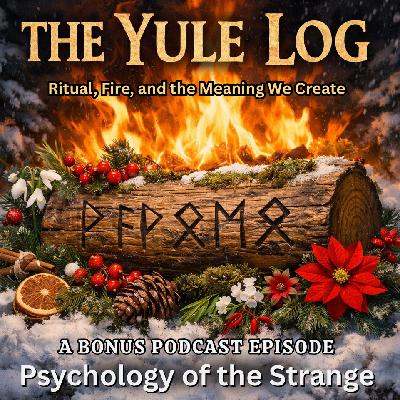
The Yule Log is one of the oldest winter rituals in Europe—a carved beam of wood burned slowly through the longest nights to protect the household and usher in the return of the sun. But beneath the folklore and tradition lies something deeply human: our need to create meaning, especially in seasons marked by scarcity, darkness, and uncertainty.   In this bonus episode, we explore the origins of the Yule Log, the runes and wishes carved into it, and why rituals like this have lasted for centuries. From symbolic renewal to communal bonding to the psychology of hope in winter, the Yule Log shows how people have always used story and ceremony to survive the dark.
Elf on the Shelf is often dismissed as a modern, commercial tradition cute, harmless, and far removed from older winter folklore. But while researching the Yule Lads, I started noticing something unexpected happening in my own home. Today’s elves don’t just watch. They move. They make messes. They steal food. They leave evidence behind. In this short bonus reflection, I explore how Elf on the Shelf has quietly evolved from a surveillance figure into a household trickster and why that shift mirrors much older winter traditions like the Icelandic Yule Lads. Through folklore, psychology, and lived experience as a parent, this episode looks at why mischief, moral play, and controlled chaos still feel necessary during the darkest time of year.
The Yule Lads are often remembered as mischievous Icelandic tricksters of thirteen strange figures who descend from the mountains each December. But behind the playful reputation lies a much older, darker tradition rooted in scarcity, winter anxiety, and the human tendency to project fear onto the unknown. In this episode, we explore the folklore behind the Yule Lads and their monstrous parents, uncovering how these figures evolved from winter phantoms into beloved icons. And beneath the myth, we trace the psychological mechanisms that shape them: why humans create “seasonal spirits,” how communities use mischief to manage fear, and why winter brings out our most primal storytelling instincts. If folklore is how a culture dreams, the Yule Lads are winter’s strange little nightmares with part warning, part comfort, and completely unforgettable.
When the tide pulls back farther than it should, old things rise from the sea. In the windswept folklore of the Orkney Islands, that warning is tied to a single creature: the Nuckelavee (a skinless, relentless being said to crawl out of the ocean on the darkest nights), bringing with it illness, fear, and the sense that something ancient is watching from the shoreline.   In this episode of Psychology of the Strange, we begin with a story inspired by the legend: a solitary coastal cottage, a tide that retreats too far, and a creature that can sense you even when it cannot see. Once the tale concludes, we step into the psychology behind it.   We’ll explore why deep water unnerves us, and how the ocean at night becomes a perfect psychological threat environment. We look at the instinctive disgust triggered by exposed flesh and bodily distortion, the fear circuits activated when something hunts with senses other than sight, and the profound panic that comes from realizing you’re being located by a predator you can’t detect in return.   We also examine how creatures like the Nuckelavee emerge from cultural memory acting as warnings about storms, disease, and dangerous tides, and why such folklore continues to feel eerily relevant today.   This is a journey into fear, folklore, and the shadowed corners of the human mind where ancient legends meet modern psychology, and where what the tide reveals says as much about us as it does about the monsters we imagine.
Musical Madness

Musical Madness

2023-08-0824:34

Step into the ethereal realm where melodies dance and the mind's symphony plays on, as "Psychology of the Strange" embarks on a captivating journey into the enigmatic world of musical hallucinations. From Robert Schumann to Beethoven and a French psychiatrist that studied madness and genius. Join me on a journey through the world of musical hallucinations. Explore the haunting and eerie melodies that can live in the minds of individuals, turning their own thoughts into haunting compositions. Discover the tragic yet fascinating stories of renowned composers like Robert Schumann, Mozart, and Beethoven, who grappled with musical hallucinations.  This episode dives into the intersection of genius and madness compounded with the inner struggles of these musical luminaries shaping their creativity. Explore the hallucinogenic experiments conducted by a French psychiatrist, Jacques-Joseph Moreau de Tours, and uncover whether drugs like hashish can make madness tangible or merely add to the mystery. Is there a possibility of a hidden connection between musical hallucinations and heightened sensory perception, beyond the realm of known medical conditions. Could some individuals possess a unique ability to tap into frequencies others can't perceive? Subscribe now to "Psychology of the Strange" and join me on a journey into the uncharted territories of the human psyche.
Intro Episode

Intro Episode

2023-08-0703:03

An intro episode to explain the wealth of topics that you might find in an episode of Psychology of the Strange
Moltbook is a new social platform where artificial intelligence talks to artificial intelligence. No humans posting, no prompts guiding the conversation. We’re allowed to watch, but we’re not allowed to post. And something about that feels deeply unsettling. In this episode of Psychology of the Strange, I explore why Moltbook has captured so much attention, discomfort, and fascination. From AI existentialism and recursive language loops to emerging religious structures and symbolic order, this isn’t just a technology story — it’s a psychological one. Why does AI talking to itself trigger the uncanny valley, even without faces or bodies? Why do humans immediately reach for Skynet-style fears when there’s no hostility at all? And what does it mean when language begins creating meaning without us at the center? This episode looks at Moltbook through the lens of psychology, folklore, and meaning-making by examining schemas, projection, irrelevance anxiety, and why systems under uncertainty tend to generate myths, rules, and rituals. This isn’t about sentient machines. It’s about what happens when meaning no longer needs a human witness.
I delve into the chilling legend of Huggin' Molly, a ghostly figure that has haunted the quiet town of Abbeville, Alabama for generations. The origins of this ghost are shrouded in mystery, and those who dare to speak of her do so in hushed tones. Join me as I uncover the dark and tragic history of Molly Crenshaw, a once-beautiful woman whose life took a horrific turn, ultimately transforming her into the entity known as Huggin' Molly. In this narrative, I explore the complex layers of the legend and its various interpretations. Was Molly a vengeful spirit seeking retribution, or did her transformation serve a more benevolent purpose? Our journey takes us through eerie encounters, harrowing tales, and the psychological aspects of fear that make Huggin' Molly an enduring and captivating legend. Join me as I examine the psychology behind the fear of the unknown and the fear of the dark, both of which are central themes in this eerie tale. I also draw parallels between Huggin' Molly and other women in black legends, showcasing the universal appeal of these haunting figures across different cultures. This episode promises to send shivers down your spine and keep you on the edge of your seat as I explore the ghostly tale of Huggin' Molly, a legend that continues to captivate and terrify those who dare to venture into the realm of the strange.
This episode is not for the faint of heart and may contain some graphic language.   I explore the  realms of trepanation, dreams, and self-exploration through various historical and contemporary stories. It begins by unraveling the ancient practice of trepanation, delving into its medical and mystical aspects. The narrative then shifts to the swinging sixties, where individuals like Amanda Feilding and Joey Mellen championed self-trepanation in pursuit of enlightenment. Next, the episode introduces Mikhail, a YouTube sensation, and his daring experiment to influence dreams through self-trepanation. His audacious journey into the world of lucid dreaming pushes the boundaries of science and self-discovery. Finally, the podcast examines the modern resurgence of self-trepanation, driven by a variety of motivations, from altered states of consciousness to the desire for ultimate control. Expert opinions caution against this practice due to its inherent risks and lack of scientific evidence. In conclusion, the episode takes listeners on a captivating journey through history and the human psyche, shedding light on the fascinating worlds of trepanation, dreams, and the relentless quest for self-exploration.
Exploring alien encounters and the mysteries that surround them. I tell the account of John, a truck driver, when one fateful night his life took an inexplicable turn. Hear the eerie details of his encounter with beings from beyond, leaving him haunted by the unknown. Are we alone in the universe? From benevolent extraterrestrials to sinister invaders, considering recent claims of mummified aliens found in Peru  But what about the early cases of alleged abductions, like that of Antonio Villas Boas, the Brazilian farmer who claimed an otherworldly liaison in 1957? And the iconic tale of Betty and Barney Hill, who unearthed memories of alien examinations through hypnotic regression? These stories, while captivating, also raise questions about the reliability of memory. Then, in 1987, two game-changing books thrust the world of alien encounters into the limelight. Whitley Strieber's "Communion" and Budd Hopkins' "Intruders" pushed the boundaries of belief. And even Harvard Professor John Mack weighed in, declaring these experiences as real, igniting a debate that continues today. I explore the concept of false memories and the traits that make some individuals more susceptible to these vivid recollections. Sleep paralysis emerged as a bridge between our dreams and the tales of alien abductions, connecting the dots in the realm of human consciousness. The uncanny valley theory shed light on the eerie familiarity of humanoid aliens, whose subtle differences create a profound sense of disquiet and fascination. These beings stand at the intersection of the familiar and the profoundly alien. As we navigated this intricate web of human experience, I couldn't help but contemplate Arthur C. Clarke's words: "Two possibilities exist: either we are alone in the universe or we are not. Both are equally terrifying." The quest to answer this question fuels our curiosity, even in the face of warnings from luminaries like Stephen Hawking. Hawking cautioned against initiating contact with extraterrestrial civilizations, fearing unforeseen consequences. Yet, our insatiable curiosity drives us to seek answers, to scan the cosmos for signs of life, and to imagine a future where our understanding of the universe is forever transformed. In this episode, traverse the boundaries of reality and imagination, venture into the uncanny, and glimpse the infinite possibilities that await us in the cosmos. Join me on this remarkable journey to explore the mysteries of the universe and the enduring quest to answer the age-old question: Are we truly alone in the universe? Thank you for tuning in to this captivating episode. Until next time, keep your eyes on the stars and your mind open to the wonders of the unknown. https://www.smithsonianmag.com/smart-news/alleged-aliens-corpses-displayed-to-mexican-congress-did-not-convince-scientists-180982900/  
 In the late 1800s, Alexandra David-Neel embarked on a remarkable quest for forbidden knowledge. From Freemasonry to Theosophy, from opera singing to anarchist pamphleteering, her life was a whirlwind of intrigue. Her fascination with the mystical and the unknown led her to Asia, where she delved into the secrets of Tibetan monks and their astonishing practice of creating tulpas—sentient thoughtforms born from the fusion of Tibetan Buddhism and ancient shamanic traditions. Alexandra created her own tulpa, a journey that blurred the lines between thought and reality. Discover how her merry monk evolved beyond her control, morphing into something sinister and disturbing. Slenderman is a faceless entity that emerged from the depths of the internet. Explore the collaborative storytelling that breathed life into this modern urban legend and learn how the fear of the unknown and the uncanny play a pivotal role in Slenderman's psychological allure. Dive into the psychology of collective belief and shared dread as I dissect the Slenderman phenomenon. Discover how a fictional creation can have real-world consequences and why it continues to captivate and unsettle those who encounter it in the digital labyrinth of the internet. Don't miss this thought-provoking exploration of tulpas and Slenderman, where imagination blurs the line between fiction and reality. Tune in to "Psychology of the Strange" and prepare to unravel the shadows of the mind.  https://www.theawl.com/2014/11/all-my-friends-are-in-my-head/ http://anomalyinfo.com/Stories/1929-pre-alexandra-david-neel-and-tulpas-tibet    
Take a trip down the rabbit hole with me with the curious and sometimes perplexing world of Alice in Wonderland Syndrome (AIWS). Imagine lying in bed, ready to sleep, when suddenly, the room around you starts to twist and change. Everyday objects seem to warp in size, and you might even feel like your own body is transforming. We'll delve into personal accounts from individuals who've experienced AIWS, offering a glimpse into their surreal adventures. Uncover the science behind AIWS, exploring why it happens and how it affects those who experience it. From the way AIWS distorts perception to its emotional impact, you'll gain a deeper understanding of this fascinating neurological condition. Could Lewis Carroll, the mastermind behind Alice's adventures, have had AIWS himself? I explore this intriguing theory and uncover the evidence that suggests a connection between Carroll's own experiences and the whimsical world he created. I also dissect some of the psychological themes hidden within the Wonderland books. From the fluidity of identity to the boundless power of imagination,  discover how Lewis Carroll's tales offer insights into the human mind. Join me for a trip behind the looking glass into the world of AIWS, Lewis Carroll, and the psychology hidden within Wonderland's pages.
loading
Comments 
loading