


Conservation and Science
Subscribed: 73Played: 1,768
Subscribe


© Copyright 2026 Tommy Serafinski
Description
Are you tired of one-sided narratives about nature and conservation? Simplified takes that ignore the nuance and complexity of matters? This show brings you diverse perspectives on environmental stories, examining their ecological, social and political dimensions. Listen and become a well-rounded voice, empowered to foster dialogue and create change.
I'm Tommy Serafinski and this is the Conservation and Science podcast, where we take a deep dive into topics of ecology, conservation and human-wildlife interactions (which, in most cases, means human-wildlife conflict). I talk with world-class scientists, members of environmental organisations, practical conservationists, farmers, nature writers, and last but not least, hunters and anglers. My conversations cover biodiversity, conservation, hunting and fishing, rewilding and more.
Start with the acclaimed episode 163, “The EU Review of Wolf Protection Status.” It’s the perfect introduction to what this podcast has to offer.
I'm Tommy Serafinski and this is the Conservation and Science podcast, where we take a deep dive into topics of ecology, conservation and human-wildlife interactions (which, in most cases, means human-wildlife conflict). I talk with world-class scientists, members of environmental organisations, practical conservationists, farmers, nature writers, and last but not least, hunters and anglers. My conversations cover biodiversity, conservation, hunting and fishing, rewilding and more.
Start with the acclaimed episode 163, “The EU Review of Wolf Protection Status.” It’s the perfect introduction to what this podcast has to offer.
242 Episodes
Reverse
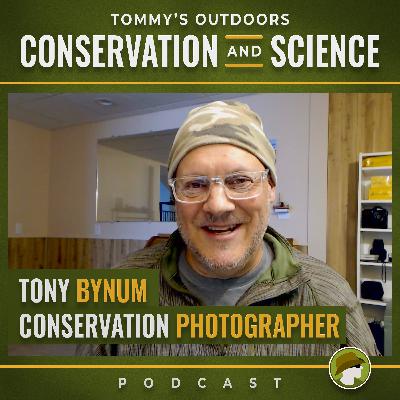
This episode features one of the most important conversations about hunting and impacts on nature that I can remember in 10 years of making the podcast. It's not surprising though as our guest today is a long-time supporter and friend of the podcast, Tony Bynum. Tony is an accomplished wildlife photographer who spent 15 years travelling the world photographing people hunting. He is a geographer by training with a master's degree in science and has managed scientific projects across the United States. He also worked in two presidential administrations at the Environmental Protection Agency. On top of all that, Tony is a lifelong hunter and angler with Native American heritage that deeply influences his approach to conservation and land ethics.Our conversation starts with a famous quote from José Ortega y Gasset suggesting that photography can never replace hunting because one is mere observation and the other is participation. Tony challenges this view with a perspective I hadn't considered before. Are photographers really just observers? What personal decisions has Tony made about his own photography as a result of his views? And how do traditional stories shape our connection to the land and the animals we pursue? You'll have to listen to find out.We also discuss the difference between transactional and value-based approaches to hunting, the role of visual art in conservation and the problematic influence of social media on outdoor pursuits. Tony's message about doing something for what you love, rather than just loving it, runs through everything we discuss. His thoughts on raising his three daughters with outdoor experiences, without pushing them to become environmentalists, offer valuable insights for anyone who cares about passing on a connection to nature.Subscribe to Tommy's Outdoors: Conservation and Science NewsletterSupport the Podcast and Buy Me a Coffee.Recommended Books: tommysoutdoors.com/booksMerch: tommysoutdoors.com/shopFollow Tommy's Outdoors on Bluesky, Twitter, Instagram, YouTube and Facebook
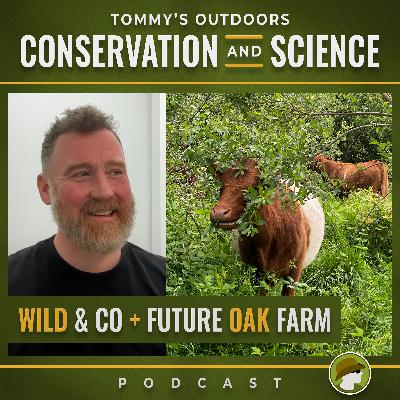
Can holistic grazing systems restore degraded hillsides and create profitable farms? How can local food systems and venison products revitalise struggling rural communities? Is it possible to farm with nature rather than against it and still make a living? These are the questions we explore in our conversation with John Duffy from Future Oak Farm, who returned to County Donegal after a career in oil and gas to transform his family's traditional sheep farm into a model of regenerative agriculture.John left Donegal at 17 because he couldn't see a future in traditional farming. After 16 years working in civil engineering, mining and oil and gas exploration across Europe, the Middle East and Africa, he returned home following an industry downturn and his father's death. What brought him back wasn't nostalgia but a vision for a different kind of agriculture. Inspired by Allan Savory's holistic management and the predator-prey dynamics he'd seen in David Attenborough documentaries, John began experimenting with bunched livestock grazing that mimics natural herbivore behaviour. The results transformed not just the land but the economic viability of hill farming in one of Ireland's most challenging landscapes.Our conversation covers habitat recovery, woodland regeneration, deer management and the creation of Wild & Co, John's venison product company that's building shorter supply chains and retaining more value in rural communities. We also discuss the fragility of long supply chains, the disconnect in Ireland's food system where 70% of consumed beef is imported despite producing enough to feed ourselves three times over and why John believes the innovation needed for Irish agriculture will come from the challenging farming conditions of the West of Ireland. John offers a practical vision for how farming can support both nature and thriving rural communities.Further reading:Wild & Co | Wild Irish Venison Protein SnacksFuture Oak FarmFuture Oak Farm | InstagramWild & Co | InstagramSubscribe to Tommy's Outdoors: Conservation and Science NewsletterSupport the Podcast and Buy Me a Coffee.Recommended Books: tommysoutdoors.com/booksMerch: tommysoutdoors.com/shopFollow Tommy's Outdoors on Bluesky, Twitter, Instagram, YouTube and FacebookThe guest featured in this episode paid a nominal guesting fee. This fee did not directly influence the content of the episode. The guest had no editorial control, did not review the episode before publication, and did not influence the questions asked during the interview.
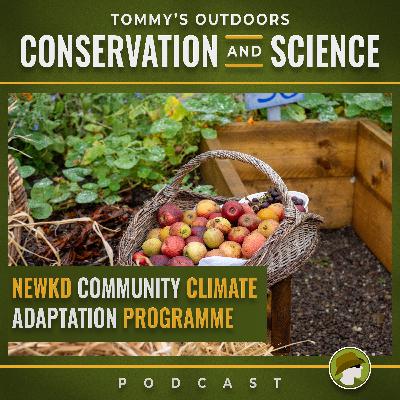
How do rural communities prepare for climate change when global commitment seems to be wavering? What does real climate adaptation look like on the ground? Can local knowledge be as valuable as academic expertise when it comes to building resilient communities? These are the questions we tackle in this special episode, which launches a new series following a two-year Community Climate Adaptation Training and Mentoring Programme in Kerry.Today I'm joined by six guests. John Loughrey from NEWKD explains how the LEADER programme evolved from having one small climate sub-theme to making it a major focus. Micheál Ó Cóileáin, Mary Kiernan, Thomas O'Connor, Niamh Ní Dhúill and Catríona Fallon from Transition Kerry share their experiences working on these issues since 2007. Together, NEWKD and Transition Kerry developed an ambitious programme to work with local communities across Co. Kerry. Our conversation covers everything from the practical details of the programme to the philosophy behind it, including wisdom about using your head, heart and hands to create the future you want.This is the first episode in a series where we'll be following the programme over the next two years. We'll be speaking with participants and community leaders as they work through the various phases of capacity building, from initial meetings through to implementing climate adaptation projects in their own communities.To sign up or find out more, contact adaptationkerry@transitionkerry.orgor go to www.adaptationkerry.transitionkerry.orgSubscribe to Tommy's Outdoors: Conservation and Science NewsletterSupport the Podcast and Buy Me a Coffee.Recommended Books: tommysoutdoors.com/booksMerch: tommysoutdoors.com/shopFollow Tommy's Outdoors on Bluesky, Twitter, Instagram, YouTube and Facebook
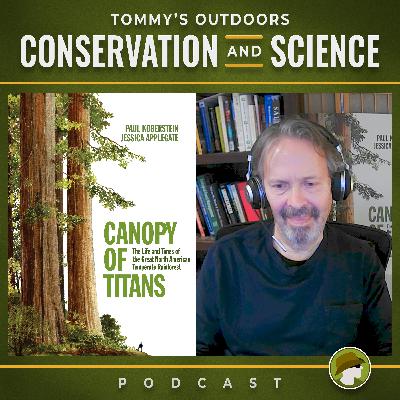
What if the world's most powerful climate solution is being logged away while politicians and industry groups feed us misinformation? How can an ecosystem store three times more carbon per acre than the Amazon rainforest? Why has the international science community remained largely silent about the destruction of temperate rainforests? Our conversation with Paul Koberstein, co-author of "Canopy of Titans - The Life and Times of the Great North American Temperate Rainforest" tackles these urgent questions head-on. The Great North American temperate rainforest stretches 2,500 miles from northern California to Alaska, making it the largest intact temperate rainforest on Earth. Yet this carbon-dense ecosystem faces ongoing threats from industrial logging, greenwashing campaigns, and policy decisions that prioritise short-term profits over long-term climate stability.Paul shares his journey from camping beneath old-growth Douglas firs as a child to becoming an investigative environmental journalist covering forest issues for over 40 years. Our conversation examines the troubling parallels between the timber industry's tactics and those employed by fossil fuel and tobacco companies. We discuss how scientists like Dr Beverly Law faced persecution for publishing research on how forests benefit the climate. Paul explains the "global blind spot" that has allowed temperate rainforest logging to continue largely unchallenged, even as the international community rallies to protect tropical rainforests. The book reveals how industry-funded research has shaped policy debates and obscured the true climate impact of logging these ancient forests.Despite the sobering realities, Paul offers hope through examples of successful grassroots activism. When thousands of people raised their voices against Drax's expansion into California, the project was cancelled. Our conversation also touches on the dramatic shift in US climate policy under different administrations and what this means for forest protection efforts globally. Paul's advice is clear: to save a forest, you must work at it every day, but to destroy it, you only need to do it once. This episode is essential listening for anyone who cares about climate action, forest conservation, and cutting through corporate greenwashing.Subscribe to Tommy's Outdoors: Conservation and Science NewsletterSupport the Podcast and Buy Me a Coffee.Recommended Books: tommysoutdoors.com/booksMerch: tommysoutdoors.com/shopFollow Tommy's Outdoors on Bluesky, Twitter, Instagram, YouTube and FacebookTommy’s Outdoors is a participant in the Amazon Services LLC Associates Program, an affiliate advertising program designed to provide a means for sites to earn advertising fees by advertising and linking to Amazon.co.uk The guest featured in this episode paid a nominal guesting fee. This fee did not directly influence the content of the episode. The guest had no editorial...
Can we find a middle ground between those who see the EU's wolf downlisting as a catastrophe and those who celebrate it as good news? The debate around wolf conservation in the EU has become frustratingly polarised, with both sides 'crying wolf' about the consequences of changing protection status. It's time to step back and look at the evidence.When dealing with controversial subjects like this, it is important to be factual and follow the evidence. So I was delighted to have the opportunity to talk about it with Dr Hanna Pettersson, one of the most prominent early career voices in interdisciplinary conservation. Hanna is the lead author of a paper titled 'Now What? The Conundrum of Successful Recovery of Wolves and Other Species for European Conservation', co-authored with Professor Erica von Essen, who was also a guest on the acclaimed episode 163.During our conversation, we discuss the success conundrum in conservation, the difference between ecological and social carrying capacity, and why we need to think about future pathways rather than looking back. We also talk about the role of legal hunting in reducing poaching and the importance of working with local communities who have lived alongside wolves for generations. Of course, there are larger systemic issues underneath and we don't shy away from discussing those as well, including inequality as a driver of biodiversity loss.Further reading:Now What? The Conundrum of Successful Recovery of Wolves and Other Species for European ConservationTime to stop crying wolf – on both sides of the debate - Stockholm Resilience CentreSubscribe to Tommy's Outdoors: Conservation and Science NewsletterSupport the Podcast and Buy Me a Coffee.Recommended Books: tommysoutdoors.com/booksMerch: tommysoutdoors.com/shopFollow Tommy's Outdoors on Bluesky, Twitter, Instagram, YouTube and Facebook
On my podcast, we talk a lot about coexistence with large carnivores and the challenges it poses. Some of those challenges might seem insurmountable to some. To shed some light on overcoming these hurdles, I contacted Helen Arusoo, an Estonian nature journalist and the leader of the National Animal Working Group. In this conversation, we talk about how Estonia overcame these hurdles and created something that I would consider the gold standard of coexistence with large carnivores.Unsurprisingly, the majority of our time was spent discussing wolves as they seem to be the most difficult carnivore species to coexist with, at least in the northern hemisphere. However, we did discuss other large carnivores like bears too. Our conversation focused mostly on social and cultural factors. We also touched on the European Commission's proposal to lower the protection status of wolves, something we’ve discussed extensively in one of the previous episodes.It was a wonderful conversation and I enjoyed speaking with Helen. Her profound understanding of the challenges of coexistence is impressive. She presented a deeply thought-out perspective and I can only wish that more people who care about wolves could learn from her experience and the Estonian model of coexistence with large carnivores.Subscribe to Tommy's Outdoors: Conservation and Science NewsletterSupport the Podcast and Buy Me a Coffee.Recommended Books: tommysoutdoors.com/booksMerch: tommysoutdoors.com/shopFollow Tommy's Outdoors on Bluesky, Twitter, Instagram, YouTube and FacebookMentioned in this episode:This is the Conservation and Science podcast Replay series, a curated collection of best episodes from last year. If you are new to the show, this is an excellent opportunity to catch up with the most popular episodes from the back catalogue. And if you’re a regular listener, maybe you missed one of those or want to listen to one of them again. Don’t worry! The new episodes are being published on the regular fortnightly schedule, so keep tuning in for the new content every other Tuesday.
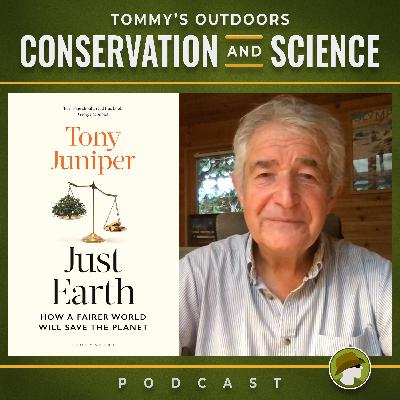
Why are we failing to make progress on climate change and biodiversity loss despite fifty years of environmental campaigning? What changed in recent years that made it so difficult to rally support for nature? Could social inequality be the root cause undermining all our conservation efforts? These are the questions Tony Juniper addresses in his latest book 'Just Earth: How a Fairer World Will Save the Planet' and in our conversation today.Tony has been campaigning for nature for nearly forty years. He has led major organisations including BirdLife International, Friends of the Earth, and WWF UK. He is a multi-award winning author whose books include 'What Has Nature Ever Done For Us?' and 'Harmony', co-authored with King Charles III. Currently, he chairs Natural England, the British Government's official conservation agency. During our conversation, Tony reflects on the progress made over the past five decades and explains why the last fifteen years have seen a dramatic shift. He describes how political volatility, misinformation, media fragmentation, and rising inequality have created an environment where environmental progress has stalled.We discuss how obscene levels of wealth concentration, declining living standards for ordinary people, and the manipulation of public debate by vested interests have made it nearly impossible to build the broad coalition needed to tackle climate change and biodiversity loss. Tony makes a compelling case that we cannot solve environmental problems without addressing social inequality. He offers practical advice on what each of us can do, starting today, to be part of the solution. This conversation challenges us to think differently about conservation and recognise the deeper societal issues we must confront.Buy Tony's Book: https://amzn.to/4ptIfs4Subscribe to Tommy's Outdoors: Conservation and Science NewsletterSupport the Podcast and Buy Me a Coffee.Recommended Books: tommysoutdoors.com/booksMerch: tommysoutdoors.com/shopFollow Tommy's Outdoors on Bluesky, Twitter, Instagram, YouTube and FacebookTommy’s Outdoors is a participant in the Amazon Services LLC Associates Program, an affiliate advertising program designed to provide a means for sites to earn advertising fees by advertising and linking to Amazon.co.uk

What is sustainable agriculture? Does regenerative farming mean focusing primarily on the soil biome? Is farming a leading cause of biodiversity loss? …and do we really have only 60 harvests left? To get the answers to those and other questions about farming and biodiversity, join me for a conversation with an agricultural management and policy specialist, an economist, a writer and an advisor, Stuart Meikle.In this episode, Stuart shares with us the history of his education in farming and later his work in different farming environments across the world. Then we switch gears and talk about issues specific to Irish agriculture, which also has some relevance in the UK context. And so, we discuss the use of nitrogen fertilisers, soil health and whether the cuts to the size of the national cattle herd are inevitable. I also ask Stuart about his thoughts on the recently passed Nature Restoration Law.After you listen to this episode, don’t forget to subscribe to my newsletter so as not to miss more farming episodes that are due in the coming weeks. Being a subscriber also gives you an excellent opportunity to send me your feedback and suggestions about past and future episodes. It’s as easy as replying to an email! Finally, newsletter subscribers are first to be informed about live events and can avail themselves of substantial discounts on exclusive content.Subscribe to Tommy's Outdoors: Conservation and Science NewsletterSupport the Podcast and Buy Me a Coffee.Recommended Books: tommysoutdoors.com/booksMerch: tommysoutdoors.com/shopFollow Tommy's Outdoors on Bluesky, Twitter, Instagram, YouTube and FacebookMentioned in this episode:This is the Conservation and Science podcast Replay series, a curated collection of best episodes from last year. If you are new to the show, this is an excellent opportunity to catch up with the most popular episodes from the back catalogue. And if you’re a regular listener, maybe you missed one of those or want to listen to one of them again. Don’t worry! The new episodes are being published on the regular fortnightly schedule, so keep tuning in for the new content every other Tuesday.
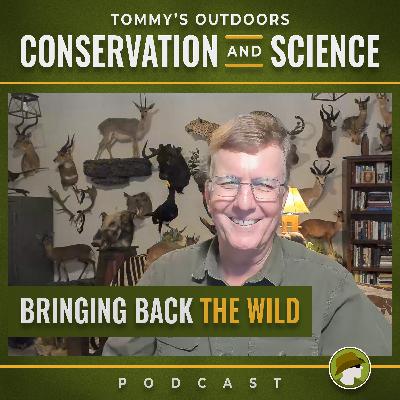
Can hunting truly support conservation? Does fortress conservation offer a sustainable solution for protecting wildlife in the long term? And how do we balance the needs of impoverished communities with the preservation of fragile ecosystems? Our guest today is Mike Arnold, a Distinguished Research Professor and Head of the Department of Genetics at the University of Georgia and a lifelong hunter. Mike has published over 220 articles in outdoor magazines and hundreds of research papers on conservation biology. He's also the author of "Bringing Back the Wild: Stories from Revitalised Ecosystems Around the World and How Sport Hunting Supports Them". In our conversation, Mike tackles these difficult questions head-on, drawing from his experiences across the globe.Mike explains how private hunting concessions in places like Mozambique have maintained stable rhino populations whilst nearby national parks have lost over 90% of their animals to poaching. He shares fascinating insights from his travels to locations as varied as Mexico's Yucatan, Scotland's hunting estates, and Sweden's forests - including his quest for a rare red-coloured West African Savannah buffalo. What emerges is a nuanced picture of conservation that refuses easy answers. Mike discusses the biological realities of managing herbivore populations, the importance of protecting entire ecosystems rather than just game species, and how economic benefits to landowners create incentives for habitat protection.The conversation takes an honest look at challenges facing hunting and conservation. Mike and I discuss the troubling demographics of hunting organisations, where finding anyone under 50 is increasingly difficult. We explore the tensions between rewilding advocates and traditional land users, the concept of "fortress conservation", and whether current systems can survive long-term pressures from growing inequality. We argue that addressing poverty is essential for conservation success, and that getting young people engaged with nature, not TikTok and PlayStation, is crucial for the future. Whether you hunt or not, this episode offers valuable perspectives on one of conservation's most contentious subjects.Buy Mike's Book: https://amzn.to/3WLkFe2Subscribe to Tommy's Outdoors: Conservation and Science NewsletterSupport the Podcast and Buy Me a Coffee.Recommended Books: tommysoutdoors.com/booksMerch: tommysoutdoors.com/shopFollow Tommy's Outdoors on Bluesky, Twitter, Instagram, YouTube and FacebookThe guest featured in this episode paid a nominal guesting fee. This fee did not directly influence the content of the episode. The guest had no editorial control, did not review the episode before publication, and did not influence the questions asked during the interview. Mentioned in this episode:DOWNLOAD:a...
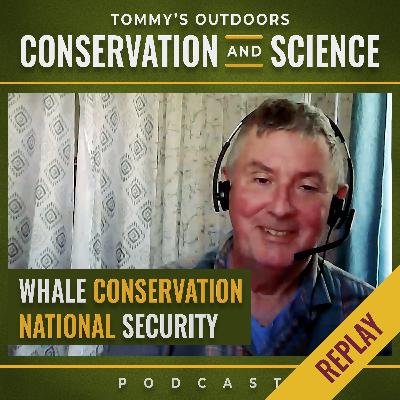
Is the resumption of commercial whaling inevitable? What hidden geopolitical forces are shaping international whale conservation efforts? Let's dive (pun not intended) into the complex world of whale conservation with marine scientist Dr Peter Corkeron. In our conversation, Peter uncovers the surprising connections between military bases, national security, and the fate of the world's largest mammals.From the history of industrial whaling to the current state of whale populations, our guest provides a comprehensive overview of the challenges facing whale conservation today. He explains how some whale species are making an impressive comeback while others teeter on the brink of extinction. But the real story goes beyond biology! Learn how US military interests in Japan may be influencing whaling policies, and why anti-whaling efforts that seemed successful for decades may now be faltering.As commercial whaling threatens to resume, we argue for a new approach to whale protection. We discuss the limitations of current conservation strategies, the complex motivations behind pro-whaling interests and why simply allowing whaling to "fizzle out" is no longer a viable option. Finally, Peter offers his perspective on potential solutions, addressing underlying geopolitical factors and advocating for policy changes to protect whale populations more effectively.Further reading:Losing the Whales: How the Anti-Whaling Narrative Has FailedThe Return of WhalingWhat US Militarism Has to Do With Japan's Quest to Slaughter More WhalesSubscribe to Tommy's Outdoors: Conservation and Science NewsletterSupport the Podcast and Buy Me a Coffee.Recommended Books: tommysoutdoors.com/booksMerch: tommysoutdoors.com/shopFollow Tommy's Outdoors on Bluesky, Twitter, Instagram, YouTube and FacebookMentioned in this episode:This is the Conservation and Science podcast Replay series, a curated collection of best episodes from last year. If you are new to the show, this is an excellent opportunity to catch up with the most popular episodes from the back catalogue. And if you’re a regular listener, maybe you missed one of those or want to listen to one of them again. Don’t worry! The new episodes are being published on the regular fortnightly schedule, so keep tuning in for the new content every other Tuesday.
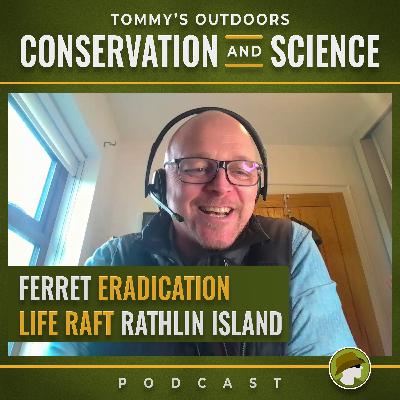
What are the ethical considerations when eradicating invasive species from an island? How do you develop wireless technology to monitor hundreds of traps across difficult terrain? Why do conservation projects like this cost so much more than people expect? These are some of the questions we explore in our conversation about the LIFE Raft project on Rathlin Island, Northern Ireland's only inhabited offshore island.Our guest is David Tosh, a Lecturer in Terrestrial Ecology at the School of Geography and Environmental Sciences, Ulster University. David led the ambitious effort to eradicate feral ferrets and brown rats from Rathlin to protect internationally important seabird colonies. The ferrets were introduced in the 1980s to control rabbits but instead devastated ground-nesting bird populations. David explains the complexities of targeting two species simultaneously using different methods, the development of wireless platforms to monitor traps remotely, and where the money actually goes in projects like this. Success came faster than expected, with Manx shearwaters breeding on Rathlin for the first time in decades, just months after the eradication was completed.Beyond the technical achievements, our conversation explores the social dimensions that often determine whether conservation projects succeed or fail. David shares why the most important measure of success isn't just the return of seabirds, but whether the organisations involved can maintain trust and partnership with the islanders. We discuss the frustrations of five-year funding cycles for projects that require decades of commitment, and what it takes to ensure Rathlin remains ferret-free and rat-free for generations to come.Subscribe to Tommy's Outdoors: Conservation and Science NewsletterSupport the Podcast and Buy Me a Coffee.Recommended Books: tommysoutdoors.com/booksMerch: tommysoutdoors.com/shopFollow Tommy's Outdoors on Bluesky, Twitter, Instagram, YouTube and FacebookMentioned in this episode:DisclaimerThe views and opinions expressed in this podcast are those of the individual participants and do not necessarily reflect the official policy or position of any organisation. The participants are expressing their personal opinions and perspectives.
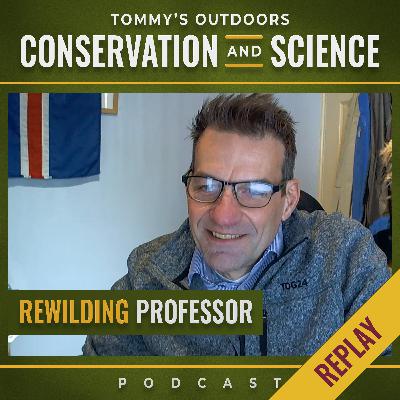
Is rewilding truly mainstream now, or does it remain mired in misunderstanding? Can we finally agree on what the term actually means? And is it really an anti-rural movement that seeks to empty the countryside of people? These questions have dominated conservation debates for years, and our conversation today tackles them head-on with refreshing clarity. Our guest is Dr Steve Carver, Director of the Wildland Research Institute at the School of Geography, University of Leeds, and Professor of Rewilding and Wilderness Science.In our conversation we explore how rewilding differs fundamentally from traditional conservation and regenerative farming. We examine the crucial role of scale, the problematic nature of fences in rewilding projects, and why the Oostvaardersplassen experiment in the Netherlands offers important lessons. Steve introduces his concept of 'nature-led versus human-led' approaches and explains why giving nature the space and time to determine its own trajectory remains the core principle. We also discuss the controversial question of whether projects like Knepp Estate truly qualify as rewilding or represent something else entirely.Throughout our discussion, Steve emphasises that rewilding is deeply context-specific and requires genuine local community engagement to succeed. He unpacks the relationship between wilderness and rewilding, explores why species reintroductions aren't mandatory, and shares his measured optimism about lynx returning to the UK (though wolves remain a more distant prospect). We also examine how the European interpretation of rewilding has evolved differently from its North American origins, and what this means for future conservation efforts. This episode offers a balanced, scientifically grounded perspective on where rewilding stands today and where it might be heading.Further reading:Guiding principles for rewildingSubscribe to Tommy's Outdoors: Conservation and Science NewsletterSupport the Podcast and Buy Me a Coffee.Recommended Books: tommysoutdoors.com/booksMerch: tommysoutdoors.com/shopFollow Tommy's Outdoors on Bluesky, Twitter, Instagram, YouTube and FacebookMentioned in this episode:This is the Conservation and Science podcast Replay series, a curated collection of best episodes from last year. If you are new to the show, this is an excellent opportunity to catch up with the most popular episodes from the back catalogue. And if you’re a regular listener, maybe you missed one of those or want to listen to one of them again. Don’t worry! The new episodes are being published on the regular fortnightly schedule, so keep tuning in for the new content every other Tuesday.
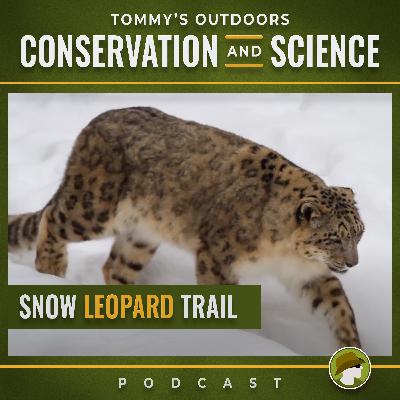
Can communities in Ireland and Britain learn to share landscapes with apex predators again after centuries of their absence? What does coexistence actually look like when people, livestock, and large carnivores occupy the same territory? How might wisdom from Himalayan communities inform debates about lynx reintroduction closer to home?Our conversation takes us from the remote mountains of Nepal to potential lynx habitats in Scotland and Ireland. Jonny Hanson travelled to the Annapurna Conservation Area to document how local communities live alongside snow leopards, creating a short film ‘Snow Leopard Trail’ that inverts the traditional conservation narrative. Rather than Western experts advising the Global South, Jonny learns from Nepali colleagues who have never experienced the extinction of experience that defines our relationship with large carnivores. His Nepali colleagues, award-winning conservation biologist Rinzin Lama and pioneering snow leopard tourism guide Tashi R. Ghale are the true guardians of these landscapes, managing coexistence in a region where 100,000 people and 100,000 tourists share space with one of the world's most elusive predators.The film and our discussion challenge romanticised notions of conservation whilst grappling with practical realities. We explore the tensions inherent in protected area management, the limitations of wildlife tourism as an economic solution, the importance of long-term funding for coexistence, and the need to bridge scientific rigour with the full spectrum of human experience, including spiritual and cultural values. The film premieres at festivals across Ireland and the UK in late 2025, offering a rare glimpse into what genuine coexistence requires.Where to watch:Queen's Film Theatre screening: ESRC Festival of Social Science in NI 2025Selected for Clones Film FestivalSubscribe to Tommy's Outdoors: Conservation and Science NewsletterSupport the Podcast and Buy Me a Coffee.Recommended Books: tommysoutdoors.com/booksMerch: tommysoutdoors.com/shopFollow Tommy's Outdoors on Bluesky, Twitter, Instagram, YouTube and Facebook
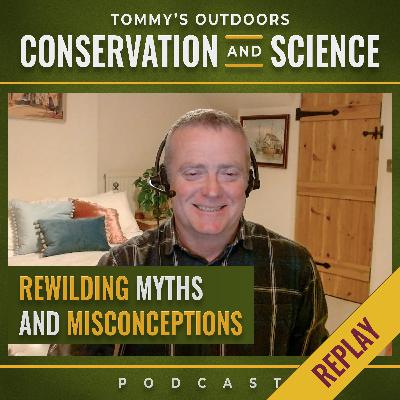
What exactly is rewilding? Does it simply mean bringing back wolves, lynx and bears, or is there more to it? Can we balance food production and rural community needs with land left to natural processes and wildlife conservation? To answer these questions, I talk with Ian Parsons, editor of "Great Misconceptions: Rewilding Myths and Misunderstandings", a new book that explores common assumptions and misconceptions about rewilding.In our discussion, we address aspects of rewilding that are often misunderstood or misinterpreted, sometimes innocently and at other times deliberately or even maliciously. We explore three topics commonly associated with rewilding that often spark heated debate: species reintroductions, community engagement, and the choice between tree planting and natural regeneration. This discussion draws on the collective wisdom of renowned authors who contributed distinct chapters to the book.In the end, Ian emphasises that rewilding shouldn't remain just another niche concept but needs to be integrated into how we live our lives, from urban planning to politics or even business practices. He challenges the notion that rewilding is anti-rural, arguing instead that it can revitalise rural economies and provide new opportunities for communities. The episode provides valuable insights for anyone interested in conservation, land management and the future of our relationship with nature.Buy Great Misconceptions: Rewilding Myths and MisunderstandingsSubscribe to Tommy's Outdoors: Conservation and Science NewsletterSupport the Podcast and Buy Me a Coffee.Recommended Books: tommysoutdoors.com/booksMerch: tommysoutdoors.com/shopFollow Tommy's Outdoors on Bluesky, Twitter, Instagram, YouTube and FacebookTommy’s Outdoors is a participant in the Amazon Services LLC Associates Program, an affiliate advertising program designed to provide a means for sites to earn advertising fees by advertising and linking to Amazon.co.uk Mentioned in this episode:This is the Conservation and Science podcast Replay series, a curated collection of best episodes from last year. If you are new to the show, this is an excellent opportunity to catch up with the most popular episodes from the back catalogue. And if you’re a regular listener, maybe you missed one of those or want to listen to one of them again. Don’t worry! The new episodes are being published on the regular fortnightly schedule, so keep tuning in for the new content every other Tuesday.
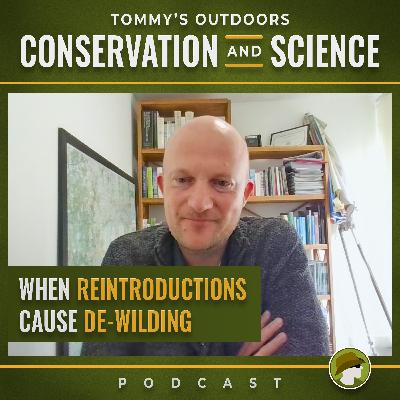
Can species reintroductions harm biodiversity rather than help it? Why might bringing back wolves or lynx create more problems than solutions? Are we using reintroductions as a distraction from the real drivers of our nature crisis? In conversation with Alex Lees, Reader at Manchester Metropolitan University, we explore these questions and cut through popular assumptions about rewilding.Alex argues that many reintroduction projects might cause 'de-wilding' rather than rewilding, particularly when we rush to move species around instead of letting natural colonisation occur. He explains why the fossil record isn't a menu for potential reintroductions and how our current biodiversity crisis stems from recent habitat degradation, not from species lost centuries ago. We also discussed the paradox of illegal beaver releases that succeeded alongside expensive official trials. Finally, we talk about the fundamental difference between fixing historical wrongs versus exercising ecological force with species translocations.The evidence shows that most of our wildlife losses happened in the 20th century due to habitat destruction, agricultural intensification and pollution, not from the absence of wolves, lynx, or other large mammals that were lost millennia ago. Alex makes a compelling case that while reintroductions have their place, they risk becoming a political smokescreen that allows governments to avoid tackling the real causes of biodiversity collapse. Our focus should be on habitat restoration, reducing invasive species, and creating connectivity for natural recolonisation rather than expensive translocation programmes.Subscribe to Tommy's Outdoors: Conservation and Science NewsletterSupport the Podcast and Buy Me a Coffee.Recommended Books: tommysoutdoors.com/booksMerch: tommysoutdoors.com/shopFollow Tommy's Outdoors on Bluesky, Twitter, Instagram, YouTube and Facebook
Sika (cervus nippon) is a mid-sized deer that was introduced to Ireland in the 1860s to the Powerscourt Estate. Soon after that, it started spreading across Ireland. Today, the main concentrations of sika are in Kerry, Wicklow, Tyrone and Fermanagh. More recently, it has also been found in Waterford, Galway, Limerick, and Wexford. The National Biodiversity Data Centre in Ireland lists sika as an invasive species. Despite that, it’s afforded protection under the Wildlife Act. It is prized by hunters as a game species and a source of excellent quality venison on the one hand, and hated by foresters and environmentalists for the damage to forestry and biodiversity on the other.Sika is present on the entire European continent and, although not as widespread as in Ireland, it is also causing similar problems. This is reflected in the recent move by the European Commission to launch consultations to put sika on the Invasive Alien Species (IAS) list across the Union. This poses the obvious question: what does it mean for the Irish population of sika if the EC makes such a decision? Will or should it be allowed continuous protection with open and closed hunting seasons? Or should it be reduced to the status of vermin and be eradicated across the country? To discuss the potential future of sika deer in Ireland and present a whole spectrum of views about this species, and invasive species more generally, I spoke with four expert guests presenting different views on the subject. By listening to this episode you will hear from Professor Jaimie T.A. Dick who specialises in Invasion Ecology, Eoghan Daltun an award-winning author who has spent last 15 years regenerating an Irish Atlantic rainforest, Damien Hannigan a Government Appointee to the Irish Deer Management Forum and Public Relations Officer at the Irish Deer Commission, and Professor of Wildlife Restoration Ecology, Adam T. Ford.Sika Deer in Ireland: Invasive Status and Its Impact - A Three-Episode ExclusiveAccess here: https://conservationlens.com/products/sika-deer-ias---Subscribe to Tommy's Outdoors: Conservation and Science NewsletterSupport the Podcast and Buy Me a Coffee.Recommended Books: tommysoutdoors.com/booksMerch: tommysoutdoors.com/shopFollow Tommy's Outdoors on Bluesky, Twitter, Instagram, YouTube and FacebookMentioned in this episode:This is the Conservation and Science podcast Replay series, a curated collection of best episodes from last year. If you are new to the show, this is an excellent opportunity to catch up with the most popular episodes from the back catalogue. And if you’re a regular listener, maybe you missed one of those or want to listen to one of them again. Don’t worry! The new episodes are being published on the regular fortnightly schedule, so keep tuning in for the new content every other Tuesday.
Why are elephants dying slow deaths from starvation in African parks? Can contraceptives really solve wildlife overpopulation in fenced reserves? What happens when international animal rights organisations influence conservation decisions from thousands of miles away? These are the uncomfortable questions at the heart of one of conservation's most contentious debates.Ryan Davy spent 30 years working in African conservation, starting as a 16-year-old volunteer in KwaZulu-Natal's remote game reserves. From those early days confronting poachers and negotiating with local communities, he witnessed firsthand how conservation policies play out on the ground. Now, as a wildlife filmmaker who has worked for National Geographic and Discovery, Ryan brings a unique perspective to the elephant culling debate through his upcoming documentary "The Culling Conundrum." His journey from animal rights supporter to someone advocating for population control reflects the complexity many conservationists face when confronted with ecological realities.Our conversation explores the practical impossibilities of alternative solutions to overpopulation. Ryan walks through a hypothetical game where listeners manage their own 75,000-hectare reserve, facing the stark choice between letting animals starve or making difficult management decisions. We examine the failed elephant translocation in Malawi, where 12 people died and 80 elephants went missing after an international organisation moved 262 elephants into unsuitable habitat. The discussion also covers the influence of well-funded animal rights campaigns on conservation policy, the disconnect between international activism and local realities, and the economic pressures facing private game reserves. Ryan argues for finding common ground between opposing camps, emphasising that sustainable conservation requires honest dialogue about uncomfortable topics rather than ideology-driven positions.Further reading:The Culling Conundrum | Official TeaserClockwork OrangeRyan's YouTube ChannelSubscribe to Tommy's Outdoors: Conservation and Science NewsletterSupport the Podcast and Buy Me a Coffee.Recommended Books: tommysoutdoors.com/booksMerch: tommysoutdoors.com/shopFollow Tommy's Outdoors on Bluesky, Twitter, Instagram, YouTube and Facebook
Should we worry about consuming venison from an animal harvested with lead ammunition? Will cutting out and discarding meat around the impact area solve the problem? And what are the best practices to keep us safe?Most of us have heard about the negative effects of lead on health. Not only on our health but also on the health of the ecosystems. In this episode, we are answering questions about the scale and severity of these effects from the perspective of lead used in hunting ammunition. To get a full picture I talk with Prof. Fredrik Widemo, a senior researcher at the Swedish University of Agricultural Sciences in the Department of Wildlife, Fish and Environmental Studies. Fredrik is also a hunter so he approaches this topic from a personal perspective.Subscribe to Tommy's Outdoors: Conservation and Science NewsletterSupport the Podcast and Buy Me a Coffee.Recommended Books: tommysoutdoors.com/booksMerch: tommysoutdoors.com/shopFollow Tommy's Outdoors on Bluesky, Twitter, Instagram, YouTube and FacebookMentioned in this episode:This is the Conservation and Science podcast Replay series, a curated collection of best episodes from last year. If you are new to the show, this is an excellent opportunity to catch up with the most popular episodes from the back catalogue. And if you’re a regular listener, maybe you missed one of those or want to listen to one of them again. Don’t worry! The new episodes are being published on the regular fortnightly schedule, so keep tuning in for the new content every other Tuesday.
Can beavers save Britain's dying rivers? Are these ecosystem engineers the key to reversing the catastrophic decline of Atlantic salmon, or do their dams create impassable barriers for struggling fish populations? With salmon numbers plummeting by 70% in just 20 years and predictions they could vanish entirely within two decades, the stakes couldn't be higher. The reintroduction of beavers to British waterways has sparked heated debate about their impact on our most threatened migratory species.In this episode, our guest is Dr Rob Needham, and we talk about his research from Scotland. Rob's long-term study reveals how beaver-modified streams support larger, healthier trout populations, with tagged fish successfully navigating multiple beaver dam crossings. We also talk about research from Norway, and North America that's providing crucial insights for British conservation efforts. For example Rachel Malison’s work in Norway demonstrates that beavers and salmon coexist successfully for past decades on some of the world's most productive salmon rivers. The evidence suggests these species co-evolved together and co-existed for millennia, creating complex ecosystems that benefit both.From the western United States, Bridge Creek's remarkable restoration story demonstrates nature's incredible capacity for self-repair, with 200% increases in fish abundance following beaver reintroduction. Meanwhile, cutting-edge environmental DNA research is mapping salmon and beaver (and other species) distribution across Scottish catchments, showing how ecosystems can recover. As climate change intensifies pressure on freshwater habitats, the ecosystem engineering by beavers offers hope for building resilient river systems. The message is clear: collaboration between conservationists, researchers, and local communities is essential if we're to harness beavers' restorative power while protecting our precious migratory fish.Further reading:The impact of reintroduced Eurasian beaver (Castor fiber) dams on the upstream movement of brown trout (Salmo trutta) in upland areas of Great BritainBalance The Scales - Launch TrailerSubscribe to Tommy's Outdoors: Conservation and Science NewsletterSupport the Podcast and Buy Me a Coffee.Recommended Books: tommysoutdoors.com/booksMerch: tommysoutdoors.com/shopFollow Tommy's Outdoors on Bluesky, Twitter, Instagram, YouTube and Facebook
Are corvids overabundant pests or are they simply survivors in landscapes we've shaped? Why do these birds seem to look at us as intently as we look at them? What can ravens teach us about intelligence that might humble our sophisticated intelligence tests? This episode explores the world of corvids, from the familiar rooks and jackdaws to the acrobatic choughs and elusive jays that call Ireland home.Dr Fionn Ó Marcaigh, author of "Encounters with Corvids," joins us to unpack the complex relationship between humans and these remarkable birds. We discuss their extraordinary intelligence, including studies showing ravens can remember and recognise individual humans, and how they've adapted to thrive alongside us while other species struggle. Fionn shares stories from his research and observations, revealing behaviours that demonstrate that these birds are always "up to something" when we encounter them in the wild.In our conversation, we tackle the thorny issue of predator control and conservation dilemmas. While corvids thrive in human-modified landscapes, ground-nesting birds face rapid declines. We also explore the mythology and folklore that has shaped our perceptions of these birds, from Celtic battle goddesses to Norse deities, and examine how cultural attitudes influence modern conservation challenges. This episode offers perspectives on living alongside intelligent wildlife in ever-changing landscapes, reminding us that sometimes the most familiar creatures hold great surprises.Subscribe to Tommy's Outdoors: Conservation and Science NewsletterSupport the Podcast and Buy Me a Coffee.Recommended Books: tommysoutdoors.com/booksMerch: tommysoutdoors.com/shopFollow Tommy's Outdoors on Bluesky, Twitter, Instagram, YouTube and Facebook

Comments

Download from Google Play

Download from App Store
 United States