


Climate Watch
Subscribed: 7Played: 69
Subscribe

© Copyright @ China Plus
Description
Climate Watch delves into the pressing climate tipping points that loom large on the horizon. We deliver the latest updates on the climate change landscape and shed light on the urgent need for collective efforts in tackling climate change. By talking to locals, experts, and activists from across the world, we aim to inspire and empower listeners to be part of the solution. Join our weekly journey into the heart of climate change for a sustainable future for generations to come.
151 Episodes
Reverse
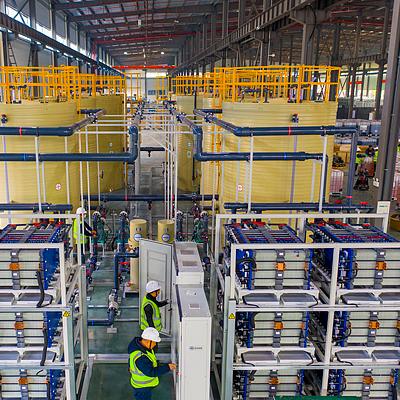
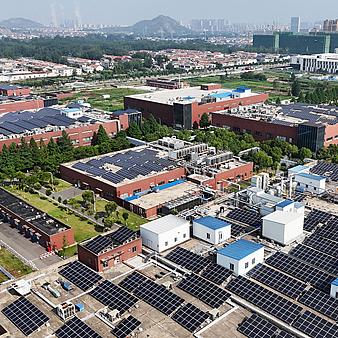
China will accelerate the development of zero-carbon industrial parks and factories. This year's government work report has highlighted the strategy, as part of the country's broader push to promote green and low-carbon development. What exactly is a zero-carbon industrial park? How do you build one? And what opportunities do they create for businesses? Zhao Ying speaks with Qu Qiang, a fellow of the Belt and Road Research Center at Minzu University of China, and Li Hanxi, the lead sustainability officer at HyperStrong, an energy storage system provider in China.
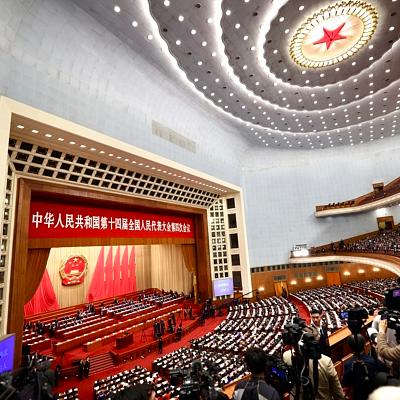
China's top legislature is deliberating on the draft of the country's first-ever Ecological and Environmental Code. If adopted, it would become only the second law in China formally designated as a "Code," after the Civil Code. How significant is this move? And what could it mean for businesses, investors, local governments, and ordinary citizens? Zhao Ying speaks with Ma Jun, Founder of the Institute of Public and Environmental Affairs.
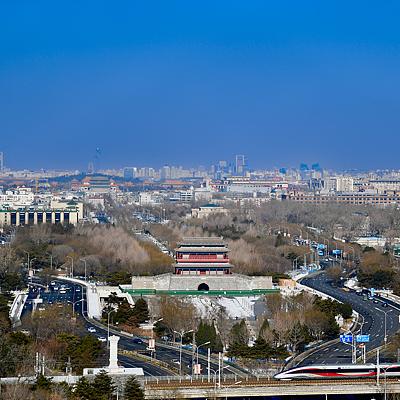
China has seen a massive, rapid cleanup of its skies over the past decade. Yet some recent reports suggest that these pollution reductions may have unintentionally accelerated global warming. What does the science actually say? Can we really blame clean air for a warming world, or are news headlines oversimplifying a much more complex climate story? Zhao Ying speaks with Arvea Marieni, European Climate Pact Ambassador.

Do you start your day with a cup of coffee? The world's 10 billion kilograms of annual coffee waste usually rots in landfills, spewing greenhouse gases. But now, scientists are turning it into biochar to replace up to 15% of sand in concrete, boosting strength by 30% and cutting carbon footprints by up to 26%.
Zhao Ying speaks with Dr. Zhang Jingxuan from the School of Engineering at RMIT, who leads the Life-Cycle Assessment of coffee waste for low-carbon concrete.
China has taken a major step toward improving corporate climate transparency with the release of its new "Corporate Sustainable Disclosure Standard No. 1 – Climate (Trial)." What does the standard require, and how should businesses and investors prepare? Zhao Ying speaks with Allan Xie, Deloitte China's Climate and Sustainability Leader.
This episode was recorded on the sidelines of the 2026 International Conference on Sustainable Development of Energy Economics. Special thanks to the School of Journalism and Communication at Tsinghua University, which co-hosted the conference.

Since January 1st, the EU's Carbon Border Adjustment Mechanism (CBAM) has fully entered into force. It places a carbon price on imports including iron, steel, and aluminum. For manufacturers in China and across global supply chains, it's no longer just about the quality or price of a product; it's now fundamentally about the carbon embedded within it. How can companies track, report, and verify emissions to EU standards? What do the EU’s default values mean for exporters? In this episode, Zhou Fang spoke with Tu Jianjun, Managing Director of Agora Energy China and Lin Boqiang, Dean of China Institute for Studies in Energy Policy.

The European Union has reached an agreement with Beijing on general guidelines regarding the pricing of Chinese electric vehicles. Shortly thereafter, Canada announced it would allow up to 49,000 Chinese EVs to enter the country at a most-favored-nation rate of 6.1 percent. Are countries finally prioritizing affordable decarbonization over a global trade war?
Zhao Ying speaks with Arvea Marieni, European Climate Pact Ambassador.
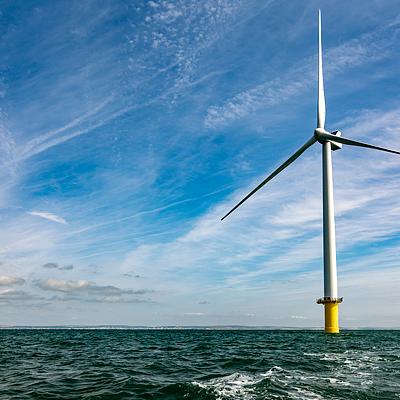
China and the UK have forged a robust foundation in advancing green energy and climate action. In recent years, cooperation between China and the UK in the offshore wind sector has grown increasingly close, transitioning from project investments by Chinese companies to deeper industrial integration. At the same time, the technological frontier of cooperation has extended to emerging fields, such as offshore wind-to-hydrogen production.
Zhou Fang spoke with Guan Dabo, Distinguished Chair Professor of Climate Change Research from Tsinghua University. We explore how this synergy moves from dialogue to real-world projects. We also discuss the urgent need for joint research on enhancing climate adaptation and resilience.
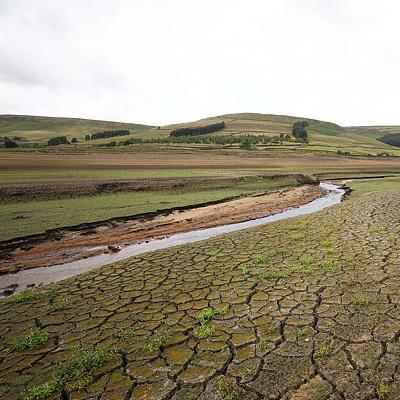
A UN report declares that the world has entered an era of global "water bankruptcy," with irreversible consequences. The report warns that many societies have been using water faster than nature can replenish it, and that the situation is so severe that old terms like "water crisis" or "water stressed" simply don't capture the full magnitude anymore.
What does a global water bankruptcy really mean? Why is it happening? And can we restructure this debt before it's too late?
Zhao Ying speaks with Wu Changhua, President of Global Climate Academy and Chair of the Governing Council of the Asia Pacific Water Forum.
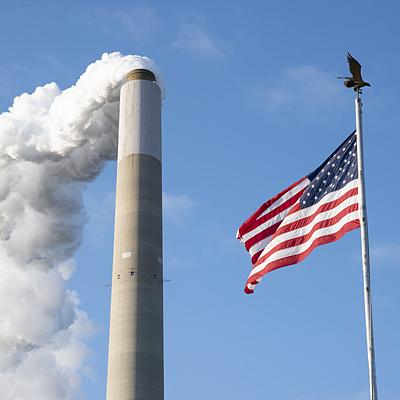
The Trump administration has announced its intention to withdraw from 66 international bodies, including the United Nations Framework Convention on Climate Change (UNFCCC) and the Intergovernmental Panel on Climate Change (IPCC).
Later this month, on January 27, the US will also officially depart the Paris Agreement for the second time.
What does all this mean for global climate action?
Zhao Ying speaks with Daniel Kreeger, the executive director and co-founder of the Association of Climate Change Officers.
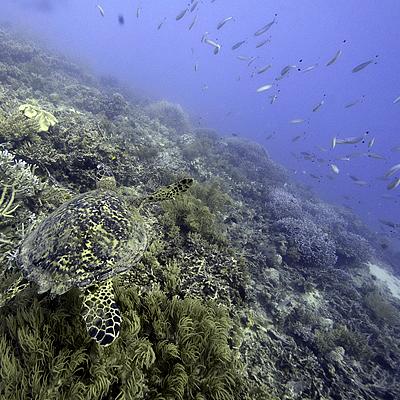
The High Seas Treaty, formally known as the Biodiversity Beyond National Jurisdiction agreement, will enter into force on 17 January, marking a major step in global ocean governance. What does it do, who benefits, and will it truly change how the high seas are managed? Zhao Ying speaks with Zhang Yimo, Priority Project Coordinator of WWF China's Sustainable Blue Economy Program.

As global temperatures continue to rise due to greenhouse gas emissions, can we dim the sunlight to cool the Earth?
The idea may sound extreme, but solar radiation management, or solar geo-engineering, has already become a serious subject of scientific research. And it's not just scientists—billionaires like Elon Musk and Bill Gates have also shown interest.
How viable is this concept in practice? What ethical, environmental, and global governance challenges could it bring?
Zhao Ying speaks with John Moore, a research professor at the Arctic Center, University of Lapland in Finland. From 2015 to '22, he led the Chinese geoengineering research program while serving as Chief Scientist at the College of Global Change and Earth System Science, Beijing Normal University.
As the year comes to a close, we step back to look at what 2025 tells us about where we are on climate change. What climate events mattered most? Where did we see real momentum, and where are the biggest risks? And as we head into 2026, what should we be watching most closely? Zhao Ying speaks with Fei Fei to unpack it all.
For years, critics in Washington and Brussels have warned about China producing "too many" solar panels. But could this so-called "overcapacity" actually be the key to solving Africa's energy crisis?
A recent report by global energy think tank Ember shows that Africa’s imports of Chinese solar panels surged by 60% in the year leading up to June, marking the first signs of a solar take-off across the continent.
Zhao Ying speaks with Dave Jones, co-founder of Ember and the author of this report, to explore the potential for solar energy to transform Africa's energy landscape.
Cities are home to over half of the world's population. With rapid urban growth, it becomes increasingly crucial for cities not just to survive, but to build resilience for future generations.
The 2025 Global Award for Sustainable Development in Cities, or Shanghai Award, offers a glimpse of that diversity. The award is jointly organized by UN-Habitat and the Shanghai Municipality. The winners – Algiers, Al Madinah, Bogotá, Espoo, and Incheon – each show a unique pathway toward sustainable urban development.
Zhao Ying speaks with Bai Xuemei, Professor of Urban Environment and Human Ecology at the Fenner School of Environment and Society, Australian National University, to explore what we can learn from their experiences.
CGTN Radio and PKU's C Force Lab bring together Professor Wang Binbin, Doctor Xie Zongxu and Reporter Yu Tianyu to explore how traditional wisdom can offer fresh pathways for global climate governance.
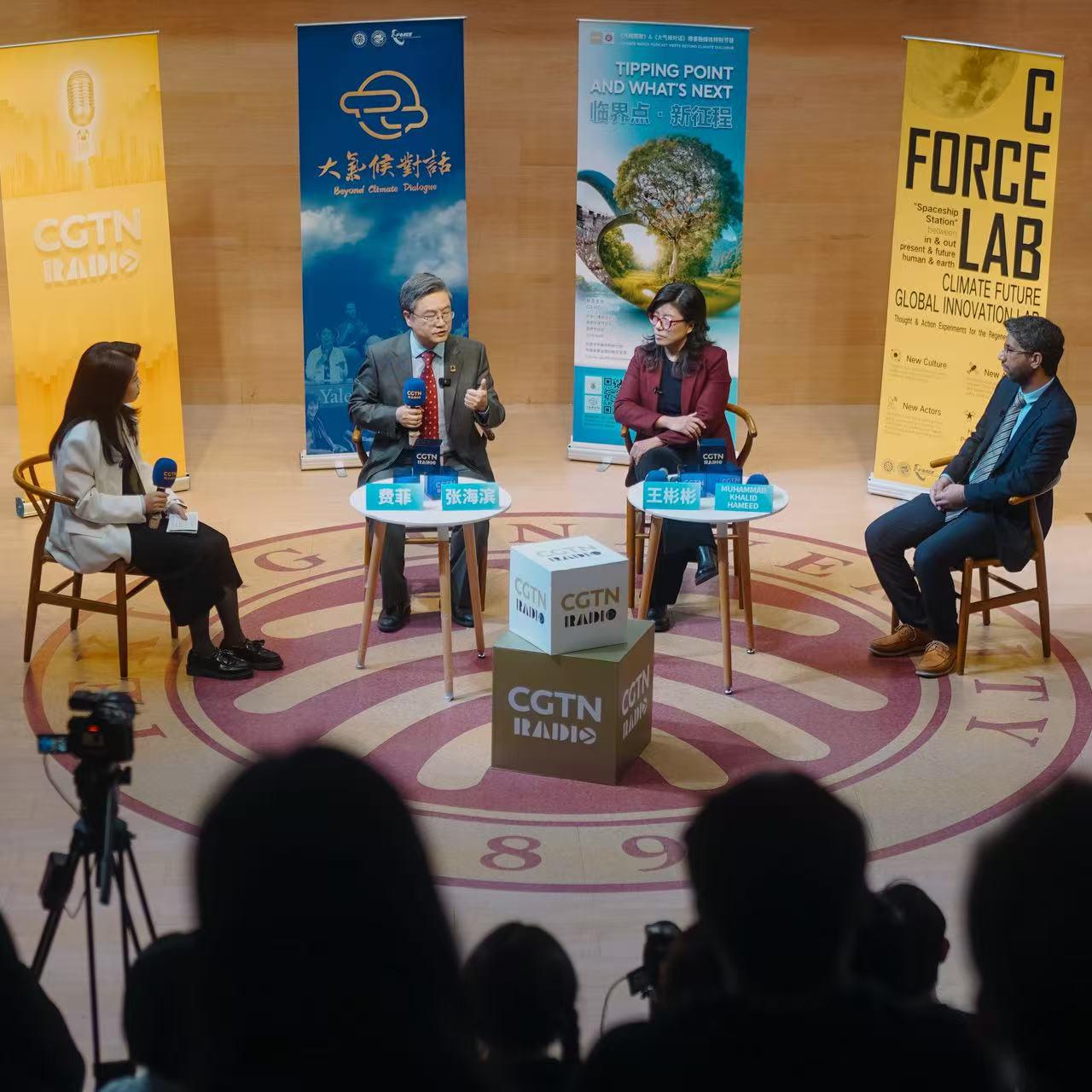
In this special live recording of Climate Watch at Peking University, together with Beyond Climate Dialogue of Peking University’s Institute of Carbon Neutrality, we feature insights from Professor Zhang Haibin, Vice Dean at the School of International Studies and the Institute of Carbon Neutrality at the University, Dr. Wang Binbin, Research Professor and Founder of C Force Lab at the Institute of Carbon Neutrality, and Dr. Muhammad Khalid Hameed with the Beijing Jingwa Agricultural Science and Technology Innovation Center. The episode delves into the complexities of global climate governance, the critical importance of adapting to climate change, and the role of joint international efforts. Emphasizing the need for education, early warning systems, and technology transfer, the conversation also explores China's role in climate governance and the importance of collective international action.

With COP30 in full swing in the heart of the Amazon rainforest, in the city of Belém, Brazil, negotiators are once again debating critical issues: who will pay for climate action, especially adaptation, as extreme weather events become more frequent and their links to climate change increasingly clear? What responses should we put in place—and where are we headed as a global community? We’re seeing familiar agendas on the table, with heated arguments but only modest steps forward. Are COP meetings still relevant today? And how can we make better use of this global gathering? Fei Fei unpacks these questions with Teng Fei, Professor and Deputy Director of the Institute of Energy, Environment and Economy, Tsinghua University, and Antoine Oger, Executive Director at the Institute for European Environmental Policy based in Brussels.
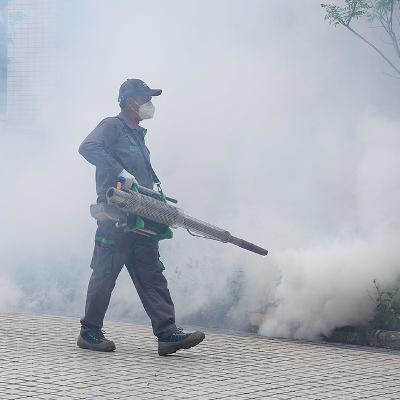
Climate change is increasingly shaping our health. According to the latest Lancet Countdown report, it is already contributing to millions of premature deaths each year through extreme heat, air pollution, wildfires, and the spread of infectious diseases. The report offers one of the most comprehensive assessments to date of how climate and public health are deeply intertwined. In this episode, Fei Fei speaks with Cai Wenjia, Director of the Lancet Countdown Regional Centre for Asia, about the report’s latest findings in China and what they mean for the future of public health.
China's national carbon market is still young. But experts see a clear path forward. In this episode, we explore the challenges it faces, and the strategies that could help it drive progress toward reducing CO2 emissions and supporting a greener economy.

Comments

Download from Google Play

Download from App Store
 United States