


 Claim Ownership
The TrainingBeta Podcast: A Climbing Training Podcast
Subscribed: 4,107Played: 96,779
Subscribe


© Copyright The TrainingBeta Podcast 2020
Description
Hosted by climber, nutritionist, and mindset coach, Neely Quinn, The TrainingBeta Podcast is a regular conversation with rock climbing’s best and brightest, including pro rock climbers, climbing trainers, and other insightful members of the climbing community. You’ll learn how to train for climbing, how to fuel yourself well for climbing, and mindset strategies to help you perform well on the wall and have a great time doing it. Whether you’re a beginner climber or a seasoned pro, you’ll learn something from these conversations, or at the very least, get really stoked to climb and train.
325 Episodes
Reverse
In this episode, Coach Alex Stiger and I talked about the ways we see our clients overtraining and the consequences it has on their bodies, minds, and climbing performance. We also share how we overdo it ourselves, and how that has affected us. We go into the causes of overtraining: feeling like more is better, fearing falling behind, not knowing how much training is enough, and as Alex calls it, "chasing fatigue." I talk about the ways I work with my mindset coaching clients on this to help them gain perspective and talk to themselves differently.
Coach Matt Pincus came on the show to talk about something he knows a LOT about: board climbing! It’s a popular topic and he gets a lot of questions from his clients about which board to use, how to use it, and for what, so we’re going to cover a bunch of info about it today. Matt is one of our coaches here at TrainingBeta and he uses boards in his own training and in his clients’ training (and just for fun and performance purposes).
Details
Most common questions he gets from clients about boards
Who should NOT use boards, if anyone
Training value of boards
Pros and cons of the popular boards (Moon, Kilter, Tension, spray wall)
3 session types to train each of the energy systems
Common pitfalls with board climbing
What to use the boards for
What grades Matt sends on boards vs. outdoors
How to not get wrapped up in board grades
Show Links
Performance Bouldering Training Program ($18/mo with a 7-day free trial)
Performance Route Climbing Training Program ($18/mo with 7-day free trial)
Train with Coach Matt Pincus
Train with Matt Pincus
If you want Matt to help you with your own goals, whether they’re with bouldering or route climbing, he’s available for month-long commitments where he’ll talk with you over zoom and create a program for you and keep in touch with you via the TrueCoach app throughout the month.
He’ll help you get stronger and he’ll cater to your specific goals so that the timing is right for you to send when it’s time to send.
Learn More about Working with Matt
Therapist Emma McAdam discusses using exposure therapy, mindfulness, and self compassion to decrease fear of falling in climbing. Emma is a Licensed Marriage and Family Therapist in Utah who has a youtube channel (@TherapyInANutshell) and online courses on her website www.therapyinanutshell.com where you can learn therapeutic tools on your own time. I really appreciate Emma's warm, down-to-Earth approach and her relatable way of speaking and teaching. Emma is also a climber and has a video specifically about how to use exposure therapy and self-compassion to decrease fear of falling in climbing.
What we covered in the interview:
Where to start with fear of falling
How to practice teaching your brain it's safe to fall
2 things that fuel anxiety
What is the emotion of fear asking you?
Building an exposure hierarchy
How to practice falling in a productive way
Difference between risk "tolerance" and risk "choice"
In this episode, Coach Alex Stiger gives some sage advice to beginner climbers about how to get off to a great start in your climbing journey. Alex is a climbing coach to all levels of climbers all over the world, but she was also the program director and head coach at a climbing gym for years. She knows a LOT about the proper ways to spend your time, invest in resources, and self-reflect in order to become the best climber you can be in the shortest amount of time.
Interview Details
Classes and instruction you should get
6 Biggest mistakes to avoid (shoes, poor movement habits, etc.)
8 Technique and skill tips that will make a huge difference
How to avoid injury
Cultivating good climbing relationships
I think that even if you’ve been climbing for a couple of years, this episode could have a lot of great information for you, or if you hang out with beginner climbers, this episode will give you a lot of knowledge to share with them!
Join Alex's wait list to work with her as your coach at trainingbeta.com/waitlist.
In this episode I do a full mindset coaching session with Maren Krammer, a 33-yr-old climber who struggles to feel like she is a part of the community when she’s surrounded by stronger climbers than herself. She feels shy, stifled, and unwilling to try hard for fear of judgment and rejection from others. It affects her self-esteem and hinders her climbing progression, and she wanted to work through it.
We do a full 60-minute mindset coaching session where we break down her thoughts, emotions, limiting beliefs, and gremlin talk (the voice that says “you’re not good enough”). By the end, Maren has a clearer understanding of why she feels so intimidated around stronger climbers and tools to help her be confident in herself and feel more a part of the community.
Work with Me on Your Mindset in Climbing
If you want to work with me one-on-one, I’m accepting new mindset coaching clients. We can work on your fears in climbing, performance anxiety, and anything that is holding you back from enjoying climbing. Go totrainingbeta.com/mindset for more info.
Natalia Grossman is a 24-year-old American professional climber who lives in Salt Lake City, Utah. She broke onto the World Cup scene in 2021 when she became the overall Bouldering World Cup champion and finished in second place in the overall Lead World Cup. That same year, she won World Championships in Moscow in Bouldering and placed 2nd in Lead.
She proceeded to win the overall Bouldering World Cup in 2022, 2023, and 2024, making her the most successful American World Cup climber in history. In 2022 she came in 3rd place for the overall Lead World Cup season. In 2023 she also won the Pan Am Games in Santiago in both Bouldering and Lead. She qualified for the Olympics in 2024 and finished in 11th place.
In February of this year (2025), she unfortunately tore her ACL and meniscus, and sprained her MCL during a training session and had to have surgery. She is now about 9 months out from surgery and has won both competitions she entered: the Lead North American Cup in Salt Lake in August and the Bouldering Pan American Cup in Colombia in November.
Besides competition climbing, she has sent up to V14 and 5.14c outside, but has focused most of her time and training on World Cup comps. Natalia graduated from University of Colorado at Boulder with a degree in psychology and is considering getting her master’s in mental health counseling.
In this interview, we talk about her comeback from her surgery, her mindset for competition climbing, and her training, among many other things:
More Details:
How she injured herself
Her injury rehab and how it’s changed her as a climber
How she got so good at climbing
What impact her coaches have had on her
What sets her apart from other climbers
What it’s like competing with your best friends
How the pressures to be light have affected her
What she eats
What she sacrifices to be a champion
How she trains
It was an honor to interview someone I have watched compete for years (I love watching World Cups!), and I appreciated Natalia giving us her time and being so vulnerable in sharing about her life.
In this episode, Coach Alex Stiger and I reflect on the important lessons and mindset shifts we've gained after NOT sending projects. Whether it's a renewed motivation to train and grow as a climber or the realization that we just don't want to try that hard anyore, we go through the gammut of what we have experienced as a result of not sending. Alex asked her clients about their own learnings from not sending and shares them in this episode.
Some Things We Talked About
What deconstructing that attachment to sending can do for our climbing and life
Tools that have helped Alex and her clients start approaching possible failure with curiosity, confidence, and even some joy vs avoidance, anxiety, and dread
Fact vs. fiction about what the experience of sending/not sending actually does to us
Coach Matt Pincus and I sat down and talked through 3 habits that we have formed over months or years that have led us to become better climbers.
Matt’s 3 Habits
Doing his finger training as part of his warmup for indoor sessions
Having a clear plan/objective for every day out
Questioning why he falls off by asking, “Why?” three to five times
Neely's 3 Habits
My "Three Questions" that keep me in a positive headspace
Continual fall practice
Nudging myself to get on things that intimidate me
Link to Matt's 6-Month Coaching Package - www.trainingbeta.com/matt
Dr. Tyler Nelson came on the show to talk about common wrist injuries and how to rehab them so you can get back to climbing and training how you want to. You may remember that I had wrist surgery on my TFCC and my husband had wrist surgery for ulnar impaction syndrome, so I inject some anecdotal information into the talk, too.
Episode Details
some common wrist injuries
how they happen
what aggravates them in climbing
what you should do about them
specific exercises to heal and strengthen them
how to continue climbing during your injury (when appropriate)
how to get a good diagnosis from a professional
my own experience with a full TFCC tear and my surgery for that
my husband's wrist surgery for ulnar impaction syndrome
Episode Links
Wrist Loading Instagram Post
TFCC Instagram Post
Wrist Pain Rehab Online Course
Camp 4 website: camp4humanperformance.com
Patreon and Podcast: patreon.com/c/C4HP_/home
Take an online class with Tyler: camp4humanperformance.com/store
Do a consultation with Tyler for coaching or an injury
Instagram: @c4hp
Dr. Jared Vagy is a physical therapist and a climber who’s incredibly motivated to help other climbers heal their bodies. In this interview, we talk about capsulitis, which is a common finger injury that climbers get. He describes what capsulitis is, how it happens, how to avoid it, and how to treat it if you have it. Find more info on Jared and this episode at trainingbeta.com/media/jared-vagy-capsulitis.
Resources from Episode
Peer reviewed case study on capsulitis
How to use a finger trap for capsulitis
Jared’s book Climb Injury-Free. Order his book here.
The Enneagram is a personality typing method that I’ve been super interested in for a few years now. I try to type all of my friends, my clients, and other people around me to help me understand them better and have more compassion for them. Knowing my own type has helped me have more compassion for myself and to identify areas I want to improve on in my life, in and outside of climbing.
I recently met Becca Droz of sunrise-mindset.com, who is certified as an Enneagram coach, and she’s a climbing coach and guide. She often ends up talking with her clients about what Enneagram type they are and how it shows up for them. I asked her to be on the show to talk about what each of the types looks like in people in general, and how the types show up for us as climbers. We talk in depth about all of the types’ core fears, motivations, strengths, and challenges. We talk a little more extensively about our own types (I am an 8 and she is a 7).
Resources Mentioned
Becca’s website: sunrise-mindset.com
Enneagram Test on Becca’s site: sunrise-mindset.com/enneagramtest
Greece trip with Becca: sunrise-mindset.com/greece
Suzanne Stabile Books on the Enneagram: Amazon list
Suzanne Stabile podcast: The Enneagram Journey
The Enneagram Institute RHETI Test: www.enneagraminstitute.com
Integrative 9 Enneagram Test: www.integrative9.com
Wisdom of the Enneagram Book: Amazon
Jana Unterholzner has her master’s degree as a Sport and Performance Psychologist and she recently helped create an online course at unblocd.com to guide climbers through mentally recovering from injuries. I asked her to be on the show to talk about some of the tools and information she provides in that course.
In this episode, we both share some of our key experiences going through our own injuries and Jana talks about the following:
Why the mental side of injury matters as much as the physical
How injury recovery can mirror grief in practice
Strategies for working with fear after injury
Why tracking progress makes such a difference
Reframing injury: challenge vs. threat
Building resilience (vs. being born with it)
The role of self-compassion in recovery
Tools for managing negative thoughts
What kind of support actually helps during recovery
Why rehab consistency is tough — and what helps
Growing into someone new, rather than ‘getting back’ to your old self
The people at unblocd.com are offering you a 30% discount on all of their programs, including the new Injury Recovery program, and their mini programs at unblocd.com using the code “TRAININGBETA30” at checkout.
In this episode I do a full mindset coaching session with Robyn Steuber, a 33-yr-old climber whose main barrier in climbing is her fear of falling and inability to try hard above her bolt. She also struggles with performance anxiety and fear of failing. So I did a complete one-hour session with her, just as I would with any climbing client, and we dissected exactly what she's afraid of and made a plan for her to start overcoming her fears. We discussed fall practice, quantitative ways for her to start learning how to try hard in general (and eventually above her bolt), and I gave her strategies for dealing with the big emotions that come with a stressful day of climbing.
If you want to work with me on your own mental barriers in climbing, visit www.trainingbeta.com/mindset.
Dr. Katie O'Brien is a functional medicine doctor who specializes in perimenopause, and in this episode she goes into great detail about what perimenopause is and how to navigate it with hormones, supplements, nutrition, and lifestyle choices so you can continue climbing hard in your late 30's, 40's and beyond.
This episode is not just for perimenopausal women! This is for everyone so that you, as a woman, can be sure you recognize signs and symptoms of perimenopause when they happen (and know what to do about them), and so that you, as a man, can help advocate for the women in your life. This is crucial for every woman's health and happiness. I hope you get a lot out of this conversation :)
Dr. Katie's new supplement FemmeMD - get 20% off with code friends20: https://shop.femme-md.com/
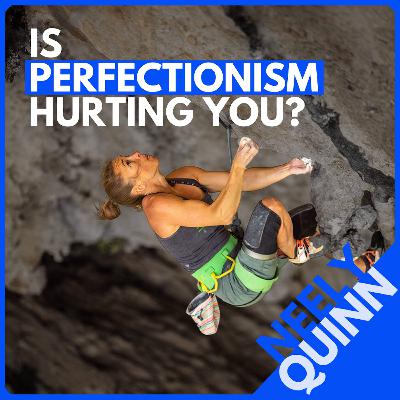
Ryan Devlin invited Neely Quinn (the host of The TrainingBeta Podcast) to be on his podcast, The Struggle Climbing Show, to talk about perfectionism in climbing. Neely talks about common symptoms of perfectionism in climbers, how it can hold people back, and how it's actually kind of a super power. She also did some coaching on Ryan to help him enjoy climbing a little bit more, instead of being so intent on constantly achieving big things in his climbing. Ryan kindly shared this recording of the interview with Neely to share on this podcast, but it was originally published on The Struggle Climbing Show, which you should definitely check out.
In this episode I did a full nutrition session with a climber, Katelin Hollowell who was struggling with intense sugar cravings and some weight gain. I treated this episode as I would any client session and asked her a bunch of questions about her goals, her lifestyle, her training, etc., and then I looked at her diet log on the MyFitnessPal app and gave her some concrete suggestions for what to do next. I then asked her for an update about three weeks after our initial conversation and I included that at the end of the episode.
If you want to follow along with her diet log screensharing that I did during the episode, you can watch this episode on video on youtube. If you'd like to work with me on your nutrition, I'm currently taking new clients and would love to help you!
I also mentioned in the podcast that I created another podcast! It's completely off the topic of climbing and it's called The Spelling Bee Podcast, where I quiz you on the spelling of 10 challenging words each week and teach you about the origins of the words. You can find it wherever you get your podcasts :)
Kat Lumby is a Sport and Exercise Psychologist in Training (SEPiT) out of Wales, UK who works with all kinds of athletes, especially climbers and surfers. She has been a climbing coach for many years and has been able to take her skills to the next level with her SEPiT education. In this episode she talks about the specific kind of therapy she uses with athletes to deal with fear (and other barriers to performance). It’s called Rational Emotion Behavioral Therapy (REBT), and she will literally take you through the “ABC’s” of this modality.
She also does a quick therapy session with me during the interview where we talk about my fear of falling. We come to some pretty great insights, which I’ve been using ever since in my climbing sessions. We also talk about some research she did on climbers and how you can put this kind of concrete thinking to use in your own climbing.
You can work with Kat Lumby as your coach or your sport psychologist at labyrinthclimbing.co.uk.
 1
1I recently received an email from someone asking for a podcast episode that talked about resting. They wanted to know how elite/pro level climbers spend their rest days, how often they rest when they’re projecting, when they’re training, and generally just how they think about rest. So I reached out to a bunch of elite climbers and got 13 responses to these three questions:
How many days a week do you rest when you’re projecting? What about when you’re in a training cycle?
What do you do on your rest days in terms of physical activity when you’re projecting? What about when you’re in a training cycle?
How old are you and how long have you been climbing?
They sent me emails or a voice memo and here’s who responded:
Emily Harrington
Alex Honnold
Lynn Hill
Hazel Findlay
Jonathan Siegrist
Bill Ramsey
Katie Lamb
Paige Claassen
Matt Pincus
Alex Stiger
Luke Parady
Sam Elias
Dusty Rasnick
In this episode I’ll give you a short bio of each of these climbers and then either read or play you the recording of their response. Hopefully you learn something from this episode, but mostly it’s just interesting to see how pro/elite climbers approach resting. Enjoy!
In this episode, Coach Alex Stiger talks about her experience being coached by Alex Puccio and Robin O’Leary (ROAP) for the past 6 months and what it’s done for her climbing. She started board climbing 2 grades harder and has improved her outdoor climbing experience as well because of the coaching she received. Alex strongly believes in the benefits of being coached and talks a little bit about being coached for the video game StarCraft as well.
She’s currently offering a 6-month coaching package for 15 new clients and she talks about what it’s like working with her at the end of the episode.
Episode Details
Why she wanted to be coached and why she chose ROAP
What worked for her
How their coaching style is different from hers
Why it made her try harder and be more consistent in her training
The thing that Puccio said to her that changed her climbing immediately
How her board climbing improved by 2 grades almost right away
Collin McGee (@liftsmcgee) is a personal trainer and coach at C4HP with Dr. Tyler Nelson. He is also a personal trainer and coach to athletes of all sports, ages, and abilities and he has a firm grasp on how to become a stronger, better athlete no matter what your objectives are. In this episode he breaks down the basics of training and how to get better at climbing even if you have a busy schedule. Here’s what he covers:
Assessment
Strength Training
Power Training
Endurance
Flexibility
Making a Plan


Download from Google Play

Download from App Store
 United States
Nutrition one was going well untill. The vegan, vegetarian, plant based diet part. That was a bit weak. Suggesting that an exclusively plant based diet makes it harder to lose weight in the long run because of fibre and Carbs that are inhertlty part of plant protein sources is a silly inaccurate notion. Strange that you indirectly associated fibre as a potential detriment to people's health which is just ludicrous. Just so you know a plant based diet is just a diet that only includes plants. Your diet is an omnivorous diet. It really is that simple. Don't complicate it and confuse people. Still some good information on dietary stratagies on snacking and food choices etc. Sorry if this sounds really negative I did like parts of this podcast. But think you need to revise your information and learn more on plant based diets especially as both of you couldn't understand how to eat that way after 10years dispite being trained in the nutrition feild.
I just realised that 5.12a is equivalent to 8- in Norwegian scale and I know only a few people who can send that. And they are all taller than me and I am 5'6".
I'm glad this podcast exists, but it would benefit greatly from some editing and maybe a few production improvements. For example, instead of running the entire conversation from start to finish, break it up with some narration or storytelling. And feel free to leave out the less pertinent/interesting parts.
Great episode. Just started listening to this podcast (and to podcasts in general). This has given me good insights on my training, despite my having much more time to train than the people you talk about. I work at a climbing gym, so I guess for me that's easier. I'm currently trying one of the schedules presented on Eric Hörst's "Training for Climbing."
did you make this specifically for me?? because I feel like you made this specifically for me....