


 Claim Ownership
STRAT
Subscribed: 40Played: 580
Subscribe

© Copyright 2026 Mutual Broadcasting System LLC
Description
STRAT – Strategic Risk Assessment Talk, is a forum with a preparedness mindset. Mitigating risks, creating systems of prevention and recovery to deal with potential threats, and understanding the objectives of a Business Continuity Plan. This is the podcast for leaders who are committed to being prepared. The program is hosted by retired Marine Corps intelligence officer and strategic risk assessment professional Hal Kempfer and investment banker Mark Mansfield.
104 Episodes
Reverse
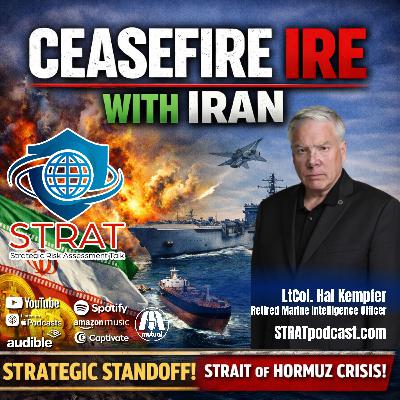
In this episode of STRAT, retired Marine Intelligence Officer LtCol. Hal Kempfer breaks down the fragile ceasefire between the United States and Iran following weeks of escalating conflict. While the agreement temporarily reduced global energy panic, Iran’s failure to reopen the Strait of Hormuz threatens to unravel the deal and reignite tensions. Kempfer examines the strategic realities behind ceasefires, including how they often serve as pauses for repositioning rather than true peace. He highlights the growing military presence in the region, including Marine Expeditionary Units and airborne forces capable of rapidly seizing key terrain. With critical islands controlling global oil flow at stake, the episode explores how economic pressure, military options, and geopolitical risk are converging. As Iran risks losing leverage, the possibility of renewed operations looms large, making this ceasefire anything but stable.Takeaways:The U.S.–Iran ceasefire was driven by mutual exhaustion, not resolutionIran’s refusal to reopen the Strait of Hormuz undermines the agreementGlobal oil markets briefly stabilized but remain highly vulnerablePakistan played a key intermediary role in facilitating the ceasefireCeasefires often function as strategic pauses, not permanent solutionsU.S. forces are actively repositioning for potential renewed operationsKey islands in the Strait of Hormuz are critical military objectivesFailure to restore shipping access may make conflict inevitable#STRATPodcast #HalKempfer #MutualBroadcastingSystem #StrategicRiskAnalysis #IranCeasefire #StraitOfHormuz #MiddleEastConflict #GlobalEnergyCrisis #USIranTensions #Geopolitics #MilitaryStrategy #FourthGenerationWarfare #OilMarkets #NationalSecurity #DefenseAnalysis #GlobalRisk #MaritimeSecurity #EnergySecurity #USMilitary #WarAndPeace
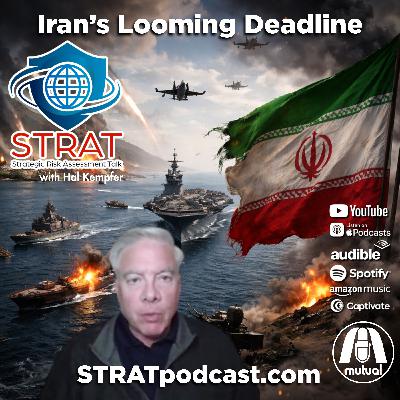
A critical deadline looms as tensions between the United States and Iran reached a far more destructive phase of the war. This episode of STRAT explores the implications of a stark ultimatum, examining what military, political, and strategic realities could unfold if no agreement is reached. From the legality of targeting infrastructure under the Laws of Armed Conflict to the fragile condition of Iran’s conventional forces, retired Marine Intelligence Officer Hal Kempfer breaks down the risks on all sides. The discussion also highlights a daring U.S. rescue mission deep inside hostile territory, showcasing operational reach and capability. Meanwhile, internal fractures within Iran’s regime, leadership uncertainty, and growing public unrest raise questions about stability. With possible retaliation in the Persian Gulf and beyond, and global stakeholders watching closely, this moment could reshape the region. The coming days may determine whether escalation, regime instability, or an unexpected resolution defines the next chapter.Takeaways:A firm U.S. deadline has dramatically escalated tensions with IranThreats include strikes on critical infrastructure and military targetsLaws of Armed Conflict shape legitimacy of potential targetsIran’s conventional military faces logistical strain and morale issuesLimited evidence of widespread defections within Iranian forcesA high-risk U.S. rescue mission demonstrated deep operational reachLeadership uncertainty inside Iran could destabilize the regimeThe Strait of Hormuz remains a critical global flashpoint#STRATPodcast #HalKempfer #MutualBroadcastingSystem #StrategicRiskAnalysis #IranCrisis #MiddleEastConflict #USIranTensions #Geopolitics #MilitaryStrategy #NationalSecurity #GlobalRisk #DefenseAnalysis #WarRisk #IranDeadline #HormuzStrait #IntelligenceBrief #ForeignPolicy #CrisisAnalysis #WorldEvents #SecurityStudies
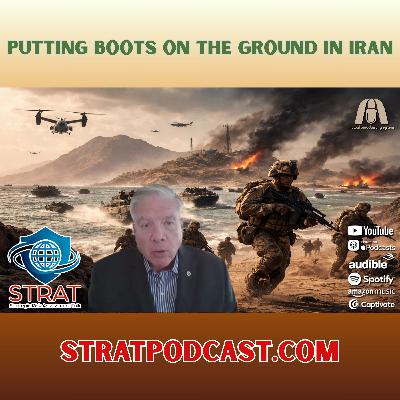
This episode of STRAT explores the growing possibility of U.S. ground operations in Iran and what those forces could be tasked to accomplish. With Marine Expeditionary Units and elements of the 82nd Airborne deploying into U.S. Central Command, military leaders now have expanded options beyond air and naval strikes. Retired Marine Intelligence Officer Hal Kempfer focuses on the strategic importance of key islands controlling the Strait of Hormuz and how seizing or neutralizing them could disrupt Iran’s military capabilities and economic lifelines. Particular attention is given to Kharg Island and the broader “defensive arc” that enables Iran to influence global shipping routes. The episode also examines operational challenges, including underground tunnel systems, missile threats, and the need for sustained occupation forces. With potential support from Gulf allies, this analysis highlights how modern warfare strategy could reshape regional power dynamics.Takeaways:U.S. forces are positioning for potential ground operations in IranMarine Expeditionary Units and airborne troops expand tactical optionsGround forces are critical for targeting underground facilitiesSeven key islands control access to the Strait of HormuzKharg Island is vital to Iran’s oil export economySecuring islands could shift control of global shipping routesOperations would require sustained multinational occupation forcesIran’s terrain, tunnels, and defenses present major challenges#STRATPodcast #HalKempfer #MutualBroadcastingSystem #StrategicRiskAnalysis #IranConflict #USMilitaryStrategy #StraitOfHormuz #MiddleEastSecurity #Geopolitics #MilitaryOperations #MarineExpeditionaryUnit #AirborneForces #DefenseAnalysis #GlobalSecurity #NavalStrategy #GroundForces #IranMilitary #StrategicPlanning #MilitaryIntelligence #RegionalStability
A growing crisis in the Strait of Hormuz is triggering far more than an oil disruption—it’s reshaping global supply chains in multiple commodities in unexpected and dangerous ways. In this episode, we examine how escalating conflict in the Middle East has choked one of the world’s most critical maritime chokepoints, with ripple effects far beyond oil. From liquefied natural gas disruptions in Qatar to fertilizer shortages threatening global food production, the impacts are cascading across industries. Even helium—critical to semiconductor manufacturing—has been severely affected, raising alarms for the tech sector. Hal breaks down how attacks on key infrastructure, combined with restricted shipping lanes, are creating a perfect storm of economic risk. While some regions may be insulated in the short term, others face immediate and severe consequences. This is not just an energy story—it’s a global supply chain emergency with long-term strategic implications. And it is the focus this week on STRAT with retired Marine Intelligence Officer and host Hal Kempfer.Takeaways:The Strait of Hormuz disruption impacts far more than oil marketsLNG infrastructure attacks have removed major global supply capacityQatar’s export losses could take years to fully recoverFertilizer shortages threaten global agriculture and food securityPrices for fertilizer have surged ahead of critical planting seasonsHelium shortages are disrupting semiconductor manufacturing globallyAsia faces the most immediate and severe economic consequencesSupply chain shocks may drive inflation and long-term instability#STRATPodcast #HalKempfer #MutualBroadcastingSystem #StrategicRiskAnalysis #GlobalSupplyChain #HormuzCrisis #EnergySecurity #LNGCrisis #FertilizerShortage #FoodSecurity #HeliumShortage #SemiconductorCrisis #Geopolitics #MiddleEastConflict #MaritimeSecurity #EconomicRisk #SupplyChainDisruption #GlobalTrade #InflationRisk #CriticalInfrastructure
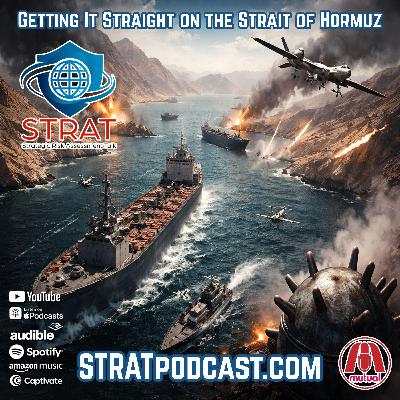
Tensions in the Strait of Hormuz have reached a critical point, placing one of the world’s most important energy chokepoints under severe strain. This episode of STRATwith retired Marine Intelligence Officer Hal Kempfer examines how escalating conflict involving Iran, the United States, and regional actors is disrupting global oil and natural gas flows. With nearly 20% of the world’s energy supply passing through this narrow waterway, even limited interference has far-reaching economic consequences. We break down the geography, military dynamics, and strategic calculations shaping events, including Iran’s use of drones, missiles, and potential sea mines. The discussion also explores alternative export routes through Saudi Arabia and the UAE, and why they cannot fully offset disruptions. Finally, we analyze the broader implications of air dominance, coalition naval responses, and the long-term viability of Iran’s regime. As oil prices surge and geopolitical risks intensify, understanding the Strait’s role has never been more urgent.Takeaways:The Strait of Hormuz carries about 20% of global energy suppliesIran’s attacks are disrupting critical oil and gas shipping routesSea mines remain the most dangerous escalation risk in the straitAlternate pipelines cannot fully replace Hormuz shipping capacityU.S. and allies are pursuing naval escorts to secure transitAir dominance has significantly reduced Iran’s strike capabilitiesIran’s economy depends heavily on vulnerable oil export infrastructureProlonged disruption could drive oil prices well above $100#STRATPodcast #HalKempfer #MutualBroadcastingSystem #StrategicRiskAnalysis #StraitOfHormuz #GlobalEnergy #OilMarkets #Geopolitics #MiddleEastConflict #EnergySecurity #NavalStrategy #OilSupply #WorldEconomy #MilitaryAnalysis #AirDominance #IranConflict #ShippingCrisis #EnergyCrisis #GlobalTrade #OilPrices
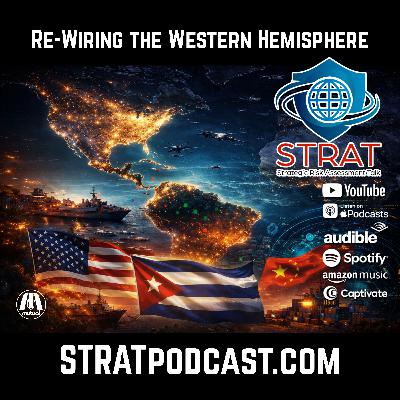
On this episode of STRAT, retired Marine intelligence officer LtCol. Hal Kempfer examines major geopolitical developments reshaping the Western Hemisphere. The discussion begins with the deteriorating situation in Cuba, where economic collapse, power shortages, and extreme poverty are placing enormous pressure on the communist regime. Kempfer explores President Trump’s statements that the United States is negotiating a significant economic agreement with Cuban leadership that could redefine relations between the two countries after decades of hostility. The episode also analyzes the newly announced “Shield of the Americas” initiative, a multinational coalition designed to combat drug cartels and transnational criminal networks throughout Latin America. With participation from numerous regional governments, the initiative reflects a more aggressive strategy aimed at dismantling cartel influence and strengthening U.S. partnerships across the hemisphere. Kempfer also explains how these moves fit into a broader strategic effort to counter China’s growing influence while securing key economic resources and stabilizing the region.Takeaways:Cuba’s economic crisis has intensified due to energy shortages, poverty, and hurricane damage.President Trump has discussed negotiations between the United States and Cuban leadership.Venezuela’s shifting political situation has altered the balance of power in the region.The United States is expanding influence through economic and security partnerships.The new “Shield of the Americas” coalition focuses on combating drug cartels.At least 17 countries have joined the new counter-cartel coalition initiative.Strategic cooperation with regional governments reflects a pragmatic geopolitical approach.U.S. actions also aim to limit China’s economic and political influence in the Western Hemisphere.#STRATPodcast #HalKempfer #MutualBroadcastingSystem #StrategicRiskAnalysis #WesternHemisphereStrategy #CubaCrisis #LatinAmericaSecurity #ShieldOfTheAmericas #CounterCartelCoalition #DrugCartelStrategy #Geopolitics #USForeignPolicy #VenezuelaPolitics #RegionalSecurity #StrategicCompetition #ChinaInfluence #EnergyGeopolitics #GlobalStrategy #SecurityAlliance #StrategicPolicy
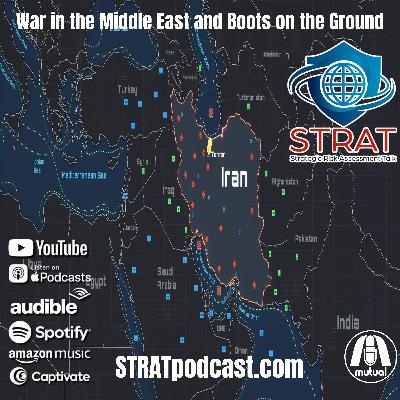
On this episode of STRAT, retired Marine intelligence officer LtCol. Hal Kempfer examines the quickly evolving war across the Middle East following U.S. and Israeli strikes and the wave of Iranian retaliation that has spread across the region. Tehran has launched hundreds of ballistic missiles and thousands of drones at military and civilian targets across multiple countries, while proxy forces such as Hezbollah and Iraqi Shiite militias expand the conflict further. Kempfer analyzes the declining rate of Iranian missile launches, the strategic impact of U.S. and Israeli strikes on Iran’s missile infrastructure, and the growing vulnerability of Iran’s underground “missile cities.” He explains how air superiority could fundamentally change the next phase of the conflict, potentially shifting the campaign from airpower to targeted special operations raids designed to destroy critical facilities. The discussion also explores how such operations could weaken the Iranian regime and potentially reshape the geopolitical balance of the Middle East.Takeaways:Iranian retaliation has expanded the conflict across the Middle East and into parts of Europe and Central Asia.Hezbollah and Shiite militias are acting as Iranian proxy forces, increasing regional instability.Iran has launched over 500 ballistic missiles and more than 2,000 drones during the current conflict.Missile and drone launch rates have sharply declined due to effective U.S. and Israeli strikes.Iran’s underground “missile cities” were designed to protect weapons but may now be strategic vulnerabilities.Achieving air supremacy could enable precision raids by special operations forces against these facilities.Amphibious and special operations raids may target coastal missile sites and naval assets.Successful raids could weaken the regime’s credibility and potentially spark internal political change in Iran.#STRATPodcast #HalKempfer #MutualBroadcastingSystem #StrategicRiskAnalysis #MiddleEastWar #IranConflict #MilitaryStrategy #BallisticMissiles #DroneWarfare #AirSupremacy #SpecialOperations #ProxyForces #Hezbollah #IranianMissileCities #Geopolitics #GlobalSecurity #DefenseAnalysis #MilitaryIntelligence #RegionalConflict #StrategicThreats
In this episode of STRAT with Hal Kempfer, we examine the growing likelihood of direct U.S. military action against Iran and what such a move would legally and strategically mean. The discussion explains why air or missile strikes would constitute an act of war under international law and reviews the historical context driving current tensions. We analyze the significant U.S. force buildup across the Middle East, including carrier strike groups, stealth aircraft, and AWACS deployments, and what these indicators suggest about operational intent. The episode also explores the strategic complications surrounding basing rights, particularly the role of Diego Garcia and allied political constraints. Finally, we assess Iran’s retaliatory capabilities, the risks of escalation, and the broader geopolitical consequences for Russia, China, and regional proxy networks. The central question: is striking Iran a necessary strategic move—or a high-risk gamble with global implications?Takeaways:U.S. strikes on Iran would legally constitute an act of warMajor U.S. force buildup signals serious operational preparationCarrier groups and stealth assets indicate potential escalationDiego Garcia access could complicate strike planningIran retains significant retaliatory capabilities across the regionProxy networks raise the risk of a wider regional conflictFailure to act carries its own long-term strategic risksPreventing Iranian nuclear capability remains a central concern#STRATPodcast #HalKempfer #MutualBroadcastingSystem #StrategicRiskAnalysis #USIranTensions #MiddleEastSecurity #Geopolitics #MilitaryStrategy #NationalSecurity #IranNuclearThreat #GlobalRisk #DefenseAnalysis #CarrierStrikeGroup #B2Bomber #AWACS #ProxyWarfare #HormuzStrait #StrategicForces #WorldAffairs #SecurityBrief
Global oil markets are no longer just about supply and demand—they are reshaping geopolitics in real time. In this episode of the STRAT podcast, retired Marine Intelligence Officer LtCol. Hal Kempfer breaks down how oil pricing and access are being used as strategic tools with far-reaching consequences. From pressure on Russia’s war economy to Iran’s vulnerability around the Strait of Hormuz, the ripple effects are global. The discussion explores how sanctions, tariffs, tanker seizures, and discounted crude are squeezing Russia’s revenues, pushing Cuba toward a full-blown energy crisis, and placing China in an increasingly precarious position due to its dependence on cheap oil from sanctioned states. Kempfer also explains key oil benchmarks like Brent and WTI, the importance of U.S. shale production, and why today’s environment differs fundamentally from past oil shocks. The result is a sober look at how energy strategy is quietly reshaping alliances, economies, and global stability.Takeaways:Oil prices are being actively shaped by U.S.-led strategyBrent and WTI benchmarks reveal critical geopolitical signalsRussia’s oil revenues are collapsing under sanctions pressureTanker seizures are disrupting sanctioned oil supply chainsThe Strait of Hormuz remains a major global choke pointCuba faces an unprecedented fuel collapse and instabilityChina’s reliance on discounted crude is becoming a liabilityEnergy pressure may accelerate regime change scenarios#STRATPodcast #HalKempfer #MutualBroadcastingSystem #StrategicRiskAnalysis #GlobalEnergy #OilMarkets #Geopolitics #EnergySecurity #RussiaUkraine #IranOil #ChinaEnergy #CubaCrisis #SanctionsPolicy #OilPrices #StrategicCompetition #NationalSecurity #EconomicWarfare #EnergyGeopolitics #GlobalStability #RiskAssessment
What would regime change in Iran actually look like—and what would it mean for the United States, Europe, and global stability? In this episode of STRAT with Hal Kempfer, we examine why many analysts believe the Islamic Republic is facing its most precarious moment since 1979. From reformist calls for constitutional change and unprecedented criticism in state-controlled media to debates over exiled versus domestic leadership, the cracks are becoming harder to ignore. We explore the rise of the Islamic Revolutionary Guard Corps as a dominant political and economic force, the risks of military escalation, and how foreign intervention could backfire by strengthening regime narratives. The discussion also addresses succession scenarios, the dangers of fragmentation or civil war, and why the Strait of Hormuz remains a critical pressure point for the global economy. Regime change, as this episode makes clear, is rarely clean or predictable—and what follows may be just as consequential as the fall itself.Takeaways:Iran faces its most unstable moment since the 1979 revolutionReformist figures are openly calling for political transitionState-controlled media criticism signals internal regime fracturesNo clear, unified leadership has emerged from the protest movementThe IRGC has evolved into Iran’s most powerful political actorMilitary strikes could unintentionally strengthen regime legitimacyControl of the Strait of Hormuz remains a global economic riskRegime collapse could lead to fragmentation or prolonged civil conflict#STRATPodcast #HalKempfer #MutualBroadcastingSystem #StrategicRiskAnalysis #IranRegimeChange #IranProtests #MiddleEastSecurity #IRGC #GeopoliticalRisk #USForeignPolicy #IsraelIran #GlobalOilMarkets #StraitOfHormuz #PoliticalTransitions #NationalSecurity #IntelligenceAnalysis #AuthoritarianCollapse #RegionalStability #StrategicForecasting #GlobalSecurity
From America’s heartland to the Pacific coast and the Middle East, this episode of STRAT examines three arenas where pressure is building—and consequences may be closer than many realize. Retired Marine Intelligence Officer Hal Kempfer begins in Minnesota, where aggressive federal immigration enforcement, violent street protests, and political resistance raise serious constitutional and legal questions, including the potential invocation of the Insurrection Act. The focus then shifts to California, where alleged large-scale fraud, sanctuary policies, and long-standing legal barriers to administering federal funds could place the state on a path toward fiscal insolvency and a showdown with Washington. Finally, attention turns to Iran, where reports of mass killings of protesters, societal collapse, and the movement of major U.S. naval assets raise the possibility of imminent military action. Together, these cases reveal how domestic unrest, financial integrity, and foreign conflict are increasingly interconnected—and why strategic risk is accelerating across the spectrum.Takeaways:Immigration enforcement is a core federal authority, not a novel policyMinnesota’s resistance mirrors past insurrection-era precedentsFederal agents are trained, but not optimized for mass civil unrestThe Insurrection Act remains a real, actionable optionFraud allegations may drive federal pressure on multiple statesCalifornia’s reliance on federal funding creates strategic vulnerabilityLongstanding legal rulings could jeopardize trillions in federal programsIran’s internal collapse may trigger rapid external military escalation#STRATPodcast #HalKempfer #MutualBroadcastingSystem #StrategicRiskAnalysis #ImmigrationEnforcement #InsurrectionAct #FederalAuthority #CivilUnrest #NationalSecurity #StateDefiance #CaliforniaCrisis #GovernmentFraud #FederalFunding #IranProtests #MiddleEastConflict #USMilitary #ConstitutionalLaw #Geopolitics #StrategicForecast #RiskAssessment
Protests and federal operations collide in Minneapolis after a fatal encounter between an ICE agent and a local resident. This episode of STRAT with retired Marine Intelligence Officer Hal Kempfer examines the surge of federal officers, the Minnesota National Guard’s mobilization, and warnings of possible troop deployments. We explore Governor and mayoral responses, crowd tensions, and how state and federal authority can clash in moments of crisis. STRAT’s insight frames the debate around immigration enforcement, public safety, and civil liberties. The show breaks down the Justice Department’s decision not to open a civil rights investigation and the DOJ resignations that followed. Listeners will hear historical comparisons to past uses of the Insurrection Act and what it could mean if invoked again. From law enforcement tactics to constitutional authority, this episode delivers context, analysis, and strategic perspective on one of the volatile stories in America today.Takeaways:Federal ICE operations in Minneapolis sparked large-scale protests.Minnesota National Guard was mobilized but not deployed to streets.Federal troops may be staged if unrest escalates further.Insurrection Act could allow military law enforcement roles.Local leaders criticize federal presence as an “occupying force.”DOJ declined a civil rights probe into a fatal ICE shooting.Multiple federal prosecutors resigned in protest.#STRATPodcast #HalKempfer #MutualBroadcastingSystem #StrategicRiskAnalysis #ICE #Minneapolis #Protests #NationalGuard #InsurrectionAct #Immigration #Federalism #CivilUnrest #LawEnforcement #DOJ #CivilRights #CrowdControl #NationalSecurity #BorderPolicy #FederalTroops #PublicSafety
This STRAT episode examines a rapidly escalating crisis in Iran and why it matters far beyond the Middle East. With protests spreading across more than 100 cities, a collapsing currency, and brutal crackdowns by the regime, Iran appears to be approaching a historic breaking point. The discussion with retired Marine Intelligence Officer Hal Kempfer explores how economic failure, mass arrests, and shocking levels of violence have shattered the long-standing social contract between the Iranian people and their rulers. The episode also looks at how recent military confrontations with Israel exposed major weaknesses inside Iran, fueling public anger and undermining regime legitimacy. Attention then turns to possible U.S. responses, the risks of military action, and the strategic dangers of retaliation across the Persian Gulf. Finally, the conversation explains why a potential regime collapse could reshape global energy markets, weaken Russia and China, and alter the world’s security balance—possibly becoming one of the most consequential geopolitical events of this century.Takeaways:Iran is facing its largest and deadliest protest movement ever.Currency collapse and economic shutdown triggered mass unrest.Israeli strikes exposed regime vulnerability and intelligence failures.The government responded with mass arrests and lethal force.Internet blackouts failed to fully hide the violence.U.S. action could help—or unintentionally strengthen the regime.Iranian retaliation would threaten U.S. and Gulf allies.Regime collapse could reshape global energy and power politics.#STRATPodcast #HalKempfer #MutualBroadcastingSystem #StrategicRiskAnalysis #IranCrisis #MiddleEastConflict #GlobalSecurity #EnergyPolitics #RegimeChange #Geopolitics #ProtestMovement #USForeignPolicy #ChinaEnergy #RussiaOil #PersianGulf #MilitaryStrategy #WorldAffairs #RiskAssessment #InternationalRelations #SecurityStudies
In this episode, retired Marine intelligence officer LtCol. Hal Kempfer analyzes the stunning overnight U.S. operation that led to the capture of Venezuelan president Nicolás Maduro and his wife, Cilia Flores. The mission—months in planning and executed with overwhelming air, cyber, space, and intelligence coordination—has sent shockwaves through Latin America and beyond. Kempfer breaks down what Operation Absolute Resolve reveals about modern U.S. military reach, strategic messaging, and escalation control. He explores the legal and moral implications of regime decapitation, the risks of attempting to “run” Venezuela, and the challenges posed by militias, rival governments, and global power competition. The conversation examines international reactions, the emergence of Delcy Rodríguez as acting president, and what this upheaval could mean for oil markets, refugees, Cuba, and regional stability. Finally, Kempfer assesses where this crisis may lead—and what Washington can realistically achieve next.Takeaways:The Maduro capture showcased integrated U.S. military, cyber, and intelligence powerOperation Absolute Resolve was designed for speed, shock, and strategic surpriseRemoving a regime is far easier than governing a fractured nation afterwardVenezuela’s military and militias pose major stabilization challengesGlobal reactions reveal shifting alliances and realpolitik calculationsOil access and sanctions remain central U.S. leverage pointsLegal justifications matter less than strategic consequencesThe crisis could trigger refugees, civil conflict, or regional escalation #STRATPodcast #HalKempfer #MutualBroadcastingSystem #StrategicRiskAnalysis #VenezuelaCrisis #MaduroCaptured #OperationAbsoluteResolve #USMilitary #Geopolitics #NationalSecurity #LatinAmerica #GlobalStability #EnergySecurity #RegimeChange #ForeignPolicy #IntelligenceAnalysis #TrumpDoctrine #CubaCrisis #StrategicStudies #WorldAffairs
In this episode of STRAT, retired Marine Intelligence Officer LtCol. Hal Kempfer breaks down the competing peace proposals aimed at ending the war in Ukraine and explains why each carries major strategic risks. The discussion examines a U.S.-backed 28-point plan that largely accommodates Russian territorial demands, Ukraine’s alternative 20-point framework emphasizing demilitarized zones and reconstruction, and Europe’s growing role as Washington signals limits to its long-term involvement. Beyond the battlefield, the episode explores Russia’s mounting economic strain, its struggle to sustain a war economy, and Ukraine’s increasingly effective deep-strike campaign against Russian infrastructure. The conversation widens to assess ripple effects across Europe and Asia, where allies like Japan and South Korea are rethinking defense self-reliance amid uncertainty over U.S. commitments. Ultimately, the episode asks whether peace is realistic.Takeaways:Proposed peace plans risk legitimizing territorial conquestUkraine rejects any deal surrendering sovereign landDemilitarized zones would require risky international enforcementEurope is accelerating defense independence from the U.S.Russian military faces equipment shortages and manpower strainUkrainian deep strikes are degrading Russia’s war economyGlobal allies are reassessing reliance on U.S. security guarantees#STRATPodcast #HalKempfer #MutualBroadcastingSystem #StrategicRiskAnalysis #UkraineWar #RussiaUkraineConflict #Geopolitics #GlobalSecurity #DefensePolicy #PeaceNegotiations #NATOSecurity #EuropeanDefense #WarEconomy #MilitaryIntelligence #InternationalRelations #AsiaPacificSecurity #StrategicStudies #RiskAssessment #ForeignPolicy #ModernWarfare
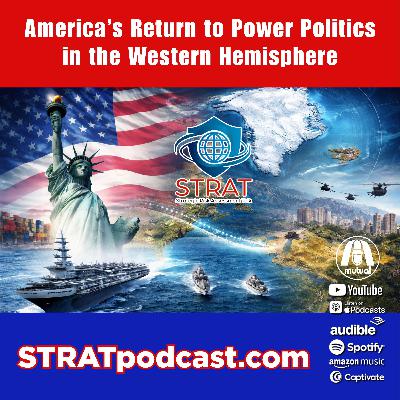
America’s strategic focus is shifting back to its own neighborhood. In this episode of STRAT with retired Marine Intelligence Officer Hal Kempfer, we examine how U.S. policy in the Western Hemisphere is evolving into what many call “Monroe Doctrine 2.0.” Drawing on history, current events, and hard geopolitical realities, the discussion explores renewed American assertiveness toward Greenland, Canada, the Panama Canal, and Venezuela. The episode traces the origins of U.S. hemispheric dominance, the legal and political legacy of past territorial ambitions, and how those precedents collide with today’s post-colonial world. It also assesses mounting military pressure near Venezuela, the risks of escalation, and the humanitarian consequences of regional conflict. With China, Russia, Iran, and Cuba all shaping the strategic environment, the United States faces difficult choices between action and restraint. This conversation highlights the dangers of unintended consequences and asks whether renewed hemispheric engagement can succeed where recent overseas nation-building efforts have failed.Takeaways:The Monroe Doctrine remains central to U.S. strategic thinking“Monroe 2.0” reflects renewed hemispheric assertivenessGreenland has long been considered strategically valuable to the U.S.Annexation rhetoric carries serious diplomatic consequencesPanama Canal treaties reshaped American power projectionVenezuela poses military, political, and humanitarian risksEscalation could destabilize the entire region through refugee flowsGreat-power competition heightens stakes in the Western Hemisphere#STRATPodcast #HalKempfer #MutualBroadcastingSystem #StrategicRiskAnalysis #MonroeDoctrine #WesternHemisphere #USForeignPolicy #Geopolitics #LatinAmerica #Venezuela #PanamaCanal #Greenland #ChinaRussiaIran #MilitaryStrategy #NationalSecurity #GlobalStability #PowerPolitics #UnintendedConsequences #HemisphericSecurity #ForeignAffairs
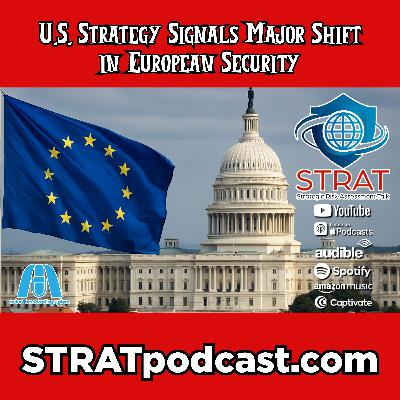
In this episode of STRAT, retired Marine Intelligence Officer LtCol. Hal Kempfer breaks down the newly released U.S. National Security Strategy and what it means for America, Europe, and the global balance of power. The Trump Administration’s document outlines a worldview driven by “flexible realism,” the revival of Monroe Doctrine thinking, and a call for Europe to change course or risk “civilizational erasure.” Kempfer explores the reaction across European capitals, from criticism by diplomats calling the strategy extreme, to growing tensions over migration, political identity, and NATO cohesion. We also examine how the U.S. is reasserting influence in the Western Hemisphere, reshaping relations with China, and potentially redefining support for Ukraine. As political alliances shift, Congress may form a new national security coalition that shapes U.S. foreign policy for years to come. Timely, controversial, and significant — this episode offers a clear look at a rapidly evolving world order.Takeaways:· The 2025 National Security Strategy marks a major policy shift.· Europe is warned of “civilizational erasure,” triggering backlash.· U.S. strategy encourages resisting Europe’s current political trajectory.· Washington plans renewed dominance in the Western Hemisphere.· Ukraine peace negotiations could involve territorial concessions.· China policy shifts toward economic competition over ideology.· Far-right influence in Europe receives positive recognition in the document.· Congress may realign into a new security coalition in response.#STRATPodcast #HalKempfer #MutualBroadcastingSystem #StrategicRiskAnalysis #NationalSecurity #Europe #ForeignPolicy #MonroeDoctrine #China #Ukraine #Congress #Geopolitics #WesternHemisphere #Migration #NATO #TrumpAdministration #Taiwan #Russia #WorldAffairs #GlobalStrategy
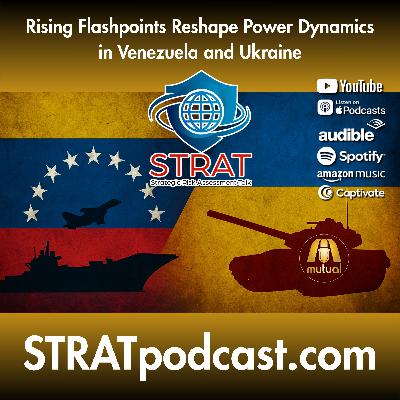
In this episode of STRAT, retired Marine Intelligence Officer Hal Kempfer examines two rapidly evolving geopolitical flashpoints—Venezuela and Ukraine—each perched at critical strategic inflection points. Venezuela faces mounting U.S. military and diplomatic pressure after President Trump’s declaration closing its airspace and the deployment of a powerful U.S. naval task force to the Caribbean. The situation places both Washington and the Maduro regime in precarious positions as covert operations, international legal concerns, and escalating cartel designations reshape the stakes. Meanwhile, Ukraine confronts a controversial peace plan that mirrors longstanding Russian objectives, raising fears about territorial concessions, regime change, and the future of Western commitment. With negotiations spanning Geneva to Washington and political turmoil in Kyiv, the outcome could redefine European security—while signaling broader implications for NATO, global alliances, and U.S. resolve in the Indo-Pacific. A complex and consequential moment is unfolding on both fronts.Takeaways:· Why U.S. pressure on Venezuela has reached a decisive point.· Strategic implications of closing Venezuelan airspace.· Capabilities and options of the U.S. carrier and MEU task force.· How cartel terrorist designations broaden potential U.S. target sets.· Concerns over reported Navy conduct and international law.· Why Ukraine’s proposed peace plan aligns closely with Russian aims.· How political instability in Kyiv and global negotiations shape outcomes.· Broader risks for NATO, Europe, and U.S. commitments worldwide.#STRATPodcast #HalKempfer #MutualBroadcastingSystem #StrategicRiskAnalysis #Geopolitics #NationalSecurity #VenezuelaCrisis #UkraineWar #USForeignPolicy #MilitaryStrategy #IntelAnalysis #RussiaUkraine #SouthAmericaSecurity #NATOAllies #GlobalStability #DefenseInsights #PolicyAnalysis #SecurityBriefing #InternationalRelations #RiskAssessment
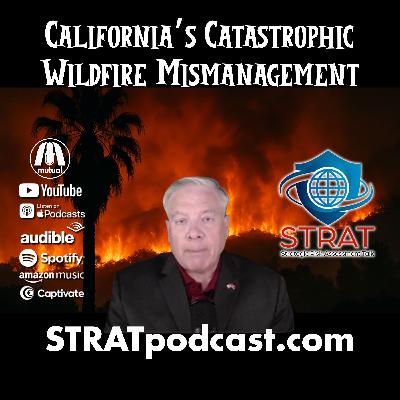
California’s recent wildfire tragedies reveal far more than natural disaster—they expose deep failures in federal oversight, intelligence integration, emergency preparedness, and state-level accountability. In this episode, retired Marine Intelligence Officer Hal Kempfer examines why California continues to suffer catastrophic losses despite receiving substantial federal resources for prevention, mitigation, and consequence-management intelligence. Using the deadly Palisades fire as a case study, we break down allegations of state interference with firefighting operations, incomplete suppression of earlier burns, unfulfilled fuel-reduction promises, and years of misrepresented accomplishments in wildfire prevention. Kempfer also traces the history of federal all-hazards intelligence programs, how they were designed to support state and local decision-makers, and how California’s leadership rejected or redirected critical DHS-funded initiatives—hindering capabilities that could have saved lives and communities. Finally, Hal explores why a comprehensive, long-look federal investigation is urgently needed to address the systemic issues that span multiple administrations and continue to put millions at risk.Takeaways:· The Palisades fire exposed major failures in California’s fire-prevention and emergency-management systems.· New allegations suggest state officials may have limited key firefighting actions before the deadly blaze.· Investigations show California overstated wildfire-prevention accomplishments by hundreds of percent.· Fuel-reduction commitments were reduced or delayed despite repeated public claims of progress.· DHS-funded intelligence programs meant to support emergency operations were halted by state leadership.· California’s actions also affected other states seeking to implement all-hazards intelligence programs.· Comprehensive consequence-management intelligence could have reduced losses in multiple disasters.· A federal investigation—independent of DHS OIG—is needed to examine systemic misconduct across administrations.#STRATPodcast #HalKempfer #MutualBroadcastingSystem #StrategicRiskAnalysis #WildfirePrevention #EmergencyManagement #CaliforniaFires #PalisadesFire #HomelandSecurity #DisasterPreparedness #ConsequenceManagement #FederalOversight #CrisisResponse #WildfirePolicy #PublicSafety #IntelligenceAnalysis #EmergencyResponse #GovernmentAccountability #RiskMitigation #DisasterResilience
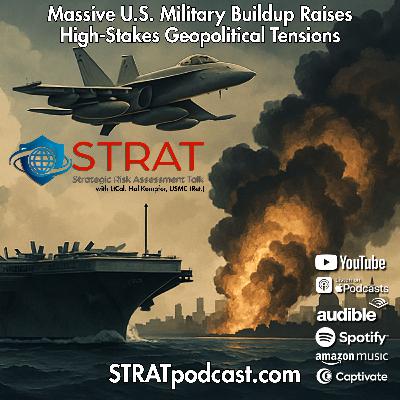
In this episode, retired Marine Intelligence Officer Hal Kempfer breaks down the newly announced Operation Southern Spear, a major U.S. military action aimed at targeting narco-terrorist networks in Latin America. With the USS Gerald R. Ford carrier strike group and an Amphibious Ready Group deploying to the region, the buildup represents one of the most significant demonstrations of American power in South America in generations. We examine what this force can actually do, what it can’t, and how its presence is being interpreted by Venezuela and regional actors. The episode also explores rapidly evolving Middle East diplomacy: the U.S. envoy’s potential meeting with Hamas leadership, Saudi-Israeli normalization talks tied to F-35 sales, and competing U.N. resolutions shaping the future of Gaza. Could these developments signal the emergence of a much larger geopolitical deal? We walk through the complexities, risks, and potential outcomes shaping the global landscape.Takeaways:Operation Southern Spear signals a major U.S. military escalation in Latin America.The USS Gerald R. Ford and Marine Expeditionary Unit form a powerful but non-invasion strike force.Venezuela accuses the U.S. of manufacturing pretexts for regional intervention.Debate intensifies over whether drug cartels meet the FBI’s definition of terrorist organizations.U.S. envoy’s planned meeting with Hamas sparks criticism over timing and intent.Saudi-Israeli normalization increasingly tied to F-35 sales and U.S. diplomatic leverage.Competing U.N. proposals reveal fractures over Gaza’s future and transitional governance.A potential “grand deal” may be forming across Latin America and the Middle East.#STRATPodcast #HalKempfer #MutualBroadcastingSystem #StrategicRiskAnalysis #OperationSouthernSpear #USMilitary #MiddleEastCrisis #VenezuelaTensions #GeraldRFord #MarineExpeditionaryUnit #GazaCeasefire #Hamas #SaudiIsraelNormalization #F35Deal #Geopolitics #NationalSecurity #DefenseAnalysis #MiddleEastPolicy #LatinAmericaSecurity #GlobalStrategy

Comments

Download from Google Play

Download from App Store
 United States