


Have a Life Teaching
Subscribed: 3Played: 58
Subscribe

© John Schembari
Description
In this podcast, we will engage in conversation with educators providing insight on best-in-class K-12 curriculum, instruction, and assessment practices.
125 Episodes
Reverse
In this episode of the Have a Life Teaching Podcast, John speaks with Dr. Danita Grissom and Dr. Vicki Kelner, co-authors of High Five to Thrive: Five Proven Practices to Unleash Your Passion for Teaching.The conversation explores why so many teachers are overwhelmed, why burnout is often created by the system rather than the individual, and what educators and leaders can do to restore hope, regulation, and sustainability. The guests share practical strategies including reconnecting to purpose, developing “hope habits,” self-regulation practices, and simple leadership moves that help teachers feel supported rather than depleted.This episode is for teachers, school leaders, coaches, and anyone trying to build healthier, more human-centered schools.Donita Grissom LinkedIn PageVicki Kelchner LinkedIn PageHigh Five Book Best Questers WebsiteMusic by Aylex
In this episode of Have a Life Teaching Podcast, John sits down with Jeff Riley, former Commissioner of Education for Massachusetts and current Executive Director of Day of AI, a nonprofit initiative launched out of MIT.Together, they explore what AI truly means for K–12 education beyond the fear, beyond the cheating headlines, and beyond the hype.Jeff shares:Why AI literacy may become the “fourth R”How schools can balance innovation with student safetyWhy banning AI outright may harm students long-termThe importance of teaching students to be healthy skepticsHow AI can finally make real differentiation possibleWhy districts should start with guardrails — not panic-driven policyThe growing role of AI in global education systemsHow AI can reduce teacher workload and reignite instructional joyThey also discuss:The dangers of AI hallucinations and why prompting mattersAI companions and the urgent need for parent awarenessWhy AI leadership cannot live in just one classroomThe opportunity to unleash teacher creativity post-COVIDJeff’s core message:AI is already here. The question is not whether schools will use it but whether they will use it thoughtfully.If implemented wisely, AI may reduce administrative burdens, strengthen differentiation, and give teachers back the space to design engaging, joyful learning experiences.Jeffrey Riley LinkedIn Page Day of AI Website Music by Aylex
Anyone who has stepped into a K–5 classroom knows this truth: kids need to move. But they also need strong math foundations. So how do we do both—without sacrificing rigor?In this episode, I sit down with Suzy Koontz, CEO and Founder of Math & Movement, to explore how movement-based learning can dramatically increase math fluency, engagement, and student confidence. A former actuary turned education innovator, Suzy shares how a simple trampoline moment with her daughter sparked a 25-year journey into brain-based math instruction .We discuss:The brain science behind movement and learningHow cross-body motion activates both hemispheres of the brainWhy skip counting is foundational for multiplication and division fluencyResearch showing significant gains in math achievement and self-efficacyHow schools can systematize movement-based strategies across classroomsPractical examples teachers can implement immediatelyThe impact on student collaboration, behavior, and math identityWe also preview Suzy’s upcoming ASCD book, Activate Math: Using Movement to Spark Engagement and Ignite Learning Activate Math: Using Movement to Spark Engagement and Ignite Learning.If you believe math should be active, conceptual, and confidence-building—not passive and procedural—this episode is for you.Suzy Koontz LinkedIn PageSuzy Koontz Web Page Math and Movement WebsiteMusic by Aylex
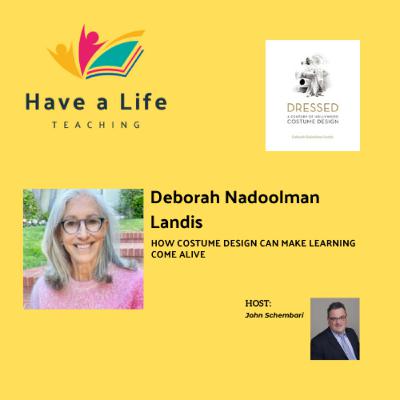
What can the costume designer behind Raiders of the Lost Ark and Michael Jackson’s Thriller teach educators?A lot.In this episode, Dr. Deborah Landis, UCLA professor and legendary Hollywood costume designer (also behind The Blues Brothers, Animal House, and Oscar-nominated for Coming to America), breaks down how costume design is actually about:Reading deeplyInterpreting textUnderstanding culture and historyBuilding authentic charactersTransporting an audienceAnd that’s exactly what great teachers do.🎭 Why costume design starts with close reading📚 How immersing students in one person or one time period builds lasting understanding🎬 The difference between “accuracy” and “authenticity”🧠 How asking better questions deepens learning👕 Why what we wear tells a story — and how students can use costume to demonstrate understanding🔥 What Indiana Jones teaches us about archetypes and engagement🎓 Why performance and teaching are more alike than we thinkDr. Landis shares how her graduate students study Oscar Wilde by examining text, history, politics, art, and culture before ever designing a garment — and why K–12 classrooms can adapt this same immersive approach.She reminds us:“We’re in the transportation business.”So are great educators.If you want to make learning feel less like coverage and more like immersion — this conversation will spark ideas across history, ELA, arts integration, and leadership.🎧 Listen in and ask yourself:How might costume, story, and performance deepen learning in your classroom or school?Deborah Landis LinkedIn PageDeborah Landis Website UCLA School of Theatre, Film & Television Dressed: A Century of Hollywood Costume Design - Book
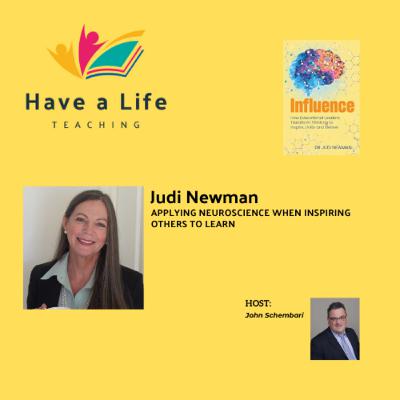
Why do people keep doing the opposite of what we’ve clearly explained over and over again? Or do nothing at all? In this episode, I’m joined by Dr. Judy Newman, researcher, former principal, and author of Influence, for a practical, eye-opening conversation on applied neuroscience, psychology, and learning.We unpack:Why thinking is not the same as learning (neurons fire vs. wire)How trust, relationships, and growth map directly onto the brainWhy “one-and-done” PD and initiatives failWhat neuroscience tells us about feedback, fear, and changeHow leaders can build influence without authorityWhat this means for AI adoption, instructional change, and adult learningWhy emotion—not logic—drives behavior more than we want to admitThis episode is packed with concrete implications for classrooms, PD sessions, leadership moves, and system-level change.If you’ve ever said “But I already told them…” — this one’s for you.Judi Newman LinkedIn PageInfluence Book Dr. Judi Newman WebpageMusic by Aylex
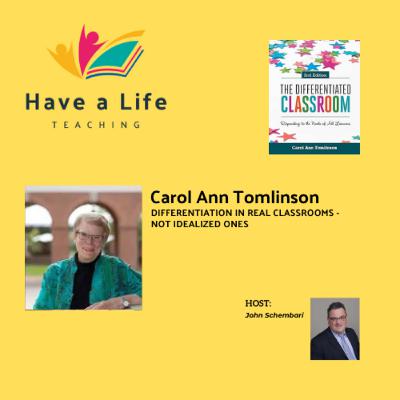
In this wide-ranging conversation, Carol Ann Tomlinson reflects on her unconventional path into teaching and the classroom realities that led her to redefine differentiation—not as a set of tactics, but as an ethical stance toward learners.Key Themes & Takeaways:Differentiation ≠ multiple lesson plans: It’s about common goals with multiple pathways, supports, and timelines.Choice builds agency: Students learn more deeply when they can choose how they engage and demonstrate understanding.Scaffolding is for everyone: Advanced learners need support too—challenge without scaffolding isn’t rigor.AI as a support, not a substitute: Translation, organizers, and access tools can expand equity when used intentionally.Second-order change: Differentiation only works when aligned with learning environment, curriculum, assessment, instruction, and classroom leadership.Safety precedes learning: Trust, belonging, and relevance are prerequisites—not “extras.”Who This Episode Is For:Teachers, coaches, school leaders, and anyone rethinking instruction in a post-COVID, AI-influenced world who wants learning to be human-centered, rigorous, and just.Where to Learn More:Carol Ann Tomlinson - ASCDThe Differentiated Classroom Book
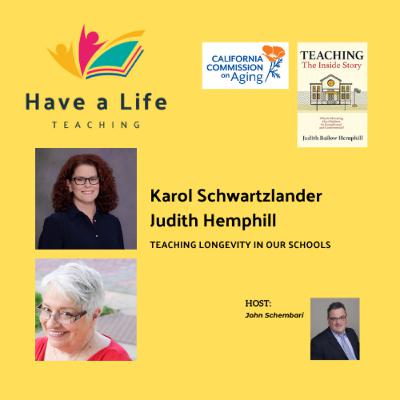
What if schools taught longevity—not just aging?On the latest episode of the podcast, I spoke with Karol Schwartzlander (California Commission on Aging) and Judith Hemphill about why aging belongs in our K–12 conversations.We’ve added nearly 30 years to life expectancy, yet schools rarely prepare students for long, multigenerational lives. Aging doesn’t start at retirement—it starts at birth.Key ideas from the conversation:Positive images of aging can add years to lifeOlder adults bring wisdom, story, and mentorship students deeply needLearning flows both ways—especially in an AI-shaped worldIntergenerational schools reduce loneliness and strengthen communitiesOne insight that stuck with me: A positive perception of aging adds 7.5 years to your life.That’s not just a health issue. It’s a curriculum, leadership, and systems issue. Karol Schwartzlander LinkedIn PageCalifornia Commission on Aging Judith Hemphill LinkedIn PageTeaching: The Inside StoryMusic by Aylex
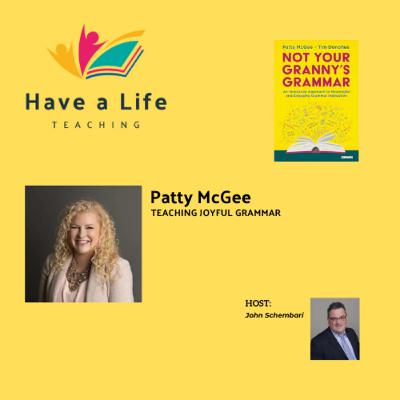
Grammar doesn’t fail because students can’t learn it.It fails because of how it’s taught.In this episode of the Have a Life Teaching Podcast, I’m joined by literacy expert Patty McGee, co-author of Not Your Granny’s Grammar, to rethink grammar instruction from the ground up.We explore how grammar can be:taught through sentences, play, and inquiryembedded across ELA, science, and social studiesaccessible to multilingual learnersfocused on growth over time, not mastery in a dayPatty shares concrete classroom strategies, including sentence manipulation, low-prep grammar play, and assessment approaches that honor language, culture, and audience.If grammar feels like a compliance task instead of a thinking tool—this conversation shows a better way.Patty McGee Website Not Your Granny's Grammar BookMusic by Aylex
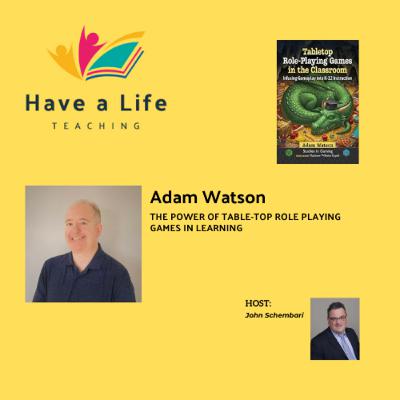
In this episode, I speak with Adam Watson about role-playing and gamification as serious instructional tools, not motivational add-ons.We explore how well-designed role-play:Shifts students from passive responders to active decision-makersLowers affective risk while increasing cognitive demandUses identity, narrative, and constraints to deepen reasoningSupports academic discourse without overscripting languageThis conversation reframes gamification as a cognitive access strategy—especially powerful in discussion-based, humanities, and problem-centered learning contexts.Key takeaway:If students are thinking as someone, not just answering as themselves, rigor goes up—not down.Adam Watson LinkedIn PageWatson Edtech PageTable-Top Role Playing Games in the Classroom Book Music by Aylex
As we return to the second half of the school year, and exhaustion starts to set in, morale often becomes fragile—for teachers, students, and leaders alike. In this episode, John is joined by Dr. Darrin Peppard, former Wyoming Principal of the Year and founder of Road to Awesome Consulting, to explore a critical reframe: morale isn’t a program—it’s a byproduct of a well-run school.Darren traces his own leadership journey from classroom teacher to principal and superintendent, including the burnout that came from trying to be a “superhero leader.” From there, the conversation unpacks what truly boosts morale: clarity of vision, strong systems, shared leadership, and leaders who model what they expect.Listeners will hear practical examples of how effective leaders:Build clear organizational and instructional systemsDelegate leadership without micromanagingCreate opportunities for teachers and students to leadShift from “putting out fires” to feeding the cultureRecognize, reward, and reinforce the behaviors they want to seeThe episode closes with a powerful reminder: the same practices we ask teachers to use with students—clarity, modeling, and positive narration—are the practices leaders must use with adults. When schools are run well, morale follows.Darrin Peppard LinkedIn PageRoad to Awesome Music by Aylex
What does it really mean to communicate a vision—and why does it matter so much for school culture?In this episode, John Schembari is joined by Corey Gordon, CEO of DeliverEd, to explore how schools and districts can move beyond vision statements as “documents on a page” and turn them into drivers of strategic action and improvement.Together, they unpack:Why a clear vision is the essential first step in building strong school cultureWhat effective vision statements include—and what they leave outHow mission statements, portraits of a graduate, and strategic plans work togetherPractical ways to elevate student voice and stakeholder co-creationCommon implementation pitfalls (initiative fatigue, lack of KPIs, rushing change)How leaders can live the vision through modeling, recognition, hiring, and accountabilityThis conversation is especially relevant for school and district leaders who want alignment, focus, and follow-through—not just another glossy plan.🎧 Key takeaway: Vision only matters if it shapes daily decisions, behaviors, and systems—and leadership makes the difference.Corey Gordon LinkedIn PageDeliverEDMusic by Alex
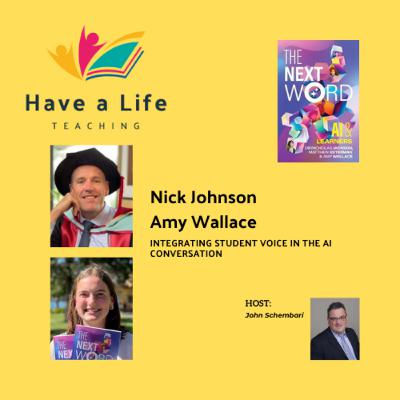
In this episode, John Schembari is joined by student author Amy Wallace and education researcher Dr. Nick Jackson to explore AI in education—from the learner’s perspective.Key Topics CoveredHow students actually use AI to think, revise, and planWhy bans and AI “detection” tools failWhat AI reveals about broken assessment systemsStudent agency vs. performative voiceAI, careers, and uncertainty in the future workforceLessons from Australia’s social media banWhy education must move from binary rules to ethical gray zonesKey TakeawayAI is not an instructional shortcut—it’s a systems stress test.And students are telling us exactly where the cracks are.Music by AylexThe Next Word: AI and Learning Dr. Nick Jackson LinkedIn Page Now Future Learning Website
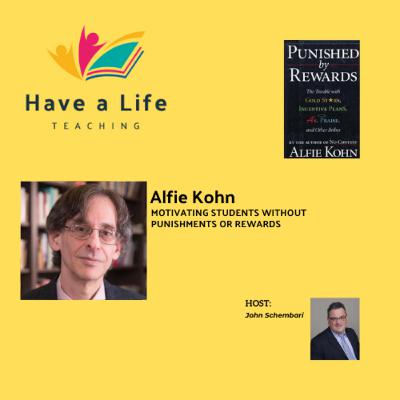
Chronic absenteeism still hovers around 25% nationwide—and one root cause keeps surfacing: student disengagement.In this episode, we sit down with Alfie Kohn, author of Punished by Rewards, to unpack a hard truth many of us weren’t trained to question:👉 Rewards, grades, praise, and “positive reinforcement” don’t build motivation—they often undermine it.Alfie reminds us:Motivation isn’t one thing. The kind matters more than the amount.Intrinsic motivation (learning for meaning, curiosity, purpose) is more powerful than extrinsic carrots and sticks.The more we reward learning, the more we unintentionally teach students that learning isn’t worth doing on its own.What’s framed as “encouragement” is often control in disguise—and kids (and adults) feel it.So what’s the shift?🔄 From doing things to students → working with students🔄 From praise and compliance → choice, voice, agency, and dialogue🔄 From grades and behavior charts → feedback, reflection, and authentic assessmentThis conversation isn’t about blaming teachers—it’s about questioning systems we inherited and reimagining classrooms (and workplaces) where engagement is designed, not bribed.Alfie Kohn WebsiteKohn's Zone PodcastPunished by Rewards Music by Aylex
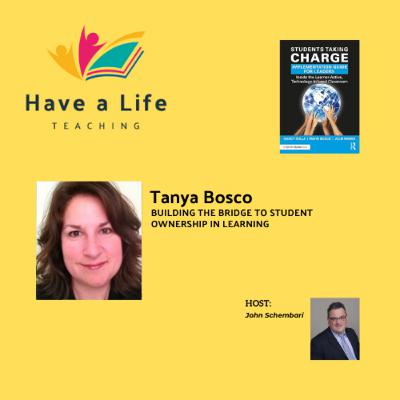
In 2025, great teaching isn’t about delivering content — it’s about curating it, unleashing student curiosity, and building true student efficacy.But here’s the twist: teachers can’t foster efficacy if leaders are still ferry-captains instead of bridge-builders.In my latest conversation with Tanya Bosco (Chief Strategy Officer at IDE Corp), we unpack the leadership mindset shifts from her new book Students Taking Charge: Implementation Guide for Leaders. We covered: 🔹 The difference between student engagement, empowerment, and efficacy 🔹 How an efficacy notebook transforms learning ownership 🔹 Why leaders must shift from dissemination → conversation 🔹 How to avoid “surface innovation” traps 🔹 What future-powered classrooms actually look and feel like 🔹 And the big one: why real transformation should feel like joyIf we want students who believe “I can change the world,” we need schools designed for it — from the classroom up and the leadership down.Tanya Bosco LinkedIn PageIDE Corp WebsiteStudents Taking Charge Book Music by Aylex
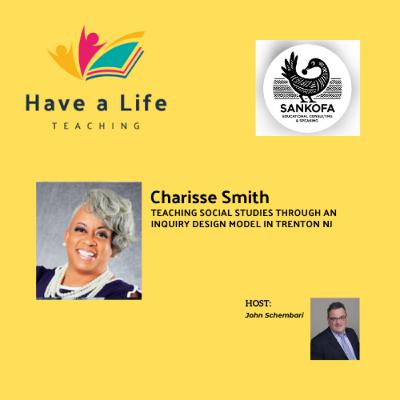
Making Social Studies Come Alive Through InquiryIn this week’s Podcast episode, I sit down with Charisse Smith Ph.D. —CEO of Sankofa Educational Consulting and former K–6 Social Studies Supervisor in Trenton Public Schools, NJ—to dig into why inquiry-driven social studies is essential for today’s learners.We talk about: ✨ Moving beyond facts + dates to real student thinking ✨ Why elementary students can handle complex history ✨ Powerful examples of informed action (2nd graders contacting City Hall!) ✨ How IDM creates space for civic engagement, critical thinking & SEL ✨ Supporting teachers through the shift from “sage on the stage” to inquiry facilitator/If you want social studies to be relevant, joyful, and transformative, this is the episode.🎧 Listen now and lean into inquiry. Our students—and our democracy—benefit.Charisse Smith LinkedIn PageSankofa Educational Consulting C3 Teachers Blog: Implementing IDMMusic by Aylex
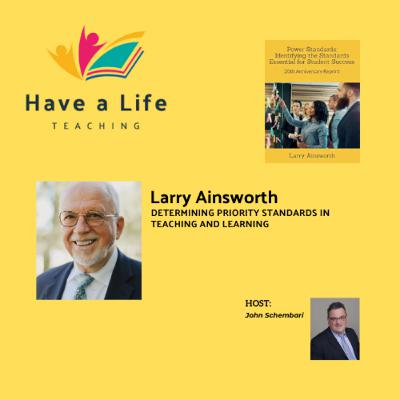
Cutting Through the Noise with Priority StandardsTeachers are asked to do everything — personalization, differentiation, voice and choice, standards-based instruction… but rarely is anything taken off the plate.In this episode of the Podcast, I sit down with Larry Ainsworth, the nationwide expert on unwrapping standards, priority standards, and creating clear learning targets.We dive into: ✨ How to identify what’s truly essential for student learning ✨ The REAL (Readiness, Endurance, Assessment, Leverage) framework ✨ Turning standards into meaningful learning targets & success criteria ✨ Supporting multilingual learners and students with disabilities ✨ Why AI is a tool — not a replacement — for teacher expertise ✨ How schools that prioritize standards see real gains in student achievement.If you’ve ever wondered, “How do I teach what’s essential when everything feels essential?” — this episode is for you.🎧 Listen now and bring clarity back to teaching.Larry Ainsworth LinkedIn PageLarry Ainsworth WebsiteEssential Standards for Multilingual Learners Music by Aylex
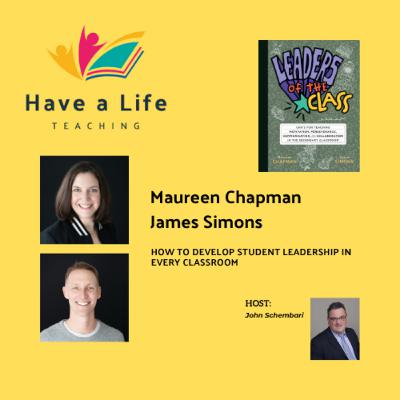
In this Have a Life Teaching Podcast episode, we speak with Maureen Chapman and James Simons of Core Creative Partners about their new book, Leaders of the Class. We explore how motivation, perseverance, communication, and collaboration can be intentionally taught alongside academic content—especially at the secondary level.Our guests share powerful stories about helping schools rebuild joy post-pandemic, why adolescents need more opportunities to reflect and lead, and how routines like goal setting, emotional awareness, perseverance strategy banks, and structured collaboration can transform classroom culture.Most importantly, we discuss how this work supports equity, belonging, and agency—ensuring every student, especially those who feel disconnected, develops the skills and confidence to thrive in school and beyond. Core Creative PartnersMaureen Chapman LinkedIn PageJames Simons LinkedIn Page Leaders of the Class Book Music by Aylex
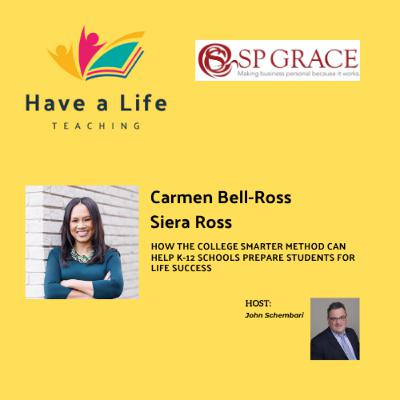
In this episode of the Have a Life Teaching Podcast. we welcome Dr. Carmen Bell Ross—founder and CEO of SP Grace—and her daughter, Sierra Ross, a Harvard University student, for a powerful mother-daughter conversation on helping students not just get into college but thrive once they’re there.Dr. Carmen shares the origins and pillars of her College Smarter Method, a framework that helps students identify their authentic strengths, personal brand, and purpose beyond grades and test scores. She explains how cultivating self-awareness, strategy, and fit empowers young people to stand out in college admissions and future careers.Sierra offers a student’s perspective on discovering her authentic path through STEM exploration, dance, and community service, and how her mother’s guidance helped her connect passion to purpose. She also speaks candidly about confidence, resilience, and self-motivation in college life.Together, they discuss how educators can validate all students’ gifts, ask better questions, and create environments that nurture student agency, reflection, and belonging—especially for diverse learners navigating today’s evolving college landscape.💡 Key Topics:Personal branding and self-discovery for high-school and college studentsThe College Smarter Method and its core pillarsStudent agency, validation, and authentic storytellingBalancing academic rigor with personal passionNavigating college challenges with confidence and purposeVisit CollegeSmarter.com to explore Dr. Carmen Bell Ross’s work and upcoming workshops.Carmen Bell-Ross LinkedIn Page
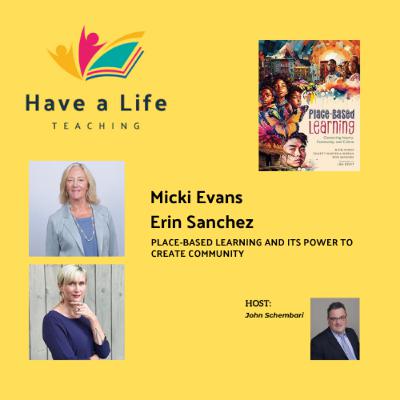
John talks with Mickey Evans and Erin Sanchez about place-based learning, a pedagogy of connectedness that roots instruction in students’ local communities, cultures, and environments. They share design principles for creating authentic, equitable learning experiences and examples from tribal, rural, and urban schools—showing how community partnerships, storytelling, and student voice transform learning. The episode also explores how AI and VR can expand access and make place-based learning possible anywhere.Defining place-based learning and its equity focusHow to design “learning journeys” that connect culture, inquiry, and communityReal-world examples from schools nationwideOvercoming time and testing pressuresUsing AI and VR to enhance community-connected learningErin Sanchez LinkedInMicki Evans LinkedIn PagePlace Based Learning Book PBL PathMusic by Aylex
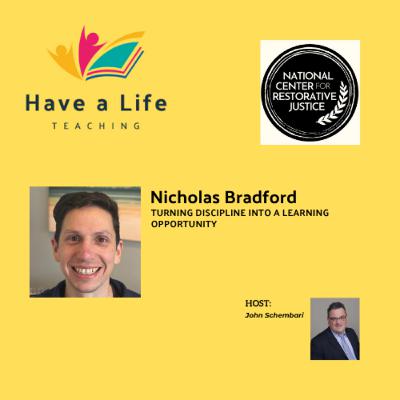
In this episode, Dr. John Schembari speaks with Nicholas Bradford - Founder at National Center for Restorative Justice - about how restorative justice can transform school culture by balancing accountability, relationship building, and community repair. Together, they unpack what restorative practices look like in real classrooms and explore how schools can move from punitive discipline models to ones focused on learning, empathy, and responsibility.Redefining Discipline: Moving beyond punishment to accountability and relationship repair.Restorative Practices in Action: How “restorative conferences” differ from traditional discipline and what they look like in schools.Accountability with Compassion: Helping students author responsibility for their actions rather than simply “serve time.”Teacher Reflection: When adults also need to own their actions and model restorative behavior.Building Schoolwide Systems: Starting small with low-hanging fruit—such as relationship-building circles—and scaling to full restorative programs.The Role of Community: Involving students, staff, and parents in a culture of empathy and shared responsibility.Results in Practice: How schools implementing restorative justice have seen significant reductions in suspensions and improvements in climate surveys.“Discipline is choosing what I want most over what I want right now.” — Nicholas BradfordNicholas Bradford LinkedIn PageNational Center for Restorative Justice

Comments

Download from Google Play

Download from App Store
 United States