


 Claim Ownership
Building LA
Subscribed: 1Played: 2
Subscribe

© Copyright 2026 Sam Pepper
Description
A podcast about the buildings and projects shaping Los Angeles, featuring the key individuals driving them forward. Each episode of Building LA features a leading figure in the Los Angeles design, real estate and business sectors. We engage in discussion about the pivotal choices that propelled their professional journey, the driving forces that sustain their motivation, and the untold narratives underlying their most remarkable projects. Subscribe to be inspired by leaders within the real estate industry, learn about the projects impacting Los Angeles, and listen to the insider perspectives on how these projects came to be.
31 Episodes
Reverse
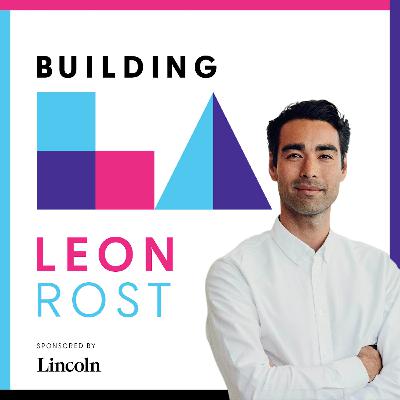
Leon Rost is a Partner at Bjarke Ingels Group (BIG), the firm behind some of the most talked-about projects in architecture today. He leads BIG's Los Angeles office, which opened three years ago in a 1928 Paul Williams building in Santa Monica. Before that, he spent 12 years running major West Coast and international projects, including Google's next-generation campus in Mountain View and Toyota's Woven City prototype in Japan. His diverse portfolio is the backdrop for our conversation about what it takes to innovate in Los Angeles. Leon walks us through BIG's recently completed Robert Day Science Center at Claremont McKenna College, a stacked, cantilevered structure designed to anchor the college's campus expansion. We also talk about the long road to entitlement for a mixed-use project in the Arts District — ten years in the making — and what it could mean for the neighborhood's revitalization. Plus, we touch on the LA River, the tension between LA's individualist culture and the density it needs, and what Copenhagen's development culture can teach us.Episode Outline(01:14) Leon’s non-linear path to BIG’s LA office (07:26) The question Leon’s team asks on every project: what's the unexpected gift we're offering? (10:51) Why BIG chose LA over San Francisco, and whether the city's ambition still matches its potential(16:45) What LA's approval process is costing developers(19:40) Setting up shop in a Paul Williams building in Santa Monica(22:32) Inside the Robert Day Science Center at Claremont McKenna(27:03) BIG's Arts District project: what happened and what's next(32:33) Favorite buildings and spaces in Los AngelesResources MentionedCopenHillGoogle Mountain View CampusToyota Woven CitySecond Home Hollywood Office / SelgasCanoGuest InfoConnect with Leon on LinkedIn Learn more about BIG More From Building LA Visit the Building LA websiteConnect with Sam on LinkedInFollow Building LA on LinkedInLearn more about Lincoln Property CompanyFollow Lincoln Property Company on LinkedInDisclaimer: The views and opinions expressed in this podcast represent the views of the individual speakers, interviewers, or guests alone, and do not necessarily reflect the official positions, views, or opinions of Lincoln Property Company or any of its affiliates.
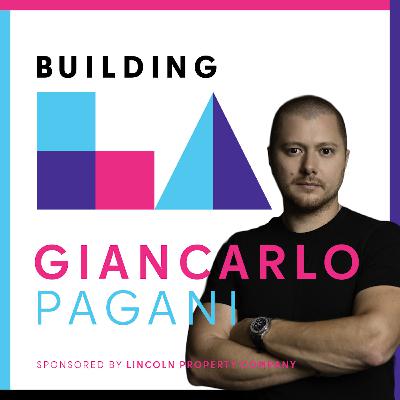
In Los Angeles, the ground floor is often where the identity of a neighborhood is established. In this episode, I sit down with Giancarlo Pagani, founder of Pagani Hospitality and Managing Partner of Mother Wolf Group, to discuss the mechanics of hospitality and his approach to creating local institutions that build community.Giancarlo is a second-generation LA restaurateur, practically growing up at the Beverly Wilshire and celebrating milestones at iconic establishments like Mr. Chow. His early exposure to fine dining shaped his focus on creating the next generation of iconic Los Angeles restaurants. He describes his philosophy on sustainable restaurant growth, specifically through the lens of licensing deals. He’s currently partnering with international brands like Maximal Concepts Group and The Good People Group, bringing world-class dining to Los Angeles while utilizing existing operational support and infrastructure.We also discuss the realities of the LA real estate market from a tenant's perspective. Giancarlo outlines his firm stance on lease negotiations, including why he considers personal guarantees a hard stop for his group. Plus, he shares his vision for the future of the city center and his optimism for Hollywood and Downtown revitalization.Episode Outline(02:24) Lessons in longevity and building restaurants that stand the test of time(08:01) The strategic value of licensing international brands versus developing original IP(11:31) Raising capital and the current state of the hospitality investment landscape(18:55) Quick Fire Round: The most overrated menu items in LA and local favorites(27:32) Giancarlo’s perspective on lease negotiation and tenant curation(32:36) Navigating the current policy environment and labor cost increases in Los Angeles(34:28) Upcoming projects: The expansion of Miznon and the LA debut of MalkaResources MentionedMother WolfMott 32MiznonMalkaMr. ChowMusso and FrankSpagoFelixFunkeGenghis CohenKa’TeenHorses The BenjaminLAMILL Coffee25 DegreesIslandsGuest InfoConnect with Giancarlo on LinkedInMore From Building LA Visit the Building LA websiteConnect with Sam on LinkedInFollow Building LA on LinkedInLearn more about Lincoln Property CompanyFollow Lincoln Property Company on LinkedInDisclaimer: The views and opinions expressed in this podcast represent the views of the individual speakers, interviewers, or guests alone, and do not necessarily reflect the official positions, views, or opinions of Lincoln Property Company or any of its affiliates.
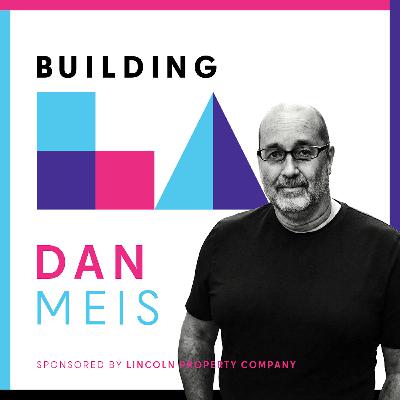
Few architects ever achieve name recognition among the general public; fewer still become local heroes in northern English cities. Dan Meis, Managing/Design Partner at MEIS+ and SVP, Director of Global Sports Design at AECOM, is the exception. In this episode, I sit down with him to discuss the vision behind the new Everton football stadium and the unique challenge of designing venues that define entire cities.We begin in an unlikely place: Kansas City, Missouri. Dan explains how a quirk of architectural history, specifically the separation of baseball and football stadiums in the 1970s, turned this midwestern city into the global epicenter of sports architecture.But the heart of our conversation lies in Liverpool. Dan recounts his approach to the Everton project: Build a brick-and-steel bowl that honors the club's history. He also reflects on his unorthodox decision to engage directly with fans on social media, debating everything from seat capacity to sightlines—a gamble that ultimately paid off.From there, we pivot to Los Angeles, where Dan shares the origin story of the Staples Center (now Crypto.com Arena). He reveals how a study of the Disneyland model, namely the strategy of keeping visitors engaged outside the main attractions, directly inspired the creation of LA Live and transformed a commuter city’s downtown into a destination.Finally, we look at the future of Los Angeles. We touch on the tragedy of teams abandoning their home markets (in particular, The Chargers leaving San Diego) and discuss Dan’s vision for stadiums not just as a venue, but as public squares akin to the Palio di Siena.Episode Outline(02:53) Dan’s non-linear journey into Global Sports Design(06:48) Responding to the Everton FC design prompt and preserving the club's identity(20:19) The Staples Center and using the Disney model for LA Live(32:37) What Dan would change about the Staples Center today(36:00) The future of stadiums and optimism for LAResources MentionedHill Dickinson Stadium Crypto.com Arena (formerly Staples Center) LA Live Goodison ParkGuest InfoConnect with Dan Meis on LinkedInMEIS+More From Building LA Visit the Building LA websiteConnect with Sam on LinkedInFollow Building LA on LinkedInLearn more about Lincoln Property CompanyFollow Lincoln Property Company on LinkedInDisclaimer: The views and opinions expressed in this podcast represent the views of the individual speakers, interviewers, or guests alone, and do not necessarily reflect the official positions, views, or opinions of Lincoln Property Company or any of its affiliates.
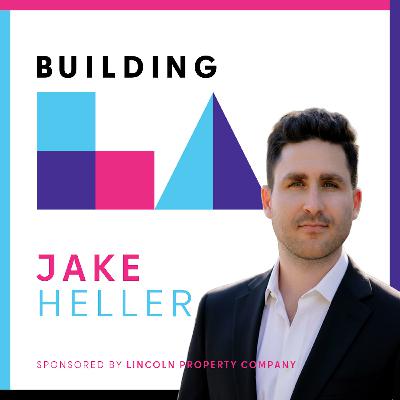
For most real estate professionals, using AI might look like asking ChatGPT to tidy up grammar on an email, but that’s just scratching the surface of what’s possible. Jake Heller, co-founder of AI for CRE Collective, argues that the true utility of these tools lies in automating tedious tasks, freeing up valuable resources to build relationships and strategies that actually get deals across the finish line. Jake is a third-generation builder navigating the complex realities of Los Angeles development. He’s experienced firsthand how AI tools have become a necessary partner for developers as expenses rise and rental growth stagnates. Crucially, we discuss the friction of AI adoption within large institutions and how successful integration doesn't mean forcing teams to learn entirely new software, but rather deploying tools that seamlessly fit into the workflows we already rely on.We also touch on the nuanced regulatory landscape of LA and how Jake is utilizing specific machine learning models to mitigate inefficiencies that usually kill deals. He details his personal toolkit, walking us through platforms like Gamma for instant investor decks and Endex AI that streamlines institutional-level underwriting. Episode Outline(01:05) Creating a hub for AI and technology in real estate(05:39) LADWP, offsite improvements, and the "LA Regulatory Risk"(23:11) AI essentials: Gamma, Claude, Endex AI, and Shortcut AI(31:37) The implementation gap and the reality of data infrastructure (34:53) Why prompt engineering is the new essential skill for analysts (38:20) Will General Contractors benefit the most from AI? (44:40) The roadmap for non-technical professionals to get started Resources MentionedAI for CRE Collective Gamma - AI Deck CreatorEndex AI - Excel AI Super AgentShortcut AI - Excel AI Super AgentClaude - Large Language ModelChatGPT - Large Language ModelPerplexity - AI Research ToolManus - Autonomous AI AgentGuest InfoConnect with Jake on LinkedIn Learn more about AI for CRE Collective More From Building LA Visit the Building LA websiteConnect with Sam on LinkedInFollow Building LA on LinkedInLearn more about Lincoln Property CompanyFollow Lincoln Property Company on LinkedInDisclaimer: The views and opinions expressed in this podcast represent the views of the individual speakers, interviewers, or guests alone, and do not necessarily reflect the official positions, views, or opinions of Lincoln Property Company or any of its affiliates.
Downtown LA generates 30% of the city's business, parking, and transient occupancy tax revenues despite occupying just 1% of its land mass. Despite this, the neighborhood faces serious challenges: office vacancy rates have risen significantly, major convention bookings have been turned away for a decade, and the graffiti-covered Oceanwide towers remain a stark symbol of neglect.In this conversation, Nella McOsker, President & CEO of Central City Association (CCA), details CCA's "Revive DTLA" plan. This 90-day roadmap was developed with input from over 100 stakeholders ranging from Fortune 500 companies to small businesses, homeless service providers, and cultural institutions. The plan outlines how DTLA can achieve the basics: concentrated foot patrols, consistent street cleaning, and prioritized implementation of existing programs like CARE Court and Inside Safe, all without requiring massive new funding.Nella also addresses the structural governance challenges that hinders progress, from LA's 15 council districts to the division of responsibilities between city and county. Plus, she highlights the practical solutions already showing results, including new bike patrols and foot beats announced shortly after the plan's release. Episode Outline(03:07) Why Downtown LA's success is tied to the entire city's budget(05:24) Nella's background and path to leading CCA(08:34) CCA's mission and 300-member coalition(14:02) The convention center expansion: why it matters and what took so long(18:22) Oceanwide towers and the role of public-private partnership(25:36) Breaking down the four pillars of the Revive DTLA plan(36:00) Making the pitch for Downtown LA office space(39:41) What the private sector and city employees should be doing to support the success of DTLA(47:46) The overlooked power dynamics between city and county leadershipResources MentionedRevive Downtown LA PlanGuest InfoConnect with Nella on LinkedInVisit CCA's websiteFollow CCA on LinkedInMore From Building LA Visit the Building LA websiteConnect with Sam on LinkedInFollow Building LA on LinkedInLearn more about Lincoln Property CompanyFollow Lincoln Property Company on LinkedInDisclaimer: The views and opinions expressed in this podcast represent the views of the individual speakers, interviewers, or guests alone, and do not necessarily reflect the official positions, views, or opinions of Lincoln Property Company or any of its affiliates.
Can LA still build things that serve everyday people? Chris Torres and Eli Lipmen think so, and their Festival Trail project is putting that belief to the test.Festival Trail is a bold 28-mile mobility and culture corridor connecting neighborhoods from Downtown through Inglewood. Chris, founder of Agency Artifact, brings urban design expertise, while Eli, Executive Director of Move LA, has a track record of passing transformative ballot measures worth $120 billion over 40 years.Their timing isn't coincidental. With 15 million Olympic tickets sold and LA's commitment to a "transit-first Olympics," the city faces what Chris calls "seven Super Bowls happening simultaneously every day for six weeks." The infrastructure challenge is massive, but so is the opportunity.What makes Festival Trail different is its opportunistic approach—following existing transportation corridors and activating projects already funded rather than starting from scratch. The plan includes 28 new resiliency hubs along the trail featuring large screens for Olympic viewing, food, music, and local culture. These become seeds for future development and community investment.The conversation reveals LA's fundamental challenge: a diffuse power structure where no single lever creates change. Instead of waiting for top-down coordination, Festival Trail builds on coalitions and momentum. The project also confronts LA's inequity head-on. Rather than concentrate investment in wealthy neighborhoods, Festival Trail intentionally follows corridors serving traditionally underserved communities. The goal isn't just throwing a party for the Olympics, but creating generational uplift and economic opportunity.Episode Outline(02:02) The spark that created Festival Trail from Olympic planning work(06:36) Why LA is the right place for these big infrastructure projects(12:17) What Festival Trail looks like on the ground(19:24) Who's actually in charge of moving 15 million Olympic ticket holders?(25:17) Building coalitions without centralized power structures(33:43) How Olympic investment typically fails communities(39:44) Lessons from passing $120 billion in ballot measures(42:19) The unintended consequences of Measure ULA on multifamily development(54:33) Why American cities no longer pencil—and what to do about it(1:04:52) Festival Trail milestones and how to get involvedResources MentionedThe Festival Trail LA River Path Project About Measure M Zev's Los Angeles: From Boyle Heights to the Halls of Power by Zev Yaroslavsky United to House LA (ULA) The California Tomorrow Plan by Alfred HellerGuest InfoConnect with Chris on LinkedIn Learn more about Agency Artifact Connect with Eli on LinkedIn Learn more about Move LA More From Building LA Visit the Building LA websiteConnect with Sam on LinkedInFollow Building LA on LinkedInLearn more about Lincoln Property CompanyFollow Lincoln Property Company on LinkedInDisclaimer: The views and opinions expressed in this podcast represent the views of the individual speakers, interviewers, or guests alone, and do not necessarily reflect the official positions, views, or opinions of Lincoln Property Company or any of its affiliates.
Most architects spend their careers talking to other architects. Vishaan Chakrabarti, FAIA took a different path, and it's made him one of the most influential voices in urban planning today.From his role as Manhattan Director of Planning under Mayor Bloomberg to founding Practice for Architecture and Urbanism (PAU), Vishaan has spent decades working across scales. His non-linear career path has given him a rare ability to speak different languages: government, development, academia, and design.In his latest book, "The Architecture of Urbanity," Vishaan argues that the abundance agenda isn't enough. Yes, we need to build more housing, but if most of what gets built is poor quality, communities will continue to fight development. The solution isn't just quantity—it's quality.The conversation takes on new urgency as we discuss the recent LA fires and what they reveal about sprawl, climate resilience, and the true cost of horizontal growth. Vishaan is direct: rebuilding exactly what was there is "suspended disbelief," and cities like LA need to confront difficult questions about density and fire buffers.From Singapore's world-class infrastructure to Paris’s reduction in car dependency, Vishaan shares lessons from cities that are getting urbanism right. These examples prove that investing in quality development and density creates virtuous cycles. More tax revenue funds better transit, housing, and public services. For cities like LA facing housing shortages and climate crisis, the path forward isn't choosing between growth and quality, but rather investing in both simultaneously.Episode Outline(04:33) Vishaan’s early influences and unconventional path to architecture (11:36) Takeaways from the Bloomberg administration (16:24) Why the commodity approach to housing development creates community resistance(25:34) Cities becoming self-sufficient as federal funding disappears(36:07) LA's infrastructure challenges and cultural barriers to gentle density(48:41) Mayor for a day: How Vishaan would approach zoning in LA (50:42) Notes from Singapore, Tokyo, Venice, Vienna, and ParisResources MentionedThe Architecture of Urbanity A Country of CitiesNYT Article: The Big City Where Housing Is Still Affordable Movie: Perfect DaysPalisades Architect with Fire Resistant Home: ABC7 Guest InfoConnect with Vishaan on LinkedIn Follow PAU on LinkedInMore From Building LA Visit the Building LA websiteConnect with Sam on LinkedInFollow Building LA on LinkedInLearn more about Lincoln Property CompanyFollow Lincoln Property Company on LinkedInDisclaimer: The views and opinions expressed in this podcast represent the views of the individual speakers, interviewers, or guests alone, and do not necessarily reflect the official positions, views, or opinions of Lincoln Property Company or any of its affiliates.
Governor Newsom recently signed a significant rollback to the California Environmental Quality Act (CEQA), creating a new statutory exemption for urban infill housing projects, effective immediately. Spencer Kallick, a land use attorney who's guided everyone from Blackstone to AvalonBay through California's regulatory maze, breaks down what this actually means for developers reassessing their pipelines.It's not the free-for-all some headlines make it out to be, but it is a major shift for urban infill housing development. Cities still have discretion and the need for a Phase I Environmental Site Assessment and tribal consultation remains. But traffic studies and air quality analyses have gotten significantly easier to navigate.Spencer walks through the fine print: projects under 85 feet avoid prevailing wage requirements, sites up to 20 acres qualify, and residential density has to be at least 50% of the minimum density in that jurisdiction. The catch is it only works if you're building on land already zoned for residential use and staying within existing height limits. High-rise towers on industrial land still need full CEQA review.The conversation digs into the political motivation behind this decision and why Governor Newsom is now championing CEQA reform when it was considered untouchable just years ago. The result is a gradual, but accelerating shift toward abundance policies that Democrats hope will demonstrate they can actually get things done.Spencer also reveals the practical challenges ahead: planning departments are understaffed and unprepared for immediate implementation, some provisions won't take effect until 2026, and environmental groups are considering lawsuits. But, he's optimistic that momentum is building if construction costs moderate and capital markets improve. Episode Outline(02:21) Why CEQA reform is happening now (11:25) Details of the urban infill statutory exemption requirements(22:49) Understaffed planning departments struggling with immediate implementation(28:13) Delayed provisions and political vulnerability of the new law(30:15) Is this the beginning of broader CEQA reform? (33:44) Development pipeline outlook and LA's building future Resources MentionedNYT Article: California Rolls Back Its Landmark Environmental LawGuest InfoConnect with Spencer on LinkedIn More From Building LA Visit the Building LA websiteConnect with Sam on LinkedInFollow Building LA on LinkedInLearn more about Lincoln Property CompanyFollow Lincoln Property Company on LinkedInDisclaimer: The views and opinions expressed in this podcast represent the views of the individual speakers, interviewers, or guests alone, and do not necessarily reflect the official positions, views, or opinions of Lincoln Property Company or any of its affiliates.
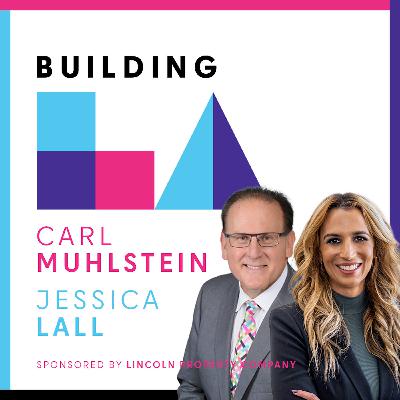
What's holding LA back from reaching its potential? Jessica Lall, Managing Director of CBRE's DTLA office, and Carl Muhlstein, a veteran LA commercial real estate advisor, have a few ideas. When Jessica ran for mayor in 2021, she discovered the harsh reality that candidates often spend more time fundraising than working on policy. Carl has witnessed the same cycle of problems for decades. Both see the disconnect between what Angelenos need and what actually gets built.Why are $500M downtown buildings selling for $150M? Why is the entertainment industry not-so-quietly leaving? And what are we going to do about the graffiti-covered tower that threatens to be the backdrop of the 2028 Olympics?Jessica and Carl are honest about LA's challenges, but they also see opportunities others are missing. From residential conversion to Century City's post-COVID success, they highlight the incredible potential of open collaboration between politicians, developers, and other stakeholders. The conversation also covers recent legislation like the Hotel Workers Minimum Wage Ordinance and what it means for the hospitality industry long-term. Plus, they share their thoughts on emerging neighborhoods and their favorite LA buildings, offering a hopeful vision for the future of Los Angeles.Episode Outline(04:01) The politics of planning vs. systemic fragmentation(06:08) Jessica's decision to run for mayor and lessons learned about campaigning(10:06) Should real estate leaders be civic leaders? (16:51) The perception problem facing developers and misaligned policy goals(20:16) The simple way to solve communication breakdowns between business and government(30:50) How the Hotel Workers Minimum Wage Ordinance impacts hospitality (33:23) What Downtown LA can learn from Century City(42:09) The future of Downtown LA and the role of the 2028 Olympics(54:37) What the entertainment exodus reveals about LA's competitiveness problem(1:00:07) Neighborhoods on the rise and favorite LA spotsResources MentionedAtomic Habits by James Clear Settecento Guest InfoConnect with Jessica on LinkedIn Connect with Carl on LinkedIn More From Building LA Visit the Building LA websiteConnect with Sam on LinkedInFollow Building LA on LinkedInLearn more about Lincoln Property CompanyFollow Lincoln Property Company on LinkedInDisclaimer: The views and opinions expressed in this podcast represent the views of the individual speakers, interviewers, or guests alone, and do not necessarily reflect the official positions, views, or opinions of Lincoln Property Company or any of its affiliates.

Building LA is back for season two with a fresh lineup of stories about the forces shaping the city from the ground up. This season, we're looking at how Los Angeles is being remade by architects and planners, developers and public officials, and what those changes say about where the city is headed. Each episode dives into the big ideas transforming LA's physical fabric and the people behind the projects, redefining what this city can be. Season two is sponsored by Lincoln Property Company, an international real estate firm with deep local roots and a 60-year legacy of building what matters. Whether you're a developer, architect, broker, or just curious about how LA is being designed and constructed, subscribe now on your favorite podcast platform. Tune in to hear from the leaders shaping the city's future and the new perspectives pushing LA forward. Building LA S2: Stories about the city in motion and what it takes to build a better one. Follow Us:Visit the Building LA websiteConnect with Sam on LinkedInLearn more about Lincoln Property CompanyFollow Lincoln Property Company on LinkedInDisclaimer: The views and opinions expressed in this podcast represent the views of the individual speakers, interviewers, or guests alone, and do not necessarily reflect the official positions, views, or opinions of Lincoln Property Company or any of its affiliates.
In today's post-pandemic world, we're presented with many new opportunities to think about and shape our workplaces. With over 7000 team members globally, Gensler leads the way with its innovative approach to workplace design and strategy that prioritizes collaboration and community. In this episode, I talk with Michael White, Gensler's principal and managing director of the LA office, and Sarah Koos, a senior strategist, to explore the future of workplace design and how Gensler is bringing these ideas to life in its Downtown LA office.Throughout the conversation, we dive into Gensler's renovated workplace design, highlighting how its structure embraces various cultures and interests to build a vibrant, engaged work community. Sarah and Michael discuss moving away from traditional work environments to create spaces that are welcoming, dynamic, and full of character. We also touch on Gensler's commitment to sustainability and how they’re integrating technology into their workflow. Plus, Sarah and Michael share their architectural background and the ways it has shaped their views on workplace design and their vision for the future of Downtown Los Angeles.Listen to the episode on Apple Podcasts, Spotify, Google Podcasts, Stitcher, TuneIn, or on your favorite podcast platform.Topics Covered:How Sarah and Michael’s background translates to their respective roles at Gensler Shifts in the design profession, noticeable changes in the workplace, and their process of working with clients Post-pandemic approaches to pre-existing projects How Gensler translated the post-pandemic workplace preferences of their employees into their Downtown LA office space The ways this pilot project is influencing a greater renovation in the City National Plaza’s “jewel box” space Creating an office space that feels comfortable, encourages collaboration/creativity, and lowers stress levelsSarah and Michael’s perspective on the future of workplace trends Gensler's approach to scenario planning for their clientsWhy Gensler is reinforcing their presence in downtown and the potential of the areaGuest Info:Connect with Sarah on LinkedInConnect with Michael on LinkedIn Learn more about Gensler on gensler.comFollow Us:Visit the Building LA websiteConnect with Sam on LinkedIn
In this episode I sit down with Frances Anderton and David Kersh for a discussion about affordable housing and their new initiative, Awesome and Affordable. Many Los Angeles residents have misconceptions, or even prejudices, towards affordable housing and there is a broad misunderstanding about the process to create affordable housing in this city. Their initiative aims to untangle some of these issues. Frances covers Los Angeles design and architecture in print, broadcast media, and via public events. Her book Common Ground: Multifamily Housing in Los Angeles (Angel City Press) won the 2022 Gold award for best Regional Nonfiction from Foreword Reviews. Previously she was the host of long-standing KCRW show DNA: Design and Architecture and is an expert in design, architecture, and urban housing. David is the former Executive Director of the Carpenters/Contractors Cooperation Committee. For close to 25 years, he worked on policy and legislative initiatives throughout the Southwest, and mobilized support in the planning and political process for the region’s most important public and private projects.Together, and in partnership with Friends of Residential Treasures LA (FORT: LA), they co-authored an innovative online resource called "Awesome and Affordable: Great Housing Now." This project is a yearlong, new media project aimed at advancing understanding and appreciation for affordable housing: how it’s funded, produced and designed. There’s a lot that is confusing about affordable housing, starting with the meaning of “affordable.” This project aims to answer all this, and offer hope and tools for all those who feel like housing in LA is an insolvable mess, and that the dream that brought so many people here has simply evaporated.In this episode we highlight the misconceptions surrounding affordable housing and the importance of educating the public on the complexities of housing legislation and urban planning. We touch on common talking points, discuss the current administration's approach, look at solutions from other places such as Vienna's affordable housing system, talk about David and Frances' perspective on the recent ED1 legislation, and much much more. Listen to the episode on Apple Podcasts, Spotify, Google Podcasts, Stitcher, TuneIn, or on your favorite podcast platform.Topics Covered:David’s career background in drafting policy and how that informs his work in affordable housingHow Frances became a leading voice for design and architecture in LAThe common misconceptions about affordable housing’s impact on neighborhood character and density in LAWhy they created Awesome and AffordableThe Housing Terminology Playbook included within Awesome and AffordableThe challenges of implementing government housing systems such the ones prevalent in Europe.David and Frances’ perspective on ED 1 and the latest legislative initiativesResources Mentioned:Learn more about Awesome and Affordable Guest Info:Connect with Frances on LinkedInConnect with David on LinkedIn Learn more about Frances on francesanderton.com/aboutFollow Us:Visit the Building LA websiteConnect with Sam on LinkedIn
In this episode, I'm joined by Robert Hale FAIA, Partner at RIOS. We talk about his career and two of his latest studio projects – Echelon Studios in Hollywood and the Sony Pictures Scenic Arts Building in Culver City. During our conversation, we discuss Robert's experience working with Frank Gehry, the future of LA's architectural and studio landscape, and what's next for the development of production studios.Echelon Studios is a production hub combining soundstage production facilities, creative office space, and retail spaces all on a single 5-acre block in Hollywood. Robert explains how they balanced all the functional requirements of state of the art soundstages along with creative office, retail and rooftop production offices. We also discuss a very different studio project, The Sony Pictures Scenic Arts Building, a historic 85-year old building on the Sony Lot in Culver City which is the only known building for the creation of historic film backdrops that were featured in movies such as the Wizard of Oz and Sound of Music. Robert and his team at RIOS renovated it to be an events and office space giving it new life.Robert also shares insights into his background in architecture and his experience working with Frank Gehry, and his later role as VP of Design and Planning at Universal Studios. Listen to the episode on Apple Podcasts, Spotify, Google Podcasts, Stitcher, TuneIn, or on your favorite podcast platform.Topics Covered:What it was like to work with Frank Gehry in the 80's. Robert’s pivot from Frank Gehry to working for Universal StudiosHow his diverse professional background and key relationships have impacted Robert’s career trajectory Why Robert started at RIOS and the influence LA has on the firm Robert’s expertise in movie studio design The original vision for Echelon StudiosThe unique social atmosphere and functional requirements of a Hollywood studio lotThe retail presence on the Echelon lot Robert’s perspective on vertical studio development in urban areasWhy the Sony Pictures Scenic Arts Building was such a unique project for his firmRios’ international expansion Guest Info:Connect with Robert on LinkedInLearn more about Rios on rios.com Follow Us:Visit the Building LA websiteConnect with Sam on LinkedIn
Today, I’m joined by Marcelo Spina and Georgina Huljich, the co-founders of Patterns, to discuss their latest project – The Victory Wellness Center in North Hollywood. The project involves the conversion of a former supermarket building originally built in the 1940s, into a contemporary medical office building. In our conversation, we dive into the how they approached the existing building, the challenges and opportunities of building in Los Angeles versus other cities, and the evolving landscape of architectural education.Georgina and Marcelo highlight how their upbringing in Rosario, Argentina shaped their perspective on architecture and the arts. Drawing inspiration from the city's renowned arts and music scene and the extensive public education system in Argentina, they developed a distinctive viewpoint on the practice of architecture. They emphasize the importance of educating the public about the impact of architecture on their communities and share their experiences as teachers at UCLA and SCI-Arc.We also discuss Georgina and Marcelo's initial approach to the Victory Wellness Center project and how they were able to create a project that thoughtfully incorporates the original structure, while also breaking from it through a series of cuts, subgrade courtyards and a new floor directly beneath the bowstring truss. Listen to the episode on Apple Podcasts, Spotify, Google Podcasts, Stitcher, TuneIn, or on your favorite podcast platform.Topics Covered:The influence Rosario, Argentina has on their practiceDifferences and similarities of practicing architecture in Argentina and the U.S. The countries where they see the most exciting potential from young designersThoughts on how to create a successful architecture lecture The key differences between SCI-Arc and UCLAMarcelo and Georgina's initial adaptive reuse approach to the Victory Wellness project What parts of the project Marcelo and Georgina are most proud of The opportunities LA presents to innovate and experiment with design Marcelo and Georgina's perspective on what is LA's greatest contribution to architecture Why LA continues to inspire them Guest Info:Connect with Marcello on LinkedInConnect with Georgina on LinkedInLearn more about Patterns on linkedin.com/company/patternsFollow Us:Visit the Building LA websiteConnect with Sam on LinkedIn
Today, I’m joined by John K Chan, AIA the Co-Founder and Design Director at Formation Association, to discuss how to create a great retail experience, as exemplified by his firm’s design of the Atwater Canyon retail development. We also take a trip outside of the recording studio to explore the project on-site with the owner and developer Myles Rogg, Head of Acquisitions and Development at Rogg Partners. Atwater Canyon is an adaptive reuse project located in Atwater Village. In our conversation, we cover the importance of retail spaces as integral parts of thriving neighborhoods, how they can engage with local communities, and the factors that contribute to a successful retail space in Los Angeles for both retail tenants and visitors.Atwater Canyon is a unique space with unusual materiality choices drawn from the history of LA architecture. John explains the international and local inspirations behind the design which artfully connects the street to the parking area behind, and creates a public thoroughfare between the retail spaces. We also touch on how city planning could potentially improve LA's streets to encourage more thriving retail corridors. John also reflects on his journey into architecture and how he started Formation Association with a vision for socially impactful projects.On site, Myles and John articulate how they approached this development, and why the decision to create 3 retail spaces instead of one has created additional value. This retail space embodies great urban design by creating a public space that’s evocative of the best retail destinations both in and outside of the US.Listen to the episode on Apple Podcasts, Spotify, Google Podcasts, Stitcher, TuneIn, or on your favorite podcast platform.Topics Covered:John’s approach to designing a great retail experience within an existing 1930's buildingThe international references and local inspirations behind Atwater Canyon How retail spaces in LA attract tenants and visitors people The major lessons and design ideas drawn from the project The reasons why Atwater Village is a successful retail corridor Atwater Canyon’s beautiful and unusual materiality choices The opportunity the developer Myles Rogg saw with the existing buildingThe response from the retailers who lease the spacesJohn’s journey into architecture and who he has been inspired by Why John decided to start his own company Guest Info:Connect with John on LinkedInLearn more about Formation Association on formationassociation.comFollow Us:Visit the Building LA websiteConnect with Sam on LinkedIn
In this episode, I speak with Babak Ziai, the Founder and Managing Principal at BrandView, Inc. His commercial real estate investment management firm focuses on acquiring underutilized properties in exceptional locations and transforming them into high-performing mixed-use developments. Today, we discuss BrandView's investment strategy, their creative approach to optimizing the value of properties, the importance of building community and collaboration among neighboring businesses, and how Babak identifies opportunities in Los Angeles.BrandView currently manages a portfolio worth $20 million and aims to reach $100 million under management this year. Their investment strategy focuses on creative repositioning and long-term value creation. We dive into some of BrandView's specific projects, such as their mixed use building on Windward Avenue in Venice where they currently rent out vacant commercial office space for marketing and branding agencies. We also explore the emerging opportunities in Los Angeles, such as the Culver City Arts District and West Adams, while addressing challenges such as nimbyism. We touch on how to revitalize areas such as Hollywood and Downtown LA, and Babak's thoughts on what the city can do to make the market more attractive to retailers. Finally, we discuss Babak's role as an Adjunct Professor in the USC Master of Real Estate Development program. Listen to the episode on Apple Podcasts, Spotify, Google Podcasts, Stitcher, TuneIn, or on your favorite podcast platform.Topics Covered:Babak’s definition of “exceptional locations” and “invisible value”BrandView’s investment strategy How BrandView attracts, communicates, and builds relationships with their investorsThe details of BrandView’s Venice property and navigating The Coastal CommissionLeasing out vacant commercial spaces to marketing and branding agencies The experience of teaching at USC’s Master of Real Estate Development programWhere in LA Babak is focusing his energy and his perspective on emerging areas The reality of nimbyism in LA What Babak thinks the city can do to make the market more attractive to retailersGuest Info:Connect with Babak on LinkedInLearn more about BrandView on brandviewinc.com Follow Us:Visit the Building LA websiteConnect with Sam on LinkedIn
In this episode, I am joined by Oliver Evans, the CEO and co-founder of The Kinn – a membership club and workspace in LA that caters to socially conscious entrepreneurs. The Kinn is a beautiful, light-filled space which fosters a community of like-minded individuals committed to personal and professional growth. Today, we discuss Oliver’s transition into entrepreneurship, why he created The Kinn, and growing demand for spaces that help people come together. Oliver shares insights into his shift from the nightlife industry in New York and his desire for a different lifestyle in LA, which led him to found The Kinn. He discusses the misconceptions about living in LA and how priorities differ from those in New York. Oliver also highlights his perspective on expanding The Kinn to other markets and the lessons he’s learned from the Venice location that will help him with other spaces. We also touch on The Kinn’s popular events, incubator program and future educational offerings. Throughout our conversation, we dive into the common desire for community and deeper connections in today’s disconnected world. Oliver hopes that co-working spaces like The Kinn will provide a supportive environment for people to develop both their personal and professional circles. Plus, Oliver offers his advice for aspiring entrepreneurs and shares his unique perspective on finding the right business opportunities for your individual lifestyle and pain points.Listen to the episode on Apple Podcasts, Spotify, Google Podcasts, Stitcher, TuneIn, or on your favorite podcast platform.Topics Covered:Oliver’s background in nightlife and hospitalityCreating a membership club for conscious entrepreneurs The design process and collaborations behind The Kinn’s space in Venice Why people are yearning for community and connection Comparing The Kinn to other co-working companies Advice for entrepreneurs looking to take risks How Oliver overcomes the challenges of running The Kinn The Kinn’s incubators, offerings, and how you can get involved Guest Info:Connect with Oliver on LinkedInLearn more about The Kinn on thekinn.co Follow Us:Visit the Building LA websiteConnect with Sam on LinkedIn
In this episode we get out of town for the weekend and go to Mammoth to discuss The Limelight Hotel Mammoth with the Managing Director of WATG's LA office, Monica Cuervo. We dive into the company's rich history and its role in designing 5-star resorts across the globe. WATG was founded in Honolulu in 1945 and is now renowned for pioneering hospitality tourism and modern luxury travel experiences. In our conversation, Monica discusses the company's evolution, WATG's response to travelers' changing preferences, and the development of the Limelight Hotel Mammoth.The development of the Limelight Hotel Mammoth is characterized by its dedication to sustainability and a connection to the outdoors. Monica explains the unique challenges in creating such a one-of-a-kind hotel and the opportunities it presents for setting new standards for innovative and eco-friendly hospitality experiences. The project is also a testament to WATG's commitment to preserving cultural authenticity in hotel design, which is a core value of the company.Monica shares her perspective on the growing trend of young architects embracing collaboration, the post-pandemic hospitality industry, and the increasing popularity of niche experiences catering to specific interests and cultures. Listen to the episode on Apple Podcasts, Spotify, Google Podcasts, Stitcher, TuneIn, or on your favorite podcast platform.Topics Covered:WATG's history and Monica’s role as Managing Director of the LA officeThe evolution of luxury travel experiences, and where we stand todayHow WATG is embracing new technology such as AI and VR to enhance their processThe post-pandemic growth of the hospitality industry and the experience economy Personalization, a desire for community, and niche travel experiences The state of the LA Hospitality market, and the focus on hotel retrofits ahead of the World Cup and OlympicsThe Limelight Hotel development in Mammoth Lakes, California The challenges, opportunities, and excitement behind the hotel’s sustainable design Building a team for unique and specific projects Guest Info:Connect with Monica on LinkedInLearn more about WATG on watg.com Follow Us:Visit the Building LA websiteConnect with Sam on LinkedIn
Not many people can write professional skateboarder, brewery owner, real estate investor and city councilmember on their resume, but my guest Mikey Taylor can. Mikey is the President of Commune Capital, a private equity real estate investment firm with a focus on multifamily and storage assets in California. Born and raised in Southern California, he resides in Thousand Oaks with his wife and daughters, where he also sits on City Council. In our conversation, Mikey discusses his transition from professional sports to multifamily investments, the common themes that connect his eclectic career, and why he is so excited about investing in real estate in California.Mikey emphasizes the importance of setting goals as a source of his motivation. Despite the high barriers to entry and political headwinds for real estate developers wanting to invest in California, Mikey is bullish on the state due to the enormous housing shortage which will likely persist for many years. In locating investments, Commune identifies the most undersupplied local markets such as Ventura as part of a sophisticated investment strategy. Partnerships are key to success in real estate investing, and he touches on his company's achievements in working with third party developers. For their Mar Vista project, which is currently under construction, we talk about the return metrics that attracted Mikey to develop a co-living property with Common as their property manager.We also talk about why Commune's branding and social media presence attract a younger investor demographic eager to build wealth, and how Mikey hopes to grow the company dramatically over the next 5 years by expanding the size of their funds, and increasing their educational offerings. Listen to the episode on Apple Podcasts, Spotify, Google Podcasts, Stitcher, TuneIn, or on your favorite podcast platform.Topics Covered:How Mikey's skateboarding and brewery experiences shaped his approach to business and real estate investingThe steps Mikey takes to find the right investors How Mikey navigated his career change and why he was well positioned post-skateboardingThe story behind St Archer, the brewery he founded and sold to Molson-CoorsCommune Capital's deal criteria and fund offeringsThe reasons for their investment in a ground-up co-living building in Mar Vista Today’s financing challenges for real estate investments and projections for what may change in 2024Overview of Commune's leadership team and Mikey's vision for the next five years Mikey's work in Thousand Oaks city council and how that experience informs his business endeavors Guest Info:Connect with Mikey on LinkedInFollow Mikey on InstagramLearn more about Commune Capital on communecapital.comFollow Us:Visit the Building LA websiteConnect with Sam on LinkedIn
Welcome to the first episode of 2024! Today, I'm interviewing Kristi Paulson, a partner at Behnisch Architekten, about their mission to promote sustainability in architecture. Behnisch was founded in Stuttgart, Germany, in 1989 and expanded to Los Angeles in 1999. They are known for pushing the boundaries of design and incorporating sustainability, passive systems, and environmentally friendly materials into their work. In this episode, we discuss their Healthy Haus Campus project, which exemplifies this commitment. Our conversation focuses on the firm's approach to sustainability, the intersection of global and local perspectives in design, and Kristi’s role as a leader in the architecture industry in Southern California.The Healthy Haus project team collaborated with other design, landscape and engineering firms to prioritize sustainability, use environmentally friendly construction materials, and promote worker well-being while building on-site. We highlight the details of these materials and systems and how they can be added to most designs. We also talk about the benefits of working in Los Angeles with the unique energy and creativity of the city. The project draws inspiration from California's native landscapes, and the concept was developed as part of a competition to re-envision an old agricultural site for a private company's office campus. We touch on the importance of fair competition in the architecture industry and what the future holds for Kristi and Behnisch in Los Angeles.Listen to the episode on Apple Podcasts, Spotify, Google Podcasts, Stitcher, TuneIn, or on your favorite podcast platform.Topics Covered:Behnisch Architekten’s mission and historyDifferences in architecture and design culture between the Pacific Northwest, Los Angeles, and GermanyHow Behnisch cultivates a learning environment for young architects The backstory and inspiration behind Healthy HausThe importance of selecting construction materials that are sustainable and environmentally friendly Prioritizing the health and well being of construction workers Incorporating passive design strategies, such as natural ventilation and insulation, into designs How Healthy Haus cultivates microecology and biodiversity on its landThe value of fair competitions for architecture firms Kristi’s goals for 2024 and the launch of Paulson Poei ProjectsGuest Info:Connect with Kristi on LinkedInLearn more about Behnisch Architekten on behnisch.com Follow Us:Visit the Building LA websiteConnect with Sam on LinkedIn

Comments

Download from Google Play

Download from App Store
 United States