


 Claim Ownership
Culture Compass
Subscribed: 3Played: 91
Subscribe

© Copyright 2025, Australian Broadcasting Corporation. All right reserved.
Description
Culture Compass is an exploration of survival, revival and connection throughout the Pacific.
The half-hour bespoke program, hosted by Seiuli Salamasina von Reiche, delves into the traditional and contemporary cultures in the Pacific.
It will take you all around the world as we uncover how and where our cultures are evolving - from how introduced foods like bully beef have become a part of our life to the integration of traditional and conventional medicine.
The half-hour bespoke program, hosted by Seiuli Salamasina von Reiche, delves into the traditional and contemporary cultures in the Pacific.
It will take you all around the world as we uncover how and where our cultures are evolving - from how introduced foods like bully beef have become a part of our life to the integration of traditional and conventional medicine.
54 Episodes
Reverse
For centuries, chiefly systems have been the backbone of governance and community leadership. While there can be similarities across the region, each country has their own uniquely designed system. They're ancient, sophisticated and complex.Influenced and reshaped by Western colonial powers, they now face the complex realities of the modern world, including the expanding Pacific diaspora community across the globe.So how do traditional systems work? And what can they teach us about the future of leadership?Hear Pohnpeiian Senator Nahnapas Aisek Artui break down how his system works within the Federates States of Micronesia. Plus, Culture Compass' Executive Producer Faleagafulu Inga Stunzner flips the script with host Afamasaga Seiuli Salamasina von Reiche. Together, they dive into what their own titles mean and how the Samoan matai system continues to guide communities today.Culture Compass was produced by Deadset Studios for ABC Radio Australia.
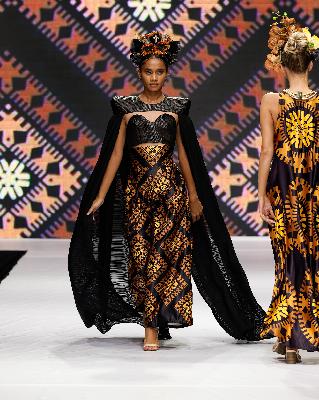
Pacific fashion is breaking through on the global stage. But with that spotlight comes a new set of challenges: mass-produced knock-offs, cultural theft, and legal roadblocks that leave creators vulnerable.So how can creators protect their designs and grow their brands at the same time? Ellen Whippy Knight, the force behind Fiji Fashion Week, says it starts with awareness, education and upskilling.You'll also hear from Dr Emelihter Kihleng about how the Pohnpei skirt — or urohs — has been threatened by overseas replicas. Plus, Solomon Islands copyright lawyer Maito'o Hauirae breaks down the complex world of intellectual property law in the Pacific.Join host Afamasaga Seiuli Salamasina von Reiche on this episode of Culture Compass, ABC Radio Australia.Culture Compass was produced by Deadset Studios for ABC Radio Australia.
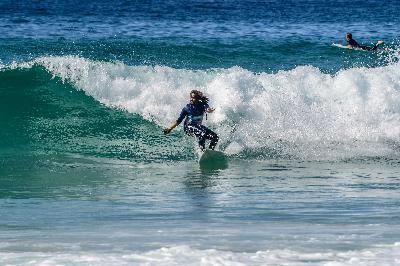
From local beaches to world championships, a rising movement of Pacific board riders are charting a new course for surfing."Just being a brown person in the water is a claim to space."In the Australian waters where Kuntamari Croft surfs, Pasifika board riders are rare. She's part of a rising movement demanding greater Pacific presence in lineups of beaches worldwide.Meanwhile, in Papua New Guinea, "The Godfather of Surfing" Andy Abel is driving policies he created to that reshape the region's social and surf culture.And on the global stage, Hawaiian Seth Moniz is the only Kanaka Maoli touring with the World Surfing Leage. He's inspiring the next generation of professional surfers.Together, these passionate surfers are shaping policy, driving social change, and championing a Pacific-led surf culture recognised worldwide.Culture Compass was produced by Deadset Studios for ABC Radio Australia.
Long before it became a billion-dollar industry or a lifestyle trend, surfing was a sacred practice across the Pacific. But that history has long been overshadowed. Commercialised, colonised, and repackaged for the masses, surfing's true origins have often been left out of the story.Now, a movement is growing to reclaim the waves. Hawai'ian historian and academic vice-president of Brigham Young University, Dr Isaiah Helekunihi Walker, takes us back to surfing's birthplace. In Hawai'i, it's called He'e Nalu, and it's always been a way of life that connected people to the ocean, community and land. ABC Radio Australia's Culture Compass host Afamasaga Seiluli Salamasina von Reiche dives into the true roots of surfing and the growing movement to reclaim it as a vital part of Pacific culture.Culture Compass was produced by Deadset Studios for ABC Radio Australia.
Fiji is restoring its traditional chiefly leadership systems, so how does it fit with modern governance?In Fiji, you’re born into the role of chief. But for over two decades, the Lau Group, the largest of Fiji’s 14 provinces, has been without a paramount chief. Until now. ABC's Lice Movono takes us to Lakeba Island, where the installation of Ratu Tevita Uluilakeba Mara marked the return of one of the country’s most revered chiefly titles. She shares just how significant this moment was, not only for Fiji but for the region.This historic event follows the reinstatement of Fiji’s Great Council of Chiefs, a body abolished in 2012 under military rule. Its new chairman, Ratu Viliame Seruvakula, shares how the Council is adapting in the modern world.ABC Radio Australia podcast host Afamasaga Seiluli Salamasina von Reiche looks asks what do these changes mean for Fiji’s future? Could they mark the beginning of a wider return to traditional governance across the Pacific?Culture Compass was produced by Deadset Studios for ABC Radio Australia.
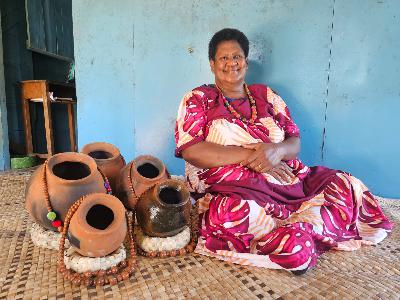
"This is what I'm known for. It's my identity"In the Fijian village of Nayawa, Akesa Vaka Kunabuli is keeping the ancient art of Lapita pottery making alive. It's one of the only remaining places continuing this particular technique.It's a style that once travelled across the Pacific, carried by the Lapita people who migrated from modern-day Taiwan over 3,000 years ago. But the story doesn't end there.Each shard found maps a chapter in one of the most complex human migrations in history. Recently, pottery shards have been uncovered in unexpected places like Papua New Guinea and northern Queensland. It's challenging what we thought we knew, and suggesting the Lapita journey stretched even further than imagined.Fijian archaeologist Dr Tarisi Vunidilo puts it simply: "The more Lapita sites we find, the more information we keep adding to our collective history." With new technology and a growing movement to preserve this art, we're not just expanding our understanding, we're safeguarding its future.Yet climate change is starting to affect how potters like Akesa source clay and dry their pieces. So what happens when the environment that sustains this ancient practice begins to shift? What will become of the craft, and the identity it carries?Culture Compass was produced by Deadset Studios for ABC Radio Australia.

What began when WWII soldiers brought guitars to our shores has grown into the defining strums of island string bands. Now, that sound is under pressure. Electronic music is rising. AI technology is trying to replicate it. Is this how string music is naturally evolving, or do we need to get back to our roots? You'll hear from Sir George Telek, the legendary voice who saw Papua New Guinea's string band skills recognised on the world stage, as well veteran Solomon Islands broadcaster Ashley Wickham, who shares how a shared sound unites such a linguistically diverse nation. And in Vanuatu, musician Sam Firi continues his father's legacy, using string band music to hold a community together.Culture Compass was produced by Deadset Studios for ABC Radio Australia.
The silhouette of the Great Frigate Bird is hard to miss — glossy black feathers, deeply forked tail, and long, slender wings that slice through the sky. But it's more than just a sea bird, its significance runs deep in our culture.For many island nations, the frigate bird stands as a powerful symbol of strength, freedom, and endurance. We capture it in coming-of-age ceremonies, weave its form into our dances and tattoos, and proudly feature it on Kiribati's national flag.But now, rising seas, coastal development, and climate change are destroying the habitats they rely on. And when they stop coming, what might disappear with them?Siosenamele Lui from SPREP sums it up clearly, "If we start to lose these keystone species, we start to lose the language and the knowledge. And bit by bit, our stories become incomplete."You'll also hear how Rooti Terubea from Kiribati, and George Quadina from Nauru are preserving the spirit of the frigate bird through the enduring traditional pastime of frigate bird catching.Culture Compass was produced by Deadset Studios for ABC Radio Australia.
Artificial intelligence is everywhere, shaping our lives faster than we can keep up.It's generating stories, images and videos that blur the boundaries between truth and fiction. But for Pacific communities, the stakes are even higher. AI is harvesting Indigenous knowledge, detaching it from its cultural roots, and reframing it through a Western lens. Is this the newest wave of colonial propaganda?AI ethicist Dr Karaitiana Taiuru poses a powerful question: "What do we do when our stories aren't our stories anymore?"In this episode, Julia Pahina and Namulau'ulu Nu'uali'i Eteroa Lafaele, founders of Aotearoa-based tech company Fibre Fale, share how Pacific communities can reclaim agency. They're building pathways for Indigenous engagement with AI, empowering people to shape technology on their own terms.Culture Compass was produced by Deadset Studios for ABC Radio Australia.
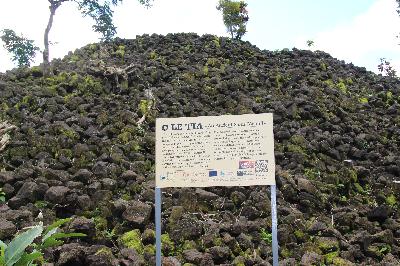
For years, gigantic stone monuments have been hidden underneath forest overgrowth in villages across Samoa. Built by the hands of our ancestors, without tools or machines.Some believe these particular stone mounds were used as a portal to the spirit world, but their original use is still mystifying. Now, modern technology is helping to uncover these ancient structures dotted across the region."This is a reawakening of an aspect of culture that has been dormant," says Samoan heritage artist Galumalemana Steven Percival, who's been working to preserve the Potini Tia Seulupe — a stone mound found in the Samoan village of Sa'anapu on the south coastal region of Upolu in Samoa.And anthropologist Meked Besebes shares how LiDAR drone technology is helping her nation map out, preserve and protect the sacred earthworks of Palau.Culture Compass was produced by Deadset Studios for ABC Radio Australia.
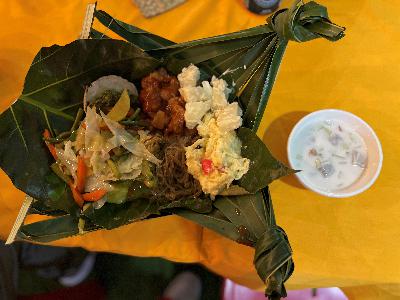
No matter where you are in the Pacific, food always brings us together. But every country does things their own way, even every family adds their own delicious flair! And those special tips and tricks are the things you can only learn by watching and helping.But what do these dishes look like with a modern twist?You'll hear from chef Denzel Sumsum, who spent his early years in Vanuatu learning how to bake from his mum and grandmother, and James Wichman, who was a professional chef for 15 years and now spends his time fishing the waters of Pohnpei.Plus Leonid Vusiilai and Laurana Rakau-Tokataake from Regenerative Vanua explain how they're continuing to make the traditional foods they grew up with using sustainable practices.Culture Compass was produced by Deadset Studios for ABC Radio Australia.
Like many cultural artforms, the art of weaving is threaded through generations. Their handywork is seen every day in our household items like mats, bags and fans.But if younger generations aren't sitting and observing their elders to learn these intricate inner workings, what could this mean for the future of woven goods?You'll hear from from Nancy Mahuna, a Papua New Guinean weaver from Iokea in the Gulf Province, as well as Tongan weaver Sione Mailaseni, who's not letting the fact that he's a man stop him from reviving ancient weaving styles that were traditionally practiced by women.Culture Compass was produced by Deadset Studios for ABC Radio Australia.
Under the light of the Spring moon, the reefs of Samoa and Fiji come alive. Swarms of mysterious, thin sea worms wriggle out from the coral to mark the changing seasons and bring life to traditional feasts.Culture Compass was produced by Deadset Studios for ABC Radio Australia.
Our trees don't tell us what they use to.The elders of Tagaloa Cooper's home island of Niue are noticing big shifts in their surroundings. The trees and plants they once looked to as indicators of weather patterns and animal migrations aren't growing the same anymore.So, what happens to our practices when our access to these valuable resources changes or even disappears completely?Tagaloa's experience is one that's been shared across the Pacific. She's part of an organisation called SPREP that's taking action for a sustainable future. You'll also hear from Saui'a Louise Mataia, a Samoan researcher whose part of a university led initiative called POCCA. They're informing the policy makers on how to enact real change in climate and development action.Culture Compass was produced by Deadset Studios for ABC Radio Australia.
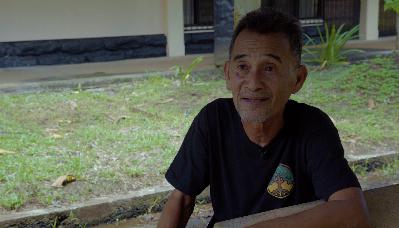
In a world that's always shifting, the timeless wisdom of our elders becomes more precious with each passing day.Their knowledge and skills aren't something you can study in the classroom or in a book; it's something you learn from sitting with them and observing.But younger generations can't always spend this valuable time with their elders. So if we aren't spending the time to hear their stories and learn their crafts, their wisdom is at risk of being lost.Samoan architect Athol Greentree is passionate about preserving the ancient knowledge the Tufuga Fau Fale, weaving modern technology with their traditional building methods.Edson Willie from Vanuatu's Cultural Centre and Augustine Kohler from the National FSM Archives are also working hard to protect traditional knowledge. They're putting policies in place to futureproof their culture for the next generation.Culture Compass was produced by Deadset Studios for ABC Radio Australia.
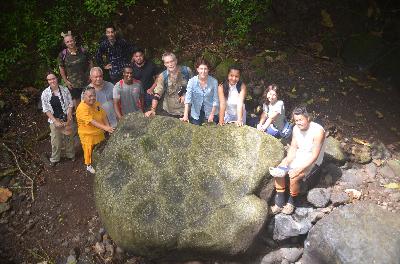
Stone tools were the foundation of civilisation across the Pacific. They were the instruments used to build homes, craft gardens and protect against enemies. In ancient times you needed a stone tool to survive.In modern times, stone tools have been replaced with other materials and technologies, but in doing this have we lost something along the way?Christopher Tep, an agriculturalist from the Western Highlands of Papua New Guinea, keeps a traditional stone axe hung on the wall of his home as a proud reminder of the foundations that shaped his craft.Meanwhile, Samoan experimental archaeologist Galumalemana Steve Percival and Ragitaane master carver Warren Warbrick have been at the forefront of a stone tool revival. They've been learning the ways of their ancestors to preserve the art of stone tool making for future generations.Culture Compass was produced by Deadset Studios for ABC Radio Australia.
Australia alone is holding the remains of almost 1,500 Pasifika ancestors. Remains that were snatched from their homelands — some less than a century ago.Last season on Culture Compass we lifted the lid some of the biggest museums across the world storing these human remains in their archives. Most of our communities weren't even aware. Since then, things have been changing, but is it enough?You'll hear from Fijian anthropologist Tarisi Vunidilo who's working with museums across the world on repatriation. We'll check in with Clacy Fatnowna, President of the Queensland United Australian South Sea Islander Council. Plus, Melissa Malu from the Australian Museum in Sydney speaks of a successful repatriation to her homeland of Tonga.Culture Compass was produced by Deadset Studios for ABC Radio Australia.
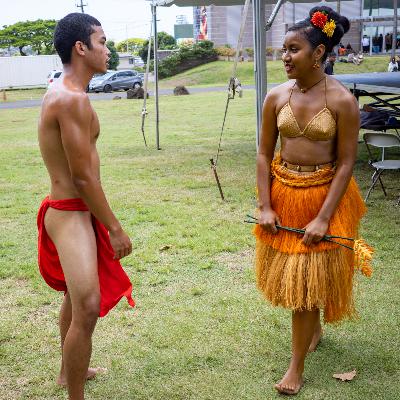
Standing on ancestral soil and dressed in traditional garments, we channel their mana when we dance.But in a modern world with contemporary influences, how do we keep true to their movements and continue to tell their stories?You'll hear about the Fijian Meke from Simione Sevudredre and the sacred Palauan women's dance from Ikelau Misech. Plus, Sandy Sur and his aunty Cicilia Lolomle from Vanuatu's Banks Islands share how their practice of women's water dancing preserves their heritage in a fun way.Culture Compass was produced by Deadset Studios for ABC Radio Australia.
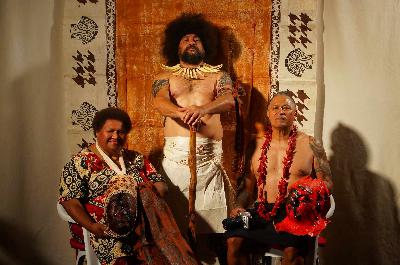
Cherishing our ancestors is engrained in our culture, so when our loved ones leave this earth, it’s important to help their spirit find peace. And funeral rites have changed dramatically over the years.
In Semisi's Qalica's barber shop, young men want a style that'll turn heads. Bleached mullets, shaved horseys, fades and hair tattoos, they want what their favourite sporting star has.These trending cuts across the Pacific go beyond just looking good— they represent identity, culture, and deeper connection to community.You'll hear from Tongan former rugby star turned hairdresser, Tevita Mailau — well known for his iconic horsey. Plus hairdresser Semisi Qalica dishes what fresh styles he's seeing on the streets of Suva, and Eric Whipps, owner of OJ Cutz Hairdressing in Koror, shares the cuts he's most asked for by young Palauans.Culture Compass was produced by Deadset Studios for ABC Radio Australia.

Comments

Download from Google Play

Download from App Store
 United States