


 Claim Ownership
Moonshot Mentor with Laverne McKinnon
Subscribed: 3Played: 190
Subscribe

© Laverne McKinnon
Description
Stories, tools, and strategies to conquer career setbacks, including grief work, as unresolved loss can lead to diminished resilience—a career challenge faced by everyone at some stage in life. Each podcast is an audio blog post from Laverne McKinnon, a Career Coach and Grief Recovery Specialist, Film and Television Producer, and Northwestern University Professor.
Full archive of posts is available for paid subscribers on Substack.
moonshotmentor.substack.com
Full archive of posts is available for paid subscribers on Substack.
moonshotmentor.substack.com
136 Episodes
Reverse
If you’ve been doing everything right and are still experiencing no flow in your career, take a listen to this chat with space doula Dorena Kohrs. It’s a super inspiring and practical talk about how to make simple changes to your home to create more energy in your career. Dorena shares three specific places to take a look at for fame & recognition, money flow and career. This is a public episode. If you'd like to discuss this with other subscribers or get access to bonus episodes, visit moonshotmentor.substack.com/subscribe

This is a free preview of a paid episode. To hear more, visit moonshotmentor.substack.comWhat if the reason you’re not getting what you want at work has nothing to do with your talent and effort? What if it has everything to do with where and how your actual workspace is set up?Maybe you want more money. More growth. More work-life balance. More freedom. More stability. More belonging. More meaning.Most people try to close that gap by doing more. More special projects to prove your worth. More networking to meet the “right” people. More closing of the skill gaps to remain relevant. More soul searching to figure out “what the heck am I doing?”Well, what if the issue is that your literal environment is stagnant and needs an upgrade? Welcome to the ancient Chinese wisdom and practice of feng shui: arranging space to direct energy toward specific outcomes.What Is Feng Shui, Really?Feng shui means “wind” and “water.” Movement and flow.At the center of feng shui is the concept of chi.Chi is life force energy. Think of it as the vibe moving through you and everything around you.In feng shui, chi either flows or it stagnates. When chi flows, opportunities circulate. When chi stagnates, things stall.This isn’t just mystical language. This practice has been around for thousands of years and is widely used today by everyone from interior designers to architects to entrepreneurs.How I Used Feng ShuiAfter it became clear in 2020 that working from home was not going to be a two week thing, I applied simple feng shui principles to my home office since it was no longer temporary. I saw my space declutter and my mind had a kind of spring-cleaning. From there, I made a decision to pivot out of my long career in the entertainment industry into being a full time career strategist and grief coach.Here’s the thing: Your environment shapes your nervous system. Your nervous system shapes your decisions. Your decisions shape your career.From an energetic lens, chi attracts what you circulate.If your space feels heavy, cramped, chaotic, or stale, that is the frequency you’re reinforcing every day.What Stagnation Looks LikePeople talk about how their careers have “stalled out” or “plateaued,” which is another way to say stagnant. Or there’s a general sense of malaise, it’s all fine, I don’t want to rock the boat, I’m lucky to have a job in this economy. Or there’s a real sense of fear and anxiety, what if this is it?Before you go deeper into that rabbit hole, consider that your environment may be under-supporting you.Here’s the part most people miss. Stagnation is not just a feeling. It has a physical footprint. It shows up in what’s around you, what you keep postponing, and what your eyes have gotten used to skipping over.Stagnation shows up as: • Piles you keep meaning to sort • Objects tied to roles you’ve outgrown • Broken items you’ve “learned to live with” • A workspace that feels dim, cramped, or forgottenIf you want to attract more money, more visibility, more recognition, more stability, clear what isn’t moving.Energy needs circulation before it can compound.Three Feng Shui Shifts to Move Career EnergyWhile I’m not a feng shui expert, I’ve tried these three feng shui shifts when I was pivoting and leveling up and they worked really well for me.1. Remove One Stagnant Object: Choose one item in your workspace that represents:• A job you resent• A rejection you’re holding• An identity you’ve outgrown• Something broken you’ve ignoredGet rid of it. Stagnant objects hold stagnant chi.One of the objects I removed was a lame ring light I bought for the endless zoom meetings I’ve been on since 2020. I wanted to keep up appearances while I watched the entertainment industry stall out, in an attempt to look like I was weathering it fine. Once I removed it, I felt more like me and that gave me confidence to make some hard decisions.Psychologically, stagnant objects create identity friction. Energetically, they trap movement.Clearing stagnant objects creates space for fresh circulation. And honestly, sometimes the “stagnant object” isn’t a thing. It’s a professional relationship that’s run its course. Not in a vicious, mean way. More like an honest assessment that you may have outgrown each other.I had an actor client who parted ways with their agent and booked more jobs after that, without a new agent. They felt freer to pursue opportunities the former agent never went after on their behalf.2. Activate Your Money FlowIf you’re trying to attract more money but your environment signals neglect, there’s a mismatch. Take a look at the space where you spend most of your time working. Let’s say it’s a desk.When you’re seated, the far-left corner represents wealth and self-worth. Place something living there. A small plant is ideal. Living things grow slowly and steadily. They require attention. They reflect investment.In feng shui terms, you’re signaling that money is welcome to grow here, and that you have the capacity to tend what you earn.In addition to a lot of fancy MBA techniques I use to figure out how to earn more money like tracking ROI and KPIs, SEO optimization, and paying attention to funnel metrics, I do have a small plant on my desk.While I can’t say for certain that the financial success of my coaching business is correlated to the Cyclamen plant, I feel happy when the flowers are blooming. When I’m happy, I have the energy to do the sales things I need to do to feed my company.3. Use a Mirror to Expand Stuck EnergyIn feng shui, mirrors are used to redirect and expand chi. They bounce light. They create the illusion of space. They shift the flow without requiring structural change.My client Jess was in the same role for five years and literally felt boxed in by cubicles and a lack of opportunity for advancement. So using feng shui, she placed an art deco mirror that belonged to her grandmother on her desk to gather good energy. The mirror was from the 1930s and it reminded Jess of just how strong and brave her grandma was, and it gave her a little more courage. She placed the mirror where it could capture light from a window and send it back into her workspace.In what some might call a fluke, her boss’ boss noticed it, asked about it, and they ended up talking about feng shui. Turns out he dabbled in it too. He was intrigued not just by the mirror, but by why Jess brought it in.While no magic promotion came about to alleviate her being in the same role for years, he did assign her a handful of special projects over the next six months that gave her two significant wins and more visibility. She was able to use that to revamp her resume and found a great job outside the company and left with his blessing and endorsement.That mirror was not for decoration. It was an energetic amplifier.When chi hits a wall, it stops. When chi hits a mirror, it moves.One rule. Don’t aim it at clutter. Mirrors expand what they reflect. Reflect light, order, and something that feels like the version of you you’re becoming.What to NoticeFeng shui is a rich opportunity to look at your environment and how it affects your state of mind and your well-being. Remember, your environment shapes your nervous system. Your nervous system shapes your decisions. Your decisions shape your career.So after you make one shift, observe. Do you feel clearer? Less irritated? More decisive?Energy shifts are subtle before they’re obvious.What we’re doing here is not passive, waiting for feng shui “magic” to get you more money, growth, balance, freedom, stability, belonging and meaning.It’s about developing a practice to be more aligned so that energy flows freely.Want To Go Deeper?If you’re as excited and intrigued as I am about feng shui and have questions and comments, I got you. On Thursday, March 12 at 12pm PST, I’m hosting a live conversation with feng shui expert Dorena Kohrs about how to apply these principles intentionally to your work life.We’ll talk about what “chi attracts” actually means in real life, and how to get things moving again. We’ll cover what to tweak when your career feels stalled, even if you’re doing everything “right.” And we’ll share practical shifts you can make without a perfect office or a big budget.If you’ve done the mindset work and the strategy work and something still feels blocked, this conversation is for you. Mark your calendars and bring your questions or submit them here!If someone came to mind while you were reading this—please send it their way. You never know the impact a well-timed message can have.Related Content* Five Reasons You May Be Stuck* Are Smart Career Moves Hiding In Plain Sight?* How Can You Stay Calm Under Stress?Longing To Feel Lighter?Professional heartbreak can leave you spinning. You replay what happened, question your judgment, get stuck in indecision, and worry you’ll never get your mojo back.Solid Ground is the paid member program inside the Moonshot Mentor Substack community that helps you move from spinning to forward motion.Paid members tell me they feel less weighed down. Empowered. Relaxed for the first time in a long time. Here’s the thing. It’s not because they got a pep talk. It’s because they finally got an accurate explanation for what’s happening and a way through it.You’ll get monthly video lessons with a guided companion to help you apply the work, live coaching for real time support, and weekly meditations and journal prompts to rebuild confidence and make decisions without panic.Become a paid member to access Solid Ground, stop misdiagnosing yourself as broken, and start moving again.Journal PromptsHere are 6 journal prompts for paid Moonshot Mentor members. These will help you get clear on what you want at work and what kind of environment would actually support it.

This is a free preview of a paid episode. To hear more, visit moonshotmentor.substack.comThere’s a moment that hits a lot of people right after a promotion or a new role.You have the new title. The bigger scope. The visibility.And then your brain goes: who do you think you are?If that’s happening to you, I want to offer one reframe that changes the whole experience.Imposter syndrome is not proof you’re unqualified. It’s what doubt sounds like when your courage puts you in a bigger room.Why This Shows Up Right When Things Are Going WellMost people think the goal is to eliminate doubt.But doubt is a normal response to new conditions. New team dynamics. New expectations. New exposure. New stakes.Your nervous system is doing its job. It’s scanning for risk. It’s trying to protect you from being judged, getting it wrong, or being seen as inexperienced.The problem is the interpretation.When doubt shows up, we often treat it like a capability report card. Instead of what it actually is: you adjusting to new conditions.The Five Common Flavors Of Imposter SyndromeImposter syndrome shows up in different ways, and sometimes we rotate through a few depending on the season. You might recognize yourself in one of these:* The Perfectionist: If it is not flawless, it does not count.* The Soloist: If I need help, I do not belong here.* The Superhuman: If I’m not excelling in every lane, I’m failing.* The Expert: If I don’t know everything, I shouldn’t be here.* The Natural Genius: If it’s not easy, maybe I’m not built for this.Notice what these have in common. They all turn growth into danger.Two Tools That Help, FastHere are two approaches I use with clients because they work without requiring you to become a different person.Tool 1: Hold two conflicting feelings at the same time. You can feel nervous and ready enough. You can feel exposed and still be the right person for the job. The goal isn’t to erase the doubt. It’s to make enough space to act with courage.Try this sentence: I can feel unsure and still lead well. That’s not a mantra. It’s a leadership skill. Senior roles involve incomplete information, messy tradeoffs, and decisions that can’t be validated in advance.Tool 2: Change the thought, change the feeling. Imposter syndrome thrives on vague thoughts that sound true because they feel intense. The antidote is precision. Here’s an example. You get the promotion and you think: “I’m not ready.” Now ask yourself: Ready for what, exactly? What’s the actual requirement in this moment? Most likely it’s something you know how to do or is in your grasp. And if it’s not, you wouldn’t have gotten promoted if you didn’t know how to solve a problem. Then rewrite the thought into something that’s truthful that you can act from.Try one of these:* I’m in the learning curve phase of this role.* I don’t need to know everything to be effective. I need to know what matters most.* I can figure this out as I go.* Accuracy calms the system. Vague drama ramps it up. And when you’re calmer, you make better decisions.A Quick Case StudyLinda had just landed her first C suite role as Chief Creative Officer. Big moment. Big visibility.And then week one happened.Seventeen people wanted her feedback. Seventeen. Meanwhile, she hadn’t even had time to read all the briefs, let alone form thoughtful opinions. Her brain did what brains do in new conditions. It turned a workload that would overwhelm anyone into proof she was an imposter.I’m behind. Maybe I don’t have what it takes.Linda’s imposter flavor was the Soloist. The voice that says, “If I need help, I shouldn’t be here.”So we used Tool 1. We practiced holding two truths at the same time: I’m leading this and I can ask for help. Then we added one simple thought that brought her back to earth: I’m not the first Chief Creative Officer in the history of media.Her next move was small, but it was a turning point. She reached out to a former boss and asked, “How did you handle the workload in your first month?”The workload didn’t disappear. But the spiral did. She stopped treating uncertainty like a red flag and started treating it like part of the job.Bottom LineConfidence is not the price of entry for leadership. Courage is.Doubt is not a verdict. It’s information about the moment you are in.Let evidence steer your decision, not the story in your head.If someone came to mind while you were reading this—please send it their way. You never know the impact a well-timed message can have.Related Content* How To Turn Powerful Failures Into Powerful Breakthroughs* The 3 Things To Do After You Lose Your Job* Why Does My Career Setback Still Bother Me?Longing To Feel Lighter?Professional heartbreak can leave you spinning. You replay what happened, question your judgment, get stuck in indecision, and worry you’ll never get your mojo back.Solid Ground is the paid member program inside the Moonshot Mentor Substack community that helps you move from spinning to forward motion.Paid members tell me they feel less weighed down. Empowered. Relaxed for the first time in a long time. Here’s the thing. It’s not because they got a pep talk. It’s because they finally got an accurate explanation for what’s happening and a way through it.You’ll get monthly video lessons with a guided companion to help you apply the work, live coaching for real time support, and weekly meditations and journal prompts to rebuild confidence and make decisions without panic.Become a paid member to access Solid Ground, stop misdiagnosing yourself as broken, and start moving again.Journal PromptsHere are 3 journal prompts for paid Moonshot Mentor members. Use these to separate what you’re feeling from what is actually true, so you can lead from clarity instead of self interrogation.

This is a free preview of a paid episode. To hear more, visit moonshotmentor.substack.comMental health is a hot topic these days - as it should be! According to the World Health Organization anxiety disorders are the most common mental disorder with approximately 4% of the world’s population affected. And stress is right there on its heels. According to the American Institute of Stress, around 35% of the U.S. population is feeling stressed. I get it! But what many people don’t get is that stress and anxiety are not the same thing. They are frequently lumped together which impacts your ability to deal with them. It’s like applying a band-aid to every ouch - except some ouches are a skinned knee and some are a broken heart. Instead, they need very different approaches. In this week’s blog, I take a deep dive into the distinctions between stress and anxiety and share coping mechanisms that have helped me.

This is a free preview of a paid episode. To hear more, visit moonshotmentor.substack.comCareer grief is not just an emotional experience. It’s a physiological one.Most of us expect grief to look like tears, sadness, maybe anger. But a lot of the time, grief shows up as: “What is wrong with me lately?”For me, it’s looked like this.I wore my pants inside out and didn’t realize until I was already out in the world.I left the faucet on.I ate an entire pizza by myself, and not because I was celebrating. Because I was trying to feel something other than what I was feeling.In those moments, I wasn’t thinking: “I’m grieving.” I was thinking: “I’m losing it.”What was really happening:. I was experiencing a normal brain and body response to loss.How Grief Shows UpGrief is the natural response to any kind of loss. Not just death. Any loss. A job. A role. A team. A dream. A sense of status. A version of your future you were counting on.When grief goes unnamed and unmourned, your brain often can’t organize the experience. It can’t file it neatly because it keeps trying to treat the loss like a problem you should solve, not something you need to metabolize.So your body starts speaking up.That can look like exhaustion. Headaches. Insomnia. Appetite swings. Stomach issues. Muscles that feel tight, wired, and braced.If the physical stuff is not loud enough, grief can also show up cognitively. Trouble concentrating. Forgetfulness. Confusion. Rumination. Intrusive thoughts. That looping reel you can’t shut off.And then it shows up in behavior. Withdrawing from others, losing interest in things that once brought joy, avoiding certain places or people, or self-medicating just to get through the day.None of this means you’re broken. It means something inside you is trying to adapt to what has changed.The Real Problem Is Not The “Stupid” MomentsThe problem is that you’re doing “stupid” things and you’re making them mean something about your character.You start narrating it like this. I’m off my game. I’m losing my edge. I’m incapable.And that story adds a second layer of pain. Shame.That’s the part I want to interrupt.Because when you look at those symptoms at face value, they can seem random. But they’re not random. They’re signals. They point to something deeper. Unrecognized grief.Why Career Grief Can Feel Like an Existential CrisisCareer grief rocks more than your schedule and bank account. It rattles your psyche.Because work is rarely just work in our culture. It’s identity. It’s belonging. It’s validation. It’s structure. It’s the place we get reflected back to ourselves.So when work breaks, it can feel like you break.That’s why career grief can border on an existential crisis. It disrupts your sense of purpose, belonging, and identity.And when grief goes unacknowledged, the price is steep. You lose resilience. Not because you’re weak, but because your system is carrying a load it was never meant to carry alone.The Solution Is Compassion For The Non Emotional Parts Of GriefHere’s what I’m asking of you. Instead of treating your symptoms like personal failures, treat them like information.Compassion is not letting yourself off the hook. It’s seeing clearly what’s happening so you can respond with wisdom instead of self attack.Here are a few ways to practice that, especially if you’re in a season where you can’t stop everything and “process your feelings”.1. Name the loss, even if it feels small. Try a simple sentence. Something changed. Something ended. Something didn’t happen. You’re not trying to make it bigger than it is. You’re trying to make it real.2. Replace the character story with a body story. Instead of “I’m being an idiot,” try: My brain is overloaded. My nervous system is on alert. My body is asking for recovery. That one change can lower shame fast.3. Build a tiny relief ritual. Not a life overhaul. A small, repeatable cue that tells your system: I’m paying attention. A short walk without your phone. A hot shower with the lights low. Ten minutes lying on the floor with one hand on your chest. A meal that is not eaten standing up. It’s not glamorous. It’s effective.4. Reduce decisions for a week. Grief burns energy. Decision making burns energy. Stack them together and you start leaving faucets on. Choose two or three defaults for the week. Default breakfast. Default outfit. Default work start and stop time. You’re not becoming predictable. You’re becoming resourced.5. Tell one safe person the truth. Not the whole story. Just a true sentence. I’ve been more affected than I expected. My focus has been off. I’m dealing with more loss than I’ve named. Grief becomes more workable when it has language and witness.If you lead a team, this matters too. When a team goes through layoffs, reorganizations, leadership changes, or public setbacks, unprocessed loss doesn’t vanish. It goes underground.And underground grief tends to reappear as: More conflict over small things. More risk aversion. More second guessing. Lower trust. Lower energy.Leaders don’t have to turn the workplace into group therapy to address this. But they do need to name what changed and what it cost, at least in human terms.If you’re noticing strange mistakes, low morale, or unusually thin patience on your team, consider this question: What loss are we acting out that we have not acknowledged?Bottom LineIf you’ve been making “weird” mistakes, craving comfort food, forgetting simple things, or feeling uncharacteristically foggy, don’t rush to self judgment.Consider the more accurate explanation. Your body might be grieving.Career grief is not only emotional. It’s physiological. It shows up in your focus, your appetite, your sleep, your memory, and your ability to self regulate.The move is not to shame yourself into functioning. The move is to meet the symptoms with compassion, name what’s been lost, and give your system a little more care than you think it deserves.If you want support applying this to your own situation, I have three 1:1 coaching packages available right now. Book a consult to see if we’re a match.If someone came to mind while you were reading this—please send it their way. You never know the impact a well-timed message can have.Related Content* How To Turn Powerful Failures Into Powerful Breakthroughs* The 3 Things To Do After You Lose Your Job* Why Does My Career Setback Still Bother Me?Longing To Feel Lighter?Professional heartbreak can leave you spinning. You replay what happened, question your judgment, get stuck in indecision, and worry you’ll never get your mojo back.Solid Ground is the paid member program inside the Moonshot Mentor Substack community that helps you move from spinning to forward motion.Paid members tell me they feel less weighed down. Empowered. Relaxed for the first time in a long time. Here’s the thing. It’s not because they got a pep talk. It’s because they finally got an accurate explanation for what’s happening and a way through it.You’ll get monthly video lessons with a guided companion to help you apply the work, live coaching for real time support, and weekly meditations and journal prompts to rebuild confidence and make decisions without panic.Become a paid member to access Solid Ground, stop misdiagnosing yourself as broken, and start moving again.Journal PromptsHere are 5 journal prompts for Solid Ground members. Use these to connect the dots between what your body is doing and what your life has been carrying.
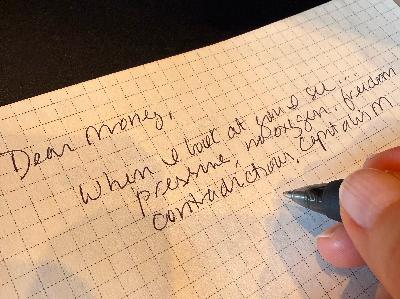
This is a free preview of a paid episode. To hear more, visit moonshotmentor.substack.comIf your career is shifting, your money story gets a vote in every decision you make. And it’s not because you’re bad at math or you “should have planned better.”It gets a vote because money is not just money. Money touches safety. Options. Identity. What you can say yes to. What you have to say no to. And when work gets uncertain, money stops being background noise. It walks right up to the microphone and says, “Hello, hello? Is this thing on?”I learned this the hard way.The first time my unspoken money story showed up was in my early twenties, when I was transitioning jobs and going through a divorce. At the time, I was (barely) earning more than my husband who was a middle school teacher. When we separated, he asked for financial support.I felt guilty about the state of our marriage, so I agreed. And then guilt met fear, and I made a decision I could not sustain. I racked up a lot of credit card debt trying to keep everything looking fine.It got so bad I had to cut myself off from my credit cards and use the envelope system. Actual cash in actual envelopes. Gas. Food. Utilities. Car repair. There were no envelopes for going out, clothing, or self care.All I could hear in my head was: “There isn’t enough. There will never be enough.”That sentence didn’t come out of nowhere. It was inherited.My dad grew up during the Great Depression. My mom lived in poverty in Japan during World War II. Not having enough was a true, lived experience for them. I’ve been fortunate to have enough, but that generational trauma is in me.This is why I’m writing about money in a post about career strategy.Because during a setback, a pivot, or a dry spell between gigs, your money story is going to cast a vote. It will influence what work you take. How quickly you panic. Whether you avoid looking at your accounts. Whether you undercharge. Whether you overgive. Whether you freeze.You do not have to shame yourself for that. You do have to notice it.Your Money StoryYour money story is the relationship you have with money. It’s what money represents to you. What it proves. What it threatens. What it feels like.For some people, money equals safety. For others, it equals freedom. For others, it equals worth.And for a lot of high achieving people, especially in unpredictable industries, money becomes evidence. Evidence that you’re doing it right. Evidence that you’re still viable. Evidence that you can relax.That is a lot to ask of money.When work gets shaky, money anxiety gets loud. And money anxiety tends to do two things at once.First, it triggers your nervous system into threat mode.Second, it distorts perception, so those panicked thoughts start masquerading as reality.So before we “do the numbers,” I want to offer something that sounds simple, but changes everything.Regulate your nervous system first, then look at the truth.Regulate First, Before All ElseMy client “April” came to see me in full blown panic. It was early 2024. As an actress and writer, she had already been hit hard by the COVID years, then the 2023 strikes happened. Her nervous system was a wreck and she was in constant panic and she couldn’t “see clearly.”Before we opened a spreadsheet, we worked with her body. Not because breathwork pays rent. But because you cannot make a clean career decision when your system is convinced you’re in danger.Here are a few regulation tools we used. They’re practical. You can do them in your car. You can do them before you open your banking app. You can do them when you feel that familiar drop in your stomach.Nervous System Regulation Tools* Extended exhale breathing. How to do it: Inhale for 4. Exhale for 6 or 8. Do 6 to 10 rounds.* Why it works: Longer exhales tend to activate the parasympathetic nervous system, which helps your body settle so your mind can think.* EFT Tapping. How to do it: Tap gently on points like the side of the hand, eyebrow, side of the eye, and collarbone while you say a simple two part sentence. The first part names what you’re feeling or noticing. The second part adds a cue of safety, choice, or self support. You’re not trying to talk yourself out of the feeling. You’re reminding your body you can stay here with it. Example: “Even though my money story is loud right now, I’m the one who gets to choose.”* Why it works: Pairing steady tapping with naming what’s true can lower intensity and help your nervous system shift out of alarm, so you can access clarity and make decisions without rushing.* Deep pressure touch. How to do it: Use a weighted blanket, drape something heavy over your shoulders, or press a firm pillow to your chest for 2 to 5 minutes.* Why it works: Deep pressure can be calming because it gives your body a clear sense of containment.* Wall support. How to do it: Stand with your back against a wall. Feet grounded. One hand on your chest, one on your belly. Stay for 60 to 90 seconds.* Why it works: Your body gets a felt sense of support. That matters when everything feels uncertain.These are not magic tricks. They are proven techniques. A way of telling your body, we are safe enough to look.Because that is the real goal. Safe enough to look. Safe enough to get honest. Safe enough to make a decision that’s not driven by panic.And once you can do that, you can meet your money story directly.How To Find Your Money StoryWhen money feels tense, a lot of people do one of two things. They obsess, spiraling into worst case scenarios. Or they avoid, hoping the problem will magically get quieter.This exercise is a third option.It slows everything down. It gives you distance from the fear. It turns the swirl into language. And when something becomes language, you can work with it. I learned this tool from my first coach, Mona Miller (RIP), and I still use it today because it is highly effective at getting underneath the noise quickly.Here’s the writing prompt with the goal to not edit. Just write what comes up and don’t judge it.Dear Money,When I look at you, I see…When I look at you, I feel…When I look at you, I think…When I look at you, I believe…When I look at you, I act like…Signed, [Your Name]Then reverse it and make the letter from Money to you.Dear [Your Name],When I look at you, I see…When I look at you, I feel…When I look at you, I think…When I look at you, I believe…When I look at you, I act like…Signed, MoneyWhat we’re looking for are themes or patterns.For April, money was proof. Proof she was successful. Proof she was making the right choices. Proof she was still allowed to belong. So every dip in income felt like a personal failure.Once she saw that, she had leverage. Because now her money story was not running the meeting in secret.Career Strategy Comes Back When You Name What You Are ProtectingThis is the part that pulls everything together.When your money story gets loud, it starts pushing you toward choices that can step on your values. So we named April’s values, not as inspiration, but as a decision filter.April told me her values included achievement, freedom, love, and travel.Here’s what we noticed.Achievement turned into a scoreboard. Money became the proof she was doing it right, so she felt pressure to take anything immediately, even if it pulled her away from her dreams.Freedom got replaced with avoidance. She stopped looking at her numbers because she assumed they would trap her, which kept her trapped.Love turned into overgiving. She said yes to commitments she could not afford because disappointing people felt more dangerous than debt.Travel became a symbol of “I’m still okay.” If she couldn’t afford it, she felt like she was failing, so she swung between denial and deprivation.When she could see that pattern, she could interrupt it.First she regulated.Then she returned to her values.Then she looked at the numbers without spiraling.And when she did, she discovered she had more runway than she thought. Not infinite runway. But enough runway to choose with intention so she chose to hold off on travel so she could have more time to find a job that was a match for her.This is what I mean when I say your money story gets a vote. It will show up in the room. But it doesn’t have to run the meeting.Where We Go From HereAt this point, if you’re thinking, okay, but I still have a hundred questions, that makes sense. Some of them might be emotional. Some of them might be very practical. What do I cut? How do I plan when income is inconsistent? What do I do first after a layoff?So I invited my friend and money mentor, Katy Chen Mazzara, to join me for a Substack Live conversation. Katy is a certified trauma-informed financial wellness coach who pivoted out of entertainment pre pandemic. She helps creative entrepreneurs and freelancers break free from scarcity, release traumas and fears, and build lasting financial freedom. With deep compassion and bold clarity, Katy empowers clients to align their finances with their truth, purpose, and power. She’s willing to share what helped her make that pivot, and she’ll answer your money questions.Quick note: This conversation is educational and not financial advice. For guidance specific to your situation, talk with a qualified financial professional.Join us Thursday, February 12, 2026 at 1:00 pm PST.Bottom lineIf your career is shifting, your money story gets a vote in every decision you make.Regulate first, so you can see clearly. Name the story that’s hogging the spotlight. Reconnect to what you’re trying to protect.Because career strategy is not just planning. It’s choosing well, even when your system wants to panic.If someone came to mind while you were reading this—please send it their way. You never know the impact a well-timed message can have.Related Content* How Do You Rewrite Your Career Story?* How To Tame Your Inner Critic* Embracing Hard Truths By Hugging The BearPerks for Paid MembersMoonshot Mentor is for people and teams moving through professio

This is a free preview of a paid episode. To hear more, visit moonshotmentor.substack.comMy birthday is this Wednesday.I usually like to fly under the radar but this year I’m trying something new. Instead of hiding out feeling self-conscious about my warped relationship with age and time, I’m choosing to go on a mission to spread joy along with cool things I’ve been learning.Take a full watch of this YouTube video that made me laugh so hard I cried. And then I watched it a second time and laughed so hard I cried. Then I shared it with my youngest daughter and we laughed and (happy) cried together. Consider it a gift from me to you!It’s a cover of the Bee Gees’ song “How Deep Is Your Love” by a South African musical sibling trio called Biko’s Manna: Biko is the eldest sister and lead singer, Manna is the guitar playing brother, and Mfundo is the youngest brother who at the time the video was made was still figuring out his musical north star.Their musicianship is locked in. Biko’s voice is unreal, Manna’s finger work is magic, and their harmonies are gorgeous. They started out as street performers in Johannesburg and have performed on shows like America’s Got Talent.As you’re watching, I imagine you being swept away with the joy of Biko and Manna’s interpretation of the song, just like me. And then, in the background, Mfundo glides into frame.I won’t spoil it. Just watch. But I will tell you that there are flippers, a helmet, backbends and more.What got me was the contrast. Biko and Manna are fully in the song. And then this tiny chaos comet is doing his own one man show behind them.And this is where the joy turns into a fabulous lesson about strategy.It’s great to be in flow, but not at the expense of completely ignoring your surroundings.For years, I was so uber focused on supporting clients one to one, and doing it well, that I didn’t fully clock what was happening in my background. Messages asking if I had any in person retreats coming up. Whether there was a group where people could take the lessons of the blog into real life. Whether there was a monthly call where we could workshop what folx were navigating in real time. Whether there was a place that made the lessons feel less theoretical.People were asking me for more community.Ask Me Anything (AMA) Live🗓️ Thursday, Feb 12 at 1:00pm PST here on Substack.Bring questions from this week’s post, your current career strategy puzzle, or whatever you’re navigating right now. I’ll help you sort signal from noise and find your next right step.How I Course CorrectedLast year, when I finally noticed what was happening in the background, I piloted a career grief group. It was terrific, but what I wasn’t prepared for was the request to keep going. People wanted to stay connected and not just let it be a one and done experience.That’s what inspired me to create an ongoing group I’m calling Solid Ground.Think of it like your favorite farmers market. Come as you are. Drop in when you need, run into familiar faces, pick up something useful, and leave feeling lighter and clearer.Solid Ground is a monthly space for anyone navigating career change that hits harder than expected.The heart of the group is simple. When work changes, you need more than a plan. You need support that’s emotional and practical, because real change asks for both.Each month, I send a short video lesson on career grief and a worksheet on the third Wednesday. Then we come together for live coaching, typically on the fourth Thursday, so you can bring what’s coming up for you and get traction in real time. (You don’t have to remember all these deets - I send reminders!)Solid Ground is included with your paid Moonshot Mentor membership. You can show up live to the coaching calls, catch the replay, or use the lesson and the worksheet whenever you need them.How To Look Up Without Losing Your FlowWhether you join Solid Ground or not, the point here is that when you’re laser focused, you miss cues that could change what you’re doing in the moment.The trick is not to stop focusing. Focus is a superpower.The trick is to add a wide angle check in that’s brief, scheduled, and non dramatic. It gives you a moment to look up, notice what’s happening in the background, and make small course corrections that align with your greater goals.Once every three months, set a 30 minute appointment with yourself and answer these questions.* What is my current “song”? Name the thing you are most focused on right now. A role. A project. A revenue goal. A skill you’re building. A version of your life you’re trying to create.* What’s happening in the background? List the signals you’ve been glanced at, but haven’t paid close attention to. Invitations. Patterns in your energy. A recurring idea. Feedback that keeps popping up.* Where has my focus tipped into rigidity? This is often where we keep pushing even though the data is changing.If you lead a team, add one more question. What are people not saying out loud, but acting out in the background? Think less initiative, more caution, quieter meetings, slower decisions. That’s usually where culture is speaking.This is the part I missed in my own work for a long time. I was heads down in one to one client success and not noticing that the wider signal was pointing toward greater community along with all the great practical wisdom. People want a place to stay connected through change, not just power through it alone.Bottom LineThat Biko’s Manna video delights me because it is so human. Two people are fully in the song and life is still happening behind them.That’s career strategy too. You need the ability to lock in. You also need the ability to look around you. Because sometimes the thing that changes your strategy is not another idea. It’s what’s been trying to get your attention.If you’re in a season where work has changed and you can feel yourself getting tunnel vision, Solid Ground is a place to process what’s real and figure out what’s next with support that’s both emotional and practical. You can find the details here. Birthday request. Watch the video. Have the laugh. Then take ten minutes to look up and see what you’ve been missing.If someone came to mind while you were reading this—please send it their way. You never know the impact a well-timed message can have.Related Content* How Do You Rewrite Your Career Story? ✍️* Is Your Career Where You Want It? 🚀* How to use Deadlines to Get to Excellence 🌟Perks for Paid MembersMoonshot Mentor is for people and teams moving through professional change that hits harder than expected. Get short monthly video lessons on career grief, plus a simple guide that helps you turn insight into your next right step, live monthly coaching to work through what’s happening in real time, and weekly meditations and journal prompts to steady yourself and move forward with clarity.Journal PromptsHere are 3 journal prompts for paid Moonshot Mentor members. Use them to spot what you’re missing in the background.

This is a free preview of a paid episode. To hear more, visit moonshotmentor.substack.comMost of us think the problem is energy.If we could just get a little more, we’d update the résumé, write the cover letter, follow up with a former colleague, get the certification.But when you keep making promises you don’t keep, the real cost isn’t momentum. It’s self trust.And once self trust takes a hit, your brain and body get conservative with energy. Not to punish you. To protect you.The problem is, that protection can keep you stuck.Here’s what I mean.If you’ve made a lot of plans and you didn’t follow through on them, your brain starts to treat these plans as make-believe. They aren’t real so you don’t have to pay attention to them. It’s your brain trying to stop you from not feeling bad about breaking a promise to yourself.You may not realize this, but disappointment takes energy. Shame takes energy. That internal argument you have with yourself after you don’t do the thing takes energy.Your system tries a different strategy. It reduces the fuel you need to do the thing you know you need to do. So you literally don’t have the energy to fulfill the promise (or the plan) that you made. The reduction of fuel makes starting feel like mud. It’s a way for your system to say: let’s not risk another broken promise and the shame spiral that follows.So here’s how to get your energy back. Stop trying to force motivation. Start rebuilding self trust.The 80 Percent Promise MethodOnly make a promise to yourself that you’re 80 percent confident you can keep. Not 90 percent. Certainly not 100 percent. 80 percent is the sweet spot because it’s doable. And it creates evidence that you can keep a promise which helps your brain realize those promises are real.Here’s how it works.* Make the promise small enough to finish in under ten minutes.Make it a single step. Not a project. Example: “Find the most recent version of my resume in my files.” Not: “Update my resume.”* Identify what might stop you from keeping the promise. Don’t judge. Just be honest. Maybe it’s technology issues. Maybe your kid gets a cold. Maybe you run out of time. Maybe you hit an emotional wall. The point isn’t to fix your personality. The point is to name the friction that might pop up.* Choose an antidote for that obstacle. If the obstacle is time, the antidote might be reprioritizing with the help of an objective friend. If the obstacle is tech, the antidote might be to know exactly who you can call whether it’s a hired hand or your teenager. If the obstacle is interruptions, the antidote might be setting a ten minute boundary and locking the door to your room.* Take the antidote! Then write a permission slip to readjust because life happens. This matters more than it sounds. You’re not failing. You’re adapting to real time issues. Your permission slip can be one sentence: “If my kid gets the flu, I will reset without shaming myself.”* Hard stop after you deliver on your promise. This is where self trust gets rebuilt. You said one thing. You did one thing. Then you stop. You’re proving reliability, not trying to squeeze out productivity.* Reward yourself. Make it simple and real. Give yourself a sticker. Share the win with someone you love. Take a moment to look in the mirror and say thank you. You’re teaching your brain and body that keeping promises to yourself counts.Over time, this does something sneaky and powerful. You start believing in yourself again. And when you believe in yourself, energy shows up. It’s amazing. Paid Member Live Coaching Reminder 😃🗓️ Thursday, Jan 29 at 11:30am PST here on Substack. Bring questions from the January career grief video lesson and worksheet, or show up with whatever you’re navigating right now. Come get unstuck.A quick case study: Richie and the ten minute promiseWhen I met Richie, he kept telling me the same thing: “I know I need to update my resume. I just can’t seem to get myself to do it.”He wasn’t confused about the steps. He was stuck in the loop.The old approach sounded like this: “Tonight I’m going to update my resume.”And then life would happen. The dishwasher imploded, his kid got detention and needed extra attention, his laptop battery died. When these things happened, the next morning, he didn’t just feel behind. He felt angry with himself. Which made updating his resume feel like more proof that he was “lazy.” So he avoided it. And the self trust took another hit.So we tried something different. Not bigger effort. Smaller promises.Here was Richie’s 80 percent promise: “Tomorrow at 10:00 am, I will find the most recent version of my resume in my files.”That’s it. Not update it. Not rewrite it. Just locate it.Then we did the honesty step. What might stop him?For Richie, it was three things. He’d open his laptop and immediately get hijacked by email. He’d start searching for the file, get irritated that he couldn’t find it, and then bail. Or he’d get interrupted and tell himself he’d come back later.So we chose antidotes that matched the real obstacles.Notifications off for ten minutes. A simple search plan: search his email for “resume,” then check downloads, then search his files. And a quick boundary: a ten minute timer, plus a heads up to the people around him that he was unavailable until it went off.Then the permission slip: “If something derails this, I will reset later today without making it mean something bad about me.”When 10:00 am came, he did the one thing. He searched with clarity on what success meant. If he found the resume within ten minutes, great. Hard stop. Reward.If he didn’t find it within ten minutes, he still got to count the win. Because the promise wasn’t “find the resume.” The promise was “search for ten minutes.”At minute ten, he stopped, took a breath, and faced a hard truth: The resume wasn’t findable. Richie needed to start from scratch.That moment could have turned into shame. Instead, we treated it as clarity and made the next 80 percent promise: “Tomorrow at 10:00 am, I will open a blank document and write my last two job titles.”Not build the whole thing. Not format it. Just lay the first brick.Small? Yes.But that’s the point. Richie wasn’t building a resume in one sitting. He was rebuilding trust.And once he started collecting proof that he could keep promises to himself, his energy shifted. Not because his life got easier overnight. Because he stopped treating his own commitments like optional suggestions.That’s what restores momentum. Energy isn’t just physical. It’s trust in motion.Bottom LineIf you’re waiting for energy to show up before you take action, you may be waiting a while. In career transitions, energy comes second. Self trust comes first.When you make big promises and break them, your brain starts treating your plans like make believe. It’s trying to protect you from the emotional cost of another letdown. The problem is that protection shows up as low energy.So don’t push harder. Become believable to yourself again.Try this once in the next 24 hours: make one 80% promise that takes ten minutes, do it, stop, reward the win. That’s the practice.And if you lead a team, zoom out for a second. The same dynamic shows up at work. When commitments keep getting made and broken, trust erodes. Energy drops. Pressure makes it worse.If you’re a senior leader and this feels familiar, I’d love to hear what you’re seeing. I have a few 1:1 coaching spots open right now, and I also work with leaders and teams who want to rebuild trust and follow through after disruption without turning the workplace into a therapy session. If you want to explore what this could look like in your organization, DM me and we’ll set up a time to talk.If someone came to mind while you were reading this—please send it their way. You never know the impact a well-timed message can have.Related Content* Is Uncertainty Blocking Your Career Growth?* How To Bounce Back From Blunders* What’s Really Driving You?Perks for Paid MembersMoonshot Mentor is for people and teams moving through professional change that hits harder than expected. Get short monthly video lessons on career grief, plus a simple guide that helps you turn insight into your next right step, live monthly coaching to work through what’s happening in real time, and weekly meditations and journal prompts to steady yourself and move forward with clarity.Journal PromptsHere are 3 journal prompts for paid Moonshot Mentor members. You can use these to start to rebuild self trust. Remember, we start with small micro steps.

This is a free preview of a paid episode. To hear more, visit moonshotmentor.substack.comYour career isn’t broken. Your heart is.And if you’ve been feeling this heartbreak for a while, you may also be feeling stuck and not sure what to do to get your mojo back. I’ve been there. And I want to talk about the kind of stuckness that doesn’t respond to a new resume, a new routine, or a new burst of motivation.It’s the kind of stuckness where you’re doing your best, but something in you feels like the weight of the world is burrowed in the pit of your stomach. Here’s what it might look like:* You can get things done, but you cannot get traction.* You keep circling the same decision.* You second guess yourself more than you used to.* The idea of making a move feels exhausting, even when it is a good move.* You are functioning, but something feels flat.When people describe this, they usually assume it means one of two things. They’re a failure. Or they’re lazy.I don’t think either of those is the most useful explanation. And honestly, it’s often not accurate. I think a lot of ongoing career stuckness is unresolved career grief.How do I know this? Because I know career grief personally. Like the time I was fired from a company I worked at for ten years. Or the conscious uncoupling of my company a few years ago. Or the movie I was producing that lost its financing after the actor and writer strikes of 2023.Career grief is what shows up when something you were attached to in your work life ends, changes, or never becomes what you hoped it would be. A role. A team. A leader. A project. A promotion. A future you were counting on.Career grief is real, and it can break your heart. In the way that makes you more cautious than you want to be. In the way that makes you feel guarded in rooms where you used to feel confident. In the way that makes you wonder if you even have it in you anymore.Hard truth about the entertainment industry:Talent is not the bottleneck. Access is. If you want the strategy and best practices to get your movie across the finish line, join the Moonshot Lab. Learn more here. Here’s the part most of us miss. Naming the heartbreak helps, but naming it is not the actual work of getting back your mojo.Because when grief doesn’t get space, it hardens into self protection. It shows up as cynicism, silence, risk aversion, burnout, disengagement. It shows up as stuck.This is why I keep returning to one idea.If your career broke your heart, you do not just need a strategy.You need a way to mourn what happened, so you can move again.That’s what I’m building inside Moonshot Mentor for paid subscribers.Solid Ground: An ongoing community for navigating career grief with clarity and courage.It’s a monthly practice for people who are tired of white knuckling their way through change and ready to make space for what was lost, without getting swallowed by it.RISE is the structure I use to help you name what was lost, make sense of what happened, create compassionate closure, and take a real next step.Here’s what happens each month.* First, you get a short video from me, under five minutes, with one insight from the RISE framework.* Next, you get a worksheet that helps you reflect and take one practical step forward.* Then, on the fourth Thursday of every month at 12 pm PST, we meet live for coaching. Bring your questions. Bring the situation you cannot stop replaying. Bring the decision you keep postponing. I will coach you in real time.The coaching sessions will be recorded and available on replay for paid members only. Throughout the year, I’ll also bring in guest speakers to help us go deeper on grief, change, identity, and rebuilding after a setback.A few brass tacks, because I believe in transparency.* Paid membership is $5 per month or $50 for the year.* Paid members also receive weekly Moonshot Meditation drops on Sunday mornings, plus exclusive journal prompts that accompany my weekly career strategy blogs.If you’re not a paid member yet, you still get the weekly blogs and a monthly live Ask Me Anything. This month’s AMA theme is Re Entry.If you’ve been feeling stuck, I want to leave you with this. Stuckness is not a character flaw. It’s information. And it may be telling you that you have unresolved grief from a professional setback or loss.If your career broke your heart, and you’re ready for a monthly structure to mourn and move forward, I would love to have you as a paid member.Come join us in Solid Ground: An ongoing community for navigating career grief with clarity and courage.If someone came to mind while you were reading this—please send it their way. You never know the impact a well-timed message can have.Related Content* A Touch Of Grief With Your Moonshot* Is Grief Holding Me Back?* Got The Rug Pulled Out From Underneath You?Perks for Paid MembersMoonshot Mentor is for people and teams moving through professional change that hits harder than expected. Get short monthly video lessons on career grief, plus a simple guide that helps you turn insight into your next right step, live monthly coaching to work through what’s happening in real time, and weekly meditations and journal prompts to steady yourself and move forward with clarity.Journal PromptsHere are 3 journal prompts for paid Moonshot Mentor members. Use these to name what’s been sitting heavy, make sense of what it’s been costing you, and take one small step toward movement again.

This is a free preview of a paid episode. To hear more, visit moonshotmentor.substack.comBefore you decide what to do next in your career, it helps to understand why you’re doing it at all.Career strategy gets a lot of attention. Especially from me. I love vision boards. Five year plans. Action steps. And all of that has its place. But strategy on its own is not going to hold up for the long run. When things get hard, fuzzy, or take longer than you expected, your strategic plan is not going to hold you up unless you have clarity on the meaning underneath it.The way I think about career momentum is pretty simple. There are three layers that need to work together: a spiritual foundation, a strategic plan, and clear tactics. When the foundation is missing, even the most thorough approach can start to crumble.It reminds me of the time I said yes to going to Disneyland. I’d never been. I was mildly curious, but I hadn’t really thought about what I wanted from the experience. Once we got there, the parking was wildly expensive, the lines were endless, and none of the food appealed to me. I wanted to bolt. Not because Disneyland was bad, but because I hadn’t chosen it for myself. I’d said yes out of people pleasing, not purpose.Careers work the same way.In your career, the foundation comes first. That’s where your values and purpose live. Strategy comes next. It’s the roadmap. And tactics come last. The small, concrete steps that move you forward once the direction is clear.Let’s break it down.Your Spiritual FoundationYou can have a clear vision for your career and still feel wobbly if that vision isn’t rooted in your own values and purpose. When the foundation is borrowed or assumed rather than examined, it’s hard to stay committed once the path gets complicated. Which it always does.That’s what happened with Molly.Molly grew up in a family of journalists. Her parents and grandparents worked in newsrooms, and family dinners often revolved around media, politics, and what was happening in the world. Continuing the legacy felt natural … and expected.So she built a strategic plan: earn a journalism degree from a prestigious university. Land a regional reporting job with the intention of working her way up. Take the best promotion regardless of where it was geographically. On paper, everything made sense.But after graduation, she struggled to find her footing. Not because she wasn’t talented, but because her career direction was built on parents’ values, not her own. She had never really paused to ask what mattered to her or what kind of work gave her energy. When she hit the inevitable bumps along the way, she had nothing to anchor her.Without a spiritual foundation, there was no reason to push through discomfort. No internal compass. Just the pressure to meet family expectations.This is why the spiritual foundation matters. It gives you a why that belongs to you. Not one you inherited.When you understand your values and purpose, you’re better equipped to weather uncertainty, make cleaner decisions, and course correct without spiraling. Your spiritual foundation won’t prevent setbacks, but it will help you stay rooted in what’s most important to you when they show up.Once Molly slowed down enough to look honestly at her values, something became clear. She didn’t dislike writing. She disliked the version of writing she had inherited. What actually lit her up was storytelling. Imagination. Building worlds. Working independently and on her own terms.Her purpose wasn’t about preserving a family legacy. It was about creating a body of work that created a community of like minded people who loved fantasy storytelling.That clarity changed everything. Not overnight, but pretty quickly. Instead of forcing herself to fit into a career that looked good on paper, she began shaping one that aligned with how she wanted to live and work.That’s when it became time to re-conceive her strategy plan.Your Strategic PlanStrategy is what you build once your foundation is clear. It’s the bridge between what matters to you and how you move forward in the real world. Without the foundation, strategy feels rigid or depleting. With it, strategy becomes supportive and energizing.For Molly, that meant designing a plan around writing fiction. Not someday. Now. So her strategy focused on finding steady work that paid the bills without draining her creative energy. She didn’t need her day job to be the dream. She needed it to support the dream.But the plan didn’t stop there.Strategically, Molly decided that her primary job outside of paid work was to write. Consistently. She set out to finish a full draft and once she had something complete, she would share it with a small, trusted group of readers and revise based on their feedback.From there, the strategy expanded. If the manuscript felt strong, she would begin researching publishing agents. If that route didn’t open up, she would explore self publishing as a viable next step. The point wasn’t to force one outcome. It was to keep moving forward in a way that aligned with her values and long term vision.This is what strategy does at its best. It helps you use your resources wisely. Your time. Your energy. Your money. Your relationships. It clarifies what deserves your focus and what doesn’t. It also gives you permission to make choices that might not impress anyone else, but make sense for you.Once Molly had that roadmap, the next step was obvious.Tactics.Tactical StepsTactics are where things get concrete. This is where you break the bigger plan into small, manageable actions.One of the most common mistakes I see is people jumping straight into tactics without understanding the bigger picture. When there’s no foundation, tactics turn into busywork. You move, but you don’t feel grounded. It’s why so many people bounce from role to role without ever feeling settled. There’s no anchor.Once Molly course corrected, she could finally get specific. She knew her best writing time was in the morning, after a good night’s sleep. So she looked for jobs close to home to avoid long commutes. She wanted work that started in the early to mid afternoon and wrapped by early evening so she could protect her creative time.She also got clear on the numbers. She figured out what she needed to earn each month and set a minimum hourly rate for a manageable work week. That clarity shaped every decision she made.Her next steps were simple and focused. She reached out to people she knew. She set up alerts on job boards. She asked around locally. Within a few weeks, she found a job that met her criteria.Not because she hustled harder, but because her choices were aligned.Bottom LineThe question isn’t what your next move should be. It’s why that move matters to you. When you start there, strategy stops feeling like pressure and tactics stop feeling like busywork. You’re no longer saying yes out of habit or people pleasing. You’re choosing a direction you can actually stay with, even when the path gets hard or unclear.That’s what gives a career plan staying power.If someone came to mind while you were reading this—please send it their way. You never know the impact a well-timed message can have.Related Content* Is It Time For A New Career?* How To Move Ahead In Your Career* Got Career Progress?Perks for Paid MembersMoonshot Mentor is for people and teams moving through professional change that hits harder than expected. Get short monthly video lessons on career grief, plus a simple guide that helps you turn insight into your next right step, live monthly coaching to work through what’s happening in real time, and weekly meditations and journal prompts to steady yourself and move forward with clarity.Journal PromptsHere are 5 journal prompts for paid Moonshot Mentor members to help you reflect on how meaning, strategy, and action are showing up in your own career right now.

This is a free preview of a paid episode. To hear more, visit moonshotmentor.substack.comIf you’re anything like me, downtime doesn’t come naturally. I get the value of stepping away from work and yet I still find myself filling open space with something productive. Over the weekend I found myself filling downtime with re-organizing the pantry. And when I say downtime, I mean the kind of pause that has nothing to do with goals, perfectionism or making things better.Years ago, after I’d started a new gig, I headed into winter break with a plan to “catch up.” My big idea was to read and evaluate more than twenty books to decide whether any might make good film or television projects. That meant more than a book a day. I convinced myself it was reasonable. Predictably, it wasn’t. I didn’t hit the goal, and the pressure I put on myself wiped out any chance at rest. I came back to work depleted and annoyed with myself for what I called “wasted time.”Over the past few years, I’ve been experimenting with real breaks. A winter break. A summer break. A solid two to four weeks of nothing to do with work. Some days I get bored. Some days I get ideas I wouldn’t have noticed if I hadn’t slowed down. It’s truly a practice, not something I’ve mastered. In fact I would say I’m a lowly apprentice.The reminder to keep practicing landed again recently. Our youngest daughter was diagnosed with a chronic medical condition, and my husband and I met with her care team. Two things came up that stopped me in my tracks.One: stress and anxiety make her symptoms worse. There’s nothing surprising about that on the surface, but the next part mattered. To release the stress and anxiety, she needs fun. She needs play. It works better than pain meds for her.And two: my stress and anxiety affect her too. That one hit harder. I’ve always known kids absorb what’s in the air, but hearing it framed as part of her treatment plan made me rethink how I’m living. If rest and play help her body stay steadier and reduce the pain, then rest and play can’t be optional for me either.So here’s where I am as we close out the year. I’m stepping into my winter break and will be back January 12. There won’t be a post on January 5, and that’s intentional. I’m giving myself room to breathe, to reset, and to model the things I want for my daughter and for myself.If this topic speaks to you and you’d like to sit with it a bit more, I’m sharing a great article from @Alli Kushner about Why Doing Nothing Is A Hidden Driver of Career Growth. It’s a smart, thoughtful look at how stepping back can move your work forward in ways constant effort never does.So here’s to closing out the year with a little less hustle and a little more breathing room. I’m calling it progress if I don’t re-organize another drawer or closet … until January 12.If someone came to mind while you were reading this—please send it their way. You never know the impact a well-timed message can have.Related Content* Rest Is Not A To-Do Item* Why Is Rest An Ethical Responsibility?* Are You A Workaholic?Perks for Paid SubscribersMoonshot Mentor paid subscribers get weekly journal prompts to spark personal and professional growth, guided meditations to help them center, reflect, and reset, plus exclusive career development and career grief workshops that build clarity, resilience, and momentum.Journal PromptsHere are three journal prompts for paid Moonshot Mentor subscribers. These questions invite you to look at your relationship with rest, play, and the pressure to stay productive, especially as the year winds down.

This is a free preview of a paid episode. To hear more, visit moonshotmentor.substack.comWhat It Really Takes to Pursue a MoonshotLet’s be honest. Ambition is exciting until you’re staring down the possibility that you might fall flat on your face. Moonshots bring that tension out of hiding. They ask more of us. They stretch us. They expose the gap between who we are now and who we’d need to become.Earlier this month, I stood on a TEDx stage in the Philippines and delivered a talk on career grief. That talk was a moonshot in the making for years and years. Not because of the stage or the lights, but because of what it represented: the courage to give language to something people feel but rarely name.A moonshot asks you to put truth above comfort. And that takes real effort.Here’s what I’ve learned: the bigger the moonshot, the more important it becomes to anchor yourself in your values and purpose. Otherwise you won’t have the clarity or stamina to go the distance.This blog is about how to find your version of a moonshot—one that isn’t based on external validation or cultural scripts, but on a deeper, spiritual part of you.Why Moonshots Matter (And Why They’re Hard)People often imagine a moonshot as some splashy public achievement. But moonshots don’t have to look grand to be meaningful. What matters is the stretch and taking you to the crusty edge of discomfort.The hard truth is, moonshots carry a high likelihood of failure. That’s what makes them moonshots. Effort increases. Uncertainty increases. The gremlins get louder.This is why values and purpose matter so much. They create the emotional spine you’ll lean on when things get wobbly (and I promise you, they will.) Without that spine, it’s easy to slip into playing small, pleasing others, or chasing outcomes you don’t even want.My Moonshot with a capital “M” is to expand access to possibility. That means no one navigating a career setback feels shut out of their future, and anyone who wants to pursue a moonshot has a real chance to try.Both demand that I stay grounded in purpose so the focus stays on possibility, not performance.How to Identify Your MoonshotHere’s a streamlined version of the process I use with clients—and the one I come back to myself.Step One: Pay attention to what breaks your heartThe spark of a moonshot often comes from what feels intolerable. When something in your world hits a nerve, keeps you awake, or leaves you thinking “this can’t be it,” that’s usually where purpose starts to flicker.Give yourself space to notice it. Walk. Journal. Sit quietly.A moonshot is often born from the moment you realize, “I can’t watch this keep happening.”Step Two: Answer the call and imagine how you’d meet itWhen something breaks your heart, it’s not random. It’s a call. Step Two is about picking up the phone. Ask yourself: If I had the freedom, the courage, and the support to address this, what would I actually do? How would I help solve it?If your answer feels scary or unreasonable, stay with it. That’s the fingerprint of a moonshot. Goals keep you comfortable. Moonshots pull you toward the edge of what you believe is possible.Don’t rush to make any of it real yet. This is the dreamer phase. Let the vision stretch. Let it be bigger than your current capacity. Imagine the version of you who would do something about this—before you worry about how to make it happen.Step Three: Identify the next first stepOnce you’ve answered the call and let yourself imagine what’s possible, bring it back to earth in the simplest way: What’s the next first step? Not the whole plan. Not the five-year strategy. Just the one move that starts the momentum.For some people, it’s sketching a loose business plan. For others, it’s gathering an informal advisory board, talking to someone who’s walked this road, or hiring a coach for structure and accountability.The point isn’t to map everything out. It’s to create enough direction that your idea stops hovering in the abstract and starts taking shape in the real world. A moonshot becomes more real the moment you choose a step you can actually take.Step Four: Check your motivation before you go any furtherAfter you take that first step, pause. Sometimes an idea looks inspiring at the start, but when you look closely, it’s being fueled by someone else’s expectations. Before you get too far down the road, ask yourself: Does this honor my values and purpose, or am I chasing something that doesn’t belong to me?Moonshots only work when they’re rooted in what matters most to you. This is the moment to be clear about why you’re doing it and who you’re doing it for. If the motivation feels solid, keep going. If it feels borrowed, forced, or performative, this is your chance to recalibrate before the stakes get higher.Step Five: Decide when you’ll walk awayNow that you’ve checked your motivation and you’re still committed, take a moment to define the boundaries of that commitment. Before you get too far in, get clear about the circumstances that would tell you it’s time to step back.This isn’t about quitting. It’s about honoring your wellbeing and your values. Ask yourself: What would make this no longer right for me?It might be an impact on your health, a shift in your family, a financial line you won’t cross, or new information that changes the landscape.Naming these conditions early protects you from making tough decisions in a moment of panic or pressure. It gives you a steady place to stand when things get complicated.If it helps, write a short note to your future self about why you said yes to this moonshot and what you want to remember if you eventually choose to walk away.Step Six: Expect setbacks and build a system for when things get roughMoonshots are, by definition, unlikely to succeed. That isn’t pessimism — it’s the nature of aiming for something that stretches you. Which means things will get rough at some point. Not “might.” Will.This is why Step Five mattered so much. When you know your quitting conditions, you won’t confuse a hard moment with a signal to stop.Now your job is to build a system that helps you move through the inevitable bumps instead of falling apart during them. Think of it as your emergency protocol.Ask yourself: When I hit the wall — emotionally, strategically, or practically — what supports me best? Some people book a therapy appointment, call a truth-telling friend, or check in with a coach before their thoughts spiral. Others move their bodies, walk off the adrenaline, or give themselves 24 hours before making any decisions.The details don’t matter as much as the clarity. Create your version of an oxygen mask, a clear route back to center, a steadying handrail. Something you can turn to when everything in you wants to collapse or run.Your system doesn’t prevent the setback — it protects your capacity to respond to it.Step Seven: Become the person this moonshot will ask you to beEvery moonshot comes with an identity shift. You can’t stay exactly who you are and expect to reach something that stretches you. Your identity will most likely change and expand as you move forward.This isn’t about reinventing yourself overnight. It’s about building the qualities, skills, and support you’ll need to sustain the effort. Think about athletes: they train, they surround themselves with people who hold them accountable, and they review what’s working so they can adjust.Ask yourself: Who is the version of me that can carry this moonshot? What qualities does she lean on? What habits support her? Who’s on her team?Then practice small versions of those qualities now. Join communities that keep you honest. Seek mentors who tell the truth. Review your progress with real data, not gremlin commentary.A moonshot isn’t just about the outcome. It’s about who you become on the way there.Bottom LineAt its core, a moonshot isn’t about chasing something impressive. It’s about responding to what breaks your heart and choosing to do something about it. When you root that choice in your values and purpose, you give yourself the clarity and stamina to keep going even when the road gets uneven.Moonshots take real effort. They’re uncertain. They stretch your identity and test your resilience. That’s why the early steps matter so much — listening for the spark, imagining how you’d meet it, taking the next first step, checking your motivation, defining your boundaries, and building a system for when things get rough.The question isn’t whether you’ll face setbacks. You will. The question is whether you’re willing to follow the part of you that’s asking for something bigger, something truer, something that aligns with who you’re becoming.Consider this:* What becomes possible when you trust the pull toward what matters most?* What shifts when you let purpose guide your reach instead of perfection?* What might open up if you allowed yourself to try, knowing the effort itself will change you?A moonshot isn’t a guarantee. It’s an invitation. And sometimes that’s enough to reshape what you believe is possible for your life.Before You Go: For Producers and Filmmakers - The Moonshot CollectiveA new 2026 cohort is forming.If you’ve ever wondered what might become possible with steady support around your creative ambitions, that’s the heart of The Moonshot Collective. It’s a yearlong community for filmmakers and producers who want guidance that isn’t about script notes, but about the spiritual, strategic, and tactical parts of getting work made.We focus on clarity, confidence, and forward movement in an industry that can feel isolating without the right people in your corner.A new cohort begins in January 2026. More info here.If you know a producer or filmmaker who might benefit, please pass this along.CHAPTERS:00:00:00 Intro00:01:33 About Me00:02:14 Why Moonshots Matter (And Why They’re Hard)00:03:36 How To Identify Your Moonshot00:03:46 Step 1: Pay Attention To What Breaks Your Heart00:04:20 Step 2: Answer The Call And Imagine How You’d Meet It0

This is a free preview of a paid episode. To hear more, visit moonshotmentor.substack.comYou know that moment when you say yes to something, you mean it, you see the upside… and then you can’t get yourself to actually do it?Procrastination is unbelievably frustrating. And demoralizing. And confusing. Because you care. You’re committed. So why does the follow-through stall?Most of us don’t even pause long enough to ask that question. We go straight to self-judgment. We beat ourselves up, try to muster more willpower, and promise that tomorrow will be different. Then tomorrow rolls in looking a whole lot like today.Here’s the truth: procrastination doesn’t show up because you’re lazy or unreliable. It shows up because something inside you needs attention.There are at least ten reasons you might be putting things off that have nothing to do with your drive. Once you understand which one is at play, things start to pick back up again. The task stops feeling like a crushing boulder and starts feeling workable again.Let’s dig in.1. You’re not avoiding the task, you’re avoiding the feeling the task represents. When I was a kid, I hated practicing baton (yes, I was a baton twirler.) Why? Because I wasn’t any good at it. So practicing made me feel like I wasn’t good enough. When a task brings up shame, fear, grief, or uncertainty, we avoid it so we don’t have to feel the “bad” feelings. Here’s a great piece from Adam Grant that delves more deeply into this concept.If this one rings true for you, be gentle with yourself. You’re not dodging responsibility. You’re trying not to touch something tender, and that’s human.2. You just don’t know where to start because the task is actually an unclear goal or moonshot.Sometimes procrastination isn’t about resistance. It’s about ambiguity.My client David wanted to make a career pivot into the mental wellness space. He cared about the idea, had the drive, and still found himself scrolling TikTok for hours. Not because he didn’t want the change — but because “pivot into a new field” isn’t a task. It’s a whole universe.Once we broke it into something bite-sized, things shifted. His first step was simply to brainstorm possible roles with AI. One tiny action gave him momentum.When a task is too big, too fuzzy, or missing a clear finish line, your brain doesn’t know where to land. And when it can’t find a starting point, it defaults to delay.If this feels familiar, break the task down until it fits into ten minutes. And if you get stuck, ask someone to help you chunk it down. We’re often too close to see the obvious first move.3. You don’t have structure or scaffolding.A lot of people think procrastination is a motivation issue. More often, it’s a structure issue.Most of my clients need some kind of container to hold their progress — a place, a routine, or a system that keeps things from floating away. For some, that’s accountability. For others, it’s an Excel spreadsheet that tracks next steps. And for some, it’s something as simple as a recurring calendar block or a weekly coworking session.Without scaffolding, even small tasks feel unwieldy. You don’t know where the work begins or ends, and your brain interprets that lack of boundaries as danger and runs for the hills.Structure isn’t rigid. It’s supportive. It creates the conditions where your energy can actually move.4. You’re a perfectionist, just like me!Perfectionism doesn’t always look like color-coded calendars or flawless work. Sometimes it looks like… not starting at all.We avoid the task because we know the beginning will be messy. First drafts, early attempts, rough versions — they bring up the discomfort of not being great right away. When the internal bar feels sky-high, delaying becomes a way to sidestep the risk of falling short.I felt this deeply while working on my book proposal. I can talk about the ideas for days, but sitting down to write that first, imperfect version? So brutal. My procrastination wasn’t laziness. It was fear of being disappointing..What helps now is that I challenge myself to write the most perfect messy draft possible. It’s my way of choosing progress over performance.5. Your brain simply has too much going on.Cognitive overload often looks invisible from the outside, and the impact shows up in your capacity, not your calendar. This is backed by research that shows cognitive overload can reduce our working memory by nearly 30 percent.And I have felt this first hand. This year asked a lot of me — family medical challenges, losing both of our dogs, and the fast growth of my business. With so much happening at once, my bandwidth was already stretched, and my capacity got really narrow.When your internal resources are tapped, even routine tasks can feel challenging because you’re operating with limited mental bandwidth.If this resonates, give yourself credit: you’re not procrastinating. You’re managing a load your brain hasn’t had room to process.6. You said yes, but it doesn’t really align with your values. Sometimes procrastination shows up because part of you already knows the truth: you agreed to something that doesn’t match what matters to you.I see this a lot. In the moment, saying yes can feel easier — it keeps the peace, meets expectations, or avoids an uncomfortable conversation. But later, when it’s time to follow through, your motivation drops because the task isn’t connected to your actual priorities.One of my clients agreed to host Thanksgiving. She wanted to be gracious, didn’t want to disappoint anyone, and thought it wouldn’t be that big of a deal. But her real value is quality time, not hours in the kitchen. So there she was at Ralphs on Thanksgiving morning, stressed and grumpy, wishing she’d suggested going out to a restaurant instead.When your actions bump up against your values, procrastination is often the first signal. It’s your system saying, “This isn’t it.”If this resonates, it might be time to check in with what you value most and whether the yes to the task reflects it.7. You just don’t have the emotional energy. Western culture loves the idea of powering through. We celebrate grit, push ourselves past our limits, and treat resilience like a renewable resource. But emotional energy doesn’t work that way.If you’re carrying grief, burnout, chronic stress, or emotional fatigue, your system is already working overtime. Your body and mind are using energy to simply stay upright. In that state, even small tasks can feel like they require more than you have to give.This isn’t about willpower. It’s about capacity.Some seasons take more out of us than others. And when your internal reserves are low, procrastination is often a sign that your system is asking for restoration, not more effort.Recognizing that you have an energy issue instead of a character flaw is often the first shift. It creates space for compassion instead of criticism — and that alone can ease the pressure.8. You don’t have the skills necessary to complete the task. Sometimes procrastination is a signal that you’re missing a skill, a tool, or a bit of knowledge you need to get started.A few years ago, I knew my website needed a complete overhaul. I didn’t have the budget to hire help, which meant I had to learn Squarespace myself. And every time I thought about it, I froze. Not because I didn’t care — but because I didn’t know how long it would take, what I’d have to figure out, or how many times I’d get stuck along the way.That uncertainty felt overwhelming. Not knowing how to do something can feel just as daunting as not wanting to do it.When you’re not confident you have the right skills (or the time to learn them), avoidance becomes the path of least resistance. It’s not resistance to the task. It’s resistance to the discomfort of being a beginner again.If this resonates, the next step might not be “do the task.” It might be “learn the first thing you need in order to do the task.” Make the learning its own task. And break that down into small, doable pieces — like finding a single YouTube tutorial or setting aside a short block of time to understand one feature. Sometimes momentum starts with learning, not doing.9. You’re scared of what might happen. Sometimes procrastination isn’t about the task itself. It’s about what completing the task might set in motion.Change, even the kind you’re excited about, can stir up fear. A new direction might mean new responsibilities, new expectations, or stepping into something unfamiliar. The brain interprets all of that as risk, so it taps the brakes.My client David — the same one exploring a career pivot — felt this deeply. Part of his procrastination came from the fear that change might require more schooling, a move, a financial reset, or disappointing people he cared about. The unknown felt big, so avoidance felt safer.We all do this. We pause not because we don’t want the future, but because we don’t know what it might ask of us.If this feels familiar, remember: fear doesn’t mean you’re on the wrong path. It often means you’re standing at the edge of something meaningful.10. You don’t see yourself as the person who does that thing. Procrastination sometimes shows up when a task bumps against your sense of who you are. When the action requires a version of you that feels unfamiliar, your system can freeze.David felt this, too. He’d been successful for years in his industry. He saw himself as accomplished, experienced, someone who knew his lane and excelled in it. Pivoting into something new meant seeing himself differently — as a “rookie” again. That identity shift felt jarring, and the tasks connected to the pivot suddenly felt impossible to start.We all have moments like this. The task isn’t hard. The identity transition is.If you catch yourself avoiding something you know will move you forward, consider whether the real friction is between who you’ve been and who you’re becoming. Naming that can bring a surprising amount of ease.Bottom LineProcrastination isn’t
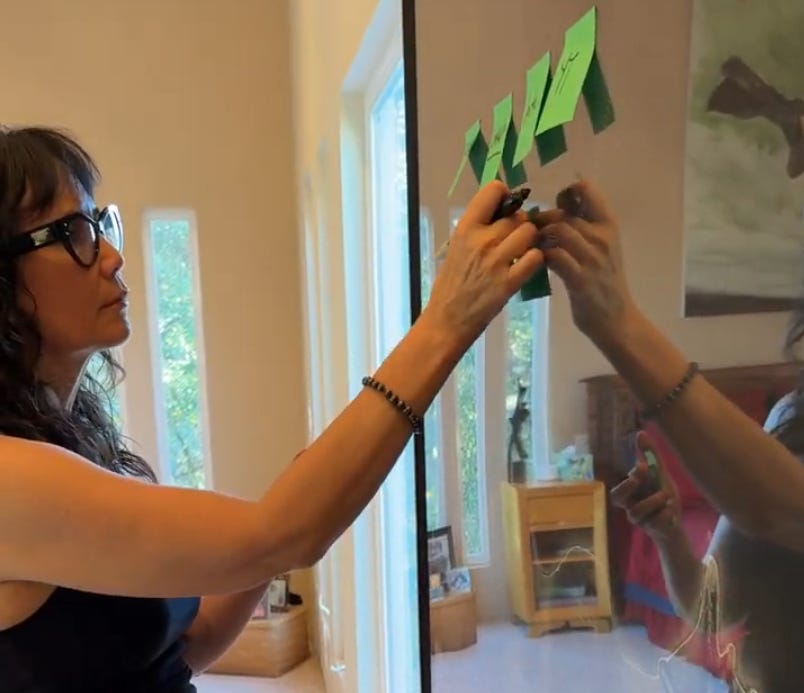
This is a free preview of a paid episode. To hear more, visit moonshotmentor.substack.comLet’s be honest—most of us don’t plan our careers. We react to opportunities, chase what looks good on paper, and hope it all somehow adds up.But if you want to stop winging it and start steering it, you need a strategic career plan—think of it as your personal GPS—connecting where you are today to where you want to go, so every step actually moves you closer to your goals.Take my client Jerry. He wanted a seat in the C-suite and his mentor told him an MBA was key. So, Jerry applied to several Ivy League programs—his heart set on Stanford. When he got the rejection email (ouch), his mentor called in a favor to get feedback. Turns out, Jerry’s résumé lacked a “big win.” He needed something to help him stand out from the crowd.So, they got to work. Over the next year, Jerry led a project that showed real leadership and delivered major results. He reapplied—and this time, he got in.That’s the power of a strategic plan. It keeps you focused on the long game, helps you adapt when things go sideways, and reminds you that progress isn’t about overnight wins. It’s about intentional, sustained effort that pays off over time.So stick with me — we’re going to unpack what made Jerry’s plan work—and how you can use the same approach to shape your next chapter. I’ll walk you through what to include, what to avoid, and how to shift from letting your career happen to actually running the show.Key Elements of a Career Strategic PlanThere are four key elements to building a strategic career plan:* Clarify Your Vision and Purpose: What does success actually look like for you? Think of vision as your destination and purpose as the engine that drives you there. Are you motivated by creativity, leadership, or making an impact? Getting clear on this gives your decisions direction and keeps your goals aligned with your values.* Create Goals and Objectives: Big dreams need small, specific steps. Goals are the big-picture outcomes (like “Become a VP within five years”), while objectives are the measurable action steps that get you get there (“Lead three cross-departmental projects in the next 18 months”). Think of goals as the headline, and objectives as the fine print that makes it real.* Conduct a SWOT Analysis: Before you map any move, know your landscape. What are your Strengths, Weaknesses, Opportunities, and Threats (SWOT). This snapshot gives you the lay of the land – where you shine, where you can grow, and what’s happening around you that might help or hinder your progress. This step grounds your plan in reality.* Identify Milestones and Metrics Milestones mark your key moments like completing a certification, landing a leadership role, publishing an article. Metrics measure your impact like boosting team performance by 20% or expanding your network by 50 new contacts. Tracking both keeps you honest, motivated and clear on your wins.What’s important to remember is that a strategic plan isn’t chiseled in stone. It’s meant to evolve as you do. New data, experiences, and insights will keep shaping it—and that’s a good thing. I like to revisit these headline elements at least once a year to see what needs a tweak or a course correction.Case Study: Jerry’s Strategic Plan in ActionLet’s revisit Jerry—the C-suite hopeful we met earlier. When we last left him, he’d just turned a Stanford rejection into a powerful lesson about clarity and perseverance. Now let’s look at how he built his strategic career plan step by step, using the same four elements we just covered.Jerry wasn’t chasing a title for ego’s sake. He wanted to lead in FinTech because he cared deeply about access. His moonshot was to make wealth-building tools available to everyday people—even those who could only invest fifty dollars at a time. That was his vision and purpose: to use leadership as a way to open financial doors that had long been closed.To move that vision into motion, he needed clear goals and objectives. The first was straightforward—earn an MBA from a top-tier program. But the how mattered just as much as the what. With his mentor, Jerry broke the big goal into smaller, actionable steps: identify a visible project that could showcase leadership, deliver measurable results, and strengthen his MBA application.Next came his SWOT analysis. Jerry’s strengths included sharp analytical thinking and the ability to navigate complex systems. His weaknesses? He hadn’t yet proven his leadership impact on a major stage. Opportunities included his mentor’s network and a company ready for fresh ideas. The threats were real too—fierce competition for top MBA programs and limited recognition at work. Seeing it all laid out helped him target where to take bold, meaningful action.Jerry launched a cross-departmental initiative to improve client onboarding—a persistent problem in his organization. It wasn’t easy. He had to rally skeptical teammates, make tough calls, and stay centered when the project hit turbulence. But he tracked milestones and metrics religiously: monthly progress reviews, measurable efficiency gains, and client retention rates. By year’s end, his team improved onboarding efficiency by 30% and cut costs across departments.When Jerry reapplied to Stanford, he had a story worth telling—one that blended purpose, proof, and progress. His essays weren’t about ambition; they reflected alignment. He didn’t just get in. He stepped into his next chapter with a renewed sense of confidence and a clear direction for the impact he wanted to make.Jerry’s plan wasn’t perfect—it evolved as he did. But that’s the beauty of having a strategy rooted in purpose. It gives you something solid to lean on when things change, and a clear way to measure progress when doubt creeps in. His story is proof that when you approach your career with curiosity and intention, even a setback can become a step forward.Bottom LineA strategic career plan isn’t about predicting every turn—it’s about creating a framework that keeps you aligned with your purpose while staying open to change. When you take time to clarify what matters most, set meaningful goals, and check in with yourself regularly, you stop drifting and start leading. Progress may not always be linear, but with intention behind it, it’s always forward.If someone came to mind while you were reading this—please send it their way. You never know the impact a well-timed message can have.Related Content* What’s a Moonshot and How Do I Find One?* How to Move Ahead in Your Career* What are the Seven Big Mistakes of Goal Setting?Perks for Paid SubscribersMoonshot Mentor paid subscribers get weekly journal prompts to spark personal and professional growth, guided meditations to help them center, reflect, and reset, plus exclusive career development and career grief workshops that build clarity, resilience, and momentum.Journal PromptsHere are 4 journal prompts for paid Moonshot Mentor subscribers. These questions will help you clarify your career vision, strengthen your strategy, and stay connected to what truly matters as you move forward.

Today is a departure from the usual career strategy talk, but still applicable to anyone who’s going after a moonshot and is in need of inspiration. I’m joining a community experiment launched by producer Ted Hope to bring together NonDē filmmakers on Substack. You’ve heard of independent filmmaking? This is non-dependent filmmaking and honestly I find that inspiring in itself – to boldly state we are no longer depending on the systems that have kept people on the outside, repressed, and denied.The idea behind the experiment is simple: each day, a member of the non-de filmmaking community or an ally or advocate shares the works, artists, or moments that are currently inspiring them. I’ve loved reading the previous posts and many of them have inspired me to action - cuz that’s what inspiration is: getting out of our spiraling monkey minds and going after our moonshots.Before I share my three inspirations as part of part of the #FilmStack Inspiration Challenge, a quick acknowledgement because these kinds of experiments don’t happen without a lot of volunteer work behind the scenes.Huge thanks to Donny Broussard, Film Le Fou, and Avi Setton for keeping the chain alive and beautifully eclectic.INSPIRATION #1: Anyone Who Spits in the Face of UncertaintyThere’s a particular kind of biting on tin-foil vibe in filmmaking — that grit and stoicism to make something with no promise it’ll ever see the light of day. You don’t know if your film will get financed, find an audience, or even make it out of post. And yet, you keep going. That’s what I love most: the folks who have the audacity to create with no guarantees.My friend and client, Utttera Singh, embodies this better than anyone I know. Her feature debut Pinch premiered in narrative competition at Tribeca this year — a dark comedy about sexual assault, shot and set in India, in Hindi with English subtitles. That alone would make most filmmakers flinch. But Utts leaned straight into it. She nails the very tricky tone with ease and full command. Please see this movie when it comes out.But you don’t have to only work in film to know that feeling. Anyone who’s ever started something from scratch — a business, a book, a new chapter — has faced that same blank space. Where courage gets tested and creativity is born. So yeah, I’m inspired to leap into the unknown by anyone who spits in the face of uncertainty.INSPIRATION #2: The Mensches Who Share the Damn PlaybookNow, we all know the hard truth that talent, grit, and stoicism alone don’t get a film made. You also need a few good humans who share their playbook instead of guarding it.Ted Hope is one of those people. I’m not saying that to blow smoke up his ass — I’m saying it because he said yes to a cold email from someone he didn’t know: me. (If you don’t know Ted, he’s a prolific film producer, former head of Amazon movies, and has produced Academy award winning and nominated films like Manchester by the Sea. In other words, he’s fancy pants.)I’d reached out to see if he’d speak to a group of filmmakers and producers I lead through The Moonshot Collective. He didn’t ask who was attending, what their credits were, or if there was a check attached (there wasn’t — though I made a donation to a charity in his name). He just showed up. Told stories. Made us laugh. Ignited new ideas.In The Moonshot Collective we’ve had a lot of folks willing to share their playbook which honestly restores my faith in humanity. Everyone from studio folx like Charlotte Koh / Lionsgate, Sarah Shepard / Disney, Elizabeth Grave / Sony and legends like attorney Peter Dekom. Their generosity to the Moonshot Collective is powerful role modeling: access isn’t something you guard, it’s something you extend.One quick piece of advice to anyone whether you’re in the film industry or not, always always always ask. People do say “yes.”So yeah, I’m inspired by the best practices, knowledge and experience these mensches are openly and generously sharing.INSPIRATION #3: Hugging the BearThis is me as a baby producer. Our lead actor decided to play basketball during lunch and came back completely unfazed that his sweaty, beet-red face would put us behind schedule.I was livid and wanted everyone to be as mad at the actor as I was. My mentor took one look at me and said, “What’s done is done. You can’t go back. How do you want to solve it?” It was a bitter pill to swallow because I really wanted to let everyone know that the actor was wrong and I was “right”, but I had to make peace with the chaos and keep us moving forward.Over time, I actually learned to love the hard truths and I’ve even adopted a phrase for it: hugging the bear. It’s the act of wrapping your arms around what scares the hell out of you so it stops running the show. The bear might be a blown deadline, a deal falling apart, a hard conversation, or the reality that the plan’s gone off the rails. Hugging the bear means you stop pretending you’re in control and start adapting in real time.Every industry has its own version of the bear. The boss who changes direction midstream. The client who ghosts. The project that’s tanking despite your best effort. We all meet that moment when the story we wanted to tell collides with the one we’re actually living.Hugging the bear inspires me to seek out the truth. And when I know the truth, I can get super creative in solving any problems that the truth reveals .Bottom LineInspiration is a way to refill your resiliency and will-power cup. Inspiration gives you a fresh perspective. Inspiration can be anything that moves you. My wish for you is that you continue to find inspiration in your work, in your life. And please share it - let us know what’s inspiring you in the comments. It could make a real difference to someone who’s feeling stuck.P.S. For bonus inspiration, be sure to check out FilmStack Daily Digest. If someone came to mind while you were reading this—please send it their way. You never know the impact a well-timed message can have.Related Content* Are You Missing The Magic In Your Career?Perks for Paid SubscribersMoonshot Mentor paid subscribers get weekly journal prompts to spark personal and professional growth, guided meditations to help them center, reflect, and reset, plus exclusive career development and career grief workshops that build clarity, resilience, and momentum.Journal PromptsHere are three prompts to help you uncover what’s inspiring you right now and where courage might be calling you next.* When was the last time you spit in the face of uncertainty? Think about a moment when you acted before you had all the answers. What made you move anyway, and what did that risk reveal about your courage?* Who’s shared their playbook with you—and who might need a peek at yours? Reflect on the people who’ve offered you wisdom, mentorship, or access. How did their generosity change things for you, and how can you pass it on?* What’s your version of the bear right now? Name one hard truth you’ve been avoiding. What might open up if, instead of resisting it, you decided to face it and get creative about what comes next? This is a public episode. If you'd like to discuss this with other subscribers or get access to bonus episodes, visit moonshotmentor.substack.com/subscribe

This is a free preview of a paid episode. To hear more, visit moonshotmentor.substack.com“I can’t find a job.”If that’s what you’ve been saying to yourself, you’re not alone. It’s one of the most common things I hear from people in transition. What’s really underneath is that mix of dread and “oh no, what if I’ve peaked?”Here’s the truth: often, the problem is that we’re looking for opportunities too narrowly — using what’s called foveal vision.What Foveal Vision Gets WrongFoveal vision is the kind of eyesight you’re using right now to read these words. It’s sharp, detailed, and essential when you need precision. But it’s also extremely limited. The fovea covers just a tiny fraction of your visual field.That’s exactly how many people approach a job search. They lock onto one title, one industry, one single path they believe is the “right” use of their skills. When that role isn’t available, their vision narrows even more. The harder they strain, the less they see.The Wider Lens of Peripheral VisionPeripheral vision is everything that sits just outside the little bullseye your eyes usually lock onto. It’s what lets you sense someone walk into the room without turning your head. It’s softer, more spacious, and it connects you to a bigger kind of awareness.In your career, peripheral vision is what helps you soften your gaze and notice possibilities in the margins. It’s how you see your skills in new contexts. Think of it like flour. If you believe flour is only for bread, you’ll miss that it also makes cakes, sauces, playdough, glue, even shampoo. The same ingredient, countless applications.Try This Quick ExercisePick one object in your space right now — maybe that plant you’re pretty sure is faking being alive.Focus on it. Notice its color, shape, and the way the light hits it.Now, without moving your eyes, soften your gaze. Notice what’s just outside of that object. Expand your awareness. Let yourself sense what’s above, to the side, maybe even slightly behind you.That’s the difference between foveal and peripheral vision. It’s not about losing detail. It’s about widening the field so more possibilities can come into view.How Job Seekers Get StuckMost job seekers default to foveal vision. They build their search around a single job title. They plug that title into LinkedIn or Indeed and hope something perfect appears.If the market for that role is shrinking, panic sets in. They start telling themselves: I’ll never work again. I’m obsolete. But the truth is simpler — they’re staring too hard at the wrong thing.Chris’s StoryTake Chris. He was a creative executive with some impressive wins under his belt. Then he got laid off. For eighteen months, he scoured job boards and reached out to contacts — but only for creative executive roles. The industry was quiet. With each silence or “no,” his confidence took another hit.That’s the trap of foveal vision. Chris was staring so tightly at a single job title that he couldn’t see how versatile his skills really were.Together, we broke his skills down: project management from idea to delivery, sales acumen in pitching properties, creative analysis of what works in a market, talent management and development, deep research abilities, and translating business objectives into creative outcomes.When I asked what energized him most, Chris lit up at the mention of business development. He loved finding new buyers, building relationships, and positioning ideas for success. It wasn’t the “creative executive” title he craved — it was opening doors and making deals.That realization changed everything. Chris shifted from foveal to peripheral vision. Instead of hunting only for creative executive jobs, he started looking at business development roles in other sectors. Once he softened his gaze, opportunities began to appear.The Bottom LineThis is the power of peripheral vision. It doesn’t erase your expertise — it expands how and where it can be used.Your talents are like flour. If you only see one recipe for them, you’ll stay stuck. But if you widen your gaze, you’ll realize you have far more options than you thought.Sometimes your next chapter isn’t sitting in the center of your vision. It’s waiting at the edges — ready to be noticed the moment you soften your focus.If someone came to mind while you were reading this—please send it their way. You never know the impact a well-timed message can have.P.S. As the holidays come speeding toward us, many people are feeling grief sneak in, energy dipping, and nerves starting to fray.Join me Thursday, November 20 at 12:30 PM PST live on Substack for an “Ask Me Anything” on career grief and the holidays.You can submit your questions ahead of time or come live and bring what’s on your mind. I’m here for you.Related Content* Is It Time For A New Career?* Why Does My Resume Get Ignored?* What Really Happens After You Apply?Perks for Paid SubscribersMoonshot Mentor paid subscribers get weekly journal prompts to spark personal and professional growth, guided meditations to help them center, reflect, and reset, plus exclusive career development and career grief workshops that build clarity, resilience, and momentum.Journal PromptsHere are three prompts for Moonshot Mentor paid subscribers to help you practice widening your own career lens. Think of them as a way to stop focusing on “one right answer” and start noticing what’s sitting at the edges of your vision.

This is a free preview of a paid episode. To hear more, visit moonshotmentor.substack.comHave you ever hit a big milestone—one you thought would feel amazing—and instead, you’re like, “Wait, that’s it?”You got the job. You crossed the finish line. You checked the box. And five minutes later, you’re already on to the next thing. Or worse—you feel a little empty, maybe even disappointed.I don’t think that’s because you’re ungrateful. I think it’s because you’ve been living by someone else’s definition of success. And if you’re wondering where those definitions come from, look no further than the culture we’re raised in. It feeds us a script about what “making it” should look like.The Success Playbook We Rarely QuestionIn the U.S., we live in a capitalist-first culture. And whether we realize it or not, we’re spoon-fed a script about what “success” should look like. It usually sounds like this:* Make a lot of money.* Get the big job title.* Work long hours—because hustle equals ambition.* Collect degrees and credentials.* Show it all off with travel, brands, and lifestyle.Now, none of this is bad. Honestly, some of it can be great. But here’s the catch: if you’re chasing these things because you think you should—or because that’s what everyone around you is doing—you’re going to feel sorta hollow and empty when you get there.The Comparison GameAnd then there’s comparison. We look around and think, “Well, they did it, so maybe I should too.”That’s exactly what happened when I went for my MBA. Most of the business leaders I admired had one. So I thought, okay, I need that too. And while that degree never once got me hired, I’ll admit it gave me confidence in a boardroom.But let’s be real—that’s not the degree speaking. That’s me outsourcing my self-worth to a piece of paper. What I really wanted was authority and belonging.That’s what comparison does: it makes you believe if you just had the thing—the degree, the Fendi handbag, the fancy beach or ski vacation—you’d finally feel successful. Spoiler: you will, but only if that’s how you define success.Redefining SuccessHere’s the shift: success isn’t a moving target. It’s a way of life. And the only way to feel it—really feel it—is to define it for yourself.Here’s a little exercise I use with my clients (and myself):* Write down your definition of success. Don’t overthink it—just get it on paper.* Ask yourself: Why is this my definition? Write down the answer.* Ask again: Why is that the answer?* And one more time: Why is this the answer?Each “why” pulls you deeper—past surface-level goals into the values and purpose underneath.Let me show you how this played out for me.Back in 2017, here was my definition of success:* Land a fabulous, high-profile job.* Finish a vomit draft of my book by the end of the year.* Lose 10 pounds.Here’s what happened when I put that list through the “why” filter:High-profile job* Why? Because I wanted to feel important and respected.* Why? Because I thought if people admired me, I’d finally feel secure.* Why? Because underneath all the ambition was a fear that without status, I wasn’t enough.Finish a book draft* Why? Because I wanted to be able to say I was an author.* Why? Because I thought having “author” next to my MBA would make me more legitimate.* Why? Because I believed credibility came from labels, not from having something meaningful to say.Lose 10 pounds* Why? Because I wanted to look like I belonged in Los Angeles.* Why? Because the beauty standards here are unforgiving.* Why? Because I thought if I fit the mold, I’d be more lovable.Unpacking each of these so called definitions of success showed me that none of them connected to my actual values. They were all seeking external validation - and they were goals, not ways of being. No wonder I felt an odd sense of emptiness and like “what, that’s it?”Here’s how I define success today: Listen with curiosity, courage, and compassion while creating content and experiences that help people love, learn, and laugh.See the difference? Instead of goals shaped by comparison and culture, this definition is rooted in what matters to me. It’s not something I can check off a list. It’s something I can live into every single day.The Bottom LineCulture and comparison will always offer you a version of success. But if you don’t stop and ask whether it’s really yours, you’re going to keep hitting milestones that don’t mean anything to you.So grab a pen. Write your definition. Ask why, and then ask why again. And don’t stop until you land on something that feels like you or gives you clarity on what needs to be course corrected. Because success isn’t out there waiting for you at the next finish line. It’s in how you’re living your life today.If someone came to mind while you were reading this—please send it their way. You never know the impact a well-timed message can have.Related Content* Why Can’t I Stick With It? 🔄* Is Uncertainty Blocking Your Career Growth?* Unlocking Your Life PurposePerks for Paid SubscribersMoonshot Mentor paid subscribers get weekly journal prompts to spark personal and professional growth, guided meditations to help them center, reflect, and reset, plus exclusive career development and career grief workshops that build clarity, resilience, and momentum.Career Strategy with Laverne McKinnon is a reader-supported publication. To receive new posts and support my work, consider becoming a free or paid subscriber.Journal PromptsHere are 4 journal prompts for paid Moonshot Mentor subscribers. These will help you dig deeper into your own definition of success and notice where culture and comparison may have shaped it.
This is a free preview of a paid episode. To hear more, visit moonshotmentor.substack.comHere’s the thing about growth: quick wins will get you moving, but mastery? Mastery changes you.Don’t get me wrong. Quick wins are great. They give you that hit of momentum, a shot of confidence, the little push that says, “Hey, I can do this.” But they only take you so far.Mastery though is a game changer. It’s when a skill or a practice stops being something you check off a list and becomes part of who you are. It’s what fuels your career for the long haul — the kind of thing that opens doors, keeps you relevant, and makes the work feel meaningful.Quick wins are sparks. Mastery is the bonfire.So here’s the real question: are you building sparks…or are you building a fire that’s going to keep you lit for years to come? Both are important, but at some point if you want longevity, develop your mastery.What’s the Value of Mastery?So what makes mastery worth chasing? Because it’s not just about getting better at a skill. Mastery expands who you are. It deepens your presence, strengthens your sense of purpose, and transforms the way you move through the world. Here are a few of the gifts mastery brings:Depth of skill: Mastery takes you beyond competence into artistry. It’s the difference between playing the notes and making music.Identity and confidence: Over time, your practice stops being something you do and becomes part of who you are. Confidence flows not from performance, but from presence.Strategic advantage: In a crowded, competitive world, mastery gives you vision. It sets you apart because you can see patterns, anticipate challenges, and deliver results with precision and reliability.Resilience: The long arc of mastery builds patience and persistence. You don’t crumble when you hit setbacks — you’ve trained yourself to see them as part of the process, not the end of the story.Fulfillment: At its heart, mastery is about joy. The joy of immersion, of purpose, of knowing your work holds meaning beyond the moment.My StoryFor me, the pursuit of mastery has been a long road. Back in 2015, when I earned my very first coaching certification, I set my sights on the highest credential offered by the International Coaching Federation: Master Certified Coach (MCC). Think of it like a doctor finishing residency and passing their boards — it signals the highest level of trust and expertise in the field.I knew from the start this wasn’t going to be a quick win. Here’s what the MCC requires:* 2,500 hours of coaching experience* 200 hours of coach-specific education* 10 hours of mentored coaching* A three-hour written exam* Demonstrated mastery of ICF Core Competencies* Demonstrated mastery of the ICF Code of Ethics* A performance evaluation* And yes, a significant financial investmentIt took me almost a decade to check all those boxes. And along the way, I learned what mastery actually demands.Depth of skill: I had to stop hiding behind my intellect — the planning, the strategizing, the note-taking. Mastery required me to be fully present. To listen not just with my ears, but with my gut and my heart. The day I stopped taking notes and just trusted myself, was a huge a breakthrough. And I thought: This is what depth feels like.Identity and confidence: I’ve always been that straight-A student who wanted to nail it the first time. But with getting my MCC, I spent eight months under supervision with a mentor coach who told me, over and over, “Not yet.” I wasn’t hitting the competencies. It was so frustrating. It was really difficult to let go of the gold-star mentality and learn to trust the process instead of proving myself through timelines or perfect scores. It was humbling to keep failing — and freeing.Strategic advantage: Yes, MCC gives me credibility on paper — more opportunities in corporate training and executive coaching. But the real advantage is what’s been happening inside. I feel more grounded, proud, and certain. That confidence fuels my vision and gives me the guts to make bigger moves.Resilience: The final stretch just about knocked me down. Months of supervision, performance reviews, and the exam were harder than getting my MBA. I burned out more than once. But it was never about the coaching — that part has always been clear to me. What got foggy was why I wanted the MCC. With the support of my mentor, I realized it was bigger than me just wanting the validation of excellence. It was about impact. About showing up in the deepest way possible for my clients. To keep going, I had to reconnect with my purpose — helping people cross their own finish lines — and anchor myself in three of my values: love, laughter, and learning. That’s what pulled me through.Fulfillment: At the end of the day, it’s sorta weird to recognize the real fulfillment isn’t the credential itself. It’s the proof (as Glennon Doyle says) that I can do hard things. Knowing that changes everything. It gives me courage to dream bigger, to be less afraid of not being perfect, and to learn faster when I stumble. And honestly? It just brings me joy. A lightness. The wisdom that as long as I stay connected to my values and purpose, I can take on hard things and succeed.Bottom LineHere’s the truth: quick wins will always have their place. But if you want longevity, advancement, and real fulfillment, you’ve got to invest in mastery. And the good news? You don’t need a decade-long certification to start.Here are three simple ways to begin building your own bonfire:* Pick one skill and go deeper. Instead of spreading yourself thin, choose a skill that matters in your career and commit to developing it over the long term. Depth creates distinction.* Reconnect with your values. Mastery isn’t just about hours logged — it’s fueled by purpose. Ask yourself: Why does this matter to me? That answer will keep you going when the road gets tough.* Model growth for others. Whether you’re a senior leader or mid-career professional, show your team, peers, or even your family what it looks like to keep learning. Growth inspires growth.Quick wins light the spark. Mastery keeps the fire burning. The question is: what fire do you want to tend?If someone came to mind while you were reading this—please send it their way. You never know the impact a well-timed message can have.Related Content* Is It Time For A New Career?* Let Go Of Career Missteps* Are You Missing The Magic In Your Career?Perks for Paid SubscribersMoonshot Mentor paid subscribers get weekly journal prompts to spark personal and professional growth, guided meditations to help them center, reflect, and reset, plus exclusive career development and career grief workshops that build clarity, resilience, and momentum.Journal PromptsHere are three prompts for paid Moonshot Mentor subscribers. They’re designed to help you explore where quick wins have served you well, and where mastery might bring deeper fulfillment.

This is a free preview of a paid episode. To hear more, visit moonshotmentor.substack.comA portion of this blog originally appeared as a guest feature on Career Pivot. Join me for a special AMA with Career Pivot on Friday, October 31st at 9:00 a.m. PT on the Substack App.The call came on a Monday morning. I was still in bed, but when I saw that it was my boss, I jumped up, cleared my throat a few times and did my best to sound normal while saying “hello.”It came out froggy and weak-sauce. I knew why she was calling. I’d been waiting for months to get the official notice of my firing. She sounded like she was reading from a script.Later that week, boxes arrived from the office—my daughter’s photo in a freshly chipped frame, a half-full bottle of McCallans, a mug with lettering: Everybody’s Watching! It was both anti-climatic and gut-wrenching.I spent the next several months in my bedroom cave, alternating between shame, humiliation, panic, depression and intense self-loathing. For the first time in ten years — really since I’d been with that company —there were no meetings to prep for, emails to craft with precision and diplomacy, or crises to be solved in a blink of an eye. So strange to have been stressed out and resentful of all that activity, and then to wish with every fiber of being I could have it back.At the time, I didn’t know what to call what I was feeling. I was pretty sure I was broken because everything I did to feel better was a big fat turd ball. I took antidepressants, went to therapy, and worked with a life coach. I read books about igniting my passion, the art of letting go, and practicing gratitude. I went to Esalen (a holistic education center), worked with psychics and intuitives, and got a certification in Excel. Nothing worked no matter how great of a student I was because the books, workshops, readings, classes and teachings were missing a key element of my experience.What I didn’t know then that I know now is that I was grieving.The Grief No One NamesTurns out grief isn’t just for funerals. It shows up any time something meaningful ends—when a relationship fractures, when a home is lost, when a dream slips out of reach.But the kind of grief that comes from losing your place in the working world? Most people don’t get it.That’s because career grief is what bereavement experts call disenfranchised grief—a form of loss that society doesn’t officially acknowledge or validate. Instead, you get advice disguised as comfort: “You’ll land on your feet.” “It’s probably for the best.” “Everything happens for a reason.”And at the same time, if you’re anything like me, you start to question yourself. Why can’t I just move on? Why does it still hurt? Why does everything, even sending a text, feel harder than it used to?You may wonder if you’re overreacting. Well, you’re not.What you’re feeling is a completely human response to loss.Grief doesn’t mean you’re broken. It means something you were deeply attached to is gone.You have permission to grieve your career losses.The Myths That Keep Us StuckOnce I tell people that, the next question usually comes fast: So how do I get over it? Getting over grief is one of several myths that cause harm. The world teaches us to treat grief like a bad cold. Take a few days off, drink lots of water, and pop a few aspirin if your head hurts.Grief is not an experience you get over. Grief is an experience that gets integrated into your life. At the same time, that gaping hole in your torso cannot simply be filled with an alternate job.Consider what happens when a tornado hits a town. Buildings collapse, trees uproot, familiar streets vanish. The landscape of the community is forever changed. Even when the debris is cleared and new structures are constructed, it’s not the same town—it’s a rebuilt one. Grief works the same way. When something you were deeply attached to is gone, it alters your internal landscape. You may rebuild, even thrive again, but you’ll always remember what once stood there—the job, the dream, the sense of belonging.Then there’s the “five stages of grief” myth. You might’ve heard of them: denial, anger, bargaining, depression, and acceptance. They’ve been printed on posters, used in workshops, and turned into a cultural script for how we should grieve. But those stages weren’t meant to be linear—or even universal. Psychiatrist Elisabeth Kübler-Ross designed them to describe how terminally ill patients process their own mortality, not how the rest of us should manage loss. Somehow we turned that amazing research into a rulebook—and in doing so, we gave ourselves a new way to fail. If you have emotions outside of the five stages framework, you’re not doing grief wrong. Your range of emotions is completely normal.Another myth? “If I stay busy, I won’t have to feel this.” That one’s especially common in ambitious people. Productivity can numb pain for a while—it gives the illusion of control. But grief has a way of leaking through the cracks and can show up as distraction, burnout, cynicism, the loss of motivation, and overall grumpiness.One of the most common myths is a close cousin to getting over grief: the belief that time heals all. Let’s debunk that from two perspectives. First, the word “heals” implies that grief is an illness to recover from, something that can be cured. It’s not. Grief is a transformative experience that changes how you see yourself and the world around you.Time, by itself, doesn’t heal—but it does create space. Over time, your relationship to what was lost shifts and the pain may soften with distance.I really do wish grief came with a timeline, but it doesn’t. What time can offer is room to integrate the loss—to make it part of your story rather than the whole story.What I’ve learned, both personally and through years of coaching, is that grief doesn’t obey rules—but it does respond to tasks. Tasks are not formulas or stages. They’re simple, human actions that help you acknowledge what’s changed and make sense of it.The framework I use to describe those tasks is called RISE—because that’s what we’re learning to do after loss. Rise through understanding. Rise through intention. Rise through agency.The RISE Framework: A Roadmap Through Career GriefThe framework offers a different way forward—each task builds on the one before it, but you don’t have to move in order. Think of RISE as a loop, not a ladder. You can circle back as often as you need to.R – Recognize the LossThe first task of grief is recognition—acknowledging what’s actually gone. It sounds simple, but most people skip it entirely. They rush to update their résumés, reach out to contacts, or start applying for jobs, believing momentum will ease the pain. But you can’t rebuild on ground you haven’t cleared.Recognition starts by naming the visible and hidden losses. The visible losses are easier to point to: the title, the office, the daily structure. These are the losses that are more readily replaced, but don’t reflect the entire picture.Beneath the visible losses are the hidden losses. These are the ones that may take time to name, but you feel them intensely. The loss of belonging. The loss of confidence. The loss of purpose. The loss of belief.When I was fired, it wasn’t just the loss of my title that gutted me—it was the loss of identity. For years, I saw myself as smart, strategic, and capable. When the parting of the ways call came, all of that vanished in an instant. My identity shifted from someone accomplished to being a loser and an idiot.That became my secret and my shame. I didn’t tell anyone how small I felt, or how humiliated. I poured all that emotion into self-criticism instead. It wasn’t until I learned to name the losses, especially the hidden ones, that I could start to get a clearer view of how to rebuild.I – Investigate the MeaningHere’s the thing: When I told myself I was a loser and an idiot, that was me creating meaning about something that happened that didn’t make sense. Why do we do that ourselves?It’s because the brain can’t tolerate not knowing, so it rushes to fill in the blanks. Each time it lands on an explanation—accurate or not—it releases a small hit of dopamine, the brain’s reward for “solving” a problem. It feels good for a moment, but the comfort doesn’t mean the meaning is true.That’s why the “I” in RISE invites you to investigate the meaning you’ve created from your loss because that meaning will shape what comes next.I avoided opportunities that scared me. I downplayed my experience. I stayed small because I worried that I’d get my head chopped off again. After all, I was a loser.Investigating the meaning you’ve created doesn’t mean forcing positivity or rewriting history. It means pausing long enough to get curious about what you’ve been telling yourself about the loss—asking whether it’s true, or whether it’s just the brain hard-wired to come up with answers. That’s why this step matters: it helps you question the meaning before it hardens into identity.Here’s a hard truth: grief isn’t only about what happened; it’s about what you believe it means. When a career disruption occurs, we’re often left in uncertainty and no answers. So our brain jumps in and creates any ol’ meaning regardless of whether it’s hurtful or helpful. Hurtful meaning sounds like: I suck. I’m not good enough. I’ll never recover from this. Helpful meanings sound like: My work mattered, even if the position ended. I served with integrity and skill, and those strengths don’t disappear. This change says more about the system than about my value.For me, I realized that calling myself a loser and an idiot was not only harmful, it was inaccurate. In looking at the facts, it was tough to ignore that I went on to several high profile gigs post losing that one job. They weren’t hiring me because I was a loser and an idiot. They were hiring me because of my talent, experience and being a good cultural fit.To complete this task, you create a new meaning based on t

This is a free preview of a paid episode. To hear more, visit moonshotmentor.substack.comIt’s been two months since my little dog Roo died. Not exactly a strong hook for a post about career strategy. But I feel compelled to share this personal information because life keeps on life-ing despite the plans we make for our professional lives. And I think it’s important to make that okay and carve out space.I think most of us are pretty good at holding boundaries when a personal commitment pops up — a friend comes into town, your kids soccer game, a graduation ceremony. We step away, take a day or two, and then we return.But what happens when it’s not a “one and done” thing? What happens in the weeks and months that follow, when you’re still grieving, but the world assumes you’re back to normal?In our society, you’re often given a weekend, maybe a few days, to attend a memorial service or sit shiva. Then there’s an unspoken expectation that the mourning period is over and you can get back to work.Well, grief doesn’t work on a capitalist timetable. It works uniquely on yours. And in those early days and weeks — sometimes the first year — you may look fine on the outside but feel completely dismantled on the inside.Roo’s StoryIt was a Tuesday when Roo started to cough-hack every few hours. I thought it was allergies, or maybe he wasn’t drinking enough water. By Friday, he was only eating once per day, lethargic, and his breathing had become “panty.” I googled his symptoms and got the range of a respiratory infection all the way to cancer. But I held out hope that he would get better with my TLC.On Sunday morning, I called the emergency hospital and asked if his symptoms warranted going in. They said to bring him in immediately. When we arrived, a crew of three technicians ran out the back and took him from my arms. A half hour later the vet told us it was congestive heart failure and all we could do was make him comfortable. They gave him diuretics and oxygen and we brought him home.He rebounded for about a day, but his breath rate started to climb and I knew it was time. I can’t say the words let alone write them. Maybe enough time hasn’t gone by.Roo died on Wednesday, August 20 at 3:15 pm PST. He was surrounded by his family, wrapped in his favorite blanket.Grief and WorkIt’s been surreal mourning while being a grief coach. I know so much, and it changes nothing. Maybe it changes the naming — I can watch myself from a distance and say, “Oh, I’m in the raw and tender stage.” The stage where everything is a first: the first dinner without him, the first night without him, the first morning, the first time watching TV. He really loved our couch time. I would say, “Roo it’s time!” He would run across the foyer, leap into our sunken living room, and hop on the coach. His little head poking over the pillows watching me make my way.There is no “hardest.” It’s all hard.And then work comes knocking at the door. What to do?I gave myself some space. The day after he died, I didn’t — I worked, because I needed a break from my crying so hard my entire face was swollen. Then I took a few days off. Then eased back in. Ten days later, I was fully back in my desk chair. My head and heart were not.Did I make the wrong decision? I don’t know. I do know that staying connected to something I love — client work — has been very helpful. The giant hole in my soul is soothed by helping others. But not all the time. I cancelled three times on one client because I couldn’t be present. She’s also an animal lover who has lost many pets so I knew she would truly understand, and she did.This is the reality of grief at work. It doesn’t disappear after a weekend. And while jobs and bills demand that we show up, we also have to be vigilant and compassionate with ourselves. If we don’t find ways to care for ourselves, burnout will bite us. Hard.Practical Guidance: How to Work While GrievingIn the early days after Roo died, I found myself swinging between extremes. One day I would bury myself in work because I needed relief from my sadness. The next, I couldn’t face my laptop at all. Both choices were valid. Grief isn’t linear — and neither is our ability to work through it.If you’re facing a similar season, here are a few ways to navigate work in those first weeks and months:* Adjust your expectations. Productivity won’t look the same. Instead of aiming for your usual capacity, ask: What’s essential today? What can wait? Shrinking the list gives you a greater chance of following through without burning out.* Communicate with care. Whether it’s your boss, your team, or a client, a simple message like, “I may need extra flexibility this week,” can make all the difference. But also remember: colleagues and clients are not your therapist or coach. Expecting them to fully understand your experience after a few weeks may set you both up for disappointment. Find support outside of work — friends, family, a counselor, or a support group — where your grief can be fully witnessed.* Build in recovery time. Grief is exhausting. Even short breaks to step outside, stretch, or sit in silence can help your nervous system reset. Think of it as scheduling grief alongside your meetings.* Anchor in what feels nourishing. Whether it’s a hot cup of cocoa, getting your nails done, treating yourself to lunch out, or listening to music on your commute — give yourself extra time and care for those small pleasures. They’re not frivolous. They’re ways of replenishing yourself when so much feels depleted.* Carry a keepsake. Sometimes pretending you’re not grieving while you’re on the job is more dysregulating than quietly acknowledging it. Having a small memento — a piece of jewelry, a photo, a favorite pen, or any object tied to your loved one — can provide comfort. Holding onto something tangible is a healthy way to feel a continued bond, a reminder you’re not carrying your loss alone.The truth is, there’s no single formula. Working while grieving is about tending to both sides of the equation: the professional obligations you must meet and the human need for gentleness. Hold them together with vigilance and compassion, and you’ll find your way through.Related Content* Is Grief Holding Me Back?* How Can Grief Boulders Turn To Butterflies?* Are There Grief Rules?Perks for Paid SubscribersMoonshot Mentor paid subscribers get weekly journal prompts to spark personal and professional growth, guided meditations to help them center, reflect, and reset, plus exclusive career development and career grief workshops that build clarity, resilience, and momentum.Here are three journal prompts for paid Moonshot Mentor subscribers. These are designed to help you reflect on how to navigate the tension between grief and productivity in your own life.

Comments

Download from Google Play

Download from App Store
 United States