


The Sportsmen's Voice | Hunting, Fishing and Conservation Advocacy with Congressional Sportsmen's Foundation
Subscribed: 1Played: 1
Subscribe

© Congressional Sportsmen's Foundation
Description
Fred Bird hosts The Sportsmen's Voice, a podcast from the Congressional Sportsmen's Foundation dedicated to conservation, hunting, and fishing advocacy. Join us as we explore key issues in hunting, fishing, outdoor access, gun rights and wildlife management. CSF exists to inform, influence and defend policies that protect and promote our outdoor traditions. Listen in as Fred delivers the most important news and explores the most pressing topics in the hunting, fishing, gun rights and outdoor heritage spaces.
153 Episodes
Reverse

Behind the scenes of fisheries policy shaping how anglers fish, access bait, and protect opportunity nationwide.
Live bait fishing, artificial reef habitat, and red snapper seasons are some of the big flashpoints of the day shaping the future of recreational angling. Fisheries leaders from the American Sportfishing Association and conservation policy experts sit down with Sportsmen’s Voice host Fred Bird to unpack three critical battles every serious angler should understand.
First, we dig into the emerging push to restrict interstate live bait sales. Framed publicly as an invasive species concern, these proposals could effectively end live bait fishing in entire regions; especially for ice fishing, panfish, and entry-level anglers. The conversation breaks down why fisheries scientists and state wildlife agencies are pushing back, how bait dealers already operate under strict biosecurity standards, and what these bans would mean for participation, local economies, and fishing heritage.
Next, we shift offshore to the Gulf of Mexico and the Rigs-to-Reef program. Decommissioned oil platforms have quietly become some of the most productive fish habitat in American waters. You’ll hear why keeping these structures in place matters for red snapper, reef fish, and saltwater anglers and what bipartisan legislation aims to fix in the current permitting process.
Finally, we cover red snapper management in both the Gulf and South Atlantic, explaining how state-led data collection has transformed seasons from just days to months. This episode offers a clear look at why better data means more days on the water—and how anglers play a role in that future.
Get the FREE Sportsmen’s Voice e-publication in your inbox every Monday: www.congressionalsportsmen.org/newsletter
Learn more about your ad choices. Visit megaphone.fm/adchoices

Momentum matters in outdoor policy, and this week’s roundup captures how quickly access, conservation, and sporting rights can shift. The conversation opens with live congressional action around the EXPLORE Act, one of the most comprehensive outdoor recreation laws in decades. With implementation now underway, hunters and recreational shooters get a clearer look at how federal land agencies may be required to expand safe, accessible target shooting opportunities and improve public land access across Forest Service and BLM districts.
The discussion then turns to state-level efforts that directly affect how hunting and fishing traditions are protected long term. Delaware and New Hampshire race toward becoming the 25th state to enshrine the right to hunt and fish in their constitutions, a move designed to safeguard conservation funding models and outdoor heritage for future generations. Listeners also hear about new Interior Department directives aimed at removing barriers for hunters and anglers on federal lands and waters.
Freshwater fishing takes center stage with renewed debate over Florida’s Rodman Reservoir, a destination largemouth bass fishery with national implications for fisheries management and angler access. The roundup closes with practical policy issues that hit close to home, including meat processor tax credits that support game meat donation programs and unique wildlife management challenges in Hawaii’s diverse ecosystem.
For hunters, anglers, and outdoorsmen who want to understand how legislation translates into real-world access and opportunity, this is essential listening.
Get the FREE Sportsmen’s Voice e-publication in your inbox every Monday: www.congressionalsportsmen.org/newsletter
Follow The Sportsmen’s Voice wherever you get your podcasts: https://podfollow.com/1705085498
Learn more about your ad choices. Visit megaphone.fm/adchoices

Are drones redefining ethical hunting, or quietly eroding fair chase traditions across America?
Modern hunting and fishing live at the intersection of tradition and technology; and few debates expose that tension like drones in the field. Corey Mason, Chief Operating Officer and Executive Vice President of Conservation for the Wild Sheep Foundation and CSF Board Member, sits down with Sportsmen’s Voice host Fred Bird to unpack one of the most pressing ethical questions facing today’s hunters: where does fair chase end when technology begins?
The conversation dives deep into how drones, thermal imaging, and real-time reconnaissance are increasingly used for scouting and game recovery. While many hunters view these tools as a way to reduce unintended waste and improve recovery after a shot, others worry they create an unfair advantage that undermines the core principles of ethical hunting. Drawing from recent legislative action in states like Montana, Corey explains how agencies are attempting to place guardrails around drone use while still respecting hunter responsibility.
Gain insight into how wildlife managers account for recovery rates, wounding loss, and harvest success when setting population goals for big game species like deer, elk, and wild sheep. The discussion also explores parallels to shed hunting pressure, tracking dogs, and digital tools like mapping apps illustrating how individual technologies may seem harmless, but collectively shift the balance between hunter and animal.
Beyond policy, this episode captures the deeper cultural stakes: heritage, effort, and respect for wildlife. For anyone invested in hunting ethics, conservation science, and the future of fair chase in the outdoors, this is a conversation that challenges assumptions and demands thoughtful reflection.
Get the FREE Sportsmen’s Voice e-publication in your inbox every Monday: www.congressionalsportsmen.org/newsletter
Learn more about your ad choices. Visit megaphone.fm/adchoices

What happens when offshore rigs become thriving fisheries and why lawmakers are finally paying attention.
Kicking off 2026, The Sportsmen’s Voice Roundup goes straight to Capitol Hill for a timely update on one of the most important fisheries conservation tools in the country: the Rigs to Reefs program. Fresh off congressional testimony, Chris Horton, CSF's Sr. Director of Fisheries Policy, breaks down what sportsmen and women need to understand about how offshore energy structures are transformed into long-term fish habitat and why that matters for coastal ecosystems and recreational fishing access.
This conversation goes beyond politics and into the science. You’ll hear how artificial reef structures support real fish productivity, increase biomass, and create ecosystems that simply wouldn’t exist without them. Drawing on decades of data and peer-reviewed research, Horton explains why Rigs to Reefs isn’t just about attraction, but about sustaining healthy saltwater fisheries for generations of anglers.
The episode also tackles common misconceptions around offshore policy, including cost-sharing, industry involvement, and how state fish and wildlife agencies reinvest funds directly into fisheries management and habitat improvement. For anyone passionate about saltwater fishing, coastal conservation, or how federal and state policy shapes the outdoors we enjoy, this is an insider look at how conservation, science, and legislation intersect.
Whether you’re a Gulf Coast angler, a traveling sportsman, or someone who cares about the future of America’s fisheries, this episode provides clarity on why these structures are worth fighting for and how the sporting community can play a role in shaping the outcome.
Get the FREE Sportsmen’s Voice e-publication in your inbox every Monday: www.congressionalsportsmen.org/newsletter
Follow The Sportsmen’s Voice wherever you get your podcasts: https://podfollow.com/1705085498
Learn more about your ad choices. Visit megaphone.fm/adchoices

How bipartisan state leaders quietly protect hunting, fishing access, and outdoor traditions nationwide.
The NASC Summit isn’t just another legislative conference—it’s where policy concepts and strategies to shape the future of hunting, fishing, and outdoor access are developed. In this episode of The Sportsmen’s Voice, host Fred Bird takes listeners inside the 2025 NASC Summit in Memphis, Tennessee, a first-of-its-kind joint effort between the Tennessee and Mississippi Legislative Sportsmen’s Caucuses.
You’ll hear candid conversations with state legislators, conservation leaders, and partners like Ducks Unlimited and the Congressional Sportsmen’s Foundation about how collaboration at the state level drives meaningful wins for sportsmen. From defending access to public lands and protecting waterfowl hunting traditions to navigating debates over lead ammunition bans and Sunday hunting laws, this episode reveals how policy battles are won—or lost—long before they ever reach Washington.
Whether you’re passionate about waterfowl hunting, fisheries management, or protecting the future of outdoor access, this episode offers an insider’s look at how leadership, collaboration, and boots-on-the-ground knowledge are keeping America’s sporting heritage strong.
Get the FREE Sportsmen’s Voice e-publication in your inbox every Monday: www.congressionalsportsmen.org/newsletter
Learn more about your ad choices. Visit megaphone.fm/adchoices
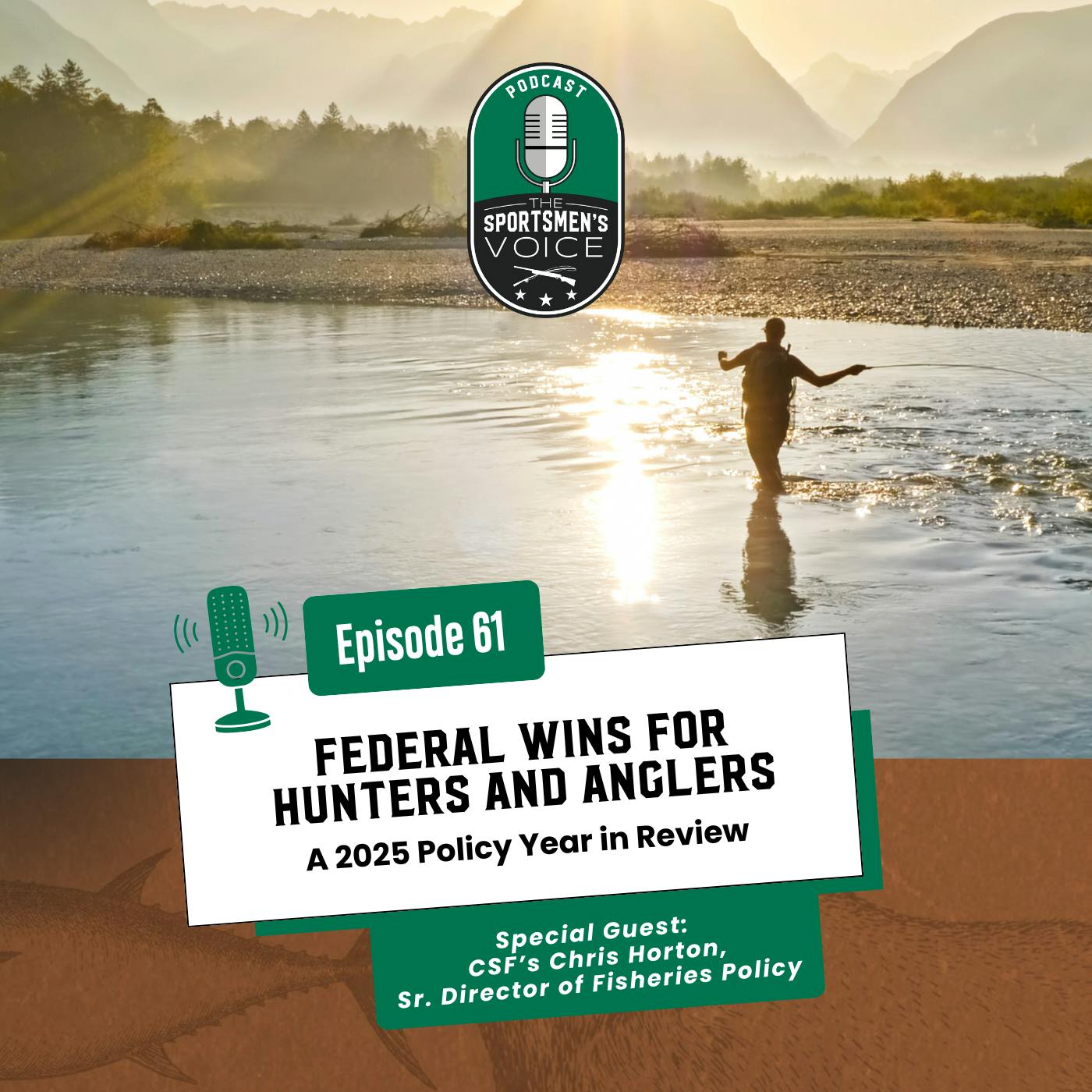
Behind the scenes of 2025’s biggest federal decisions shaping access, seasons, and the future of hunting and fishing.
As the final feature episode of 2025, this conversation takes a clear-eyed look at how federal policy quietly shaped the year for hunters, anglers, and public-land users nationwide. Host Fred Bird sits down with Chris Horton, Congressional Sportsmen's Foundation Sr. Director of Fisheries Policy, to unpack the legislative wins, hard-fought battles, and unfinished business that directly affect how and where we hunt and fish.
The discussion starts with the MAPWaters Act, landmark legislation headed to the President’s desk that brings long-overdue clarity to public water access. From waterfowl hunting access points to inland fishing regulations, standardized digital maps will help sportsmen understand where they can launch, hunt, and fish without guesswork or accidental violations. The conversation then moves offshore, where progress on MAPOceans promises similar clarity for saltwater anglers navigating seasons, closures, and marine boundaries.
Get an insider breakdown of fisheries management victories, including momentum toward better red snapper data collection in the South Atlantic, and the decision to hold the line on striped bass restrictions amid strong rebuilding trends. These aren’t abstract policy debates, they determine season length, access, and opportunity for recreational anglers.
The Congressional Sportsmen's Foundation crew also highlights key reauthorizations that protect wetland habitat, support fisheries conservation funding, and safeguard science-based management. Finally, Chris looks ahead to 2026, outlining what hunters and anglers should watch as Congress returns to work.
Follow the show for more weekly conversations shaping the future of hunting, fishing, and the outdoors.
Get the FREE Sportsmen’s Voice e-publication in your inbox every Monday: www.congressionalsportsmen.org/newsletter
Learn more about your ad choices. Visit megaphone.fm/adchoices
Michigan just changed how the next generation learns to hunt and it could reshape hunting nationwide.
In this year-end edition of The Sportsmen’s Voice Roundup, Fred Bird delivers a concise but consequential policy update for hunters, anglers, and public-lands advocates across the country. The headline story comes out of Michigan, where legislation to allow hunter education in schools has passed both chambers and now awaits the governor’s signature. If signed, the program would count toward graduation credit and satisfy the classroom requirement for a Michigan hunting license an unprecedented step toward strengthening hunting heritage and recruitment.
Congressional Sportsmen's Foundation's Bob Matthews joins the show to explain how this long-fought effort came together, what it means for hunter recruitment and retention, and why other states are watching closely. This conversation gets into the mechanics of hunter education, the role of conservation-minded lawmakers, and how classroom-based programs can protect access to hunting while building informed, responsible sportsmen.
Beyond Michigan, the episode hits critical national updates affecting waterfowl hunting, deer management, and fishing regulations. Listeners will hear about wildlife crossings legislation that improves habitat connectivity and human safety, updates from the U.S. Fish and Wildlife Service on refuges and hatcheries, changes to Missouri’s deer seasons and CWD management, and new mandatory harvest reporting rules for North Carolina anglers targeting species like red drum and speckled trout.
The Sportsmen's Voice is an insider briefing designed to keep serious outdoorsmen informed, effective, and engaged as we head into a new year of hunting and fishing policy battles.
Get the FREE Sportsmen’s Voice e-publication in your inbox every Monday: www.congressionalsportsmen.org/newsletter
Follow The Sportsmen’s Voice wherever you get your podcasts: https://podfollow.com/1705085498
Learn more about your ad choices. Visit megaphone.fm/adchoices

What happens when common-sense hearing protection collides with outdated laws and misinformation?
Suppressors have quietly become one of the most misunderstood and transformative tools in modern hunting, and this week Fred sits down from NASC with Knox Williams, President of the American Suppressor Association and Brent Miller to unpack what the removal of the federal suppressor tax means for hunters, recreational shooters, and the broader outdoors community.
This is an insider conversation that goes far beyond politics. We explore why suppressors are best understood as hearing protection, not tactical accessories—and why waterfowl hunters, elk hunters, whitetail hunters, and upland bird hunters alike are adopting them in record numbers. From maintaining auditory situational awareness in the field to protecting hunting dogs and introducing kids and new shooters to firearms responsibly, suppressors fundamentally change the shooting experience.
The discussion also tackles common myths head-on: poaching concerns, safety misconceptions, and Hollywood-driven narratives that don’t hold up under real-world data. Drawing on decades of advocacy, field experience, and sound-measurement research, our guests explain how suppressors improve hunter safety, reduce noise conflicts with neighbors, and make participation in hunting and the shooting sports more accessible, especially in fragmented landscapes common across the East and Midwest.
Listeners will also gain insight into how hunting culture is evolving, why suppressors are widely accepted in Europe, and what legal challenges could mean for the future of firearms regulation in the United States. Whether you’re a seasoned hunter or just getting started, this episode offers a clear-eyed look at where tradition, technology, and conservation-minded hunting intersect.
Get the FREE Sportsmen’s Voice e-publication in your inbox every Monday: www.congressionalsportsmen.org/newsletter
Learn more about your ad choices. Visit megaphone.fm/adchoices

Major changes in hunting access, fisheries policy, and fall opportunities every outdoorsman should hear.
This week’s TSV Roundup delivers a packed briefing on the biggest conservation and policy developments shaping hunting, fishing, and outdoor access across the country. We open with Massachusetts’ sweeping new gun laws—and what those changes mean for hunters, sportsmen, and future access on Bay State lands. You’ll hear why these policies are raising red flags for gun owners, conservation advocates, and anyone concerned about the future of lawful hunting traditions.
From there, we break down how Federal Duck Stamp dollars continue to drive waterfowl habitat restoration, wetlands conservation, and public access for waterfowl hunters. If you chase ducks, dabble in waterfowl hunting, or just want a deeper understanding of how wetlands get funded, this segment gives you the essential context behind one of America’s most successful conservation tools.
We also cover a major forest restoration effort on Oregon’s Rogue River–Siskiyou National Forest—work that strengthens wildlife habitat, supports big-game hunting opportunities, improves watersheds, and reduces wildfire risk across critical access areas.
In the Southwest, we provide a clear update on CWD surveillance in Arizona and what hunters should know about testing rules, carcass transport, and keeping this devastating disease out of the state.
Finally, we close with fall fishing opportunities across the Great Plains, including trout stocking updates, cold-water angling strategies, and why musky and winter trout fishing are heating up as temperatures cool.
Whether you hunt deer, chase ducks, or fish through the fall, this episode equips you with the insider knowledge you need heading into the holiday season.
Get the FREE Sportsmen’s Voice e-publication in your inbox every Monday: www.congressionalsportsmen.org/newsletter
Follow The Sportsmen’s Voice wherever you get your podcasts: https://podfollow.com/1705085498
Learn more about your ad choices. Visit megaphone.fm/adchoices

Major wins for wildlife management and new hunting opportunities highlight a pivotal week for outdoorsmen.
This week’s Sportsmen’s Voice Roundup covers one of the most encouraging conservation wins of the year. Fred opens with a deep dive into Washington’s wolf-management shakeup, where a court dismissed a lawsuit that blocked lethal removal authority during active livestock depredations. CSF’s Assistant Manager, Northwestern States Marie Neumiller joins the show with boots-on-the-ground insight into wolf behavior, non-lethal deterrents, and how lawsuits can undermine science-based wildlife management. The team provides clarity on wolf depredation thresholds, why lethal removal is necessary no matter what the anti-hunters say, and how litigation disrupts effective predator control for ranchers and wildlife managers alike.
From there, we shift east to Maryland, where CSF’s own Kaleigh Leager, Assistant Manager, Mid-Atlantic States has been appointed to the Migratory Game Bird Advisory Committee, an influential body shaping waterfowl hunting regulations and habitat conservation across the Atlantic Flyway. Learn why this Committee matters, what species are directly affected, and how sportsmen’s voices influence state-level gamebird policy.
We then head to Wisconsin for an update on the Knowles-Nelson Stewardship Program, a cornerstone conservation funding mechanism now fighting for reauthorization. Hear how land access, habitat improvement, and long-term investment in hunting and fishing opportunities hinge on the outcome.
Finally, we wrap with a look at surging black bear hunting opportunities across the Southeast. From Florida to Louisiana to North Carolina, thriving bear populations and science-based management are opening new doors for hunters seeking adventure, wild game, and conservation impact.
Get the FREE Sportsmen’s Voice e-publication in your inbox every Monday: www.congressionalsportsmen.org/newsletter
Follow The Sportsmen’s Voice wherever you get your podcasts: https://podfollow.com/1705085498
Learn more about your ad choices. Visit megaphone.fm/adchoices
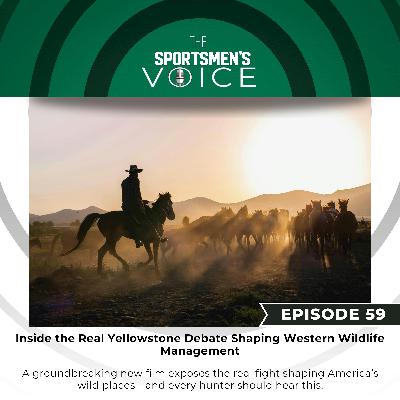
A groundbreaking new film exposes the real fight shaping America’s wild places—and every hunter should hear this.
In this feature edition of The Sportsmen’s Voice, Fred Bird sits down with filmmaker and conservation advocate Tom Opre to break down The Real Yellowstone—a revealing new documentary that dives straight into the conflicts shaping modern wildlife management, ranching, predator recovery, and the future of hunting access across the American West.
Tom unpacks the tension between rewilding movements, regenerative ranching, and the long-standing North American Model of Wildlife Conservation. Listeners get an insider look at how producers, ranchers, and wildlife managers navigate issues like elk distribution, water resources, fair chase, and the booming presence of apex predators. Along the way, Tom explains how private land stewardship, rotational grazing, and habitat-first ranching practices are creating healthier grasslands that benefit both cattle and wildlife—from upland birds to pronghorn and other big game.
The conversation also digs into the rise of American Prairie, bison restoration controversies, and the delicate balance between national food security, public access, and the cultural identity of rural communities. From grizzly bear conflicts to the economics of outfitting, shed hunting seasons, property taxes, and hunter opportunity, this episode pulls no punches.
Whether you’re passionate about elk hunting, land management, big-picture conservation policy, or the future of hunting in the Lower 48, this conversation gives you the informed perspective most sportsmen never hear.
Follow the show for more weekly hunting and fishing conversations.
Get the FREE Sportsmen’s Voice e-publication in your inbox every Monday: www.congressionalsportsmen.org/newsletter
Learn more about your ad choices. Visit megaphone.fm/adchoices
From California’s new firearm restrictions to reef fish recovery and deer disease alerts—this week’s roundup covers it all.
Host Fred Bird breaks down the latest hunting, fishing, and conservation headlines shaping the outdoor community. Broadcasting from deer camp in New Hampshire, Fred covers California’s controversial Assembly Bill 1127, what many are calling a backdoor striker-fired handgun ban, and how it could jeopardize both firearm access and conservation funding nationwide.
Then, in better news for anglers, the Gulf Council has voted to permanently implement Descend Act measures. Fred explains how descending devices and venting tools are helping to reduce barotrauma in deep-water reef fish, leading to healthier fisheries and more sustainable recreational fishing opportunities across the Gulf of Mexico.
Rounding out the episode, Fred shares important updates on the menhaden harvest buffer rollback in Louisiana and CWD testing reminders across the Great Plains. Hunters will learn where testing is available, what new regulations to watch, and how staying informed helps protect deer herds for future seasons.
Whether you’re tracking policy, chasing rutting whitetails, or tuning up your reef rig, this is your inside look at the week in conservation and outdoor legislation.
Get the FREE Sportsmen’s Voice e-publication in your inbox every Monday: www.congressionalsportsmen.org/newsletter
Follow The Sportsmen’s Voice wherever you get your podcasts: https://podfollow.com/1705085498
Learn more about your ad choices. Visit megaphone.fm/adchoices
From striped bass policy to black bear hunting, Fred Bird breaks down this week’s biggest wins for America’s sportsmen.
New Hampshire Governor Kelly Ayotte officially joins the Governor’s Sportsmen’s Caucus, continuing the state’s long tradition of leadership in defending hunting and angling heritage. Fred also spotlights CSF’s new Rocky Mountain States Coordinator, Nate Serlin, and his role working with the Legislative Sportsmen's Caucuses in Colorado, Idaho, Montana, New Mexico, and Wyoming.
On the fisheries front, the Atlantic States Marine Fisheries Commission decides to maintain striped bass regulations, averting unnecessary closures for thousands of saltwater anglers. Down south, Florida’s outdoor community celebrates major conservation wins, from saving the Rodman Reservoir bass fishery to reinstating a science-based black bear hunt.
Fred also covers how the U.S. Senate voted to uphold science-based wildlife management, defeating an anti-hunting proposal targeting owl conservation, and explains why access without habitat is meaningless for hunters and trappers nationwide.
If you care about how policy affects the woods, waters, and wildlife you love, this is your weekly must-listen briefing from the front lines of conservation.
Get the FREE Sportsmen’s Voice e-publication in your inbox every Monday: www.congressionalsportsmen.org/newsletter
Follow The Sportsmen’s Voice wherever you get your podcasts: https://podfollow.com/1705085498
Learn more about your ad choices. Visit megaphone.fm/adchoices
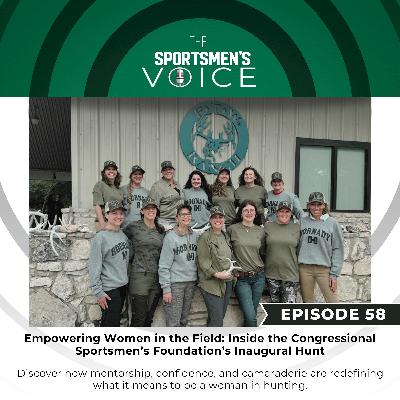
Discover how mentorship, confidence, and camaraderie are redefining what it means to be a woman in hunting.
Fred and a panel of women hunters reviews the inaugural women’s hunt organized by the Congressional Sportsmen’s Foundation, a groundbreaking event bringing together women from all walks of life to experience the outdoors in a supportive, mentorship-driven setting. Whether you’re a seasoned hunter or curious about getting started, this conversation offers a rare look at how female-led hunting programs are changing the landscape of outdoor sports.
Hear firsthand stories of women stepping behind the trigger for the first time, overcoming the intimidation of a male-dominated space, and finding empowerment through shared experiences in the field. The discussion unpacks everything from big game hunting fundamentals to the emotional side of the chase reminding listeners that the heart of hunting is connection: with the land, with wildlife, and with one another.
You’ll also learn how these initiatives are building confidence, fostering lifelong friendships, and driving wildlife conservation through education and advocacy. The guests reveal why programs like this are vital for the next generation of outdoor enthusiasts and how mentorship remains the key to keeping our hunting heritage alive.
Follow the show for more weekly hunting and fishing conversations from leaders shaping the future of the outdoors.
Get the FREE Sportsmen’s Voice e-publication in your inbox every Monday: www.congressionalsportsmen.org/newsletter
Learn more about your ad choices. Visit megaphone.fm/adchoices

How smart policy can secure additional investments from America’s original conservationists.
The Sportsmen’s Voice Roundup this week dives into one of the most important (and overlooked) aspects of wildlife conservation: how we fund it. Bob Matthews joins the show to break down Michigan Senate Bills 276 and 277, a pair of measures aimed at securing long-term conservation funding through smarter hunting license and tag fee structures. Matthews explains how these bills would both generate additional conservation funding and modernize the state’s reimbursement framework, ensuring the Michigan Department of Natural Resources (DNR) can continue managing wildlife, habitats, and public lands effectively.
From license reforms to senior discounts, the conversation pulls back the curtain on how small policy details can make or break conservation success. Then, Fred shifts the focus to the Southeast, where outdated Sunday hunting restrictions still keep thousands of outdoorsmen out of the woods and cost critical dollars for habitat work. Together, the team unpacks the tension between access, tradition, and modern conservation funding, challenging listeners to rethink who really pays to protect the outdoors we all enjoy.
Whether you hunt, fish, or just care about wild places, this episode offers a candid look at the policies shaping our shared future outdoors.
Get the FREE Sportsmen’s Voice e-publication in your inbox every Monday: www.congressionalsportsmen.org/newsletter
Follow The Sportsmen’s Voice wherever you get your podcasts: https://podfollow.com/1705085498
Learn more about your ad choices. Visit megaphone.fm/adchoices
From pheasant season updates to Montana’s new habitat protections—this week’s roundup covers the biggest moves shaping America’s hunting and fishing future.
This week on The Sportsmen’s Voice Roundup, the crew digs into the most important conservation and policy headlines impacting hunters, anglers, and outdoor enthusiasts nationwide. With Pennsylvania Governor Josh Shapiro joining the Sportsmen’s Caucus, the growing momentum behind legislative support for outdoor traditions takes center stage.
You’ll get the latest on recreational fishing policy updates that could affect how and where you cast next season, plus new insights into pheasant hunting opportunities and access across the Midwest. The conversation also breaks down key actions from the Montana Fish and Wildlife Commission, including wildlife disease management strategies, drought mitigation efforts, and how conservation easements are being used to protect both habitat and public hunting access.
Listeners will walk away with a stronger understanding of how legislation, conservation groups, and state agencies are shaping the future of waterfowl hunting, big game management, and fisheries conservation. It’s a boots-on-the-ground look at how policy decisions ripple across the fields, forests, and waterways that define the American outdoors.
Get the FREE Sportsmen’s Voice e-publication in your inbox every Monday: www.congressionalsportsmen.org/newsletter
Follow The Sportsmen’s Voice wherever you get your podcasts: https://podfollow.com/1705085498
Learn more about your ad choices. Visit megaphone.fm/adchoices

Discover how America’s top trapping school is shaping the next generation of wildlife managers and conservationists.
Few people outside the trapping world understand just how much science, skill, and stewardship go into the craft. In this episode, Fred Bird and Charlie Masheck, FTA College Instructor and owner of Hoosier Trapping Supply, take listeners deep inside Trappers College, exploring how its curriculum, mentorship programs, and field instruction prepare students to become leaders in wildlife conservation and furbearer management. From understanding coyote population dynamics to learning diverse trapping techniques from expert instructors, this isn’t just about setting traps—it’s about managing ecosystems responsibly.
But first, Fred sits down with Cristina Jones, business executive for Fur Takers of America and assistant director of Trappers College. She shares how the college’s partnership with Purdue University brings credibility and structure to the nation’s premier trapping education program. Together, they unpack how professionalism and public outreach are reshaping the image of trappers in conservation policy circles and how mentorship plays a vital role in carrying the heritage of trapping forward.
If you’ve ever wanted an insider’s look at the balance between fieldcraft, education, and advocacy in the outdoors, this episode delivers it straight from the source.
Get the FREE Sportsmen’s Voice e-publication in your inbox every Monday: www.congressionalsportsmen.org/newsletter
Learn more about your ad choices. Visit megaphone.fm/adchoices

From black bears to marine fisheries, this week’s stories reveal how science — and sportsmen and women — drive conservation.
In this episode of The Sportsmen’s Voice Roundup, we dive deep into how hunters, anglers, and policymakers are shaping the future of wildlife conservation across the country. From black bear hunting seasons fueling conservation funding to new legislation safeguarding marine fisheries habitat, this episode unpacks how science-based management is the foundation of America’s outdoor legacy.
You’ll hear how Missouri is inviting public input on deer management strategies, why drought is challenging furbearers and trappers in New England, and how game managers in Hawaii are using data-driven solutions utilizing hunters to restore ecosystem balance.
Whether you’re a seasoned outdoorsman or a newcomer passionate about conserving wildlife and wild places, this episode delivers a grounded look at the policies, programs, and people securing the future of hunting, fishing, and wildlife management in America.
Get the FREE Sportsmen’s Voice e-publication in your inbox every Monday: www.congressionalsportsmen.org/newsletter
Follow The Sportsmen’s Voice wherever you get your podcasts: https://podfollow.com/1705085498
Learn more about your ad choices. Visit megaphone.fm/adchoices

A new Massachusetts gun tax could reshape the future of the state’s hunting traditions and shooting sports.
In this episode of The Sportsmen’s Voice Roundup, host Fred Bird sits down with Christian Ragosta to unpack an alarming legislative proposals in Massachusetts — a 4.75% excise tax on firearms and ammunition. On the surface, it’s framed as a public safety measure; but for hunters, recreational shooters, and other sportsmen and women who funds conservation through gear and license purchases, the implications run much deeper.
Fred and Christian break down how this proposed tax would unfairly target law-abiding gun owners while sidestepping the real issues driving firearm crime. They explore the ripple effects this kind of legislation could have on conservation funding — the very lifeblood of our hunting and fishing traditions. Listeners will learn how sportsmen’s dollars already sustain wildlife management, habitat restoration, and access programs that benefit everyone who enjoys the outdoors.
This is more than a policy debate — it’s a call to protect the values that define America’s outdoor heritage.
Get the FREE Sportsmen’s Voice e-publication in your inbox every Monday: www.congressionalsportsmen.org/newsletter
Follow The Sportsmen’s Voice wherever you get your podcasts: https://podfollow.com/1705085498
Learn more about your ad choices. Visit megaphone.fm/adchoices
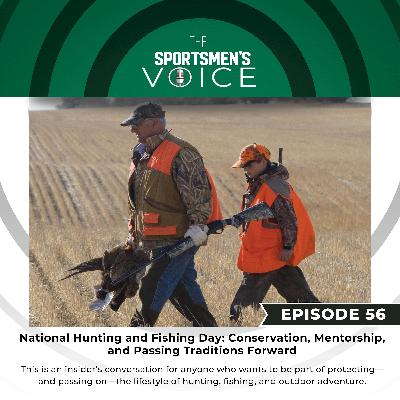
Discover how hunters and anglers are shaping conservation, mentoring youth, and protecting the future of the outdoors.
National Hunting and Fishing Day isn’t just a date on the calendar—it’s a call to action for every sportsman and woman who values wild places and outdoor traditions. In this special episode, Fred Bird sits down with Ronnie “Cuz” Strickland, Scotty Lago, and Sam Soholt to explore why hunters, anglers, and conservationists must carry the torch forward.
From elk hunting tips and waterfowl hunting mentorship to bass fishing strategies and habitat awareness, the discussion highlights how time-tested knowledge can be passed down to the next generation. The guests share personal stories about their own paths into hunting and fishing, the challenges of changing perceptions in communities outside the outdoors, and the responsibility we all have in wildlife management.
Listeners will learn why mentorship is the most powerful tool for recruiting new hunters, how social media can amplify conservation messages, and why bipartisan support is critical for protecting public lands. The conversation also touches on the cultural value of hunting and fishing traditions, the mental health benefits of time outdoors, and the role of license purchases in funding conservation.
This is an insider’s conversation for anyone who wants to be part of protecting—and passing on—the lifestyle of hunting, fishing, and outdoor adventure.
Follow the show for more weekly hunting and fishing conversations that celebrate conservation and tradition.
Get the FREE Sportsmen’s Voice e-publication in your inbox every Monday: www.congressionalsportsmen.org/newsletter
Learn more about your ad choices. Visit megaphone.fm/adchoices

Comments

Download from Google Play

Download from App Store
 United States