


 Claim Ownership
🧠 Let's Talk Brain Health!
Subscribed: 18Played: 110
Subscribe

© Virtual Brain Health Center
Description
🎙"Let's Talk Brain Health!" is a podcast that delves into the fascinating world of the brain and how it affects our overall health and well-being. Join us as we explore the latest research, cutting-edge technology, and practical tips for enhancing brain function, preventing cognitive decline, and optimizing the health of your brain.
💡Whether you're a health enthusiast, a medical professional, or simply curious about the inner workings of the brain, "Let's Talk Brain Health!" offers a wealth of knowledge and inspiration to help you optimize your cognitive potential and live your best life.
💡Whether you're a health enthusiast, a medical professional, or simply curious about the inner workings of the brain, "Let's Talk Brain Health!" offers a wealth of knowledge and inspiration to help you optimize your cognitive potential and live your best life.
70 Episodes
Reverse
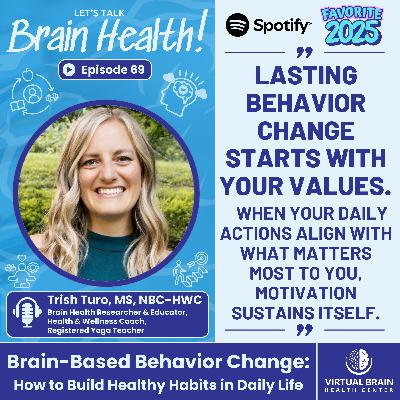
Episode SummaryWhy is it so difficult to change habits even when you deeply care about the goal?In this episode of the Let’s Talk Brain Health Podcast, Dr. Krystal Culler, DBH, MA, sits down with returning guest Trish Turo, NBC-HWC, health educator/researcher & brain health coach, to explore habits and behavior change through a brain-based lens.Together, they unpack how habits form, why resistance shows up, and what is happening inside the brain when we try to change routines. This conversation focuses on real-life behavior change, not ideal conditions. You will learn how brain systems such as the amygdala, hippocampus, and prefrontal cortex influence motivation, fear, and follow-through.This episode also explores how shame, setbacks, and past experiences shape the stories we tell ourselves about our ability to change. Instead of relying on willpower alone, Trish shares practical strategies that help you work with the brain rather than against it.If you have ever said, “I know what to do, but I can’t seem to do it,” this conversation will help you understand why and what to do next.What You’ll Learn in This Episode• The difference between a behavior and a habit• Why motivation often shows up after action rather than before it• How the brain’s habit loop works: cue, routine, reward• Why the amygdala can make behavior change feel threatening• How past experiences and memories influence your willingness to try again• The role of shame and self-talk in habit formation• Why social support improves long-term behavior change• Practical ways to make habit change easier for your brainPractical Brain Health Tips from This EpisodeStart smallFocus on one change at a time instead of trying to overhaul everything at once.Use habit stackingPair a new habit with something you already do daily.Anchor your habits to your valuesConnect behavior change to something meaningful, such as family, health, or purpose.Create visual remindersPhotos or objects connected to your values can reinforce daily choices.Practice self-compassionYour brain is designed to protect you from change. Progress requires patience.Try something more than onceYour brain needs repetition to build new neural pathways.Spend time in natureEven small moments outside can support brain health and regulation.About the GuestTrish Turo, NBHWC, is a National Board Certified Health and Wellness Coach, brain health educator, researcher, and registered yoga teacher. She holds a master’s degree in health psychology and has spent more than a decade helping individuals and organizations support behavior change and healthy lifestyle habits.Trish has presented at national conferences, served on national committees, and worked across digital healthcare organizations. She is also the author of "A Kid’s Book About Healthy Habits" and focuses on making brain health education accessible to people of all ages.Connect with Trish TuroLinkedIn: Trish Turo, MS, NBC-HWCInstagram: @Coach_Trish LinkTr.ee: Coach_TrishPrevious Podcast Episode Mentioned In This ConversationUnveiling the Habenula: The Neuroscience of Behavior Change with Dr. Kyra Bobinet, MD, MPHKey TakeawayHabits shape daily life more than motivation ever will. When you understand how your brain responds to change, you reduce shame and increase your ability to follow through. Sustainable behavior change starts with small steps, patience, and learning to work with your brain’s natural tendencies.Listener Question or Topic Suggestion?Have a brain health topic you would like covered on the podcast?Email: podcast@virtualbrainhealthcenter.comSupport the PodcastIf you found this episode helpful:• Share it with someone who could benefit from it• Leave a review to help others discover the showYour brain health matters. Thank you for investing in it.
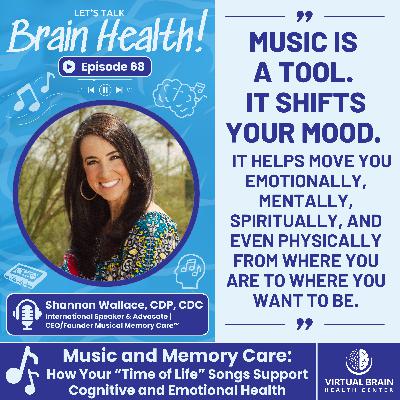
Music reaches your brain fast! It activates memory, movement, emotion, and connection in seconds.In this episode, host Dr. Krystal L. Culler, DBH, MA, sat down with Shannon Wallace, CDP, CDC, creator of Musical Memory Care to explore how music functions as a whole-brain and body workout. We focus on one powerful idea—the “time of your life” effect.Research shows the music you loved between roughly ages 13 and 27 leaves a lasting imprint. Those songs shape identity. They anchor memory. They often remain accessible even during cognitive change.Shannon shares how she moved from professional jazz vocalist to serving older adults in memory care communities. What began as singing for residents evolved into an intentional, research-informed program that integrates rhythm, movement, emotional expression, and identity support.We explore:Why time-of-life music remains accessible in dementia How music activates the limbic system and supports emotional regulation The role of rhythm in movement, including Parkinson’s support Why intentional facilitation matters in memory care settings How music supports dignity, identity, and human connection Practical ways you can use music today for brain healthYou will hear real-world stories from Shannon’s work in memory care. Stories of individuals who had not spoken in years yet responded to music. Stories of rhythm supporting walking and daily tasks. Stories that reinforce this truth. Music is not entertainment alone. It is a neurological tool.If you are a caregiver, clinician, or family member supporting someone with cognitive change, this conversation gives you some practical suggestions. Play their music, not yours. Use rhythm to support movement. Build playlists rooted in their adolescence and young adulthood. Intention matters.If you are focused on your own brain health, start here:Create a “time of your life” playlist Use music to regulate mood and stress Pair rhythm with movement for exercise Share meaningful songs to deepen social connectionMusic does not require perfection. It asks for presence.About Shannon Wallace, CDP, CDC Shannon Wallace is a professional international jazz vocalist and the creator of Musical Memory Care, an interactive program serving active older adults and individuals living with all stages of dementia. Her work has reached participants across North America and in more than 40 countries. She is a Certified Dementia Practitioner and Dementia Care Certified professional who integrates music, movement, and compassion into structured memory care experiences.Brain health lives in daily moments. Music is one of the most accessible tools you already have.00:00 Why Music Hits Fast: A Whole Brain + Body Workout00:49 Meet Shannon Wallace & the Musical Memory Care Mission02:23 The Grant Question That Changed Everything (Volunteering in Memory Care)05:48 Music Like Fitness: Intentionality, Regulation, and Engagement08:09 Your “Time of Life” Music Bump: Why Certain Songs Stick Forever11:41 Music for Mood & Nervous System Regulation (Limbic System, Empathy, Shifting State)15:10 Why Music Still Connects in Dementia—and the Need for Intentional Care20:45 Inside the Musical Memory Care Program: Reading the Room + Multi-Sensory Design23:32 Proof in Practice: Vivian Speaks Again & Building Trust Through Personal Connection29:28 Try This at Home: Playlists, Movement, Sharing Songs + Parkinson’s Rhythm Hack36:24 Closing Wisdom: Work-Life Balance, Where to Find Shannon, and Final TakeawaysResourcesDownload the free infographic on how music is a whole brain-body workout!Learn more about Shannon and her Musical Memory Care™ program on her website. Connect with Shannon on LinkedIn or her professional website for her vocal talent or speaking.Listen to our previous podcast conversation with Eyleen Braaten, Executive Director of the Giving Voice Chorus and Neuroscientist, Dr. Patricia Izbicki, Ph.D., to learn how singing can impact your brain.
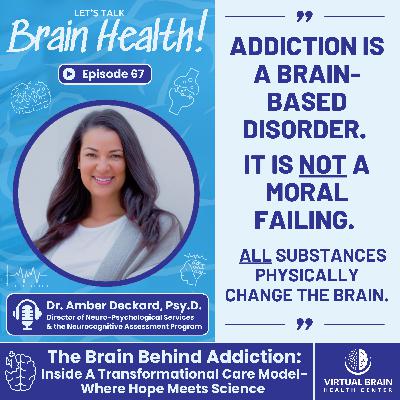
In this episode, Dr. Amber Deckard, a neuropsychologist and leader in neurocognitive assessments at Caron's neuropsychological services, shares insights into the brain-first approach to addiction treatment. She explains how viewing addiction as a brain-based disorder rather than a moral failing changes the treatment paradigm. We delve into the latest brain science, revealing how substances physically alter brain areas responsible for reward, motivation, memory, decision-making, and self-control, challenging the misconception that addiction is a moral failing. Dr. Deckard discusses the impacts of substances on brain function and the importance of a holistic, evidence-based, and multidisciplinary approach to recovery. She highlights the role of various therapeutic modalities, including neurofeedback, hyperbaric oxygen therapy, and personalized treatment planning, in supporting brain health and recovery. The episode aims to shift perspectives on addiction, emphasizing the brain's capacity for healing and the crucial role of integrated care.00:00 Introduction to the Brain First Approach00:05 Meet Dr. Amber Deckard, PsyD02:16 Understanding Addiction as a Brain-Based Disorder05:04 The Role of Family in Recovery07:38 Advanced Neurocognitive Assessment Tools13:54 Personalized Treatment Plans23:30 The Power of Neurofeedback29:12 The Comprehensive, Multimodal Approach to Brain Health33:25 Dr. Deckard's Personal Brain Care35:41 Message of Hope and ConclusionResourcesLearn more about Caron’s Neurospychological Service’s and its cutting-edge Neurocognitive Assessment Program on their website.Connect with Dr. Amber Deckard on LinkedIn.Listen to learn more about Brain HQ’s brain training program in our previous podcast episode “What the Latest Brain Training Science Means for Your Brain Health: A Conversation with the Lead Developer of BrainHQ, Dr. Henry Mahncke, Ph.D.”
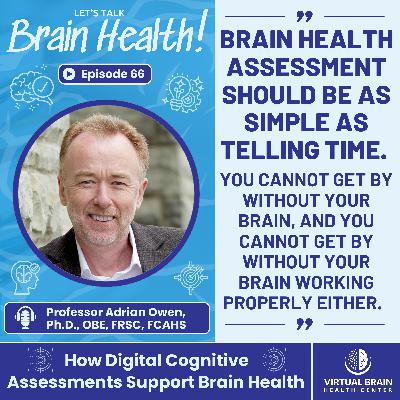
In this episode of the Let's Talk Brain Health! Podcast, we were joined by Professor Adrian Owen, a globally recognized neuroscientist, author, and Chief Scientific Officer of Creyos. The conversation delves into Professor Owen's extensive career in cognitive neuroscience, his groundbreaking research on brain function and dementia, and the innovative digital tools his team has developed to make cognitive assessment more accessible to the public. Key topics include the importance of brain health, the role of sleep in cognitive function, and practical strategies for monitoring and enhancing brain health using technology. Listeners will gain valuable insights on how to take proactive steps to care for their brains and why it's crucial to measure cognitive health accurately and consistently.The episode wraps up with actionable steps listeners can take to prioritize their brain health daily. Join this enlightening conversation to learn more about protecting and optimizing brain function at every stage of life.00:00 Introduction to Let's Talk Brain Health! Podcast00:41 Meet Professor Adrian Owen03:11 Professor Owen's Journey into Neuroscience06:37 Understanding Dementia and Cognitive Decline12:24 The Importance of Brain Health and Cognitive Assessments18:04 The Role of Technology in Brain Health27:06 Future of Neuroscience and Brain Health31:34 Actionable Steps for Better Brain Health37:24 Conclusion and Final ThoughtsResources:Learn more about Creyos' digital cognitive assessments on their website.Explore Creyos’ blog for additional resources and information.Stay in touch with Creyos on LinkedIn, Facebook, X, and YouTube. Questions? Email help@creyos.com for additional information.Read more about his book “Into the Gray Zone” and sign up for his next book’s release on August 4, 2026, “Think Before You Think: Understanding and Mastering Executive Function.”
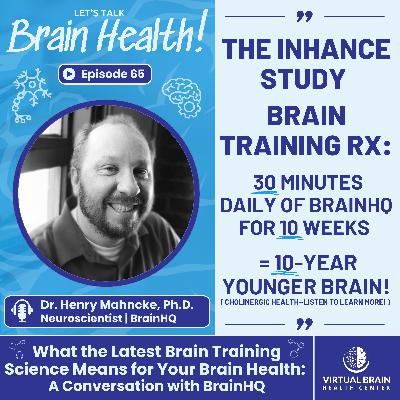
In this episode, we explore the science of brain fitness and how targeted brain training exercises can strengthen key brain systems with Dr. Henry Mahncke, Ph.D.. Dr. Mahncke shares his journey from studying neuroscience at UCSF to leading brain plasticity-based training at BrainHQ. Learn how BrainHQ’s specific brain training program can improve memory, attention, decision-making, and overall brain resilience across 300+ published research studies. Discover the profound impact of brain plasticity, the significance of the groundbreaking INHANCE study, and practical tips on incorporating brain training into your daily life. Dr. Mahncke emphasizes that brain training is not just a trend but a scientific approach to maintaining and boosting brain health. Tune in to find out how you can intentionally train your brain at any age and better understand the notion of cognitive fitness. 00:00 Introduction to Brain Fitness00:24 Meet Dr. Henry Mahncke, Ph.D.01:46 Personal Motivation and Early Career03:13 Graduate School and Discovering Brain Plasticity05:40 The Concept of Brain Fitness09:19 Brain HQ: The Science Behind Brain Training11:02 Understanding Brain Fitness and Training20:50 The Enhanced Study and Neuromodulatory Systems24:46 Exciting Beginnings: Launching the Study25:11 Study Design: Brain HQ vs. Ordinary Games26:18 Training Regimen and Compliance26:35 Breakthrough Results: Acetylcholine Levels27:43 Beyond Brain HQ: Broader Brain Health29:56 The Importance of Intensity in Brain Training32:58 Holistic Approach to Brain Health39:45 Practical Tips for Brain Training42:45 Final Thoughts and EncouragementResourcesTry BrainHQ’s brain training exercises for free on their website.Explore the science behind BrainHQ in over 300+ research studies.Learn more about the INHANCE study’s media coverage and results in the research article.Learn more about brain health in BrainHQ’s “Better Brain Health” blog.Connect with Henry on LinkedIn.Stay in touch with BrainHQ on Instagram and Facebook.
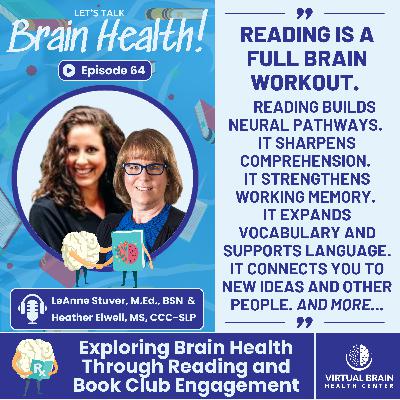
In this episode, we delve into the incredible benefits of reading for brain health with guests Leanne Stuver, a nurse educator and Director of Lifelong Learning, and Heather Elwell, CEO of Brain Health Mentors. Learn how reading stimulates multiple brain areas, enhances social connections, and supports lifelong learning. Discover the advantages of different reading formats, genres, and even how book clubs can enrich your cognitive and social wellbeing. Join us as we discuss the science behind reading, offer practical tips, and share personal favorite book recommendations. This episode is filled with insights and strategies to help you integrate reading into your brain health routine. Tune in for a comprehensive discussion on how to make reading a key component of a happier, healthier life.00:41 The Brain-Boosting Power of Reading01:09 Meet Our Guests: Leanne Stuver and Heather Elwell03:14 How Reading Impacts the Brain07:30 The Benefits of Book Clubs10:00 The Neuro Nook Book Club22:04 Books vs. Audiobooks: What Science Says26:05 Genres and Their Unique Brain Benefits34:09 Rapid Fire Book Recommendations41:03 Final Thoughts and Tips for Better Brain HealthResourcesLearn more about the Neuro Nook (Book Club)Explore the Neuro Nook (Book Club) Reading ListView Our Neuro Nook Rx Infographic
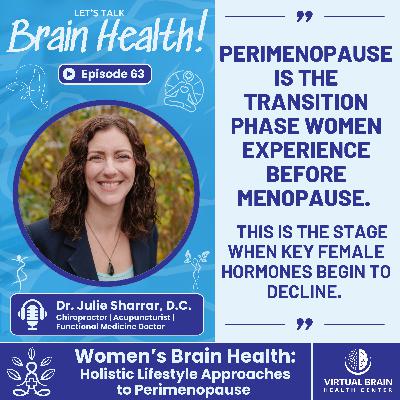
In this episode of the Let's Talk Brain Health Podcast, we delve into perimenopause, a significant yet often misunderstood life transition. Dr. Julie Sharrar, DC, a holistic healthcare practitioner specializing in chiropractic, acupuncture, and functional medicine, shares her expertise on how this phase impacts brain health, mood, memory, and overall well-being. She provides insights into common symptoms, natural support strategies like diet, sleep, and exercise, and the benefits of holistic approaches such as acupuncture. Learn the importance of recognizing and addressing these changes with practical tips and resources to help navigate this journey with confidence.00:00 Introduction to Perimenopause00:44 Meet Dr. Julie: Expert in Women's Health02:03 Understanding Perimenopause: Symptoms and Onset07:23 Lifestyle Changes to Support Perimenopause12:06 Functional Medicine and Acupuncture16:45 Practical Advice and Misconceptions20:09 Final Thoughts and ResourcesResourcesLearn more about Dr. Julie Sharrar on her website.Read more about navigating perimenopause naturally in Dr. Julie’s recent blog.Follow Dr. Julie on social media @consciouswellnessohio on Instagram and Facebook.
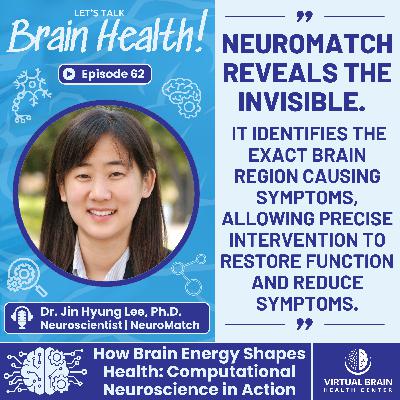
In this episode of the Let's Talk Brain Health Podcast, we are joined by Dr. Jin Hyung Lee, Ph.D., a pioneering neuroscientist, Stanford professor, and founder of LVIS Corporation. Dr. Lee introduces NeuroMatch, a groundbreaking technology that creates live digital twins of brain function to revolutionize brain healthcare. She shares her personal journey from electrical engineering to neuroscience, inspired by her grandmother's stroke, and discusses the intersection of technology and brain health. Discover how NeuroMatch can diagnose and treat conditions like epilepsy, autism, and Alzheimer's, potentially transforming the way we understand and manage brain health. Learn about the importance of sleep, preventative care, and how AI could make brain health accessible to all. Tune in to explore the future of neuroscience, AI, and personalized brain healthcare.00:00 Introduction to Dr. Jin Lee and NeuroMatch00:42 Dr. Lee's Personal Journey into Neuroscience01:25 The Intersection of Electrical Engineering and Brain Health02:49 Developing NeuroMatch: From Lab to Clinic03:52 The Future of Brain Health Monitoring05:05 How NeuroMatch Works07:33 Collaborations and Inspirations09:56 Patient Advocacy and Real-World Impact12:25 Artificial Intelligence and Energy Efficiency17:53 Future of Neuro Match in Healthcare24:41 Rapid Fire Questions and Final ThoughtsResources:Explore more about Dr. Lee and her work on her lab’s website Learn from Dr. Lee in one of her TedX talks from her websiteSee the Invisible: Innovating How Neurological Diseases Are Examined with NeuroMatch and LVIS on their websites.
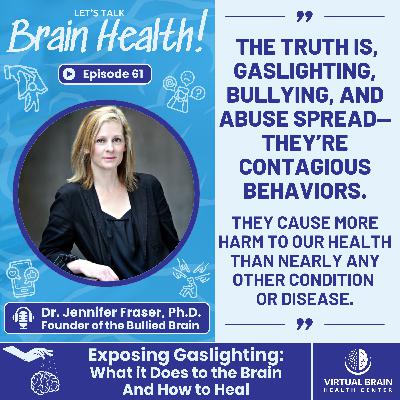
In this episode of the Let's Talk Brain Health! podcast, returning guest Dr. Jennifer Fraser, Ph.D. delves into the concept of gaslighting and its severe impact on brain health. A renowned educator and author, Dr. Fraser explains how gaslighting can manipulate individuals, causing them to question reality and suffer significant emotional harm. She references her latest book, 'The Gaslit Brain,' and provides practical insights on identifying gaslighting behaviors, advocating for legal changes, and fostering environments that combat this toxic behavior. Dr. Fraser also shares actionable steps to protect oneself from gaslighting and stresses the importance of recognizing its manipulative nature. Join us for an enlightening conversation designed to help you understand and counteract gaslighting's pervasive influence.00:00 Introduction and Guest Reintroduction01:12 Understanding Gaslighting02:48 Personal Experience with Gaslighting04:33 Gaslighting in Society and Media07:22 Impact of Gaslighting on the Brain09:25 Gaslighting in the Workplace14:33 Protecting Children and Youth from Gaslighting18:36 Gaslighting and Social Media27:00 Spotting and Stopping Gaslighting31:31 Future Work and Final ThoughtsResources:Listen to our previous podcast conversation on “Understanding the Neuroscience of Bullying & Its Impact on the Brain: A Conversation with Dr. Jennifer Fraser, Ph.D.”https://drkrystalculler.substack.com/p/understanding-the-neuroscience-of-8e3 Learn more about Jennifer and her work on her website or LinkedIn.Read more about gaslighting and bullying in recent media in Dr. Fraser’s Substack.Explore Dr. Fraser’s latest blog post on Psychology Today. Follow Jennifer’s updates on social media @bulliedbrain on Instagram and Facebook. Purchase “The Gaslit Brain” on Amazon, Barnes & Noble, Books-a-Million, and Bookshop.
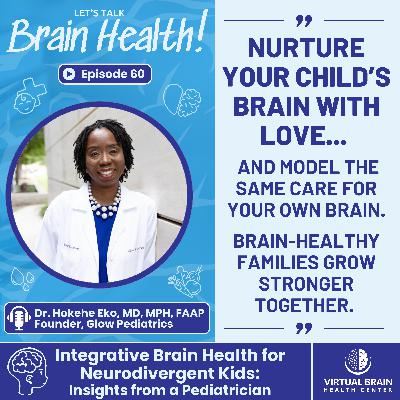
In this episode of the Let's Talk Brain Health podcast, Dr. Hokehe Eko explores the crucial role of nutrition in supporting children with ADHD and autism. A board-certified pediatrician and specialist in integrative medicine, Dr. Eko discusses the gut-brain connection, blood sugar regulation, essential nutrients for cognitive support, and practical dietary changes. Sharing insights from her personal journey and professional expertise, Dr. Eko emphasizes the importance of addressing food sensitivities and adopting healthier eating habits to improve behaviors, focus, and overall brain health in neurodivergent children. She provides actionable strategies to help families make small but impactful changes, underscoring the interconnectedness of diet, hydration, and brain health.00:00 Introduction to Nutrition and Integrative Medicine00:24 Meet Dr. Hokehe Eko, MD MPH FAAP01:45 A Personal Journey to Integrative Medicine07:24 The Gut-Brain Connection11:25 Practical Dietary Strategies for Neurodivergent Children15:56 Identifying Food Sensitivities20:43 The Importance of Hydration24:16 Debunking Myths and Final Advice28:24 Conclusion and Key TakeawaysResourcesLearn more about Glow Pediatrics on their websiteWatch Dr. Hoeke’s Tedx Talk: We must change the way we treat Children's ADHDExplore the “Brain Power Podcast” with Dr. EkoConnect with Dr. Eko on LinkedIn, Facebook and Instagram
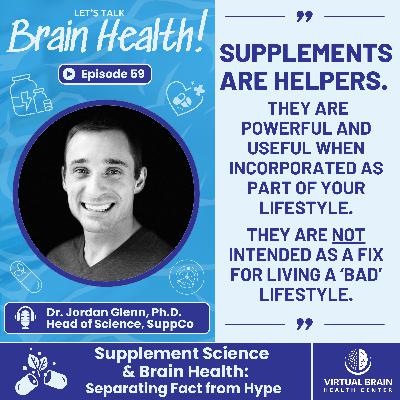
Dive into the world of supplement science for brain health with Dr. Jordan Glenn, PhD. In this episode, we explore the efficacy of various supplements, debunk common myths, and discuss how to make informed, personalized choices for your brain health. Dr. Glenn shares insights from his extensive research in exercise physiology, nutrition, and aging, highlighting key supplements like creatine, omega-3s, and curcumin. Learn about the importance of evidence-based decisions, the role of rigorous supplement testing, and how SuppCo’s trust score can guide you in choosing the right products. Tune in to understand the science, safety, and benefits of brain health supplements.00:00 Introduction to Supplement Science00:22 Meet Dr. Jordan Glenn, Ph.D.01:09 Journey into Supplement Science03:37 The 2014 Study on Supplement Habits06:06 Personalized Supplementation Explained09:14 Spotting Credible Science vs. Hype14:03 Effective Supplements for Brain Health24:18 The Importance of Third-Party Testing29:06 SuppCo's Role in Supplement Evaluation32:42 Final Thoughts and TakeawaysResources:Read more about the research study that Dr. Glenn dubbed “the most important supplement study you’ve never heard of” on his Substack post. Connect with Dr. Jordan Glenn, Ph.D. on LinkedIn or follow his writing on Substack.Learn more about SuppCo on their website.Explore a recent summary of a brain health supplement study that explored marketing labels titled, “What 4,400 People Just Proved About Supplement Labels (and Why It Matters for You)” or access the full research article on “Label Statements and Perceived Health Benefits of Dietary Supplements”
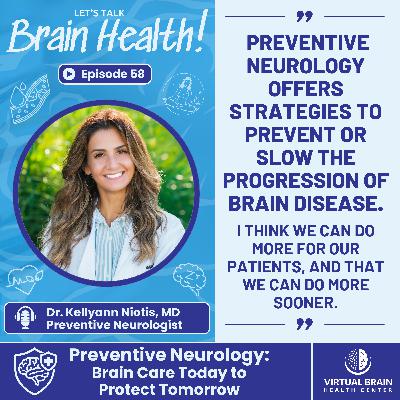
In this episode of the Let's Talk Brain Health Podcast, we welcome Dr. Kellyann Niotis, MD, the world’s first fellowship-trained preventive neurologist, who shares her insights on early detection and risk reduction for neurodegenerative diseases, including Alzheimer's disease, Parkinson's disease, and Lewy body dementia. Dr. Niotis discusses the emerging field of preventive neurology, the role of blood biomarkers and genetic testing, and the importance of lifestyle choices in maintaining brain health. She also highlights the impact of cholesterol management, sleep studies, and the significance of personalized care approaches. Join us as we dive into a comprehensive discussion about the future of brain health and the proactive steps we can take today for healthier brains tomorrow.00:00 Introduction to Dr. Kellyann Niotis, MD02:47 What is Preventive Neurology?06:08 The Role of Biomarkers in Early Detection13:52 Lifestyle Modifications and Brain Health17:12 Cholesterol and Brain Health24:15 The Impact of Statins on Cognition26:05 Underutilized Tools in Brain Health30:11 Rapid Fire Questions and Final ThoughtsResourcesConnect with Kellyann on Instagram @drkellyannniotis Visit her website and learn more about her new clinic on their websiteResearchLearn more about the research-informed brain health risks mentioned in this episode from the “Dementia prevention, intervention, and care: 2024 report of the Lancet standing Commission” ReportRead more about Dr. Lisa Misconi’s research on how estrogen receptors are unregulated in perimenopause in this research article
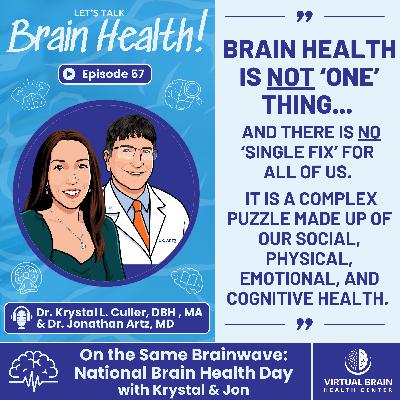
In this episode, hosts Krystal and Jon reconvene after a summer brain break to reflect on their journey of hosting the Let's Talk Brain Health! podcast over the past two years. They revisit the origins of the podcast, which was initiated by their mutual interest in brain health and a desire to share insights. The episode covers a diverse range of topics, notable guests, and the broad audience they've engaged with to date. Key themes include lifestyle interventions for brain health, the importance of early conversations about cognitive health, and the role of holistic wellness practices. The hosts also discuss emerging trends and future topics, emphasizing the continuous evolution in brain health research and practical applications for everyday life. They conclude by inviting listeners to contribute their topic suggestions and wish them a Happy National Brain Health Day (September 15)! The podcast returns to its regular bi-weekly schedule starting Wednesday, October 1.00:00 Welcome Back to Let's Talk Brain Health!00:24 The Origins of Our Podcast Journey02:38 Reflecting on Memorable Episodes and Guests08:38 Listener Engagement and Global Reach12:32 Insights from Recent Brain Health Research25:23 Future Directions and Upcoming Topics30:25 Wrapping Up and Looking AheadResources:Email us at podcast@virtualbrainhealthcenter.com with brain health topics you’d like us to explore in future episodes.Learn more about Dr. Dean Ornish’s research study in our previous podcast conversation with him.Link to the Alzheimer’s Association Brain Health Pointer Study Infographic- View it hereConnect with Krystal on Substack for weekly brain health updates and her work at the Virtual Brain Health CenterConnect with Jon on LinkedIn
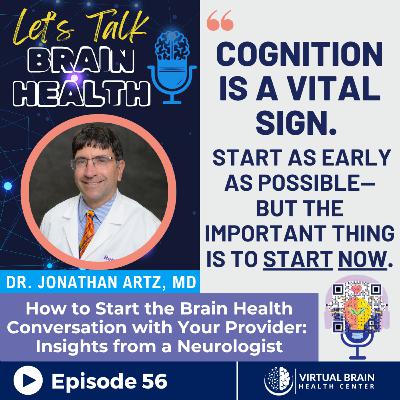
In this episode of the Let's Talk Brain Health! Podcast, co-host Dr. Jonathan Artz, MD, an experienced neurologist, shares his extensive background and insights on cognitive health. Dr. Artz discusses his journey from medical school through various specializations, ultimately focusing on cognitive disorders and dementia. He emphasizes the importance of early conversations about brain health, lifestyle modifications, and the role of primary care providers in initial evaluations. Dr. Artz also outlines key factors affecting brain health, the limitations of current medications, and common misconceptions about cognitive diseases. Listeners are encouraged to engage in preventive measures actively and have detailed discussions with healthcare providers about any cognitive concerns.**Recorded live on March 10, 2025, during our Brain Week 2025 events and adapted to this podcast episode.**00:00 Welcome and Introduction to Dr. Jonathan Artz00:37 Dr. Arts' Educational and Professional Journey02:01 Establishing a Cognitive Program at Kaiser Permanente02:45 Transition to Renown Institute of Neurosciences04:06 Common Questions About Brain Health04:24 The Role of Primary Care in Cognitive Health06:48 Key Information to Share with Healthcare Providers13:53 Importance of Sleep and Other Factors16:27 When to Start the Conversation About Cognitive Health22:42 Red Flags and Immediate Actions for Brain Health26:26 The Prevalence of Brain Health Supplements27:01 Importance of Disclosing Supplements to Healthcare Providers28:26 Common Cognitive Concerns and Symptoms28:46 The Significance of Memory and Learning Issues29:21 Understanding Speech and Language Problems29:32 When to Seek Medical Attention for Cognitive Issues32:43 The Role of Neurologists in Cognitive Health33:14 The Importance of Patient History in Neurology33:45 Encouraging Open Communication with Healthcare Providers35:31 Practical Tips for Cognitive Wellbeing35:53 The Impact of Lifestyle on Brain Health41:50 The Role of Social Interaction in Cognitive Health42:52 The Risks of Smoking and Other Substances48:34 The Complexity of Diagnosing Dementia51:31 Current Treatments and Their Limitations56:52 The Importance of Lifestyle in Managing Cognitive Health57:25 Conclusion and Encouragement to Start the Conversation"Twelve Questions to Ask Your Doctor For Better Brain Health" Conversation Starters from the American Academy of Neurology Explore additional podcast conversations in our library of 30-minute conversations with the experts on a wide variety of topics, from nutrition to oral health
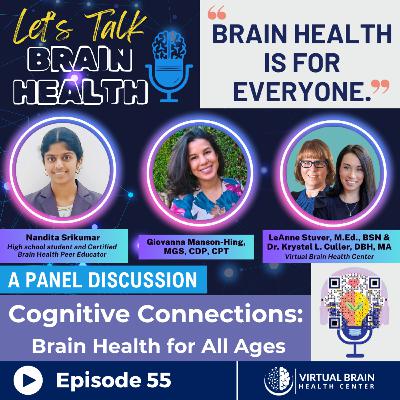
🧠 Episode Overview:In this special panel discussion, we explore why brain health matters at every age. Join host Dr. Krystal Culler and three expert guests—LeAnne, Nandita, and Giovanna—for a vibrant, age-inclusive conversation spanning childhood through adulthood. You’ll walk away with fresh insights, surprising truths, and practical strategies to support brain health across the lifespan.🎧 Tune in to discover:Why brain development and care are critical at every life stage—from kids to adultsWhat everyone should know about the brain, including tips on sleep, stress, and neuroplasticityMyths we need to bust (no, brain health isn’t just for older adults!)A rapid-fire round of actionable tips across the five pillars of brain health:🔹 Movement🔹 Nutrition🔹 Sleep🔹 Emotional Well-being🔹 Cognitive FitnessPowerful takeaways and messages of hope for every listener, no matter your age💬 Perfect for:Parents, educators, students, caregivers, health professionals, and anyone curious about protecting and improving brain health from childhood to adulthood.00:00 Introduction to Brain Health for All Ages00:47 Brain Health in Children (Ages 5-9)04:51 Brain Health in Teens (Ages 11-18)08:17 Brain Health in Youth (Ages 18-39)11:08 Brain Health in Adults and General Discussion13:25 Risk Factors and Protective Factors for Brain Health26:58 Debunking Brain Health Myths33:16 Debunking Brain Health Myths for Youth34:05 Understanding Nutrition for Brain Health35:43 Brain Health Tips for Adults and Older Adults39:05 Practical Brain Health Strategies: Movement43:05 Practical Brain Health Strategies: Nutrition46:42 Practical Brain Health Strategies: Sleep50:44 Practical Brain Health Strategies: Emotional Wellbeing54:35 Practical Brain Health Strategies: Cognitive Fitness57:12 Final Takeaways on Brain Health**Recorded live on March 12, 2025, during our Brain Week 2025 events and adapted to this podcast episode.** Panelists:Kids: LeAnne Stuver, M.Ed., BSN, Director of Lifelong Learning at the Virtual Brain Health CenterTeens: Nandita Srikumar, Founder of Cognitive ConnectionsYouth: Giovanna Manson-Hing, MA, CDP, CPT, Adults: Dr. Krystal L. Culler, DBH, MA, Founder of the Virtual Brain Health Center🧠 Brain Health Resources by Age GroupTeens:Cognitive Connections – Learn more about Nandita's work, teen brain tools, and her podcast:Website | LinkTreeMy Teenage Brain – Dr. John Coleman shares 10 essential insights on the adolescent brain:Read PDFYouth (18–39):NextGen Brain Health Study – A global research initiative on young adult brain health:Study WebsiteLancet Public Health Article – Research spotlight on dementia prevention in young adults:Read ArticleHFC's Youth Movement Against Alzheimer’s – Activating youth for stigma reduction and education:YMAA Program | Free Youth CoursesAdults:Brain Health Basics – Browse infographics for everyday brain health tips:View LibraryLancet Commission 2024 – Hopeful updates on dementia prevention and care:View ReportVirtual Brain Health Center Directory – Curated tools, programs, and expert resources:Explore DirectoryLet’s Talk Brain Health Podcast – Expert interviews on topics from hearing to nutrition:Listen Here
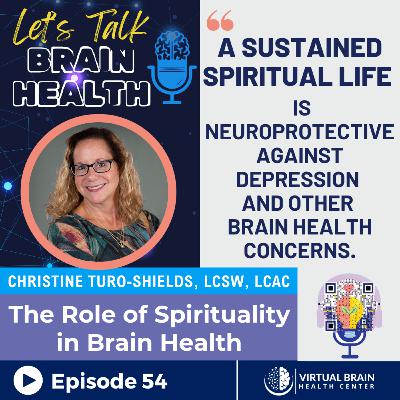
In this episode of the Let's Talk Brain Health! podcast from the Virtual Brain Health Center, we explore how spiritual health supports brain health with guest Christine Turo-Shields. Christine, a licensed clinical social worker and addictions counselor, shares how she integrates spirituality into trauma care and highlights the role of spiritual practices in healing and building resilience.Discover the profound connection between spirituality and brain health as Christine shares her insights on the importance of integrating faith and spirituality into mental well-being, especially for trauma survivors. Gain valuable strategies for nurturing spiritual health, including meditation, prayer, and mindfulness practices.Explore how these practices can lead to emotional resilience and cognitive wellness. Tune in for an inspiring conversation and practical tips to enhance your brain health journey.00:45 Meet Christine Turo Shields02:32 Blending Spirituality with Clinical Practice04:18 Defining Spiritual Health07:05 Research on Spiritual Health and Brain Health15:01 Practical Strategies for Spiritual Health21:28 The Power of Spiritual Health & Healing24:58 Final Thoughts and Resources34:53 ConclusionResources: Learn more about Christine and her practice on their website. You can also connect with them on Facebook, Instagram, LinkedIn, and YouTube.
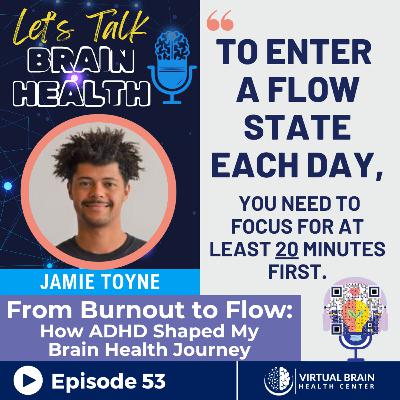
What if the key to better focus, less burnout, and sharper brain health was flow?In this inspiring episode of Let’s Talk Brain Health!, former professional athlete and ADHD advocate Jamie Toyne shares how discovering the science of flow transformed his life—and how it can do the same for you.Jamie explores what it takes to enter a flow state, why it’s essential for cognitive performance, and how small shifts in your daily routine can help you get “in the zone” more often. He also shares practical tools to reduce distractions, improve focus, and build habits that support your brain’s natural rhythm.Whether you're seeking more clarity, energy, or creativity, this episode offers actionable strategies to help you tap into your brain’s full potential through flow.00:00 Introduction & Jamie's ADHD Journey03:03 Discovering Flow Through Tennis06:30 Burnout and the Quest for Flow08:56 The Science and Practice of Flow14:28 Creating Flow in Daily Life18:50 Addressing Burnout and Self-Care25:17 Rapid Fire Questions and ConclusionResourcesLearn more about Jamie’s coaching and consulting services on his websiteExplore the factors that may be blocking you from flow with his free tool
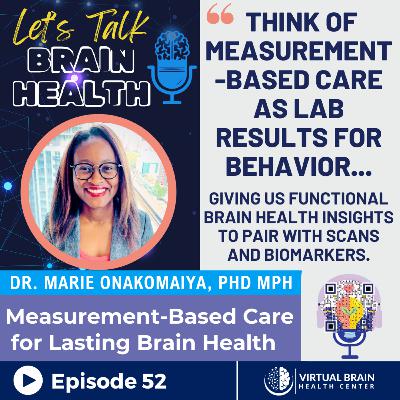
In this enlightening episode of the Let's Talk Brain Health podcast, we are joined by Dr. Marie Marie Onakomaiya, PhD, MPH, a distinguished neuroscientist and CEO of Metric Health. Marie shares her journey from her academic pursuits to her groundbreaking work in AI-driven assessment platforms for brain health. She discusses the importance of measurement-based care, how personalized data collection can revolutionize brain injury recovery, and the transformative potential of bringing advanced assessments to more people globally. Gain valuable insights on the future of brain health, patient empowerment, and the role of technology in healthcare from an expert dedicated to making a meaningful impact. Tune in to learn how technology can empower patients, provide better data to healthcare providers, and ultimately improve outcomes for individuals with brain injuries.00:00 Introduction to Dr. Marie Onakomaiya, PhD, MPH01:23 Inspiration Behind Metric Health03:14 Understanding Measurement-Based Care04:38 Traditional vs. Modern Brain Health Assessment07:55 The Role of Self-Advocacy in Brain Health11:04 Challenges in Brain Injury Recovery17:20 Personalized Medicine and Brain Health19:58 Future of Brain Health Assessment25:32 Practical Advice and Resources28:46 Final Thoughts and TakeawaysResources:Learn more about Metric Health on their website.Interested in learning more about Virtual Reality and its use to improve brain health? Check out our podcast episode with Amir Bozorgzadeh, CEO and co-founder of VirtuLeapBeta Testing InformationExpress interest in joining the beta test group to help inform the future of brain care injury.Have you ever had a concussion or brain injury? You can be part of an evolution in brain injury care by joining Metric Health's beta launch. Designed to make follow-up care less frustrating and more personalized, Metric Health's new app is an alternative to “go home and rest” when that is not enough. With easy-to-use, scientifically valid assessments and personalized insights into your brain health, you can communicate more effectively with your healthcare providers. Sign up for the waitlist today and get early access to a better way to manage your recovery.
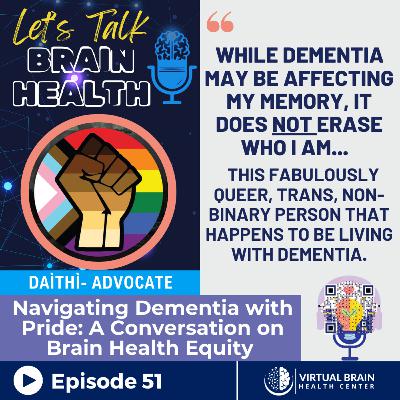
**If you’re looking for supportive LGBTQI+ communities or want to connect further with today’s speaker, we’re here for you. Reach out anytime at podcast@virtualbrainhealthcenter.com—we’d be happy to guide you in the right direction!**In this podcast episode, we welcome Daìthì, a passionate advocate diagnosed with young-onset dementia in 2015, whose advocacy highlights the intersection of dementia care and LGBTQI+ rights, particularly for trans and non-binary individuals. Daìthì shares their personal journey, emphasizing their unwavering identity and the importance of inclusive research and services across several countries. They discuss the challenges faced by LGBTQI+ individuals with dementia, their advocacy work, and their involvement in various projects and conferences aimed at greater visibility and inclusion. The conversation also touches on misconceptions about dementia erasing identity and the necessity of identity-affirming care for brain health. Daìthì highlights the importance of personal directives, community, and the ongoing fight against exclusion. The episode concludes with a powerful call to action: listen, educate, and advocate for trans and non-binary individuals living with dementia.00:00 Introduction to Daìthì 02:40 Personal Journey and Identity04:19 Defining Moments and Challenges06:01 Misconceptions About Dementia and Identity08:30 Importance of Identity-Affirming Care16:50 Advice for Navigating Dementia Care22:19 Future of Inclusive Dementia Care29:44 Final Thoughts and Call to ActionLearn more and take action with resources from some key organizations:SAGE (Services & Advocacy for LGBTQ+ Elders)Opening Doors London (focused on LGBTQ+ aging)Alzheimer’s Europe’s LGBTQ+ working groupDEEP Network’s LGBTQ+ initiatives and support groupDementia Engagement & Empowerment Project (DEEP)Mens & Zorg, where Tommy Sierens is working on inclusive palliative careThese organizations are actively making a difference in how dementia care intersects with LGBTQ+ identities.
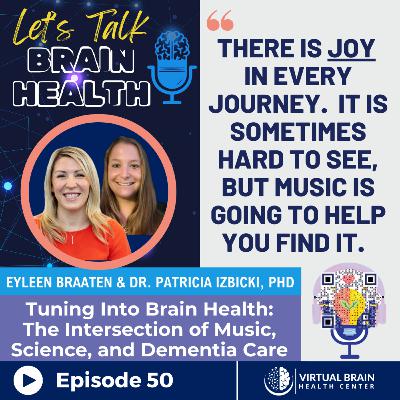
In this episode of the Let's Talk Brain Health Podcast from the Virtual Brain Health Center, expert host Dr. Krystal Culler engages with two distinguished guests, Dr. Patricia Izbicki and Eyleen Braaten, to explore the intersection of music and brain health. Dr. Izbicki, a neuroscientist and musician, and Eyleen, the Executive Director of the Giving Voice Chorus, discuss the profound impact of music on cognitive health, emotional well-being, and social connectivity. They share insights from scientific research and real-world applications, emphasizing how group singing can significantly benefit individuals, especially those living with dementia and their care partners. The episode highlights the transformative power of music in fostering joy, community, and cognitive resilience, urging listeners to embrace music in their daily lives.00:00 Introduction to Brain Health00:45 Meet Our Special Guests02:59 Patricia's Journey into Music and Neuroscience03:58 Eileen's Passion for Music and Brain Health04:53 The Science Behind Music and the Brain08:23 Benefits of Singing and Choir Participation10:25 The Giving Voice Initiative14:45 Transformative Stories from Giving Voice25:34 Long-term Benefits of Music on Cognitive Health30:00 Final Thoughts and TakeawaysResources:Learn more about the Giving Voice Chorus on their website.Explore more of Dr. Patricia Izbicki’s science writing on her website.

Comments

Download from Google Play

Download from App Store
 United States