


 Claim Ownership
The Tudor Chest Podcast
Subscribed: 132Played: 5,080
Subscribe

© The Tudor Chest
Description
The Tudor Chest - The Podcast is a brand new podcast series from the popular Instagram and blog - The Tudor Chest. Episodes will feature historian and author, Adam Pennington, creator of the Tudor Chest Platform, as well as guest appearances by notable historians and fellow authors. Episodes will be released weekly, with a focus not solely on Tudor history, but also the Plantagenets and current royal family news.
129 Episodes
Reverse
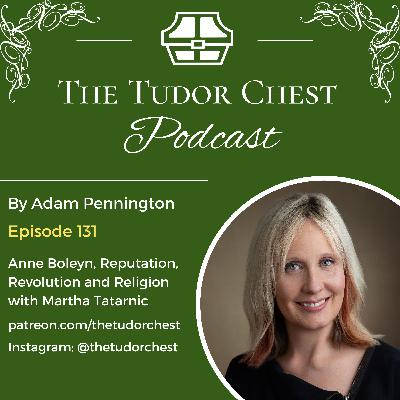
For centuries, Anne Boleyn has been cast, in certain quarters, as a power hungry manipulator who schemed to become queen of England. The story, when one digs a bit deeper, is far more complex. In truth, Anne Boleyn was a queen who used her power and influence to shape the English reformation and transform Europe’s political and religious landscape. To discuss all of this with me, I am pleased to welcome onto the podcast for the first time, Martha Tatarnic whose upcoming book, Anne Boleyn, Reputation, Revolution, Religion and the Queen who Changed History, acts as the basis for our conversation, so stay tuned to find out how Martha’s fresh takes challenge assumptions made about one of the most infamous women in history.
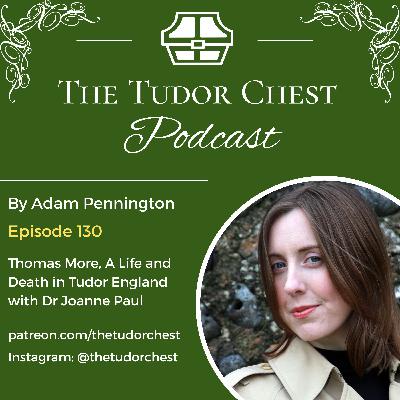
Sir Thomas More is one of the most famous men of the 16th century. A figure of colossal significance at the court of King Henry VIII, a figure who stood up to the king, always remaining loyal but unable to accept the royal supremacy, a decision which would cost him his life. Today, I am pleased to welcome back onto the podcast historian Dr Joanne Paul for a discussion on Thomas More, following the recent release of Joanne’s incredible book, Thomas More, A Life and Death in Tudor England. From Thomas’s early life to his own involvement in the torture and burning of protestants through to his trial and how he was set up by Richard Rich, all will be discussed, so settle in as we explore the life of the man who's last words were "I die the kings good servant and gods first".
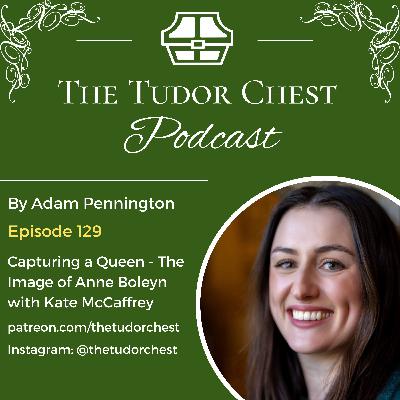
A brand new exhibition, Capturing a Queen: The Image of Anne Boleyn, was unveiled at Hever Castle, the childhood home of Anne Boleyn opened a few weeks ago, and rather than presenting a single “definitive” portrait, it showcases dozens of competing images—some painted decades after Anne’s death—each shaped by politics, propaganda, and cultural memory. To discuss the exhibition with me today, I am thrilled to welcome one of its curators, Kate McCaffrey onto the podcast for the first time. We discuss the different images included, some amazing new artefacts and much more, so settle in as Kate and I explore the image of Anne Boleyn.
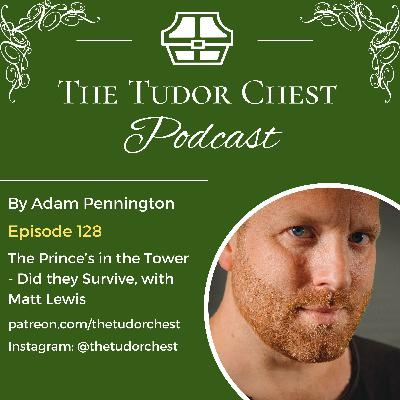
It is undoubtedly the biggest royal mystery of all time - the whereabouts of the two missing princes in the tower, or to be more accurate, the missing king and prince in the tower. The two teenage boys who vanished during the reign of King Richard III, or did they? Well to discuss this story, I am beyond thrilled to welcome historian and broadcaster Matt Lewis onto the podcast for the very first time. Matt is utterly convinced that the princes in the Tower were not killed by their uncle, but instead escaped and went on to challenge King Henry VII for the throne. So, what is the story, what is the evidence and can he convince me to join his side of the argument?
The Tudors were prolific builders, from grand palaces such as Hampton Court Palace and Greenwich to imposing castles, small townhouses and narrow cobbled streets with black and white timber structures jutting out at odd angles. Sadly, many of the great sites of Tudor England are now either greatly reduced or completely lost, but what happened in them is not. Today, I am pleased to welcome back onto the podcast my friend Dr Sarah Morris, for a discussion all about her very favourite topic - Tudor buildings. Sarah has an encyclopaedic knowledge of practically every Tudor building in the UK, including many that people have never heard of but can still be visited, so stay tuned to find out some of the secrets and lesser known locations and stories from the myriad Tudor buildings spread across Great Britain!
One of the most fascinating but perpetually overlooked figures from the world of the Tudors is Margaret Douglas, Countess of Lennox. As the sole daughter of Margaret Tudor, Queen of Scotland, Margaret Douglas was a niece of King Henry VIII and first cousin to his three children. Her life was spent in the shadows of the Tudor world, and she found herself getting on the wrong side of her relatives on several occasions, resulting in several stints as a prisoner in the tower of London, so, what was her story? Well to discuss Margaret and her fascinating life, I am pleased to welcome back historian and author Beverley Adams onto the podcast for a discussion inspired by her book, The Forgotten Tudor Royal, Margaret Douglas, Grandmother to King James VI and I
Mary, Queen of Scots is one of the most famous women in British history, known best for the dramatic nature of her execution at the hands of her cousin Queen Elizabeth I. What is less well known is the story behind Mary’s nearly twenty year imprisonment, during which time she was moved all over England, in increasingly worse conditions. To discuss this window of Mary’s life and all of the complexities that went with it, I am pleased to welcome historian Rosemary Goring onto the podcast for the first time, for a discussion based on her latest book, Exile, The Captive Years of Mary, Queen of Scots.
She is known, thanks to Shakespeare as the “She Wolf” of France, an evil queen who bullied the men around her, personally authorised the execution of the duke of York and laughed as a paper crown was nailed to his head. I am speaking of Margaret of Anjou, the wife and queen of King Henry VI. The question is, was Margaret in any way like the infamous caricature Shakespeare created? Well to help answer that question for me, I am pleased to welcome back onto the podcast the amazing Dr Elizabeth Norton, who will share her take on this fascinating woman who has for far too long been unfairly maligned.
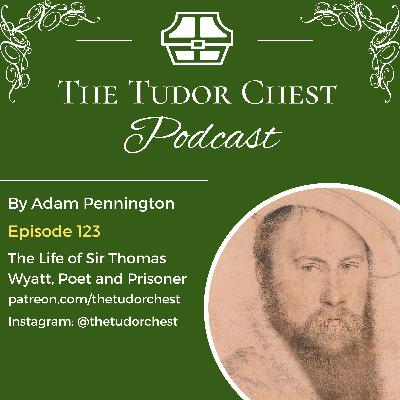
Sir Thomas Wyatt was more than a courtier with a gift for words. He was a man whose life unfolded against the turbulent backdrop of Henry VIII’s reign — a world of shifting alliances, dangerous intrigue, and sudden reversals of fortune. Though best remembered today for introducing the sonnet into English literature, Wyatt was also a diplomat, a one time prisoner of the Tower of London, and a figure whose personal story has long been entangled with that of Anne Boleyn. Thomas’s life shows us a vivid window into the volatile world of Tudor England, so lets explore his story!
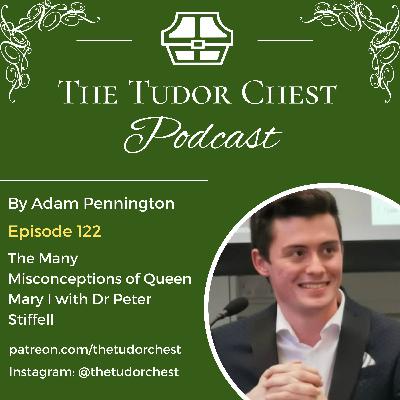
Queen Mary I is England’s first true queen regnant, and yet her reign is invariably considered a mere blip in the wider Tudor story, a short lived window in which an intolerant zealot went around burning people alive with undiluted pleasure. The truth is, of course, far more complex. Many misconceptions surround Queen Mary I, and so to unpack them I am pleased to welcome back Dr Peter Stiffell onto the podcast. From his annoyance at the term Mary Tudor, to Mary’s own commitment to the good treatment of her household, to one of the most controversial topics, Mary’s pregnancies, in this episode we will uproot much of what people think they know of Mary’s reign, and so prepare to hopefully have some of your opinions altered!
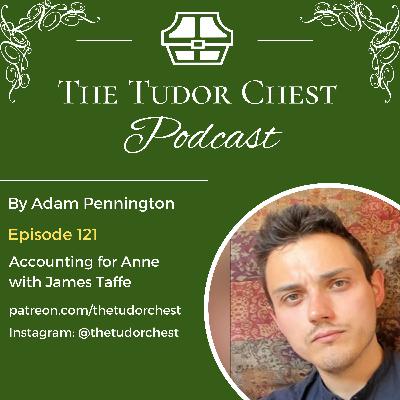
Given the brevity of her time as queen of England, we often overlook the fact that Anne of Cleves was indeed that, a queen, and thus her tenure came with all of the benefits, mores and facets of queenship just as much as it did for the many other queens of Henry VIII. We seldom explore what kind of queen she was, how did she spend her money, was she a good landlady, was she a good queen?! Well to discuss all of this and more, I am pleased to welcome back James Taffe onto the podcast for a discussion based on his latest book, Accounting for Anne, The Tudor Queen who could have been, so, settle in to find out precisely what kind of queen she was!
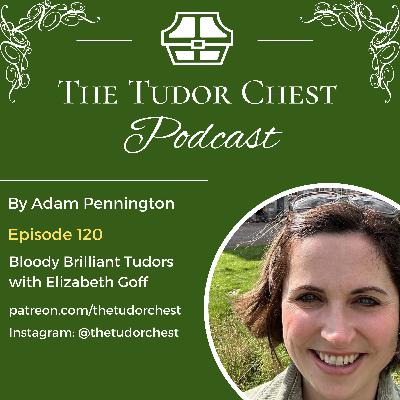
The Tudors are perhaps our most famous royal dynasty, everyone knows that Henry VIII had six wives and that he had two of them made a head shorter, we all know Lizzie the first loved fashion and spent loads, or did she, was it in fact another queen for whom the term shopaholic would apply? Today, I am pleased to welcome back historian Elizabeth Goff onto the podcast for a discussion based around her very first book, coming out next month, Bloody Brilliant Tudors, 100 tales of gowns, gossip and gory ends. Sadly we can’t cover 100 stories, and so I hand picked 20 to discuss, from the surprising role the groom of the stool performed to two of Jane Seymour's ladies in waiting turning up for work in completely the wrong clothes to Elizabeth I stuffing her cheeks with silk, all will be discussed, so settle in for a thoroughly fun jaunt through some of the more random or overlooked parts of our favourite and often bonkers royal dynasty!

In this, the first episode of the year I am pleased to be welcoming Craig Lightoller onto the podcast for the first time. Craig is a historical re-enactor and a playwright. He is here today to speak about his upcoming play, The Falcon’s Last Flight, in which Craig will play King Henry VIII. This play dares to ask the question, what would a conversation between Henry VIII and Anne Boleyn on the eve of Anne’s execution have looked like. Playing Anne Boleyn opposite Craig is Karen L Davies. In this chat, Craig explains the basis for the play, what viewers can expect to see, how it strips away king and queen, refocusing them as two human beings whose legendary relationship altered the course of history.
It’s the most wonderful time of the year, and so it was for the Tudors as well. Yes, its Christmas, and so I thought it would be the ideal opportunity to examine how the Tudors spent the most festive time of year. To join me, I am pleased to welcome back Tudor food and gardening historian, Brigitte Webster onto the podcast. She and I examine how the Tudors decorated the home, from the poorest of subjects right up to the royal family, we look into some of the major foods popular across the Tudor period, explore some traditions and also delve into what aspects of Tudor Christmas are still very much part of the way we celebrate today!
Most of us can agree that Anne Boleyn was perhaps the most controversial woman to ever sit on the throne of England, but, her life has rarely been examined through a legal lens, until now. Today, historian Heather explains why religious reform and the break from Rome not only predate Anne Boleyn but the Tudors all together, why and how Anne Boleyn regularly broke the law and, perhaps most interestingly of all, why Heather firmly believes that even if Anne Boleyn had given birth to a son, that Henry would still have got rid of her, and that it would have been death. Controversial I know, but carry on listening to find out why.
Reginald Pole started out as a man who Henry VIII sponsored and celebrated, but soon turned on the king, becoming an outright and vocal critic of his all too bloody reign. To discuss Reginald with me, I am pleased to welcome historian Dr Helen Hyde onto the podcast for a discussion based around her recent book, The King’s Traitor, Reginald Pole and the Tudors. We explore Reginald's early life, his position as an arch enemy of Henry VIII, his very close bond to Queen Mary I and even his friendship with none other than Michelangelo himself!
The de la Pole family were one of the great noble houses of Tudor England, who awkwardly possessed a big dollop of York royal blood, tracing direct descent from Elizabeth of York, a sister of Kings Edward IV and Richard III. It was the de la Pole family whom Richard III intended to be his successors, and would in turn become figureheads of rebellion against the Tudors. Today, I am pleased to welcome historian and author Richard Anderton, onto the podcast, for a discussion based on his latest book, The Last Yorkists, Edmund and Richard de la Pole. We discuss these two brothers lives, early days, their connections to the other noble houses, their roles in rebellion against the Tudors and of course, how this would, inevitably, lead to their destruction.
The rule of the Plantagenets saw an unbroken line of fourteen kings reign over 300 years, but while these kings are undeniably interesting, often it is their wives, the queens of the medieval period who command the attention, I'm talking of histories she wolves, Eleanor of Aquitaine, Isabella of France and Margaret of Anjou, and as such, I am thrilled to welcome back the woman who wrote the book and fronted the series dedicated to histories she wolves, Dr Helen Castor, who joins me to discuss these three remarkable queens.
An aspect of Tudor history seldom discussed or, perhaps more accurately, all but ignored, is the role black people living and working in England across the 16th and 17th centuries. Today, to unpick the stories of some of Tudor England’s African population, I am pleased to welcome Dr Miranda Kaufmann onto the podcast for a discussion based around her book, Black Tudors, The Untold Story. We look at the stories of several figures from the time, including John Blanke, a black trumpeter for whom a contemporary image exists, to Diego the Circumnavigator, who helped Sir Francis Drake explore the globe, to Cattelena of Almondsbury, who livid in the Tudor countryside and made her way in the world owing to her most prized possession, a cow!
I was due to be speaking to Dr Helen Castor this week, but sadly that episode is being delayed by a couple of weeks. A follower wrote to me recently asking me whether I would do an episode telling people about my own story. How I came to do what I do now, what are my own historical opinions etc., and so I thought, well, why not! So, here it is, your chance to get to know me, the man behind the podcast, a bit better.

Comments

Download from Google Play

Download from App Store
 United States