


 Claim Ownership
UAR Remixed
Subscribed: 4Played: 18
Subscribe

© Urban Affairs Review
Description
UAR Remixed is the companion podcast to Urban Affairs Review, an academic journal focused on urban politics. We interview scholars, practitioners, activists, and more about urban life, culture, political economy, and history. Check out our website for more information, show notes, transcripts, and more: https://www.urbanaffairsreview.com/uar-remixed
Hosted on Acast. See acast.com/privacy for more information.
34 Episodes
Reverse

COMING SOON! In this four-part series on cities and technology, we speak with six scholars about their research and perspectives on the role of technology in urban politics and culture. Stay tuned for the first episode, coming SEPTEMBER 5th.Music by Blue Dot Sessions Hosted on Acast. See acast.com/privacy for more information.
In this first installment of a four-part series, we spoke with six scholars about how they think about technology in relation to the city and the urban. We drill into the etymology and anthropological implications of how technology really operates in our daily lives, and preview some of our discussions in the series. We could have created an entire show focused on this topic! But instead, we’re taking a wide-angled and ecumenical approach to general topics in urban studies. We hope to expose scholars, students, and practitioners of urban studies to diverse research methods and approaches to these themes. Visit our website for a full reading list.Guests: David Banks, SUNY, University at Albany Ryan Burns, University of Calgary Ayonna Datta, University College London Shannon Mattern, University of Pennsylvania Erin McElroy, University of Washington John Stehlin, University of North Carolina at Greensboro Credits: Many thanks to the Lindy Institute for Urban Innovation at Drexel University, the managing editors at Urban Affairs Review, and our guests for sharing their time and insights with us. The show’s music is “Hundred Mile” by K2, courtesy of Blue Dot Sessions. Producer and sound engineer: David Weems, Drexel University Executive Producer and writer: Emily Holloway, Associate Managing Editor, Urban Affairs Review. Hosted on Acast. See acast.com/privacy for more information.
In part two of this four-part series on cities and technology, we turned our attention to smart cities. This concept gained some traction over the last decade as a technocratic solution to urban problems. Through the use of open data, widespread surveillance systems, and various digital data-generating tools, the smart city promised an apolitical suite of practices that could improve and optimize city governance and life. But as we learned in Part One, nothing about technology is politically neutral. We speak with four different scholars on their work in the smart cities arena and how it intersects with postcolonial critique, economic development, and the politics of open data. Visit our website for more information and a reading list.GUESTS David Banks, SUNY, University at Albany Ryan Burns, University of Calgary Ayonna Datta, University College London Shannon Mattern, University of Pennsylvania Erin McElroy, University of Washington John Stehlin, University of North Carolina at Greensboro CREDITS Many thanks to the Lindy Institute for Urban Innovation at Drexel University, the managing editors at Urban Affairs Review, and our guests for sharing their time and insights with us. The show’s music is “Hundred Mile” by K2, courtesy of Blue Dot Sessions. Producer and sound engineer: David Weems, Drexel University Executive Producer and writer: Emily Holloway, Associate Managing Editor, Urban Affairs Review. Hosted on Acast. See acast.com/privacy for more information.
Part three of our four-part series on cities and technology attempts to grapple with the urban platform, platform urbanism, and the messy consequences of implementing these approaches in cities. Is a city like a platform, or is it a platform? What kinds of data do urban platforms need to operate, and what kinds of subjects do those data make? This episode features excerpts from all six scholars in the series who untangle these threads and challenge the assumptions of tech-driven policies. GUESTS David Banks, SUNY, University at Albany Ryan Burns, University of Calgary Ayonna Datta, University College London Shannon Mattern, University of Pennsylvania Erin McElroy, University of Washington John Stehlin, University of North Carolina at Greensboro CREDITS Many thanks to the Lindy Institute for Urban Innovation at Drexel University, the managing editors at Urban Affairs Review, and our guests for sharing their time and insights with us. The show’s music is “Hundred Mile” by K2, courtesy of Blue Dot Sessions. Producer and sound engineer: David Weems, Drexel University Executive Producer and writer: Emily Holloway, Associate Managing Editor, Urban Affairs Review Hosted on Acast. See acast.com/privacy for more information.
In our final installment of this four-part cities on cities and technology, we wrap up our conversations on smart cities, urban platforms, knowledge production, and civic intelligence by exploring alternative approaches to urban transformation – analog and digital. Tune in to learn more about the Anti-Eviction Mapping Project, the changing geography of carbon economies, and what post offices and hardware stores can teach us about community. GUESTS David Banks, SUNY, University at Albany Ryan Burns, University of Calgary Ayonna Datta, University College London Shannon Mattern, University of Pennsylvania Erin McElroy, University of Washington John Stehlin, University of North Carolina at Greensboro Hosted on Acast. See acast.com/privacy for more information.
In this four-part miniseries, we spoke with six scholars whose research addresses different aspects, geographies, and approaches to analyzing and understanding the relationship between migration and urban politics and culture. After introducing our guests for the series, this episode works through the concept of the border as a mobile entity that carries very real and concrete implications. We could have created an entire show focused on this topic! But instead, we’re taking a wide-angled and ecumenical approach to general topics in urban studies. We hope to expose scholars, students, and practitioners of urban studies to diverse research methods and approaches to these themes. Each episode will be accompanied by a suggested reading list based on our discussions, and we welcome suggestions for future guests and topics!GuestsAndrew Baldwin, Durham UniversityDeirdre Conlon, University of LeedsLeslie Gross-Wyrtzen, Yale UniversityNancy Hiemstra, Stony Brook University (SUNY)David Kaufmann, ETH ZürichDomenic Vitiello, University of Pennsylvania Hosted on Acast. See acast.com/privacy for more information.
In this four-part miniseries, we spoke with six scholars whose research addresses different aspects, geographies, and approaches to analyzing and understanding the relationship between migration and urban politics and culture. This episode delves into recent debates in critical geography that explore the relationships between racism, migration, borders, and labor.We could have created an entire show focused on this topic! But instead, we’re taking a wide-angled and ecumenical approach to general topics in urban studies. We hope to expose scholars, students, and practitioners of urban studies to diverse research methods and approaches to these themes. Each episode will be accompanied by a suggested reading list based on our discussions, and we welcome suggestions for future guests and topics!GUESTSAndrew Baldwin, Durham UniversityDeirdre Conlon, University of LeedsLeslie Gross-Wyrtzen, Yale UniversityNancy Hiemstra, Stony Brook University (SUNY)David Kaufmann, ETH ZürichDomenic Vitiello, University of Pennsylvania Hosted on Acast. See acast.com/privacy for more information.
In this four-part miniseries, we spoke with six scholars whose research addresses different aspects, geographies, and approaches to analyzing and understanding the relationship between migration and urban politics and culture. In this episode, we take a multidisciplinary look at the sanctuary city with political scientist David Kaufmann and historian Domenic Vitiello, and examine the fraught concept of climate migration with Andrew Baldwin.We could have created an entire show focused on this topic! But instead, we’re taking a wide-angled and ecumenical approach to general topics in urban studies. We hope to expose scholars, students, and practitioners of urban studies to diverse research methods and approaches to these themes. Each episode will be accompanied by a suggested reading list based on our discussions, and we welcome suggestions for future guests and topics!GUESTSAndrew Baldwin, Durham UniversityDeirdre Conlon, University of LeedsLeslie Gross-Wyrtzen, Yale UniversityNancy Hiemstra, Stony Brook University (SUNY)David Kaufmann, ETH ZürichDomenic Vitiello, University of Pennsylvania Hosted on Acast. See acast.com/privacy for more information.
In this four-part miniseries, we spoke with six scholars whose research addresses different aspects, geographies, and approaches to analyzing and understanding the relationship between migration and urban politics and culture. In this episode, we’ll hear from collaborators Deirdre Conlon and Nancy Hiemstra about their decade-long project on detention economies; Leslie Gross-Wrytzen on how migration has shaped Moroccan cities; David Kaufmann on the important but fraught role of NGOs; and Andrew Baldwin raises some important and understudied questions on the relationship between urban climate migration and property.We could have created an entire show focused on this topic! But instead, we’re taking a wide-angled and ecumenical approach to general topics in urban studies. We hope to expose scholars, students, and practitioners of urban studies to diverse research methods and approaches to these themes. Each episode will be accompanied by a suggested reading list based on our discussions, and we welcome suggestions for future guests and topics!GUESTSAndrew Baldwin, Durham UniversityDeirdre Conlon, University of LeedsLeslie Gross-Wyrtzen, Yale UniversityNancy Hiemstra, Stony Brook University (SUNY)David Kaufmann, ETH ZürichDomenic Vitiello, University of Pennsylvania Hosted on Acast. See acast.com/privacy for more information.
This special series, “Political Lessons from American Cities,” is presented courtesy of Temple University Press. In this episode, you'll hear from Els de Graauw (Baruch College/CUNY Graduate Center) and Shannon Gleeson (Cornell University) about their book, "Advancing Immigrant Rights in Houston."Houston is one of the most diverse cities in the United States and has long been a prime destination for international migrants from Latin America, Asia, and more recently, Africa. However, the city is politically mixed, organizationally underserved, and situated in a relatively anti-immigrant state. This makes Houston a challenging context for immigrant rights despite its rapidly diversifying population.Els de Graauw and Shannon Gleeson recount how local and multi-level contexts shape the creation, contestation, and implementation of immigrant rights policies and practices in the city. They examine the development of a city immigrant affairs office, interactions between local law enforcement and federal immigration enforcement officials, local public-private partnerships around federal immigration benefits, and collaborations between labor, immigrant rights, faith, and business leaders to combat wage theft.The case study of Houston provides a bellwether for how other U.S. cities will deal with their growing immigrant populations and underscores the importance of public-private collaborations to advance immigrant rights.Temple Press is publishing six titles in their series, “Political Lessons from American Cities,” which is edited by Richardson Dilworth, UAR Managing Editor and Professor of Politics at Drexel University. Hosted on Acast. See acast.com/privacy for more information.
This special series, “Political Lessons from American Cities,” is presented courtesy of Temple University Press. In this episode, you'll hear from Jennifer A. Heerwig (Stony Brook University) and Brian J. McCabe (Georgetown University) about their book, Democracy Vouchers and the Promise of Fairer Elections in Seattle. In 2017, Seattle inaugurated a new way for citizens to be involved in democracy: they introduced publicly financed vouchers for voters to donate to local candidates. The innovative plan is designed to level the playing field in campaign financing. Through the vouchers, residents allocate dollars to candidates of their choice in local elections, putting political money directly in the hands of voters. The intent is to increase political participation and ameliorate the long-standing representational inequalities of private donations.Democracy Vouchers and the Promise of Fairer Elections in Seattle critically evaluates the success and impact of this program. Jennifer Heerwig and Brian J. McCabe emphasize how local elections now attract a much wider and more diverse field of both donors and candidates. They also consider external threats to the program, from litigation about the constitutionality of a voucher program to the rise of independent expenditures.Offering important lessons on how other cities can adopt a similar program, this compelling case study also highlights the obstacles that will likely arise in its implementation.Temple Press is publishing six titles in their series, “Political Lessons from American Cities,” which is edited by Richardson Dilworth, UAR Managing Editor and Professor of Politics at Drexel University.Credits Many thanks to Gary Kramer and Sam Cohn at Temple University Press, the Lindy Institute for Urban Innovation at Drexel University, the managing editors at Urban Affairs Review, and our guests for sharing their time and insights with us. The show’s music is “Hundred Mile” by K2, courtesy of Blue Dot Sessions. Hosted on Acast. See acast.com/privacy for more information.
Reforming Philadelphia examines the cyclical efforts of insurgents to change the city’s government over nearly 350 years. Political scientist Richardson Dilworth tracks reformers as they create a new purpose for the city or reshape the government to reflect emerging ideas. Some wish to thwart the “corrupt machine,” while others seek to gain control of the government via elections. These actors formed coalitions and organizations that disrupted the status quo in the hope of transforming the city (and perhaps also enriching themselves).Dilworth addresses Philadelphia’s early development through the present day, including momentous changes from its new city charter in 1885 and the Republican machine that emerged around the same time to its transformation to a Democratic stronghold in the 1950s, when the city also experienced a racial transition. Focusing primarily on the twentieth and twenty-first centuries, Dilworth evaluates the terms of Mayors Frank Rizzo, Wilson Goode, and Ed Rendell, as well as John Street, Michael Nutter, and Jim Kenney to illustrate how power and resistance function, and how Philadelphia’s political history and reform cycles offer a conceptual model that can easily be applied to other cities.Reforming Philadelphia provides a new framework for understanding the evolving relationship between national politics and local, city politics.Temple Press is publishing six titles in their series, “Political Lessons from American Cities,” which is edited by Richardson Dilworth, UAR Managing Editor and Professor of Politics at Drexel University.Credits Many thanks to Gary Kramer and Sam Cohn at Temple University Press, the Lindy Institute for Urban Innovation at Drexel University, the managing editors at Urban Affairs Review, and our guests for sharing their time and insights with us. The show’s music is “Hundred Mile” by K2, courtesy of Blue Dot Sessions. Hosted on Acast. See acast.com/privacy for more information.
Looking closely at New York City’s political development since the 1970s, three “political orders”—conservativism, neoliberalism, and egalitarianism—emerged. In Inequality, Crime, and Resistance in New York City, Timothy Weaver argues that the intercurrent impact of these orders has created a constant battle for power.Weaver brings these clashes to the fore by showing how New York City politics has been shaped by these conflicting orders. He examines the transformation of the city’s political economy in the aftermath of the 1975 fiscal crisis through neoliberal real estate development and privatization, the conservative rise of law-and-order politics in the 1970s to 1990s, and the efforts of the city’s egalitarians to respond to each of these shifts through social movements such as Occupy and Black Lives Matter.Inequality, Crime, and Resistance in New York City belies glib assumptions about the city’s liberal character. Weaver reveals the metropolis not as a homogenous political whole, but as a site in which the victories and defeats of rival political forces change the terms of local citizenship for the millions of residents who call the city home.Temple Press is publishing six titles in their series, “Political Lessons from American Cities,” which is edited by Richardson Dilworth, UAR Managing Editor and Professor of Politics at Drexel University.Credits Many thanks to Gary Kramer and Sam Cohn at Temple University Press, the Lindy Institute for Urban Innovation at Drexel University, the managing editors at Urban Affairs Review, and our guests for sharing their time and insights with us. The show’s music is “Hundred Mile” by K2, courtesy of Blue Dot Sessions. Hosted on Acast. See acast.com/privacy for more information.
In this two-part miniseries, UAR Remixed speaks with several authors from the journal’s recent symposium, “The Intrinsic Relationship between Local Politics and Public Health.” We speak with the authors about their research, which covers a wide breadth of topics and ideas at the intersection of public health and politics in local contexts. In Part 1, we meet the authors and learn more about the big questions and pressing issues that prompted them to do this research. In Part 2, we’ll be thinking about the inherently political nature of public health policy, and how our present political climate is affecting public health research and institutions at the local level. The Symposium Guests Nátalia de Paula Moreira, PhD. Postdoctoral Researcher, Wesleyan University. Sarah Gollust, PhD. Professor, Health Policy and Management, University of Minnesota. Andrew Kelly, PhD. Associate Professor of Public Health, Cal State East Bay.Didi Kuo, PhD. Center Fellow, Freeman Spogli Institute for International Studies, Stanford University. Holly Jarman, PhD. Associate Professor, Health Management and Policy and Global Public Health, University of Michigan. Patricia Strach, PhD. Professor, Political Science, University at Albany. Kathleen Sullivan, PhD. Professor, Political Science, Ohio University. Charley Willison, PhD. Assistant Professor of Public Health at Cornell University. The Collaborative on Media and Messaging (COMM)Public Health Governance Lab Hosted on Acast. See acast.com/privacy for more information.
In this two-part miniseries, UAR Remixed speaks with several authors from the journal’s recent symposium, “The Intrinsic Relationship between Local Politics and Public Health.” We speak with the authors about their research, which covers a wide breadth of topics and ideas at the intersection of public health and politics in local contexts. In Part 1, we meet the authors and learn more about the big questions and pressing issues that prompted them to do this research. In Part 2, we’ll be thinking about the inherently political nature of public health policy, and how our present political climate is affecting public health research and institutions at the local level. The Symposium Guests Nátalia de Paula Moreira, PhD. Postdoctoral Researcher, Wesleyan University. Sarah Gollust, PhD. Professor, Health Policy and Management, University of Minnesota. Andrew Kelly, PhD. Associate Professor of Public Health, Cal State East Bay.Didi Kuo, PhD. Center Fellow, Freeman Spogli Institute for International Studies, Stanford University. Holly Jarman, PhD. Associate Professor, Health Management and Policy and Global Public Health, University of Michigan. Patricia Strach, PhD. Professor, Political Science, University at Albany. Kathleen Sullivan, PhD. Professor, Political Science, Ohio University. Charley Willison, PhD. Assistant Professor of Public Health at Cornell University. The Collaborative on Media and Messaging (COMM)Public Health Governance Lab Hosted on Acast. See acast.com/privacy for more information.
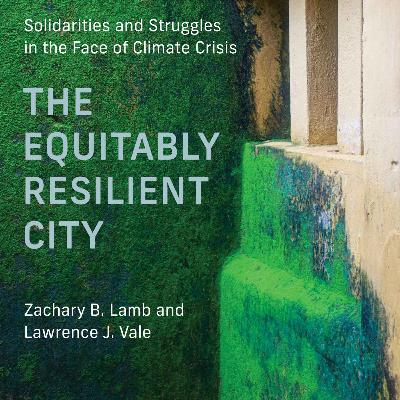
Featuring Lawrence Vale and Zachary Lamb, co-authors of The Equitably Resilient City: Solidarities and Struggles in the Face of Climate Crisis, published in 2024 by MIT Press. Their book, which draws on research from twelve unique case studies around the world, asks how cities can respond to climate change and still commit to maintaining and improving the lives of their most disadvantaged residents. Links: The Equitably Resilient City: Solidarities and Struggles in the Face of Climate Crisis (OPEN ACCESS) The Resilient Cities Housing Initiative, MIT The Equitably Resilient City, MIT Guests: Lawrence Vale, MIT Zachary Lamb, UC Berkeley Hosted on Acast. See acast.com/privacy for more information.

Featuring Theodore Greene, author of Not in My Gayborhood! Gay Neighborhoods and the Rise of the Vicarious Citizen from Columbia University Press (2024). Not in My Gayborhood explores “gayborhoods” in Washington, DC, Greene investigates how neighborhoods retain their cultural identities even as their inhabitants change.Get the book!Not in My Gayborhood! Gay Neighboorhoods and the Rise of the Vicarious Citizen, Columbia University Press (2024)Guest:Theo Greene, Assistant Professor, Bowdoin College Hosted on Acast. See acast.com/privacy for more information.
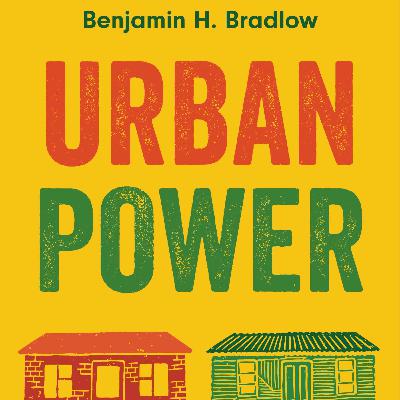
Featuring Ben Bradlow, author of Urban Power: Democracy and Inequality in São Paulo and Johannesburg published in 2024 by Princeton University Press. Urban Power examines how social inequalities are created and addressed through the urban built environment by comparing the case studies of São Paulo and Johannesburg.Get the book!Urban Power: Democracy and Inequality in São Paulo and Johannesburg, Benjamin Bradlow. Princeton University Press, 2024.GuestBen Bradlow, Assistant Professor of Sociology and International Affairs, Princeton University Hosted on Acast. See acast.com/privacy for more information.
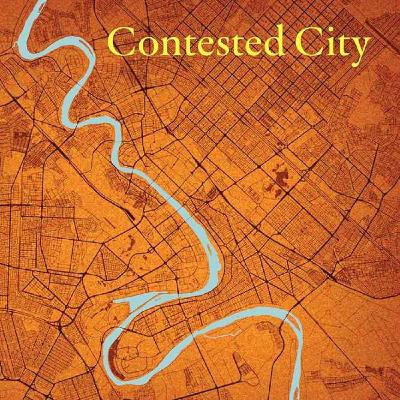
Featuring Alissa Walter, author of Contested City: Citizen Advocacy and Survival in Modern Baghdad published in 2025 by Stanford University Press. Contested City charts the political history of modern Baghdad and how residents navigated and negotiated with the state through periods of economic growth, war, and sanctions.Get the book!Contested City: Citizen Advocacy and Survival in Modern Baghdad. Alissa Walter. Stanford University Press, 2025.GuestAlissa Walter, Associate Professor of History, Seattle Pacific University Hosted on Acast. See acast.com/privacy for more information.
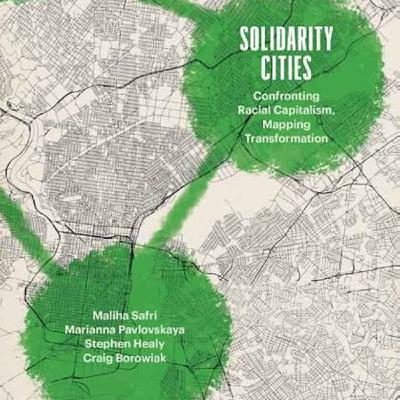
Featuring Maliha Safri, Marianna Pavlovskaya, Craig Borowiak, and Stephen Healy, authors of Solidarity Cities: Confronting Racial Capitalism, Mapping Transformation, published by University of Minnesota Press. Solidarity Cities explores the diverse practices of cooperation and mutual support as alternatives to racial capitalism through case studies of Philadelphia, Worcester, MA, and New York City. Get the book!Solidarity Cities: Confronting Racial Capitalism, Mapping Transformation. Maliha Safri, Marianna Pavlovska, Craig Borowiak, and Stephen Healy. University of Minnesota Press, 2025. [OPEN ACCESS]GuestsMaliha Safri, Professor, Drew UniversityMarianna Pavlovskaya, Professor, Hunter CollegeCraig Borowiak, Professor, Haverford CollegeStephen Healy, Associate Professor, Western Sydney University Hosted on Acast. See acast.com/privacy for more information.

Comments

Download from Google Play

Download from App Store
 United States