


 Claim Ownership
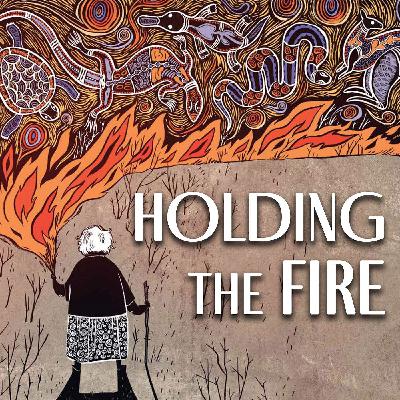
Holding the Fire: Indigenous Voices on the Great Unraveling
Subscribed: 29Played: 311
Subscribe

© 2025 Post Carbon Institute
Description
Indigenous thought leaders offer their unique perspectives on this moment of shared crises, the consequence of global industrialized society having been built on extraction, colonialism, perpetual growth, and overexploitation of nature. Award-winning journalist and author Dahr Jamail hosts in-depth interviews with leaders from around the world to uncover Indigenous ways of reckoning with environmental and societal breakdown. If you’re concerned about climate change, species extinctions, loss of social cohesion, the specter of collapse, and other aspects of the Great Unraveling, then tune in for insight and wisdom gained from lived experience and cultural memory.
12 Episodes
Reverse
Dahr Jamail speaks with Dilafruz Khonikboyeva about how people can live through collapse while maintaining their core identities and values. Dilafruz also reminds us how Indigenous people have always had a symbiotic relationship with Earth, living as one with and being in love with Earth.Dilafruz Khonikboyeva, an Indigenous Pamiri from Tajikistan, is a transformational conflict expert, who has focused her work on civil wars, climate and resource conflicts, and storytelling. She is the inaugural Executive Director of the Home Planet Fund, the latest tool in the Patagonia philanthropic ecosystem.
Dahr Jamail talks with Dr. Lyla June Johnston and gains a far broader perspective on the polycrisis. Lyla June wonders why people are surprised that things have arrived at this point of collapse, given the inherent insatiability of the dominant system of extraction and growth, and the fact that Indigenous people have been issuing warnings for centuries. She also discusses rebirth, consequences of our actions, the creation of new paradigms, the Lakota view of selfishness as a mental illness, gardening our culture, healing, and ultimately, love. Dr. Lyla June Johnston, of Navajo, Cheyenne, and European lineages, received her PhD from the University of Alaska Fairbanks’ Indigenous Studies Program, with a focus on Indigenous land stewardship. She also has a degree in environmental anthropology, with honors, from Stanford University, and a degree in American Indian education, with distinction, from the University of New Mexico.
Dahr Jamail speaks with Dr. Yuria Celidwen about how we must find true belonging and true community with both humans and the more-than-human world. Yuria discusses a broader statement she created that she calls “the ethics of belonging,” which encourages awareness, intention, relational well-being, and actions towards planetary flourishing. She also talks about spirit medicine, why she is not fond of the word "hope," dreaming, non-linear time, and much more.Dr. Yuria Celidwen, a native of Nahua and Maya descent from Chiapas, Mexico, has been conducting research that combines the vibrant threads of Indigenous studies, cultural psychology, and contemplative science. Yuria is a senior fellow at the Other and Belonging Institute at the University of California, Berkeley.
Dahr Jamail speaks with Shoba Liban about the importance of persevering with our work to serve our communities, no matter the results and no matter how difficult things become. Shoba also discusses the great importance of building community resilience, local farming, and adapting to the impacts of the worsening climate crisis. Shoba Liban, a Boorana woman from Kenya, is the founder and CEO of the entirely women-run Pastoralist Women, an NGO that promotes health and education for women and children in Kenyan pastoralist communities.Caution for listeners: please note that Shoba discusses extreme violence against women, which can be difficult to hear.
Dahr Jamail speaks with Alson Kellen to hear about how his people survived nuclear testing on their home islands, colonialism, imperialism, and how they are now navigating the climate crisis. Alson discusses how he believes traditional values present the best hope for a sustainable future for his people, as well as for all of us.Alson Kelen, a native of Bikini Atoll, is one of the world’s few masters in the ancient art of wave-piloting. Alson is an authority on traditional ocean canoe construction and navigation, and has done much to perpetuate Marshallese culture and traditional knowledge among the younger generations where he lives.

Comments

Download from Google Play

Download from App Store
 United States