


 Claim Ownership
Global Horizons - The Australian International Education Podcast
Subscribed: 9Played: 108
Subscribe

© Global Society
Description
Global Horizons is Australia’s international education podcast.
Each episode is focused on the stories that make our industry just so great to work in.
Sometimes the stories will be industry news and current affairs. Other times, we’ll dive into a guest's personal career and travel stories on the show. We’ll also have episodes dedicated to unpacking industry trends or helping you to understand the nuances of one of international education’s many specialisations, like learning abroad, compliance, marketing and more. Our goal is to showcase the stories, knowledge and impact of our industry.
Each episode is focused on the stories that make our industry just so great to work in.
Sometimes the stories will be industry news and current affairs. Other times, we’ll dive into a guest's personal career and travel stories on the show. We’ll also have episodes dedicated to unpacking industry trends or helping you to understand the nuances of one of international education’s many specialisations, like learning abroad, compliance, marketing and more. Our goal is to showcase the stories, knowledge and impact of our industry.
125 Episodes
Reverse

Australia keeps saying it wants a “Future Made in Australia”. But what happens when you starve the labs, research institutes and universities that are supposed to build that future, while talking tough on “integrity” and migration instead? In this episode of Global Horizons, Dirk Mulder and Rob Malicki unpack the Senate committee’s final report on the Education Legislation Amendment (Integrity and Other Measures) Bill, and what the so called “final hearing” really means for international education, universities and research in Australia.They trace the politics behind the ESOS changes, the push to give the minister sweeping powers, and the convenient narrative that keeps framing students as the problem, while much bigger issues in the migration system are left largely untouched.Along the way, they connect the dots to the CSIRO job cuts, Australia’s anaemic research investment and a public debate that keeps missing the point on university surpluses and social licence.In this wide ranging conversation, Rob and Dirk move from Parliament House to the lab bench to Circular Quay, where they also reflect on the NSW International Education Awards and what genuine sector leadership looks like.In this episode, you will hear:Why the Senate committee has recommended the ESOS integrity bill pass “as is”, despite serious concerns from the sectorHow expanded ministerial powers risk undermining procedural fairness and certainty for institutions and studentsThe growing problem with the “integrity” narrative around agents, commissions and international studentsThe massive visa backlog that no one wants to talk about, and the curious lack of focus on graduate visasWhy university surpluses are not the smoking gun people think they are, and what really drives uni financesHow CSIRO job cuts reveal a research system “running dangerously low on fuel”What it would actually mean to treat research funding as core national infrastructureVictoria’s refresh of its international education strategy and why you should have your sayA snapshot from the NSW International Education Awards, including Dirk’s quietly awkward moment as a finalistIf you care about the future of Australian higher education, international students and research, this is one of those episodes that helps you see how all the threads tie together, from Senate hearings to social licence to who actually pays for the ideas that power our economy.Global Horizons is a production of The Global Society, Australia’s Learning Abroad support company. Our editor is Len Zamora and our distribution specialist is Angelo Ablao. Rob Malicki is the executive editor and host. The podcast wouldn’t be possible without The Koala News, Australia’s international education news website. This episode is supported by Choosing Your Uni, Australia's unique, AI-powered platform that helps domestic and international students to find the right institution for them, and that helps Australian institutions to access new markets. For guest suggestions and feedback, email podcast@globalsociety.com.au
In this episode of the Koala News Global Horizons podcast, Dirk Mulder and Rob Malicki unpack another big week in international education.They discuss the ongoing uncertainty around student visas, why inconsistent decision-making is creating real problems for providers, and what that could mean for institutions in the months ahead. They also touch on the Queensland Exporters Conference, some of the latest thinking around AI and productivity, new moves in student accommodation accreditation, and the value of initiatives like the upcoming Study Melbourne International Student Careers Fair. They’re then joined by Ian Pratt from Lexis English, who brings a grounded, direct perspective from the front line of the sector. Ian talks about what the past five years have looked like for English language and vocational education providers, the commercial and human impact of policy instability, and why some of the biggest consequences of recent changes may not show up in the data for years. He also reflects on regional delivery, student demand, and why investment decisions are increasingly being pushed offshore. Highlights include:why visa subjectivity is becoming such a major issue for providerswhat universities may need to prepare for if current patterns continuekey takeaways from the Queensland Exporters Conferencea new national approach to student accommodation qualityIan Pratt’s take on what recent policy settings are doing to ELICOS, VET and regional Australia We are incredibly proud to be the OFFICIAL podcast of the AIEC Australian International Education Conference. This is the conference's 40th anniversary and is being held in Sydney, so it's going to be bigger and more impactful than ever... and AIEC not to be missed!Global Horizons is a production of The Global Society, Australia’s Learning Abroad support company. Our editor is Len Zamora and our distribution specialist is Gelo Ablao. Rob Malicki is the executive editor and host. The podcast wouldn’t be possible without The Koala News, Australia’s international education news website. This episode is supported by Choosing Your Uni, Australia’s unique, AI-powered platform that helps domestic and international students to find the right institution for them, and that helps Australian institutions to access new markets. For guest suggestions and feedback, email podcast@globalsociety.com.au

Naresh Gulati has been in international education since the mid-90s. He helped build one of the largest education agencies in India, then founded BPO Intelligence, and now is driving the rise (pun intended) of Ascent One, a modular ecosystem designed to reduce admin chaos by helping systems talk to each other. But instead of giving you a standard “here’s how I scaled” playbook, this conversation offers something more human: a philosophy for staying steady when business, and life, get messy.It's a very personal conversation with one of Australian international education's leading entrepreneurs. In this episode, we get into:Naresh’s early story, including failing Year 10, selling candles on the roadside, and what those years taught him about resilienceWhy he makes decisions largely on gut feel, and how that’s shaped every business he’s builtThe “leaf on the river” metaphor, float, bump into rocks, rest when you reach shore, then move againRob also brings in something many listeners will recognise, that 3am spiral where your brain turns into a to-do list machine. Naresh’s response is simple, practical, and surprisingly hard to argue with: stress rarely solves the problem, it usually just doubles it. From there, they explore the difference between happiness and contentment, why we get used to carrying tension, and what awareness actually looks like when you are in the middle of a tough season.You’ll also hear:Why schools teach competitiveness, but rarely teach stress management, and what that costs laterA grounded take on collaboration, and why “me versus them” thinking leaves opportunities on the tableA personal COVID-era moment that reminds you everything changes, even the hardest chaptersIf you want an episode that feels like a deep breath, without pretending the world is easy, this is it.Global Horizons is a production of The Global Society, Australia’s Learning Abroad support company. Our editor is Len Zamora and our distribution specialist is Angelo Ablao. Rob Malicki is the executive editor and host. The podcast wouldn’t be possible without The Koala News, Australia’s international education news website. This episode is supported by Choosing Your Uni, Australia's unique, AI-powered platform that helps domestic and international students to find the right institution for them, and that helps Australian institutions to access new markets. For guest suggestions and feedback, email podcast@globalsociety.com.au
Who would have guessed? Out of the blue on Sunday, the Government announced the doubling of the cost of one of the key student-related visas. Dirk Mulder and Tracy Harris from The Koala News were right on it, with the breaking news hitting inboxes within hours. It just shows why industry news is so important!This week is a bumper episode of the podcast, including our special guest Michael Holaday from Prometric. Prometric are the administrators of the Celpip English test, one of the new English language tests approved by the Department of Home Affairs last year for visa purposes. It's a great conversation about Michael's career trajectory through international ed, as well as a dive into this new offering (in Australia, at least) in the English language testing market.And alongside that, we've got the mission critical news that you simply can't miss. Thanks for joining us!Global Horizons is a production of The Global Society, Australia’s Learning Abroad support company. Our editor is Len Zamora and our distribution specialist is Angelo Ablao. Rob Malicki is the executive editor and host. The podcast wouldn’t be possible without The Koala News, Australia’s international education news website. This episode is supported by Choosing Your Uni, Australia's unique, AI-powered platform that helps domestic and international students to find the right institution for them, and that helps Australian institutions to access new markets. For guest suggestions and feedback, email podcast@globalsociety.com.au

When I sat down with Ainslie Moore, I thought we’d spend 45 minutes doing what we’ve almost never done in the past 25 years: talk without an agenda.We made it about 30 seconds.Because Ainslie opens with the kind of confession that tells you exactly what sort of episode this is going to be, she has a “flight home story” she “will not tell the rest of the world”… and then casually admits she once booked a train from London to Brussels because she thought that’s where The Hague was. From there, we’re off. Travel disasters, sliding-door moments, and the deeper thread underneath it all: how someone goes from being a 17-year-old international student with a life-changing exchange experience, to becoming a proper policy operator who can move a whole system with the right alliance, the right incentives, and the right message. This conversation keeps flipping between the “romance” of international education (travel, language, identity, becoming more yourself) and the machinery that makes it possible (policy settings, incentives, and the behind-the-scenes work nobody sees). It’s two sides of the same coin, and Ainslie lives right at the centre of it.This episode is a cracker. Global Horizons is a production of The Global Society, Australia’s Learning Abroad support company. Our editor is Len Zamora and our distribution specialist is Angelo Ablao. Rob Malicki is the executive editor and host. The podcast wouldn’t be possible without The Koala News, Australia’s international education news website. This episode is supported by Choosing Your Uni, Australia's unique, AI-powered platform that helps domestic and international students to find the right institution for them, and that helps Australian institutions to access new markets. For guest suggestions and feedback, email podcast@globalsociety.com.au
“This report reads almost like a postmortem of a world-class Aussie industry being systematically dismantled.” That’s how this week’s conversation starts, and honestly, it sets the tone.In this episode of Global Horizons, Dirk Mulder and I sit down in the week of 16 February and try to make sense of a sector that feels like it’s accelerating in ten different directions at once. New data, new panels, new policy pressure, and the kind of political rhetoric that has a habit of turning complex issues into easy headlines.We begin with English Australia’s newly released 2025 visa data, and it is bleak reading for anyone who cares about the health of the broader international education ecosystem. The numbers point to a sustained contraction in independent ELICOS visas, and the flow-on effects are not abstract. They are people, jobs, institutions, and capability.Then, we shift to the International Student Representative Council, which is making a meaningful move towards rebuilding a stronger national student voice, appointing an inaugural expert panel with serious credentials. It is one of those developments that might sound procedural on paper, but could matter a lot if it helps restore advocacy and legitimacy in a space that has been battered since COVID.Along the way, we dig into an unusual sign of public pushback from within the sector, a change.org petition targeting the onshore commission ban, and what that might signal about the next phase of industry response.A few highlights we unpack in this episode:English Australia’s 2025 data, and why the visa fee settings hit ELICOS differently to higher educationThe estimated job impact, and what it means when an industry loses capacity, not just revenueThe International Student Representative Council’s expert panel, and why student voice has been missing for too longThe onshore commission ban petition, the ethics, the optics, and the unintended consequences for genuine student supportGermany’s record-breaking growth as an alternate destination, and why it keeps coming up in these conversationsAIEC is already on the horizon, key dates, and a gentle nudge to new voices to put their hand upWe also take a quick detour into AI, not as a gimmick, but because it is becoming impossible to ignore how fast expectations are shifting, especially for students. The default is rapidly becoming instant answers, personalised guidance, and always-on support, and that changes the bar for everyone.By the end, this episode is less about one headline and more about a pattern. Where policy settings land hardest. Who gets protected, who gets squeezed, and what the global market does when Australia decides to “de-scale” an export industry that has spent decades building trust.Global Horizons is a production of The Global Society, Australia’s Learning Abroad support company. Our editor is Len Zamora and our distribution specialist is Gelo Ablao. Rob Malicki is the executive editor and host. The podcast wouldn’t be possible without The Koala News, Australia’s international education news website. This episode is supported by Choosing Your Uni, Australia's unique, AI-powered platform that helps domestic and international students to find the right institution for them, and that helps Australian institutions to access new markets. For guest suggestions and feedback, email podcast@globalsociety.com.au

When I sat down with Ian Aird, the CEO of English Australia, I expected we’d talk mostly about the sector’s current policy turbulence, and what it’s like trying to advocate when the rules keep shifting.We absolutely go there.But what I didn’t expect was how quickly the conversation turned into something more personal, more human, and (weirdly) more useful for anyone trying to make sense of careers, leadership, and what “good decisions” actually look like in real life.Because Ian’s path to the “big chair” wasn’t a neat, straight-line plan. It was part instinct, part risk, part luck, and part turning up in Spain with basically no plan at all, walking the streets with a CV, and hoping the bank account didn’t hit zero first. And then there’s the moment that still makes me laugh: he was lined up to go to Japan… until he found out he’d have to cut his hair. Except it’s not really about the hair. It’s about the sliding-door moments, the tiny decisions that end up shaping the whole story, and what happens when you actually ask the question you’re “not supposed” to ask. In this episode, we get into:What it’s really like stepping into a CEO role mid-whirlwind, including Ian’s brutally honest version of “strategy” in a small organisation (hint: triage). Why the last two years have felt uniquely chaotic, from visa and legislative change through to constant policy pivots. COVID as a career breaker and a career re-route, and the uncomfortable realisation that the world has now learned it can shut borders fast, and do it again. What today’s students need that they did not used to, including the hidden “life skills gap” for students who lost formative years to lockdowns, and why support needs are higher than many people realise. Why language is not just words, and why the “earpiece that translates everything” still misses the point of learning how humans actually communicate. There’s a part of the conversation where we’re talking about Year 12 exams and the pressure young people feel to “get it right” right now, and Ian says something that should be printed on a sticker and slapped onto half the careers advice floating around out there: “Don’t convey that what you do now will lock you in for life.” It’s a simple line, but it cuts straight through the panic. Yes, some decisions matter. But the myth that one choice defines you forever is, in Ian’s words, absolute garbage. And because I can’t resist a good left turn, we also end up in Southeast Asia, the chaos of learning how to cross a road in a new country, and why being overwhelmed is sometimes exactly the point. If you work in international education, advocacy, student experience, or you’re just trying to build a career that does not feel like a straightjacket, I think you’ll enjoy this one.Global Horizons is a production of The Global Society, Australia’s Learning Abroad support company. Our editor is Len Zamora and our distribution specialist is Angelo Ablao. Rob Malicki is the executive editor and host. The podcast wouldn’t be possible without The Koala News, Australia’s international education news website. This episode is supported by Choosing Your Uni, Australia's unique, AI-powered platform that helps domestic and international students to find the right institution for them, and that helps Australian institutions to access new markets. For guest suggestions and feedback, email podcast@globalsociety.com.au
I didn’t think, in my life, that I’d be recording a podcast… and I definitely didn’t think I’d be talking about taxation in India. Yet here we are. In this episode of Global Horizons, Rob Malicki and Dirk Mulder are back for 2026, slightly dazed by how January vanished, and diving straight into the stories that are shaping the international education conversation right now.We start with the politics-meets-perception problem. Net overseas migration is down (the numbers have shifted materially), but the public debate is still running at full volume. Dirk breaks down the latest Australian Bureau of Statistics release and why departures are a big part of the story that often gets missed. Then we get into student housing, including the latest student accommodation signals coming through.A few highlights we unpack along the way:What the latest migration figures suggest, and why the “bubble” effect post-COVID is still working its way throughWhy departures matter just as much as arrivals when people talk about students and housingThe global trend in purpose-built student accommodation demand, and what’s changing in student expectationsThe surprisingly important India tax changes that could reduce friction and cost for families sending money overseasThe submissions closing for the Australian Tertiary Education Commission legislative review, and why the sector is nervous about how decisions get madeThen we bring in our guest, Jessie Gardner Russell, National President of Council of Australian Postgraduate Associations. Jessie takes us inside the reality of postgraduate life right now, including food insecurity, cost-of-living pressure, and why career support is showing up as a much bigger need for international postgrads than domestic students.Jessie also explains CAPA’s work on a big, practical question: if PhD stipends sit below the poverty line, what does that do to research productivity nationally, and what happens if you fix it?We also cover:The HECS repayment threshold change, and why it matters for fresh gradsThe placement payment, what it solves, and where the gaps still are (hello, allied health)The employment support problem for international postgrads, and why it’s a missed opportunity Australia can’t really affordGlobal Horizons is a production of The Global Society, Australia’s Learning Abroad support company. Our editor is Len Zamora and our distribution specialist is Angelo Ablao. Rob Malicki is the executive editor and host. The podcast wouldn’t be possible without The Koala News, Australia’s international education news website. This episode is supported by Choosing Your Uni, Australia's unique, AI-powered platform that helps domestic and international students to find the right institution for them, and that helps Australian institutions to access new markets. For guest suggestions and feedback, email podcast@globalsociety.com.au

Dominic de Moura McCarthy is one of those guests who makes you quietly sit up straighter.He’s 24, he’s done ballet for 15 years, he taught himself how to build a personal brand before most of us even knew what that meant, and he’s the kind of person who doesn’t wait for an “official invitation” to start something meaningful. When Dom joins me on Global Horizons, we go back to Mackay, regional North Queensland, where a teenage decision to study French (because ballet terminology is French, of course) became a hinge moment that eventually led him overseas, into the New Colombo Plan, and deep into youth leadership work across the Pacific and Latin America.There’s a sliding-doors moment early on too: Dom moves to Brisbane to study dance at QUT, hears a blunt “this course isn’t for you unless you want to dance every day”, ends up in hospital that first week, and makes the call to switch to business instead. That one decision quietly changes the trajectory of everything that follows.Along the way, we get tactical about visibility and influence. Not the braggy kind, but the “how do you show up and contribute when you don’t feel like the expert” kind. We talk imposter syndrome, tall poppy syndrome, why community service can be the best personal brand strategy going around, and how Dom’s faith and sense of service keep him moving when most people would hesitate.In this episode, we cover:Dom’s “French via ballet” origin story, and how Distance Education pre-COVID shaped his confidenceThe New Colombo Plan experience that turned curiosity into a global pathwayThe QUT-to-business switch, and how to make a call when you’re terrified of closing doorsPersonal branding without the show pony energy, plus practical ways to build the muscleWhy volunteering and youth development work can become your sharpest leadership trainingA rare honest chat about setbacks, and why most people don’t reflect on them enoughGlobal Horizons is a production of The Global Society, Australia’s Learning Abroad support company. Our editor is Len Zamora and our distribution specialist is Gelo Ablao. Rob Malicki is the executive editor and host. The podcast wouldn’t be possible without The Koala News, Australia’s international education news website. This episode is supported by Choosing Your Uni, Australia's unique, AI-powered platform that helps domestic and international students to find the right institution for them, and that helps Australian institutions to access new markets. For guest suggestions and feedback, email podcast@globalsociety.com.au
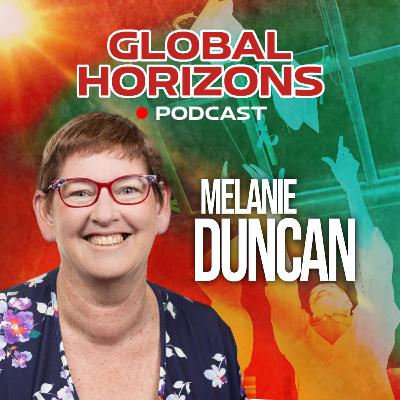
A student storms into Melanie Duncan’s office in tears, shaking with certainty that Australia is an “awful place”… because we eat our dogs.The evidence? He saw “dog bones” at the supermarket.It sounds ridiculous, until you realise what Melanie has spent nearly three decades learning the hard way: without context, even the most well-meaning support can miss the mark. Recorded at the IEC conference, this episode is a warm, funny, occasionally brutal reality check on what international student support really looks like when it is done properly. Melanie takes us from the classic student-services moments you laugh about later, to the high-stakes cases that stay with you for years, and the quiet expertise it takes to hold it all together.Along the way, we unpack:Why the best practitioners become masters of the right question at the right timeWhat “visa-informed” support actually means, and why it cannot be replaced by a knowledge baseThe cultural faux pas that shaped Melanie’s early years, and the training that changed everythingHow “international student services” is being mainstreamed, and why Melanie calls it a dying artThe political rhetoric that has fuelled uncertainty for students, and frustration across the sectorThe part nobody wants to talk about: COVID, staff cuts, and losing experienced practitioners when students still needed themWhat it is like to step out of institutions and build a consulting business built on one idea, compliance done well should equal a better student experienceThere’s mentorship, nostalgia, a few sharp edges, and a genuine reminder that international education is still full of people who care deeply, even when the systems around them make it harder than it should be.Global Horizons is a production of The Global Society, Australia’s Learning Abroad support company. Our editor is Len Zamora and our distribution specialist is Angelo Ablao. Rob Malicki is the executive editor and host. The podcast wouldn’t be possible without The Koala News, Australia’s international education news website. This episode is supported by Choosing Your Uni, Australia's unique, AI-powered platform that helps domestic and international students to find the right institution for them, and that helps Australian institutions to access new markets. For guest suggestions and feedback, email podcast@globalsociety.com.au
It’s the first Global Horizons News episode of 2026, and Rob Malicki and Dirk Mulder are back at the desk with that familiar mix of “happy new year” energy and “wait, what changed while we were away?” realism. They start with PRISMS and a South Asia assessment-level update that feels, frankly, out of cycle and out of sync. The headline move is Bangladesh, which only recently moved up, now dropping two assessment levels in one hit, and it sets off a wider conversation about policy volatility, recruitment strategy, and just how hard it is to plan when the goalposts keep shifting. Along the way, you’ll hear them unpack:The South Asia assessment level changes (including Bangladesh, India, Nepal, Bhutan, and Sri Lanka), and why the timing matters for providers trying to plan recruitment responsibly The question hanging over it all: what triggers these changes, and should a ministerial trip be enough to reshape settings this quickly? A rare moment of mainstream coverage, including a news.com.au write-up, and a longer sit-down interview with Phil Honeywood on Channel 7’s The Issue Then the conversation moves to ATEC and a detail that could easily slip past most people unless you’re watching legislation closely. Dirk draws on analysis from Andrew Norton to explain how international student allocations, and the power to cap, could be embedded through the proposed Australian Tertiary Education Commission, with serious questions about independence, process, and years of compounding uncertainty. They also cover:What ATEC’s role could mean in practice if international student allocations become one of its key functions, and why that design choice raises eyebrows TEQSA’s new requirements for offshore delivery approvals, including the looming reality of application fees and yet more compliance weight on transnational education activity And then, in the spirit of not leaving you in a pure regulatory fog, they finish with an actual milestone worth pausing for: Adelaide University is now live, the new combined institution born from the University of Adelaide and the University of South Australia. There’s congratulations, curiosity about rankings impact, and a few side-eye questions about what happens next, in Adelaide and possibly beyond. Global Horizons is a production of The Global Society, Australia’s Learning Abroad support company. Our editor is Len Zamora and our distribution specialist is AngeloAblao. Rob Malicki is the executive editor and host. The podcast wouldn’t be possible without The Koala News, Australia’s international education news website. This episode is supported by Choosing Your Uni, Australia's unique, AI-powered platform that helps domestic and international students to find the right institution for them, and that helps Australian institutions to access new markets. For guest suggestions and feedback, email podcast@globalsociety.com.au

In this episode of Global Horizons, Peter and I wander through three and a half decades of international education, from the days when Wollongong was considered “aggressive” for opening an office in Japan, to the launch and heartbreaking end of The Scholar Ship, to his 15 years shaping JMC’s international work in the creative industries. Along the way we talk about caps, fairness, and why policy settings have hit the private sector so much harder than universities.You will hear us dig into:How The Scholar Ship created a “university at sea” focused on intercultural leadership, and why the GFC and oil prices brought it undoneWhat it felt like to watch that ship sail into Sydney Harbour and realise you had helped build something genuinely world classThe leap from federal government land surveyor to running Wollongong’s Japan office, and then setting up ANU’s regional office in BangkokThe strange joy and terror of consulting life, from currency swings that wipe out your margin overnight to clients who keep pulling you backWhy Peter fell in love with Japan, Sweden and Vietnam, and what those countries taught him about creative talent and mobilityFrom there we shift into the creative industries and the future. Peter reflects on 15 years at JMC, why he is bullish on performance and the arts in an age of AI and virtual production, and how Swedish arts high schools and emerging Vietnamese creatives are reshaping the pipeline of global talent. Music is still music, he argues, and performance is still performance, even if the tools keep changing.We also get very real about the past few years in Australia:How the student caps and immigration debates have disproportionately damaged the private sectorThe quiet injustice of private provider students being shut out of the New Colombo Plan and OS-HELPWhy Peter thinks Australia’s historic strength in relationship building is being undermined by bureaucracy and short term politicsThe danger of becoming a “fairweather friend” to partners who remember who stuck with them when times were hardOne of my favourite parts of the conversation is Peter’s story of COVID at JMC. While others were cutting, he bet that, like previous crises, the downturn would last about two years. JMC kept its international team intact, especially in-country staff in Indonesia and Malaysia, moved people onto projects where needed, and doubled down on relationships. The result was their best ever international intake in February 2022, up 35 per cent on 2019.We finish with advice for students and early career professionals. It is simple and hard to argue with: go somewhere. It does not have to be Australia, or any particular country. Just go. Peter went to Japan with a backpack and a bit of Japanese, and everything that followed, from Bangkok to Latin America to the creative industries, unfolded from that single decision to leave home.Global Horizons is a production of The Global Society, Australia’s Learning Abroad support company. Our editor is Len Zamora and our distribution specialist is Angelo Ablao. Rob Malicki is the executive editor and host. The podcast wouldn’t be possible without The Koala News, Australia’s international education news website. This episode is supported by Choosing Your Uni, Australia's unique, AI-powered platform that helps domestic and international students to find the right institution for them, and that helps Australian institutions to access new markets. For guest suggestions and feedback, email podcast@globalsociety.com.au

On the way back from his honeymoon, Mike Ferguson and his wife are walking across a square, headed for the airport.Two guys come up from behind.A knife to his throat. A gun to his wife’s head. And somehow, unbelievably, what follows is not just a story about being mugged, it’s a story about negotiation, keeping your head, and walking away with the things that actually matter. Including, in a twist I genuinely did not see coming. This episode starts with that kind of energy and then keeps going. Because Mike is one of those people who, the more you talk, the more you realise he’s lived about five careers and 60 countries worth of stories.He’s worked in government, including designing the simplified student visa system, and he’s now on the university side, which means he can see the cracks, the incentives, and the misunderstandings from both directions. Along the way, we get into the stuff the sector often talks around, but rarely says plainly: what public servants can actually commit to, why policy “boom and bust” cycles keep repeating, and why genuine consultation is not a nice-to-have, it’s the whole game. A few highlights to listen out for:The honeymoon mugging story, including how you “negotiate” your way out of a nightmare. Mike’s case for broader engagement, consultation, and genuine co-design between government and sector, especially when integrity and sustainability are on the line A lighter moment that still says a lot: childhood dreams of being a bus driver and a train driver, which might explain more about international education careers than we’d like to admit. It’s part travel yarn, part policy masterclass, and part reminder that international education is, at its best, built on relationships, trust, and shared goals. Global Horizons is a production of The Global Society, Australia’s Learning Abroad support company. Our editor is Len Zamora and our distribution specialist is Angelo Ablao. Rob Malicki is the executive editor and host. The podcast wouldn’t be possible without The Koala News, Australia’s international education news website. This episode is supported by Choosing Your Uni, Australia's unique, AI-powered platform that helps domestic and international students to find the right institution for them, and that helps Australian institutions to access new markets. For guest suggestions and feedback, email podcast@globalsociety.com.au
G'day and welcome to Season 4 of the Global Horizons podcast! To open up the season, Rob Malicki reflects on some of the highlights from Australian higher education from the past 12 months. Over the past 12 months, the narrative of universities "losing their social licence" was shown to be a simply ridiculous, click-bait headline. Here's the proof: In the latest data, our universities taught 1,676,077 students, up 4.7%, with success also up, at 87.9% and attrition down to 12.2%.Equity and access to higher education also moved: more First Nations, low-SES, regional and disability students getting in, and through.Institutions invested, and built, in some bigger projects than ever before: Adelaide University launches on 1 January 2026, and Edith Cowan University's $853m City campus is already energising Perth’s CBD... and it hasn't even opened yet!Deakin University and the University of Wollongong are building real campuses in India, not fly-in deals.Monash University is investing a Billion (yes, capital "B"!) in TRX Kuala Lumpur... such a big commitment that even the Prime Minister turned up to back it.In the labs and libraries across Australia, our researchers continued to punch well above their weight, delivering a Nobel prize, state prizes, and countless breakthroughs from CO2 concrete to soil ecology to brain cancer.Looking at rankings, and Australia continues to slay on a global scale. Six unis in THE top 100, ten in the top 200, and 97% of public universities ranked globally. If we look at sustainability and climate action rankings, our institutions are leading the world at just the right time, when humanity needs it most. International education has had a mixed year (read the article by Dirk Mulder in The Koala News for the best summary of that). But on the domestic front, students are better protected and supported now than when the year began: the National Student Ombudsman is live, HELP indexation has been fixed, and the Commonwealth Prac Payments (a BRILLIANT and long overdue addition to our system) are underway. Those initiatives deserve some flames (so I'll oblige: 🔥🔥🔥).If we truly care about Australia’s future, our university sector is the one doing the heavy lifting. It's educating our people, and driving research and innovation. In short, it's setting us up for the future. And there can't be a better way to fulfil a social license than that.
There's so much attention on TNE right now, and maybe there's never been a more important time to be catching up with colleagues to work through the challenges. In this special micro-podcast, as part of our AIEC Warm Up series, Rob Malicki is joined by Peter Harris, TNE legend and Exec Director of Future Students at UTS College, to have a quick chat about what's on the agenda at AIEC and some of the biggest issues facing the sector. OFFICIAL podcast of the AIEC Australian International Education Conference... registrations are open now!Global Horizons is a production of The Global Society, Australia’s Learning Abroad support company. Our editor is Len Zamora and our distribution specialist is Angelo Ablao. Rob Malicki is the executive editor and host. The podcast wouldn’t be possible without The Koala News, Australia’s international education news website. This episode is supported by Choosing Your Uni, Australia's unique, AI-powered platform that helps domestic and international students to find the right institution for them, and that helps Australian institutions to access new markets. For guest suggestions and feedback, email podcast@globalsociety.com.au

From the beer business to international education, Julian Longbottom’s career has been anything but predictable—and that’s exactly what makes this episode so good.In this wide-ranging conversation, Rob sits down with Julian to unpack a life of unexpected pivots, bold strategies, and smart innovation—from launching Carlton Cold and Carlton Mid, to helping transform the University of Canberra’s reputation, to building StudyPortals in Asia-Pacific from the ground up.There’s business wisdom here, to be sure—but also great stories and laughter, including a wild skiing trip to Kashmir (avalanches, Russians, military zones—you name it).In this episode, we cover:Julian’s start in the brewing industry (yes, really!)How transferable skills landed him a leadership role at IDP during its transformationBuilding data-driven marketing strategies for the University of Canberra and StudyPortalsWhat innovation actually looks like inside big orgs—and how to foster it🏔️ Heli-skiing in Alaska, backcountry snow missions in Kashmir, and the thrill of offline adventurePlus, a memorable quote to take away:“Is there a gap in the market… and a market in the gap?”Julian shares candid reflections on success, failure, curiosity, and carving your own path—whether that’s through the boardroom or knee-deep Himalayan powder.We are incredibly proud to be the OFFICIAL podcast of the AIEC Australian International Education Conference... registrations are open now!Global Horizons is a production of The Global Society, Australia’s Learning Abroad support company. Our editor is Len Zamora and our distribution specialist is Gelo Ablao. Rob Malicki is the executive editor and host.The podcast wouldn’t be possible without The Koala News, Australia’s international education news website.This episode is supported by Choosing Your Uni, Australia's unique, AI-powered platform that helps domestic and international students to find the right institution for them, and that helps Australian institutions to access new markets.For guest suggestions and feedback, email podcast@globalsociety.com.au
Where did the year go? As we plunge headlong into August, it means that the best event for international educators is just around the corner. AIEC is in Canberra this year, and joining me on the pod is Louise Goold, chair of the conference Program Committee. Together we go through some of the key changes and enhancements to this year's conference: all the things you really need to know!Of course, Global Horizons is the OFFICIAL podcast of the AIEC... a real privilege for us since it is the "do not miss" event of the year. Grab your registration before the conference fills up: Global Horizons is a production of The Global Society, Australia’s Learning Abroad support company. The podcast wouldn’t be possible without The Koala News, Australia’s international education news website. This episode is supported by Choosing Your Uni, Australia's unique, AI-powered platform that helps domestic and international students to find the right institution for them, and that helps Australian institutions to access new markets. For guest suggestions and feedback, email podcast@globalsociety.com.auOur editor is Len Zamora and our distribution specialist is Angelo Ablao. Rob Malicki is the executive editor and host.
A surprise bulletin from the RBA, a sobering reality check at the IEAA’s TNE Forum, and new data showing a dramatic shift toward intra-Asian student mobility — July’s international education news cycle was anything but quiet.In this wide-ranging episode of Global Horizons, Dirk Mulder and Rob Malicki tackle the biggest stories shaping the future of the sector — from transnational education (TNE) to housing policy, and what Australia's universities can learn from shifting student sentiment.Tune in for:-Why the RBA’s surprise bulletin just blew up the “students cause housing stress” myth-The warning signs emerging at the TNE Forum (hint: don’t jump in without a map)-Why more students are now choosing Asia for their international education-What the Keystone report says about Hong Kong, Singapore, and Malaysia’s rise-Plus: Why ACICIS alumni are being asked to help prove just how powerful Indonesian language and study abroad can beAlso in this episode: reflections on social licence, housing economics, Australia’s global competitiveness, and the intergenerational impact of shifting study trends — all wrapped in signature Global Horizons commentary.Stick around for the outro as Rob gives a sneak peek into the next episode — a full preview of the AIEC 2025 conference program with conference chair Louise Gould.LAST CHANCE!Super early bird tickets for AIEC are closing soon - grab your tickets before July ends and save hundred!Global Horizons is a production of The Global Society, Australia’s Learning Abroad support company. Our editor is Len Zamora and our distribution specialist is Gelo Ablao. Rob Malicki is the executive editor and host.The podcast wouldn’t be possible without The Koala News, Australia’s international education news website.This episode is supported by Choosing Your Uni, Australia's unique, AI-powered platform that helps domestic and international students to find the right institution for them, and that helps Australian institutions to access new markets.For guest suggestions and feedback, email podcast@globalsociety.com.au
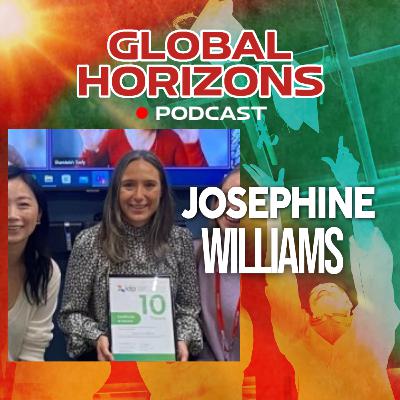
You know those people who make the impossible look effortless? That’s Josephine Williams.In this episode, Rob sits down with the former AIEC Conference Manager and international education legend to unpack the stories behind the scenes—and behind the passport stamps. From coordinating a last-minute plenary for 300 delegates to climbing into a taxi bound for Damascus (yes, that Damascus), Josephine’s career has been anything but ordinary.What starts with a streaker in Fitzroy becomes a wild ride across languages, countries, and careers—all fuelled by adrenaline, curiosity, and a love of making things happen.In this episode:🚨 That time 300 people mobbed an AIEC session and Josephine had to find a solution—fast✈️ How a failed translation career led to a global event management pathBackpacking pre-Google Maps: navigating Laos with film cameras and walkie talkiesTeaching in Korea, fleeing Dubai, and accidentally discovering BeirutWhy feedback matters—and how innovation really happens in large-scale conferencesThe bittersweet joy of stepping back after being the heart of an event for a decadeWe also get reflective: What photos are missing from your life? What makes you feel most alive? And how do you find your safe space when the world is chaotic?This one’s a story-lover’s dream, and a testament to what can happen when you say yes—to jobs, countries, conversations, and even a bit of chaos.We are incredibly proud to be the OFFICIAL podcast of the AIEC Australian International Education Conference... registrations are open now!Global Horizons is a production of The Global Society, Australia’s Learning Abroad support company. The podcast wouldn’t be possible without The Koala News, Australia’s international education news website. This episode is supported by Choosing Your Uni, Australia's unique, AI-powered platform that helps domestic and international students to find the right institution for them, and that helps Australian institutions to access new markets. For guest suggestions and feedback, email podcast@globalsociety.com.auOur editor is Len Zamora and our distribution specialist is Angelo Ablao. Rob Malicki is the executive editor and host.
In this week’s episode of The Koala News on Global Horizons podcast, Dirk Mulder (The Koala News) and Rob Malicki (The Global Society) we’re digging into the latest InternationalEducation News. - A new Purpose Built Student Accommodation provider is entering Australia. - Another ELICOS/VET provider has closed as a result of the Government’s ongoing catastrophicpolicies. - Big news in the Learning Abroad space as Australia’s leading third party provider, CIS Australia, merges with CEA Capa. Dirk and Rob are also joined by Brett Blacker, Managing Director Australia-New Zealand for Duolingo to talk about English language testing and what’s going on in thatspace. We are incredibly proud to be the OFFICIAL podcast of the AIEC Australian International Education Conference... registrations are open now!Global Horizons is a production of The Global Society, Australia’s Learning Abroad support company. The podcast wouldn’t be possible without The Koala News, Australia’s international education news website. This episode is supported by Choosing Your Uni, Australia's unique, AI-powered platform that helps domestic and international students to find the right institution for them, and that helps Australian institutions to access new markets. For guest suggestions and feedback, email podcast@globalsociety.com.auOur editor is Len Zamora and our distribution specialist is Angelo Ablao. Rob Malicki is the executive editor and host.

Comments

Download from Google Play

Download from App Store
 United States