


 Claim Ownership
Re-Alliance Radio
Subscribed: 0Played: 0
Subscribe

© Re-Alliance
Description
How can we create long-term resilience and abundance while responding to urgent need or crises?
19 Episodes
Reverse
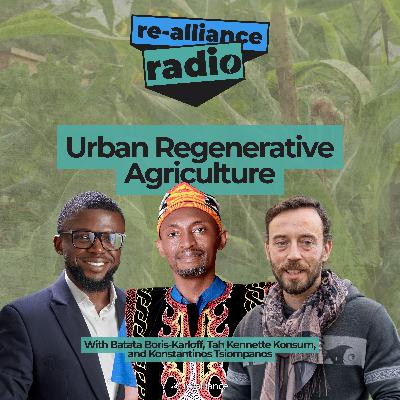
Join Boris-Karloff Batata on Re-Alliance Radio as he delves into the transformative world of regenerative agriculture in urban and small spaces. In this episode, Tah Kennette Konsum and Konstantinos Tsiompanos share their inspiring stories of turning scarcity into abundance and fostering community resilience. Discover how Tah and Konstantinos are bridging cultural gaps and nurturing nature-friendly practices in degraded environments. Tune in to explore the power of regeneration and the human spirit's adaptability in the face of challenges.
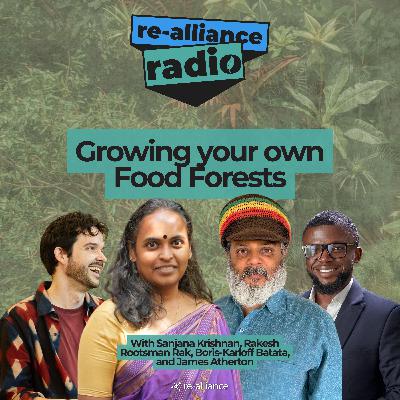
"They hold not just biodiversity, but cultural memory and a deep spiritual relationship between humans and nature." - Sanjana KrishnanIn this episode of Re-Alliance Radio, we delve into the world of Food Forestry, exploring how ancient practices offer regenerative solutions for modern food production. Join hosts Boris-Karloff Batata and James Atherton as they listen to Sanjana Krishnan and Rakesh Rootsman Rak, who share their insights on integrating ecological wisdom with community-driven, ecosystem-centred initiatives. Discover how Food Forests not only nourish the land but also foster cultural and spiritual connections, and also how you can get started on your own project!"The planet has all the answers; we just need to ask the right questions." - Rakesh Rootsman Rak
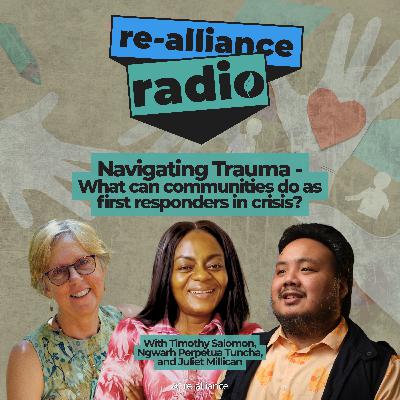
Re-Alliance coordinator Juliet Millican interviews Timothy Salomon and Ngwarh Perpetua Tuncha about how communities might navigate Trauma. What are the first steps to a collaborative, community healing process? And what might nature-inspired, Regenerative Trauma healing look like?Perpetua draws on experience and research gathered from a programme run by SACOD in Cameroon, while Timothy explores his perspective of working with communities affected by natural disasters and land grabbing in the Philippines.Juliet, Perpetua and Timothy discuss the impact of various nurturing activities, including storytelling, arts therapy, and connection with nature, in fostering resilience among people impacted by Trauma. They highlight the need for a regenerative approach that not only addresses individual healing but also the systemic issues that contributed to the violence or traumatic event.You can find a free, downloadable guide about Trauma Healing on Re-Alliance's website: www.re-alliance.org/publications
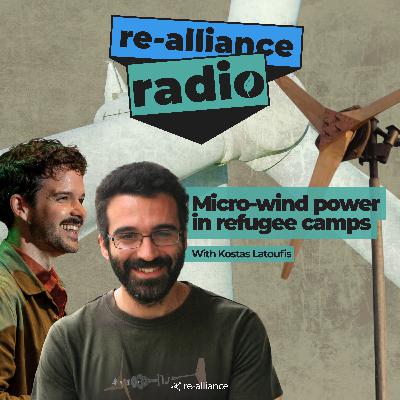
Access to clean energy is a vital necessity, especially for displaced populations. In this episode, Kostas Latoufis, Board member of the Wind Empowerment Network (windempowerment.org), an electrical engineer, and co-founder of School of the Earth in Greece, shares his insights on the transformative power of locally manufactured wind turbines. Especially in windy locations, small turbines can produce energy at a lower cost compared to solar panels.By providing training on how to build and maintain these turbines, communities can gain valuable skills that extend beyond energy production.
What connects mushroom growing, trauma healing, wind turbines, food forests, and compost toilets?In this opening episode of Season 3 of Re-Alliance Radio, hosts James Atherton and Boris-Kaloff Batata explore the deeper threads that connect regenerative actions, even across very different contexts. As the season shifts from paradigms and principles toward practice, this episode sets the foundation by asking a vital question: how do we design regenerative projects so they are holistic, not singular?We’re joined by Juliet Millican, Re-Alliance Coordinator and educationalist with decades of experience in peace-building and international development, and Casinga Ansiima Rolande, Re-Alliance correspondent and founder of FOLONA, working on ecological learning and community education in Nakivale Refugee Settlement in Uganda.Together, we explore why process matters as much as action, how emergencies are no longer short-term, and why regenerative responses must integrate people care, earth care, and fair share. From systems mapping to community-led design, this conversation invites listeners to look beyond single interventions and toward holistic, long-term regeneration.This episode introduces new co-host Boris-Kaloff Batata and lays the groundwork for a season full of practical stories — all connected by whole-systems thinking.
The topic of this final episode of Series 2 of Re-Alliance Radio is Adaptation. As our contexts are always changing, and as our communities grow and evolve, or if we are faced with disasters or crises, how might we adapt to best meet ever changing needs?
We are joined by special guest Jehane Akiki, founder of Farms Not Arms, a collective of designers, farmers, strategists, and agriculturalists who have come together to build an integrated, multi-agricultural educational farm model that heals land, health, and community. Farms Not Arms' first farm is in the Beqaa, Lebanon, bringing together refugees and host communities to increase food security, ease climate change, and promote social cohesion.
Join along with the activity here: https://jamboard.google.com/d/1L2fkfX0dyRz7kKkYT5k5xl136_EgZ-imBGq-QdhdQtA/viewer
We would love to hear from you. What did you find useful about this podcast series? What would you prefer in the next series? You can email us at contact@re-alliance.org and we will be grateful to hear from you.
A regenerative and nature-inspired design process is often, by nature, reflective and adaptive. But often we can forget to take time for deep reflection.
In this episode of Re-Alliance Radio's Designing Regenerative Change series, we explore Reflection. Once we are in the process of implementation, and we are delivering our regenerative projects, how might we build learning and reflection into the process? How might we be open to the things that go well, and also the things that don't go well that we can learn from?
We are joined by special guests Timothy Salomon from the National Land Coalition in the Philippines, as well as Gisele Henriques from CRS.
When you're deepening into a regenerative design process, there are a lot of parts that come before implementation. But when you're ready to take action, what do you need to consider before getting going?
The topic of this episode of Re-Alliance Radio is Implementation. How might we deliver on our vision and our design? How do we still embed regenerative principles in the way we implement?
We are joined by special guest Noah Ssempijja, the co-founder of YICE Uganda, who shares some experiences of delivering a project in Nakivale Refugee Settlement.
Take part in the activity with this Jamboard: https://jamboard.google.com/d/1avwlKfZrD2LH4qG228Jdo2nJ0YSDU9y6vJyh69eWPG4/viewer
Hosted by James Atherton and Jackie Kearney.
In this season of Re-Alliance Radio, we're exploring a regenerative design process, and how it can be applied in different contexts.
The topic of this session is Designing for Action. How might we best learn from the Visioning and Mapping stages, to put our ideas and plans 'down to paper'? What could it look like to make formalised plans for the upcoming work?
We are joined by two special guests: Arnima Jain from Tarun Bharat Sangh (https://tarunbharatsangh.in/) and Faith Flanigan from Regenerosity (http://www.regenerosity.world).
Join along with the design questions activity by making a copy of this Jamboard: https://jamboard.google.com/d/1NP2m8DqYoiZkHaOgrHja2Cvpoh5esvg5FyEBnemigLM/viewer
Hosted by James Atherton and Jackie Kearney from Re-Alliance.
In this season of Re-Alliance Radio, we are exploring what it could look like to deepen into a process-led approach to regeneration. How might you take time to embed regenerative, nature-inspired principles into your work? How do you do it in a way that is participatory and community-led?
The topic of this session is Mapping Resources, the second session in the series. How might we best work with our communities to help map out the resources we currently have available to us to help achieve our goals? What would it look like to map out the seen and the unseen elements of our Place, and the communities we're working with?
We are joined by special guest Sarah Queblatin, founder of Green Releaf in the Philippines, and Living Stories Landscapes Project.
Join along with the mapping activity by making a copy of this Jamboard: https://jamboard.google.com/d/1V5yksyrsAN_jLl8RYrjmuPZOowjNcd3Yha0L_jvFKO0/viewer
Hosted by James Atherton and Jackie Kearney from Re-Alliance.
In this season of Re-Alliance Radio, we are exploring a regenerative design process. Why are processes just as important, or perhaps even more important, that practices?
In this episode, we explore Visioning, the first step the process we examine in this series. Why is it important to start with visioning? How do you go through this process with community?
We are joined by special guests Filipa Pimentel from the Transition Network, and Jane Wegesa Fraser from Ecosystem Restoration Camps and Regenerosity.
Hosted by James Atherton and Jackie Kearney from Re-Alliance.
Welcome to Re-Alliance’s Designing Regenerative Change podcast series, hosted by James Atherton and Jackie Kearney. Each of these podcast episodes in this series of Re-Alliance Radio focuses on a different stage of a regenerative design process. Grounded in regenerative paradigms and principles, and contextualised with inspiring real world examples from Re-Alliance members and the wider community, you will be guided on steps you can take to bring your regenerative vision to life.
This series was originally recorded as a webinar. If you prefer to watch along rather than listen, find the series on www.re-alliance.org/videos or youtube.com/@re-alliance.
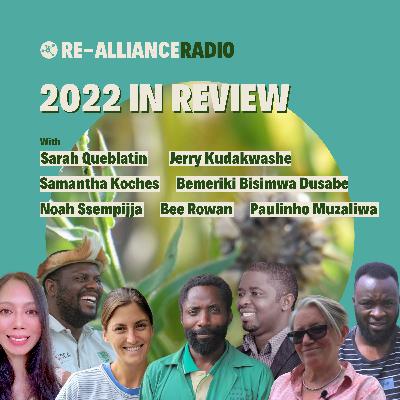
As we look at the changes to our world in the past year, we can see that regeneration is needed now more than ever. In a world challenged by war, the increasing cost of living, and the worsening effects of the climate and nature crises, it has been an immensely challenging year for grassroots regenerative groups.
And yet amidst these challenges, Re-Alliance members have guided the way in showcasing how community-led regenerative responses to disaster, displacement, and development can be truly transformative and impactful.
What happened in the Re-Alliance network over the past year? In the final episode of this season of Re-Alliance Radio, we speak to some fantastic members to share in some of their successes. In this episode, we are joined by Sarah Queblatin from Green Releaf, Jerry Kudakwashe from Fambidzanai, Samatha Koches from Nourish All, Bemeriki Bisimwa Dusabe from Rwamwanja Rural Foundation, Noah Ssempijja from YICE Uganda, Bee Rowan from Strawbuild, and Paulinho Muzaliwa from Unidos Social Centre.
Keep in touch with Re-Alliance by visiting our website (www.re-alliance.org) where we post regular blogs and articles about regeneration in the humanitarian and development contexts, in partnership with our members.
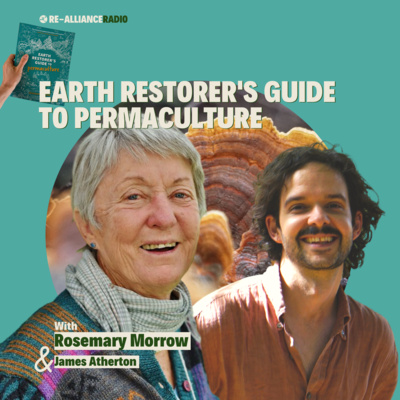
With an accredited stamp of approval from the UN's Decade on Ecosystem Restoration, Rosemary Morrow has re-released a fully updated version of her acclaimed book, now titled 'Earth Restorer's Guide to Permaculture'. What's changed? What does Permaculture have to offer people experiencing displacement, conflict, war, and ecological breakdown?
In this episode, host James Atherton inquires what inspired Rosemary Morrow to rewrite her book, and why humanitarian workers and community responders need to build their ecological literacy. With decades of experience teaching in situations of conflict and displacement, Rosemary offers guidance for Permaculture teachers, and how grassroots practitioners might use her book to create change in their communities.
Earth User's Guide to Permaculture is out now, published by Melliodora: https://melliodora.com/catalogue/earth-restorers-guide-to-permaculture/

The Humanitarian sector can seem immovable, static and rigid in the way it works, while at the same time is ever moving and ever adapting in its priorities. How can a sector such as this rapidly adapt to the worsening climate crisis?
In this episode, podcast host Juliet Millican welcomes Gareth Owen, the humanitarian director of Save the Children, and the initiator of the Humanitarian Leadership Academy. Juliet and Gareth explore and discuss Gareth's new book, 'When The Music's Over', and explore his experience working as a young aid worker in Somalia in 1993.
Later in the episode, Juliet interviews a long time friend and associate of Gareth's, George Francis Iwa. George Francis is the director of CAFOMI - a leading local humanitarian organisation in Uganda.
“We need to think radically differently if we’re going to sustain our existence together, in harmony with our planet - our only home.” - Gareth Owen
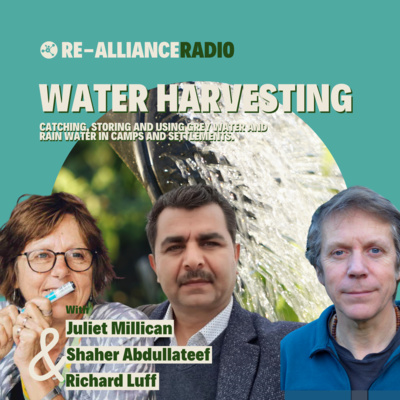
A regenerative approach to camp and settlement design goes beyond the sustainable lens recommended in the Sphere guidelines. It aims to create an abundance of health and well-being of all inhabitants, while ensuring any interventions have a positive impact on the land they are settled in, and biodiversity. This includes managing water and water disposal effectively, replenishing soil and vegetation, and providing people with access to green spaces and fresh food they can grow themselves.
In areas of limited rainfall and high temperatures, nearly all food crops will need additional irrigation water to supplement rainfall. Water is heavy to transport so growing areas should be sited close to identified water sources.
In this podcast, we explore guidelines that Re-Alliance developed alongside partners, showcasing tools and techniques for catching, storing and using Grey water and Rainwater in camps and settlements. We welcome three people who have worked together to create a set of guidelines focussed on harvesting rainwater and grey water:
Juliet Millican, the coordinator of the Re-Alliance team, and an educator and researcher exploring participatory and community-based learning in situations of conflict and displacement,
Shaher Abdulateef, the Director of Syrian Academic Expertise and an agronomist with a research focus on Food Security and Livelihoods in Syria. Shaher and SAE recently worked with Re-Alliance to train communities in Northwest Syria in effective water use in agriculture, and,
Richard Luff, a humanitarian practitioner who has worked with a number of large NGOs and agencies, with a speciality in water harvesting.
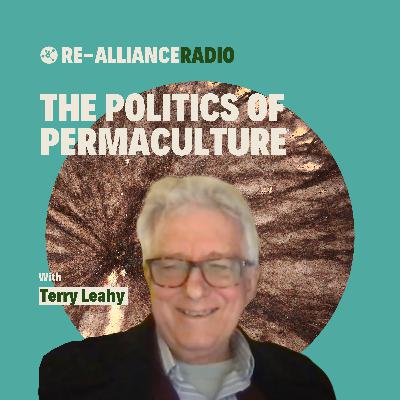
What can Permaculture teach us about the way we organise ourselves, politically? How can nature-inspired principles guide us in the way we govern?
Join Terry Leahy, author of the book 'The Politics of Permaculture' (Pluto Press, 2021), to discuss the transformative power of Permaculture applied to social spaces.
Terry Leahy is an author, Permaculture practitioner and sociologist, who has lectured at the School of Social Sciences in the University of Newcastle, Australia.
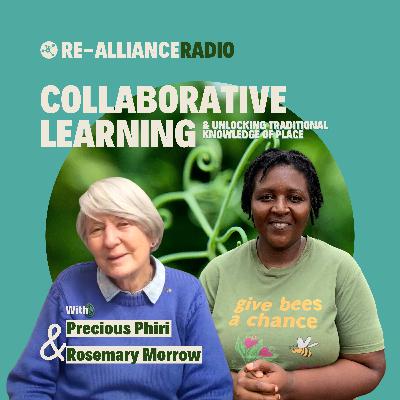
How do you embed nature-inspired principles into the way we teach? How do you help people to remember and connect with the wisdom and uniqueness of their Place?
Join two fantastic women from regenerative movements - Rosemary Morrow and Precious Phiri - to explore some of these questions and more.
Rosemary Morrow is a Permaculture practitioner, teacher and trainer, author of 'The Earth User's Guide to Permaculture', and co-founding member of Permaculture For Refugees.
Precious Phiri is a Holistic Land Management practitioner, teacher and trainer, and the Africa Coordinator of Regeneration International.

Introducing Re-Alliance Radio.
Re-Alliance is a coalition of members bringing together field practitioners, educators, community leaders and humanitarian and development workers. We share skills and experiences to grow the influence and impact of Regeneration in humanitarian and development contexts. Alongside our members and partners, we highlight and pilot regenerative solutions, often in contexts of disaster or displacement.
What's Regeneration got to do with it anyway? In Episode One of Re-Alliance Radio, some of our members help us answer this question. We hear from Gisele Henriques, Sarah Queblatin, Ruth Andrade, Pru Waldorf, and Maurice Obuya.
Hosted by James Atherton.
Comments


Download from Google Play

Download from App Store
 United States