


 Claim Ownership
🌎 Earth Central - By Orbify
Subscribed: 0Played: 1
Subscribe

© Orbify Inc
Description
This podcast series explores stories & concepts relevant to climate crisis and its mitigation while putting the emphasis on the one thing that can help us understand the real scale of it: the ever objective satellite-based data. Brought to you by Orbify, a company on a mission to use Space to make better decisions on Earth.
Follow us:
LinkedIn: linkedin.com/company/orbify
X: @orbifyinc
Follow us:
LinkedIn: linkedin.com/company/orbify
X: @orbifyinc
25 Episodes
Reverse
In this episode of Earth Central, Selina Rathke, Senior Consultant for Sustainability Supply Chains at LRQA, joins the conversation to explore the key challenges and trends shaping sustainable supply chains today, along with the implications of EUDR for sustainability.
Selina shares her expertise on the EU Deforestation Regulation (EUDR), emerging ESG requirements, and the challenges companies face in managing risks across global supply chains. She also sheds light on the importance of transparency, responsible sourcing, and minimizing negative impacts while navigating today’s rapidly changing landscape.
Whether you’re a business leader or just curious about sustainability, this conversation offers practical insights into tackling supply chain risks with clarity and purpose.
Tune in and discover how thoughtful strategies can help shape a more sustainable future.
In this engaging episode of Earth Central, Matías Yudelevich, Account Director for EMEA at Puro.earth, joins the conversation to shed light on the evolving landscape of voluntary carbon markets. As a pioneer and leader in durable carbon removal crediting, Puro.earth sets the standard for innovation and reliability in the sector.Matías shares insights into what sets Puro.earth apart in an increasingly competitive field, emphasizing their commitment to transparency and trust. The discussion delves into the trends shaping the future of voluntary carbon markets, addressing challenges such as misconceptions and market skepticism. The episode also explores the transformative potential of biochar and its critical role in advancing sustainable solutions.Transparency and CredibilityFuture Trends in Carbon MarketsAddressing Challenges and MisconceptionsThe Role of Biochar in the Global SouthTune in to uncover how Puro.earth is leading the charge in reshaping carbon markets with a focus on transparency, innovation, and collaboration.
In this insightful episode of Earth Central, Konstantinos from Orbify engages in a deep conversation with Billy Richards, CEO of Changeblock. They delve into how cutting-edge technologies like satellite data are revolutionizing the carbon markets by enhancing transparency and trust. Billy shares his expertise on overcoming skepticism in the voluntary carbon market, addressing challenges like bad press and lack of regulation, and the critical role of collaboration in the climate tech sector.
Discover how Changeblock and Orbify are partnering to provide accurate, reliable data that improves the integrity of carbon credits. Learn about the future of sustainable finance, the importance of standardization, and how technology is bridging the gap between innovation and impactful environmental action.
Key Takeaways:
• Leveraging Technology for Transparency: Explore how satellite data are being used to enhance the accuracy and trustworthiness of carbon credits.
• Overcoming Market Skepticism: Understand the challenges posed by bad press and lack of regulation in carbon markets, and how innovative solutions can rebuild confidence.
• Collaboration in Climate Tech: Learn why cooperation between startups and established organizations is essential for advancing sustainability goals.
• Future of Carbon Trading: Gain insights into how regulation and technology intersect to shape the future of carbon markets and sustainable finance.
Changeblock: https://changeblock.com/
Billy Richards: https://www.linkedin.com/in/billybrichards/
In this episode of Earth Central, host Konstantinos welcomes Lewis Rattray, Managing Director and Co-Founder of Frontierra, to explore the exciting world of satellite technology, nature-related risks, and how businesses are navigating sustainability challenges.
Lewis takes us through Frontierra’s journey from its inception to becoming a leading consultancy that uses satellite data to monitor deforestation and environmental risks.
We discuss how satellite monitoring is revolutionizing industries, helping companies manage their impacts on nature, and empowering them to act quickly on environmental challenges.
Lewis sheds light on how Frontierra’s work with TNFD (Taskforce on Nature-Related Financial Disclosures) pilot projects in Latin America and the evolving landscape of biodiversity and nature-related assessments are shaping global sustainability practices.
Key Topics Covered:
• Satellite Technology for Environmental Monitoring:Discover how satellite technology is helping businesses in industries like finance and agriculture identify and mitigate nature-related risks. From monitoring vast supply chains to tracking deforestation, satellite data is a game-changer in sustainability efforts.
• TNFD Pilot Projects in Latin America:Lewis discusses Frontierra’s involvement in TNFD pilot projects with financial institutions in Colombia and Brazil. These projects are helping shape how companies assess and report on nature-related risks, setting new standards for environmental accountability.
• Real-Time Satellite Monitoring – The Future:We explore the potential of real-time satellite monitoring, which could revolutionize how industries respond to environmental changes. Luis explains the challenges of making this technology widely accessible and affordable, but emphasizes its future importance, especially for preventing deforestation.
• Challenges in Working with Remote Farmers and Smallholders:Sustainability efforts often face hurdles in remote areas, where farmers may lack the technology to monitor their plots. Luis highlights the difficulties and potential solutions in helping smallholder farmers engage with sustainability programs, particularly under the EUDR (European Deforestation Regulation).
Lewis Rattray - https://www.linkedin.com/in/lewis-rattray/Frontierra - https://www.linkedin.com/company/frontierra/
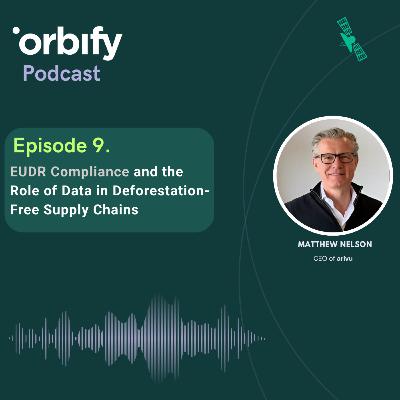
In this episode of Earth Central Podcast Matthew Nelson CEO of Arivu unpacks the European Union Deforestation Regulation (EUDR).
Moving beyond basic compliance, Matthew delves into how the EUDR is reshaping global trade by requiring companies importing into Europe to provide verifiable, conclusive evidence of deforestation-free and legally compliant production.
Matthew also highlights the ripple effects EUDR is already having, from supply chain disruptions, to the growing importance of technologies such as satellite analytics and geolocation data.
The conversation also covers the reasons behind the delay in EUDR implementation, with Matthew explaining how early adopters have successfully future-proofed their businesses by investing in compliance ahead of time
.Key Takeaways:
1. EUDR’s Legal Compliance Requirements: Listeners will gain a thorough understanding of how the EUDR requires businesses to ensure local law compliance and provide verifiable evidence of deforestation-free supply chains across all commodities, not just certified products.
2. Delays in EUDR Implementation and Pushback: Matthew discusses the reasons behind the delayed rollout of the EUDR, including the challenges and pushback from industry stakeholders, while also showcasing how early adopters have successfully positioned themselves for long-term sustainability.
3. Data Sharing and Privacy in Compliance: Listeners will learn how the EUDR’s data retention requirements are reshaping how businesses manage data privacy, transparency, and integration across their supply chains.
4. Supply Chain Disruptions and Market Shifts: The episode highlights how lack of transparency at the producer level is already causing significant supply chain disruptions, particularly in vulnerable commodity markets, such as Ethiopian coffee.
5. The Role of Satellite Analytics in EUDR Compliance: Listeners will discover how technologies, like satellite analytics and geolocation data, are essential tools for businesses to verify production locations and meet deforestation-free regulations.
6. Unintended Consequences of EUDR: Matthew explores the broader consequences of EUDR, including market shifts, price differentials, and how businesses can turn these challenges into opportunities for community engagement and impact storytelling.
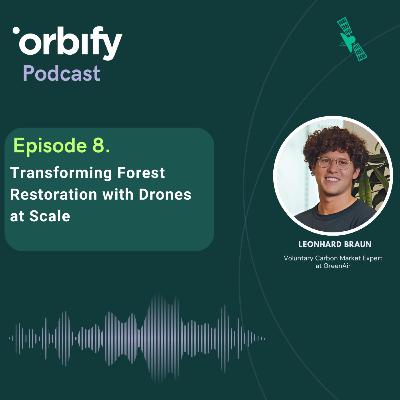
In this special episode of Earth Central, Konstantinos, the Sustainability Content Strategist at Orbify, sits down with Pascal, co-founder of Morfo, to explore the groundbreaking innovations in large-scale forest restoration.
Pascal shares his personal journey, from growing up in the Amazon to co-founding Morfo, a company at the forefront of using drones and seed pod technology to restore degraded lands. This episode goes beyond surface-level discussion, diving deep into the technical, ecological, and social aspects of forest restoration.
Pascal breaks down the critical steps Morfo takes to restore ecosystems: from soil analysis, drone deployment, and biodiversity monitoring, to working closely with local communities and organizations.
Why You Should Listen:
This episode is a must-listen for anyone interested in climate tech, reforestation, or the future of sustainability. Pascal’s insights provide a rare, behind-the-scenes look at how cutting-edge drone technology is not only accelerating the reforestation process but also improving outcomes.
Beyond the technology, Pascal emphasizes the importance of engaging local communities in restoration efforts, ensuring long-term success and creating jobs in the process.
Key Takeaways:
1. Drone Technology Revolution: Discover how Morfo’s use of drones and seed pods is making large-scale reforestation more efficient, cost-effective, and sustainable.
2. Biodiversity Restoration: Learn why biodiversity is at the heart of Morfo’s projects and how they ensure a balanced ecosystem recovery.
3. Community Engagement: Pascal explains how involving local communities in restoration efforts is key to long-term success and sustainability.
4. Challenges and Triumphs: Gain insight into the real-world challenges of forest restoration, from environmental factors like drought to the complexities of scaling operations.
Tune in to hear how Pascal and the team at Morfo are leveraging technology and partnerships to make a global impact in the fight against climate change.
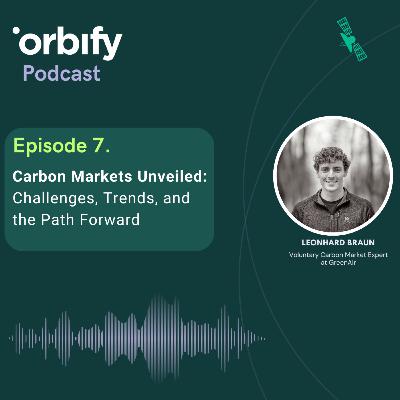
In this episode of Earth Central, Konstantinos is joined by carbon market expert Leonhard Braun, the Voluntary Carbon Market Expert at GreenAir, to explore the evolving landscape of voluntary and compliance carbon markets.
Leonhard shares his personal journey and discusses how carbon markets are adapting to new demands for transparency, high-quality carbon removal projects, and digital solutions that simplify participation for businesses and individuals alike.
They dive into the challenges facing the sector, from market volatility to scrutiny over project integrity, and how technology and policy shifts are reshaping the future of carbon credits.
Key Takeaways:
- Voluntary Carbon Markets Driven by Client Demand:
Companies with sustainability goals are increasingly looking for integrated solutions. They want to address carbon reduction through both compliance and voluntary markets, seeking measurable climate impact alongside operational efficiency.
- Restoring Trust Through Transparency and Integrity:
Recent scrutiny over the quality of carbon credits has led to a push for greater transparency in how carbon projects are developed and assessed. Leonhard highlights the importance of clear data, third-party evaluations, and high-quality projects, particularly those focused on durable carbon removals and local impact.
- The Role of Technology in Carbon Markets:
Digital platforms are revolutionizing the carbon market by offering automated onboarding, transparent fee structures, and simplified project evaluations. This makes it easier for companies to choose projects that align with their sustainability goals, improving trust and participation in both compliance and voluntary markets.
- Opportunities for Innovation in Carbon Project Development:
Increased innovation is emerging, particularly with smaller project developers entering the space. Technologies such as direct air capture (DAC) and biochar are gaining traction, offering new opportunities for scaling carbon removal solutions globally.
Get in touch:
Orbify Website
Orbify LinkedIn
GreenAir Website
GreenAir LinkedIn
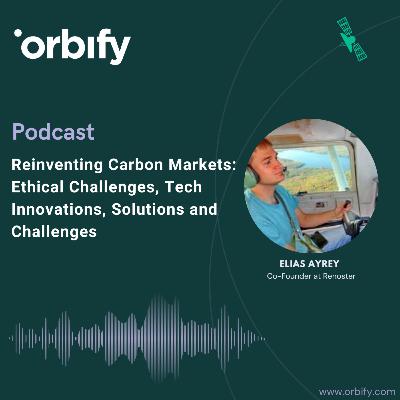
In this insightful episode, we sit down with Elias Ayrey, Chief Science Officer and co-founder of Renoster, to explore the current and future landscape of carbon markets. Elias pulls back the curtain on the flaws in the voluntary carbon market (VCM) and discusses how innovative solutions like remote sensing and AI can bring much-needed transparency and reform.
Elias shares Renoster’s mission to combat inefficiencies in the market by validating carbon projects with cutting-edge technology, ensuring that carbon credits are both credible and impactful. We dive into the ethical dilemmas and conflict of interest surrounding carbon offset projects, highlighting the lack of benefit to local communities and calling for more transparency in project revenues.
He also provides recommendations for reforming carbon markets, from third-party verification to financial transparency, outlining a bold vision for change.
Finally, Elias offers a glimpse into the future of carbon markets, predicting more stringent regulations and transparency, but also warning of the risks if these issues aren’t addressed soon.
Key Takeaways:
Ethical Challenges: Carbon offset projects often fail to benefit local communities—Elias calls for public transparency in project revenues.
Flaws in the Carbon Market: Elias outlines recommendations to make the market more credible, including better regulation and third-party verification.
Technology’s Role AI and remote sensing can revolutionize carbon credit monitoring, but human oversight remains critical.
The Future of Carbon Markets: Stricter regulations and transparency will shape the future, but swift reform is needed to maintain credibility.
Why You Should Listen:
This podcast offers a no-nonsense look at the carbon markets, addressing the real ethical and technological challenges and offering tangible solutions. Whether you’re an investor, buyer, or sustainability advocate, Elias’s insights will help you navigate carbon markets with a sharper, more informed perspective.
Tune in to learn more!
Elias Ayrey LinkedIn:
https://www.linkedin.com/in/elias-ayrey/
Renoster LinkedIn:
https://www.linkedin.com/company/renosterinc/posts/
Orbify LinkedIn:
https://www.linkedin.com/company/orbify
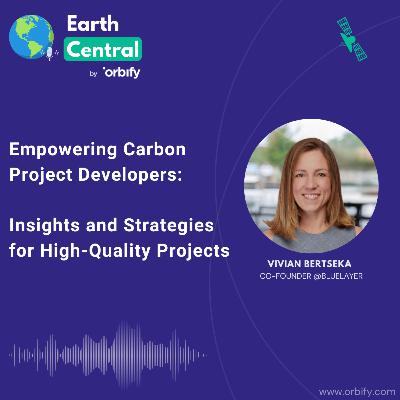
In this podcast episode of Earth Central, Konstantinos engages with Vivian, co-founder of BlueLayers, to discuss critical aspects of the carbon markets.
They emphasize the importance of transparency, trust, and high-quality data systems in achieving robust and credible carbon projects. They explore current market trends, noting a shift towards high-quality nature-based carbon removals and the growing demand for transparency in carbon credits.
The discussion underscores the significance of collaboration among stakeholders to set high standards and the importance of carbon markets when it comes to sustainability.
Key Points:
- Importance of transparency, trust, and standardization in carbon markets.
- Involvement of local communities in enhancing project quality and stability.
- Current market trends focusing on high-quality nature-based carbon removals.
- Need for collaboration among stakeholders to set high standards
This episode provides valuable insights for carbon market participants, highlighting the steps needed to ensure high-integrity and impactful carbon projects.
In this episode of Earth Central, we have a special guest, John Rogers CEO and Founder of InvestConservation, who shares his mission of making conservation investable. John, originally an economist and banker, combines his passion for conservation with his expertise in finance to bring transformative capital to conservation projects.Key takeaways from this episode:
1. Making Conservation Investable:
John explains the goal of Invest Conservation: to create market mechanisms that make conservation financially attractive.
2. Blockchain for Transparency in Carbon Markets:
John discusses how blockchain technology is used to reduce overhead costs and enhance transparency in carbon markets. By standardizing documentation and legal processes, blockchain helps ensure that more funds reach conservation projects rather than being lost in administrative costs.
3. Transparency and Project Quality in the Voluntary Carbon Markets:
The conversation emphasizes the importance of transparency and maintaining high project quality in voluntary carbon markets. John highlights the need for robust frameworks to avoid greenwashing and ensure genuine impact.
4. Challenges of Pre-Financing and Time-Consuming Project Developments:
The podcast delves into the complexities and challenges of pre-financing and the time-consuming nature of developing conservation projects. Invest Conservation aims to streamline these processes to make them more efficient and effective.
5. Legal Threats and Risks in the Voluntary Carbon Markets:
The discussion covers the legal risks faced by corporations in the voluntary carbon markets, including the threat of greenwashing lawsuits. John emphasizes the need for transparent and legally sound practices to mitigate these risks.
6. The Role of Corporate Capital in Driving Change:
John highlights the transformative power of corporate capital in conservation. He discusses how companies can contribute to meaningful conservation efforts and drive change by investing in high-quality projects.For more detailed insights, listen to the full podcast episode!
Get in touch with us!
Orbify's LinkedIn: https://www.linkedin.com/company/orbify
Orbify's Website: https://orbify.com/
InvestConservation LinkedIn: https://www.linkedin.com/company/investconservation
InvestConservation Website:
https://investconservation.com/
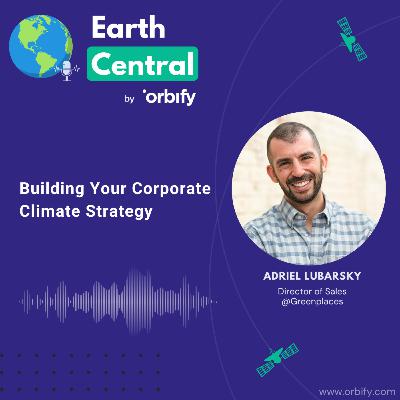
Tune in to our latest episode of Earth Central as we host Adriel Lubarsky, Director of Sales at Greenplaces and author of "Attainable Sustainability: Building Your Corporate Climate Strategy".
Adriel provides expert insights on creating impactful and profitable climate strategies for businesses.In this episode, you'll learn:
1. Integrating Climate Strategies: How to effectively incorporate sustainability into your business operations for long-term success.
2. Sustainability vs. Profitability: Debunking the myth that sustainability and profitability are mutually exclusive. Learn how sustainable practices can enhance your bottom line.
3. Carbon Offsets and Net-Zero Strategies: A comprehensive discussion on carbon offsets as a critical component of achieving net-zero emissions, including what businesses need to consider for effective implementation.
4. Big Emitters and Sustainable Actions: Insights into how major polluters are adopting sustainable practices and what smaller companies can learn from their efforts.
5. Starting Your Sustainability Journey: Practical advice on taking the first steps towards a robust sustainability strategy, regardless of your company's current stage.
6. The Importance of Real Action: Why genuine, measurable actions are crucial in the fight against climate change, and how to avoid the pitfalls of greenwashing.
7. Success Stories: Real-world examples of companies that have successfully implemented sustainability initiatives, highlighting their challenges and achievements.
Adriel shares practical advice and real-world examples, helping companies tackle sustainability challenges with effective strategies.
This episode is essential for business leaders, sustainability professionals, and anyone committed to making a positive environmental impact through corporate strategies.
Don't miss out on these valuable insights!
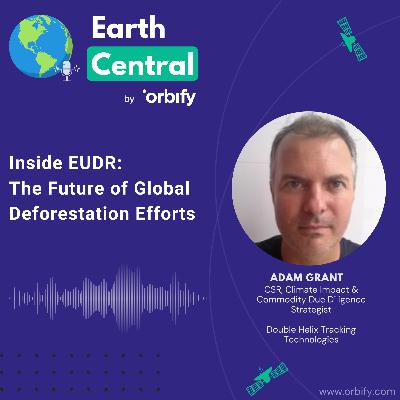
In this episode of Earth Central, we delve into the European Union Deforestation Regulation (EUDR) and its profound impact on global deforestation efforts. The EUDR is set to significantly advance sustainable supply chains and enhance traceability, marking a major step forward in environmental conservation.
Our expert guest Adam Grant from Double Helix provides insights into the primary differences between EUTR and EUDR, due diligence processes involved in sustainable supply chains transparency, and the expected improvements in compliance and environmental impact.
We discuss the direct and unintended consequences of this regulatory shift on deforestation projects, exploring how it influences international partnerships and efforts to combat deforestation.
Lastly, we offer strategic advice for businesses and stakeholders needing to align with EUDR, outlining future steps to maintain a focus on deforestation and environmental protection. Join us for an informative discussion that addresses the complexities and opportunities of EUDR.
In this episode of Earth Central, we sit down with Giulia Burchi, Impact and Project Manager at Green Future Project.
During our discussion, we delve into how Green Future Project selects and ensures the quality of their carbon projects.
We also explore the critical issue of transparency in carbon markets, discussing the challenges and current state of the voluntary market.
Giulia shares her insights on what needs to be done to improve market transparency and her perspectives on the future of carbon projects.
In this episode of Earth Central, we talk with Anete Garoza - Co-Founder & Chief Climate Officer at 1MTN
Anete shares her thoughts on nature-based carbon removal projects and how 1MTN is combating climate change by developing high-value, high-quality, nature-based and tech-powered carbon removal projects
in Africa.
1MTN Website: https://www.1mtn.com/
East Africa Carbon Markets Forum: https://carbonmarketsforum.com/
Anete Garoza: / anete-garoza
In this episode of Earth Central, host Alex sits down with Alex Logan to discuss the evolving landscape of environmental data and the growing importance of accessibility in the climate and conservation space. As environmental monitoring technologies continue to generate vast amounts of data—particularly through remote sensing—the challenge is no longer availability, but usability. Logan sheds light on the often-overlooked hurdles that researchers, technologists, and organizations face when trying to turn raw data into actionable insights.The conversation highlights three key obstacles: identifying the most relevant datasets, navigating the technical complexity of geospatial formats, and managing licensing or pricing constraints that can limit access. New tools and platforms are emerging to bridge these gaps by simplifying integration and reducing the burden on science and engineering teams. These solutions are helping to accelerate the development of applications that rely on nature data, as illustrated through collaborative use cases such as carbon project planning and ecosystem monitoring.The discussion also explores the importance of community-driven efforts to share knowledge and resources in this rapidly growing field. Logan introduces initiatives that aim to provide ethical, legal, and technical guidance for sharing environmental and Indigenous data responsibly. As interest in biodiversity, land use, and soil data intensifies, the conversation underscores the need for shared standards and infrastructure to support more effective decision-making. This episode offers a thoughtful look into how collaboration and data accessibility are shaping the future of environmental action.
In this episode of Earth Central, we talk with Manuel Coco, a Senior Climate Change Mitigation expert.
Manuel shares his thoughts on whether or not we’re doing enough when it comes to climate change adaptation from policies to business commitments, touches upon the future of VCM (voluntary carbon markets) and more.
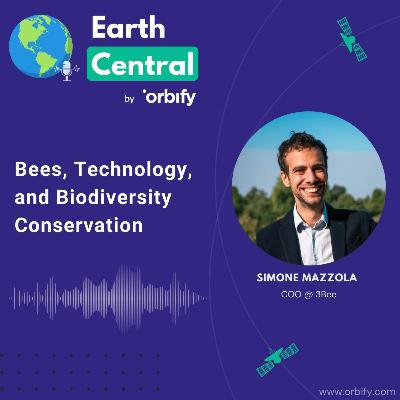
In this episode of Orbify Interview, we talk with Simone Mazzola, COO at 3Bee
3Bee is a company that connects nature with technology, specializing in the development of sensors, analysis tools, and regenerative activities aimed at preserving and promoting biodiversity. Its team of experts works to create cutting-edge technology for monitoring, analyzing, and promoting environmental health, firmly believing that their expertise, combined with deep respect for the natural world, can make a positive impact on the planet.
Additionally, this episode delves into the dynamic synergy between technology and the responsible stewardship of our natural world. It emphasizes the critical role that companies at the forefront of innovation have in shaping a more sustainable future.
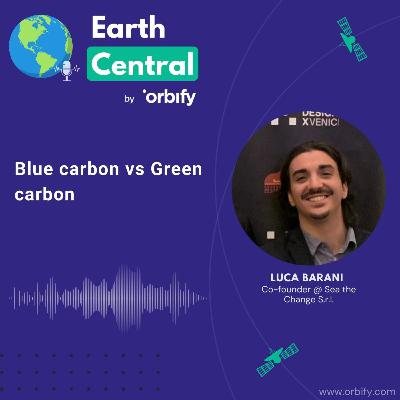
In this episode, we talk with Luca Barani, Co-founder at Sea the Change S.r.l.
Sea the Change is an innovative social-oriented start-up, which operates in the blue economy by offering sustainability services for individuals and companies, safeguarding marine ecosystems, and supporting local communities.
This episode also uncovers the significance of safeguarding the oceans and highlights how blue carbon, with its capacity to capture carbon emissions, plays a vital role in the battle against climate change.
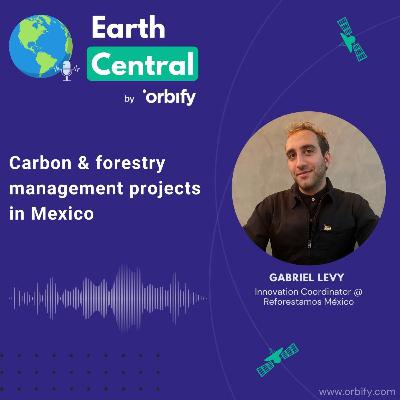
In this episode, we talk with Gabriel Levy, Innovation Coordinator at Reforestamos México. Reforestamos México is focused on conserving and restoring forests, combating environmental challenges through reforestation, community involvement, and sustainable practices.
This episode also unveils the Forest and Technology Forum 2023, an event hosted by Reforestamos México to promote the use of disruptive technologies in the management of natural resources in forests, as well as to create a platform for dialogue between experts, businessmen, technology developers, students and entrepreneurs.
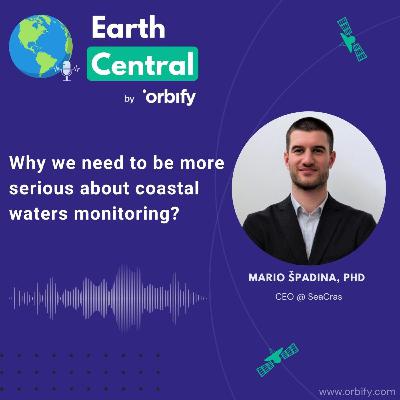
In this episode, we talk with Mario Špadina, CEO of SeaCras.
SeaCras is an innovative company that specializes in water quality monitoring, particularly in highly challenging coastal waters.
This episode also unveils the Spillalert Project, a collaborative initiative between Orbify and SeaCras. Recently recognized as one of the winners at the myEUspace Competition organized by EUSPA.

Comments

Download from Google Play

Download from App Store
 United States