


 Claim Ownership
Castlemaine Zen Podcast
Subscribed: 1Played: 17
Subscribe

Description
A selection of emerging dharma talks from Kynan Sutherland Roshi and Castlemaine Zen
49 Episodes
Reverse
In this talk, we meet Yanguan Qi’an, one of Mazu’s primary dharma heirs. Yanguan lived right up until the Huichang Persecution of 840-845, where 4,600 Buddhist temples were destroyed and 260,000 monks and nuns were displaced. Not only did his teaching endure, but his influence led to a restoration of temples and practice throughout China, and a flourishing of Zen that continues to this day. So what did he teach? How did he convey the simplicity of Mazu’s “ordinary mind”? And how might this be useful in our own time of uncertainty, with so much violence and displacement shaking the globe? This talk was given as part of Zen Open Circle’s Taking Part in the Gathering.
This talk was offered into a round of silent meditation during Zen Open Circle’s Taking Part in the Gathering. It explores the Chinese characters for “ordinary mind” and opens them up for contemplation. This talk preceded a much longer talk on Yanguan Chi’an, one of Mazu’s colourful dharma heirs.
Birds have always been great Zen teachers. In this talk, we take up the miscellaneous koan, “My relaxed gaze freely follows the tracks of flying birds” and examine what implications this might have for our practice today. We also meet Niutou Farong, a fascinating figure from the 6-7th Century, who meditated in a cave and was visited by birds “with flowers in their mouths”. What was going on? And why did these very same birds stop arriving with flowers in their mouths after Niutou spoke with the fourth Zen ancestor, Daoxin? This talk was given in Castlemaine on 15/3/26.
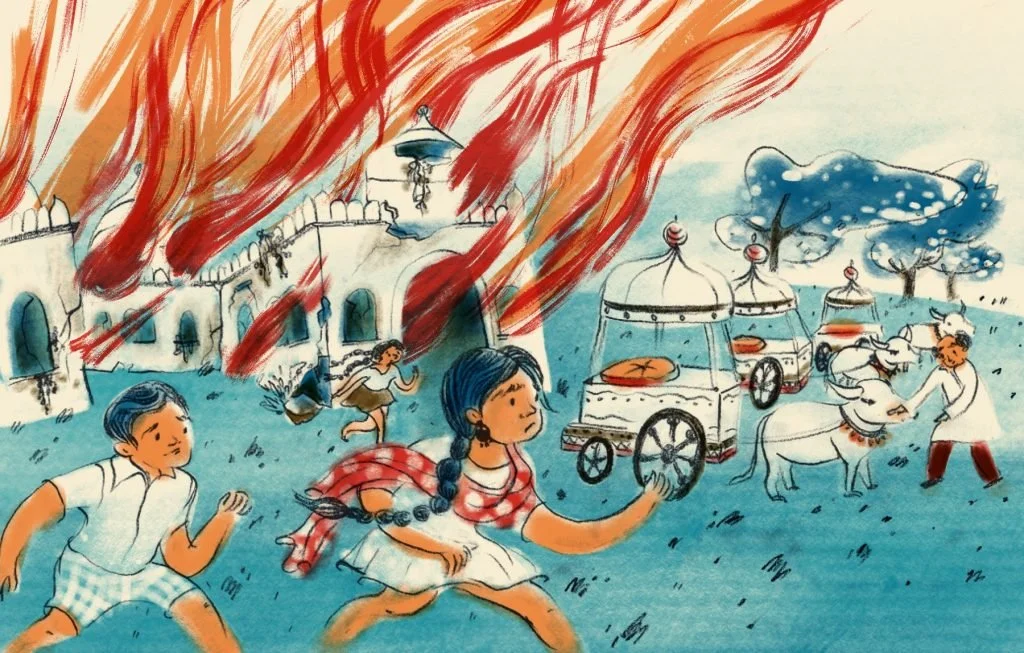
At the start of 2026, it’s time to get back to basics. That’s what Zen is all about, after all. Instead of spending our time curating a perfectly polished “self”, we learn to let this “self” go and draw closer to what Zen masters of old called “someone”. This someone, who has no name or form, is nevertheless standing, sitting, walking and lying down. Can we rely on this “someone” and their innate, practical wisdom, even when we’re sitting on the point of a needle? Even in these perilously complicated times?

With our end-of-year Jukai Ceremony fast approaching, we take up the questions, “What is a Bodhisattva? How does a bodhisattva act in the world? And how do the precepts liberate wise action in the world?” To bring this forth we meet Mahasattva Fu, a younger contemporary of Bodhidharma, who became a teacher of the Emperor. Affectionately known as “The Motley Bodhisattva”, he demonstrates just how inclusive the Way is, and how with every move we make we can “take hold of the plough with empty hands.”

One of the great pleasures of immersing yourself in Zen is getting to know the ancestors. In this talk we meet Linji, the inspiration behind Rinzai Zen, who opened up the path of practice with a great shout, beyond words and letters. This talk was given as part of a wider series on the Zen ancestors, hosted by Susan Murphy Roshi and Zen Open Circle.
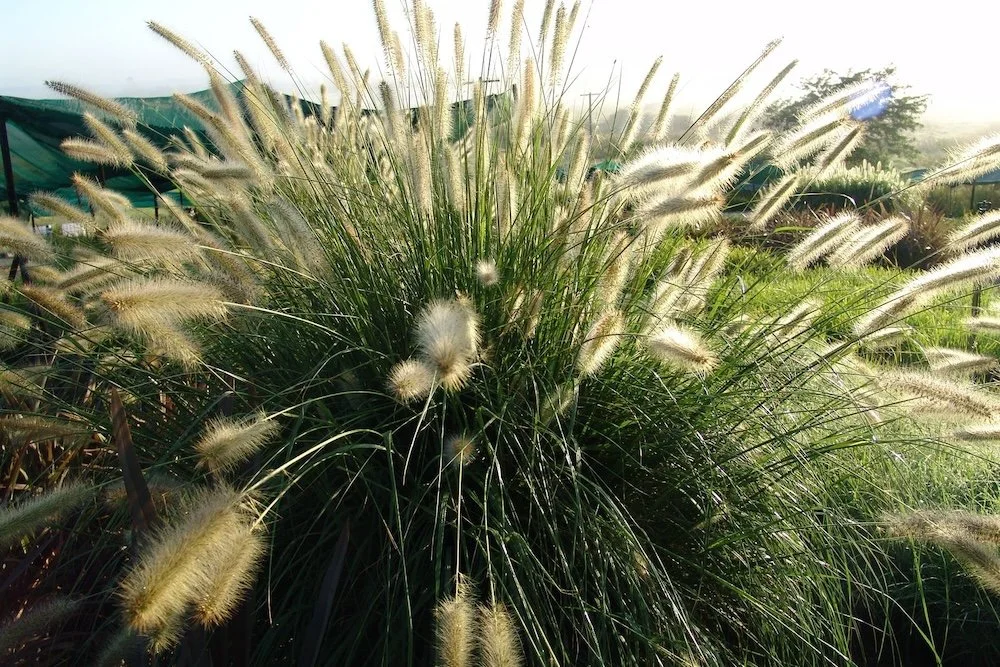
What does it take to build a temple, right where you are? When Shakyamuni Buddha was walking with Indra, he announced that, “Here would be a good place to erect a temple.” Indra immediately took a stem of grass, inserted it in the earth, and said, “The temple is erected.” Just one blade of grass was all it took. So how do we erect a temple in our day-to-day activities? And what, exactly, are we erecting? This talk was given at our regular Sunday morning zazen, teisho and dharma inquiry.
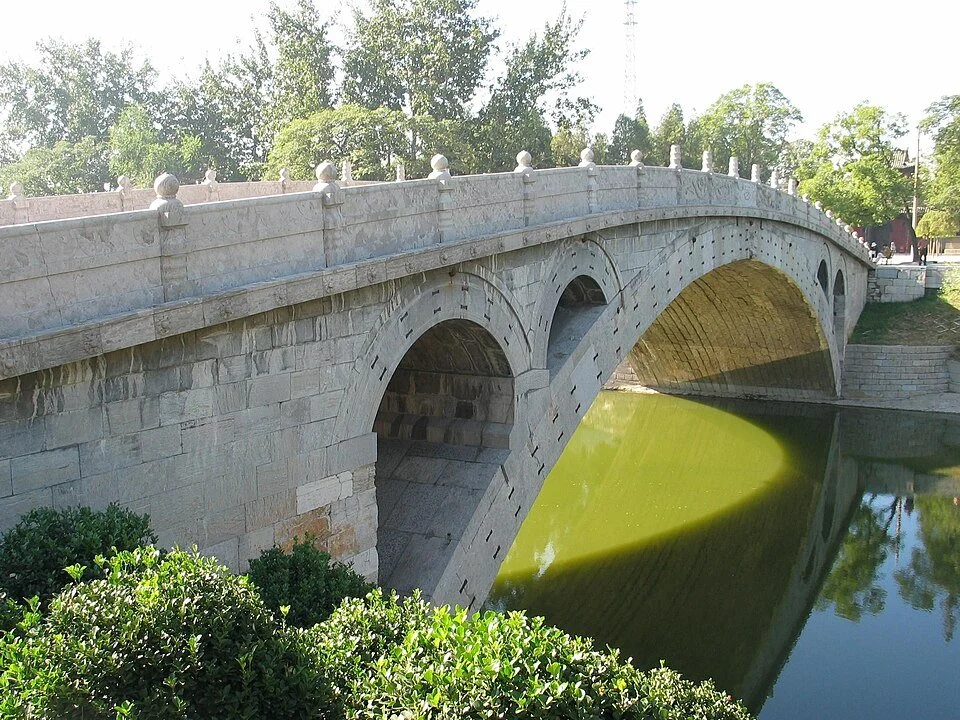
When a monk came to visit Zhaozhou he said, “For a long time I’ve heard about the famous stone bridge of Zhaozhou, but coming here I see only a common wooden bridge.” What is the stone bridge of Zhaozhou? And what does it span? This is a talk that asks us to see the stone bridge flows, and that to realise this, we must become a flowing bridge ourselves.
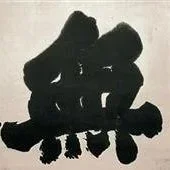
What is Mu? Why do we constantly return to this not-quite-a-syllable in our Zen practice? In this talk, given at the Zen Open Circle Spring Sesshin, we look at how Mu undoes our habitual thinking and liberates a life of not-knowing. In Japan there is a word, “sa’pari”, which means something like “unblemished by understanding.” What does a life unblemished by understanding afford? Why would we want to draw close to its promise?

What is power for the Way? Why does sitting in solitary peace fall short of genuine realization? In this talk we meet the Hermit of Lotus Flower Peak, a mysterious figure from Mount Hua who ventures into the dharma hall to rattle his staff and wake us up to gift of difficulty. This teisho was given on the third Sunday of the month at Castlemaine Zen.

Before he died, Furong Daokai left a death poem. On this fourth and final night we investigate this poem to see how it might illuminate our own life and death. This talk was recorded at the Mountains and Rivers Zen Sesshin in Hobart, Tasmania.

After Zen Master Furong Daokai announced, “The green mountains are always walking,” he added “A stone woman gives birth to a child at night.” If the first sentence highlights the bright, energetic side of experience, the second welcomes us into the dark, receptive side. What do we see in the dark? This talk was recorded at the Mountains and Rivers Zen Sesshin in Hobart, Tasmania.

Zen Master Furong Daokai walked into his assembly and said, “The green mountains are always walking.” What did he mean? What was he pointing to? In this talk we scale the highs and lows of our own life to seek not just the stability of mountains, but their living dynamism. This talk was recorded at the Mountains and Rivers Zen Sesshin in Hobart, Tasmania.

What is Mu? On this first night of sesshin, we take up this question and let it take away everything we have - and have not. This talk was recorded at the Mountains and Rivers Zen Sesshin in Hobart, Tasmania.
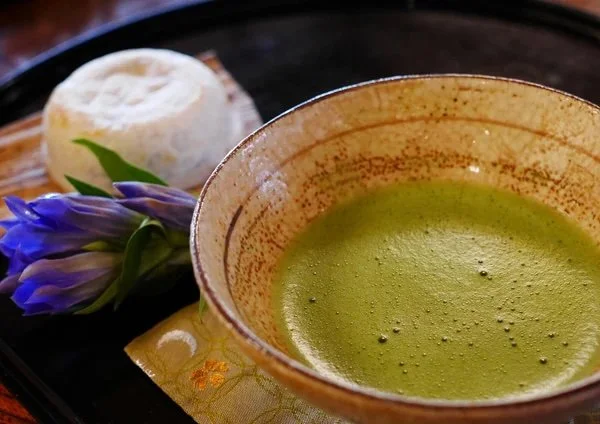
How are you with mistakes? What do you do when something goes wrong? In this talk we join three Zen adepts as they bumble their way through a tea ceremony, exploring what it’s like to own mistakes without being owned by them. This talk was given as part of our monthly Teisho and Inquiry at Castlemaine Zen.

With two sangha members about to begin the process of Jukai, we explore The Three Vows of Refuge and The Three Pure Precepts with some help from an old monk sitting high up in an old even older pine tree. Is it really possible to take refuge in precarity? Is it really possible to praise the mutilated world? What do we undertake when we take the Buddhist Precepts to heart? This talk was given in Castlemaine as part of our monthly Teisho and Inquiry.
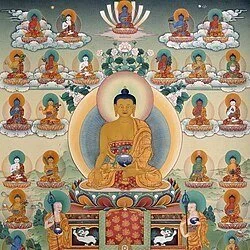
When Shakyamuni Buddha saw the morning star he cried, “I and all beings of the great earth have in this same moment attained the Way.” He was not describing an experience limited to one human being. He was describing an experience that leaves nothing out, affirming the true human being. So how do we wake up together? And what does that even mean? This talk was given on the fifth day of the Great Ocean Sesshin 2025.

The young Wuzu was vexed. He’d heard about Zen and he’d heard about the teachings, but he did not know how to embody them “personally”. So he set off on a great adventure to taste the dharma for himself, bringing all of us along with him. This talk was given on the fourth day of the Great Ocean Sesshin 2025.

It’s easy to feel that something has been lost in childhood - something precious that we yearn to reclaim or embrace as we get older. The Chinese folk story “Chien and her Soul are Separated” brings this matter into direct focus, questioning whether anything is truly lost and how we might experience reunification. This talk was given on the third day of the Great Ocean Sesshin 2025.
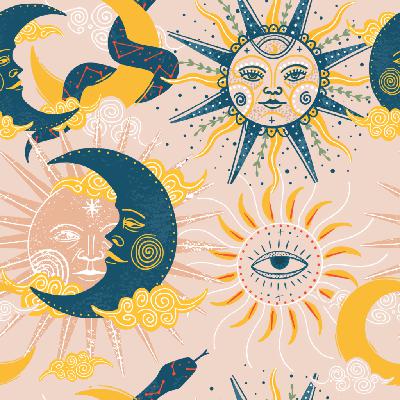
Great Master Ma was unwell. The accountant monk came up to him and asked, “How is your Reverence feeling these days?” The Master responded, “Sun Face Buddha, Moon Face Buddha.” What are these mysterious words pointing to? And how might we realise them in our own lives? This talk was given on the second day of the Great Ocean Sesshin 2025.

Comments

Download from Google Play

Download from App Store
 United States