


 Claim Ownership
The Optimize Podcast
Subscribed: 3Played: 7
Subscribe

© 2023 - VisibleThread
Description
The Optimize Podcast brought to you by VisibleThread. We bring you the best and latest insights for everything from government contracting on topics such as BD, capture, proposal management, and business writing.
36 Episodes
Reverse
Modernization isn’t just a technology problem—it’s a funding model, risk model, and governance problem. In this episode of Optimize, Chris Hamm talks with Vaughn Noga, former EPA Chief Information Officer, about what it takes to modernize in government when every change creates operational churn and oversight pressure.Vaughn explains why Working Capital Funds can enable continuous modernization (instead of one-and-done “projects”), how boards and transparency can create accountability, and why some modernization funding approaches don’t scale when the same infrastructure needs refresh every few years.They also tackle the tension between innovation and compliance including the rising bar of FedRAMP and what vendors should do differently when trying to break in: build credibility with the people closest to the tech and risk, not just the top of the org chart. Useful timestamps (MM:SS)03:02–03:32 — Leadership reality: too many “rocks” to pick up at once08:17–12:11 — Working Capital Funds: continuous modernization + governance model14:27–15:18 — Vendor engagement: “work from the bottom” to earn trust18:31–19:12 — FedRAMP as a high bar for commercial innovators21:47–22:28 — Why TMF loans for recurring infrastructure refresh don’t make sense43:32–44:12 — “We tried that, it didn’t work” mindset—and why it stalls progress Topics discussedWorking Capital Funds and continuous modernizationModernization risk: operational churn, oversight, and adoption realitiesFedRAMP/compliance barriers and innovation tradeoffsTMF vs repeatable funding for infrastructure refreshShared services and consolidation: what’s realistic vs wishful thinkingHow industry should engage CIO orgs (credibility, bottom-up buy-in)LinksPodcast page: https://www.visiblethread.com/podcasts/Host LinkedIn (Chris Hamm): https://www.linkedin.com/in/chris-hamm-304103/Guest LinkedIn (Vaughn Noga): https://www.linkedin.com/in/vaughn-noga-984360299/
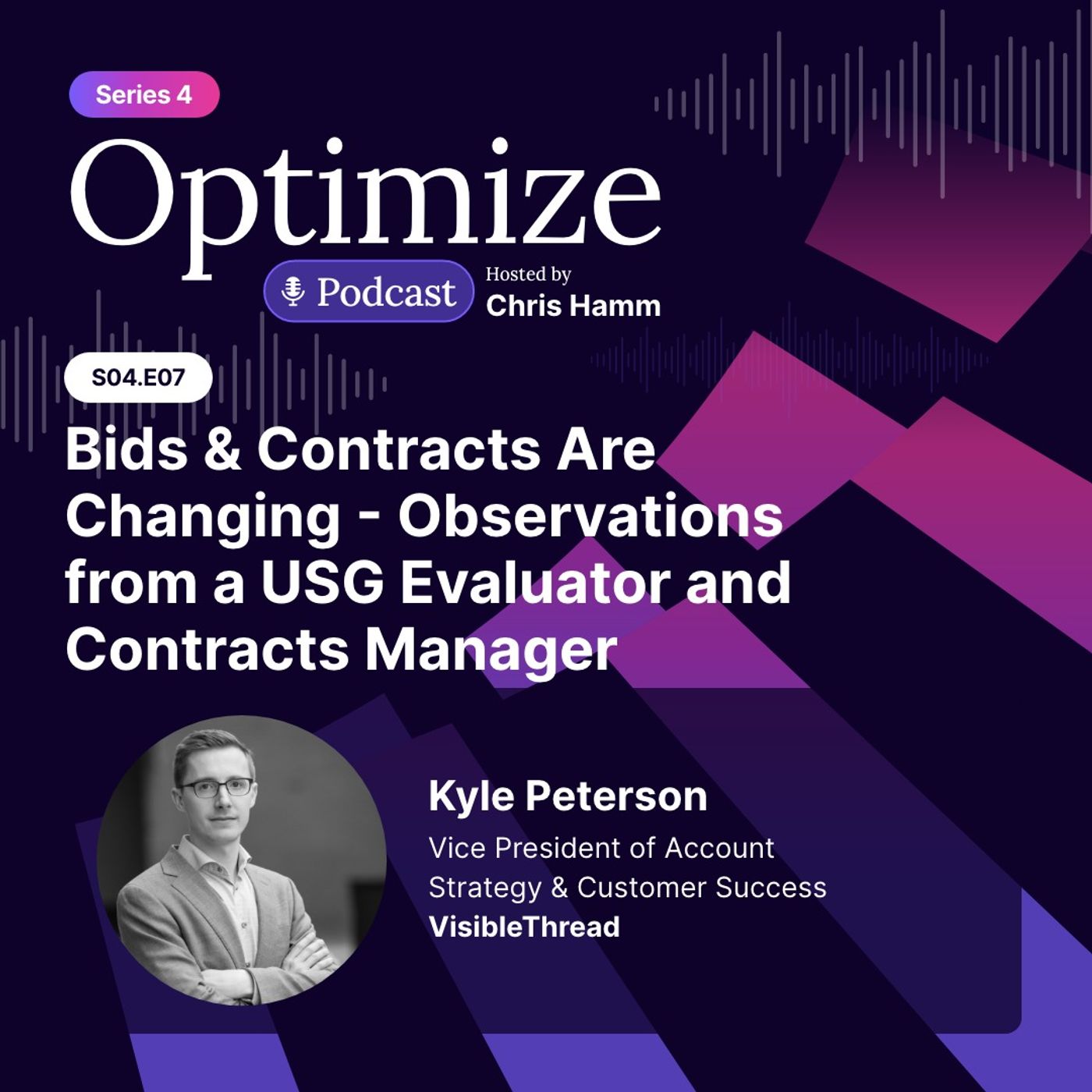
What’s really changing in the GovCon bid and contracts landscape—and what does that mean for the people doing the work? In this episode, host Chris Hamm brings the evaluator viewpoint (1,000+ proposals reviewed across written evaluations, orals, demos, and source selections) into a practical conversation with Kyle Peterson, a former aerospace contracts manager who now leads Customer Success at VisibleThread.Transcript series-4-optimize-po…They walk through the “real day job” friction: parsing Section I clause lists and flowdowns, catching security and classification requirements that don’t belong, building compliance matrices, and comparing multiple RFP amendments—work that can quietly consume entire days. Kyle shares concrete time-savings examples (hours → minutes) and why those gains aren’t just productivity—they’re also risk mitigation.Transcript series-4-optimize-po…The second half shifts to AI: how GenAI can support briefings, alignment to prior work, and early drafting—paired with deterministic methods that show exactly where requirements appear in the document. They also address the new wave of NDAs and customer clauses that restrict proprietary data from being ingested into learning/training models, plus the questions every GovCon team should ask about data handling and controls before adopting AI-enabled tools.Transcript series-4-optimize-po…Useful timestamps (MM:SS)00:02 — Intro + why this episode is different (VisibleThread-focused; Chris “plays the novice”)Transcript series-4-optimize-po…00:43 — Kyle’s background: aerospace contracts manager → Customer Success leaderTranscript series-4-optimize-po…02:17–03:38 — Clause/flowdown reviews: “two screens,” hours of cross-referencing, and the real pain pointTranscript series-4-optimize-po…06:51–09:25 — How teams start: upload docs + persona-based workflows; SAM.gov integration and lifecycle viewTranscript series-4-optimize-po…12:19–14:45 — GenAI vs deterministic: briefings, alignment, and “show me where it is in the doc”Transcript series-4-optimize-po…16:30–17:52 — Writing + audience: translating technical content for audits (DCAA) and building trustTranscript series-4-optimize-po…18:30–19:25 — Time savings examples: “shall” extraction (hours → minutes) + amendment comparisons (8 hours saved)Transcript series-4-optimize-po…19:51–20:40 — Who buys tools like this (and the “VisibleThread alumni base” effect)Transcript series-4-optimize-po…22:09–27:48 — Market shifts: non-traditionals, OTAs/CSOs realities, and why tools can’t rely on a single data sourceTranscript series-4-optimize-po…33:06–35:43 — NDAs + AI: “you shall not” clauses, model learning, and what to ask vendorsTranscript series-4-optimize-po…38:56–41:24 — Evaluator perspective: why tools fell out of evaluation, and why AI is coming back to speed awardsTranscript series-4-
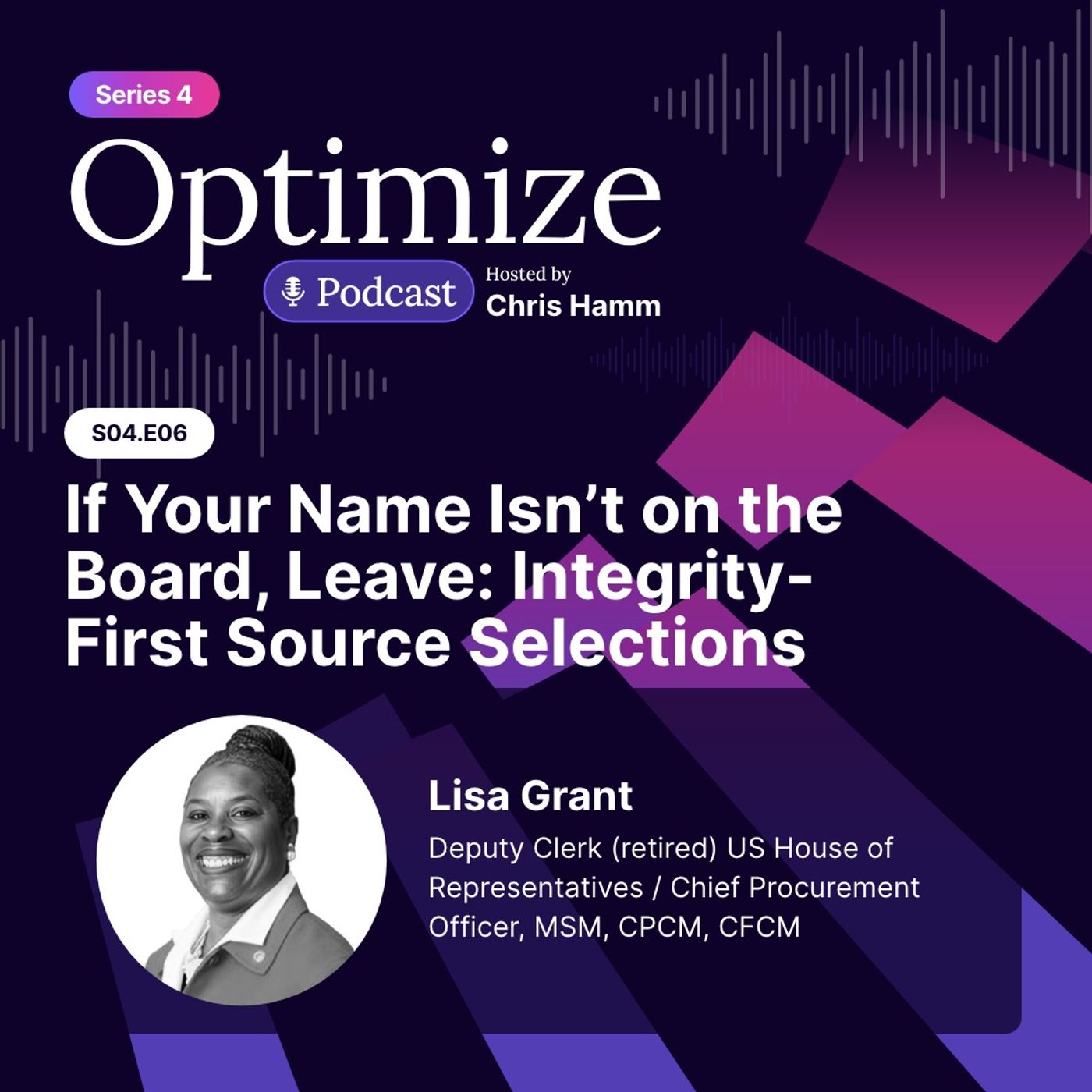
In this episode of Optimize, host Chris Hamm sits down with Lisa Grant, a veteran acquisition leader whose career spans mission-critical federal contracting and senior procurement leadership, including serving as Deputy Clerk and Chief Procurement Officer for the U.S. House. Lisa walks through the experiences that shaped her leadership style, from high-tempo environments where timelines and consequences are real, to complex procurements that draw intense scrutiny.A central thread of the conversation is procurement integrity, not as a buzzword, but as a set of deliberate behaviors and guardrails. Lisa shares a standout behind-the-scenes moment from a high-profile source selection when unlisted attendees began piling into the room and how she enforced the structure so the process stayed fair, credible, and defensible.Lisa also explains the practical mechanics that protect trust: disciplined communications, clear roles, visible processes, and the leadership backbone to hold the line even when senior stakeholders want updates. The episode closes with hard-earned advice on reputation, trust, and leaving every job with integrity.
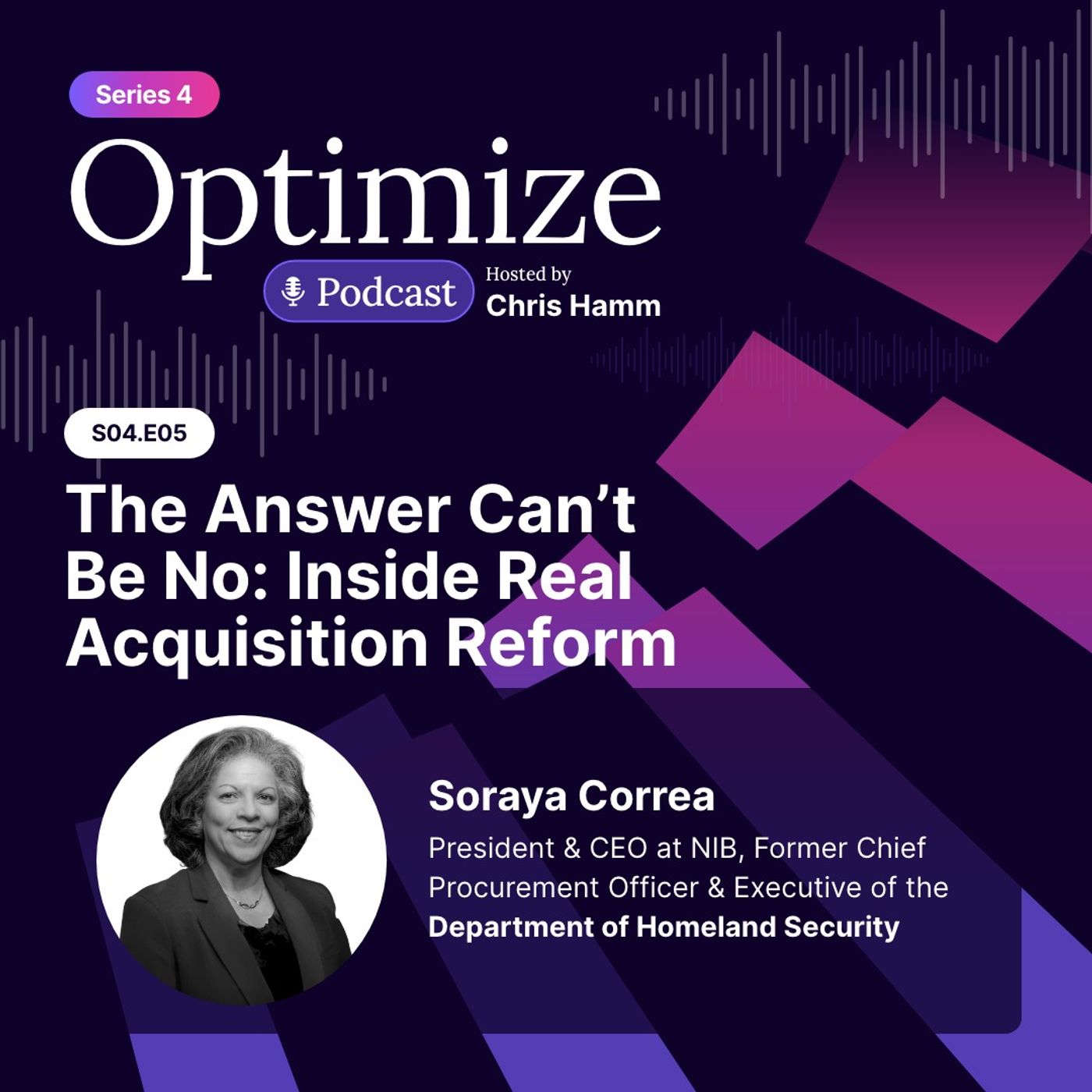
In this episode of Optimize, host Chris Hamm sits down with Soraya Correa—former Chief Procurement Officer and Senior Procurement Executive at the Department of Homeland Security—to get specific about what it actually takes to modernize acquisition from the inside. Soraya walks through her career path across procurement and program leadership, then explains how she launched the DHS Procurement Innovation Lab by focusing on speed, outcomes, and the flexibilities already available “within the four corners of the FAR.”They dig into what “top cover” looks like in practice: letting contracting officers try new approaches, learning from failure, and sharing repeatable playbooks across government. Soraya also addresses the risk environment leaders face today—and why she believes the acquisition workforce (not legislation) drives the most meaningful reform.Finally, Soraya shares what she’s building now as CEO of the National Industries for the Blind (NIB)—supporting the AbilityOne ecosystem, expanding services like closeout support, and creating real economic independence for Americans who are blind or visually impaired.Useful timestamps (MM:SS)00:04 — Welcome + why Soraya’s DHS acquisition role matteredTranscript s04-Soraya Correa Th…00:59 — Soraya’s career path: contract specialist → CPO (and why it took 40 years)Transcript s04-Soraya Correa Th…03:35 — Moving to the program side: learning IT and building acquisition muscle07:32 — The Procurement Innovation Lab origin story: “I didn’t ask for permission”Transcript s04-Soraya Correa Th…09:47 — Starting with closeouts: removing friction and cleaning up the backlogTranscript s04-Soraya Correa Th…10:40 — “Show me” evaluations: using practical tests (including “bad code”) to assess vendors12:10 — Coalition of the willing: sharing playbooks across agencies (and why reform starts with practitioners)14:20 — Do leaders still provide “top cover” for innovation in 2026?Transcript s04-Soraya Correa Th…17:50 — “The answer can’t be no”: partnering with political leadership, legal, IT, and CFO21:52 — The most unexpected DHS buy (and what it taught her about mission support)Transcript s04-Soraya Correa Th…25:00 — What NIB does: AbilityOne, Skillcraft, and building employment pathways29:14 — Marketing services like closeouts and accessibility at scaleTranscript s04-Soraya Correa Th…32:01 — Wrap-up and where to connect
In this episode of the Optimize Podcast, host Chris Hamm sits down with David Rothzeid — Principal at Shield Capital, U.S. Air Force reservist, and former acquisition lead at Defense Innovation Unit (DIU) — for a candid look at how protests, OTAs, and SBIR policy really shape DoD innovation.David walks through his journey from ROTC and early Air Force contracting roles to DIU, where he helped stand up the Commercial Solutions Opening (CSO) model and use Other Transaction Authority (OTAs) to pull non-traditional tech companies into defense. He explains how a high-profile production OT for Raincloud was protested and sustained on a “ticky-tacky” issue — and how that single GAO decision effectively froze enthusiasm for production OTs and hurt both the company and the mission.Chris and David then connect that experience to today’s landscape: new “speed of delivery first” guidance from the Secretary, the FORGE and SPEED Acts, and why schedule — not cost or performance — must become the sacred variable for defense acquisition.In the second half, David talks about leaving active duty to join Shield Capital, what he actually does as a venture investor for dual-use startups, and why he’s been pushing hard on SBIR/STTR reform to shut down “SBIR mills” that live off endless grants with no commercialization intent. He shares his work supporting the INNOVATE Act, his view of how SBIR should work, and how he helps founders decide when (and when not) to pursue DoD.They close with a lighter segment on Sweat Equity, David’s early-morning workout and networking group on the National Mall — a healthier, more human way for the national security community to connect.In this episode, you’ll learn:How OTAs evolved from NASA’s early days to DIU’s CSO model — and why their flexibility and collaborative nature matter so much.What actually happened in the Raincloud protest, why GAO sustained it, and how it chilled production OT usage across DoD.Why protests and cultural risk aversion make it harder for leaders to override decisions, even when they believe they were right.How new guidance and legislation aim to make speed of delivery the primary success metric for defense acquisition.What “SBIR mills” are, why David calls them exploitative, and how the INNOVATE Act could reset incentives toward commercialization.How a national-security-focused VC like Shield Capital works with startups on capability gaps, GTM strategy, and when to tackle DoD.Why leaving uniform actually made it easier for David to engage Congress and senior leaders on acquisition reform.The story behind Sweat Equity and why he thinks we need new ways to build community in the defense innovation ecosystem.Timestamps (approximate)00:00 – 04:10 – Meet David Rothzeid: ROTC, discovering acquisition, early Air Force contracting roles, and the road to DIU.04:10 – 08:10 – Joining DIU, DIUX 2.0, and the push for new authorities like OTAs and CSOs.08:10 – 12:30 – OTAs 101: NASA origins, DARPA, codifying prototype authority, and why DIU built the CSO process.12:30 – 16:30 – “Being right but early is the same as being wrong”: institutional pushback, being called a heretic, and the Raincloud production OT.16:30 – 20:30 – The Oracle protest, GAO’s decision, and how one sustained protest killed momentum for production OTs.20:30 – 24:30 – Secretary’s memo, FORGE/SPEED Acts, and elevating schedule over cost and performance.24:30 – 28:30 – Leaving active duty for Shield Capital, staying in the reserves, and discovering how accessible Congress and senior leaders can be.28:30 – 32:30 – SBIR/STTR, SBIR mills, the INNOVATE Act, and why perpetual grants are “asinine.”32:30 – 35:30 – What David actually does as a VC for founders: government translator, strategy coach, and talent advisor.35:30 – 36:30 – Sweat Equity workouts and closing thoughts.Resources & links🔗 Optimize Podcast hub: https://www.visiblethread.com/podcasts/🔗 Connect with host Chris Hamm on LinkedIn: https://www.linkedin.com/in/chris-hamm-304103/🔗 Connect with guest David Rothzeid on LinkedIn: https://www.linkedin.com/in/david-rothzeid-7a116961
In this episode of the Optimize Podcast, host Chris Hamm (CEO, FIN Acquisitions & former SES at GSA AAS) sits down with Robert (“Bob”) Niewood, a career GSA acquisition and systems leader turned consultant, to unpack how federal procurement actually works under the hood.Bob walks through his 20+ year journey at GSA — from intern and contracting officer to director of systems and HCA for the Multiple Award Schedules program — and explains why the uniqueness of federal appropriations and fund flows keeps breaking commercial tools. He argues that in many mission spaces, custom-built solutions still beat COTS and low-code, and that focusing only on contract writing systems badly mis-frames the real problem.Chris and Bob dig into the executive order on centralized procurement and OCAS, the push to move GWACs and MACs into GSA, the coming explosion of BPAs under FAR changes, and AI’s emerging “cottage industry” of one-off pilots. Throughout, Bob stresses business architecture, financial integration, and workforce capacity as the real constraints — and offers pragmatic advice for both agencies and GovCon teams trying to navigate what’s next.In this episode, you’ll learn:Why “the financial tail wags the dog” in federal procurement — and what that means for system design and data.How GSA’s mission and revenue model make it fundamentally different from a “back office” contracting shop.The real trade-offs between COTS, low-code, and custom-built acquisition systems in a legacy-heavy environment.Why contract writing is just one small piece of a much larger business system (funds, audits, oversight, post-award).The hidden complexity of OCAS and centralized procurement for “simple” common goods and services.How GWACs, MACs, and new BPAs will stress current data models and legacy systems.Why AI in acquisition today looks a lot like the early days of dashboards and RPA — and what might actually scale by 2026.Timestamps[00:00] Meet Bob Niewood – Philly sports, early GSA days, and how he fell in love with government contracting.[06:30] Lotus Notes, paper files, and the first attempt to move GSA into a commercial ERP — and why it failed.[10:00] Why federal money “is not commercial” – appropriations rules, one-year vs multi-year funds, and custom finance logic.[14:00] Custom vs COTS vs low-code: when GSA must build its own mission systems and where commercial tools still fit.[18:20] Can GSA still be its own integrator? Workforce constraints, DRPs, and the tax of transformation on 1102s.[21:00] “It’s not about clauses” – reframing acquisition systems as end-to-end business systems, not just contract writing tools.[27:20] Why “one system for everything” usually fails — and how GWACs and MACs complicate any consolidation strategy.[29:10] Moving contract vehicles from NIH or NASA into GSA: practical realities, data migration, and integration pain.[33:40] OCAS and centralized procurement: why making simple buys “more complex” can create a false economy.[38:50] Enterprise pricing vs local buys – how timing, specs, and IDVs could solve more problems than new central offices.[40:55] What will work by 2026? A more focused procurement ecosystem, incremental modernization, and better alignment inside GSA.[42:30] AI as the next “wild west” – pilots, cottage industries, and finding use cases that scale across agencies.[44:50] BPA boom, legacy data problems, and why intelligent automation still has huge headroom in acquisition workflows.[46:00] Bob’s parting advice and why experiencing life as a contractor (yes, register in SAM) can be eye-opening.
Rob Burton brings over three decades of legal and procurement experience to this candid episode of the Optimize Podcast. In conversation with host Chris Hamm, Rob dives into the growing use of AI in bid protests—some of which are generating “hallucinated” claims that frustrate GAO reviewers.They break down the scope of the FAR overhaul, the implications of GSA’s OneGov consolidation effort, and how current acquisition trends could impact competition, pricing, and policy for years to come.From protest reform to the OEM reseller debate, this is a must-listen for GovCon professionals navigating a wave of change in federal acquisition.📌 Topics & Timestamps:Rob’s federal background & GSA happy hour banter (00:30)Bid protest reform under Trump & Biden (04:20)AI-generated protests and GAO pushback (06:40)Executive orders and procurement strategy (10:45)OneGov and GSA centralization risks (18:30)OEMs, resellers, and the pricing squeeze (23:00)FAR overhaul and the “600-page” rule change (26:00)Debriefing breakdowns and protest drivers (42:30)What needs fixing next in acquisition (48:00)
Guest:Alan Thomas, Founder of AlphaTango Strategies & Former Commissioner, GSA FAS🎧 Host:Chris Hamm, CEO of FIN Acquisitions & Former SES, GSA AAS Defense📄 Episode Description:In this episode of the Optimize Podcast, host Chris Hamm kicks off Series 4 with a powerful conversation with Alan Thomas—former Commissioner of GSA’s Federal Acquisition Service. Together, they dig into what it really means to lead through transformation in the world of federal contracting.Alan reflects on his time at GSA, including integrating 18F, managing risk tolerance, and prioritizing culture over compliance. He shares hard-won leadership advice for anyone working in or around government acquisition—whether you're navigating reform, building teams, or just trying to stay focused in a sea of noise.From public sector leadership to private sector insights, this episode offers a rare, honest look at the pressures and purpose behind decision-making in GovCon.📌 Topics & Timestamps:Alan’s journey from consulting to federal leadership (02:00)Leading GSA’s Federal Acquisition Service (06:00)Managing risk, reform, and cultural tension (14:00)Lessons from integrating 18F and TTS (17:00)What focus really means in public service (13:30)Culture vs. compliance and leading with trust (27:00)Thoughts on AI, innovation, and the risk-averse mindset (28:00)Why “every storm runs out of rain” (37:40)🔗 Useful Links:Listen to more episodes: https://www.visiblethread.com/podcasts/Connect with Chris Hamm: https://www.linkedin.com/in/chris-hamm-304103/
Episode Title: 2025 Unfolded – Essential Insights from the Optimize Podcast2025 is here, and the lessons from last year’s top conversations are more relevant than ever. In this special compilation, The Optimize Podcast host Jeff Shapiro takes you through the most valuable moments from Series 3—insights you can use to sharpen your strategy and stay ahead in the evolving world of government contracting.You’ll hear highlights from our most popular and talked-about episodes, organized into four timely themes:DOGE Policies – Navigating the New NormalHow the Department of Government Efficiency is reshaping contracting, from terminations to compliance.Competitive Intelligence and Bid Protests – Staying Ahead of the GameWinning strategies for gathering intel and navigating protests to secure contracts.Building Relationships – Why Connections Still MatterWhy trust, networking, and collaboration remain the backbone of GovCon success.Adapting to Technological and Cultural Change – Embracing the FutureHow contractors are leveraging tech, AI, and cultural shifts to drive innovation.Timestamps:00:00 – Welcome to 2025 Unfolded03:15 – DOGE Policies – Navigating the New Normal15:40 – Competitive Intelligence and Bid Protests – Staying Ahead of the Game29:20 – Building Relationships – Why Connections Still Matter42:05 – Adapting to Technological and Cultural Change – Embracing the Future55:30 – Closing thoughts and key takeawaysUseful Links:More episodes of The Optimize PodcastConnect with host Jeff Shapiro on LinkedIn
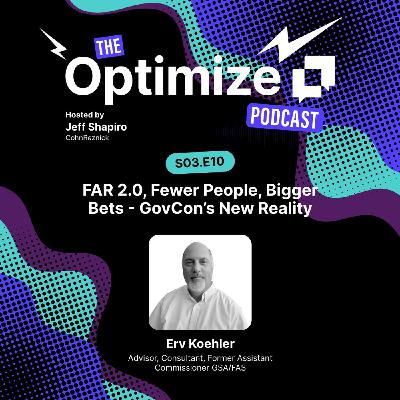
Episode Title:FAR 2.0, Fewer People, Bigger Bets: Surviving the Next GovCon Wave👤 Guest:Erv Koehler, former Assistant Commissioner, GSA’s Office of General Supplies and Services🎧 Host:Jeff Shapiro, Optimize Podcast📄 Episode Description:In this episode of the Optimize Podcast, host Jeff Shapiro is joined by Erv Koehler, a former senior leader at GSA, to discuss what FAR 2.0 and current procurement reforms really mean for industry. With decades of acquisition experience inside the federal government, Erv breaks down how shrinking workforces, growing complexity, and shifting cultural mindsets are colliding inside federal acquisition teams.From the real-world limitations of DOGE to why AI is both promising and problematic, Erv offers a frank, detailed view of the issues affecting buyers and contractors alike. They explore how leadership sets the tone for risk tolerance, what contractors get wrong about relationship-building, and why the future of GovCon will demand more strategy, patience, and adaptability than ever before.Whether you’re a small business, large integrator, or consultant trying to navigate change, this episode delivers practical, eye-opening insights you won’t want to miss.📌 Topics & Timestamps:Erv’s unexpected path into federal acquisition (01:30)The problem with shrinking acquisition teams (05:45)What FAR 2.0 actually changes—and what it doesn’t (09:20)AI’s role in acquisition and what to watch for (22:00)Risk tolerance and leadership culture in contracting (26:00)The impact of DOGE reform and where it fell short (30:20)Consultant relationships, pricing, and small business access (38:15)GSA schedules, TDR, and evolving competition (45:00)Strategic advice for navigating the GovCon landscape (56:30)🔗 Useful Links:🎧 Listen to more episodes: https://www.visiblethread.com/podcasts/🔗 Connect with host Jeff Shapiro: https://www.linkedin.com/in/jeffshapirocpa/🔗 Connect with guest Erv Koehler: https://www.linkedin.com/in/erv-koehler-63a67a38/
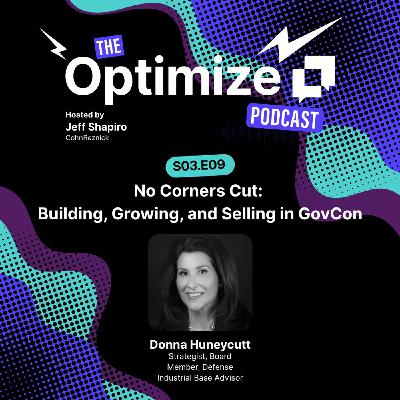
No Corners Cut: Building, Growing, and Selling in GovCon👤 Guest:Donna Honeycutt, Co-founder & former COO of WWC Global🎧 Host:Jeff Shapiro, Optimize Podcast📄 Episode Description:In this episode of the Optimize Podcast, host Jeff Shapiro is joined by Donna Honeycutt, co-founder and former COO of WWC Global—a pioneering government contracting firm known for its commitment to military spouses, compliance, and culture.Donna shares how she and her co-founder built a GovCon business overseas from scratch, scaled it over 15 years, and sold it with zero due diligence findings. From pricing pressures and CPARS credibility to hiring challenges and values-based leadership, Donna unpacks the real-world experiences behind growing and exiting a successful federal contracting company.She also speaks candidly about the realities of competing with big business, the problem with regulatory inertia, and how integrity became WWC’s most valuable differentiator.📌 Topics & Timestamps:Building WWC Global from Naples, Italy (03:15)Creating opportunities for military spouses (06:40)Staying audit-proof and compliance-focused from day one (13:30)Growing while staying values-aligned (20:00)Managing pricing and perception in a competitive GovCon space (26:45)The exit strategy and selling the business (34:00)What big businesses get wrong—and small businesses get right (55:00)Why regulatory change is overdue in federal acquisition (01:03:00)🔗 Useful Links:Listen to more episodes: https://www.visiblethread.com/podcasts/Connect with Jeff Shapiro: https://www.linkedin.com/in/jeffshapirocpa/Connect with Donna Honeycutt: https://www.linkedin.com/in/donna-segal-huneycutt-a441619/
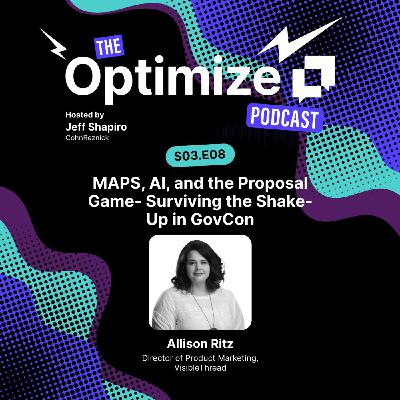
In this episode of the Optimize Podcast, Jeff Shapiro speaks with Allison Ritz, a GovCon expert and Director of Product Marketing at VisibleThread. Together, they unpack the shifting rules of federal procurement—from the ripple effects of the MAPS acquisition to the rise of AI in capture and proposal processes.Allison discusses what consolidation really means for niche contractors, why subcontracting shouldn’t be viewed as a fallback, and how strategic positioning is more important than ever in the face of fewer—but broader—acquisitions. She also offers a grounded, practical perspective on AI’s role in GovCon: where it helps, where it doesn’t, and what business leaders often get wrong when adopting it.With insights into human decision-making, relationship-driven sales, and the future of proposal work, this is a must-listen for anyone navigating change in the federal market.📌 Topics & Timestamps:Allison’s path into public sector SaaS and GovCon (02:30)The MAPS acquisition and what it signals for the market (06:00)Professional services and consolidation risks (11:15)Subcontracting as a strategy, not a demotion (19:00)Capture planning and human decision-making (33:00)AI and proposal development: hype vs. value (43:30)AI implementation mistakes and what leaders overlook (51:00)How to stay competitive and adapt (58:00)🔗 Useful Links:Listen to more episodes: https://www.visiblethread.com/podcasts/Connect with Jeff Shapiro: https://www.linkedin.com/in/jeffshapirocpa/Connect with Allison Ritz: https://www.linkedin.com/in/allison-ritz-cf-apmp-111a6663/
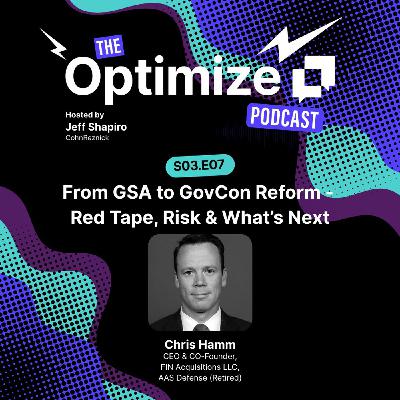
Guest:Chris Hamm, former Director, GSA Assisted Acquisition Services🎧 Host:Jeff Shapiro, Optimize Podcast📄 Episode Description:In this episode of the Optimize Podcast, Jeff Shapiro sits down with former GSA leader Chris Hamm to explore the state—and future—of federal procurement. With firsthand experience at the helm of GSA’s Assisted Acquisition Services, Chris shares his perspective on the challenges of consolidating contracts, the tension between innovation and risk aversion, and the cultural drivers behind federal protest trends.They tackle what the recent executive order on contract consolidation really means, how government-wide contracts are evolving, and why acquisition teams often default to “safe” over smart. Chris also discusses the SBIR program, eBuy critiques, and how to build a better, more accountable procurement system.Whether you're an acquisition professional, contractor, or policy follower, this episode delivers sharp, honest insights you won't hear anywhere else.📌 Topics & Timestamps:Chris’s path into GSA and early federal service (03:20)Executive order on contract consolidation (08:12)Culture vs. policy: Why risk aversion dominates (19:30)Protest culture and unintended consequences (25:00)GWACs and the potential impact on programs like NASA SEWP (30:00)RFO/FAR overhaul and tech modernization (39:15)Thoughts on eBuy, automation, and procurement platforms (47:30)SBIR program and small business innovation (1:00:55)Chris’s current work supporting GovCon companies (1:04:30)🔗 Useful Links:Optimize Podcast: https://www.visiblethread.com/podcasts/Connect with host Jeff Shapiro: https://www.linkedin.com/in/jeffshapirocpa/Connect with guest Chris Hamm: https://www.linkedin.com/in/chris-hamm-304103/
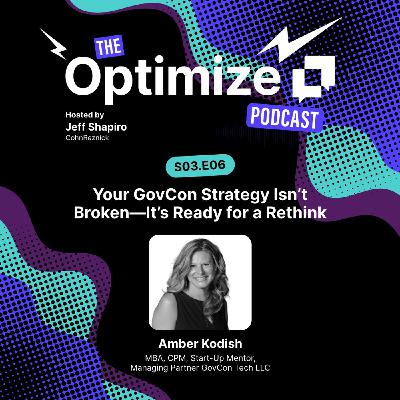
In this episode of the Visible Threads Optimized Podcast, host Jeff Shapiro speaks with Amber Kodish, a seasoned expert in government contracting. They discuss Amber's journey into the GovCon space, the cyclical nature of government contracting, and the current challenges and opportunities within the industry. Amber emphasizes the importance of understanding core capabilities, networking, and building relationships in the federal sector. The conversation also touches on leadership strategies during uncertain times and the potential for businesses to pivot towards defense and homeland security opportunities. Additionally, they explore the significance of state and local government contracts and the evolving landscape of procurement practices. In this conversation, Amber Kodish and Jeff Shapiro discuss the importance of networking in the business world, particularly in the context of government contracting. They explore strategies for building a network, the significance of follow-up, and how commercial companies can successfully enter the government market. The discussion also covers various funding sources available to businesses, including SBIRs and RFIs, and emphasizes the need for relationship-building in achieving success in government contracts.👤 Guest:Amber Kodish, Federal Business Development & Strategy Consultant🎧 Host:Jeff Shapiro, Optimize Podcast📄 Episode Description:In this episode of the Optimize Podcast, host Jeff Shapiro speaks with GovCon strategist Amber Kodish about how to shift mindset, strategy, and operations when federal business doesn’t go according to plan. From navigating budget uncertainty to creatively entering new markets through pilots and partnerships, Amber shares an insider’s take on how businesses can lead with agility and grow through the chaos.They discuss how to identify resilient agencies, why being likable matters more than ever in business development, and how to rethink your capture strategy beyond waiting on SAM.gov. Whether you’re a prime, a sub, or a commercial company trying to break into federal, Amber offers sharp, honest, and energizing advice to help you take action.📌 Topics & Timestamps:Amber’s path into GovCon and passion for mission-focused work (02:30)Leading teams and setting a strategic vision after disruption (10:15)Identifying growth-friendly agencies and geographic opportunities (13:30)Relationship-driven business development and why it works (26:00)Breaking in through pilots, micro-purchases, and alternative entry points (50:30)GSA schedules, SBIRs, and how to stop relying on SAM.gov alone (57:40)Lessons in leadership, optimism, and adaptability in GovCon (01:05:00)🔗 Useful Links:Listen to more episodes: https://www.visiblethread.com/podcasts/Connect with Jeff Shapiro: https://www.linkedin.com/in/jeffshapirocpa/Connect with Amber Kodish: https://www.linkedin.com/in/amber-kodish-mba-cpm/
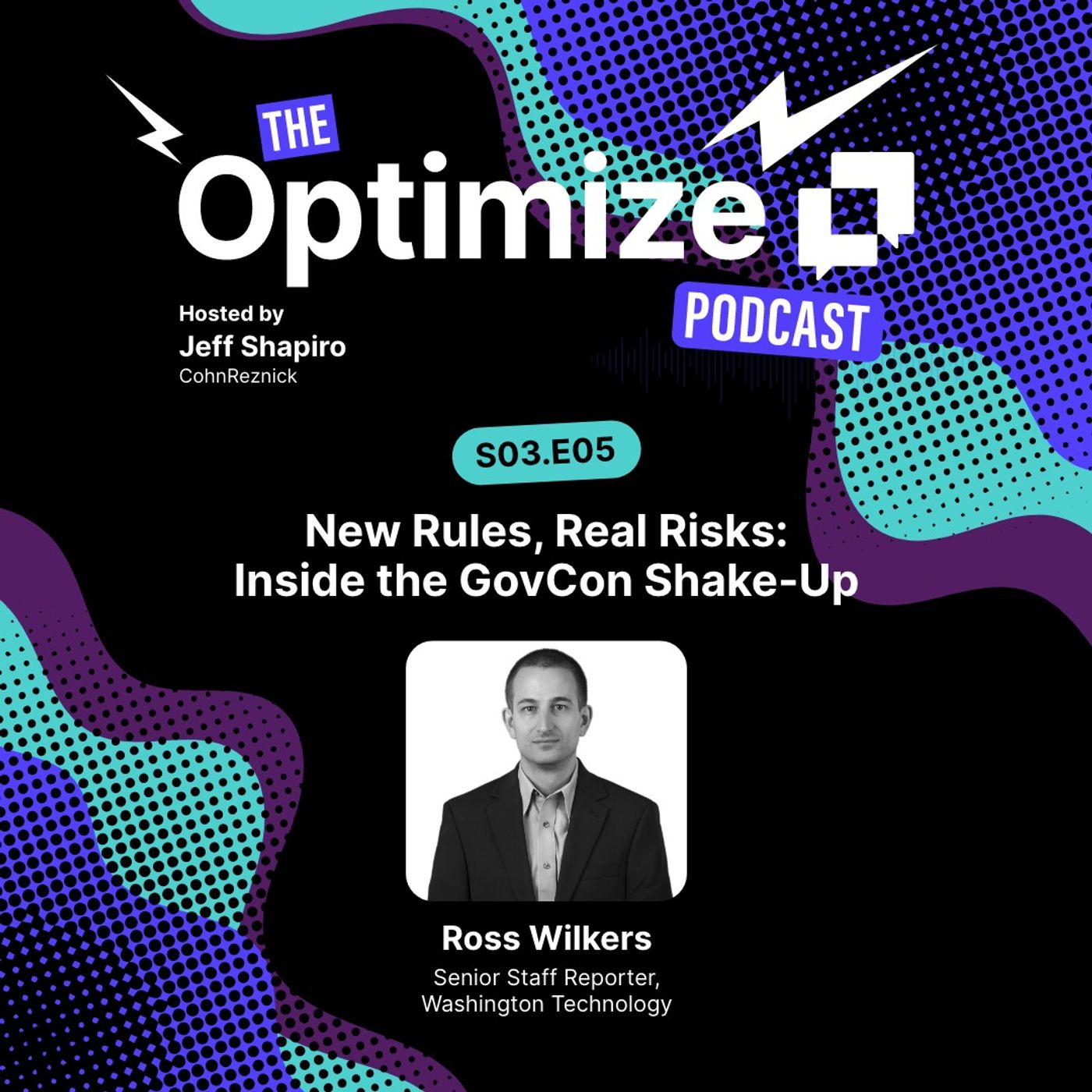
Guest:Ross Wilkers, Senior Staff Reporter, Washington Technology🎧 Host:Jeff Shapiro, Optimize Podcast📄 Episode Description:In this episode of the Optimize Podcast, host Jeff Shapiro is joined by Ross Wilkers, veteran journalist and Senior Staff Reporter at Washington Technology. They dive deep into the current transformation sweeping federal procurement—fueled by policy mandates, staffing changes, and a growing push toward commercial solutions and outcome-based contracting.Ross shares what he’s hearing on the ground from contractors, policymakers, and agency insiders—from the shrinking federal workforce and skepticism around consulting, to the reality of scaling commercial tech for government needs. Whether you’re a longtime GovCon player or just trying to stay ahead of the headlines, this episode delivers fresh perspective on what’s really driving change—and how to prepare for it.📌 Key Topics & Timestamps:Ross’s path from local journalism to GovCon (01:00)How agency workforce reductions are disrupting relationships (08:00)The commercial preference push and Palantir’s lawsuit (14:00)Consulting’s image crisis in GovCon (18:30)Scaling challenges with commercial tech in government (20:00)Outcome-based contracting: rewards vs. risks (59:00)Advice for influencing policy change and avoiding “complaint-only” feedback (50:00)Where to get real GovCon insights (52:00)🔗 Useful Links:Listen to more episodes: https://www.visiblethread.com/podcasts/Connect with Jeff Shapiro on LinkedIn: https://www.linkedin.com/in/jeffshapirocpa/Connect with Ross Wilkers on LinkedIn: https://www.linkedin.com/in/ross-wilkers-9256a371/
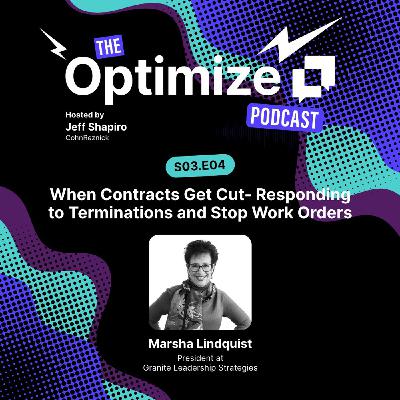
Jeff Shapiro and Marsha Lindquist delve into the complexities of government contracting, focusing on strategic pricing and the implications of terminations and stop work orders. Marsha shares her extensive experience in the field, offering insights into best practices for contractors facing potential contract terminations. The conversation covers essential topics such as understanding termination costs, navigating different contract types, and the importance of strategic planning when preparing settlement proposals. In this conversation, Marsha Lindquist and Jeff Shapiro discuss the complexities of managing records and costs associated with contract terminations, particularly in the context of audits and subcontractor claims. They emphasize the importance of maintaining thorough documentation, understanding allowable costs, and preparing for potential audits. The discussion also covers the nuances of subcontractor claims, price analysis, and the business decisions that contractors must navigate when settling termination proposals. Ultimately, the conversation highlights the need for diligence and compliance in government contracting.
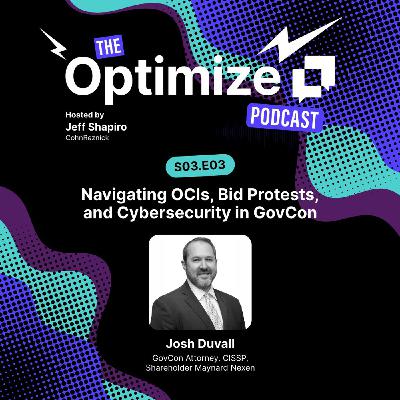
In this informative episode of the Optimize Podcast, host Jeff Shapiro sits down with cybersecurity and government contracting expert Josh Duvall, shareholder at Maynard Nexon. They delve into critical issues impacting federal contractors, providing valuable insights on navigating Organizational Conflicts of Interest (OCIs), effectively managing bid protests, and the importance of cybersecurity compliance, particularly with the implementation of the Cybersecurity Maturity Model Certification (CMMC).Topics Discussed:Understanding and navigating Organizational Conflicts of Interest (02:50)Types of OCIs: biased ground rules, unequal access to information, impaired objectivity (11:07)Strategies and insights for successful bid protests, including managing key personnel issues (24:36)Importance and strategic use of government Q&A processes (21:17)eLatest developments and impacts of the Cybersecurity Maturity Model Certification (CMMC) (58:35)The significance of proactive cybersecurity compliance and third-party certifications (01:03:26)Useful Links:Optimize Podcast: https://www.visiblethread.com/podcasts/Connect with host Jeff Shapiro on LinkedIn: https://www.linkedin.com/in/jeffshapirocpa/Connect with guest Josh Duvall on LinkedIn: https://www.linkedin.com/in/joshuabduvall/
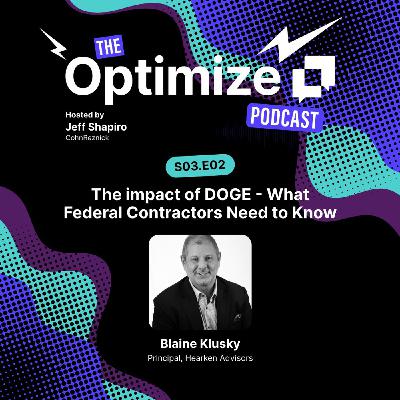
In the latest Optimize Podcast episode, host Jeff Shapiro is joined by Blaine Klusky, founder and principal of Harkin Advisors. Together, they delve deep into the significant impacts and complexities introduced by the Department of Government Efficiency (DOGE) and how these policies are affecting federal contractors.Topics Discussed:Understanding DOGE and its implications for federal contractors (06:15)Navigating terminations for convenience (T for Cs) and rescinded terminations (06:44)Managing regulatory audits and potential overreach by DCAA (07:11)The importance of empathy and maintaining relationships during audits (35:59)Strategies for proactive proposal writing and avoiding "taboo words" flagged by DOGE (16:32)Effectively handling unintended consequences and pivoting your business model (11:18)Practical advice for interacting with regulators and auditors (41:24)Managing business operations and planning strategically for DOGE's impact (29:57)Advice on professional social media conduct and internal communication (59:41)Useful Links:Optimize Podcast: https://www.visiblethread.com/podcasts/Connect with host Jeff Shapiro on LinkedIn: https://www.linkedin.com/in/jeffshapirocpa/Connect with guest Blaine Klusky on LinkedIn: https://www.linkedin.com/in/blaineklusky/
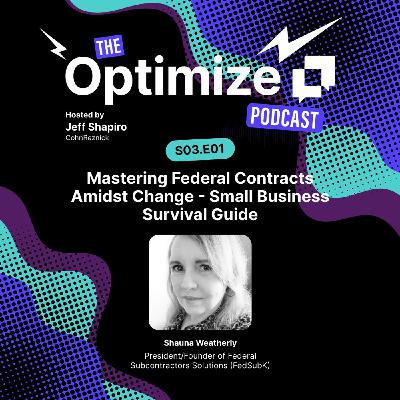
In this episode of the Optimize Podcast, host Jeff Shapiro interviews Shauna Weatherly, a federal acquisition expert with over 35 years of experience. They discuss the current landscape of government contracting, particularly for small businesses, and the importance of adapting to changes in federal acquisition policies. Shauna shares insights on effective strategies for small businesses, including the significance of teaming, engaging with contracting officers, and leveraging resources like SAM.gov. The conversation also touches on the role of NAICS codes, GSA contracts, and alternative opportunities in government contracting. In this conversation, Shauna Weatherly and Jeff Shapiro discuss the evolving landscape of government procurement, focusing on commercial strategies, the future of the Federal Acquisition Regulation (FAR), and the challenges faced in contracting and talent retention. They emphasize the importance of adapting to changes in the market, understanding proposal evaluation processes, and the need for businesses to diversify their offerings. The discussion highlights the significance of presenting strong proposals and the necessity for companies to be proactive in their strategies to succeed in a competitive environment.
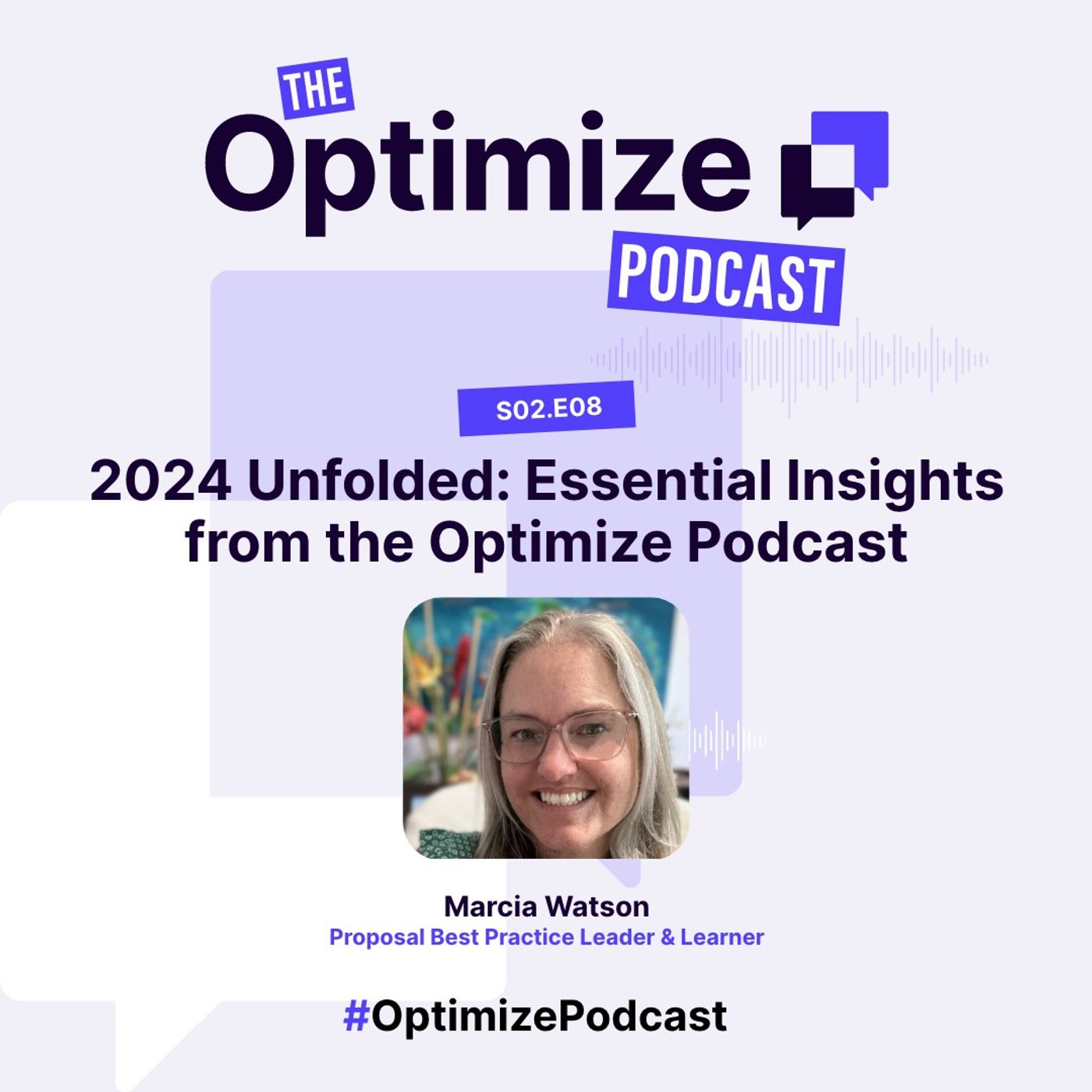
In 2024 Unfolded - Essential Insights from the Optimize Podcast, we’ve distilled the top moments from seven impactful episodes into one essential highlights reel. Join Marcia Watson and explore how AI is reshaping federal contracting, the power of building strong relationships, strategies for mastering competitive intelligence, and insights on adapting to rapid changes in technology and workplace culture. Whether you’re a seasoned professional or new to the field, this episode offers actionable takeaways, expert perspectives, and a fresh look at what’s ahead for government contracting in 2024.

Comments

Download from Google Play

Download from App Store
 United States