


 Claim Ownership
Science Fare
Subscribed: 0Played: 1
Subscribe

© Susan Keatley
Description
Welcome to Science Fare! In this show, scientist and writer Susan Keatley talks with scientists about their latest research and how it relates to what kids learn in the science classroom.
Hosted on Acast. See acast.com/privacy for more information.
50 Episodes
Reverse
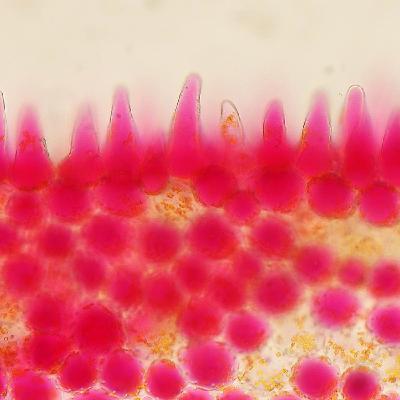
Please click below to fill out the survey for this episode:Science Fare Podcast Feedback FormScience Fare Podcast website Online resources mentioned in this episode: Stacey’s flower petal image on the Howard Hughes Medical Institute Biointeractive site Stacey’s essay, With Bated Breath Stacey’s lab websiteScientific American article, “DNA Studies Uncover Unexpected Evolutionary Changes in Modern Humans”Paúl Gonzáles social media on plants Our guest today Stacey Smith. Stacey is an associate professor in the Ecology and Evolutionary Biology department at the University of Colorado in Boulder. Her lab studies the evolution and genetics of flowers with a focus on the tomato family.Recent work in her lab has focused on the evolution of flower color, as this trait has a relatively simple genetic basis and is ecologically important. Results of the lab’s studies suggest that flower color changes can involve a range of genetic mechanisms and may often be driven by competition for pollinators.Highlights of the episode:*Susan introduces the Science Fare podcast and opens with a quote from our guest who describes the surprising and unintuitive way flowers make the color red [0:01];*Susan introduces guest Stacey Smith, a botanist at UC Boulder [1:31]; *Stacey tells us about her path to becoming a scientist, including how when she went to college she asked, What major is for people who like wildflowers? [3:38];*Listener question! From Megan, age 16, a senior in high school — How do plant pigments such as chlorophyll, Anthocyanins, and carotenoids work with the visible light spectrum and absorb certain wavelengths of light and then appear as a certain color? [6:27];*Why is flower color simple genetically? [9:31];*Why is flower color important ecologically? [12:00];*What would a landscape of flower colors have looked like way back when flowers first came on the scene? [15:02];*How do you start in the search for plant fossils? [16:53];*Yes, we need more botanists to go outside and make new discoveries in plants — AI cannot do it alone! [19:56];*Stacey’s lab’s work on convergent evolution [21:30];*Interesting examples of convergent evolution in the development of red pigments in flowers and other examples [26:10];*What does Stacey’s research process look like? [30:30];*An especially beautiful image under the microscope of petals — the image looked like a carpet of pink cells with orange globs and it was a picture of the day at Howard Hughes Medical Institute [35:30];*Another listener question! This is from Sam, age 16, in Lafayette, CO and he asks, What evolutionary pressures are responsible for the evolution of plant pigments? [36:40];*What does Stacey like most about her job and what surprises her? [41:33];*The importance of writing in being a successful scientist [42:52];*What is like having so many undergraduate and high school students in Stacey’s lab? [45:47]*Stacey’s essay “With Bated Breath” and the importance of basic science because you don’t know what incredible discoveries it can lead to [48:22];*What path would a high school student interested in plants take? What advice do you have? [56:05];*Stacey’s suggestions for online resources on plants [59:50] Hosted on Acast. See acast.com/privacy for more information.
Please click below to fill out the survey for this episode:Science Fare Podcast Feedback FormScience Fare Podcast website Our guest today Stacey Smith. Stacey is an associate professor in the Ecology and Evolutionary Biology department at the University of Colorado in Boulder. Her lab studies the evolution and genetics of flowers with a focus on the tomato family.Recent work in her lab has focused on the evolution of flower color, as this trait has a relatively simple genetic basis and is ecologically important. Results of the lab’s studies suggest that flower color changes can involve a range of genetic mechanisms and may often be driven by competition for pollinators.In this mini episode, Stacey answers the question, “Why is flower color important ecologically?” Hosted on Acast. See acast.com/privacy for more information.
Please click below to fill out the survey for this episode:Science Fare Podcast Feedback FormScience Fare Podcast website Our guest today is David Schwartz, who is a genomic scientist and emeritus professor of chemistry and genetics at the University of Wisconsin-Madison. Dave received his Ph.D. from Columbia University in 1985 and he invented an important method for separating large DNA molecules called pulsed field gel electrophoresis. Dave was a professor at NYU in the chemistry department until 1999 when he moved to UW-Madison, where he founded and directed the Genomic Sciences Training Program.In this full-length interview, Dave talks about his life growing up and interest in science, his early research developing pulsed field gel electrophoresis, then his move into imaging single DNA molecules through the optical mapping system, and where genomics has come and where it’s going. He also gives advice to students interested in science — spoiler alert — run toward those hard problems! Highlights of the episode:*Susan introduces the Science Fare podcast and opens with a quote from our guest who says scientists are the intellectual fire fighters - they run toward the hard problems [0:01]; *Susan introduces guest David Schwartz, a genomic scientist and emeritus professor of chemistry and genetics at the University of Wisconsin - Madison and he was also Susan’s Ph.D. advisor [1:07]; *Dave tells us about his life growing up and how Mr. Wizard and his older brother sparked his interest in science [3:42];*His experience going to Bronx Science in NYC — “the most competitive academic environment” [6:36];*The beginning of the idea of pulsed field gel electrophoresis during his senior year of college — he was at Hampshire College but spent senior year at college [7:40];*Dave went to UCSD to pursue this idea more [11:28];*Dave moved back east, transfers to Columbia University to continue his Ph.D. program and refined pulsed field gel electrophoresis there [13:02];*Dave became very interested in the genetics and biology — what were the new problems that physical science could solve? [14:30];*Susan makes the point that Dave’s new genomic approach was hitting this middle scale — in between the sequence of DNA fragments and cytogenetic approaches [17:28];*Dave talks about why certain parts of the genome were originally called junk, and the importance of running toward hard problems and doing “dangerous science” [18:50];*Dave moved on to a research position at the Carnegie Institution of Washington (now Carnegie Science) and began using microscopy to image DNA molecules [20:20];*The beginnings of optical mapping and Dave’s move to NYU [24:00];*Why working with large DNA molecules was so hard [29:29];*The link between single molecules and what happens in meiosis, something students learn about in high school science [31:37];*When will the “perfect genome” be cheap and easy? [35:40];*Dave’s advice for high school students interested in science [40:40] Hosted on Acast. See acast.com/privacy for more information.
Please click below to fill out the survey for this episode:Science Fare Podcast Feedback FormScience Fare Podcast website In this mini episode, host Susan Keatley gives an overview of what happens in meiosis and genomic scientist David Schwartz talks about how genomics enabled biologists to make discoveries through, in part, visualizing single DNA molecules. Schwartz connects the ability to visualize single DNA molecules to what is going on when a cell goes through meiosis. Hosted on Acast. See acast.com/privacy for more information.
Please click below to fill out the survey for this episode:Science Fare Podcast Feedback FormAnd, check out the Science Fare Podcast website! Our guest today is Jan Drgona, who joins us today from Johns Hopkins University. Jan is an associate professor in the department of civil and systems engineering, and is also at the Ralph S O’Connor Sustainable Energy Institute. In this full-length interview, Jan talks with us about the challenges in sustainably heating and cooling buildings, and how physics and scientific machine learning can help. Highlights of the episode:*Susan introduces the Science Fare podcast and frames the idea that a building’s materials play a role in the ubiquitous challenge of fighting the second law of thermodynamics [0:01]; *Susan introduces guest Jan Drgona, an engineering professor at Johns Hopkins University who is studying sustainable energy use in buildings [1:30]; *Jan shares his “winding” path to becoming a scientist, from wide-ranging interests in science as a kid to knowing he wanted to be a scientist due to a great high school chemistry experience and interests in math and computers [2:29]; *A lucky encounter conversing with another Ph.D. student during the coffee break at a scientific workshop who was working in modeling physical processes in buildings and was looking to collaborate with someone with Jan’s background and skills [5:12]; *Susan reflects on the power of in-person scientist meetings leading to multi-decade collaborations [7:28]; *Jan talks about the fascinating and important interdisciplinary research going on at the Ralph S O’Connor Sustainable Energy Institute [8:30]; *Susan sets up the problem Jan is working on — the difficulty in sustainably heating and cooling buildings — and Jan explains why building energy use is often inefficient and what the problem-solving opportunities are [9:20]; *The hundreds or thousands degrees of freedom in building HVAC — far higher than in driving a car (more like 12 degrees of freedom)! And how one human can’t really manage this in a static rules-based way [12:23]; *Why we often need to wear sweaters in buildings in summer and other problems with the current, more conservative approach to HVAC [14:30]; *Let’s talk about these problems in terms of something high school students are learning — the second law of thermodynamics [15:30]; *Combining thermal mass and thermal resistance of building materials can help make operation more efficient [19:00]; *HVAC type — electrification and coefficient of performance [19:31]; *Susan introduces Next Generation High School Science Standard PS 3-4, which states that students should be able to plan and conduct an investigation to provide evidence that when two components of different temperature are combined within a closed system, transfer of thermal energy results in a more uniform energy distribution among the components in the system — buildings can be a great setting for this kind of investigation! [21:49]; *Jan describes scientific machine learning and how it’s different from regular machine learning and illustrates with a concrete example of a building he worked on [23:30]; *Jan explains that scientific machine learning combines the guarantees of the physics with the adaptability of machine learning [30:16]; *Susan asks what would be the most complicated building to deal with in terms HVAC? One kind, Jan explains, are data centers [31:55];*Jan’s hopes for the near future [34:27];*Susan asks, what do you enjoy most about working in science? Jan says the people and the community, and the chance to live in many different places and countries and meet many different kinds of people. [39:39];*Jan’s advice for high school students interested in science — follow your passion — your path is important! [43:20]; *Closing remarks, listener feedback information, and acknowledgment of the Science Fare team [45:47] Hosted on Acast. See acast.com/privacy for more information.
Please click below to fill out the survey for this episode:Science Fare Podcast Feedback FormScience Fare Podcast website Our guest today is Jan Drgona, who joins us today from Johns Hopkins University. Jan is an associate professor in the department of civil and systems engineering, and is also at the Ralph S O’Connor Sustainable Energy Institute. Jan’s research focuses on energy management in buildings and he’s working on developing scientific machine learning methods to model energy management which turns out is very complex. In this mini episode, I ask Jan about what makes a building complicated to heat and cool, and describes the various factors that make temperature control a challenge, and hints at how physics and machine learning can help. Tune in next week for the full-length interview when Jan talks about making energy use in buildings sustainable and how scientific machine learning and problem solving with an engineering approach and mindset can help. Hosted on Acast. See acast.com/privacy for more information.
Please click below to fill out the survey for this episode:Science Fare Podcast Feedback FormAnd, check out the Science Fare Podcast website! In this full-length interview, Baltimore City police officer and education doctorate holder Tris Hann talks about his background in math education and explains how physics is used to investigate motor vehicle crashes.Highlights of the episode:*Susan introduces the Science Fare podcast and frames the idea of “physics world vs. real world” where ideal equations meet messy reality [0:01]; *Susan introduces guest Tris Hahn, a Baltimore City police officer and former math teacher and will tell us about how police officers use physics to investigate motor vehicle crashes [1:34]; *Tris shares his background in education and his transition from teaching math to becoming a police officer and why real-world applications of math and physics were central to his teaching philosophy [2:16]; *A listener question from a physics teacher — he asks about which actual measurements are taken at accident scenes and Tris explains [3:37]; *What investigators measure: area of impact, final rest positions, skid marks, and debris patterns [5:10]; *Why crash reconstruction often relies on calculating minimum speeds, not exact speeds [6:10]; *The equations the police use are essentially the same kinematics equations students learn in high school physics [7:32]; *Deep dive into skid marks: what they reveal about braking, vehicle motion, and driver behavior [8:46]; *A real-world crash example involving extreme speeding and how physics overturned assumptions about fault [13:38]; *Determining area of impact and danger of pedestrian being struck [17:55]; *A student listener question highlights the gap between idealized physics problems and messy real-world conditions [19:49]; *A full worked example: reconstructing a pedestrian crash using physics principles [25:03]; *Comparing outcomes at 66 mph vs. 30 mph—how speed exponentially affects stopping distance [32:44]; *The dangers of distracted driving, including statistics on phone use and crash risk [37:30]; *Closing remarks, listener feedback information, and acknowledgment of the Science Fare team [39:00] Hosted on Acast. See acast.com/privacy for more information.
Our guest today is Tris Hann, and we are doing something new on this episode — Tris is not actually a scientist, but, he is a Baltimore City police officer! The reason he is on the show is because police officers use physics to investigate vehicle crashes, and that is what Tris is going to talk to us about today. Highlights of this mini episode: *Susan introduces the Science Fare podcast and explains the mini-episode/full-episode format [~0:30];*Susan introduces guest Tris Hahn, a Baltimore City police officer, and explains how physics is used in crash investigation [~1:10];*A listener question from a physics teacher prompts discussion of real-world accident reconstruction [~1:55];*What measurements are taken at serious crash scenes, including area of impact, final rest positions, and debris fields [~2:30];*Why investigators measure everything—from skid marks to pedestrian travel distance—to reconstruct what happened [~3:10];*How physics helps determine not just what happened, but who may be at fault [~3:45];*The misconception that “right of way” always determines fault in a collision [~4:20];*Introduction to perception-reaction time and its importance in crash analysis [~4:50];*How the brain—not just the eyes—processes roadway information and influences driver decisions [~5:20];*A real crash case: a driver turns onto a roadway and is struck by an oncoming car traveling at an extreme speed [~5:55];*How investigators determined the striking vehicle was traveling over 100 mph based on physical evidence [~6:30];*Why the turning driver was not considered at fault despite not having the right of way [~6:45];*How assumptions about typical driving speeds factor into “reasonable behavior” in physics-based investigations [~6:55];*Episode wrap-up, listener feedback information, and acknowledgment of the Science Fare team [~7:00]. Hosted on Acast. See acast.com/privacy for more information.
Please click below to fill out the survey for this episode:Science Fare Podcast Feedback FormAnd, check out the Science Fare Podcast website! Dr. Elizabeth Catania is a neuroscience researcher, assistant professor, Director of Undergraduate Studies and Director of Independent Studies at Vanderbilt University. In this episode, guest host Lucy Pohl, who is the high school intern for the podcast, interviews Dr. Catania talks about her research and path as a scientist. Highlights of the episode: *High school intern Lucy Pohl introduces Dr. Elizabeth Catania of Vanderbilt University and outlines her background in neuroscience and education [~1:20]; *Lucy asks Dr. Catania about how her passion for science originated and how she became interested in neuroscience [2:42]; *Dr. Catania describes starting college as an English major and not discovering her love of science until later [~3:20]; *How an introductory neuroscience course taken “just for fun” changed her academic trajectory and led her to switch majors [~4:05]; *Why students don’t need to “find their thing” in middle school or high school—and why trying new subjects matters [4:58]; *Lucy asks about Dr. Catania’s postdoctoral work at the Vanderbilt Kennedy Center and how working with individuals with autism influenced her approach to neuroscience [~6:20]; *Connecting basic neuroscience research to real people and real-world challenges [7:18]; *Lucy asks Dr. Catania to explain what the nervous system is for students who may not have studied it in depth [~8:05]; *What the nervous system does: how neurons, sensory input, and brain processing allow us to interact with the world [~8:35]; *Dr. Catania discusses comparative neurobiology and how studying different animals helps scientists understand how nervous systems are built and specialized [9:39]; *Lucy asks about technologies that have helped scientists understand the nervous system, including MRI and genetic manipulation [11:55]; *What brain circuitry is and how connections between neurons drive behavior [~13:05]; *How illusions (like the blue/black vs. gold/white dress) reveal how the brain processes sensory information [~14:35]; *Using fMRI to measure connectivity and activity in the brain—and what scientists mean by “higher” or “lower” circuit strength [16:13]; *Why understanding brain circuitry is critical for studying conditions like autism and ADHD [~17:35]; *Connecting neuroscience research to hierarchical systems—from behavior down to genes [~19:05]; *The “cold dog and fireplace” example—moving from behavior to brain regions to cells, proteins, and genes [20:31]; *Discussion of women in STEM: progress made, ongoing challenges, and mentorship as a source of pride [~23:05]; *Field-specific differences in representation of women, including contrasts with engineering [25:01]; *Advice for middle and high school students: follow your interests, don’t fear detours, and allow yourself to change direction [~26:05]; *Incorporating humanities into science education and the importance of communicating science clearly [~28:05]; *Vanderbilt’s first-year core course, “Science, Technology and Value,” and creating a common intellectual experience across disciplines [29:40]; *Why integrating science with humanities benefits both STEM and non-STEM students [32:01]; *Majors that bridge science and humanities, including communication of science and technology and medicine, health, and society [34:17]; Recommended science books for students, including The Beak of the Finch and Why Zebras Don't Get Ulcers[~37:05]; *Advice for students who feel pressured to choose a single academic pathway too early [38:42]; *Current neuroscience research Dr. Catania finds exciting: brain organoids and the future of personalized medicine [~41:05]; *Closing reflections on science, humanities, and intellectual curiosity [43:18]; *Episode wrap-up, listener feedback information, and acknowledgments of the Science Fare intern team [~43:50]. Hosted on Acast. See acast.com/privacy for more information.
Please click below to fill out the survey for this episode:Science Fare Podcast Feedback FormScience Fare Podcast website Dr. Elizabeth Catania is a neuroscience researcher, assistant professor, Director of Undergraduate Studies and Director of Independent Studies at Vanderbilt University. Dr. Catania earned her BA in Neuroscience from the University of Delaware, where she originally started as an English major, and earned her PhD in Neuroscience from Vanderbilt University. She also did a post-doctoral fellowship at the Vanderbilt Kennedy Center’s Treatment and Research Institute for Autism Spectrum Disorder. She has researched how brain circuitry relates to social-emotional well-being. She currently teaches courses on nervous system development and endocrinology. In this MINI episode, Dr. Catania talks about her research, being a woman in science today, and her career path. Highlights of the episode:*Susan introduces the Science Fair podcast, its mission, and the mini-episode/full-episode format [0:03];*High school intern Lucy Pohl introduces today’s guest, Dr. Elizabeth Catania of Vanderbilt University, and summarizes her background in neuroscience and education [~0:55];*Lucy asks Dr. Catania about how her passion for science originated and how she became interested in neuroscience [~1:45];*Dr. Catania describes her early interests in the humanities and starting college as an English major [2:23];*How an introductory neuroscience course—taken largely by chance—sparked Dr. Catania’s love of neuroscience and led her to change majors late in college [~4:04];*Lucy asks Dr. Catania to explain what the nervous system is for listeners who may be unfamiliar with it [~4:30];*What the nervous system is and how the brain, spinal cord, and nerves allow organisms to sense and respond to the world [4:47];*Lucy asks about Dr. Catania’s research on the evolution of the nervous system [~5:40];*Introduction to comparative neurobiology and how studying different animals helps scientists understand nervous system structure and function [6:49];*Lucy asks about Dr. Catania’s experiences as a woman in STEM and how the field has changed over time [~7:30];*Progress and remaining challenges for women in science, including leadership and representation, and moments of pride as a mentor [9:03];*Advice for middle and high school students about following interests, changing paths, and not fearing academic detours [~9:15];*Lucy asks about current neuroscience research Dr. Catania finds especially exciting [~10:50];*Brain organoids: growing “mini-brains” from human cells and how they may transform neuroscience research and personalized medicine [11:17];*Lucy reflects on the conversation and thanks Dr. Catania for sharing her story and insights [~13:05];*Closing remarks, listener feedback information, sponsorship details, and acknowledgments of the Science Fare intern team [13:40] Hosted on Acast. See acast.com/privacy for more information.
Welcome to Science Fare, Season 4! Episodes every Monday, Feb - May 2026. Hosted on Acast. See acast.com/privacy for more information.
Pat Brown talks about his path to becoming a physician and scientist, the importance of a bench-to-bedside-back-to-bench approach in drug development, and targeted cancer therapy. Using his work in leukemia as an example, Pat talks about how changes at the level of DNA sequence change proteins and can lead to the development of cancer, and how scientists can use this knowledge to develop specific cancer treatments. Works cited in this conversation:The Emperor of All Maladies: A Biography of Cancer by Siddhartha MukherjeeJanet Rowley and her work on cancer genetics FLT3 inhibitors: a paradigm for the development of targeted therapeutics for paediatric cancer, in the European Journal of Cancer, March 2004 The biology and targeting of FLT3 in pediatric leukemia, in Frontiers in Oncology, September 2014 Episode highlights:*Susan introduces Pat [1:58];*Pat talks about his journey to becoming a physician and scientist focusing on pediatric leukemia [5:08];*What is leukemia? Pat gives us an overview [8:46];*Why leukemia has been at the forefront of cancer research and treatment [11:58];*Pat’s early research and clinical work in leukemia [13:38];*When, how, and why cancer treatment shifted from a one-size-fits-all approach to something more targeted [15:45];*Some of the specifics of Pat’s work — what is FLT3? Why is it important in leukemia? [21:12];*Pat’s work in developing clinical trials for treatments for children with leukemia — bench to bedside and back again [28:00];*Success with the small molecule lestaurtinib, a first-generation FLT3 inhibitor [30:10];*Pat’s group partnered with another company to produce a monoclonal antibody that could target FLT3 [31:12];*Main challenge with both treatments (and challenge with all cancer therapies) is cancer developing resistance to treatment — people try to prevent resistance with multimodal treatments [32:20];*Leads to the idea of personalized therapy — in each person, what are the genetic characteristics driving the cancer and can those be targeted with a cocktail tailored to that person? [35:40];*Liquid biopsy’s potential in helping us see solid tumor cancers earlier and more comprehensively [36:58];*Pat’s reflections on working in “translational medicine” — as a physician and a scientist — and the importance of bedside to bench as well as bench to bedside [39:21];*How working as a scientist in academia is different from working in industry [43:25];*What Pat is working on now, and his hopes for a decade or two out [50:04];*High school science portion of the episode — Focusing on leukemia as an example, Pat tells us how changes in the DNA sequence of a gene can result in cancer. This connects to one of the Next Generation High School Science Standards in Life Science, which states that students should be able to construct an explanation based on evidence for how the structure of DNA determines the structure of proteins which carry out the essential functions of life through systems of specialized cells [55:23];*Pat shares a memory from high school science [1:02:43];*Pat’s advice to high school students today who are interested in science [1:04:05] Hosted on Acast. See acast.com/privacy for more information.
Pat Brown is a Senior Clinical Trial Physician in Hematology Clinical Development at the pharmaceutical company Bristol Myers Squibb. (For listeners who aren't familiar with the word hematology, it means the study of blood and blood disorders.)Pat earned a bachelor’s degree in engineering from the United States Military Academy in West Point, NY, and a master’s degree in philosophy and politics from Oxford University in England. He then went on to get his medical degree from Medical University of South Carolina College of Medicine and then completed his internship and residency training in pediatrics at Johns Hopkins Hospital, followed by completion of fellowship training in pediatrics hematology/oncology in the joint Johns Hopkins/National Cancer Institute program. He joined the Johns Hopkins faculty as an instructor, and was then promoted to assistant, associate, and full professor of oncology and pediatrics and the director of the Pediatric Leukemia Program at the Sidney Kimmel Comprehensive Cancer Center, with a focus on childhood leukemia, which is a cancer of the blood and bone marrow. During his time at Hopkins, Pat has mentored many students who went on to impactful careers in academic and industry, and was honored for his teaching by several awards and being selected to teach for the premiere national board review course for pediatric hematology/oncology. His lab found that a gene called FLT3 (which was initially discovered by Dr. Brown's mentor, Dr. Don Small) is especially important in certain kinds of childhood leukemia that are especially hard to cure. His lab also identified and helped develop promising combinations of standard chemotherapy drugs and FLT3 inhibitors that can work together to more effectively kill leukemia cells. Episode highlights:*Susan introduces Pat [0:56];*Pat gives an overview of leukemia — what is it? And how does it help us understand other cancers? [3:36];*Pat explains how DNA mutations lead to cancer, and how those same mutations guide scientists to discover targeted cancer therapies [6:12] Hosted on Acast. See acast.com/privacy for more information.
Please click below to fill out the survey for this episode:Science Fare Podcast Feedback FormOur guests today are Sam and Meg Lubner. They are cancer doctors, and they are married!Sam is a hematologist and oncologist at University of Wisconsin Health, and an associate professor at the University of Wisconsin School of Medicine and Public Health.Meg is a professor of radiology at the University of Wisconsin School of Medicine and Public Health in the section of abdominal imaging and intervention. Meg and Sam discuss how physics, chemistry, biology, and data science come together in modern medicine. Through real-world examples—CT scans, genetic mutations in cancer, and the use of AI in medical imaging—students see how foundational science concepts are applied to diagnose disease, design treatments, and make evidence-based decisions. Best fit for: High school biology, chemistry, physics, or interdisciplinary science; introductory college science coursesKey themes: Scientific modeling, structure–property relationships, genetics, medical imaging, AI and ethics, science communication*Susan introduces Sam Lubner, oncologist, and Meg Lubner, radiologist [0:38]; *Sam describes his unconventional path to medicine, from history major and sports radio to oncology [2:58]; *Sam discusses how his career evolved toward education, mentorship, and student leadership [5:19]; *Meg explains why radiology appealed to her, combining physics, chemistry, and patient care [7:44]; *Meg describes modern radiology, including image-guided procedures and patient interaction [10:05]; *Meg discusses the importance of mentorship and what made her teachers so influential [12:20]; *CT, ultrasound, MRI, fluoroscopy, and how different imaging tools answer different clinical questions [14:34]; *Life in the radiology reading room: collaboration, teaching, and learning in a shared space [16:48]; *Why physical proximity and shared workspaces matter for learning and patient care [19:02]; *Sam describes his roles as oncologist, fellowship director, and dean for students [21:21]; *The importance of understanding patients’ goals, quality of life, and side effects during cancer care [23:49]; *Team-based cancer care and close collaboration between oncologists, surgeons, and radiologists [26:07]; *Meg reflects on the emotional weight of oncology and Sam’s strengths as a communicator [28:32]; *Sam discusses compassion, physician wellness, and the human side of medical practice [30:54]; *Sam and Meg share insights from their talk on improving communication between oncologists and radiologists [32:19]; *Why word choice matters in radiology reports and how certain terms can alarm patients [34:41]; *The meaning of “progressive disease” and why precision in language is critical [37:04]; *Sam explains why clinicians should order imaging with clear hypotheses and specific questions [39:22]; *Radiologists as consultants: tailoring imaging and biopsies to clinical questions [41:43]; *Meg explains the physics behind CT scans and how ionizing radiation creates images [44:34]; *Hounsfield units, tissue density, and how radiologists distinguish cysts, tumors, fat, air, and bone [46:48]; *Radiology as “low-power microscopy” and the value of radiologic–pathologic correlation [49:16]; *Sam discusses targeted cancer therapies and genetic mutations such as KRAS [51:18]; *How basic biology, protein structure, and genetics drive modern cancer treatments [53:21]; *Meg explains how AI is currently used to triage imaging studies and detect urgent findings [55:40]; *AI tools for tumor detection, measurement, and automated image analysis [57:53]; *Opportunistic screening: extracting cardiovascular and metabolic risk data from CT scans [1:00:17]; *Bias, validation, and challenges in deploying AI tools in clinical practice [1:02:25]; *Advice for students interested in science: curiosity, persistence, and asking good questions [1:04:48]; *Why science matters—and encouragement for young scientists not to get discouraged [1:07:13]; Hosted on Acast. See acast.com/privacy for more information.
Please click below to fill out the survey for this episode:Science Fare Podcast Feedback FormOur guests today are Sam and Meg Lubner. They are cancer doctors, and they are married!Sam is a hematologist and oncologist at University of Wisconsin Health, and an associate professor at the University of Wisconsin School of Medicine and Public Health where he directs the Hematology and Medical Oncology fellowship program. He specializes in gastrointestinal malignancies. Meg is a professor of radiology at the University of Wisconsin School of Medicine and Public Health in the section of abdominal imaging and intervention. Meg works in the field of radiomics — a field focused on the extraction of quantitative information from diagnostic images — and her research interests include new technology in CT scans — which means using radiation like X-rays for instance to create detailed, cross-sectional images of the body.In this MINI episode, Sam and Meg talk about the basic science behind how their cancer-fighting tools — imaging and targeted cancer therapies. This basic science is part of the high school science curriculum — the radiation that is part of the electromagnetic spectrum, and the notion that DNA mutates. Tune in on Thursday for the full-length interview!Highlights of the episode:*Susan introduces Sam and Meg and today’s topic [1:30];*Meg talks about imaging and how powerful it is as a tool in cancer care [3:25];*Sam talks about targeted cancer therapy [9:46];*Meg talks about changes in sampling of tumor tissue and imaging methods to try and maximize capturing the genetic profile of the tumor [13:02] Hosted on Acast. See acast.com/privacy for more information.
Please click below to fill out the survey for this episode:Science Fare Podcast Feedback FormOur guest today is Kelly Knudson. This episode is an edited version of an episode released during Season One of the podcast. Kelly is a professor of Anthropology in the School of Human Evolution and Social Change at Arizona State University, and director of the Center for Bioarchaeological Research and the Archaeological Chemistry Laboratory.In this full-length interview, Kelly talks about what led her to pursue archaeological chemistry and shares how chemistry data helped her team reconstruct what happened at a 2,000-year-old site in Peru. She talks about how isotopes and the periodicity of atomic radii make this work possible. She then gives some advice to high school students interested in science. Resources:Center for Bioarchaeological Research at ASU Kelly’s paper in PNAS entitled “Feasting and the evolution of cooperative social organizations circa 2300 B.P. in Paracas culture, southern PeruThe Periodic Table on the NIST website Radium Girls by Kate Moore Highlights of the episode:*Susan introduces Kelly [1:15];*The field school in Chile that led Kelly to study archaeological chemistry at the University of Wisconsin-Madison and pursue archaeological chemistry as a career at Arizona State University [1:55];*How a summer program can have such an impact on one’s trajectory [6:10];*What Kelly’s job is like — directing the archaeological chemistry laboratory and teaching both undergraduates, graduate students, and post-doctoral scholars in the classroom and lab [6:50];*How one learns to run a lab [9:20];*Discussing Kelly’s paper in PNAS on feasting and social cooperation in Peru 2,000 years ago — how Strontium isotopes helped her team understand what happened at this archaeological site [10:40];*What Kelly and her team found based on the archaeological and isotopic evidence [16:58];*How to make strontium isotope maps of an area — in Peru, guinea pigs are an ideal way to do this [20:38];*How the archaeological and chemical evidence complemented each other in this study [29:00];*Why looting at archaeological sites is so problematic [31:14];*What happens when the archaeological and chemical evidence are at odds with each other? [31:40];*How archaeological chemistry as a field has changed during Kelly’s career [36:05];*What excites Kelly the most about his work [37:08];*Susan asks about the Arizona state high school chemistry standard that asks students to explain how the structure of atoms relates to patterns and properties seen in the periodic table [38:27];*Kelly explains that since strontium has a similar atomic radius as calcium because they are both in the same column of the periodic table — periodic trends! — strontium can substitute for calcium in bones [39:03];*Kelly’s advice for high school students interested in science, and especially something specific, like for example, archaeological chemistry [42:40] Hosted on Acast. See acast.com/privacy for more information.
Please click below to fill out the survey for this episode:Science Fare Podcast Feedback FormOur guest today is Kelly Knudson. This episode is an edited version of an episode released during Season One of the podcast. Kelly is a professor of Anthropology in the School of Human Evolution and Social Change at Arizona State University, and director of the Center for Bioarchaeological Research and the Archaeological Chemistry Laboratory.In this MINI episode, Kelly talks to us about how archaeologists use strontium isotopes to determine where things found at an archaeological site are from, and draws on the concept of periodic trends, specifically atomic radius, to talk about how strontium isotopes can substitute for calcium in bone. Tune in on Thursday for the full-length interview!Highlights of the episode:*Susan introduces Kelly and today’s topic [0:56];*Susan gives a quick overview of isotopes [2:20];*Kelly talks about how strontium isotopes help archaeologists determine where things at an archaeological site are from [4:00]; *Susan asks about the Arizona state high school chemistry standard that asks students to explain how the structure of atoms relates to patterns and properties seen in the periodic table [9:22];*Kelly explains that since strontium has a similar atomic radius as calcium because they are both in the same column of the periodic table — periodic trends! — strontium can substitute for calcium in bones [9:50] Hosted on Acast. See acast.com/privacy for more information.
Please click below to fill out the survey for this episode:Science Fare Podcast Feedback FormOur guest today is Richard Edden Richard is a professor in the department of Neuroradiology at Johns Hopkins University. He uses a tool — a technology, a method— called Magnetic Resonance Spectroscopy (MRS) to study the brain. Richard’s group focuses on both method development — how can they make MRS better? More informative? — and also what the specific findings mean for brain health. Resources:Edden Research Group Web PagePubmedPubmed Central Healthy Brain and Child Development Study Highlights of the episode:*Susan introduces Richard and today’s topic [1:20];*Richard talks about his path to becoming a scientist, starting with growing up in Hampshire, England [2:18];*On how a postdoc is a chance to go to the edge of what are qualified to do — go sideways — [15:30];*What it’s like to work in a big lab [17:56];*How interpreting an NMR spectrum is like solving a puzzle [18:50];*How electronegativity is fundamental to NMR spectroscopy [24:12];*Richard’s group has worked on interpreting magnetic resonance spectra taken on brain tissue [36:33];*Magnetic resonance spectrum peaks — in brain tissue, one of the strongest peaks is from creatine [39:00];*Richard began to ask, what can we do about some of those weaker signals in the spectra? [42:17]:*Improving methods for looking at GABA, an inhibitory neurotransmitter, in the brain [42:30];*Richard’s primary interest in the methods vs the neuroscience led to a a funny thing that happened at a conference [46:20];*How do changes between people in the amount of GABA relate to people’s ability to do particular tasks? [48:43];*The approach Richard’s group has taken with Hadamard encoding (subtraction editing) to amplify the GABA signal [51:13];*We made the experiment twice as fast because we eliminated waste in the old way of doing things [59:00];*How Richard had the idea for Hadamard encoding years before putting it in practice with GABA in the brain [1:01:42];*It’s always better to be doing something than not doing something, but doing starts you thinking and generating more ideas [1:03:45];*These methods are being used in many studies, including the Healthy Brain and Childhood Development study - national level, 25 universities - recruiting pregnant mothers to study brains of thousands of babies during the first five years of life [1:04:15];*Listener question from Lucy Pohl, an 11th grader at Nightingale-Bamford school in Manhattan: What issues in science have become more significant to you as a result of your research? [1:09:01];*Richard gives advice to students interested in a career in science [1:12:34];*Resources for listeners to learn more about Richard’s work [1:20:12] Hosted on Acast. See acast.com/privacy for more information.
Please click below to fill out the survey for this episode:Science Fare Podcast Feedback FormOur guest today is Richard Edden. Richard is a professor in the department of Neuroradiology at Johns Hopkins University. He uses a tool — a technology, a method— called Magnetic Resonance Spectroscopy (MRS) to study the brain. Richard’s group focuses on both method development — how can they make MRS better? More informative? — and also what the specific findings mean for brain health. In this MINI episode, Richard talks to us about spectroscopy and a particular kind of spectroscopy: nuclear magnetic resonance spectroscopy, also known as NMR (and more familiarly, MRI.) Richard talks about why electronegativity, a concept taught in high school and early college chemistry, is essential to how NMR works. Tune in on Thursday for the full-length interview!Highlights of the episode:*Susan introduces Richard and today’s topic [0:56];*Susan explains electronegativity and phrases the question to Richard [1:45];*Richard answers, beginning with an explanation of spectroscopy, starting with the visible light spectrum [3:12];*Richard describes NMR and how electronegativity influences it [4:23];*Richard talks about the features of molecules in our body and how NMR can help distinguish them [8:44] Hosted on Acast. See acast.com/privacy for more information.
Please click below to fill out the survey for this episode:Science Fare Podcast Feedback FormOur guest today is Stephen Steiner: President, CEO, and founder of Aerogel Technologies. Stephen has a PhD from the Massachusetts Institute of Technology in Materials Chemistry and Engineering which he completed in the Department of Aeronautics and Astronautics, and a Master’s Degree in Materials Science and Engineering, also from MIT. Stephen has such an interesting story of really falling in love with science at a young age and doing so many interesting things on both the discovery side and the business side of science, really focused on aerogels. Resources mentioned in this episode:Stephen’s Aerogel Website Photo of an aerogel - looks holographicAerogel Protects Chocolate from Blowtorch videoSearch “Supercritical Magic Carpet” on Youtube Search “World’s Lightest Solid” on Youtube Highlights of the episode:*Susan introduces Stephen and today’s topic [1:24];*Stephen tells us what aerogels are [3:20];*Stephen talks about his middle school science fair projects which he did for extra credit, not because he liked science — at first! [4:27];*Stephen’s high school science fair projects, now that he liked science! [6:09];*Stephen’s foray into competitive science seminar with a teacher who taught him the algorithm for creativity [9:30];*Things to consider when picking a research topic [12:23];*Stephen’s first foray into making an aerogel [15:28]; *Removing a liquid from a gel while preserving the gel-like structure in a process called supercritical drying [21:10];*Stephen decides to make an autoclave for supercritical drying [24:58];*After FORTY tries, Stephen makes his first aerogel in his basement, at age 17! [30:00];*Having a do-it-yourself attitude and persistence [35:14];*Stephen’s experience with normal science classes while he was conducting real research in his basement in middle and high school [37:05];*Undergrad institutions and what it takes to get in [45:04];*Stephen applying to graduate programs and getting into MIT [49:05];*Senior, established scientists like to help younger people who reach out for help [52:52];*Stephen’s commitment to sharing knowledge and making knowledge accessible [53:22];*Aerogels and their interesting properties [1:01:32];*Why aerogels are such good insulators — the Knudsen effect [1:04:52];*How do properties of elements perpetuate in aerogels made out of those elements? [1:10:27];*How aerogels were first invented [1:15:29];*Why making aerogels ends up breaking the ideal gas law [1:18:35];*What does it mean when PV no longer equals nRT? [1:20:53];*What is the critical point? Liquid and the gas become the same! [1:25:12];*Properties of supercritical fluids and the magic in watching them form [1:29:12];*Applications of aerogels kicked off by a listener question from Riley, a junior from the Chapin School, about aerogels and space travel [1:33:07];*The challenging problem of insulating cryogenic tanks for rockets and potential for polyimide aerogels to solve this [1:37:07];*What advice does Stephen have for students interested in science? Spoiler: Thorium! [1:45:40] Hosted on Acast. See acast.com/privacy for more information.

Comments

Download from Google Play

Download from App Store
 United States