


 Claim Ownership
The Fundamental Molecule
Subscribed: 7Played: 57
Subscribe

© 2023 Burnt Island Ventures
Description
Welcome to The Fundamental Molecule. This show explores the intersection of water, technology and entrepreneurship. Each week, Tom Ferguson, Managing Partner of Burnt Island Ventures, interviews innovators, experts, entrepreneurs and investors in the world of water, to help us understand where this trillion dollar industry is headed. These are the stories of the people building the future of the world’s most valuable and fundamental resource.
Explore all of our episodes and learn more at https://www.burntislandventures.com/the-fundamental-molecule
Explore all of our episodes and learn more at https://www.burntislandventures.com/the-fundamental-molecule
52 Episodes
Reverse
One of the things that is most easily overlooked in water is just how big it is. And we mean Lake Michigan and the Nile and the Amazon basin and all the big things, but cash flow is just as big, if not bigger than actual flows. And all that cash needs to be managed. As you will hear, $500 billion a year flows through US utilities of all stripes alone, coming from customers, governments, NGOs and other sources into those utilities, then out to employees, service providers, utilities, chemical suppliers, consultants, all day, every day. And that half trillion dollars is handled through software that is problematic. Old, expensive, inflexible, poorly designed, especially in under-resourced utilities. Nobody has successfully built the software to help them manage these flows as efficiently as possible. Nobody until Barrett Hansen and the team at Current arrived to build a platform to solve one of the more obvious and vital workflows in utility management, aiming squarely at those under resourced utilities. Now live with 60 customers, Current is up there with the fastest growing companies we have backed and Barrett is a very smart, very humble guy. I have a soft spot for people who went to graduate school in Cambridge - Allston actually. Please enjoy my conversation with Barrett Hansen.Subscribe to The Fundamental Molecule here: https://www.burntislandventures.com/the-fundamental-moleculeFor the full show notes, transcript, and links to mentioned content, check out the episode page here: https://podcasts.apple.com/us/podcast/the-fundamental-molecule/id1714287205-----------Barrett Hansen is the Co-Founder and CEO of Current, a cloud-native utility billing and payments platform purpose-built for small to mid-sized water utilities. An innovative problem solver with a decade of experience in tech and analytics, he combines technical strengths in data analysis, predictive modeling, and visualization with operational expertise and a strategic mindset. Previously, Barrett delivered data-driven solutions in Silicon Valley across fintech, B2B SaaS, and sales operations. He holds an MBA from Harvard Business School.00:00 - Introduction02:20 - Utility SaaS Opportunity in Water Industry03:48 - Why Utility Billing Is Still Manual06:43 - Finding Startup Ideas in Boring Industries09:52 - How to Start a Vertical SaaS Business13:31 - How to Get Your First Customers17:09 - Pain vs Buying Triggers in B2B Sales18:52 - Cold Calling Strategy That Actually Works21:01 - How to Build a Winning SaaS MVP25:31 - Founder Led Sales for Early Startups27:37 - SaaS Pricing Strategy for Utilities29:51 - Customer Onboarding and Retention Strategy34:29 - How to Build Trust in B2B SaaS37:04 - Expanding Into Fintech and Payments40:34 - Using Data Analytics for Utility Insights44:07 - Why Boring Startups Can Win BigLinks:Burnt Island Ventures: https://www.burntislandventures.com/Barrett Hansen: https://www.linkedin.com/in/barrett-hansen/Current Software: https://www.currentsoftware.app/SM MaterialKey Takeaways:"$500 billion a year goes through the US utility market, whether it's electric, gas or water. I think global will probably be about 10 times that.""Utilities, unlike other industries, they're not competitive. If anything, they're extremely collaborative. They share information.""We're data rich, insight poor. And so that's the role that we think we can play is to kind of help connect the dots there."

Water is one of those sectors that hides in plain sight — essential, enormous, and quietly full of complexity — and very few people have done more over the last decade to help the world take it seriously than Tom Ferguson. From shaping the earliest conversations around water risk, to building global platforms for entrepreneurs through Imagine H2O, to founding Burnt Island Ventures as the first venture firm dedicated exclusively to water, Tom has been a consistent force in defining what this industry can become. Milestones are useful moments to pause and ask first-principle questions, and for the 50th episode of The Fundamental Molecule, Steve Kloos and I decided to do something special - flip the mic. This episode covers a lot of ground — including Charlie Munger, fat tails, Culture Bees, the Burnt Island and keeping the main thing the main thing. Please enjoy our conversation with Tom Ferguson.Subscribe to The Fundamental Molecule here: https://www.burntislandventures.com/the-fundamental-moleculeFor the full show notes, transcript, and links to mentioned content, check out the episode page here: https://podcasts.apple.com/us/podcast/the-fundamental-molecule/id1714287205-----------Tom Ferguson is the Founder and Managing Partner of Burnt Island Ventures. With a decade in water and startups, he previously led Imagine H2O’s global programming, where companies raised $600M+ under his tenure. Tom holds an MA from the University of Edinburgh and an MBA from Harvard Business School.Christine Boyle is a Partner at Burnt Island Ventures. A veteran entrepreneur, she founded Valor Water Analytics and led its sale to Xylem in 2018, where she later served as VP of Digital Product Development. She is also the Chair of the Cal-Nevada American Water Works Association.Steve Kloos is a Partner at Burnt Island Ventures. An experienced investor and leader, his background includes pivotal roles at GE Water and True North Venture Partners. He is the founding board chair of Current Water and a longtime advisor to Imagine H2O, specializing in water and climate tech.00:00 - Water Tech and Entrepreneurship Trends01:40 - Keep the Main Thing the Main Thing03:43 - Spot the Series B Funding Gap06:31 - Scale from Seed to Growth Investing09:19 - Win in Water with Better Storytelling13:44 - Use Acting Skills for Founder Leadership16:43 - Build a Fat Tailed Water VC Portfolio21:05 - Use Munger Mental Models to Invest Smarter25:43 - Build Culture Beats that Drive Behavior26:53 - Hire for Learning Speed33:03 - Choose a Memorable Fund Name36:22 - Build a Water Specialist Mega Fund40:29 - Pick the Right Water Startup ProblemLinks:Burnt Island Ventures: https://www.burntislandventures.com/Tom Ferguson: https://www.linkedin.com/in/tom-ferguson-biv/Christine Boyle: https://www.linkedin.com/in/cboyle/Steve Kloos: https://www.linkedin.com/in/steve-kloos-4136bb3/SM MaterialKey Takeaways:"Stories are powerful. They help us make sense of the world. They shape meaning and understanding.""Find people who know where to put themselves in the kitchen. It’s about action and understanding.""Be the queen in the kitchen. Know where to put yourself. Act on what needs to be done.""Avoid failure by eliminating paths to failure. It’s not about brilliance, but about avoiding mistakes.""In water, the survival rate is high. We focus on companies with good bones that stick around.""We're building the plane as we're flying. Our journey mirrors our founders' experiences.""Inversion is key. Avoid what doesn’t work. Focus on consistent, not stupid, decisions."
Accurate, informed, contextualized, sophisticated research is at the heart of the development of any industry because it allows the players, from CEOs to investors to entrepreneurs, to make better decisions. Since inception in 2011 as O2 Environmental, Paul O'Callaghan and BlueTech Research have been at the forefront of getting pretty much all the key figures in our industry the information they need when they need it. Paul is a wonderful guy, thoughtful, insightful, a magpie for ideas that usually don’t coexist, and an exceptional entrepreneur in more ways than one. There aren’t many conversations that feature Tolstoy, Chekhov, Matt Damon, Liam Neeson, BIV Partner Steve Kloos, Glen Hansard, David Bowie, and the Beatles. Please enjoy my conversation with Paul O'Callaghan. Subscribe to The Fundamental Molecule here: https://www.burntislandventures.com/the-fundamental-moleculeFor the full show notes, transcript, and links to mentioned content, check out the episode page here: https://podcasts.apple.com/us/podcast/the-fundamental-molecule/id1714287205-----------Paul O’Callaghan is a scientist, researcher, and documentary producer focused on sustainable water technologies. As founder of O₂ Environmental and CEO of BlueTech Research, he provides global intelligence on water innovation. Paul holds a PhD from Wageningen University, where he developed the WaTA model and co-authored The Dynamics of Water Innovation. He is the executive producer of the documentaries Brave Blue World and Our Blue World. In 2025, he received the Stroud Award for Freshwater Excellence for his contributions to water research and public communication.00:00 - Introduction02:00 - What “Disruptive Innovation” Really Means in Water04:19 - Why Traditional Disruption Models Fail in Regulated Water Markets06:16 - How to Evaluate Water Startups08:25 - The 12-16 Year Reality of Building a Water Company10:49 - Speeding Up Commercialization Without Breaking the System12:47 - Hardware vs Software in Water16:20 - Building BlueTech Research25:40 - Trust, Data, and AI28:24 - Storytelling as Strategy31:36 - Brave Blue World36:10 - Making Water a Universal Human Story44:49 - One Rule for Water EntrepreneursLinks:Burnt Island Ventures: https://www.burntislandventures.com/Paul O’Callaghan: https://www.linkedin.com/in/o2environmental/BlueTech Research: https://www.bluetechresearch.com/SM MaterialKey Takeaways:"Innovation theories are helpful. They provide frameworks to analyze emerging technologies.""Disruptive innovation is often misunderstood. It's not just about change.""In water, a low-end innovation won't work. You can't compromise on drinking water standards.""The entrepreneur's role is to imagine what doesn't exist and make it real for others.""In technology innovation, the math and science matter. Fundamentals must stack up.""The water sector is still emerging. We're just starting to generate critical data.""Travel opens your mind. It teaches there are many ways to see and be in the world.""Music lets you participate without speaking. It's a universal language.""Trust is paramount in water. You can't afford to be wrong.""Make a list. Weeks with a list always go better. Surround yourself with good people."
Taking the reins at a company is no small thing, especially when your predecessor in the CEO role was someone as exceptional as Julie Mullen. Julie had built the basis for Aclarity, and following her was not for the faint of heart.Mike Shaw is not faint of heart. He is an exceptional technical and product leader with fascinating experiences at Evoqua and Nanostone, and he has been leading the development of the Aclarity product up to its first commercial deployments late last year. Now officially in the CEO role - congratulations, Mike - I wanted to hear how he reflected on his journey, the transition from a technical leader to a company leader, and talk about the development of the PFAS market, among many other things, including a certain Manchester United manager. Please enjoy my conversation with the CEO of Aclarity, Mike Shaw.Subscribe to The Fundamental Molecule here: https://www.burntislandventures.com/the-fundamental-moleculeFor the full show notes, transcript, and links to mentioned content, check out the episode page here: https://podcasts.apple.com/us/podcast/the-fundamental-molecule/id1714287205-----------Mike Shaw has two decades of water industry expertise across product management, engineering, and R&D. Before joining Aclarity, he was VP of Product at Nanostone Water, leading global application engineering and innovation strategy. Mike also spent 12 years at Evoqua Water Technologies, most recently as Director of Process and Technology, where he managed international teams to integrate advanced technologies into the company’s portfolio. A specialist in global water treatment implementation, Mike holds a chemical engineering degree from the University of Massachusetts, Lowell.00:00 - Introduction00:49 - Taking Over as CEO at Aclarity After Julie Mullen01:50 - Aligning Technical and Commercial Teams Around the Real Customer Problem04:21 - Using Techno-Economic Analysis to Prove Product–Market Fit12:25 - Shifting From Engineering Leader to CEO16:14 - Building a Water-Tech Career Path22:02 - Why Startups Win for Speed24:17 - Iterating Toward Breakthroughs29:13 - Solving PFAS Destruction32:09 - How PFAS Customers Decide35:47 - Where the PFAS Market Is Headed45:35 - Water Entrepreneur AdviceLinks:Burnt Island Ventures: https://www.burntislandventures.com/Mike Shaw: https://www.linkedin.com/in/michael-shaw-02172a16/Aclarity: https://www.aclaritywater.com/SM MaterialKey Takeaways:"Technical people often drift from the problem. A tiny mistake can lead you off course.""Good techno-economic evaluation means measuring a problem and assessing the solution's ability to address it.""Honest assessment of your solution and competition is crucial. Bias doesn't help anyone.""Having a product management function prevents silos and keeps the team aligned.""Surround yourself with diverse people. You need pessimists, optimists, detail-oriented, and big thinkers.""It's not about speed, it's about velocity. Direction of travel really matters.""Constantly second guess yourself. Test your hypothesis. Surround yourself with people who will challenge you."
My guest today is the exceptional Christopher Gasson. As the owner of Global Water Intelligence, he has built a business that he bought for £17,000 and less than 150 subscribers to the indispensable knowledge source for people in this $1.6T business of water. Those of you who read his opinion columns in GWI know that this is a man not short of opinion, and I think that is an enormous service in a sector that suffers from a lack of people willing to both speak their mind with clarity and be controversial. He thinks as clearly as anyone I have met about water as a business and brings decades of perspective to how he communicates about where the market, and his market, is moving today, from semiconductors and AI to the bond markets and the potential for utility privatization in an era of government indebtedness. He's just right. Please enjoy my conversation with the excellent Christopher Gasson.Subscribe to The Fundamental Molecule here: https://www.burntislandventures.com/the-fundamental-moleculeFor the full show notes, transcript, and links to mentioned content, check out the episode page here: https://podcasts.apple.com/us/podcast/the-fundamental-molecule/id1714287205-----------Christopher Gasson is the owner of Global Water Intelligence (GWI) and a revered authority on water finance. Since acquiring GWI in 2002, he has built the pre-eminent source of information for the $1.6T water industry, including products like DesalData and the Global Water Summit. An Oxford graduate in Politics and Economics, Christopher combines a background in investment banking with a distinctive voice as a columnist. Known as the "water industry torchbearer," he is also a co-founder of the Global Water Leaders Group and Leading Utilities of the World.00:00 – Introducing Christopher Gasson02:10 – Why Christopher Bought GWI and How the Market Collapsed04:01 – The Pivot to Desalination and the Rise of Global Water Markets07:05 – Why Industrial Water and Ultra Pure Systems Became the Big Bet10:42 – How AI, Data Centers and Chip Fabs Reshape Water Demand15:37 – Hyperscalers, Community Water Partnerships and Public Backlash17:13 – Extreme Weather, Climate Disruption and NASA’s Scariest Chart22:19 – How Capital Markets Are Waking Up to Water Investment27:56 – What the UK Got Wrong About Water Privatization30:25 – Why Finance Literacy Gives Water Leaders a Strategic Edge33:10 – What Makes Powerful Commentary and Water Thought Leadership36:15 – How AI Is Transforming GWI and Water Market Intelligence39:51 – GWI’s Future as a Global Water Tech Platform42:22 – Biggest Contrarian Wins and Misses in Water Innovation47:32 – Essential Advice for Every Water EntrepreneurLinks:Christopher GassonGlobal Water IntelligenceSM MaterialKey Takeaways:"The water industry is capital hungry. For every dollar in revenue, you need $7 in capital.""Droughts and floods are increasing with temperature rise. We need agile solutions.""The public sector owns underperforming water assets. Private sector participation is key.""Understanding physics is crucial in water technology. Overlooking it leads to failures.""Water infrastructure needs flexible solutions. Fixed solutions to variable problems don't work."

You may know by now that I get pretty excited when people walk through the figurative BIV door with an understanding of reality that is virtually impossible to diagnose from the outside. From the moment I met Dylan Wolff and he explained what he was up to, I couldn't believe what he was solving. We will go into some depth as to what he's building at CNSRV, but it's the vehicle for the deletion of a stunning quantity of waterway as well as the provision of a multi layered, deeply practical and financial set of value propositions, all of which drop straight to their customers’ bottom line. Once you see it, you really can't unsee it. Dylan also happens to be, as we say back home, a really lovely bloke to spend time with. Please enjoy my conversation with Dylan Wolff.Subscribe to The Fundamental Molecule here: https://www.burntislandventures.com/the-fundamental-moleculeFor the full show notes, transcript, and links to mentioned content, check out the episode page here: https://podcasts.apple.com/us/podcast/the-fundamental-molecule/id1714287205-----------Dylan Wolff is the Founder & CEO of CNSRV, a startup transforming commercial kitchen sustainability. A product developer driven by California’s water crisis, Wolff identified a hidden source of waste: running faucets to defrost food. He built the CNSRV DC-O2, a device that saves 98% of water and halves prep time. Resilience has defined his journey; weathering the COVID-19 industry shutdown, he bootstrapped development and secured groundbreaking rebates from water districts. Today, his tech is used by industry leaders, proving environmental impact drives financial ROI.00:00 - Introducing CNSRV and the Future of Water Tech00:49 - Exposing Hidden Water Waste in Commercial Kitchens02:36 - How Dylan Discovered the Defrosting Problem04:02 - Validating a Silent Industry Pain Point06:17 - Turning Curiosity Into a Scalable Startup Opportunity09:01 - How CNSRV Saves Water, Time, and Labor12:10 - Matching Value Propositions to Kitchen Stakeholders15:12 - Navigating COVID and Early Product Development Hurdles19:42 - Building a Lean Team and High-Performance Product Design23:52 - Lessons From Founder-Led Sales and Market Education27:22 - Early Distribution Wins and Scaling Through Rep Groups30:18 - Product Evolution: Smarter Interfaces and New Models34:27 - Enterprise Logos vs. Regional Rollouts36:05 - Quantifying the Massive Market and Water Savings Impact37:05 - How Utility Rebates Accelerate Customer Adoption39:14 - The Emotional Reality of Entrepreneurship41:45 - Essential Advice for Water Innovators: PerseveranceLinks:Burnt Island Ventures: https://www.burntislandventures.com/Dylan Wolff: https://www.linkedin.com/in/dylan-wolff-032b1439/CNSRV: https://cnsrv.com/SM MaterialKey Takeaways:"Solve a problem you're passionate about. Translate curiosity into action.""Perseverance is everything. If you believe in it enough, don't take ‘no’ for an answer.""The kitchen is full of hidden inefficiencies. Expose reality to solve them.""Running lean is crucial. You can provide value without massive overheads.""Every day looks different. It's both the best and worst part of being an entrepreneur.""The market is massive. 15,000 units can save billions of gallons of water annually.""Entrepreneurship is a test of will, not intellect. Embrace uncertainty and keep pushing."
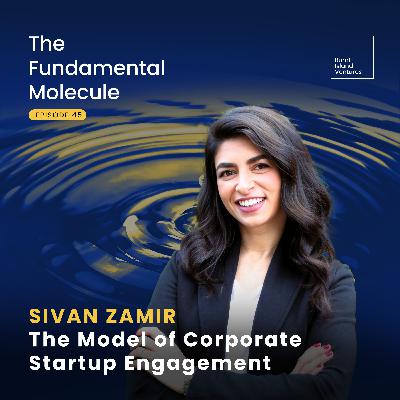
In 2015, all of the startup founders who were part of Imagine H2O's Accelerator had to bear with me as I had no idea what I was doing. One of those founders was Sivan Zamir. Four years later she was and remains the only person to go through the program twice, and mercifully, her feedback then was rather better. Now she's VP of Enterprise, Innovation and Venture at Xylem, Burnt Island Ventures’ anchor investor and a true partner. And Sivan has become a serious force in early stage water, taking on the enormous challenge of making a very large company very good at working with very small ones. She and her team not only set a new standard for corporate engagement with the startup community, we think they reinvented it. It has been fascinating to see how the ideas and principles of entrepreneurship are flowing into the wider Xylem organization as a result. She is a force of nature, an unyielding advocate for water and an astonishingly generous friend. Please enjoy my conversation with Sivan Zamir. Subscribe to The Fundamental Molecule here: https://www.burntislandventures.com/the-fundamental-moleculeFor the full show notes, transcript, and links to mentioned content, check out the episode page here: https://podcasts.apple.com/us/podcast/the-fundamental-molecule/id1714287205-----------Sivan Zamir, VP of Enterprise Innovation and Venture at Xylem, shares her journey from two-time founder to corporate innovator. She discusses the systemic challenges large companies face when working with startups and her strategy to overcome them. Key topics include the criticality of team culture and "voice of customer," using agile sprints to drive change, and a unique "partnerships-first" corporate venture capital model. She also advocates for bringing enabling technologies from other industries into the water sector and advises all entrepreneurs to "be kind."00:00 - Introduction02:24 - Why Big Companies Struggle to Work With Startups05:53 - Breaking the Certification Roadblock for Pilots08:06 - Startup Lessons: Team Culture and Customer Feedback16:40 - First 90 Days: Research, Business Plan, and Execution20:32 - Running Sprints and Scaling Innovation Culture25:18 - Building Partnerships Before Launching Venture Capital29:49 - How the Accelerator Program Drives Go-To-Market35:25 - The State of Water Tech: Adjacent Innovation and Low Funding40:53 - Final Advice: Always Lead With KindnessLinks:Burnt Island Ventures: https://www.burntislandventures.com/Sivan Zamir: https://www.linkedin.com/in/sivan-sidney-zamir/Xylem: https://www.xylem.com/en-us/SM MaterialKey Takeaways:"Team culture is everything. You can teach skills, but you can't teach culture. It's the backbone of resilience and innovation.""Voice of the customer is critical. Without it, you're building on a hypothesis without market validation.""In large companies, innovation must be baked into governance, metrics, and incentives.""The water sector needs to look beyond itself. Adopt existing tech from other industries.""Accelerators simplify complex processes. They coordinate efforts and focus on clear outcomes.""The water tech sector has grown, but we have a long way to go. Only 3% of climate tech investment is in water.""Kindness is essential in entrepreneurship. It's a small world, and relationships matter."
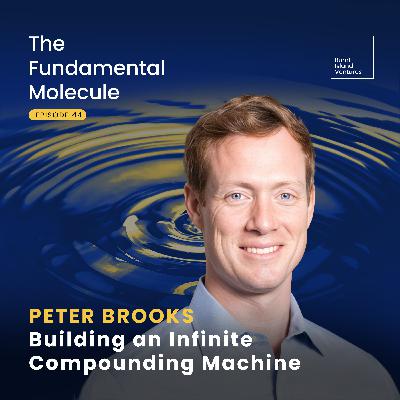
Out of 910 graduating students in the Class of 2014 from HBS, three went into water. Of those three, only Peter Brooks and I remain. And, meaning no offense to all our wonderful classmates, I'm glad it's him. Peter is just a really great guy. A former Marine, he worked across a variety of fascinating opportunities before setting up Sylmar Group. He and his partner Michael have been hard at work creating a compounding machine in water, building with an infinite holding period. And, as you will hear, it has developed exceptionally in the six years since it was founded. I have been looking forward to this for a long time because there are few people as thoughtful, practical, wise, self-effacing and talented as Peter. I was also amazed to find out that this is the first time he has talked about the Sylmar story on a podcast. So you're literally hearing it here first. Please enjoy my conversation with Peter Brooks.Subscribe to The Fundamental Molecule here: https://www.burntislandventures.com/the-fundamental-moleculeFor the full show notes, transcript, and links to mentioned content, check out the episode page here: https://podcasts.apple.com/us/podcast/the-fundamental-molecule/id1714287205-----------Peter Brooks details Sylmar's "compounding machine" strategy, advocating for patient, long-term investment, cultural integration, and network effects to create value. He explains their entrepreneurship-through-acquisition model, targeting small, high-quality water businesses, and emphasizes operational enhancements while preserving an entrepreneurial spirit. Peter shares insights on managing growth, recruiting talent, and his military-informed leadership. He also addresses the future water market, noting AI's increasing demand and the critical role of infrastructure, and urges entrepreneurs to pursue their "true north" for societal benefit.00:00 - Peter Brooks & the “Compounding Machine”02:30 - Equity, Culture & Network Effects06:03 - Partnering with Mission-Critical Small Operators11:27 - Listen, Prioritize, Fix Systems17:02 - Operating System That Scales21:24 - Disciplined Growth & Smart Capital Allocation26:35 - Make Water a Talent Magnet34:46 - Sales as Market Discovery43:21 - AI Data Centers & Water50:49 - Tech That Matters Now1:01:27 - True North LeadershipLinks:Burnt Island Ventures: https://www.burntislandventures.com/Peter Brooks: https://www.linkedin.com/in/peterharringtonbrooks/Sylmar: https://sylmargrp.com/SM MaterialKey Takeaways:"Compounding is the consistent accumulation of small advantages that allow us to win.""In water, patience is rewarded. Quick-turn investors often misunderstand this.""We're building a compounding machine with long-term patient capital.""Plans are nothing, but planning is everything. No plan survives first contact with reality.""Water is the third pillar of public safety, critical behind fire and police.""Embrace uncertainty. Entrepreneurship isn't for the faint of heart."“Roughly every 5 million of EBITDA, you're going to have a different job description if you continue to scale.”“So much of the M & A world, people just paste over underperforming bad business decisions with new acquisitions.”“When you have a long time horizon, you can literally say, ‘We'll talk down the road. Let us know when you're ready because we think you'd be a great partner for us.’”“I rue the day when…we're not actually thinking about customers.”

It's always worth listening to someone's ‘why’ for doing something. What is their core motivation? Are they a tourist, or are they here for the long haul? When you combine a compelling ‘why’ with the right mix of technical brilliance, charisma, kindness, and energy, you get someone who looks and sounds a lot like Allan Adams. He is the founder and CEO of Aquatic Labs, who have made amazing strides in bringing lab chemistry into real time, eradicating one of the core monitoring problems that is profoundly bad in both water operations and ocean science. This is also the only conversation where the guest's idea of a misspent youth is teaching particle physics at MIT. He is genuinely amazing. Please enjoy my conversation with Allan Adams.Subscribe to The Fundamental Molecule here: https://www.burntislandventures.com/the-fundamental-moleculeFor the full show notes, transcript, and links to mentioned content, check out the episode page here: https://podcasts.apple.com/us/podcast/the-fundamental-molecule/id1714287205-----------Allan Adams joins Tom today to discuss how witnessing dying coral reefs after the birth of his son inspired him to leave physics and found Aquatic Labs. He critiques the inefficiency of slow, lab-based water analysis and details his mission to create real-time, scalable sensors. By first optimizing industrial processes, Aquatic Labs aims to commoditize its technology, making it affordable for vital future applications like verifying ocean carbon sequestration and tracking the true impact of climate change on our most fundamental resource.00:00 - Introduction to Water Innovation and Entrepreneurship00:49 - Allan Adams’ Journey from Physics to Ocean Science02:29 - Fiji Expedition and Life-Changing Career Shift05:25 - Passing Ocean Stewardship to the Next Generation07:29 - Global Climate and Human Impacts on Oceans11:12 - Founding Aquatic Labs to Scale Real-Time Ocean Sensors15:43 - Industrial Use Cases and Aligning Profit with Conservation19:42 - Lessons from Academia and Startup Realities22:50 - Breaking Lab Bottlenecks with Real-Time Water Sensing26:43 - Commercialization Journey and Market Pivot Post-Election32:05 - Hard Lessons in Sales and Building a Mission-Driven Team37:41 - The Big Vision: Aquatic Labs’ Role in Water and Carbon Markets43:29 - Allan’s Advice for Water EntrepreneursLinks:Burnt Island Ventures: https://www.burntislandventures.com/Allan Adams: https://www.linkedin.com/in/allan-adams/
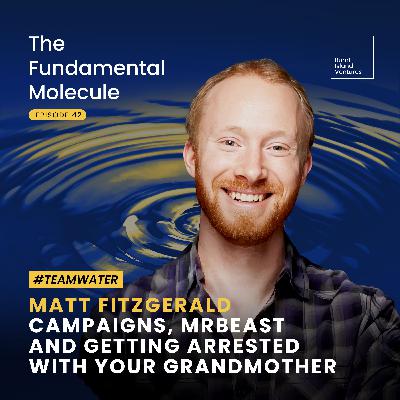
The saying, "Those who tell the stories rule the world," is such a core truth that it is both a quote from Plato and a Native American proverb - two entirely distinct societies coming to the same conclusion. We in water know that our inability to tell our story is one of the most frustrating aspects of the sector and one of, if not the most, negatively impactful. So what happens when you put water's story in the hands of two of the best storytellers and creators on the planet? Matt Fitzgerald is the campaign architect of #TEAMWATER, which, after #TEAMTREES and #TEAMSEAS, is the third major campaign from MrBeast, the world's largest YouTuber, and Mark Rober, the world's most prominent science YouTuber. #TEAMWATER's aim is to mobilize $40 million in one month in order to provide two million people with clean, safe, reliable drinking water for decades. It is one seriously entrepreneurial undertaking, and Matt is a remarkable guy. We thought it would be fascinating to sit down with him and find out how he thinks about pulling off something this audacious, and we were right - it was. Please enjoy my conversation with Matt Fitzgerald.Subscribe to The Fundamental Molecule here: https://www.burntislandventures.com/the-fundamental-moleculeFor the full show notes, transcript, and links to mentioned content, check out the episode page here: https://podcasts.apple.com/us/podcast/the-fundamental-molecule/id1714287205-----------Campaign architect Matt Fitzgerald discusses the strategy behind #TEAMWATER, the $40M clean water initiative with creators MrBeast and Mark Rober. He shares his philosophy on building successful movements like #TEAMTREES and #TEAMSEAS, focusing on harnessing the "attention economy." Fitzgerald explains the importance of simple, emotionally resonant narratives that make complex issues universal and inspire mass participation, turning viewers into heroes and creating tangible change.00:00 - Power of Storytelling in the Water Sector02:28 - What Makes an Effective Campaign05:39 - Building Narratives That Inspire Participation08:12 - Inside the #TEAMWATER Mission and Impact11:05 - Leveraging Massive Creator Reach for Change13:29 - Lessons from #TEAMTREES and #TEAMSEAS20:44 - Competing in the Attention Economy25:25 - Messaging Strategies That Resonate28:57 - Balancing Grassroots and Grasstops Influence36:17 - Matt Fitzgerald’s Career and Campaign Insights42:12 - Using Emotion to Drive Action43:20 - Shaping Philanthropy for Water’s Future47:20 - Call to Action for #TEAMWATER Support at https://teamwater.org/49:18 - Matt’s advice for water entrepreneursLinks:Burnt Island Ventures: https://www.burntislandventures.com/Matt Fitzgerald: https://www.linkedin.com/in/mattfitzgerald/Contribute to #TEAMWATER: https://teamwater.org/SM MaterialKey Takeaways:"Water is where climate and people meet. You either have too much of it or too little.""The best campaigns build relationships, activate them, and provide a next step… a cycle of engagement.""#TEAMWATER is a $40 million crowdfunding campaign to bring clean water to 2 million people.""Water is like the sun; everyone has a relationship to it. Yet it's stuck in conference rooms and reports.""The greatest change you can make is the change that happens after you're gone.""If you know your North Star, you can navigate the squiggly line of your journey."“If you do one thing, go to teamwater.org and donate.”
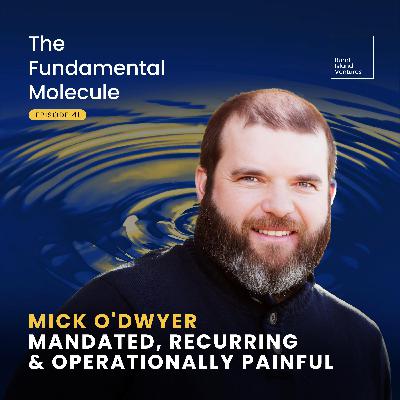
Some people are born to drive their own bus. They have an idiosyncrasy of outlook that makes building their own thing inevitable. When these people run into a problem that they find both annoying and ridiculous and decide to solve it, good things happen. Mick O'Dwyer is one of those people. Even before BIV started, the second check I ever wrote, and first real one, was into his company, SwiftComply, and for good reason. He is a very serious entrepreneur in its most core sense. He's a taker of opportunities with, as you will hear, a clear attitude to risk, who delights in the wrestle of getting the thing done. As anyone who has met or shared a karaoke room with him will attest, he's also a great person to spend time with. The man could sell, and indeed has sold, Guinness to the Irish. Please enjoy my conversation with the excellent Mick O'Dwyer.Subscribe to The Fundamental Molecule here: https://www.burntislandventures.com/the-fundamental-moleculeFor the full show notes, transcript, and links to mentioned content, check out the episode page here: https://podcasts.apple.com/us/podcast/the-fundamental-molecule/id1714287205-----------Mick O'Dwyer shares his evolution from a young, ambitious engineer at Guinness to a water entrepreneur. He recounts his time at Dublin City Council, where the "ridiculous" and inefficient paper-based system for managing fats, oils, and grease in wastewater sparked the idea for his company. Mick details his journey of building SwiftComply, from developing the initial solution to moving to the U.S., making a high-stakes acquisition, and scaling the business.00:00 - From Guinness Factory to Government Engineer08:29 - Discovering the Wastewater Compliance Problem12:38 - Building the First Version of SwiftComply16:58 - Turning a Consulting Gig Into a Tech Company20:32 - Going Global After a U.S. Conference Breakthrough22:43 - Why Moving to Silicon Valley Was a Game-Changer30:43 - Using AI to Improve Utility Compliance and Efficiency33:31 - Rebuilding Product Velocity After Acquisition Challenges41:28 - Scaling SwiftComply With Growth Investment46:43 - Advice to Founders: Bet on “Mandated, Recurring, Painful” ProblemsLinks:Burnt Island Ventures: https://www.burntislandventures.com/Mick O'Dwyer: https://www.linkedin.com/in/odwyermichael/SwiftComply: https://www.swiftcomply.com/SM MaterialKey Takeaways:"I had this compelling thing that the world needed a solution for the problem. What I will say is I wasn't really built to be a passenger.""The bus was leaving the station and had no driver, and I was like, well, I'm going to be the one to drive that bus.""I was young and opinionated and bullish. You could say I'm now old and opinionated and bullish.""I fell in love with wastewater treatment. I fell in love with the people in the plant, actually. Like, they're just like, you know, these men who are 40 years older than me.""I was just using practical experience to solve the problem at hand.”"I had to extract myself from that and had the trauma of giving up things. You don't need to see the company to be the one running payroll.""I do have a core belief that people overestimate the downside of risk.""Good investors invest in traction, and great investors invest in the future."
Pierre Côté is arguably the most successful inventor and technologist in the industrial wastewater space. He has two ubiquitous technologies under his belt - the hollow fiber membrane and the membrane bioreactor, or MBR - and a third technology well on the way to becoming ubiquitous: the membrane aerated biofilm reactor, or MABR. Pierre is not only brilliant and a wonderful person, he is totally focused on finding practical solutions to persistent problems that are affordable and implementable. Pierre is now at it again with a new technology for dealing with nutrient pollution via an inexpensive algae biofilm process being brought to life through AlgaFilm, our 7th investment in our Second Fund. He is a profoundly thoughtful, modest, and wise man, and his advice for technical founders is particularly on point. Please enjoy my conversation with the great Pierre Côté.
Subscribe to The Fundamental Molecule here: https://www.burntislandventures.com/the-fundamental-molecule
For the full show notes, transcript, and links to mentioned content, check out the episode page here: https://podcasts.apple.com/us/podcast/the-fundamental-molecule/id1714287205
-----------
Inventor Pierre Côté discusses the iterative process of invention, stressing that ideas arise from real-world problems and pressure. He details the origin of his latest venture, AlgaFilm, which evolved from failed prototypes into a novel biofilm system, and advises technical founders to focus on solving a customer's whole problem rather than just their specific technology. For success, he says entrepreneurs must build strong, diverse teams, find a market "wave" (like new regulations) to ride, and have a bit of luck on their side.
00:00 - How Inventors Solve Real-World Water Challenges02:34 - Why Innovation Requires Pressure, Curiosity, and Iteration05:12 - Cross-Disciplinary Thinking and Customer-Driven Design08:09 - The Origin Story Behind AlgaFilm’s Algae Biofilm System10:32 - How the Algae Forest Reinvents Nutrient Removal14:18 - Lessons from Past Water Tech Failures and Breakthroughs18:10 - Navigating Startup Constraints vs. Corporate Innovation21:31 - Commercializing Water Tech with a Whole-Solution Mindset25:16 - Why Cost Modeling and Competitive Awareness Matter28:43 - Staying in Water: Motivation, Mentors, and Market Realities32:15 - Future Trends: Climate Resilience, AI, and Smarter Infrastructure35:01 - Final Advice: Build the Right Team and Catch the Right Wave
Links:
Burnt Island Ventures: https://www.burntislandventures.com/
AlgaFilm: https://algafilm.com/
Pierre Côté: https://www.linkedin.com/in/pierre-c%C3%B4t%C3%A9-5291a226/
SM Material
Key Takeaways:
"Ideas don't come in a vacuum. You need to be exposed to problems. Start by looking for problems."
"Inventions come to fruition through iterations. Risk-taking and mistakes are part of the process."
"Introverts live in their heads, thinking about problems more than extroverts. Curiosity is key."
"Algae can do interesting things, but existing processes are either too large or complex and expensive."
"Focus on building a strong team. Include expertise outside your field for diverse solutions."
"Express objectives as goals, not means. Focus on solving problems, not just creating products."
"Limited funding in startups forces focus on pain points. It's a positive constraint."
"Find early adopters excited about new technology. Treat them well to ensure mutual success."
At BIV, we have huge admiration for people who call their shot and are right. For all you hockey fans out there, it's people who ‘Gretzky’ to where the market is going to be and so are there when it arrives. Oliver Lawal is a fascinating entrepreneur. He saw something obvious - his words - and just went and built the thing and has made so many smart moves along the way. He's a truly thoughtful person, and there is a lot in this conversation for fellow entrepreneurs - from what ‘focus on the customer’ really looks like to how to build a team that never wants to do anything else. He also uses a phrase which has now entered the BIV lexicon: “There's a big difference between what I think is cool and what is actually helpful.” Never a truer word. It almost makes me forgive him for being a Spurs fan. Please enjoy my conversation with the excellent Oliver Lawal, CEO of AquiSense.
Subscribe to The Fundamental Molecule here: https://www.burntislandventures.com/the-fundamental-molecule
For the full show notes, transcript, and links to mentioned content, check out the episode page here: https://podcasts.apple.com/us/podcast/the-fundamental-molecule/id1714287205
-----------
Oliver Lawal discusses UV water treatment, detailing its history and AquiSense's UV-C LED innovation (analog to digital shift). He explains entrepreneurial strategies like controlling the LED supply chain by becoming a key customer and enabling customer validation with affordable lab units. Oliver emphasizes solving real problems ("cool vs. helpful") and building a strong team culture focused on shared vision, respect, and practical problem-solving rather than blame.
00:00 - Why Water Innovation Needs Entrepreneurs
02:52 - How UV Disinfection Works and Its Origins
04:42 - Why UV Beats Chemical Treatment in Water
06:57 - Transitioning UV from Mercury Lamps to LEDs
10:47 - Spotting Market Shifts and Acting Early
13:44 - Building Trust Through Scalable UV Tech
18:44 - From Petri Dishes to Multimillion-Dollar Utility Deals
23:03 - Building What’s Helpful vs. What’s “Cool”
27:06 - How Strong Co-Founder Dynamics Shape Success
31:06 - Designing a High-Performance Technical Culture
35:31 - Balancing Startup Leadership with Real Life
39:43 - Final Advice: Solve Real, Not Just Interesting, Problems
Links:
Burnt Island Ventures: https://www.burntislandventures.com/
Oliver Lawal: https://www.linkedin.com/in/oliver-lawal-6877ab9/
AquiSense: https://aquisense.com/
SM Material
Key Takeaways:
"Solve a real problem. The operative word is ‘real’. Be honest about it."
"There's a big difference between what I think is cool and what is actually helpful."
"We have to control the supply chain. I want the best pricing and newest products."
"Being honest is crucial. Focus on solving the problem, not apportioning blame."
"How do you come in with a new technology and have a customer sign a $2 million contract?"
"I don't need to be excellent at everything. I need the ability to step away."
"Balance is key. America is positive, but sometimes lacks nuance."
"I have high expectations. I can be tough, but I'm focused on problem-solving."
"Variety is important. I play instruments averagely, but it's about stepping away."
"Listening to direct feedback is vital. You can't solve real problems from an office."
There is so much that is dumb in water, but easily one of the dumbest is that in the US - let alone the rest of the world - 60 percent of meters are offline and need to be read by hand in 2025. It is an insane state of affairs, and we have had our eyes out for teams to solve it for literally years. Anne Mushow is the driving force behind the solution to this problem at Subeca. Taking over from the exceptional Patrick Keaney, she is a superb leader: practical, experienced, thoughtful, and so determined to banish the schleppiest of schlep work that is meter reading to the past. She spent a lot of time in this market, both in water at Sensus and Xylem, as well as experiencing hypergrowth at Amazon. Please enjoy my conversation with Anne Mushow.
Subscribe to The Fundamental Molecule here: https://www.burntislandventures.com/the-fundamental-molecule
For the full show notes, transcript, and links to mentioned content, check out the episode page here: https://podcasts.apple.com/us/podcast/the-fundamental-molecule/id1714287205
-----------
Anne Mushow highlights the slow adoption of advanced metering infrastructure (AMI) in the water utility sector, attributing it to factors like risk aversion and capital intensity. She emphasizes the importance of data-driven decision-making and customer-centricity, sharing insights from her experiences at Sensus, Xylem, and Amazon. Anne also delves into Subeca's innovative approach, focusing on low-barrier adoption and leveraging technologies like Amazon Sidewalk to empower utilities with efficient and cost-effective solutions.
00:00 - Why Most Water Meters Still Require Manual Reads
02:43 - The Real Barriers to AMI Adoption in Utilities
08:41 - How Cloud and Managed Services Are Changing Water Tech
11:01 - Subeca’s Low-Friction Approach to Smart Metering
16:04 - Eliminating Manual Labor with Plug-and-Play Devices
20:15 - Building a Strong ROI Case Without Infrastructure Costs
24:05 - How to Successfully Sell Into Utility Markets
31:52 - Applying Amazon’s Culture to Water Tech Innovation
36:17 - The Future of Water Data as a Service
39:55 - Leadership Lessons from Stepping Into the CEO Role
45:50 - Anne’s advice for current and future water entrepreneurs
Links:
Burnt Island Ventures: https://www.burntislandventures.com/
Anne Mushow: https://www.linkedin.com/in/anne-mushow-3108a65b/
Subeca: https://www.subeca.com/
SM Material
Key Takeaways:
"Water utilities are buyers, not builders. They need solutions, not just data."
"In the US, 60% of meters are offline and need manual reading in 2025. It's an insane state of affairs."
"Utilities are risk-averse. They need to see proof of concept before making big investments."
"Amazon Sidewalk's connectivity in challenging terrains is astonishing. It works where others fail."
"Focus on solving real customer problems. Product-market fit will follow."
"The market for water utilities is diverse. Tailor your approach to their unique needs."
"Documentation and working backwards are key. They transform ideas into actionable plans."
"Survive and advance. Find what's working and ride it to bring in revenue for innovation."
"The sky's the limit for networks. Managed services will drive utility transformation."
"Gut is the instant amalgamation of all your experience. Trust it, but verify with data."

Flooding is becoming an increasingly obvious mega issue in the world today. It costs anywhere between $200 billion and $500 billion in the US alone each year. They're 31% of natural catastrophes and 1.8 billion people, about a quarter of the planet, live under flood risk. This is a nightmare for insurers who are raising their premiums in response, 17% last year in the US alone. But what if you could change the cost structure of this issue - where possible, allow homes and businesses enough lead time to take high value items out of harm's way, take the cars off the parking lot of the dealership and the goods off the warehouse floor? This can transform the insurance economics around flooding and is exactly what Previsico is doing. Jonathan Jackson is an exceptional entrepreneur now on his fourth company, and it was a pleasure to have him on The Fundamental Molecule to hear what he's building at Previsico and how he's building it. Please enjoy my conversation with Jonathan Jackson.
Subscribe to The Fundamental Molecule here: https://www.burntislandventures.com/the-fundamental-molecule
For the full show notes, transcript, and links to mentioned content, check out the episode page here: https://podcasts.apple.com/us/podcast/the-fundamental-molecule/id1714287205
-----------
Jonathan Jackson describes the growing challenges for insurers due to unpredictable floods, and how his company, Previsico, addresses this with precise, actionable flood warnings that utilize advanced forecasts and ground sensors. This enables businesses to mitigate up to 70% of flood damage and transform the economics of insurance. He discusses Previsico's origins as a UK university spin-out, its customer-driven US market entry, the significance of a clear ROI, and core company values such as fairness and purpose. Jonathan finishes by advising entrepreneurs to focus on their specific area of expertise.
00:00 - Why Flooding Is a Massive Insurance Crisis
01:59 - How Insurers Struggle to Price Flood Risk
07:04 - Key Differences in UK vs US Flood Insurance
08:47 - Why Businesses Are Forced to Self-Insure Flood Loss
09:58 - Provisico’s Approach to Preventing 70% of Flood Damage
11:14 - How Forecasts and Sensors Enable Real-Time Response
14:52 - The ROI of Ground-Truthing Flood Data
16:24 - How a Government Grant Sparked Provisico’s Founding
21:10 - Breaking Into Insurance Through Public-Private Partnerships
24:18 - Cracking the Insurance Market with Lloyd’s Lab and Zurich
25:40 - How to Sell to Risk-Averse, Slow-Moving Enterprises
29:12 - Expanding to the U.S. Through Customer Pull, Not Push
31:11 - Building Culture Around Fairness, Purpose, and Creativity
37:18 - Why Water Entrepreneurs Must Stay Laser-Focused
Links:
Burnt Island Ventures: https://www.burntislandventures.com/
https://previsico.com/
https://www.linkedin.com/in/jonathan-jackson-a393102/
SM Material
Key Takeaways:
"Flood risk maps estimate property location risk. Insurers use them to determine underwriting."
"A 1% flood risk every year means you could be flooded year after year. It's about communication."
"Provisico's service, with a good flood plan, can achieve 70% commercial loss prevention."
"We enable insurers to mitigate losses, improving their profitability through accurate flood warnings."
"Our flood forecast prepares organizations for flood, while sensors provide high-confidence alerts."
"Our vision is global. We aim to reduce flood loss by 50% or more, helping people worldwide."
One of the reasons why working in water is fun is the people who work in it - dedicated, driven, modest, self-effacing, hard working, but with a lightness that comes from doing something that really matters. Craig Beckman personifies these qualities and then some, and he also happens to be working on a generational - and I really do mean that it's once in a generation if the past is anything to go by - generational shift in the design of the spiral wound membrane module. Well, we'll go into it in the episode, but think of it as the basic building block, the workhorse of water treatment, a $4.6 billion a year market growing at 11%. Craig and his team have the opportunity to make something we all rely on, whether we know it or not, fundamentally better. It's such an exciting story from inception to development to their enormous production space they just moved into. But more than anything, Craig is a wonderful person to spend time with. Please enjoy my conversation with Craig Beckman.
Subscribe to The Fundamental Molecule here: https://www.burntislandventures.com/the-fundamental-molecule
For the full show notes, transcript, and links to mentioned content, check out the episode page here: https://podcasts.apple.com/us/podcast/the-fundamental-molecule/id1714287205
-----------
Craig Beckman shares lessons learned from GE Water and MIOX on customer needs and small company agility here today. He describes how his current venture, Aqua Membranes, revolutionizes membrane elements by replacing inefficient mesh spacers with optimized, 3D-printed structures - an innovation that targets reduced fouling and energy use, especially in industrial reuse. Discussing focused go-to-market strategies, overcoming technical challenges, and scaling production to build confidence, Craig emphasizes membrane technology's crucial role in future water security and advises persistence for water entrepreneurs.
00:00 - Building the Future of Water Through Innovation
01:59 - Lessons from Big Company Sales and GE Water Rollups
05:10 - Why Big Companies Miss Mid-Market Water Opportunities
09:18 - Balancing Recurring Revenue with Customer Needs
13:31 - Why Traditional Membrane Spacers Fail in Water Treatment
17:24 - Redesigning Membranes for High-Reuse Industrial Wastewater
21:54 - Solving Customer Pain with Elegant Membrane Engineering
27:44 - Overcoming Doubt and Manufacturing Complexity in Water Tech
31:05 - Go-to-Market Strategy for Industrial Water Startups
35:10 - Building Case Studies to Accelerate Market Adoption
39:04 - Scaling Manufacturing to Gain Customer Trust
42:19 - The Future of Membranes in Global Water Scarcity Solutions
45:04 - The #1 Advice for Water Entrepreneurs
Links:
Burnt Island Ventures: https://www.burntislandventures.com/
Craig Beckman: https://www.linkedin.com/in/craig-beckman-ceo/
Aqua Membranes: https://aquamembranes.com/
SM Material
Key Takeaways:
"Just because everyone has wastewater doesn't mean it's a good commercial opportunity."
"The membrane market is poised for growth. It's a critical need for food and water security."
"Persistence is key in water entrepreneurship. Be patient. Water's impact grows over time."
"In water treatment, solving problems for customers is about aligning with their needs, not just trends."
"Cash flow is crucial in startups. It's a lesson learned from experience."
"The speed at which opportunities are pursued is crucial. Big companies often can't get out of their own way."
It's no secret that the so-called "hyperscalers"—Amazon, Microsoft, Google, Meta, and others—are doing their hyperscaling in the context of the AI revolution. The pace of digital infrastructure buildout is mind-boggling—about $450 billion in 2024 and with no sign of slowing. All of this has implications for the water sector. So I wanted to talk to someone who is a) in the thick of this, and b) has been part of a hyperscaler's water work for some time. Will Hewes is a superb guy, a proper water veteran all the way from his undergrad work, and he took his considerable expertise in infrastructure into running water resources first at AWS, and now across all of Amazon. They have been at the forefront of basin-wide sustainability efforts, and it was so energizing to hear how an "intrapreneur" builds inside a company like Amazon, all the way down to how these individual projects get done. Please enjoy my conversation with Will Hewes.
Subscribe to The Fundamental Molecule here: https://www.burntislandventures.com/the-fundamental-molecule
For the full show notes, transcript, and links to mentioned content, check out the episode page here: https://podcasts.apple.com/us/podcast/the-fundamental-molecule/id1714287205
-----------
Will Hewes discusses his role in overseeing Amazon's water replenishment, detailing their "Water Positive" strategy which aims to return more water to communities than Amazon uses, particularly in AWS data centers which employ water for energy-efficient cooling. Hewes details the two-pronged approach: internal efficiency improvements (ex. direct evaporative cooling design reducing L/kWh, real-time monitoring, using recycled water), and external replenishment projects. These projects, chosen for local impact and verified credibility, address needs like WASH access or agricultural irrigation efficiency, often catalysing tech adoption.
00:00 - How AI and Data Centers Are Reshaping Water Demand
03:40 - Amazon’s Water Positive Strategy Explained
05:00 - Sustainable Cooling in Data Centers with Water Efficiency
08:45 - Shifting from Potable to Recycled Water Sources
11:49 - How Amazon Builds Global Water Replenishment Projects
13:55 - Partnering with Startups to Scale Smart Irrigation
18:24 - Measuring Impact and Verifying Replenishment Claims
21:55 - The Reality of Corporate Water Risk Assessment
24:45 - Why Hyperscalers Collaborate on Water Stewardship
27:33 - Balancing Growth with High-Quality Sustainability Practices
30:33 - Lessons from Will Hewes’ Career in Water Infrastructure
34:44 - Why Scalable, Fast-Adopting Water Tech Wins
43:21 - Advice for Water Entrepreneurs
Links:
Burnt Island Ventures: https://www.burntislandventures.com/
Will Hewes: https://www.linkedin.com/in/will-hewes-61947232/
SM Material
Key Takeaways:
"Water is the most fundamental resource. It's about public health, urban planning, and managing wild spaces."
"Water is key to cooling strategies in data centers. It reduces energy use and meets sustainability goals."
"Our Water Positive program commits to returning more water to communities than we use."
"Efficiency and recycled water are cornerstones of our water sustainability strategy."
"Water replenishment projects must respond to local watershed challenges."
"Technology can unlock water security and reduce carbon associated with water treatment."
"Collaborate with partners to implement innovative water solutions that address local needs."
It's so fun when you feel like an investment has been dragged out of your hands. At the end of our deployment of our first fund, I was adamant that our final investments had to be blindingly obvious because the next best use of funds was to give more capital to companies we already knew were amazing. So when I met Shane Dyer, CEO of Irrigreen, the quality could not have been more obvious. Here was a multitime founder operating at a seriously high level, building around a product that was an absurdly large improvement on the status quo and which had the potential to save billions of gallons of water. It's been such a pleasure to watch him work, and it was deeply exciting to invest in them again as the third position in our Opportunity Fund. Please enjoy my conversation with Shane Dyer.Subscribe to The Fundamental Molecule here: https://www.burntislandventures.com/the-fundamental-moleculeFor the full show notes, transcript, and links to mentioned content, check out the episode page here: https://podcasts.apple.com/us/podcast/the-fundamental-molecule/id1714287205-----------Irrigreen’s CEO Shane Dyer discusses tackling overlooked water tech challenges by applying his IoT and growth marketing expertise from outside the sector. He details Irrigreen's genesis, adapting inkjet tech for precise, water-saving irrigation. Dyer shares critical startup lessons: the power of listening to customers for product & marketing direction, strategic hiring focusing on grit over resumes, rigorous iteration & verification for deep tech, effective board management, and keeping the customer the ultimate North Star.00:00 - Why Water Tech Is the Climate Opportunity Hiding in Plain Sight02:34 - Bringing IoT and Startup Experience into Water Innovation04:11 - Growth Marketing Tactics for Climate Tech Startups07:52 - Building High-Impact Startup Teams09:25 - From Inkjet Printers to Smart Sprinklers12:43 - Designing Products That Customers Actually Want17:21 - Reinventing Irrigation Through Digital Precision21:36 - Balancing Consumer Appeal with Contractor Adoption25:33 - Simplifying Supply Chains27:53 - How to Get Real Value from Your Startup Board32:46 - Running Data-Driven Growth Experiments That Work35:45 - Scaling Hardware Quickly38:12 - Hiring as the Ultimate Startup Superpower40:34 - Shane Dyer’s #1 Advice for Water EntrepreneursLinks:Burnt Island Ventures Shane Dyer Irrigreen Sean Ellis Steve Blank The Startup Owner's Manual Nail It Then Scale It Getting to Plan B The Lean Startup SM MaterialKey Takeaways:"Experience is when the hairs on your neck rise during design review, sensing a potential landmine ahead.""Startups are not little big companies. They're a completely different experience requiring ambition, talent, and grit.""Growth marketing requires high-velocity experimentation and qualitative insights to drive hypotheses.""A board is a team. Keep them informed and engaged to work on urgent growth problems for your next unlock.""Hire slowly and focus more on getting the right team.""For new ideas, reach directly to customers first."
When you hear a canary singing in the coal mine, you should stop and listen. Without torturing the metaphor too far, this is how I felt when I started working with Megan Glover at 120Water in 2017 as she started to build her business. The success of a business is predicated on the talent of the people running it, and Megan was important because she was one of the first brilliant CEOs who was truly new to water. She is at the vanguard of exceptionally smart, driven company leaders who appeared at the end of the 2010s and were the predicate essentially of BIV coming into being. We don't get to do our job without enough people as good as Megan. I love this conversation covering everything from strategic marketing to advice to board members. Please enjoy my conversation with my friend Megan Glover.Subscribe to The Fundamental Molecule here: https://www.burntislandventures.com/the-fundamental-moleculeFor the full show notes, transcript, and links to mentioned content, check out the episode page here: https://podcasts.apple.com/us/podcast/the-fundamental-molecule/id1714287205-----------Megan Glover, Co-founder and CEO at 120Water, joins Tom to discuss the role of strategic marketing in her organization’s trajectory, emphasizing market analysis, customer understanding, and the importance of a quantitative approach. Together, they delve into the genesis of 120Water, its pivot from a consumer focus to serving municipalities, and the significance of regulatory drivers like the lead and copper rule. Megan reflects on talent in the water sector, the evolution of her role as CEO, and offers advice to founders regarding risk-taking in particular.00:00 - Why Talent Defines Startup Success02:52 - The Role of Strategic Marketing in Water Tech05:17 - Market Research: Understanding Customers Before You Build07:19 - The Origin Story of 120Water09:36 - The Business Pivot: From Consumer to Municipal Focus12:07 - How Water Regulations Create Business Opportunities14:17 - The Future of Lead, PFAS, and Emerging Contaminant Rules16:50 - State vs. Federal Water Regulations19:46 - Consumer Awareness vs. Action in Water Quality20:56 - The Evolution of Lab Testing & Data Standardization22:49 - The CEO Journey24:10 - Navigating Board Relations & Investor Alignment27:08 - Attracting & Retaining Talent in the Water Industry29:17 - The Future Vision for 120Water30:42 - Managing Cash Flow While Scaling in a Slow-Moving Market32:10 - The Role of Partnerships33:20 - The Art of Negotiation for Water Entrepreneurs35:13 - The #1 Advice for Water EntrepreneursLinks:Burnt Island Ventures: https://www.burntislandventures.com/Megan Glover: https://www.linkedin.com/in/megancglover/120Water: https://120water.com/SM MaterialKey Takeaways:"The success of a business is predicated on the talent of the people running it.""Before you can create, know who the creative is for.""Regulatory demand is the number one driver for change in the water industry.""Take the risk. The water industry is here to support you and wrap their arms around you.""Partnerships can be a phenomenal tool. Win fast and fail fast.""Manage your cash. Sales cycles in water take twice as long as in other startups.""Every stage requires reflection.""People are concerned about water quality, but not willing to pay for the solution."
Sometimes things just strike you as dumb and then one day you understand why. The current model of desalination is a great example. It's something that everyone thinks that we at BIV should be invested in up to the eyeballs, and, of course, we support technologies that are pertinent to desal, but the legacy model is just a tough nut to crack. Ever more scaled plants to minimize the per gallon cost of purified water is the name of the game. So when I met Alex Fugelsang and the full Flocean team, it was like a light bulb going off. Legacy desal was dumb for the simple reason you were pumping up onto land a whole load of water, putting all of it through a giant factory, having designed it for all of that water, then throwing at least 40% of it back into the ocean. So what if you could desalinate under the surface of the sea and get rid of all that excess capacity? You don't run into paradigm shifts all the time, but we think that Flocean is one of them. Alex is a superb guy with a fascinating skill set, having spent most of his life operating machinery at inhospitable depths, and he's on a remarkable mission to put a huge dent in global water insecurity. Please enjoy my conversation with Alex Fugelsang. Subscribe to The Fundamental Molecule here: https://www.burntislandventures.com/the-fundamental-moleculeFor the full show notes, transcript, and links to mentioned content, check out the episode page here: https://podcasts.apple.com/us/podcast/the-fundamental-molecule/id1714287205-----------In today’s episode, Alex Fuglesang details Flocean's underwater desalination: less energy and less environmental impact thanks to stable deep-sea conditions. He reveals how robotics ensure reliable maintenance in their water-as-a-service model, and highlights building trust with communities, providing tailored solutions for water scarcity. Alex also shares insights on his background, leadership, and the future of desalination.00:00 - Why Legacy Desalination Is Failing02:16 - Operating and Engineering in Harsh Deep Sea Conditions 05:30 - Robotics and Automation in Underwater Water Tech 06:32 - Flocean's Origin Story 10:35 - How Flocean Cuts Energy Use and Environmental Impact 13:22 - Simplifying Permitting for Subsea Desalination 15:16 - Real-World Water Scarcity Challenges in Island Nations 17:24 - Growing Industrial Demand for Onsite Desalination 19:52 - New Business Models for Water Delivery 22:56 - What Infrastructure Investors Want from Water Tech 24:09 - Building a World-Class Water Tech Team 26:53 - Targeting High-Impact Coastal Markets 28:38 - Strategic Marketing for Deep Tech Startups 29:57 - Military Leadership Lessons in Startup Life 34:17 - The Future of Desal37:43 - Cutting Red Tape in Water Infrastructure Projects 39:17 - Top Advice for Climate Hardware Entrepreneurs Links:Burnt Island Ventures: https://www.burntislandventures.com/Alex Fuglesang: https://www.linkedin.com/in/alexanderfuglesang/?originalSubdomain=noFlocean: https://www.flocean.green/SM MaterialKey Takeaways:"In water-scarce regions, the frustration is real. Limited budgets lead to expensive maintenance and weeks of downtime."“Cutting bureaucracy and aligning stakeholders can unleash new technologies."“Flocean uses natural deep-sea pressure to cut power consumption. 40% energy efficiency savings are not abnormal.""Scale with trust and demand. Start small to build trust, then scale without massive infrastructure changes."

Comments

Download from Google Play

Download from App Store
 United States