DiscoverThe Best of the Week
The Best of the Week
Claim Ownership

The Best of the Week

Author: Relevant Radio

Subscribed: 11Played: 1,961
Share

Description

Life can get busy, and it's easy to miss out on the captivating moments from your favorite Relevant Radio shows. But now, we've got you covered! "The Best of the Week - Relevant Radio Podcast" brings you the crème de la crème of Relevant Radio's programming. We carefully curate and compile the most engaging and relevant content from the past week, just for you! Get ready to catch up on faith, culture, current events, and personal growth, all in one convenient and easily accessible podcast. It's like having a front-row seat to the most compelling moments from Relevant Radio's diverse range of shows. So, whether you're an active Relevant Radio listener or new to our programming, "The Best of the Week - Relevant Radio Podcast" is your passport to a world of knowledge, growth, and inspiration.


1632 Episodes
Reverse
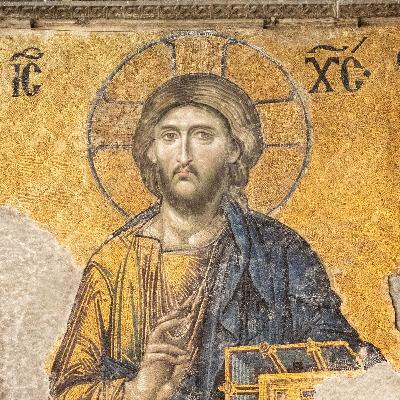
Some lines in Scripture are repeated because God wants us to stop and listen. For Fr. Richard Simon, one of those lines is Psalm 118:22: “The stone that the builders rejected has become the cornerstone.” On Father Simon Says, he reflects on how this verse echoes throughout the Bible, appearing again and again in the Gospels, Acts, and the letters of St. Peter. That repetition is no accident. It points us directly to Christ. Fr. Simon explains that Jesus was not crucified on a distant hill, as many imagine, but in a quarry near one of Jerusalem’s busiest gates. It was a public place, a place where Rome made examples of criminals. And in that quarry, there was apparently a great stone that had been rejected for building because it was unusable. That detail gives the passage fresh power. Jesus, rejected by the world, was crucified at the place of rejection. The image is almost too perfect to ignore: the rejected stone becomes the cornerstone. As Fr. Simon puts it, “By the Lord has this been done, it is wonderful in our eyes.” What looked like defeat became the foundation of salvation. What seemed cast aside became the center of God’s plan. It is a reminder for all of us: God does not waste rejection, suffering, or weakness. In Christ, even what the world throws away can be transformed into glory. The best way to listen to the Best of the Week is on our #1 Free Catholic App. It’s free, and always will be! To get and share the Relevant Radio app, check it out here.
Fasting has always been part of the Christian life, especially during Lent. But on The Drew Mariani Show, Drew Mariani looked at this timeless practice from another angle: What if fasting is not only spiritually fruitful, but physically beneficial too? Drew pointed out that for most of human history, people did not eat constantly. Periods without food were a normal part of life. Today, however, many people eat all day long, rarely giving the body a chance to rest. That is one reason fasting has drawn new attention from modern science. According to Drew, after about 12 to 16 hours without food, the body begins to shift from burning sugar to burning stored fat. He noted that this “metabolic shifting” may open the door to deeper physical benefits. He invited on guest Dr. Sean O’Mara to explain more. Dr. O’Mara began with a reminder from Saint Paul that our bodies are temples of the Holy Spirit. From that perspective, fasting is not merely self-denial. It can also be a way of honoring God with our bodies. He described fasting as a kind of “spring cleaning” that helps the body clear out what is damaged or unhealthy. He also stressed that fasting can benefit people even later in life. Far from simply weakening the body, he said fasting may help preserve strength and support healthier aging. Still, his advice was practical: start slowly. Lent calls Catholics to prayer, fasting, and almsgiving. This conversation served as a timely reminder that fasting is not an empty rule. It is a discipline that can sharpen the soul, strengthen the body, and draw us back to greater dependence on God. The best way to listen to the Best of the Week is on our #1 Free Catholic App. It’s free, and always will be! To get and share the Relevant Radio app, check it out here.
A thoughtful call on The Patrick Madrid Show turned into a moving reflection on one of Christianity’s deepest wounds: the division between the Catholic Church and the Orthodox Church. Lyal, a Greek Orthodox listener from San Diego, asked a simple but powerful question. She explained that Roman Catholics and Greek Orthodox celebrating Easter on different dates causes confusion, especially in a workplace full of non-Christians. She wondered whether there are any real signs that Catholics and Orthodox might one day celebrate Easter together. Patrick Madrid responded with warmth and hope. He said this division is one that “can be healed,” and he pointed to meaningful signs of progress. He recalled the lifting of mutual excommunications between Pope Paul VI and Patriarch Athenagoras, as well as the work of Pope Saint John Paul II, who emphasized both the beauty of Eastern Christianity and the importance of Christian unity. Patrick did not pretend the path forward would be easy. He noted that the biggest obstacle may not be at the highest levels of leadership, but among ordinary believers still carrying suspicion and anger. Reconciliation, he said, will require humility, forgiveness, and trust on both sides. Speaking from the experience of her Middle Eastern Christian background, and even sharing that members of her own family were killed for being Christian, she asked a piercing question: if Christians can forgive such suffering, why can’t Catholics and Orthodox forgive one another? As her witness suggested, Christian unity is not just about calendars or centuries-old disputes. It is about conversion of heart. It is about seeing fellow Christians not as rivals, but as brothers and sisters in Christ. By the end of the call, Patrick and Lyal were united in the same prayer: that God would grant true reconciliation between East and West. Their exchange was a reminder that healing often begins with one honest conversation, one generous heart, and one shared hope. The best way to listen to the Best of the Week is on our #1 Free Catholic App. It’s free, and always will be! To get and share the Relevant Radio app, check it out here.
As Lent unfolds, many Catholics give something up, but not every sacrifice leads to lasting change. On Morning Air, Father Robert Ryan offered a simple but striking reminder: “Fasting without prayer is just dieting.” Lent is not about surviving 40 days without chocolate or social media. It is about returning to the Lord with a whole heart. Father Ryan rooted that call in Scripture. From Joel’s plea to “return to me with your whole heart” to the repentance of Nineveh and the prayer of Psalm 51, fasting is never presented as an empty ritual. It is meant to clear away the idols in our hearts and open more room for God. The goal is not to white-knuckle our way through Lent, then go back to old habits by Easter. The goal is real conversion. That is why the Church gives us prayer, fasting, and almsgiving together. Fasting creates space, but prayer is what fills it with the presence of God. Charity is the fruit that follows. Without that turning toward God, we may simply replace one attachment with another. Father Ryan also encouraged listeners to begin Lent not by asking, “What do I want to give up?” but rather, “Jesus, what is getting in the way of my relationship with You?” That shift changes everything. It moves fasting from self-improvement to surrender. He shared his own Lenten practice as an example. After bringing it to prayer, he felt called to be more present to the people in front of him, putting aside the distractions of texts, emails, and his phone. In that small but intentional sacrifice, he found a deeper attentiveness to both his parishioners and the Holy Spirit. Lent is not a finish line. It is a beginning. True fasting helps reorder the heart, loosens the grip of sin, and teaches us again that our hearts were made for the Lord. The best way to listen to the Best of the Week is on our #1 Free Catholic App. It’s free, and always will be! To get and share the Relevant Radio app, check it out here.
What happens when someone stops trying to carry everything alone and places it all in God’s hands? On The Inner Life, Bishop Donald Hying reflected on the power of surrender, and one caller’s testimony showed just how life-changing that surrender can be. Marissa called in from Springfield, Illinois, and shared that during Lent in 2025, she was struggling with alcohol and using it “as a crutch” to cope with past trauma and painful emotions. But after praying the Surrender Novena, everything changed. “On March 12th, I gave up alcohol. Thanks be to God,” she said. Nearly a year later, she was still marveling at what the Lord had done. “I do not know, I cannot tell you what happened to my desire to drink. It is gone. It has been removed from me. Literally saved my life.” Her words were raw, grateful, and full of hope. Marissa did not describe self-improvement in purely human terms. She described grace. “It’s a choice every day to surrender to Him,” she said. “Every day is our conversion.” Bishop Hying pointed to her witness as a living example of the Gospel’s power. “You’ve been set free, and that’s the power of the gospel,” he told her. He connected her healing to the deeper spiritual truth that all of us are tempted to cling to something other than God. As he explained, idolatry is not just an ancient problem. “We have idolatry today. It’s just more sophisticated than it was 3,000 years ago.” That is why surrender matters so much. Bishop Hying spoke about the Surrender Novena, centered on the simple prayer: “Oh Jesus, I surrender myself to you. Take care of everything.” He described it as a path to peace, freedom, and wisdom, especially in moments when we do not know what to do next. He also turned to the Gospels, recalling Jesus asleep in the storm-tossed boat. The lesson is simple and profound: in our own stormy moments, we must “wake up the sleeping Christ and hand it over to him.” Marissa’s story is a reminder that surrender is not weakness. It is trust. It is the daily decision to let God be God. And when we do, He can bring freedom we never could have given ourselves. The best way to listen to the Best of the Week is on our #1 Free Catholic App. It’s free, and always will be! To get and share the Relevant Radio app, check it out here.
When a marriage is wounded, couples often look for practical solutions first. But on Marriage Unhindered, Doug Hinderer offered a deeper starting point: confession. Doug said one of the most powerful things a couple can do for healing is to “get into the confessional and make a good confession.” He shared how some couples, away from the sacrament for 20 or even 30 years, returned with fear, only to leave feeling “so light and so unburdened.” For some, that grace became a turning point in their marriage. Guest Greg Schutte shared a similar story from his own life. During a difficult season, he went to confession burdened by thoughts of his wife’s faults, not his own. But through God’s grace, his heart changed. When he got home and listened instead of fighting back, everything shifted. “Yeah, you’re right. Let’s work on this,” he told her. That is the quiet power of confession. It opens the heart to humility, mercy, and the Holy Spirit. Sometimes the breakthrough a marriage needs begins not with winning an argument, but with kneeling before God. The best way to listen to the Best of the Week is on our #1 Free Catholic App. It’s free, and always will be! To get and share the Relevant Radio app, check it out here.
On Family Rosary Across America, the week’s highlight began with a beautiful thanksgiving. Susan from Spartanburg, South Carolina, shared that just two days after asking for prayers to find a nursing home for her 91-year-old mother, an opening became available, despite being told it would not happen. It was the third time she had sent in a prayer request, and the third time she received an answer. She also asked for prayers for her friend Viola, who is battling cancer. Then came a sweet moment from 15-year-old Jules in Lafayette Hill, Pennsylvania. She called in to pray for her great-grandfather Jack, who had just turned 93. When Fr. Rocky heard the news, he invited Maggie to sing Happy Birthday on the air, turning a simple prayer intention into a joyful family celebration. The best way to listen to the Best of the Week is on our #1 Free Catholic App. It’s free, and always will be! To get and share the Relevant Radio app, check it out here.
On Trending with Timmerie, Timmerie and Sarah Hernholm take on a question many women quietly carry: Can you really have it all, or do some choices close doors you hoped would stay open? Sarah’s story is honest and refreshing. She shares that she did desire marriage in her 20s and 30s, but she came to see that her dating choices did not always reflect that desire. Looking back, she admits she sometimes stayed too long in relationships that were not rooted in shared values, hoping things would change. Her insight is simple, but sharp: “Your actions need to line up with your words. Otherwise, stop saying them.” That clarity became a turning point. Sarah began to recognize that wanting marriage was not enough by itself. She also had to become the kind of person ready to receive it. She speaks candidly about needing to “clean up my side of the street,” choosing to stop entertaining the wrong relationships and learning how to be alone without fear. Timmerie connects this to a larger cultural problem. Women are often told they can delay marriage and family indefinitely, while also being assured everything will work out later. But this mindset can leave people wounded, tired, and grieving time they cannot get back. Sarah’s testimony does not deny God’s providence; rather, it shows that trusting God also means living intentionally now. Their conversation also pushes back against hookup culture and the loss of real courtship. Sarah argues that genuine connection, conversation, and shared values matter more than modern dating habits often allow. In a world that prizes convenience and chemistry, this episode is a reminder that love requires honesty, self-knowledge, and virtue. For anyone discerning marriage, healing from disappointment, or reevaluating the path they are on, this conversation offers both encouragement and a challenge: be truthful about what you want, and let your life reflect it. The best way to listen to the Best of the Week is on our #1 Free Catholic App. It’s free, and always will be! To get and share the Relevant Radio app, check it out here.
There’s more going on in our tech habits than most of us want to admit. Timmerie warned that the biggest battle for platforms like TikTok and X isn’t just over marketshare. They're battling for influence. These systems aren’t neutral. They're fighting for your attention. They’re designed to keep you scrolling, keep you agitated, keep you hooked, and over time they can shape what you think is normal, what you fear, and even what you believe about yourself. She pointed to a disturbing pattern many parents recognize: young people changing in sudden, clustered ways that orbit around the topic of identity. Timmerie noted that peer influence plays a role, but she suspects something deeper, what she called “a level of psychological manipulation,” prominent in a generation that's rarely offline. And it’s not only teenagers; some adults ignore real-life relationships for the pull of a screen, too. Timmerie said this shouldn’t shock us. We already know major tech companies use addiction specialists to “hack our brains” so we stay engaged. The algorithm doesn’t just show you what you like. It can steer you toward frustration, obsession, isolation, and a constant craving for novelty. The end result, she argued, is disorientation and disengagement from our Faith, pulling us away from knowing, loving, and serving God. So what do we do? Timmerie explained that this is a spiritual battle for our souls, so it requires spiritual weapons. She urged listeners to begin where the Church begins: obedience to Christ, frequent prayer, and especially the Sacrament of Reconciliation. Confession, she explained, forces honesty. It breaks self-deception. It helps us stop excusing sin and return to reality because God is truth and perfect love. She also turned to St. Paul’s call to “take every thought captive to obey Christ.” That’s the real fight: not just resisting a screen, but resisting anything that tries to form our minds away from God. Our hope rests in this: God has the divine power to destroy any evil. So stay close to Jesus. Stay close to the Church. Grace builds on grace, and little by little, we can become resilient again. The best way to listen to the Best of the Week is on our #1 Free Catholic App. It’s free, and always will be! To get and share the Relevant Radio app, check it out here.
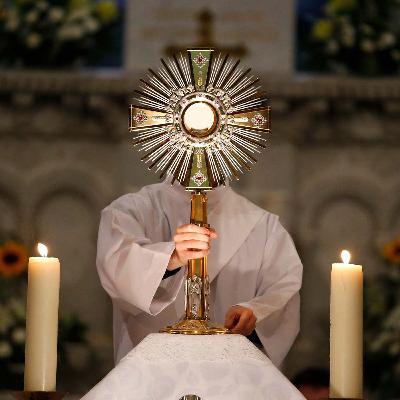
Drew Mariani opened a segment of The Drew Mariani Show with a sobering image of chaos: cartel violence in Jalisco, Mexico—“a multi-headed snake” that keeps rearing its ugly head, resulting in buildings burnt down, cars engulfed in flame, and bullets flying through the streets. In the middle of that fear, one priest did something that stopped Drew in his tracks. Drew explained that everyone was told to stay in lockdown, but this priest didn't bother hiding. Instead, he went into the church, took the Blessed Sacrament, and climbed onto the roof of the church. There, above the smoke and panic, he lifted Our Lord and blessed the city where violence and bloodshed ruled. As the priest raised Jesus above the chaos, he prayed for Mexico. That scene became a catechesis in action. “The Eucharist is not a symbol,” Drew reminded us. “It’s not a piece of bread.” What the Church teaches is staggering but true: when the Lord is brought into darkness, it is the living Christ, Body, Blood, Soul, and Divinity, that is being brought into that darkness. He is the light. Drew recalled how, in 1240, a terrified convent turned to St. Clare of Assisi when invaders climbed the walls. She had the Blessed Sacrament brought to her, and she “lifted the monstrance towards these attackers and she prayed.” Later, during the 1576 plague in Milan, St. Charles Borromeo carried the Blessed Sacrament in procession, placing the city under Christ’s protection as the people begged for mercy. Drew even shared modern eyewitness stories, like a priest in India during the 2004 tsunami who, in the face of imminent death, followed the example of the saints before him and lifted Jesus. Then Drew turned the spotlight back on us: “So here’s the question for you. When fear comes to your door, what do you lift?” Maybe it’s not cartel violence, but unrest in your marriage, division in your family, or that crushing, anxiety at 2:00am. “You can argue. You can rage. You can spiral. Or, you can lift Jesus.” The best way to listen to the Best of the Week is on our #1 Free Catholic App. It’s free, and always will be! To get and share the Relevant Radio app, check it out here.
Omar from Ceres, California, called The Patrick Madrid Show with a concern many parents have. His 5-year-old daughter had watched a Disney movie featuring a “magician,” and he wasn’t sure to what extent he should let her indulge in movies that featured magic or spells. Patrick first helped Omar sort out an important distinction. Not all “magic” is the same. A stage performer doing card tricks or “pulling a rabbit out of a hat” is one thing. But if a show is presenting spell-casting, conjuring, or seeking forbidden power as something exciting or harmless, that’s a different story. Depending on the way the magic is presented, that can be a serious red flag for families. Without having seen the exact movie, Patrick encouraged Omar to do his due diligence, while also acknowledging why parents feel wary. He noted Disney’s “bad track record” in pushing ideologies to children and even said plainly, “If you were to ask my opinion, I wouldn’t even pay for Disney. I wouldn’t have it in the house.” Then Omar asked a follow-up question: How do you explain the fantasy of magic and the reality of Jesus to a kid? Patrick suggested keeping it simple, concrete, and centered on Jesus. Show her a crucifix. Ask who Jesus is. Then explain that Jesus teaches us not to try to “contact spirits or cast spells” or “conjure things,” because that’s what witchcraft seeks. Instead, “We are followers of Jesus… We are to ask God for the things that we need.” Omar thanked Patrick and asked for prayers that he and his wife might be blessed with more children. Patrick responded warmly: “May God grant you many happy years together and many happy, healthy children, please God.” The best way to listen to the Best of the Week is on our #1 Free Catholic App. It’s free, and always will be! To get and share the Relevant Radio app, check it out here.
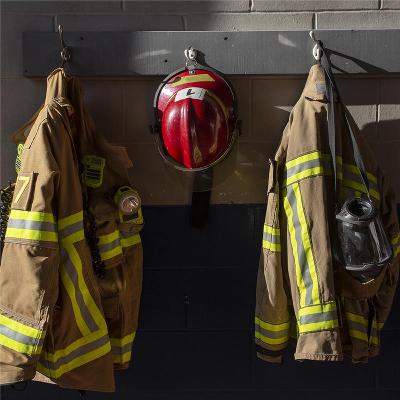
Father Ryan Brady never expected an email reply from the new Holy Father. But after Pope Leo XIV was elected, Fr. Brady took “a shot in the dark” and wrote to him, simply to share his joy and his promise of prayers. To his surprise, the Pope responded kindly, personally, and generously, and even arranged a ticket for Fr. Brady to greet him after the general audience on Feb. 11. Fr. Brady, pastor of St. Christina Parish in Chicago and chaplain to nearly 5,000 members of the Chicago Fire Department, knew he couldn’t arrive empty-handed. “What do you give the man who needs nothing?” he asked. The answer came from home: a Chicago Fire Department chief’s helmet. The white helmet, he noted, is easy to spot at the scene of a fire. Before his meeting with the Pope, Fr. Brady received an unexpected sign in Rome. Lost on a walk, he found himself at St. Rita’s Church, an Augustinian favorite, on the Feast of Our Lady of Lourdes. Praying for the intercession of St. Rita, “the patron saint of impossible causes,” he noticed a grotto of Our Lady of Lourdes staring right at him. In that moment, he heard the reassurance in his heart: “All will be well, Ryan, rest easy.” “That’s the guy who’s in charge. He’s the one that we should follow.” At the top of the front plate, they placed “Pope Leo XIV”, and on the bottom “Chicago”. In the center where an engine company number would go, they placed a cross, because the Pope “stands firmly with Jesus Christ…as he leads the universal church.” The gift sparked laughter between the Fr. Brady and the Holy Father. “Firemen are putting out fires all the time,” Fr. Brady joked, “and so do popes, apparently.” Pope Leo received the gift with warmth — an example, Fr. Brady said, of being a gracious receiver. We should never “rob someone of the opportunity to be generous,” he explained, because love bears fruit in both the giving and the receiving. The best way to listen to the Best of the Week is on our #1 Free Catholic App. It’s free, and always will be! To get and share the Relevant Radio app, check it out here.
Most of us have at some point walked away from a conversation thinking, Wait… did we just cross a line? On Morning Air, John Morales welcomed Father Michael Rennier to help us look at gossip through a Catholic lens this Lent, when the Lord invites us to purify not only our actions, but our speech. Father Rennier admitted he once excused gossip by hiding behind facts. “It took me a long time before I realized that I do have a problem with gossip because I had convinced myself that I could talk about other people as long as I was saying true things.” Truth matters, but charity matters, too. Sometimes “true” can still become harmful when it isn’t ours to share. He explained how gossip often feeds curiosity more than love. It can even sneak into “Christian” language: “I heard so-and-so is having a really hard time. Will you pray for them?”—while quietly hoping the details spill out. Father also noted that even good news can become a kind of theft if we “steal that person’s thunder” before they’re ready to share it. So how do you spot gossip? Father Rennier offered practical signs: speech driven by negativity or insecurity, talk that lacks empathy, conversations that create division, and that vague guilt afterward that tells you something wasn’t right. At its core, gossip is often a search for details we don’t need and don’t deserve. Instead of talking behind someone's back, take it to your prayer. Ask God to help the people in your life who are struggling. If you believe that someone's situation warrants a conversation to discuss how you can help them, find a confidant, someone with wisdom and a loving heart who can offer advice, not just more gossip. The best way to listen to the Best of the Week is on our #1 Free Catholic App. It’s free, and always will be! To get and share the Relevant Radio app, check it out here.
Some Christians point to Jesus’ words in Matthew 23 as a reason to avoid calling priests “Father.” "Call no one on earth your father; you have but one Father in heaven." (Matthew 23:9) On Father Simon Says, Father Richard Simon explains why that reading misses the point. Father Simon starts with a practical question: if you took the phrase literally, “what are you going to call that man who married your mother?” Scripture itself uses the word father often, and the Church has always recognized the reality of human fatherhood. The problem Jesus is addressing isn’t ordinary family language, it’s spiritual pride. In Jesus’ day, certain religious titles carried a kind of inflated honor. Father Simon notes that rabbi didn’t simply mean “teacher,” but “my great one”. It was a badge of status. Jesus also warns against being called “master,” which Father Simon points out is tied to the idea of a guide or guru. Hence, someone is treated as the ultimate authority. That’s the heart of the warning: don’t build your identity on titles, and don’t treat any human leader as if he replaces God. Father Simon even jokes about the old stereotype of clergy privileges, then pivots to the deeper issue: people who “love seats of honor” and crave recognition. So why do Catholics call priests “Father”? Father Simon says it began as a relationship, not a power play. The Church was envisioned as a family, and priests were seen as spiritual fathers through guidance and care. Used rightly, the title points beyond the priest to the One true Father in Heaven. Jesus isn’t banning a word, He’s guarding our hearts from making idols out of human authority. The best way to listen to the Best of the Week is on our #1 Free Catholic App. It’s free, and always will be! To get and share the Relevant Radio app, check it out here.
Religious anxiety can hide in plain sight, and it often wears a familiar name: scrupulosity. In a conversation on Marriage Unhindered, Doug and Dr. Beth Plachetka describe how it can show up in ordinary devotions like the rosary. For example, a person might feel haunted by the fear that it didn’t “count” because it wasn’t done perfectly, so it has to be repeated again and again. Dr. Plachetka explains that scrupulosity pushes a soul into excess: I prayed, but it wasn’t enough. Underneath that spiral is a deeper wound: forgetting that Jesus’ sacrifice is sufficient, and treating God like a scorekeeper instead of a loving Father. Doug adds an important distinction that scrupulous hearts often miss: temptation is not sin. The sin is in consenting to temptation. A passing thought or impulse can be unsettling, but it is not automatically a moral failure. So what helps? First, naming the anxiety for what it is, something “in excess”, can loosen its grip. Dr. Plachetka even suggests that when someone can gently see the pattern as excessive, it can become easier to resist and, at times, even to laugh at it. Not because suffering is funny, but because fear loses power when we recognize we’re not obligated to obey it. It will take patience to build this new habit of rejecting the scrupulous thoughts, but it's worth the practice. Doug also shares a simple practice that unites faith and the body: On inhale, pray “Jesus,” and on the exhale, “I love you.” It’s a small act of trust that can calm the heart and offer peace. The best way to listen to the Best of the Week is on our #1 Free Catholic App. It’s free, and always will be! To get and share the Relevant Radio app, check it out here.
Some praise reports don’t come with fireworks. They come with small, steady faithfulness. On Family Rosary Across America, Fr. Rocky and Maggie heard from Cynthia in Newburgh, New York, who shared how prayer has been changing her home. Her husband always went to church with her, but, as she put it, he “was not a big rosary person.” Then, when she began praying with Relevant Radio during the early days of COVID, something started to shift. Over time, his “Okay, you’re going up to pray your rosary” became something more. Cynthia said that for the past two or three years, her husband has prayed the Holy Rosary with Relevant Radio every single night. He even put Relevant Radio stickers on their cars and wants to support the mission. He is a disabled veteran, but he’s also hoping to make the Walk to Mary when he’s feeling stronger. Cynthia's testimony is a simple reminder: when we bring our needs to the Lord, He really does meet us there, through the steady rhythm of prayer. The best way to listen to the Best of the Week is on our #1 Free Catholic App. It’s free, and always will be! To get and share the Relevant Radio app, check it out here.
On Family Rosary Across America, Fr. Rocky greeted Macklin, a young listener. They quickly discovered a sweet connection: Fr. Rocky had met Macklin’s grandmother at the Walk to Mary in 2025, and the family hoped to see him again at this year’s pilgrimage. But the moment took a deeper turn when Fr. Rocky asked for Macklin’s prayer intention. Macklin explained it wasn’t really a prayer intention, but instead a prayer of gratitude. “I finally have a father,” he said. Fr. Rocky affirmed this great blessing as a gift and an answer to years of prayer, both for Macklin and for his whole family. A father’s presence, he noted, can bring stability, comfort, and a stronger foundation for a home. The exchange was brief, but it carried a powerful reminder: God hears all of our prayers, especially the ones whispered for our families over many years. And sometimes the “best of the week” is simply a child’s quiet thank you, and a family’s new beginning. The best way to listen to the Best of the Week is on our #1 Free Catholic App. It’s free, and always will be! To get and share the Relevant Radio app, check it out here.
Nathan from Santa Margarita, California, called The Patrick Madrid Show with a very real family question. He and his wife have four little kids aged nine, six, three, and one, and like many parents, they sometimes find themselves outside the nave during Mass, doing their best to keep the peace. Before asking his question, Nathan shared a joyful gratitude: “You and your show are personally responsible for my wife converting to the Catholic faith, and now we’re one big happy Catholic family.” Then came his concern. If he’s in the back of the church with a child for a stretch of time missing parts of the homily or other moments, should he refrain from receiving the Eucharist? Patrick gently clarified a common misconception. Receiving Holy Communion, he explained, is not the same question as fulfilling the Sunday obligation. “You could arrive at a Mass right as they’re about to distribute Holy Communion, and you’ve missed the entire Mass. If you’re in the state of grace, you can receive Holy Communion.” So what about the obligation? Patrick acknowledged it’s hard to tell exactly where the line is, but he offered a practical guide rooted in common sense and charity. If you came to Mass, entered the church, and only stepped out because a child was crying—whether to the hallway, vestibule, or even outside the doors—you have fulfilled your Sunday obligation. You’re still there, present, and doing what a considerate parent should do. The line is crossed, he said, when someone decides not to participate at all and chooses to “hang out here in the parking lot” and never really be present at Mass. For parents trying to love God and neighbor with a toddler in arms, Patrick’s message was simple: keep coming, keep trying, and don’t let a season of noisy faith steal your peace. The best way to listen to the Best of the Week is on our #1 Free Catholic App. It’s free, and always will be! To get and share the Relevant Radio app, check it out here.
NOTE: This article features some sensitive topics that may not be suitable for younger readers. Please use discretion. A listener named Diane called into Marriage Unhindered to share the kind of pain that takes your breath away. Nearly a year ago, on March 8, 2025, she lost her 28-year-old son unexpectedly. As she described the moment, her husband walked across the street to their son's home to let his dog inside. When he tried to wake their son, he couldn't. Diane admitted that the pain was nearly unbearable for her and there were times she longed to “go to sleep and not wake up.” She also shared another burden: anger at God. “In all of my 60 years, I have never … been angry at God,” she said, but in the beginning she was. Even now, the ache and the temptation toward despair still crosses her mind, yet she doesn’t want to lose the hope of seeing her son again. Doug responded with steady compassion, naming what a mother longs for: “You want to talk to him. You want to hold him.” He encouraged Diane not to isolate, and to seek support through her parish or diocese, where grief groups can help carry the weight with her. Guest Matt Young also offered practical next steps, pointing Diane toward peer support resources like the American Foundation for Suicide Prevention’s Healing Conversations and local community chapters that can connect her with others who understand. Then the conversation turned outward, to anyone listening in a dark place. Doug and Matt emphasized the nationwide crisis line. For anyone struggling with suicidal thoughts, you can call or text 988, 24 hours a day, seven days a week. And in the middle of it all, Doug offered a tender, faith-filled reminder: we can keep loving our dead, praying for them, and even talking to them, trusting God’s mercy and the Communion of Saints. The best way to listen to the Best of the Week is on our #1 Free Catholic App. It’s free, and always will be! To get and share the Relevant Radio app, check it out here.
Temptation can be our downfall if we succumb to it. But if we reject it, we will emerge from it even stronger than before. On Father Simon Says, Fr. Richard Simon points out that we even use the word in everyday life: “tempered steel” and “tempered glass” are materials that have been tested and proven strong. In the spiritual life, God permits testing “not because he needs to know what’s in us, but because we need to know what’s in us, that we might repent of it.” That’s why Jesus, led by the Spirit, entered the desert and faced the devil’s challenges head-on. When the enemy presses Him—“If you’re the Son of God, command this stone to become bread”—Jesus doesn’t negotiate. He answers with Scripture: “One does not live on bread alone.” The pattern repeats: the devil dangles “all this power and glory” and the lure of worldly kingdoms, but Jesus responds plainly: “You shall worship the Lord your God, him alone shall you serve.” Fr. Simon pauses on a detail you might miss: the devil calls Jesus “Son of God,” but never “Son of Man.” Jesus uses “Son of Man” to describe Himself, echoing the Book of Daniel. God enters human history, walks among us. The enemy is content when religion stays safely contained. As Fr. Simon puts it, the devil is “fine if we keep our religion in church.” It’s when we live it publicly in our choices, our witness, and our daily obedience that the enemy starts pushing back. And how does he push? Often with a question. Fr. Simon connects this to Eden: “Did God really say, ‘You shall not eat from any of the trees in the garden’?” (Genesis 3:1) The goal is to destabilize trust and make obedience seem optional, outdated, or naïve. The remedy is what Jesus models: knowing what God has said and standing on it. As Fr. Simon likes to joke (crediting his favorite theologian, the Reverend Billy Bob), “At the beginning of something, get your leading straight." In other words, you gotta know why God called you into this, because the devil’s going to try to shake your faith. That’s why we discern with prayer, wise counsel, and humility. We need guidance on this journey. God has spoken through Scripture, His commandments, and Christ’s own teaching on life and love. When the questions come, don’t let them shake you. Study Scripture. Hold fast to the moral law given in love. And remember: the Word of God endures forever. The best way to listen to the Best of the Week is on our #1 Free Catholic App. It’s free, and always will be! To get and share the Relevant Radio app, check it out here.
loading
Comments