


 Claim Ownership
Badlands Media
Subscribed: 133Played: 49,874
Subscribe

© Copyright 2024 All rights reserved.
Description
Badlands Media features the work of a dedicated group of Patriot citizen journalists who are changing the media landscape in America. Badlands Media shows are originally broadcast LIVE on Rumble.com/BadlandsMedia. Join us live on Rumble to interact with our community and the hosts in the chat.
4825 Episodes
Reverse

Alpha Warrior and Josh Reid dig into the concept of psychological operations and the reality of operating inside an active information war. The episode centers on how multiple psyops from competing forces can overlap, creating confusion and what they describe as a “fog of war” in the information space. They examine the idea that just as traditional warfare has historically been influenced from both sides, the same strategy is now being applied to the information domain, where narratives are shaped, countered, and reengineered in real time.
The discussion also highlights their own disagreements as part of the process, emphasizing the importance of first principles thinking and stepping back to a broader view to identify patterns and connections. As events build toward what they describe as a larger culmination, the hosts stress the need to analyze information carefully, recognize influence operations as they unfold, and understand how perception is being actively managed.

Chris Paul and Burning Bright take on Three Days of the Condor, unpacking a story that blurs the line between intelligence work, institutional power, and the individual caught in the middle of it all. What starts as a classic political thriller becomes a deeper examination of how systems operate behind the scenes and what happens when someone inside that system begins to see too much.
The discussion focuses on the film’s portrayal of covert operations, internal secrecy, and the unsettling realization that threats are not always external. Chris and Burning Bright explore how the story reflects larger questions about trust in institutions, the role of intelligence agencies, and the way information is compartmentalized to maintain control. As the conversation unfolds, they connect the film’s themes to modern concerns about transparency, narrative framing, and the difficulty of discerning truth within complex systems.
CannCon, Ashe in America, and Colonel Towner Watkins continue their breakdown of Stolen Elections, moving into Chapter 14 where the claims intensify around election systems, coordination, and alleged manipulation at scale. As the chapter attempts to tie together prior arguments, the hosts focus on whether the narrative is becoming more coherent or simply more complex.
The discussion centers on how the chapter builds on earlier technical claims while introducing broader conclusions about control and intent. The hosts question whether the connections being made are supported by evidence or if they rely on repeating earlier assumptions in more expansive ways. Throughout the episode, they carefully separate what is being claimed from what is actually demonstrated, highlighting gaps in logic and clarity.
By the end of the conversation, the chapter serves as a turning point where the weight of the argument depends entirely on whether the foundation laid in earlier sections can hold up under continued scrutiny.
Ghost walks through the specific sequence of reported strikes and responses, breaking down how each development is being presented and why the order of events matters. He focuses on how initial reports, follow up statements, and shifting details create a moving narrative that can change public perception within hours.
The episode digs into how retaliation is framed, not just in terms of action but in how it is described to the public. Ghost highlights how language like “defensive,” “measured,” or “escalatory” is used to shape interpretation, even when the underlying actions may be similar. He also examines how quickly narratives solidify before full confirmation, and how those early frames tend to stick.
Throughout the discussion, Ghost emphasizes tracking the timeline closely, comparing early reports to later clarifications, and paying attention to how messaging evolves. The focus remains on identifying what is actually happening versus how it is being presented, and what those differences reveal about intent.

President Donald J. Trump oversees the swearing in of Markwayne Mullen as Secretary of Homeland Security, marking a shift in leadership focused on border enforcement, national security, and restoring operational control across federal agencies. During the ceremony, Trump emphasizes the importance of strong leadership within DHS, pointing to ongoing efforts to secure the southern border, reduce illegal crossings, and reinforce law enforcement authority.
Mullen outlines his commitment to carrying out the administration’s priorities, including strengthening border patrol operations, supporting ICE, and ensuring coordination across agencies tasked with protecting the homeland. The discussion highlights recent progress on border security, including reduced crossings and increased enforcement actions, while reinforcing a broader strategy centered on law and order.
The event also reflects on the role of DHS in national security beyond immigration, including disaster response, infrastructure protection, and internal coordination. Trump frames Mullen’s appointment as a key step in maintaining momentum on security initiatives and ensuring long term stability and protection for the country.
Jon Herold hosts The Daily Herold and breaks down a shifting landscape where strategic silence, legal developments, and subtle signals are shaping the broader narrative. Jon walks through key updates, focusing on how certain actions are happening quietly while public attention is directed elsewhere. He explains why what is not being said can often be just as important as what is being reported, especially as events continue to unfold behind the scenes.
The episode also explores how ongoing legal movement is influencing both political positioning and media coverage. Jon highlights the importance of reading between the lines, tracking patterns over time, and resisting the urge to react to every headline. Throughout the discussion, he reinforces the need for patience, critical thinking, and careful observation in an environment where clarity often comes from connecting smaller details into a larger picture.

In this March 24 episode of Badlands Daily, CannCon and Ghost focus on the rapidly shifting narratives surrounding the Ukraine conflict and how conflicting reports are being used to shape public perception. The hosts break down how different versions of events are being pushed simultaneously, creating confusion around what is actually happening on the ground.
They examine how media framing and selective information releases contribute to a constantly changing storyline, making it difficult to separate signal from noise. The conversation highlights how narratives can pivot quickly depending on political or strategic needs, often leaving audiences reacting instead of analyzing.
CannCon and Ghost emphasize the importance of recognizing these patterns, questioning why narratives change, and staying grounded when information is inconsistent or incomplete. The discussion centers on understanding how perception is managed during ongoing geopolitical events.

Jon Herold and Zak Paine break down a fast moving conversation centered on recent Trump statements, ongoing war speculation, and the public reaction that follows. The discussion focuses on how statements are interpreted in real time, how quickly narratives form around them, and how audiences attempt to connect meaning across incomplete information.
The episode moves through reactions from media, online communities, and political figures, highlighting how different interpretations emerge from the same set of facts. Jon and Zak question assumptions, revisit what is actually known versus what is being inferred, and explore how speculation can quickly outpace verified information.
As the conversation unfolds, the hosts emphasize the importance of staying grounded, avoiding overreaction, and recognizing how easily perception can be shaped when information is still developing.

Ashe in America is joined by Mark Fitzpatrick, who is running for Governor in Idaho, for a conversation centered on how politics has become the front line of the culture war. Mark shares his perspective on stepping into the political arena, what motivated his run, and how cultural issues are now directly shaping policy decisions at the state level. The discussion focuses on the connection between everyday values and government action, and why local leadership is becoming increasingly important.
The episode also explores how narratives, institutions, and public pressure influence political outcomes, along with the challenges of running as a candidate in a highly charged environment. Ashe and Mark examine what it means to represent constituents in a time where cultural divisions are driving political engagement, and how individuals can play a role in shaping the direction of their communities. Throughout the conversation, the focus remains on the intersection of culture, governance, and personal responsibility in today’s political landscape.

Ghost is joined by Zak Paine to dig into the cultural and media firestorm surrounding Mel Gibson, focusing on how his career, controversies, and public image intersect with broader narratives about Hollywood, power, and redemption. The conversation walks through Gibson’s rise, the backlash that followed his personal scandals, and the way media coverage shaped public perception over time. Ghost and Zak examine whether Gibson’s treatment reflects a larger pattern within the entertainment industry, where certain voices are elevated or sidelined depending on alignment with prevailing narratives. Throughout the episode, they explore themes of cancellation, forgiveness, faith, and the tension between personal failure and professional legacy, framing Gibson’s story as a case study in how cultural figures are built up, torn down, and sometimes re-emerge.

President Donald J. Trump participates in a roundtable discussion focused on economic policy, domestic industry, and the impact of recent legislative and regulatory changes on American businesses and workers. Throughout the conversation, participants highlight challenges facing key sectors, including energy, manufacturing, and small business operations, while emphasizing the role of government policy in shaping economic outcomes.
Trump discusses efforts to reduce regulatory burdens, lower costs for businesses, and increase domestic production, framing these moves as essential to strengthening the U.S. economy. The roundtable also touches on workforce development, supply chain resilience, and the broader goal of keeping investment and job growth within the United States.
Business leaders and participants share firsthand experiences, reinforcing themes of economic recovery, operational challenges, and opportunities tied to policy shifts. The discussion centers on practical impacts, with Trump positioning current initiatives as part of a broader push to support American industry and long-term economic stability.

In Episode 64 of Alphas Make Sandwiches, Ashe in America, Christy Lupo and Jackie Espada are joined by Michelle from Tamaracgarden.com and they continue the conversation around food, self reliance, and the realities of stepping outside the conventional system.
The discussion centers on what it actually looks like to take more control over your food and lifestyle, breaking down the gap between idealized homesteading and the day to day reality of doing the work. The hosts explore the tradeoffs, the learning curve, and the mindset shift required to move away from convenience and toward intention.
They also touch on broader food system concerns, why more people are questioning what they consume, and how small, consistent actions can create meaningful change over time. Rather than presenting perfection, the conversation stays grounded in what is realistic, sustainable, and worth pursuing.
It is an honest look at the process of reclaiming independence in a world built for convenience.

In Episode 75 of Y-Chromes, CannCon, Alpha Warrior, JB White, and Cam Cooksey dive into an intense discussion surrounding Israel, Iran, and the broader implications of escalating conflict in the Middle East. The hosts debate what constitutes a justified response, whether current actions signal the start of a larger war, and how narratives around these events are being shaped and interpreted in real time.
The conversation focuses on the line between strategic military action and full scale war, with strong disagreements on how to interpret intent, outcomes, and the role of global influence. The hosts challenge each other directly, questioning assumptions about alliances, long term strategy, and whether the public is being given an accurate picture of what is unfolding.
As tensions rise throughout the discussion, the episode highlights the difficulty of separating fact from narrative while emphasizing the importance of critical thinking in moments where information is rapidly evolving.
Jon Herold hosts The Daily Herold and examines a rapidly evolving landscape where legal pressure, narrative shifts, and political signaling are all unfolding at once. Jon breaks down key developments, focusing on how emerging legal actions and responses are shaping the broader conversation. He highlights how quickly narratives adjust in response to new information and why paying attention to timing and sequencing is critical to understanding what is really happening.
The episode also explores how public messaging continues to diverge from underlying actions, with Jon walking through examples that suggest deeper strategic positioning beneath the surface. He emphasizes the importance of identifying signals within the noise, encouraging viewers to look beyond headlines and consider the broader context driving current events. Throughout the discussion, Jon reinforces a core theme of staying grounded, thinking critically, and recognizing patterns in an environment where information is constant but clarity must be earned.

In this March 23 episode of Badlands Daily, CannCon and Zak Paine examine the systems and incentives driving mass migration and ongoing border challenges. The hosts focus on how current border policy is being implemented in practice, breaking down the roles of government agencies and outside organizations involved in processing and relocating migrants.
CannCon and Zak discuss the influence of NGOs and how their involvement shapes both the scale and structure of migration flows. The conversation explores how funding mechanisms, logistical coordination, and policy decisions intersect to create a system that appears to operate beyond simple enforcement or deterrence.
The episode also highlights the disconnect between public messaging and on the ground realities, with the hosts emphasizing the importance of understanding the full network of actors involved. Throughout the discussion, they frame the border situation as a system driven by incentives, coordination, and policy design rather than isolated decisions.

JB White returns with a focused message on discipline and discernment, emphasizing the importance of staying aligned during a time when confusion and competing narratives continue to cloud judgment. He reflects on recent discussions and reactions within the broader community, pointing out how quickly people can lose clarity when emotions take over and analysis becomes reactive instead of grounded.
Throughout the episode, JB reinforces the need to remain steady and disciplined in both thought and communication. He argues that many of the disagreements and misinterpretations circulating right now stem from a lack of patience and an unwillingness to fully process what is unfolding before drawing conclusions.
He also stresses the importance of maintaining alignment, particularly when the stakes are high, and encourages listeners to avoid getting pulled into unnecessary division. The episode ultimately centers on sharpening awareness, maintaining composure, and continuing to evaluate events with a clear and steady mindset.

Alpha Warrior and Josh Reid break down the latest developments surrounding Iran, focusing on how war narratives are being shaped in real time and what signals may point toward regime change rather than prolonged conflict. The hosts explore how official statements, media framing, and timing of events can reveal deeper strategic intent, especially when viewed through the lens of past operations and communication patterns.
They also examine how public messaging, including statements from political leaders and viral online reactions, can be used to influence perception and steer emotional responses. The conversation highlights the importance of staying grounded, filtering information carefully, and recognizing how easily narratives can be manipulated during moments of global tension.
Throughout the episode, Alpha and Josh emphasize the need to read between the lines, question surface level reporting, and remain focused on the broader strategic picture rather than reacting to every headline.

Burning Bright is joined by Ghost to tackle what they describe as one of the most complex geopolitical and narrative challenges in play right now: the “Iranian Knot.” Building on recent discussions and analysis, the episode explores how the situation surrounding Iran is not a simple conflict, but a deeply engineered entanglement shaped by decades of energy politics, foreign intervention, and competing narratives.
Burning and Ghost break down why Iran continues to sit at the center of both real world tensions and the information war, examining how energy, historical power struggles, and global influence converge in this region. The conversation moves between macro level strategy and narrative framing, including how escalation and deescalation can happen simultaneously and why what appears to be chaos may actually be a structured process. They also explore the idea that this “knot” was intentionally tied, making the process of unraveling it far more complex than most people realize.
As the discussion unfolds, the hosts highlight the difficulty of separating truth from narrative in a rapidly evolving media environment, emphasizing that understanding the Iranian Knot requires both historical context and a willingness to question surface level explanations.

In Episode 24 of the No Treason Podcast, Jonathan Drake continues his breakdown of Lysander Spooner’s Trial by Jury, focusing on the question of who truly determines justice within a legal system. Drake examines the tension between judicial authority and the role of the jury, challenging the assumption that judges should have the final say on the meaning of law.
The episode explores how shifting power away from juries and toward centralized legal authorities has reshaped the justice system into one that prioritizes procedural control over individual judgment. Drake walks through Spooner’s argument that juries were originally intended to serve as independent evaluators of both law and fact, acting as a safeguard against government overreach.
Throughout the discussion, he highlights how modern courts have narrowed the jury’s role, creating a system where citizens are expected to comply with laws they may not fully understand. The episode ultimately argues that restoring the jury’s full authority would reintroduce accountability, decentralize power, and better align legal outcomes with the common understanding of justice.
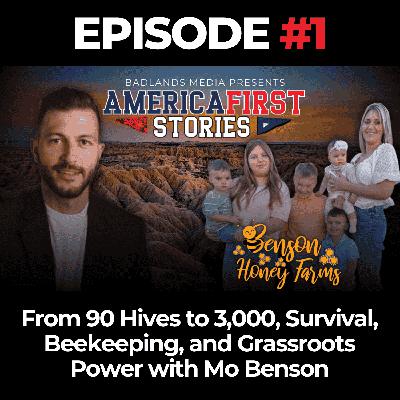
Jon Herold launches America First Stories by sitting down with Mo Benson of Benson Honey Farms, one of Badlands’ earliest supporters, to share the real story behind her family business and her fight to survive a life-threatening medical crisis. Mo walks through the brutal health battle that nearly took her life, how it reshaped her perspective, and the strength it took to come back while raising five young children and rebuilding their operation.
The conversation dives deep into the world of commercial beekeeping, from starting with 90 hives to scaling into thousands, the realities of pollination across the country, and the hands-on process of producing raw honey. Mo explains the economics behind the industry, the challenges facing American beekeepers, and how foreign honey impacts local producers.
Beyond business, Mo shares her journey into grassroots politics, detailing how local involvement can create real change from the ground up. From county-level organizing to working alongside elected officials, she breaks down how everyday people can step into leadership and influence the direction of their communities.
This episode blends resilience, entrepreneurship, and civic engagement into a powerful introduction to the stories behind the people who support Badlands.
Visit Benson Honey Farms: https://badlandsmedia.tv/honey


Download from Google Play

Download from App Store
 United States
Hey, the sound was bad on p. G reading it wasn't the speed, it was a nervous echo, it was an audio problem