


 Claim Ownership
Badlands Media
Subscribed: 132Played: 45,421
Subscribe

© Copyright 2024 All rights reserved.
Description
Badlands Media features the work of a dedicated group of Patriot citizen journalists who are changing the media landscape in America. Badlands Media shows are originally broadcast LIVE on Rumble.com/BadlandsMedia. Join us live on Rumble to interact with our community and the hosts in the chat.
4487 Episodes
Reverse

In this extended episode of Baseless Conspiracies, Jon Herold and Zak Paine dig into the newly released Epstein-related documents and the media frenzy surrounding them. The conversation breaks down what the files actually show versus what’s being claimed online, including misrepresented emails, viral misinformation, and recycled conspiracy narratives. Jon and Zak examine claims involving intelligence agencies, political figures, financial elites, and alleged blackmail operations, while repeatedly drawing a hard line between verifiable evidence and speculative leaps. The episode also explores how psyops, bad actors, and sloppy interpretation muddy public understanding, especially when emotionally charged topics dominate the discourse. Along the way, they address censorship, platform manipulation, and why discernment matters more than ever when massive document dumps hit the internet. This episode serves as both a deep dive into the Epstein files and a broader warning about narrative warfare, credibility traps, and the cost of abandoning skepticism.

In this episode of Culture of Change, Ashe in America and Abbey Blue Eyes dig into the unraveling narratives coming out of Davos and the growing panic among global elites as long-standing systems begin to fracture. The conversation centers on the World Economic Forum’s messaging around AI, globalization, and economic control, questioning whether fear is being deliberately deployed to maintain authority in a rapidly shifting world. Ashe and Abbey break down key statements from Davos, explore the collapse of the “rules-based international order,” and examine how narratives around AI, climate policy, and global integration are being used to pressure compliance. The episode also dives into discernment in an age of information overload, the role of belief versus authority, and why sovereignty, truth, and human judgment are becoming increasingly threatening to centralized power. As the old frameworks strain under their own contradictions, this conversation asks who is really panicking, and why.

In Chapter 43 of The Book of Trump, Ghost is joined by Lt. Col. Oak McCulloch for a deep, firsthand examination of the Kosovo War and the geopolitical precedent it set. The conversation traces the breakup of Yugoslavia, the rise of ethnic and religious conflict in the Balkans, and NATO’s decision to intervene without UN authorization. Oak shares detailed on-the-ground experiences from his deployment, including the realities of peacekeeping, working alongside Russian forces, and navigating tensions between Serb, Albanian, and Gypsy communities.
The episode explores how Kosovo became a turning point in international law, influencing later Russian actions in Georgia, Crimea, and Ukraine. Through historical context, military insight, and lived experience, this chapter connects a decades-old conflict to the modern geopolitical landscape, showing how decisions made in Kosovo continue to echo across today’s global power struggles.

In this episode of Movie Nights with Matt, Matt Ehret presents and discusses a documentary examining the historical, ideological, and institutional forces shaping Mark Carney’s rise and worldview. The episode traces Carney’s lineage through British imperial structures, including the Rhodes Scholarship system, the Round Table movement, and the enduring influence of the City of London on Canadian governance. Matt walks viewers through the role of technocracy, green finance, ESG frameworks, and central banking in redefining sovereignty, accountability, and economic control. The film connects Carney’s career at Goldman Sachs, the Bank of England, and international financial bodies to broader efforts to shift power away from democratic institutions toward managerial systems governed by metrics, behavior controls, and financial leverage. The discussion also explores historical precedents involving Canada’s role in imperial strategy, the dismantling of Glass-Steagall protections, and the use of climate policy as a tool for financial and social restructuring. The episode closes with live audience discussion, historical context, and reflections on why understanding these systems is essential to preserving national sovereignty.

This episode of Alphas Make Sandwiches kicks off with Groundhog Day chaos, falling iguanas in Florida, and a deep dive into the strange tradition of “painting the town red,” tracing the phrase back to 19th-century British aristocrats and elite excess. The hosts share camera-roll challenges, night photography tips, and audience submissions before pivoting into U.S. history, including the founding of Rocky Mountain National Park, the Challenger and Columbia disasters, and a thought-provoking discussion on the constitutional consequences of the 13th Amendment’s ratification.
The conversation shifts to cultural commentary with reactions to awards-show spectacle, celebrity activism, and public expressions of faith, including Jelly Roll’s acceptance speech. The panel also explores Victorian-era curse words, blasphemy laws, and creative alternatives to modern profanity, blending history with humor. Rounding out the show are hands-on segments featuring crystal-growing crafts, Super Bowl snack ideas, sourdough recipes, and Badlands community banter, making this episode equal parts cultural analysis, history lesson, and laid-back Monday hang.

Episode 68 of Y-Chromes is equal parts locker-room chaos and cultural commentary as CannCon, Alpha Warrior, JB White, and Cam Cooksey lean all the way into what makes this show what it is. The episode kicks off with birthday roasting, late arrivals, and military punctuality jokes before spiraling into debates over gaslighting, language, and where comedy collides with culture. The crew dives into NFL and Super Bowl predictions, old rivalries, and why some teams deserve lifelong hate. From superhero showdowns like Wolverine vs. Wonder Woman to survival skills, fire-starting techniques, and cold-weather realities in Florida, the conversation never stays in one lane for long. The guys react to viral clips, stand-up comedy bits, media gaffes, and internet absurdities while weaving in commentary on masculinity, fatherhood, sports, and modern culture. As always, nothing is off-limits, everyone gets roasted, and the laughs come fast. This is Y-Chromes exactly as intended...unfiltered, unapologetic, and wildly unpredictable.
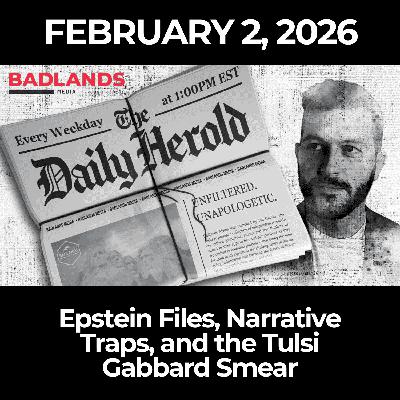
In this episode of The Daily Herold, Jon Herold opens with a sharp breakdown of the public reaction to the newly released Epstein files, challenging viral claims, online hysteria, and the widespread confusion between allegations, hearsay, and actual proof. He walks through what is and is not present in the documents, calling out how monetized outrage and confirmation bias have distorted public understanding.
The show then turns to a developing political narrative surrounding Tulsi Gabbard, examining a highly classified whistleblower complaint that has stalled for months and why its timing, secrecy, and media framing raise red flags. Jon also touches on economic warning signs, including a sharp decline in heavy truck sales, market instability, and broader indicators of a looming recession.
Rounding out the episode are updates on government funding disputes, election-related legal battles, media hypocrisy, and the ongoing disconnect between institutional narratives and observable reality.

CannCon and Zak Paine break down a packed Badlands Daily covering the unraveling media narrative and escalating unrest tied to ICE enforcement. The show opens with an in-depth examination of Don Lemon’s arrest, the media’s attempt to reframe him as a persecuted journalist, and direct comparisons to the treatment of January 6 defendants. From there, the conversation expands into ongoing ICE protests across Los Angeles, Minnesota, and New York, including traffic blockades, attacks on media crews, and the growing use of children in politically charged demonstrations and school walkouts.
The hosts also dig into newly released Epstein-related emails, unpacking disturbing claims involving powerful political figures, intelligence connections, and foreign interference. Additional segments cover massive overseas cash transfers out of U.S. airports, the financial collapse of the DNC heading into 2026, Hollywood backlash over the Melania documentary’s box office success, and rising public pushback against establishment narratives. The episode closes with a clear throughline: selective enforcement, narrative control, and the consequences now coming into focus.

In Episode 15 of Q After Hours, hosts Alpha Warrior and Josh Reid engage in a focused discussion on interpretation, responsibility, and the role of discernment within the broader Q conversation. The episode centers on how information is received, filtered, and acted upon, emphasizing the difference between curiosity and certainty. Alpha and Josh revisit core ideas around personal accountability, resisting emotional reactions, and avoiding the temptation to assign meaning where clarity has not yet emerged. The conversation also addresses how speculation, overconfidence, and misinterpretation can fracture understanding and distract from the deeper purpose of the movement. Throughout the episode, the hosts stress patience, humility, and the importance of grounding analysis in principle rather than impulse. Episode 15 serves as a recalibration, encouraging listeners to slow down, think critically, and recognize that interpretation itself carries responsibility, especially in moments of uncertainty.

In Episode 56 of The Narrative, Burning Bright is joined by Ashe in America for an extended breakdown of the unfolding Epstein narrative and the broader phenomenon of “flooding the zone.” The discussion centers on how sudden information drops, competing claims, and confident speculation are being used to overwhelm public perception rather than clarify truth. The hosts examine why the Epstein developments function as a narrative deployment in themselves, exploring how financial networks, intelligence history, and institutional protection are reframed through selective storytelling. They also address the danger of certainty in moments where facts are incomplete, emphasizing the discipline of admitting what is not yet known. Throughout the episode, Burning Bright and Ashe analyze how repetition, timing, and emotional bait shape audience response, and why these moments test whether observers truly understand narrative warfare. The conversation weaves in historical examples, media behavior, and current reactions to illustrate how control narratives begin to fracture under their own weight.

In Episode 17 of The No Treason Podcast, host Jonathan Drake continues a deep examination of Lysander Spooner’s arguments on trial by jury, natural law, and the foundations of justice. The episode focuses on the historical role of juries as courts of conscience rather than enforcers of statutory law, tracing this principle through Anglo-Saxon tradition, English common law, and recorded juror oaths. Jonathan breaks down how juries were historically expected to judge guilt or innocence based on intrinsic justice, not legislative command, and why this understanding placed real limits on kings, judges, and governments. The discussion contrasts this framework with modern legal systems, where procedural control, evidence restriction, and judicial instruction often undermine jury independence. Throughout the episode, the emphasis remains on consent, moral responsibility, and the idea that justice is discovered through natural law rather than created by authority. This chapter advances the series’ central argument that reclaiming the true function of the jury is essential to resisting tyranny and restoring liberty.

In Episode 428 of Devolution Power Hour, hosts Jon Herold and Chris Paul continue their disciplined examination of process, jurisdiction, and timing as pressure builds across political and institutional systems. The conversation focuses on why expectations of instant results often clash with how accountability actually unfolds, particularly within legal and governmental frameworks. Jon and Chris break down recent developments, emphasizing the difference between visible action and meaningful movement behind the scenes. They revisit recurring themes of patience, structure, and information discipline, warning against emotional reactions driven by speculation or incomplete data. Throughout the episode, the hosts stress the importance of understanding authority, sequencing, and lawful process rather than chasing headlines or symbolic moments. Episode 428 reinforces the show’s core message: progress is often quiet, uneven, and misunderstood in real time, but pressure applied correctly and consistently still produces results.

In this deeply personal episode of People, Alpha Warrior sits down with Gabs and Dr. Nikki, two women brought together by lived experience, hard truths, and a shared mission to protect families. Setting politics aside, the conversation centers on real stories, real consequences, and real solutions.
Gabs shares how her family was directly impacted by ideological pressure in schools, leading her to develop a structured, parent-led approach to helping children disengage from destructive belief systems. Dr. Nikki, a former pediatrician, explains why she walked away from her medical career and joined the effort after witnessing similar patterns affect her own family and countless others.
Together, they discuss indoctrination, addiction to digital spaces, cultural pressure, and why affirming reality starts at home. This episode is about courage, accountability, and rebuilding trust between parents and children, one family at a time.

In Episode 38 of Flow, host Cam Cooksey delivers a focused, reflective conversation centered on personal momentum, discipline, and navigating uncertainty without losing direction. The episode explores how consistency, mindset, and intentional action shape long-term outcomes, especially when external circumstances feel unstable or distracting. Cam reflects on recognizing internal signals, adjusting pace without abandoning purpose, and the importance of staying grounded while growth unfolds. The discussion emphasizes self-awareness, accountability, and learning to trust the process even when results are not immediately visible. Rather than offering shortcuts or hype, the episode leans into practical insight and lived experience, encouraging listeners to refine habits, sharpen focus, and remain present. Episode 38 continues Flow’s steady, introspective tone, highlighting how clarity and progress are built through daily choices rather than dramatic breakthroughs.

In Episode 30 of The Audio Files, Brad Zerbo and Jaytriot dedicate the entire show to a space-themed musical journey inspired by optimism, exploration, and innovation. The episode opens with discussion around the launch of Lt. Gen. Steven Kwast’s Space Revolution and the symbolism behind its use of David Bowie’s “Starman” as a theme of inspiration rather than invasion. From there, the hosts weave together music, cultural commentary, and speculative conversation about space, UFOs, and humanity’s drive to explore the unknown. The playlist spans decades and genres, highlighting how space has influenced rock, punk, metal, classical composition, and pop culture, from Bowie and Black Sabbath to John Williams’ Star Wars score and beyond. Along the way, Brad and Jaytriot reflect on technological stagnation versus innovation, cosmic curiosity, and how music often captures humanity’s hopes about the future before science catches up. The result is a fun, free-flowing episode that blends music history, curiosity, and imagination into a true late-night Audio Files jam.

Episode 42 of OnlyLands brings together a rotating menagerie of Badlands Media hosts for another unpredictable, unscripted night of humor, commentary, and community-driven chaos. The episode leans into spontaneous banter, running jokes, and off-the-cuff reactions as the group bounces between current events, personal anecdotes, and the absurdities of online culture. Conversations drift freely, shaped more by chemistry and timing than structure, creating moments that range from sharp commentary to pure comedic derailment. Throughout the episode, the hosts riff on shared experiences, poke fun at themselves and each other, and embrace the loose, anything-goes atmosphere that defines OnlyLands. Episode 42 captures the spirit of the show at its core: unfiltered, irreverent, and powered by interaction, where entertainment comes first and the only real plan is to see where the conversation goes next.
In this episode of Spellbreakers, Matt Trump reflects on a pivotal week for election integrity and the growing sense that long-awaited accountability may finally be taking shape. Centered on developments in Fulton County, the discussion frames recent events not just as isolated actions, but as part of a broader story that has been unfolding since the 2020 election. Matt revisits the emotional toll of watching the election process in real time, the frustration of unanswered questions, and the difficulty of communicating complex evidence to those who did not experience it firsthand. The episode emphasizes the importance of storytelling as a way to connect facts, timelines, and characters into a coherent narrative that can reach beyond legal filings and headlines. Rather than rushing to conclusions, Matt advocates patience, discernment, and building a truthful account grounded in documented events, arguing that only through understanding the full story can public awareness and justice truly move forward.
In this episode of Why We Vote, CannCon and Ashe in America dive into a packed week of election integrity news and cultural shifts that signal a broader turning point. The conversation opens with reflections on recent developments that many longtime viewers have been waiting for, including major movement around election records and accountability, and why these moments matter in the long arc of restoring trust. The hosts break down ongoing legal battles, newly surfaced filings, and the significance of federal actions tied to past elections, explaining what’s changed and why it feels different this time.
Beyond the courtroom and headlines, the episode explores the cultural landscape, from unexpected themes emerging in new films to a renewed focus on redemption, accountability, and national identity. CannCon and Ashe connect these threads to a larger sense that the country is entering a period of reckoning and rebuilding, one that demands transparency and persistence from those paying attention. It’s a wide-ranging, candid discussion that blends hard election analysis with cultural insight, underscoring why vigilance, documentation, and public pressure remain essential.
![MAHA News [1.30] No More WHO, Medicare Rates, RFK's "100 Studies", Corporate Capture of BEEF](https://pbcdn1.podbean.com/imglogo/ep-logo/pbblog15577742/Podcast_Thumnails_38_7p3uu.png "MAHA News [1.30] No More WHO, Medicare Rates, RFK's \"100 Studies\", Corporate Capture of BEEF")
In this January 30 episode of MAHA News, Jordan Sather and Nate Prince break down major developments reshaping public health policy, healthcare accountability, and food systems. The discussion opens with the United States’ withdrawal from the World Health Organization and what that shift signals for national sovereignty and public health governance. From there, the hosts examine updates from HHS, including action on healthcare fraud, the launch of more than 100 autism-related studies, and renewed focus on chronic disease as a long-term national crisis. The episode also covers changes to Medicare Advantage reimbursement rates and their implications for insurers and patients. In the second half, attention turns to the corporate capture of the beef industry, consolidation among major meat packers, and how regulatory and market forces have distorted food production. Throughout the episode, the focus remains on transparency, accountability, and challenging systems that benefit from consolidation and illness rather than health.
In Episode 78 of Geopolitics with Ghost, host Ghost analyzes current international tensions through the lens of strategy, signaling, and restraint. The episode focuses on how escalation is often implied rather than executed, with governments leveraging posture, messaging, and selective disclosures to influence perception without committing to irreversible action. Ghost walks through recent geopolitical developments, highlighting how timing, deterrence, and ambiguity are used to shape outcomes while avoiding direct confrontation. The discussion emphasizes the difference between performative threats and actionable moves, stressing why patience and context are essential when interpreting global events. Throughout the episode, Ghost encourages listeners to look beyond headlines and emotional reactions, paying closer attention to incentives, capabilities, and what is notably not happening. Episode 78 continues the show’s disciplined approach to geopolitics, prioritizing structure, historical patterns, and strategic intent over surface-level narratives.


Download from Google Play

Download from App Store
 United States
Hey, the sound was bad on p. G reading it wasn't the speed, it was a nervous echo, it was an audio problem