


 Claim Ownership
Moderate Party
Subscribed: 11Played: 121
Subscribe

© 2023 Moderate Party
Description
Moderate Party is a political podcast for Moderates, Centrists, and Independents. Each week, Hillari Lombard will be joined by conservatives, liberals, politicians, journalists, activists, educators, and any one else with a good idea on how to improve our Country. She will take an honest look at the week’s news and have inspiring conversations with top political thinkers — all while trying to add some energy to the Moderate Movement
62 Episodes
Reverse

Iowa is struggling — with rising cancer rates, a shrinking economy, overburdened healthcare systems, and families being pushed out of communities they love. This week, Rob Sand returns to Moderate Party to talk about why he’s running for governor in a moment when many people would run the other way. Rob is the only Democrat who can still win statewide in Iowa, and he’s trying to build a coalition grounded not in outrage, but in actual problem-solving.We talk about listening, dissent, navigating disagreement without feeding division, and what it means to govern a state that’s hurting. It’s a conversation about leadership, humility, and why the work is still worth doing.About RobRob Sand was born and raised in Decorah, where his family has lived for generations, and where he grew up fishing, hunting, and discovering his passion for public service while helping build a community skatepark. He began his career as an Assistant Iowa Attorney General and the state’s chief public corruption prosecutor, taking on scammers, taxpayer abusers, violent criminals, and the largest lottery-rigging scheme in American history—later chronicled in his true-crime book The Winning Ticket. Iowans have since elected him twice as State Auditor, first in 2018, when he became the first Democrat to win the office since the 1960s, and again in 2022 as the only Democrat reelected statewide. In office, Rob has uncovered more than $29 million in waste, fraud, and abuse, held both parties accountable, and launched the Public Innovations and Efficiencies (PIE) program—an award-winning efficiency initiative now adopted in all 99 counties and replicated in other states. Known for working across political lines, Rob has included Independents and Republicans in senior leadership roles and supported staff regardless of their political donations, grounding his work not in left vs. right but right vs. wrong. Now running for governor, Rob is focused on lowering costs, protecting taxpayer dollars, restoring trust in government, and improving the lives of Iowa families. And when he’s not fighting corruption or working for Iowans, you can find him bowhunting, fishing, biking, taste-testing Casey’s pizza, or spending time with his wife Christine, their two sons, and their dog, Pow.Rob Sand for IowaReynolds signs law to limit Iowa state auditor's powers | Iowa Public Radio
In this episode, Hillari sits down with Lanae Erickson of Third Way to make sense of a political moment that feels chaotic, confusing, and—somehow—full of opportunity. Together, they unpack the blowout victories of moderates like Abigail Spanberger and Mikie Sherrill, the progressive shockwave in New York City, and the shutdown fight that left Democrats divided and frustrated.It’s a conversation about what voters are actually demanding—calm over chaos, strength without theatrics, and leaders who talk about the cost of living in plain English. Lanae brings new data and candid insight into how moderates can win (and govern), why the center-left keeps underestimating its own appeal, and what the Democratic Party needs to rethink before 2026 and 2028.From gender dynamics to electability, from the moderate “training montage” to the politics of belief, this episode cuts through the noise and delivers the kind of clarity you rarely hear in the post-2025 fog.If you care about where Democrats go next—and what it will take to actually build a governing majority—this is the conversation you’ll want to hear.Links:Third Way Moderate Power Project
California just passed Proposition 50 — handing lawmakers temporary control of redistricting and pulling the state that once defined fair map-making into the same partisan brawl it used to condemn.Across the country, states are quietly rewriting political boundaries mid-decade — not because populations changed, but because power did. Each redraw justifies the next, and the rulebook that was supposed to protect fairness keeps getting thinner.Host Hillari Lombard unpacks how America’s redistricting arms race began, why the Supreme Court stepped back from policing it, and what happens when reformers decide they can’t afford to play by their own rules. She also admits something personal: she voted for Prop 50 — and she’s still not sure how she feels about it.This episode asks a hard question: When every side keeps moving the lines to survive, how much of democracy do we lose along the way?What to read next:Explainer: Understanding the mid-decade redistricting push in Texas | Harvard Kennedy SchoolProposition 50 passed in California. Here's what you missed

Why does America — the birthplace of the internet — have some of the slowest, most expensive broadband in the developed world? Hillari Lombard sits down with Christopher Mitchell, Director of the Community Broadband Networks Initiative at the Institute for Local Self-Reliance, to unpack the root causes behind our bad connections.From monopoly power and fake “fees” to the political roadblocks that stop cities from building their own networks, Hillari and Chris dig into how a handful of corporations have turned an essential utility into a cash cow — and what communities can do to fight back.This episode explores why internet access isn’t just about streaming speeds — it’s about opportunity, education, and democracy itself.If you’ve ever stared at a $100 Comcast bill and wondered, “How is this legal?” — this one’s for you.
The federal government is closed for business — again. But this time, it isn’t about border walls or spending caps. It’s about health care. As the 2025 shutdown drags into its third week, Democrats are demanding an extension of Affordable Care Act subsidies for 20-plus million Americans, while Republicans push a “clean” funding bill that leaves those benefits to expire. In the middle: a trillion dollars in Medicaid cuts, a president keeping his distance, and millions of families caught in the crossfire.Host Hillari Lombard breaks down what’s really driving the standoff — from the politics of Obamacare’s popularity in red states to why both parties think they’re winning — and what November 1 means for America’s health-care future.

When conservative activist Charlie Kirk was assassinated on a college campus in Utah, the nation erupted in shock, grief, and rage. For some, Kirk was a hero; for others, he was the worst of the worst. But behind the headlines, what does his death mean for free speech, political violence, and the health of our democracy?In this episode, Hillari Lombard reflects on the personal and political aftermath of Kirk’s murder. From the disturbing spread of the shooting video on social media, to the “grief policing” playing out online, to the uncomfortable truth about America’s epidemic of gun violence—this conversation doesn’t look away.Most of all, it asks the urgent question: what happens to a country when words are answered with bullets?
How do we think about history? How do we tell the story of our country? In this episode, Hillari Lombard sits down with Lindsay Graham (no, not that one)—the voice behind American History Tellers, American Scandal, and more—to talk about the accidental path that led him to podcasting, the art of storytelling in history, and how the past helps us make sense of our fractured present.From dusty archives to dramatic vignettes, Lindsay shares how his shows turn forgotten corners of history into gripping narratives—and why stories about “normal people” are just as essential as those about presidents and wars.
What’s happening in Los Angeles right now isn’t just about immigration—it’s about power. In this episode, Hillari Lombard unpacks how a series of ICE raids spiraled into mass protests, a violent crackdown, and the unprecedented deployment of the National Guard and U.S. Marines—over the objection of California’s governor.This isn’t a policy debate. It’s a stress test for our democracy.This episode breaks down what triggered the protests, how Trump’s immigration tactics have escalated, and what the legal limits actually are when it comes to using military force on U.S. soil.Links to Donate:https://www.chirla.orghttps://www.immdef.org/ This episode was informed by these sources and references:National Guard can stay in LA while Trump appeals ruling, court finds - CalMattersWhat U.S. law says about Trump’s deployment of active duty troops to Los Angeles | PBS NewsICE’s tactics draw criticism as it triples daily arrest targets - Reuters
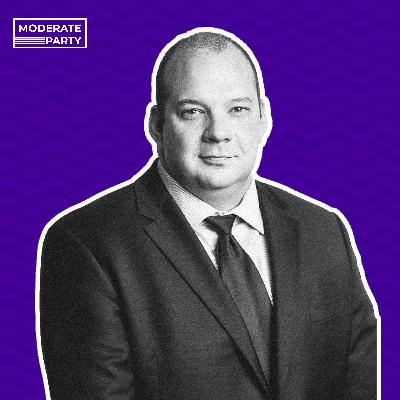
In this episode, Hillari Lombard sits down with Adam Brandon of the Independent Center to explore how independent voters reshaped the 2024 election — and what it means for the future of American politics.They dive into why traditional party strategies are losing ground, how grassroots movements and digital media are fueling real change, and what a future beyond partisan gridlock could look like.Adam Brandon is a longtime grassroots leader and a Senior Advisor at the Independent Center, an organization committed to empowering independent voters with common-sense solutions.If you believe there's a better way forward, this conversation is for you.Episode Links:America's Independent Center for Independent Voters

Donald Trump’s America First policy has reignited a debate that has shaped U.S. history for centuries: Should America lead on the world stage, or should it pull back and focus on problems at home? In this episode, Hillari Lombard sits down with Charles Kupchan—senior fellow at the Council on Foreign Relations, professor at Georgetown, and author of Isolationism: A History of America’s Efforts to Shield Itself from the World—to unpack the past, present, and future of American isolationism.This episode is a good-faith attempt to understand what America First really means—not just as a campaign slogan, but as a governing philosophy. Whether you support it, fear it, or are just trying to make sense of it, this is a conversation you won’t want to miss.Resources that informed this episode:Isolationism: A History of America’s Efforts to Shield Itself From the World | Council on Foreign RelationsSupporting Ukraine Is in Trump’s Interest by Michael Froman & Charles A. Kupchan - Project SyndicateTrump Is Right That Pax Americana Is Over - The AtlanticThe Past and Future of American Isolationism | Council on Foreign Relations---Charles A. Kupchan is Professor of International Affairs in the School of Foreign Service and Government Department at Georgetown University, and Senior Fellow at the Council on Foreign Relations. From 2014 to 2017, Kupchan served as Special Assistant to the President and Senior Director for European Affairs on the National Security Council in the Obama White House. He was also Director for European Affairs on the National Security Council during the first Clinton administration. His most recent books are Anchoring the World: International Order in the Twenty-First Century (2021), Isolationism: A History of America’s Efforts to Shield Itself from the World (2020), No One’s World: The West, the Rising Rest, and the Coming Global Turn (2012), and How Enemies Become Friends: The Sources of Stable Peace (2010). His forthcoming book is Bringing Order to Anarchy: Governing the World To Come.
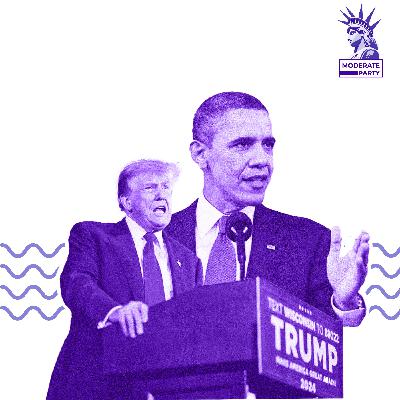
In this episode of Moderate Party, host Hillari Lombard dives deep into the increasing power of the U.S. presidency and how it has changed over time. Triggered by the importance of President’s Day and growing concerns about executive power, Hillari takes listeners on a journey from the ineffective Articles of Confederation to the immense authority wielded by modern presidents. The episode critically examines the policies and actions of Presidents George Bush, Barack Obama, and Donald Trump, and discusses how each administration expanded executive powers. Hillari warns about the dangers of unchecked presidential power and explores how congress has succeeded in creating an American King.
Moderate Party returns after a hiatus and Hillari Lombard hits the mic to talk about where she's been and where we're going.

In this episode of Moderate Minis, Hillari Lombard explores Vice President Kamala Harris's sweeping economic policies aimed at tackling affordability and creating new opportunities. Harris targets the high cost of living and corporate greed with proposals to invest in small businesses, enforce price gouging laws, and expand tax credits. Her ambitious agenda includes raising the child tax credit, introducing a $6,000 newborn tax credit, and making the Earned Income Tax Credit more accessible. These measures, while promising to reduce financial stress and child poverty, spark debates over their $1.4 trillion price tag and potential increase in government dependency. Harris's strategy also involves fostering 25 million new small businesses through government contracts and low-interest loans, funded by tax hikes on the wealthy and corporations. Critics worry about the impact on investment and national debt, but supporters argue it's a fair approach to tackling income inequality and providing better social outcomes. The feasibility of passing these through Congress remains a big question mark, coloring Harris's policies as both ambitious and contentious.

On this episode of Moderate Party, Hillari Lombard tackles the major economic policies presented by former President Donald Trump, analyzing the impact of his tax cuts and tariffs. The discussion dives deep into the implications of Trump's America First agenda, focusing on corporate tax cuts, deregulation, and proposed tariffs, as well as their potential short-term benefits and long-term consequences. With references to expert analyses, the episode addresses who truly benefits from these policies and what they mean for the average American consumer. The first in the 'Moderate Minis' series, the episode aims to provide a clear, nuanced view of Trump's economic vision. Stay tuned for a detailed comparison with Vice President Kamala Harris's economic plan in our upcoming episode.Chapters:00:00 Debate Highlights: Trump vs. Harris01:13 Introducing Moderate Minis01:35 The Economy: A Voter's Priority03:41 Trump's Economic Promises06:34 The Tax Cuts and Jobs Act10:16 Impact of Corporate Tax Cuts17:13 Trump's Tariff Plans26:50 Conclusion and Next Episode PreviewLinks used to inform this episode:The 2024 Trump Campaign Policy Proposals: Budgetary, Economic and Distributional Effects — Penn Wharton Budget ModelTax Policy and Investment in a Global Economy*The Efficiency-Equity Tradeoff of the Corporate Income Tax: Evidence from the Tax Cuts and Jobs ActMODELING THE DISTRIBUTION OF TAXES ON BUSINESS INCOME | Joint Committee on Taxation

In our annual 4th of July episode Hillari takes to the mic to work out why Independence Day feels different this year. She reflects on patriotism under strain, American exceptionalism, and the fundamental beliefs that form the American Identity. She comments on a recent controversial U.S. Supreme Court ruling granting former presidents immunity for certain official acts, the shifting balance of powers, and the broader implications for American democracy. Additionally, she addresses concerns about President Biden's mental fitness and the anxiety many feel about the country's future. Finally, Lombard delves into what it truly means to love your country—reflecting on how America's promise of individual value and rights has shaped her life, and emphasizing that real patriotism involves active participation and defense of democratic principles. Shop Moderate Party MerchEmail the Show

In this bonus episode of Moderate Party, Hillari reacts to the recent debate between President Biden and former President Donald Trump. //Moderate Party returns from summer hiatus this July! Get caught up on episodes you may have missed before we return to your airwaves mid summer.If you haven't already purchased your ModPod Merch, head over to Moderatepartypodcast.com and check out the store while supplies last.

Arizona has undeniably stepped into the national political spotlight in recent years, from contentious debates over abortion bans to its pivotal role in both the 2020 election and the upcoming 2024 battle. In today's episode, Hillari sits down with Representative Laura Terech to gain insight into the Arizona political landscape and delve into her remarkable journey from kindergarten teacher to influential political figure in the state. They also discuss why, after a very successful term in the Arizona Legislature, she's made the difficult decision not to seek re-election.Recorded live at the New Deal Leaders Idea Summit, this episode explores the challenges and triumphs of navigating Arizona's divided political landscape as a moderate voice in an increasingly divided country. From personal struggles to professional victories, Terech's story of transformation and empowerment is full of insights and inspiration for Moderates everywhere. Links Mentioned in this Episode:Sources that helped inform this episode:NewDEAL LeadersArizona For Abortion AccessCivic Engagement Beyond Voting - Civic Engagement Beyond Voting, an Indivisible group, is a grassroots nonpartisan organization that works to empower Arizona’s citizens to exercise their voices at the local level. Guest: Rep. Laura TerechRepresentative Laura Terech (Legislative District 4 - Scottsdale, Paradise Valley, North Phoenix) is a proud product of Arizona public schools, including both the University of Arizona and Arizona State University. After earning her master’s degree in education, she taught kindergarten and 2nd grade in a Title I school district. She is the ranking Democrat on the House Municipal Oversight & Election committee and also sits on House Education. Representative Terech also had the honor of serving as the House member on Governor Hobbs’ Bipartisan Elections Task Force. Rep Terech has been instrumental in securing a water supply for communities in Arizona such as the Rio Verde Foothills and negotiating a fix for the election recount law.Outside of the Legislature, Terech serves as the Training Director for the nonprofit, nonpartisan organization Civic Engagement Beyond Voting.Connect with Rep. Terech: Facebook | Instagram | X/Twitter | Website

Hillari talks with Debbie Cox Bultan, CEO of the NewDeal Leaders, about the current state of the democratic party heading into 2024.Check out Debbie's podcast

On this week's episode of Moderate Party, Hillari Lombard is joined by Heath Mayo, the innovative leader behind Principles First, a grassroots initiative reshaping the conservative landscape.In this thought-provoking discussion, Heath and Hillari delve into the complex terrain of conservatism, dissecting the role of principles in today's polarized political sphere. From navigating the legacy of Donald Trump to charting a course for a more principled Republican Party, Heath shares his vision for a conservatism rooted in timeless values and integrity.But the conversation doesn't stop there. We explore the pressing need for transformative change within our political systems, discussing how a principles-first approach can pave the way for meaningful reform. And don't miss our deep dive into the upcoming Principles First Summit, where visionaries gather to ignite a new era of principled politics.Join us as we navigate the murky waters of modern conservatism, guided by the wisdom and courage of voices like Heath Mayo. Here are some things we mentioned in this episode:Follow Principles First on X/TwitterThe 2024 Summit: Conserving America’s Liberal Tradition Principles First Website

In this eye-opening episode, we tackle the deep-seated issues plaguing our food system, exposing the cracks in regulatory oversight and policy implementation. From the FDA's staggering incompetence and sluggish response times to the far-reaching consequences of poor food policies, we delve into the heart of the matter. Join us as we unpack the investigative reporting of Helena Bottemiller Evich, shining a spotlight on the intricate web of failures that compromise food safety and public health. Get ready for a thought-provoking discussion that'll leave you questioning the very foundation of our food regulatory framework.Checkout Helena's Newsletter FoodFixSeven Former FDA Commissioners: The FDA Should Be An Independent Federal AgencyWhy President Obama and Congress turned their backs on food safety - POLITICOOPERATIONAL EVALUATION OF THE FDA HUMAN FOODS PROGRAMHow the FDA’s food division fails to regulate health and safety hazardsFor the nation’s health, break up the Food and Drug Administration - Washington Post Editorial Board


Download from Google Play

Download from App Store
 United States
I'm disappointed that thoughtful, civil discussion is smudged by crass, uncivil, ugly language. A moderate cause that values respectful, reasonable discourse and solutions should also lead with their words. You can hit a higher road.