


 Claim Ownership
Frontier Road - short stories.
Subscribed: 6Played: 69
Subscribe

© ContemplateBooks.com
Description
Frontier Road podcast includes short stories, poems, and excerpts and or abridgments of classical literature, often deriving themes of questioning God, liberation of unbelief, ambiguity and the absurdity of life.
We often introduce themes of mid-life crisis, sometimes from a male perspective. Issues of marriage, raising children, mental struggle and melancholy are all major themes within the selected literature.
*Frontier Road can often times be satirical and/or irreverent and/or sincere. Viewer discretion advised.
We often introduce themes of mid-life crisis, sometimes from a male perspective. Issues of marriage, raising children, mental struggle and melancholy are all major themes within the selected literature.
*Frontier Road can often times be satirical and/or irreverent and/or sincere. Viewer discretion advised.
85 Episodes
Reverse
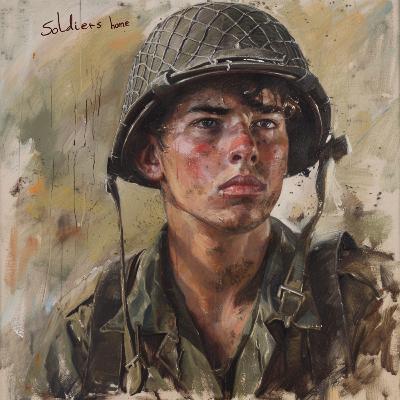
*The following short story "Soldier's Home," written by Ernest Hemingway and initially published in 1925, falls within the public domain in the United States. Ignoring our own usual standards, we have refrained from abridging or altering this work. It stands independently as a reflective narrative on the experiences of young men navigating life's transitions. The protagonist, Harold Krebs is a young man from Oklahoma who is drafted during World War I to fight in Germany while in college. Upon his return home, he grapples with a sense of aimlessness, disconnection, and a wavering desire to reintegrate into society. He finds himself disillusioned with the consequences of existence and struggles to find understanding listeners for his own experiences. Despite being addressed as Harold by his mother, the narrative hints at his preference for the name Krebs, indicating a gradual erosion of his sense of self and belonging to family.
*Post Script:
During World War I, Ernest Hemingway volunteered to serve in Italy as an ambulance driver for the American Red Cross. In June 1918, while he was distributing chocolate and cigarettes to soldiers from a mobile canteen, he was wounded by Austrian mortar fire. "Then there was a flash, as when a blast-furnace door is swung open, and a roar that started white and went red," he recounted in a letter home.
Despite sustaining injuries, Hemingway managed to evacuate a wounded Italian soldier to safety but was hit again by machine-gun fire. In recognition of his bravery, he was awarded the Silver Medal of Valor by the Italian government, becoming one of the first Americans to receive this honor.
Reflecting on this experience years later in his work "Men at War," Hemingway observed: "When you go to war as a boy you have a great illusion of immortality. Other people get killed; not you. . . . Then when you are badly wounded the first time you lose that illusion and you know it can happen to you. After being severely wounded two weeks before my nineteenth birthday I had a bad time until I figured out that nothing could happen to me that had not happened to all men before me. Whatever I had to do men had always done. If they had done it then I could do it too and the best thing was not to worry about it."
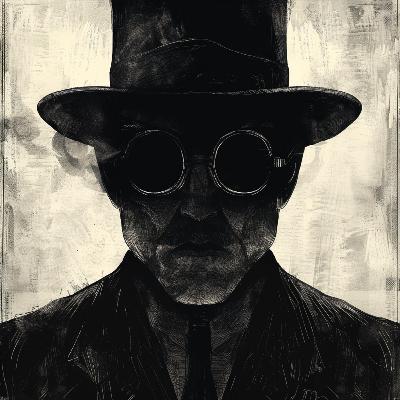
**The Invisible Man: Crusade Against Hitler is a short work of historical fiction - a short story loosely, and very loosely, inspired by H.G. Wells' 1896 classic novel.
"The Invisible Man: Crusade against Hitler," unfolds during the 1940s, at the height of World War II. Both the original novel and our story follow a scientist named Griffin, who renders himself invisible through scientific experimentation, but that is basically where the parallels stop.
Although our short story includes some of the themes and science fiction aspects introduced by H.G. Wells, it also presents unique twists and turns and a more modern reading that may be both cringey and cliché at times, yet hopefully intriguing, suspenseful, or thought-provoking.
Written by Franz Bradford
To the Reader—
The Book of Mormon is a source of spiritual guidance and inspiration for members of the Church of Jesus Christ of Latter Day Saints and likely many others. This book of scripture has long been revered as a testament of faith and an integral part of the LDS Church’s canon.
In recent years, however, many have sought to gain a greater understanding of the Book of Mormon through the modernization and abridgment of its content. The translation and abridgment of the Book of Mormon is a labor intensive process. It continues to involve multiple versions of edits and rewrites, and an extensive review by hand-picked volunteers. Compared to my previous abridgment projects such as Anna Karenina, The Island of Dr. Moreau, Peter Pan, Moby Dick, The Great Gatsby, and others, each of which took slightly over a month to complete, our ongoing endeavor to condense the Book of Mormon has extended for more than two years now.
The purpose of this process is to make the Book of Mormon more accessible to some contemporary audiences; it is not meant to replace the original Book of Mormon. Most of those that are already comfortable reading the Book of Mormon, will prefer to read it in its original King James scriptural language.
It is important to note that not every detail, nuance or theological purpose of the original book of Mormon is included in this translation.
A Word of Understanding and Caution
Many readers will find this modern interpretation of the Book of Mormon unsatisfying or possibly even irreverent. We are used to hearing the word of God in formal King James-style language. This plainer speech with modernized themes may initially feel less sacred or divine.
This modern rendering aims to make this substantial book more accessible to today’s readers. The goal is to open it’s teachings to a wider audience, not to provide the definitive interpretation. More than precise literalism, the spiritual essence and enlightenment within these pages is what matters most to us.
*This interpretation is not endorsed by the Church of Jesus Christ of Latter Day Saints.
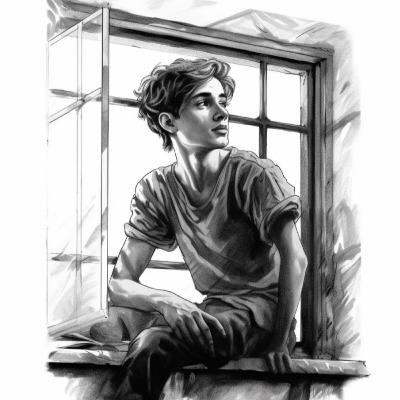
In this new retelling of the Classic Peter Pan, we seek to honor the essence of J.M. Barrie’s original work with a contemporary lens. Just as Peter himself refuses to grow up, the story of Peter Pan has refused to fade into literary history. Instead, it has evolved, adapting to the changing times and capturing the hearts of new audiences.
Through the years, the character of Peter Pan has taken on different shades, resonating with diverse generations. We, the creators of this adaptation, have sought to recapture the magic that made Peter Pan an enduring tale, while adding our own unique twist. We hope to breathe new life into the beloved characters, exploring their complexities and motivations in a way that speaks to modern sensibilities.
While the core themes of adventure, friendship, and the yearning for eternal youth remain at the heart of this story, we invite you to embark on a fresh journey with us. Together, let us rediscover the wonder and enchantment of Neverland, as we witness the evolution of these beloved characters through a contemporary lens.
Excerpt from the story:
They soon realized it was no dream. The extraordinary events were set to unfold that very night. After the boys finished their baths, Mrs. Darling found herself in the nursery, engrossed in her phone. As she scrolled through the endless content, her gaze would occasionally shift to the sleeping figures of Wendy and Michael across the room, with John close by. Thoughts of Wendy stirred within her, leading her to quietly whisper her emotions.
O Wendy, dear, how time does swiftly flee, From nursery play to woman grown, I see. In your eyes, a world of wonders shine,A spirit wild, a heart that’s truly thine.
Fly forth, embrace the unknown’s grand display, Yet know in my heart, you’ll forever stay near, A part of me, in Neverland, my dear.
As the words completed, Mrs. Darling quietly drifted off to sleep and slipped into a dream. A place where Neverland was all too close and a peculiar boy broke through the veil. He didn’t alarm her; he was familiar like the faces of countless women she’d seen before.
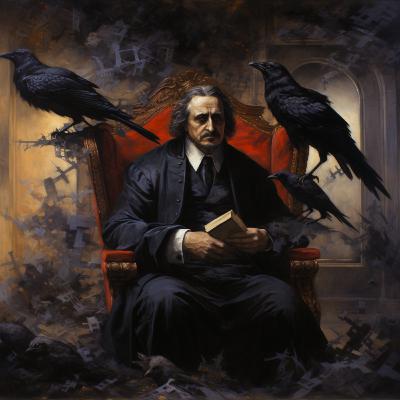
This podcast episode features a modern reimagining of Edgar Allan Poe's haunting poem. This modernized re-telling attempts to breathe new life into these timeless verses, so they can be more easily understood. After the poem, the podcast dives briefly into an analysis of key symbols like the ominous raven and the idealized Lenore. It explains their representation of sorrow, mortality, and the frightening power of memory. The line "Is there no balm in Gilead?" highlights the narrator's futile search for relief from grief and Poe's unquenchable fascination with the dark side of the human psyche.

A reading of the parable of the prodigal sons with a short commentary at the end (audio produced by ai generated voice).
In his profound book The Prodigal God, pastor Timothy Keller analyzes the famous parable, revealing that there are not just one but two lost sons.
The younger son is the obvious prodigal, rebelling and leaving home for a distant land. But Keller insightfully sees that the elder brother is also alienated from the father's love, despite staying home and following all the rules.
Keller explains how the elder brother mentality divides the world into "us versus them" - the moral churchgoers versus the problems out there. The younger brothers do the same, just with different categories. They see the open-minded as in. The bigoted as out.
But Jesus reveals that it is the humble who are accepted by God, and the proud who are rejected - regardless of outward obedience. The elder brothers follow moral laws not out of love, but as leverage to control God and put Him in their debt.
In the end, both sons are estranged from their father's grace. The father must actively go out and invite each back to his feast of love. The prodigal repents, but the elder brother self-righteously refuses. Jesus provocatively leaves him outside, challenging the judgmental Pharisees, the religious leaders of the day.
Through this parable, Jesus calls all of us to examine our own hearts - to humbly receive the outrageous grace of God, not cling to pride or moral accomplishment. In short, Jesus is redefining everything we thought we knew about connecting to God. He is redefining sin, what it means to be lost, and what it means to be saved.

Part One - Left Side of the Bench
In the coastal town of Lincoln City, a horticulture engineer with a unique perspective on life finds unexpected connection with a mysterious, but familiar stranger.
Excerpt:
"Oh hey, how are you?" I responded.
It was the girl. She was beautiful. I adjusted my head
slightly to make eye contact with my good eye.
"I think I know you," she said.
The analytical mind of an engineer quickly deduced that this
girl, whom I slightly recognized, but possibly never met, had left her group of friends and returned to me. There had to be a motivation.
"Stop overthinking," I scolded myself.
"Say something, you damned idiot. She asked you a question, and you're sitting here speechless."
"You know, you seem awfully familiar too. We must have
known each other at some point in our lives. When do you think it was?" I replied with a question.
I ease into a sense of relief. This girl is way out of my
league, both in looks and style. The truth is, I don't stand a chance. Thank you, God. Now, I can just relax, be her friend for just a moment, and not worry about the complexities of romance. There's something about our human nature always pushing for romantic relationships, which ironically can work against them, especially when pushed too early.
Lately, I've found a certain contentment with the idea of
being a single man—not a bachelor or a party animal, just a human living solo. There's a wonderfully relaxing aspect to it that I've come to appreciate.
"Quit overthinking, you fool. You've only exchanged
one sentence with this girl, and you're already reconsidering your entire future." I thought to myself, still waiting on her response.
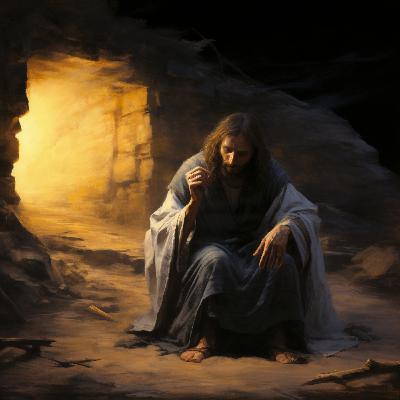
Excerpt from the Short Story:
During a brief lull in the excitement, Lazarus managed to escape with his friend John, yes the disciple.
“I cannot suffer this celebration any longer.”
John was caught off guard by Lazarus. He’d never heard him speak so directly before, especially an expression of discomfort. Yet, considering what had transpired, John did his best to maintain composure.
“Why? What’s going on Lazarus?”
“Have you ever suffered such agony you yearned for it to end? Been so feeble life itself became unbearable? Have you died before?”
“No, I haven’t. But isn’t your revival miraculous?”
“Miracle? I have to die again!"
"Yes, I understand," John replied gently. "To others this seems a blessing. I'll help bear what burden I can, my friend.”
John understood Lazarus in a way no one else did. He recognized the changes wrought by Lazarus's death and miraculous revival. It wasn't just his demeanor that had shifted. The illness that killed him, and the shock of returning, left his body gaunt and diminished. His fingers remained blue, his flesh soft and bloated - such was the reality of Lazarus's second lease on life.......
Edmund Sears was a quiet hero, lost to most histories but
not to time. He lived an honest, modest life - kind to others, devoted to his family, avoiding unnecessary drama or attention. His life was simply one of goodness. In 1810, Edmund was born on a Massachusetts farm. He came of age in complex times, at least in his personal life. Edmund didn’t fit in, as he thought he should and as his brothers did in school. As he later recalled, “I went to school in an old loose gown, with the head piece and the body all in
one. Because of the way I dressed, my schoolmates wondered to what species I belonged." Though quietly ashamed of his differences, Edmund persevered thanks to his mother's high expectations.
Edmund Sears is the author of the famous Christmas hymn 'It Came Upon a Midnight Clear.'"
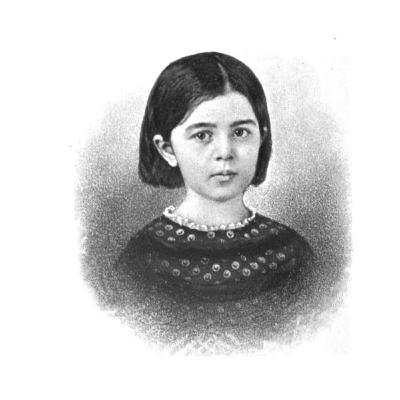
*The cover art is an illustration of his 10 year old daughter Katy Sears who died tragically of scarlet fever
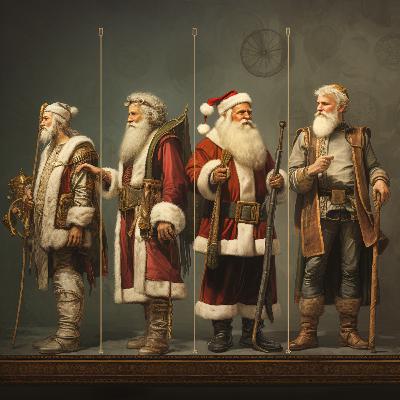
Uncover the historical journey of Santa Claus beyond the popular legend. This short story delves into the origins of the tale, starting with St. Nicholas, a 4th-century Greek bishop celebrated for secret gift-giving. Learn how influential figures like Martin Luther and Clement C. Moore contributed to shaping Santa's modern image, introducing elements like sleigh rides and reindeer.
Charles Dickens played a key role with the first-ever "Ho Ho Ho," giving life to Santa's signature catchphrase. Gain insights into Santa's perspective on parental pressures amid today's extravagant holiday celebrations. Reflect on the evolving portrayals of Santa Claus in film throughout the decades.
Above all, explore a new perspective behind Santa's mission. This short story offers a unique perspective on the lesser-known background of the true Santa Claus.
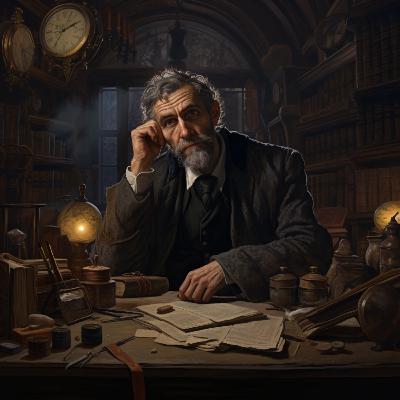
Bartleby, The Law Clerk
A Modern Adaptation
of the Short Story Bartleby, The Scrivener.
By Herman Melville.
This contemporary retelling of Melville’s short story centers around an unnamed narrator, a lawyer who takes interest in a new legal clerk he hires named Bartleby. Though at first highly productive, Bartleby soon grows lifeless and despondent, preferring not to complete basic work tasks when asked and instead staring vacantly out the office's lonely windows all day. Despite the narrator’s mounting frustration and confusion at Bartleby’s eccentric defiance, he makes ongoing efforts to accommodate and help the non-compliant clerk. However, Bartleby’s deepening detachment from standard social expectations creates chaos in the office and tries even the narrator’s patience and empathy. When Bartleby refuses to leave the premises, he is eventually imprisoned, where he simply retreats further into himself and decline amidst the narrator's best attempts, wasting away while facing a blank wall in silent protest of a world and reality he rejects entirely. This poignant psychological portrait examines isolation, alienation from societal norms, and the limits of one’s responsibility toward those who repel support or solutions.

Herman Melville created a legend, a life philosophy, an epic tale in Moby Dick. Unfortunately, the language of the original story is so digressive and complex, that it is difficult to finish, or even start.He Called Me Ishmael is the story of Moby Dick, using original ideas, themes and focus. It is a fully developed short story with complex characters and themes.
The story begins as a young man, Ishmael (the lone survivor of Moby Dick and the ship Pequod) chases his dream of being a whale-man on a whaling ship. He soon finds himself at sea with a curious crew of misfits, a best friend cannibal and a maniacal captain (Ahab), who is hell bent and obsessed with revenge on Moby Dick, the great white whale. He soon understands that if he doesn't maintain an "outside perspective" on the chase, he may end up at the bottom of the sea along with the rest of the crew.
Ishmael's beautiful bond with an unlikely friend, Queequeg, the cannibal, builds to a crescendo from their first encounter to their last. Listen as Ishmael negotiates his fears and anxieties and leans on his friend for support. This short story stays true to Herman Melville's original story. It is not a substitute for reading Moby Dick, but the average recreational reader is likely to understand more of the story by listening this book, then by attempting to pick up the weighty original.
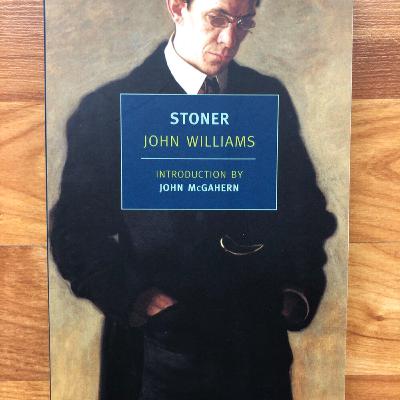
The novel Stoner, by John Williams, follows William Stoner, who was raised on a Missouri farm in a religious Methodist household but loses his strong religious beliefs as he enters academia and becomes engrossed in his scholarly work. Stoner is portrayed as having an internal "religion of the heart," guided more by his personal values than formal doctrine. As a professor, he finds meaning through teaching literature and experiences a "faith in learning." There are suggestions of a vague spirituality in his reflections on nature and the cosmos. As Stoner nears death, there is a sense of letting go and merging with something larger through the power of literature, beyond his own earthly life. The book seems to fall into "silence" just as Stoner's life ends, carrying a symbolic sense of release and legacy.
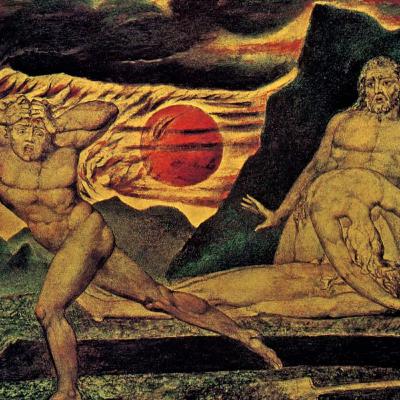
Blake’s contemporaries and modern critics may have regarded him as a heretic or satirist when it came to matters of religion. Some might even consider him irreverent and radical in his views on institutionalized religion, emphasizing the importance of freedom of expression and thought while critiquing the constraints imposed by religion. However, when it comes to unconventional depictions of the divine, Blake pales in comparison to the prophet Ezekiel.
While Blake’s portrayal of God can be enigmatic and unsettling to some at times, the God described by Ezekiel seems like a blend of the Greek deity Zeus, the conqueror Genghis Khan, and the whimsical Angela Lansbury from “Bedknobs and Broomsticks.” Ezekiel’s account involves the creation of an army of skeletal beings, a far cry from Blake’s harmless question: “Did he who made the lamb make thee?
For those who insist on the strictest interpretation of the Bible, it can be challenging. It’s a reminder that reconciling a Bible believed to be divinely authored by a God who doesn’t always conform to idealized expectations can be a complex endeavor.
Let’s not crucify Blake for his minor heresy, relegating him to a lesser heaven or even hell while at the same time praising Ezekiel simply because he has a role as a prophet in the bible.
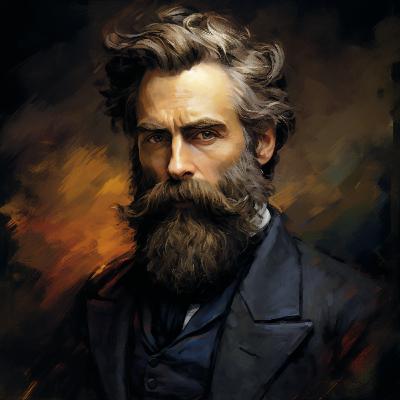
The renowned American novelist Herman Melville is best known for literary classics like Moby Dick. Yet throughout his life, Melville privately wrestled with profound questions of faith, belief and doubt.
As his friend and contemporary Nathaniel Hawthorne observed, Melville relentlessly grappled with matters of “Providence and futurity” that extend beyond human understanding. Melville doubted divine providence, frankly acknowledging to Hawthorne that he “had ‘pretty much made up his mind to be annihilated’” upon death.
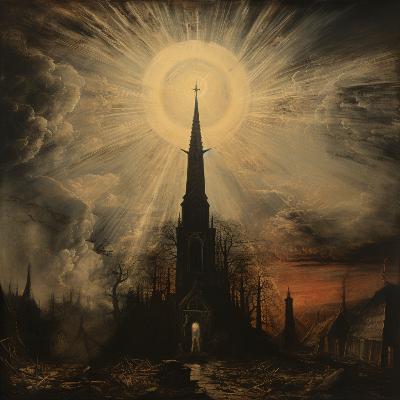
William Blake's poem "The Garden of Love" may subtly allude to the biblical Genesis account of Adam and Eve's expulsion from the Garden of Eden. The combination of these works, "The Garden of Love" by William Blake and excerpts from the biblical book of Genesis. grapple with themes of lost innocence and the consequences of gained knowledge and disobedience. By relating these two works, we gain insight into a layered commentary on purity and corruption, freedom and control.
Blake's poem depicts a garden that once offered joy and freedom, but is now a closed-off churchyard with restricting rules like "Thou shalt not." As the analysis notes, this symbolizes how organized religion and institutions tend to restrain natural human desires and impose order. The spontaneity and delight of the garden have been lost.
The Genesis passages describe God commanding Adam and Eve not to eat forbidden fruit in Eden, or else they will die. However, they disobey and are expelled from the perfect garden into a world of pain and toil. The biblical account shows consequences for moral transgression.
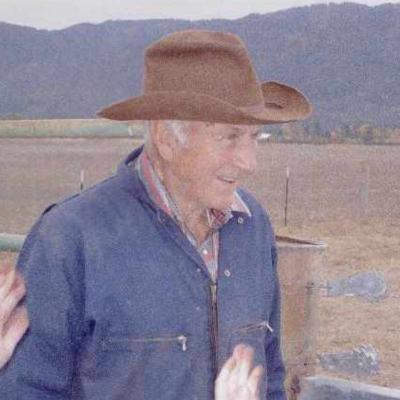
In a recent conference of the LDS Church, President and Prophet Nelson urged members to "think celestial." This directive underscores the importance of aligning one's thoughts, values, and actions with the principles and ideals of the Celestial Kingdom, the highest level of heaven in LDS theology.
President Nelson explained that thinking celestial means making the Celestial Kingdom one's eternal goal and carefully considering how each decision made on Earth will affect their place in the next world. He emphasized the significance of temple sealing and covenant-keeping for eternal togetherness with loved ones.
Cowboy Pat, however, had a slightly different perspective. While not a rebel or anti-Mormon, he held a simpler outlook. He never really sought for the highest degree of the Celestial Kingdom or for personal gain. Rather, he saw it as a way to serve and boost others. He didn't lose sleep over which heavenly kingdom he'd enter and believed in making the most of wherever he landed, lifting others along the way.
“Generally speaking, the guy that seeks the highest degree of the Celestial Kingdom doesn’t seek it for himself, he seeks it for the other people that are with him “
President Nelson's message highlights the importance of striving for celestial goals and living in accordance with LDS teachings. However, Cowboy Pat's wisdom reminds us that true celestial living should be marked by selflessness and service to others. It's a powerful lesson that underscores the idea that heaven is not just about personal rewards but about loving and caring for those around us.
As we contemplate the concept of three heavens and their distinctions, it's worth noting that this idea predates Joseph Smith and the LDS Church. In the book "Heaven and Hell" from 1758, the concept of three distinct heavens is explained. Each heaven corresponds to a specific degree of openness within our souls, leading to varying levels of perfection.
Joseph Smith's teachings on the three heavens align with the celestial, terrestrial, and telestial kingdoms. The celestial kingdom represents the highest level where those who embraced the gospel fully will dwell in God's presence. The terrestrial and telestial kingdoms cater to honorable individuals who may not have fully accepted the gospel and those who rejected it but will still be saved, respectively.
In the end, Cowboy Pat's wisdom reminds us that the pursuit of celestial living should be driven by a genuine desire to serve and uplift others, just as he did throughout his life.
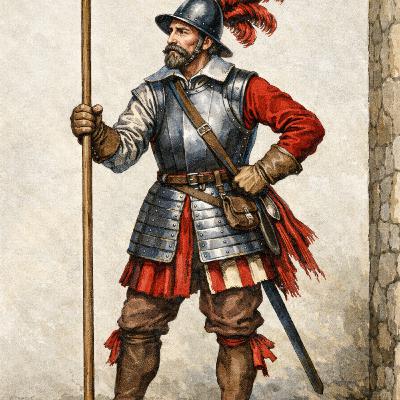
A Story of the Age of EmpiresThe Dark AgesI cannot say now how the village was created. Whether it began with a cosmic spark, or whether it simply appeared because I willed the earth to open. I only remember that I did not feel hurried.Not yet.A Town Center, my Town Center, door opened and two villagers stepped out at once. They blinked in the light and then stood. Waiting their orders. Then the door shut, then opened again. Another body. Then another.Each time it opened, a worker emerged. I never asked where she wanted to work. I appointed her. That was the arrangement. They would appear. I would decide. And they stood still until they were told what to do.I remember that first morning clearly.My clan was not talkative. They communicated mostly through movement. Maybe an occasional nod or a possible grunt. The short, irritated sound a man makes when handed an axe instead of a basket. Words were rare, and unnecessary.They came one at a time. Always one at a time.The first six went to the sheep tied near the well. Their knives moved without hesitation. The animals fell quickly and without ceremony. The next sheep followed, then the next. The baskets filled with meat and wool. Steam rose faintly in the morning air.The boar in the distance lifted its head.It watched.The villagers kept their rhythm. If they felt the animal’s attention, they gave no sign. Their pace quickened slightly, but I didn’t know why. I still felt no urgency. But the villagers did. I sensed it in them. Food first. Questions later.Two others wandered toward the trees and began hacking at trunks. Chips of wood flew. Trees fell. None of them were Paul. But they chopped like Bunyon. A small pile formed at their feet. It did not look like much. But it was the beginning of something, but I didn’t know what.A pair drifted toward a thin patch of berry bushes and began pulling fruit into baskets. They worked quietly. One of them hummed something low and tuneless.Inside the Town Center, the voice came again.“We need another at the lumber camp.”“Another.”The door opened.Another stepped out.The deer came before the boar.One of the younger villagers spotted movement near the edge of the clearing. He raised a hand. Three of them approached cautiously and brought down a small deer. Then another. They were not heroic about it. They did what needed to be done and dragged the bodies back toward the Mill.The mill was too far to walk. We needed one near the deer. We had the lumber, so we set the builders to it. They raised a small mill by the clearing. The deer were unloaded there, saving time and energy and workers.The village was still small. Everything felt contained. Manageable.Then came the sound.It was not loud at first. Just a crack of underbrush and a short, strangled shout.I turned toward it immediately.A wandering villager—eager, foolish, ambitious—had decided to take the boar alone. He must have thought speed would be enough. Or bravery. Or that the others would notice quickly enough to save him.The boar did not hesitate.It charged low and fast, tusks forward. The villager stumbled backward, spear half-raised. The others froze for a fraction of a second, then scattered toward the Town Center.The man fell hard. The boar stood over him, gnashing its teeth, furious and alive in a way the sheep had not been.For a moment, the clearing emptied.Then the bell rang.The Town Center door burst open.They came out together this time. With urgency. More than even before.We were down one and I fought shy of boar ever since.Bows drawn. Axes still in hand. A few still clutching half-filled baskets............

Part 3 is the conclusion of this short story series. Excerpts from this podcast:"The Professor returned to New Jersey under federal escort. When he was still at the monastery, two FBI agents met with him and explained he needed to return to the United States immediately for questioning and for his own protection. They told him handcuffs wouldn’t be necessary if he cooperated. Of course he cooperated. He was a professor, and an anxious one at that. He didn’t have it in him to resist.""“Yes,” Einstein said. “My whole life I’ve been anxious about consequences, about being wrong. It crippled me. I was always afraid of failure, of being exposed as less capable than people assumed. Academia can do that to you. Religion can as well. One mistake, one bad result, and suddenly your students see it, your peers see it. You always see it within yourself. I lived with a kind of quiet perfectionism that kept me cautious. And when you two arrived, moving quickly, not worrying about how it would be received, it unsettled me. I didn’t measure up to that kind of certainty. I mistook your confidence for recklessness, but really it just showed me how careful I had always been.”"Princeton had one more chance to make something of the machine. One last production for the world. Molly and Jason were offered millions to participate, to start it again and show, live, what history might look like if light could be folded back on itself.They had no real confidence it would work. The machine had always keyed to Einstein. Every calibration, every successful projection, had resolved to him. There was no clear way to reset that. When the system locked in, it locked to his timing, his parameters. Even gone, he still seemed to dictate the terms.They agreed to try anyway, but only on fixed terms: ten million each, paid up front, not contingent on results. Contracts were drafted and signed. Princeton accepted. Netflix cleared its schedule and built weeks of programming around the event—documentary segments, interviews with physicists, theologians, historians, commentators. By the night of the broadcast, viewership projections had climbed into the billions. The expectation was that nearly half the world would tune in live, the rest catching fragments, replays, and commentary in the hours that followed."
This is part 2 of Professor Einstein’s Light Machine (a short story). There was enough interest in part 1, in fact it was the second most listened to short story of ours (the first being The Beardless Jesus Series) to release part 2. Not to gloat or brag. We are a small book club, a niche of readers, and we like it that way. We don't have to conform to anyone telling us how or what to write. We have our own standards, but freedom. IntroTime and Space, however actual they may appear to us in the affairs of daily life, are, from the meta physical point of view, merely modes and conditions under which our intelligence functions. They are part and parcel of our limitations as finite beings; but in attempting to postulate the existence of the Infinite we must assume a state where neither Time nor Space have place or meaning. In such a condition we cannot admit the reality of past, present, and future but only the truth of one all embracing eternal NOW.Chapter 1The Device Existed.The Light Machine.It sat in a secured lab on the north side of campus, wrapped in plastic and bureaucracy. Without Professor Einstein, it was motionless and cold. Dead in every way that could be measured.No matter how many technicians, mechanics or physicists that rotated through the room, no matter how many senior faculty members were “consulted,” it refused to do anything at all. Not a glow or a projection. Not even a hum. It did not even pretend to cooperate.Princeton brought in a private forensic engineering firm out of Chicago. Along with them came a small militia of lawyers from one of those big law firms that specialized in corporate intellectual property disputes and crisis containment. The official explanation was “non-destructive testing.” They disassembled what they could without cutting into the core structure. Scanned the lattice. Mapped the circuitry. Logged every material. Ceramic composites. Rare-earth alloys. Optical channels so precise they bordered on absurd. Everything was cataloged and photographed.They wanted to know what it had done and if they could replicate it. But they couldn't. And they were frustrated. What they learned was inconvenient.The hardware made sense in pieces. The optical compression frameworks were a decade's old technology. The interferometric chambers sold on ebay. The AI-assisted signal processors were state of the art, but accessible. The whole thing seemed experimental maybe, and far fetched certainly, but not impossible. Clunky though. It was a patchwork job, obviously built by a professor, not an engineer.But what they could not reproduce was activation.There wasn't a trigger sequence or noticeable boot protocol. It didn't come with a manual or intuitive ignition switch. The machine sat there like a locked door with no handle.Three weeks later, Princeton released a statement.It came out just after noon, carefully worded and aggressively calm.

Comments

Download from Google Play

Download from App Store
 United States