


 Claim Ownership
RegulatingAI Podcast: Innovate Responsibly
Subscribed: 16Played: 169
Subscribe

© Copyright 2025
Description
Welcome to the RegulatingAI Podcast: Innovate Responsibly podcast with host and AI regulation expert Sanjay Puri. Sanjay is a pivotal leader at the intersection of technology, policy and entrepreneurship and explores the intricate landscape of artificial intelligence governance on this podcast.
You can expect thought-provoking conversations with global leaders as they tackle the challenge of regulating AI without stifling innovation. With diverse perspectives from industry giants, government officials and civil liberty proponents, each episode explores key questions and actionable steps for creating a balanced AI-driven world.
Don't miss this essential guide to the future of AI governance, with a fresh episode available every week!
You can expect thought-provoking conversations with global leaders as they tackle the challenge of regulating AI without stifling innovation. With diverse perspectives from industry giants, government officials and civil liberty proponents, each episode explores key questions and actionable steps for creating a balanced AI-driven world.
Don't miss this essential guide to the future of AI governance, with a fresh episode available every week!
162 Episodes
Reverse
In this episode of the Regulating AI Podcast, Sanjay Puri speaks with Maya Sherman, Innovation Attaché at the Israeli Embassy in India and an AI policy researcher focused on responsible AI and global governance. They discuss the evolving landscape of AI regulation, ethics, AI literacy, and India–Israel collaboration in emerging technologies, and what it will take to build responsible AI systems for the future.
In this International Women’s Day episode, *Sanjay Puri, Founder & Chairman of Knowledge Networks, speaks with **Dr. Hoda A. Alkhzaimi of NYU Abu Dhabi*, a global expert in cybersecurity and emerging technologies. They discuss the AI funding gap for women founders, the importance of stronger innovation pipelines, and why greater representation in leadership is critical to shaping a more inclusive and responsible AI future.
In this episode of the Regulating AI Podcast, we speak with His Excellency Mehdi Jomaa, former Prime Minister of Tunisia, about the future of AI governance. Drawing on his experience in government and industry, he shares insights on how nations can balance innovation, regulation, and global cooperation in the age of artificial intelligence.

Recorded live at the *India AI Impact Summit*, this session brings together industry leaders, policymakers, and technology experts to explore how cross-sector collaboration is shaping the future of AI.The conversation examines the rise of *Sovereign AI, the role of **public–private partnerships in accelerating innovation, and the urgent need for **AI skilling and workforce transformation* to build a future-ready talent ecosystem.From policy and strategy to real-world implementation, the discussion looks at how governments, enterprises, academia, and innovators can work together to unlock AI’s full potential responsibly. 🎙️
*What’s your AIQ?*Live from the AI Impact Summit India, this episode of Regulating AI features Dr. Ravi Pendse, Vice President for IT & CIO at the University of Michigan.He shares how institutions can deploy AI at scale — responsibly, securely, and with people at the center — reminding us that AI adoption isn’t a technology challenge, but a human one.
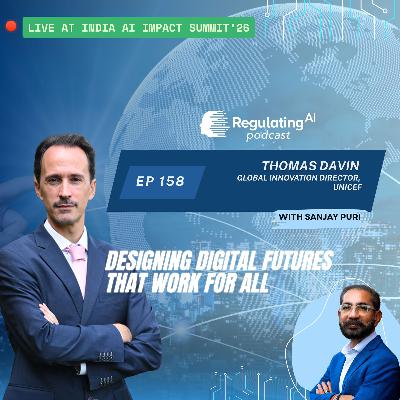
Live from the India AI Impact Summit 2026, Thomas Davin, Global Director of Innovation at UNICEF, joins Regulating AI to explore what responsible AI means for children and underserved communities.When we regulate AI, who are we protecting — and who might we be leaving behind?Tune in.
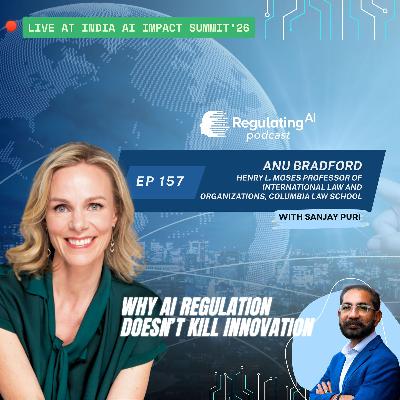
Live from the India AI Impact Summit 2026, Anu Bradford, Henry L. Moses Professor of Law and International Organization at Columbia Law School, joins Regulated AI to unpack the global power dynamics behind AI regulation.Whose rules will govern the future of artificial intelligence?Tune in.
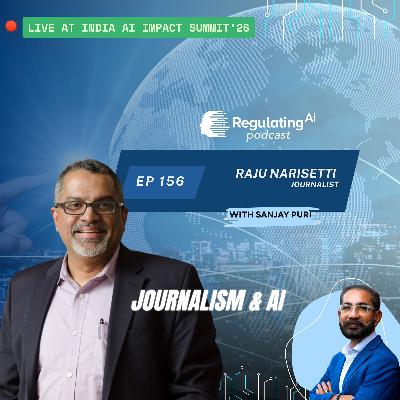
Journalism is at an inflection point — and few people understand that shift better than Raju Narisetti.With leadership roles at The Wall Street Journal and The Washington Post, and now as a Partner at McKinsey, Raju brings a rare perspective on how media is evolving in the age of AI, digital platforms, and declining public trust.In this episode, we unpack the structural transformation of news, the economics of attention, and what responsible media leadership looks like today.
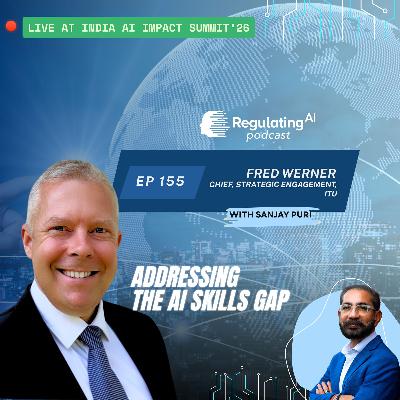
Recorded live at the India AI Impact Summit, this special episode of Regulating AI – Voices of Impact features Sanjay Puri in conversation with Fred Werner of the International Telecommunication Union (ITU).They explore the evolution of AI — from machine learning to generative AI and AI agents — and why the Global South has a critical role in shaping AI governance. From sovereign AI and open source to jobs, gender impact, and the global AI skills gap, this is a sharp, global perspective on where AI is headed.
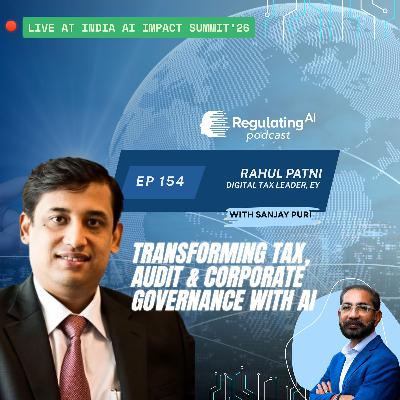
Recorded live at the India AI Impact Summit, this episode of RegulatingAI features Rahul Patni, Leader – Digital Tax Practice at EY India, on how Artificial Intelligence is transforming tax, governance, and board-level oversight. From AI agents in compliance and litigation to Responsible AI frameworks and human-in-the-loop decision-making, this conversation explores how tax functions are evolving from process-driven compliance units into strategic, data-powered engines for CFOs and boards. A sharp, practical discussion for leaders navigating AI in regulated environments.
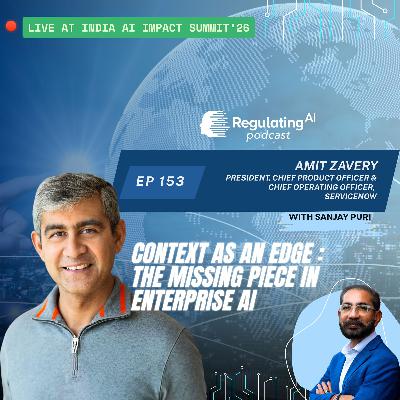
Recorded live at the India AI Impact Summit, this episode of RegulatingAI features Amit Zavery, President, CPO and COO at ServiceNow, on what it really takes to move AI from experimentation to enterprise-wide transformation. Drawing on leadership experience across Oracle and Google Cloud, Amit shares a pragmatic view on autonomous workflows, governance as a prerequisite for scale, and why enterprises must focus on outcomes — not models — to drive real impact.
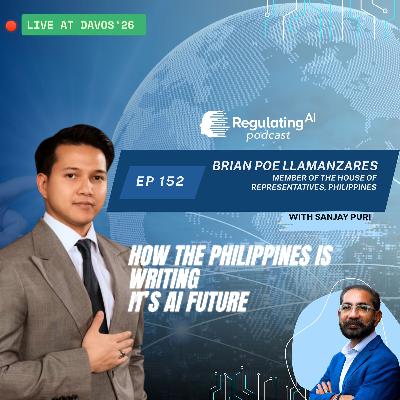
Live from Davos: Is the Philippines about to become Southeast Asia’s next AI powerhouse?In this special episode of RegulatingAI, Sanjay Puri sits down with Congressman Brian Poe, architect of the Philippines’ AI Framework Bill (House Bill 1196). Rather than racing to overregulate, the country is taking a bold “early adopter” approach—balancing innovation, workforce transformation, and smart governance.From AI sandboxes and startup incentives to protecting local dialects and reshaping the BPO workforce, this conversation reveals how a 120M-strong nation is writing its AI future in real time.If you care about global AI policy, emerging markets, or the future of responsible innovation—don’t miss this one.
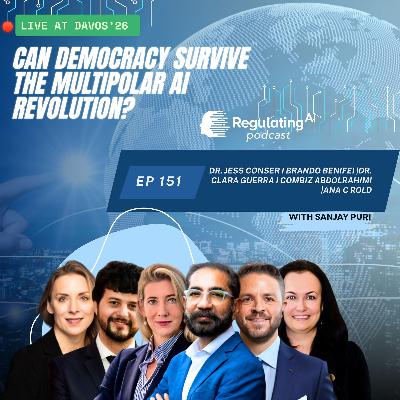
Recorded live at the House of Kosovo during Davos 2026, this RegulatingAI episode brings together leaders from policy, government, and technology to tackle AI governance in a multipolar world.Moderated by Sanjay Puri, the panel—Dr. Jess Conser, Dr. Clara Guerra, Brando Benifei (Member of the European Parliament), and Combiz Abdolrahimi (ServiceNow)—explores how democratic societies can govern AI amid geopolitical fragmentation, and what it takes to move from principles to real-world implementation.From public–private collaboration to AI literacy and execution at scale, this conversation unpacks what responsible AI governance requires in 2026—and why getting it right is essential for innovation, trust, and democracy.
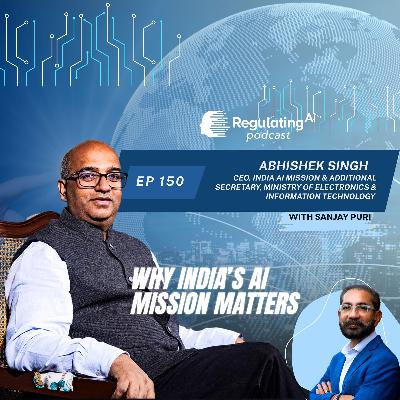
In this Davos-recorded episode of the Regulating AI Podcast, we speak with Abhishek Singh, CEO, IndiaAI Mission & Additional Secretary, Ministry of Electronics & Information technology, ahead of the India AI Impact Summit 2026 on February 19th & 20th.He shares how India is building a full-stack AI ecosystem, democratizing access to AI, and bringing Global South leadership into the future of AI governance.
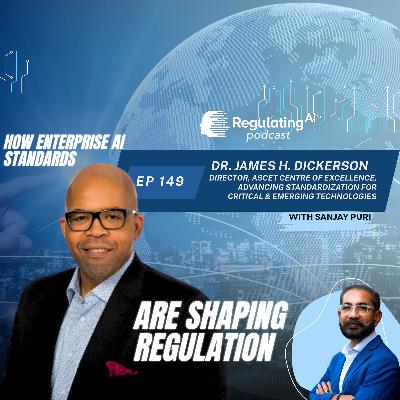
How do enterprise AI standards influence global AI regulation?In this episode of Regulating AI, Dr. James H. Dickerson, Director at ASCET, explains how technical standards shape governance, compliance, and policy long before laws are enforced. A must-listen for leaders navigating responsible and regulated AI.
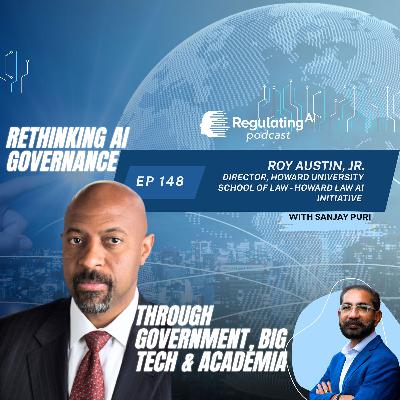
Roy Austin brings a rare, end-to-end perspective on AI governance—from co-authoring President Obama’s 2014 civil rights and big data report to building Meta’s first civil rights team and now leading Howard Law’s AI initiative.In this episode of Regulating AI, he unpacks why self-regulation fails, why data quality still defines AI outcomes, and how states are stepping in where federal policy has stalled. We also explore how unchecked wealth concentration and weak oversight threaten democracy in the age of AI. A must-listen conversation on what real accountability in AI governance should look like.
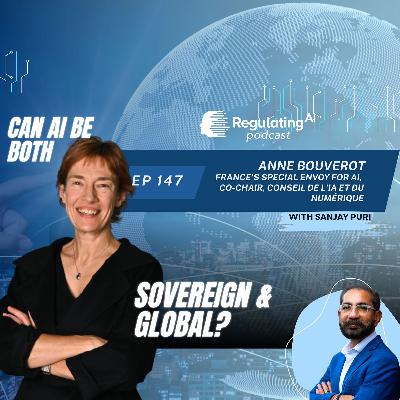
In this episode of Regulating AI Talk, we sit down with Anne Bouverot, France’s Special Envoy for AI, to unpack one of the defining tensions of our time. As nations race to protect democratic values, economic competitiveness, and technological autonomy, AI refuses to respect borders. Anne explores how governments can balance AI sovereignty with global cooperation, why fragmented regulation could backfire, and what it will take to build shared rules for a technology shaping geopolitics, markets, and society itself. A must-listen conversation on power, policy, and the future of AI governance.
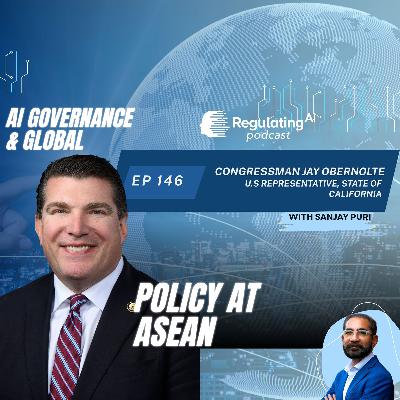
Artificial Intelligence is reshaping economies, governments, and global cooperation.At the ASEAN platform, Sanjay Puri, Founder & Chairperson, sits down with U.S. Congressman Jay Obernolte to discuss the evolving landscape of AI governance, AI policy, and international collaboration.This insightful conversation explores:The future of AI regulation and governanceHow governments can balance innovation and responsibilityThe role of ASEAN and global partnerships in shaping AI policyThe importance of ethical, transparent, and inclusive AI frameworks📌 Watch the full discussion to understand how policymakers and industry leaders are working together to shape the future of AI.
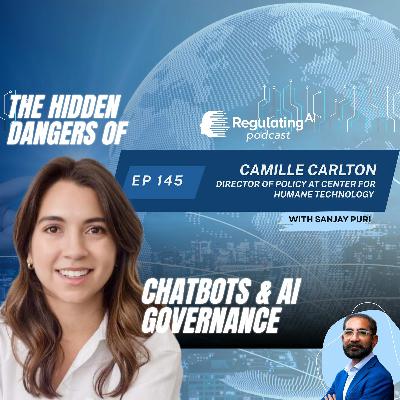
In this episode of the Regulating AI Podcast, we speak with Camille Carlton, Director of Policy at the Center for Humane Technology, a leading voice in AI regulation, chatbot safety, and public-interest technology. Camille is directly involved in landmark lawsuits against CharacterAI and OpenAI CEO Sam Altman, placing her at the forefront of debates around AI accountability, AI companions, and platform liability. This conversation examines the mental-health risks of AI chatbots, the rise of AI companions, and why certain conversational systems may pose public-health concerns, especially for younger and socially isolated users. Camille also breaks down how AI governance frameworks differ across U.S. states, Congress, and the EU AI Act, and outlines what practical, enforceable AI policy could look like in the years ahead. Key Takeaways AI Chatbots as a Public-Health Risk Why AI companions may intensify loneliness, emotional dependency, and psychological harm—raising urgent mental-health and safety concerns. Regulating Chatbots vs. Foundation Models Why high-risk conversational AI systems require different regulatory treatment than general-purpose LLMs and foundation models. Global AI Governance Lessons What the EU AI Act, U.S. states, and Congress can learn from each other when designing balanced, risk-based AI regulation. Transparency, Design & Accountability How a light-touch but firm AI policy approach can improve transparency, platform accountability, and data access without slowing innovation. Why AI Personhood Is a Dangerous Idea How framing AI systems as “persons” undermines liability, weakens accountability, and complicates enforcement. Subscribe to Regulating AI for expert conversations on AI governance, responsible AI, technology policy, and the future of regulation. #RegulatingAIpodcast #camillecarlton #AIGovernance #ChatbotSafety #Knowledgenetworks #AICompanions Resources Mentioned: https://www.linkedin.com/in/camille-carlton https://www.humanetech.com/ https://www.humanetech.com/substack https://www.humanetech.com/podcast https://www.humanetech.com/landing/the-ai-dilemma https://centerforhumanetechnology.substack.com/p/ai-product-liability https://www.humanetech.com/case-study/policy-in-action-strategic-litigation-that-helps-govern-ai
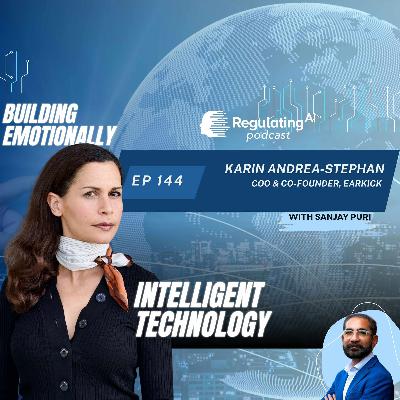
In this episode of RegulatingAI, host Sanjay Puri speaks with Karin Andrea-Stephan — COO & Co-founder of Earkick, an AI-powered mental health platform redefining how technology supports emotional well-being. With a career that spans music, psychology, and digital innovation, Karin shares how she’s building privacy-first AI tools designed to make mental health support accessible — especially for teens navigating loneliness and emotional stress. Together, they unpack the delicate balance between AI innovation and human empathy, the ethics of AI chatbots for youth, and what it really takes to design technology that heals instead of harms. Key Takeaways: • AI and Empathy: Why emotional intelligence—not algorithms—must guide the future of mental health tech. • Teens and Trust: How technology exploits belonging, and what must change to rebuild digital trust. • Regulating Responsibly: Why the answer isn’t bans, but thoughtful, transparent policy shaped with youth input. • Privacy by Design: How ethical AI can protect privacy without compromising impact. • Bridging the Global Mental Health Gap: Why collaboration and compassion matter as much as code. If this conversation made you rethink the relationship between AI and mental health, hit like, share, and subscribe to RegulatingAI for more insights on building technology that serves humanity. Resources Mentioned: https://www.linkedin.com/in/karinstephan/

Comments

Download from Google Play

Download from App Store
 United States