


 Claim Ownership
Nina’s Notes Podcast
Subscribed: 0Played: 8
Subscribe

© Nina Patrick
Description
111 Episodes
Reverse
Living longer isn't the same as living well. In this episode, I explore a concept that might matter more than your health span or lifespan: your joy span, the years you spend actually liking your life.Dr. Kerry Burnight, professor of geriatric medicine at UC Irvine, argues that how we respond to aging determines whether we thrive or suffer. And the good news? You can lengthen your joy span at any age through everyday choices.What You'll Learn:- The difference between lifespan, health span, and joy span- Dr. Burnight's 4 non-negotiable actions: Grow, Adapt, Give, Connect- Why asking questions makes you more likeable (science-backed)- How to continue learning as you age (including free college options for 60+)- Why I believe this matters at 38, not just in your later yearsIn The Video, I Share Practical Challenges:- Journal prompts to assess your current joy span- How to adapt when life throws you curveballs- Creative ways to stay connected and give back- Dr. Burnight's quizzes to get your baseline (link below)Timestamps:00:00 Understanding Joy Span vs. Health Span01:00 The Four Non-Negotiable Actions for Thriving03:36 Adapting and Growing as we Age05:35 The Book of the Week07:15 Check this OutLinksJoyspan Quizzes: https://www.hachettebookgroup.com/wp-content/uploads/2025/07/JoyspanExtendedExcerpt.pdfCONNECT WITH ME Newsletter: https://www.ninasnotes.xyz LinkedIn: https://www.linkedin.com/in/ninapatrick/ Website: https://www.ninapatrick.xyzjoy span, health span, aging, quality of life, mental health, connection, lifelong learning, geriatric medicine, Dr. Kerry Burnight, thriving, Nina’s Notes Get full access to Nina’s Notes at www.ninasnotes.xyz/subscribe

Preventative healthcare isn’t just for the wealthy few, it can be accessible to everyone who needs it most.In this episode, Nina sits down with Emilian Popa, founder of Expand Health, for a candid conversation about democratizing longevity and preventative care. From his early days as an entrepreneur in Romania to working in venture capital and finally building his own healthcare company, Emilian reveals the critical gaps in our current healthcare system and how technology can bridge them.This isn’t about boutique longevity clinics charging $10,000 for annual memberships. It’s about making evidence-based preventative care accessible and affordable for the middle class, the people who need it most but are currently priced out of the market.Emilian explains why behavior change is the hardest part of healthcare transformation, how AI is revolutionizing patient experience and cost structures, and why the fundamentals of nutrition, movement, and sleep remain non-negotiable. You’ll discover what’s actually stopping people from accessing preventative care, how healthcare will evolve over the next decade, and why brain health deserves more attention in the longevity conversation.Timestamps:00:00 Emilian’s Entrepreneurial Journey05:47 Building Expand Health: A New Approach to Healthcare12:11 Behavior Change and Health Span20:24 Innovations in Preventative Care25:43 Scaling Preventative Health Across Continents30:57 The Cost of Healthcare and Access to Testing32:31 Democratizing Healthcare: Bridging the Gap34:59 Behavior Change: The Key to Health37:16 The Future of Work: Balancing Productivity and Health41:05 Foundational Health: Nutrition, Movement, and Sleep43:33 Emerging Technologies in Health and Longevity48:15 Advice for Individuals in the Longevity Space52:58 The Importance of Brain Health and Future InnovationsWhere to find Emilian Popa:* Expand Health* LinkedInWhere to find Nina Patrick, PhD:* Newsletter* LinkedIn* Website Get full access to Nina’s Notes at www.ninasnotes.xyz/subscribe
In this conversation, I explore a fascinating paradox in our relationship with artificial intelligence.Why do we demand absolute perfection from AI while accepting human error as inevitable? When an LLM hallucinates or cites fake sources, I get frustrated. But when a colleague misspeaks or misremembers, I give them grace. Why the double standard?I walk through the reality of human error across industries:* Diagnostic mistakes happen in 5-20% of doctor visits* 80% of aviation accidents trace back to human error* 20% of Big Four audits have significant deficiencies* Even elite professionals only achieve 90-95% accuracy.The thread tying all of this together is simple but uncomfortable: our imperfections are what make us human and interesting. AI-generated content feels soulless. You can sense it. It lacks emotion, depth, playfulness, and personality.I believe we’re heading toward an age where we’ll pay a premium for human-generated content, art, and music. We think we can scale the human experience with AI, but what we’ll find instead is an overly perfect, emotionless dark age of art and culture.The choice isn’t between perfect AI or imperfect humans. It’s about deciding which imperfections we’re willing to live with.TIMESTAMPS00:00 Hello from Australia!01:16 We Expect Perfection out of AI and Not in Humans, Why?06:41 The Paradox of Perfection in AI and Humanity07:05 Mentoring Opportunities07:26 The Book of the Week08:34 Grab My Guidebooks08:51 Check this outLinkshttps://www.who.int/news-room/fact-sheets/detail/patient-safetyhttps://www.sciencedirect.com/science/article/pii/S2666691X23000246https://tax.thomsonreuters.com/news/audit-deficiency-rate-drops-in-2024-in-sign-of-improvement/https://www.researchgate.net/publication/1907590_Thinking_is_Bad_Implications_of_Human_Error_Research_for_Spreadsheet_Research_and_PracticeCONNECT WITH MENewsletter: https://www.ninasnotes.xyzLongevity.Technology Unlocked Podcast: https://longevity.technology/unlocked/Longevity Guidebooks: https://ninapatrick.xyz/guidebooksMentoring: https://ninapatrick.xyz/startup-mentor/LinkedIn: https://www.linkedin.com/in/ninapatrick/Website: https://www.ninapatrick.xyz Get full access to Nina’s Notes at www.ninasnotes.xyz/subscribe
What if you could actually see your brain activity in real-time and learn to control it like adjusting a thermostat?In this episode, Nina sits down with Ariel Garten, neuroscientist and founder of Muse, for a deep dive into how neurofeedback technology is revolutionizing the way we train our brains. From her early work making buildings light up with brainwaves at the 2010 Winter Olympics to creating a headband used by half a million people worldwide, Ariel reveals how accessible brain training has become.This isn’t science fiction, it’s neuroscience made practical. Ariel explains how three to five minutes of daily brain training can improve focus, enhance sleep quality by 20%, and even help you fall asleep 55% faster. You’ll discover what your brain really looks like during sleep, why most of us aren’t getting “textbook” sleep, and how emerging technologies like deep sleep stimulation could change how we age.Timestamps:00:00 Introduction to Muse and Neuroscience01:50 The Journey of Muse: From Concept to Reality04:29 User Experience: Feedback and Interaction with Muse06:54 Training the Brain: Techniques and Processes09:44 Understanding Calmness: EEG Insights and Metacognition12:12 Evolution of Use Cases: Meditation to Sleep Optimization14:52 The Muse S: Enhancing Sleep Quality17:35 The Complexity of Sleep: Insights from EEG Studies22:10 Transforming Sleep Through Mindfulness24:33 Understanding Calmness and Anxiety26:06 Enhancing Focus and Productivity27:52 The Role of Muse in Daily Life29:19 Exploring ADHD and Focus31:30 The Future of Brain Diagnostics34:01 Innovations in Brain Measurement36:34 The Limits of Brain Training39:30 Best Practices for Brain TrainingCONNECT WITH ARIEL GARTENWebsite: https://choosemuse.comLinkedin: https://www.linkedin.com/in/arielgarten/Twitter: @choosemuseInstagram: @choosemuseCONNECT WITH NINA’S NOTESNewsletter:LinkedIn: https://www.linkedin.com/in/ninapatrick/Website: https://www.ninapatrick.xyz Get full access to Nina’s Notes at www.ninasnotes.xyz/subscribe
In this episode of Nina’s Notes (#164), I dive into the crucial but under-researched connection between estrogen and ADHD in women. After conversations with friends and audience questions at my recent talk, I dug into the scientific literature - and ladies, we were right, the two are very connected.KEY TOPICS COVERED:• Why ADHD gets missed in women and girls• How hormonal fluctuations impact ADHD symptoms throughout your cycle• The follicular phase advantage vs. luteal phase challenges• ADHD during pregnancy: what the limited research shows• Perimenopause and menopause: the hormone hurricane effect• Why estrogen is crucial for cognitive function and dopamine regulation• Practical symptom tracking strategies using apps like Clue or FloTIMESTAMPS:00:00 Introduction to New Podcast Launch01:40 Exploring the Estrogen-ADHD Connection03:27 How Hormones Affect ADHD04:55 Hormonal Changes and ADHD Symptoms08:27 Managing ADHD Through Hormonal Awareness09:03 Do you want to improve your health and wellness in 2026?09:31 The Book of the Week09:59 Book Review: The Secret of Secrets11:09 Mentoring with Nina11:31 Check This OutCONNECT WITH MENewsletter: https://www.ninasnotes.xyzLinkedIn: https://www.linkedin.com/in/ninapatrick/Website:https://www.ninapatrick.xyz Get full access to Nina’s Notes at www.ninasnotes.xyz/subscribe
In this conversation, I cover the emerging science on psychedelics. Not the hype, but the data.How these compounds interact with the brain, reopen windows of neuroplasticity, and appear to influence aging, neurodegenerative disease, mental health, trauma, and resilience in ways we’re only beginning to understand.I walk through studies looking at psychedelics in neurodegenerative disease, stroke recovery, and end-of-life care, specifically improvements in Parkinson’s, life extension in cells and mice, and cancer patients losing their fear of death.The thread tying all of this together is simple but uncomfortable: longevity isn’t just about adding years to the body. It’s about tending to the nervous system, the mind, and the stories we carry.If we want to live longer and better, we may need to stop treating biology and psychology as separate systems, and start designing a more integrated, humane approach to aging.Timestamps:00:00 Introduction to Epigenetics and Longevity02:42 The Intersection of Psychedelics and Longevity05:36 Understanding the Hallmarks of Aging08:51 Mental Health, Neuroplasticity, and Aging11:45 Psychedelics and Neurodegenerative Diseases14:46 Psychedelics in Stroke Recovery17:33 Psychedelics and Trauma Healing20:30 Psychedelics in End-of-Life Care23:41 The Future of Longevity and PsychedelicsCONNECT WITH NINA’S NOTESNewsletter: https://www.ninasnotes.xyzLinkedIn: https://www.linkedin.com/in/ninapatrick/Website: https://www.ninapatrick.xyz Get full access to Nina’s Notes at www.ninasnotes.xyz/subscribe
What if the secret to aging well isn’t about crushing yourself in the gym, but about simple, consistent movement that you can sustain for life?In this episode, Nina sits down with Jaime Brenkus, the fitness pioneer behind 8 Minute Abs, for a refreshingly honest conversation about what actually matters for longevity and health. Jamie challenges conventional fitness wisdom and reveals why routine beats motivation, why resistance training becomes non-negotiable as we age, and how the choices we make today directly impact how we’ll feel decades from now.This isn’t about achieving the perfect body, it’s about building sustainable habits that let you wake up with energy, move with confidence, and age with vitality.Timestamps:00:00 Introducing Jaime Brenkus02:21 Changing The Way You Age02:36 What’s The Real Cost Of Aging?03:35 People Don’t Die Of Old Age, They Die Of Inactivity03:41 If You Don’t Make Time For Your Wellness, You’re Going To Make Time For Your Illness05:26 The Science Of Powerful Workouts07:41 Move Every Hour On The Hour (Ehoh)08:16 Jaime’s Daily Routine09:20 The Power Of Routine Over Motivation11:44 Resistance Training Is The Key To Build Muscle18:15 The Impact Of Aging On Fitness19:31 Your Diet Is Just As Important As Your Fitness20:27 You Have To Think Like A Lean Person23:35 Don’t Compare Yourself To Others24:49 If Exercise Is King, Nutrition Is Queen26:34 Jaime’s Principles To Eat Healthy - Lean, Green & Clean27:21 Nutrition: The Key To Longevity30:16 Portion Control Tips31:36 Your Waistline Is Your Lifeline36:28 Refuel Your Body, Don’t Fool Your Body36:47 The Importance Of Resistance Training41:59 Wake Up With A Grin Or A Groan In The Morning43:35 Consistency Beats Intensity44:31 Routine Over Motivation45:55 Lessons From Jack LaLanne50:11 First Steps To Fitness Transformation51:03 Don’t Forget The Resistance TrainingCONNECT WITH JAIME BRENKUSWebsite: https://jaimebrenkusfitness.com/Linkedin: https://www.linkedin.com/in/jaime-brenkus-3494422/Online Coaching: https://www.subscribepage.com/meetjaimeCONNECT WITH NINA’S NOTESNewsletter: https://www.ninasnotes.xyzLinkedIn: https://www.linkedin.com/in/ninapatrick/Website:https://www.ninapatrick.xyz Get full access to Nina’s Notes at www.ninasnotes.xyz/subscribe
What if the key to creativity, meaning, and happiness isn’t doing more, but doing less?When I realized I was spending 10 hours a week on Instagram, I knew something had to change. But instead of replacing it with more productivity hacks, I discovered something counterintuitive: my brain needs boredom.In this episode, I explore why eliminating boredom from our lives might be the root cause of modern depression and anxiety, and how embracing those uncomfortable moments of “doing nothing” can unlock creativity, meaning, and happiness.What You’ll Learn:* Why humans prefer electric shocks over being alone with their thoughts* The Default Mode Network and what happens when your brain has nothing to do* Why eliminating boredom might be causing our epidemic of depression* How Agatha Christie, Neil Gaiman, and Kate Nash used boredom to fuel their creative breakthroughs* Practical challenges to reclaim boredom in your lifeTimestamps:0:00 - My 10-hour Instagram problem2:15 - What happens when you’re bored4:30 - The electric shock experiment6:45 - Why we’ve engineered boredom out of our lives9:20 - The boredom challenge11:40 - How to get bored more often14:15 - Famous creators who credit boredom for their success17:30 - Book of the Week: Unreasonable Hospitality21:45 - Check This Out: 10-minute endometriosis test breakthroughLinks☀️ Are You Wasting Your Dopamine Budget Before Breakfast? - https://www.ninasnotes.xyz/p/153-are-you-wasting-your-dopamine48-Hour Phone Detox - https://www.ninasnotes.xyz/p/128-48-hours-unpluggedCONNECT WITH MENewsletter: https://www.ninasnotes.xyzLinkedIn: https://www.linkedin.com/in/ninapatrick/Website: https://www.ninapatrick.xyz Get full access to Nina’s Notes at www.ninasnotes.xyz/subscribe
What if healthcare could predict your future instead of just treating your present?In this episode, I’m joined by Michael Geer, co-founder of Humanity, to explore how AI is transforming healthcare from reactive treatment to predictive prevention.Michael and I discuss how large biological models, similar to large language models like ChatGPT, are making it possible to predict future health outcomes with unprecedented accuracy. We explore biological age versus chronological age, why personalized health recommendations will replace one-size-fits-all advice, and how AI literally saved Michael from permanent nerve damage.This conversation gets into the weeds of transformers, attention mechanisms, and the future of medicine, but don’t worry, we keep it accessible and practical.Key topics: biological age, large biological models, AI in healthcare, predictive medicine, personalized health, digital twins, preventive care, longevity scienceAbout the guest: Michael Geer is co-founder of Humanity, a company building tools to measure and reverse biological aging. Before Humanity, he helped grow Badoo to over 300 million users. Connect with Michael at mg@humanity.email or learn more at humanity.healthTimestamps:00:00 Introduction to Predictive Healthcare02:28 The Motivation Behind Humanity05:39 The Shift from Reactive to Predictive Healthcare08:05 Understanding Biological Data and Predictions12:00 The Importance of Context in Health Predictions16:35 The Role of Doctors in a Predictive Framework21:42 Open Source Biological Models and Their Impact24:25 Digital Twins and Future of Treatment Predictions26:16 The Impact of Health Data on Treatment Predictions27:58 Exploring Longevity and Biological Age Predictions31:06 Modeling Interventions and Supplements for Health35:07 The Role of AI in Personalized Medicine39:06 The Future of Healthcare with Predictive ModelsLinks#80: 🎙️ INTERVIEW | Your Rate of Aging with Michael Geer, Co-Founder of HumanityCONNECT WITH MENewsletter: https://www.ninasnotes.xyzLinkedIn: https://www.linkedin.com/in/ninapatrick/Website: https://www.ninapatrick.xyzYouTube: https://www.youtube.com/@Ninas-Notes Get full access to Nina’s Notes at www.ninasnotes.xyz/subscribe
In this episode of Nina’s Notes, I explore VO2 max - potentially the most important health biomarker for longevity. I break down what VO2 max is, why it matters for your lifespan, and most importantly, how you can measure it yourself without expensive lab equipment.You can estimate your VO2 max with the Cooper’s Test, a simple 12-minute walking or running test you can do on any track or treadmill to estimate your VO2 max.I also share three proven training methods to boost your VO2 max: endurance training, interval training, and sprint interval training.Timestamps:00:00 Understanding VO2 Max and Its Importance07:42: Book of the Week09:14: Check This OutLinksMinoa Berlin Bookstore SubstackCONNECT WITH MENewsletter: https://www.ninasnotes.xyzLinkedIn: https://www.linkedin.com/in/ninapatrick/Website: https://www.ninapatrick.xyzYouTube: https://www.youtube.com/@Ninas-Notes Get full access to Nina’s Notes at www.ninasnotes.xyz/subscribe

In this conversation, Dr. Nina Patrick interviews Dr. Sioned Fôn Jones, founder of BoobyBiome, to discuss the breast milk microbiome: what we know, what we don’t, and how understanding it can improve infant health, enhance breast milk storage, and lead to healthier formulas.Dr. Sioned Fôn Jones is an award-winning scientist with a Master of Science in Chemistry and a PhD in Biophysics. She was listed in the 2024 Forbes 30 under 30 list, and was a recipient of the 2023 Potts Medal for her outstanding contribution to science. She has co-founded BoobyBiome which is a biotech start-up based at the Great Ormond Street Institute of Child Health leveraging extensive knowledge of the breast milk microbiome to create solutions that will revolutionise infant health.In the conversation, Sioned shares her scientific background, the importance of breast milk for infant health, and the challenges faced in women’s health research. Our discussion covers the diversity of the breast milk microbiome, the impact of maternal factors, and the innovative solutions being developed to enhance infant nutrition.BoobyBiome is developing innovations in the preservation of breast milk components, as well as the future potential of probiotics in infant health. The conversation concludes with insights on fundraising challenges and her vision for the future of women’s and infant health.Listen to the episode on 🔴YouTube, 🟢 Spotify, 🟣 Apple Podcasts, 🟠 Substack Podcasts.Key Takeaways:* Breast milk is not just food; it’s a dynamic substance.* The breast milk microbiome plays a crucial role in infant health.* Diversity in the breast milk microbiome varies significantly among mothers.* Super donors have a high abundance of beneficial probiotic species.* BoobyBiome has developed innovative storage solutions to preserve breast milk’s benefits.* Formula milk lacks microbiome components found in breast milk.Recommended Timestamps* 00:00 Introduction to Booby Biome* 00:23 The Science Behind Breast Milk Microbiome* 03:00 Diversity of the Breast Milk Microbiome* 06:01 Breast Milk Donation and Sampling* 08:42 Impact of Maternal Factors on Microbiome* 11:27 Feedback Loop Between Baby and Breast Milk* 14:47 Oxygen and Its Effects on Breast Milk Microbiome* 17:53 Innovations in Breast Milk Storage* 19:23 Comparing Breast Milk and Formula* 22:02 Future of Probiotics in Infant Health* 25:13 Challenges in Women’s Health and Fundraising* 30:17 Long-term Goals for Booby Biome* 36:13 Advice for Aspiring Scientists* 41:20 Collaborations and Future DirectionsWhere to find Dr. Sioned Fôn Jones:* LinkedIn* BoobyBiome WebsiteWhere to find Nina Patrick, PhD:* Newsletter* LinkedIn* WebsiteThanks for listening to Nina’s Notes #155. If you like this newsletter & podcast, click the share button and send it to a friend.Edited by Wright Time Publishing Get full access to Nina’s Notes at www.ninasnotes.xyz/subscribe
The longevity economy is WAY bigger than you think.For years, I’ve been frustrated watching “longevity” get reduced to just health and wellness. Green smoothies and biohacking clinics.But here’s the thing: if we’re going to live to 100, we need more than optimized bloodwork.We need careers that span 60+ years. Financial systems that don’t collapse at retirement. Communities designed for multi-generational living. Purpose that extends beyond our working years.So I built a framework to map the ENTIRE longevity ecosystem: The Longevity Economy Wheel.It breaks down longevity into 4 categories and 12 sectors. Each sector depends on the others. Remove one, and the wheel doesn’t turn.In this video, I walk you through:* Why “longevity” and “wellness” becoming synonymous is a problem* The complete framework across Science, Lifestyle, Business, and Society* How entrepreneurs and investors can use this to find opportunities* Real companies pioneering each sectorThis is for anyone building in longevity, investing in it, or just trying to understand where this $7 trillion economy is headed.Recommended Timestamps:00:00 Introduction to the Longevity Economy Wheel03:03 The Longevity Economy Wheel Framework06:45 Content of the Week9:01 Check This OutLinks:📥 DOWNLOAD THE FREE GUIDEBOOK https://ninapatrick.xyz/product/guidebook-the-longevity-economy-wheel/🔗 CONNECT WITH MENewsletter: https://www.ninasnotes.xyzLinkedIn: https://www.linkedin.com/in/ninapatrick/Website: https://www.ninapatrick.xyzIf you’re building in any of these sectors, drop a comment—I want to hear what you’re working on! Get full access to Nina’s Notes at www.ninasnotes.xyz/subscribe
In this episode, Dr. Nina Patrick breaks down the science of “cheap” vs “expensive” dopamine, and why the way you start your morning literally rewires your brain.If you wake up scrolling, snoozing, or stressing, you’re training your brain to crave instant rewards all day.But if you start your morning with sunlight, movement, and stillness, you’re building resilience, focus, and long-term motivation.Learn how to: ✨ Stop flooding your brain with cheap dopamine 🌞 Build a morning routine that boosts your natural motivation 💪 Rewire your brain for focus and fulfillmentIt’s not magic. It’s neuroscience.Recommended Timestamps:* 00:00 Introduction to Dopamine Budgeting* 02:06 Morning Routines and Dopamine* 05:48 Identifying Cheap Dopamine Sources* 07:52 Breaking Bad Morning Habits* 11:45 Rebalancing with Expensive Dopamine* 13:46 Book of the Week* 14:55 Check This OutLinks:Subscribe for more insights on neuroscience, brain health, and longevity: www.ninasnotes.xyzClick here to work with me as a mentor to build resilient minds: https://bit.ly/4nZEGZSNina’s Notes #122: Brain Hacks for Habit Change: https://www.ninasnotes.xyz/p/122-brain-hacks-for-habit-changeNina’s LinkedIn: https://www.linkedin.com/in/ninapatrick/ Get full access to Nina’s Notes at www.ninasnotes.xyz/subscribe
In this episode of Nina’s Notes, Nina Patrick, PhD explores the profound effects of 5-MeO-DMT on the brain.She discusses the science behind altered states of consciousness, the unique brain activity induced by psychedelics, and how these experiences can lead to lasting changes in perspective and mental health.Recommended Timestamps:* 00:00 Understanding 5-MeO-DMT: The Science of Altered States* 05:35 Book of the Week* 06:32 Check This OutCONNECT WITH MENewsletter: https://www.ninasnotes.xyzLinkedIn: https://www.linkedin.com/in/ninapatrick/Website:https://www.ninapatrick.xyz Get full access to Nina’s Notes at www.ninasnotes.xyz/subscribe
In this episode of Nina’s Notes, Nina Patrick explores the fascinating connection between music, heart rate, and human emotions.She discusses how music at 75 BPM aligns with our resting heart rate, enhancing feelings of connection and emotional response.Nina also shares insights on creating personalized playlists based on heart rate and in the Check This Out section introduces an innovative drink designed to reduce blood alcohol levels quickly.Recommended Timestamps:00:00 The Science of Music and Human Connection03:58 Make a Heartrate Playlist04:39 Book of the Week10:24 Check This OutCONNECT WITH MENewsletter: https://www.ninasnotes.xyzLinkedIn: https://www.linkedin.com/in/ninapatrick/Website:https://www.ninapatrick.xyz Get full access to Nina’s Notes at www.ninasnotes.xyz/subscribe
In this episode of Nina’s Notes, Nina Patrick explores the connection between movement, particularly dance, and the brain’s happiness hormones.She discusses the four key neurotransmitters involved in happiness: dopamine, serotonin, oxytocin, and endorphins, and how they interact to create joy.Nina emphasizes the importance of social connection and shared experiences in activating these happiness pathways, highlighting the role of dance in fostering emotional and physical well-being.At the end, she provides practical tips for incorporating movement and connection into daily life to enhance happiness.Recommended Timestamps:* 00:00 Unlocking Happiness Through Movement* 04:09 The Power of Dance in Happiness* 08:28 The Neuroscience of Connection and Belonging* 09:03 Practical Tips to Create More Healthy Happiness* 09:54 Book of the Week* 10:24 Check This OutCONNECT WITH MENewsletter: https://www.ninasnotes.xyzLinkedIn: https://www.linkedin.com/in/ninapatrick/Website: https://www.ninapatrick.xyz Get full access to Nina’s Notes at www.ninasnotes.xyz/subscribe
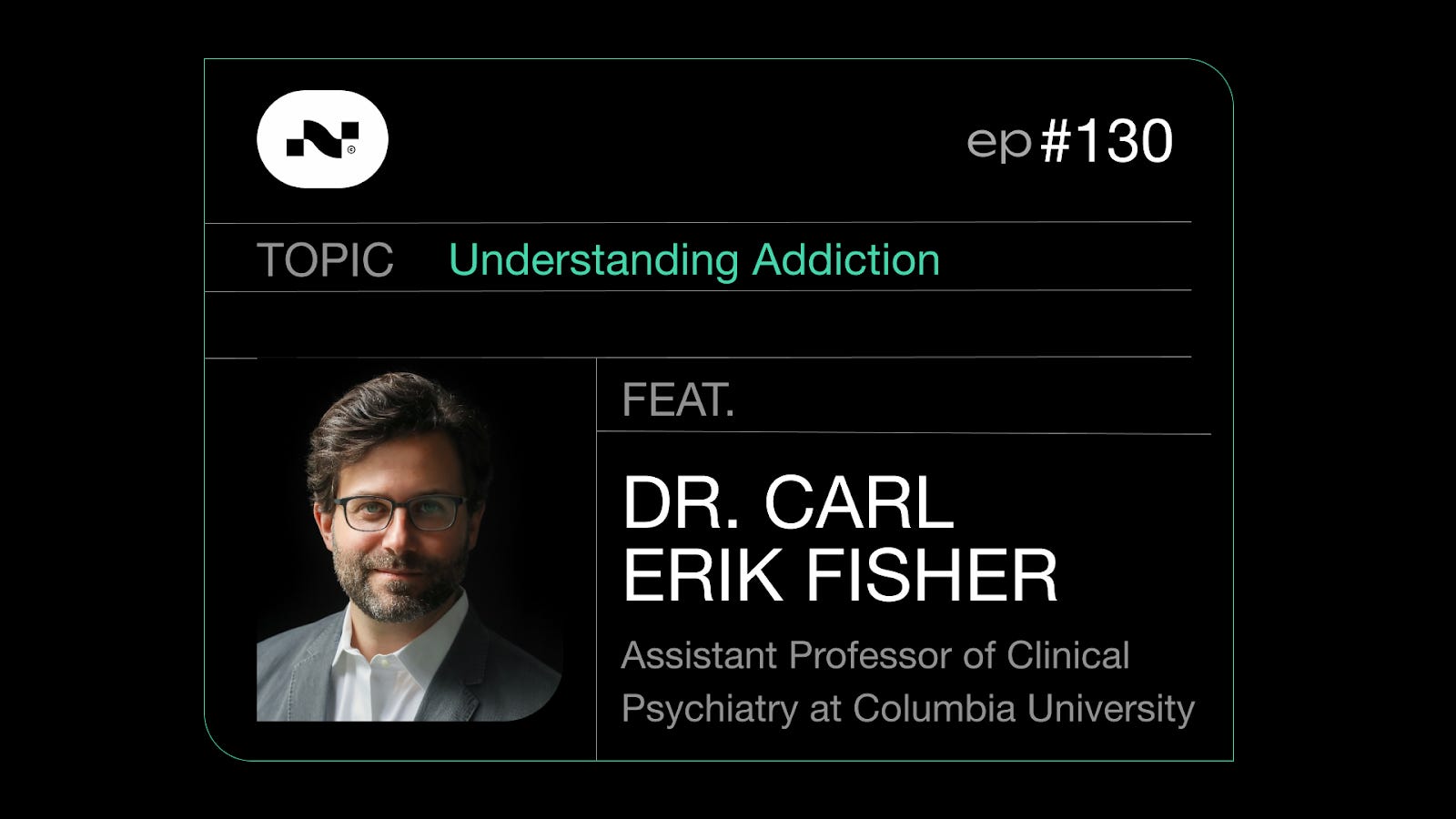
Hey friends,I’m giving a talk tonight at a beach party 🎉This isn’t just a party, it’s an invitation to reconnect with your happiest self through music, movement, and a touch of science. 🌈✨My talk unpacks “The Pursuit of Happiness” through the lens of biochemistry and neuroscience, revealing how dance floors, gatherings, connection, and friendships drive our brain’s joy systems. 🧠Set by the beach, kissed by sunlight, and carried into starlight, this edition of Shugi Nights is all about ALEGRIA - happiness.Details:🗓 Wednesday 30 April | 🕔 17h–02h📍 AURA — Estr. da Praia do Infante, Costa da Caparica🎶 LINEUP | IN ORDER OF APPEARANCE | 17h-02h* UDI FAGUNDES – Live on the beach under the sun 🌅* DR. NINA PATRICK – Talks about “The Pursuit of Happiness” 🧠* MIGUEL DOMINGOS – Bringing fire to the floor 🔥* WAMANZI – DJ set to awaken your soul 🌊* SHUGI – Closing with a hybrid live/DJ set 💫Grab your ticket here.INTERVIEW | Understanding Addiction with Dr. Carl Erik Fisher, Author of The Urge: Our History of AddictionIn this week’s episode of the Nina’s Notes Podcast, I host a remarkable guest whose work explores the complex terrain of addiction, mental health, and human behavior.Dr. Carl Erik Fisher is an addiction physician, bioethicist, and Assistant Professor of Clinical Psychiatry at Columbia University. His unique perspective combines rigorous medical training with personal lived experience, deep philosophical inquiry, and a profound compassion for those struggling with addiction and mental health challenges.Dr. Fisher is the author of the acclaimed book The Urge: Our History of Addiction, which examines addiction through historical, cultural, and scientific lenses. In addition to the deep historical research in the book, Dr. Fisher openly shares his own journey with addiction, bringing an invaluable layer of authenticity and insight to his work. The Urge was named one of the best books of the year by both The New Yorker and The Boston Globe.His writing has appeared in prestigious publications including The New York Times, The Washington Post, The Guardian, Slate and Scientific American MIND, where he brings complex medical and ethical concepts to broader public understanding. He also writes the Rat Park with Carl Erik Fisher Substack.As the host of the podcast "Flourishing After Addiction," he explores addiction and recovery from science to spirituality, from philosophy to politics, and everything in between. He interviews leading experts in areas such as psychology, neurobiology, history, sociology, and more--as well as policy makers, advocates, and people with lived experience.In our conversation, we discuss the history of addiction and explore how the traditional view of addiction as simply either choice or compulsion fails to capture its true complexity.We discuss addiction beyond substances to include behavioral addiction and address the stigma that surrounds these conditions, and Dr. Fisher offers insights that combine scientific evidence with compassionate approaches to healing.Listen to the episode on 🟢 Spotify, 🟣 Apple Podcasts, 🟠 Substack Podcasts.Key Takeaways:* Addiction treatment is often not well covered in medical training.* The dichotomy of choice and compulsion in addiction is oversimplified.* Addiction should be viewed as a process of diminished control.* Cultural influences play a significant role in shaping addiction perceptions.* The environment significantly impacts addiction recovery.* The traditional definition of addiction needs to evolve to include behavioral aspects.* Genetics play a role in addiction but are not the sole factor.* Stigma around addiction affects treatment access and perceptions.* Different individuals require different pathways to recovery.Recommended Timestamps:* 00:00 Introduction to Addiction and Personal Journey* 03:04 The Evolution of Addiction Treatment* 05:58 Historical Perspectives on Addiction* 09:00 The Dichotomy of Choice and Compulsion* 12:14 Cultural Influences on Addiction* 15:02 The Role of Environment in Addiction Recovery* 18:01 Personal Experiences with Addiction* 21:05 Understanding Behavioral Addictions* 23:55 The Future of Addiction Treatment* 26:09 Understanding Gambling Disorder and Addiction* 29:40 Redefining Addiction: A Broader Perspective* 30:34 The Psychedelic Renaissance in Addiction Treatment* 34:11 Exploring Future Technologies in Addiction Treatment* 39:51 Addressing Stigma and Access to Treatment* 44:32 Pathways to Recovery: Resources and StrategiesWhere to find Dr. Carl Erik Fisher:* LinkedIn* Flourishing After Addiction Podcast* Website* Rat Park SubstackWhere to find Nina Patrick, PhD:* Newsletter* LinkedIn* WebsiteThanks for listening to Nina’s Notes #130. If you like this newsletter & podcast, click the share button and send it to a friend.Edited by Wright Time Publishing Get full access to Nina’s Notes at www.ninasnotes.xyz/subscribe
💬 In this note:* 💉 Why GLP-1 Drugs Might Be the Future of Brain Health* 📚 The Paris Daughter* ⚡️ Controlling an Apple Vision Pro With Your ThoughtsWe know GLP-1 drugs like Ozempic cause weight loss, but users are reporting something else: "mental clarity" and "psychedelic-like" thinking shifts.Science is finding GLP-1 receptors throughout the brain's cognitive and reward pathways.This might explain why these medications:* Improve executive function* Help break addiction patterns* Show promise for Alzheimer's prevention* Change users' relationship with food at a fundamental levelCould these medications be cognitive enhancers hiding in plain sight?Listen to it here.Thanks for listening to Nina’s Notes #129! This post is public so feel free to share it. Get full access to Nina’s Notes at www.ninasnotes.xyz/subscribe
Hey Friends,Two weekends ago I made a decision that felt both radical and oddly frightening.I put my phone in a drawer and committed to leaving it there for 48 hours.No checking notifications, no scrolling through social media, no quick Google searches.Just me, reconnecting with the world without my phone.Here’s how it went.💬 In this note:* 📵 48 Hours Unplugged* 📚 The Winemaker’s Wife* ⚡️ Mushroom LanguageThanks for listening to Nina’s Notes #128! This post is public so feel free to share it. Get full access to Nina’s Notes at www.ninasnotes.xyz/subscribe
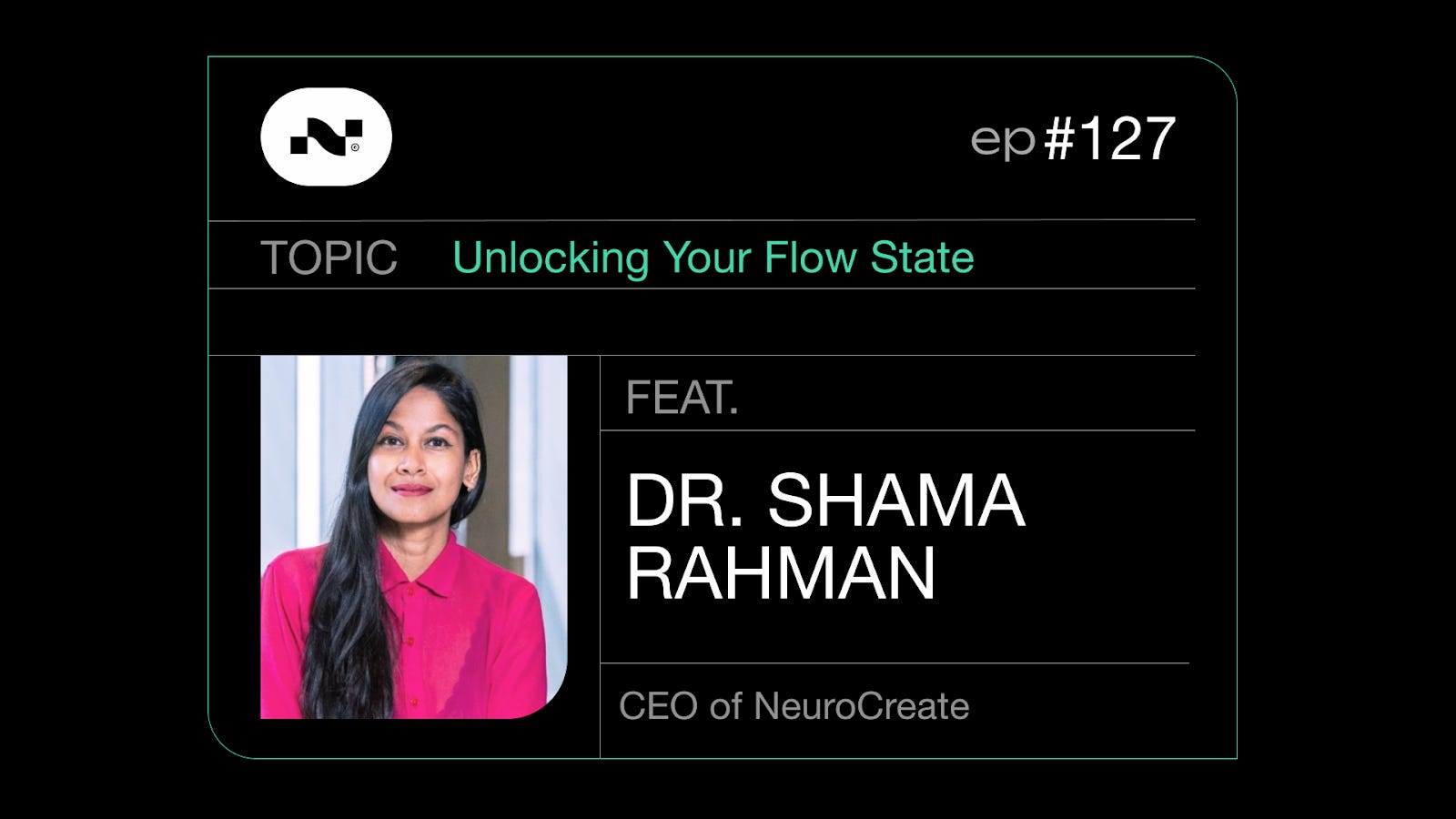
INTERVIEW | Unlocking Your Flow State with Dr. Shama Rahman, CEO of NeurocreateI'm thrilled to welcome an extraordinary guest to the Nina’s Notes Podcast to expand upon insights she gave me when I wrote #119: Hacking Focus and Flow.Dr. Shama Rahman is a true polymath. She is a neuroscientist, entrepreneur, tech innovator, and award-winning musician. With a PhD in neuroscience from Imperial College London, she's dedicated her career to understanding human creativity and cognition, and applying those insights to technology and business.Shama is the founder and CEO of NeuroCreate, which aims to help individuals achieve flow states through innovative tools and neurofeedback. Her work sits at the intersection of neuroscience, artificial intelligence, and human creativity.But that's not all, Dr. Rahman is also an accomplished sitarist, TEDx speaker, and she was named as one of the Top 20 Inspiring Women in Tech.In this episode, we'll explore the importance of understanding flow, the role of AI in enhancing creativity, and practical techniques for achieving flow in daily life.Listen to the episode on 🟢 Spotify, 🟣 Apple Podcasts, 🟠 Substack Podcasts.Key Takeaways:* Creativity can be measured through brain activity.* Flow states are essential for optimal performance.* Flow is energy-intensive and cannot be sustained indefinitely.* Neurofeedback can help individuals achieve flow and immediate feedback is crucial for achieving flow.* AI can enhance creative processes and productivity.* Creative engagement techniques can facilitate flow.* Incorporating play can help induce a flow state.* Sleep quality impacts creativity and flow states.* Flow requires a balance of challenge and skill.Recommended Timestamps* 00:00 Introduction to Shama's Journey* 02:51 Exploring the Neuroscience of Creativity* 05:56 Understanding Flow States and Their Importance* 08:53 Neurofeedback and Measuring Flow* 11:58 The Role of AI in Enhancing Creativity* 14:51 Techniques for Achieving Flow* 17:57 The Dynamics of Flow in Performance* 20:57 Practical Applications of Flow in Daily Life* 26:11 Creative Approaches to Overcoming Tasks* 27:59 Exploring Psychedelics and Creativity* 30:20 The Impact of Microdosing on Creativity* 32:12 The Role of Altered States in Insight* 34:30 The Connection Between Sleep and Creativity* 36:44 Understanding Flow and Focus* 39:10 Circadian Rhythms and Flow* 41:50 The Joy of Flow StateWhere to find Dr. Shama Rahman:* LinkedIn* NeuroCreate WebsiteWhere to find Nina Patrick, PhD:* Newsletter* LinkedIn* WebsiteThanks for listening to Nina’s Notes #127. If you like this newsletter & podcast, click the share button and send it to a friend.Edited by Wright Time Publishing Get full access to Nina’s Notes at www.ninasnotes.xyz/subscribe

Comments

Download from Google Play

Download from App Store
 United States