


 Claim Ownership
Venture to Flourish
Subscribed: 0Played: 5
Subscribe

Description
Venture to Flourish is a podcast from Learn Capital for founders, investors, and leaders who are working to build ventures that unlock what we call human flourishing. We believe humans are capable of incredible things, but we often lack the tools and resources we need to realize that extraordinary potential. Flourishing manifests across a variety of vectors — happiness and satisfaction; mental, physical and emotional health; purpose and vocation; relationships; the list goes on. What if we could, for once, focus on the person, unlocking those tools and resources that will help them thrive most? Each episode, we’ll explore these different aspects of human flourishing through the lens of entrepreneurship, and how these various elements reveal themselves in the real-world. We talk to entrepreneurs and community leaders who are helping promote these ideals for themselves and others, and discuss the challenges that are hindering flourishing today as well as the solutions to help us reach our full potential as individuals and a society.
9 Episodes
Reverse
In this Episode:Nat on how his views on social impact evolved from fundraising as a teen to creating a nonprofit to now leading a startup.Why Nat believes that startup businesses have 100x more capability than nonprofits to drive flourishing at scale.The four reasons income share agreements have failed to scale quality education.How Forte aligns incentives for citizens, governments, and investors to unlock human potential.Why income (and therefore income tax revenue) is the key metric to optimize for human flourishing.Nat's perspective on critiques of profiting from human capital investments.How Forte is bringing "trickle up economics" to make capitalism work for humanity's interests.Keep Learning:For a deeper dive into Nat's ideas and Forte's mission, check out these insightful talks:Why we're unhappy -- the expectation gap | Nat Ware | TEDxHow to Deal With Hypocritical Activists, Politicians, and Charities | Nat Ware | TEDxOxfordFree Charities from The Idea of Charity: Nat Ware at TEDx
How can AI empower educators and transform the classroom experience? What role does technology play in enhancing the effectiveness of teachers rather than replacing them? How can a hybrid workstyle contribute to a balanced and productive work life? These are some of the big ideas that drive Satya Nitta, co-founder and CEO of Merlin Mind, an innovative AI tool that is revolutionizing the way teachers navigate classroom programs, apps, quizzes, and more. In this episode of Venture to Flourish, we delve into a stimulating conversation with Satya about his journey as an AI researcher, the transformative potential of AI in education, and the nuances of his hybrid workstyle. Join us as we explore why empowering educators with AI will be a game-changer for the future of education.Summary:Introduction to Satya Nitta, co-founder and CEO of Merlin Mind, and his journey as an AI researcher.Discussion on the role of AI in education, specifically how it can enhance the effectiveness of teachers rather than replace them.Overview of Merlin Mind, an innovative AI tool that enables teachers to navigate classroom programs, apps, quizzes, and more using voice commands.Insight into Satya Nitta's hybrid workstyle, balancing between working from home and the office. Resources:Merlin Mind Official WebsiteSatya Nitta on LinkedInLearn
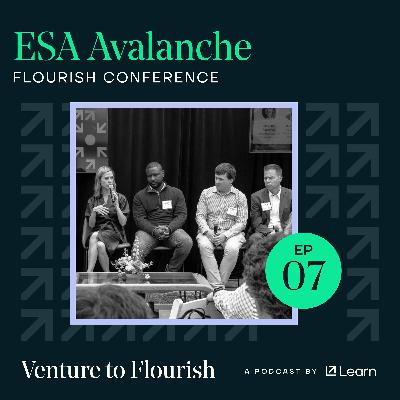
Panelists:Greg Mauro (Moderator) - Managing Partner of Learn CapitalDan Lips - Policy Director at the Foundation for Research on Equal OpportunityPreston Cooper - Researcher at the Foundation for Research on Equal OpportunityGlen Gilzean - President and CEO at Central Florida Urban LeagueJulie Linn Minnehan - Partner, Shapiro Linn LLC In the first episode of a special three-part series, featuring panel discussions at the Flourish Conference, education savings accounts (ESAs), which are unlocking $25 billion towards school choice. Here are the pull quotes from each of the panelists:"Putting financing power in the hands of parents unleashes innovation, puts parents in control, and leads to better outcomes." -Dan Lips"46 percent of what the federal government spends on education is overhead. Only 54 percent of that money is spent on students."- Julie Linn Minnehan"Education should be about the child and giving the parents the power to provide access and equity." - Glenn GilzeanKeep Going: Explore a map of School Choice Programs here.
Rod on why a housing or job-only strategy won’t prevent reincarceration?Some of the responses to the issue have been a housing first strategy. Let's get them in secure housing, and that'll be a way to go at it. That is a failed proposition. Some responses have been a jobs first strategy, just get them a job. That'll solve the problem. It is true that there is a correlation between having secure housing and having some success in life and having a stable job and having some success post incarceration, but it's missing the point. The people who were able to do that, and are successful are those who would have been successful without, and it's not the two thirds of the people who go back and who are really, really in need of a healing first approach.Rob on the importance of a healing first approach to rehabilitation:If you don't stabilize people and start addressing mental health, substance use, and the sort of the cognitive distortions that they bring to their life situation, there's no chance that any employment, education, or training program is going to be successful. As you know, two thirds of the people who go to prison return to prison, and that really is a problem of behavioral health. Rod on the impact of trauma in the prison population: I saw gang violence, I saw people fighting. It's community violence. It's the violence that happens at the home. It's the abuse and neglect, and all of those things that folks have to contend with. And then when you go to prison, one of the first things that happens to many people when they go to prison is they lose the ability to be empathetic, the ability to smile and enjoy life. I'm not one here to say that people should not be punished for crimes they commit. But I am here to say that we need a better response to getting them ready to re-enter the workforce, because over half the crimes that are committed in our country are committed by people who've been to prison.Rod on the importance of interdisciplinary approaches to preventing reincarceration: Sometimes innovation is really interdisciplinary, right? It's when these sort of disparate things that don't necessarily go together, come together to form something much more powerful. That is the story. You can’t address it with housing first. You can't address it with a job first. You can't only address it with behavioral health, because you have to do something with folks, once they get treatment, right? And so having it all together under one roof operating with the right sequence, and the right mix of services is the thing that works. Keep Going: Read: Leadership on the lineWatch:Just Mercy
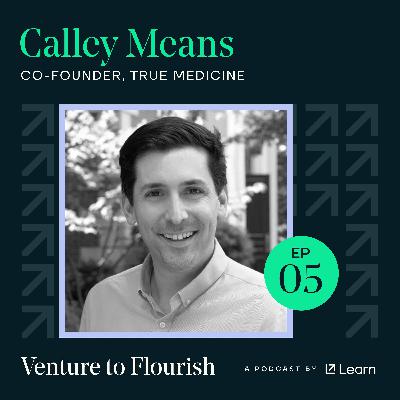
Calley on why we need to expand our definition of what a drug is?I think most of our lives go from one what would be defined as a drug to the next we get up, we drink caffeine, we check our phone, you know many people look at porn, we take pharmaceutical drugs, there's 17 prescriptions per American issued a year in the United States And we're in this like, chamber of having the system define what’s a drug for us. like all those things are drugs and were literally guided much more than we think by this dopamine reward system.Calley on how True Medicine will incentivize healthy behavior:When you talk about any of these metabolic conditions, food and exercise are very often the best medicine. So we utilize that research and what we're trying to do is bring that to the people. We're going to be a payment app embedded in healthy products, where you can take an asynchronous medical survey, and qualified patients will be qualified through the payment flow. To purchase this food is medicine. This exercise is medicine - their favorite supplements, food, exercise products, tax free. Calley on how big pharma influences medical schools:The majority of funding that actually goes to major med schools somehow comes from pharma. And that dictates the curriculum. 80% of medical schools in the United States today do not require a single nutrition course. 90% of the overall curriculum is dealing with pharmacology and how to prescribe once people are sick. Doctors in this country just fundamentally do not know the underlying physiology of why people are sick.Calley on the normalization of poor metabolic health:Gestational diabetes is normalized, PCOS, which many of our friends are experiencing, is almost normalized. Depression, anxiety, fatigue, low energy, brain fog. The biggest lie in health and the most dangerous gaslighting, I think that's happening, is the idea that people in their 30s and 40s are healthy. We are experiencing things that we should not be accepting. The number one reason for visits to the doctor's office is low energy. That is not normal. It's just just generalized concerns about their energy levels. Right. So let's get that out of the way. We are all most of us are experiencing some kind and understanding that depression, that infertility, that anxiety, that fatigue, it's not normal, it's tied to metabolic health. These are warning signs, we can thrive betterKeep Going: Read: Calley’s tweet thread on the rigged food system: https://twitter.com/calleymeans/status/1609929026889711617?s=20&t=YapMYK_ubldfhhH_YNO8pQ
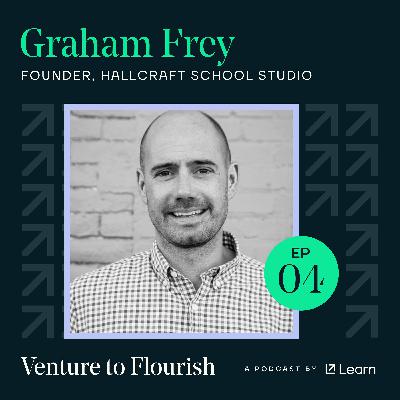
Graham on what it mean to be an entrepreneur in education:I've always been interested in going back to your personal question, what is happening in the four walls of this place where I am dropping off my children? In other words, you know, you have this moment where you look around and go, Man, this could just be better, right? What kids are going through every single day, the experience that staff has, how do we how do we get to the point where we are more comfortable with failure? I like to say that the great schools are places that make kids feel uncomfortable, in a place where they're known and loved, that we have to have a really high threshold for what I call well executed failure that, you know, if we think about the history of schools, these are places where we went to learn, and if we're going to go learn, that means that we're admitting really quickly that we don't know everything, right? it should be a learning organization. And unfortunately, I think a lot of schools that fall into this place where they have that, you know, sort of all figured out. And that's simply not true. It's simply this process where we have to go make sure that schools are committed to change and iteration.Graham on how traditional VC approaches to education don't work: It's a longer horizon. I think you have to be cognizant that that your customer acquisition is simply slower. If we think about the big economic indicators for a school - obviously the cost to educate, your average income per student, and then your cost to acquire. That's often what we look at from the standpoint of do we have a going concern here? So when you think about structuring a school, from a financial perspective, from a business perspective, I think it's very possible to make a venture backed program work, realizing the horizon is probably a little bit longer. But that's one of my beliefs in the platform concept - that you can actually share resources between different types of schools. And that will actually give you the advantage of having a lower cost to your structure or backbone, and really be enable leaders to focus on program culture.Graham on school choice:School choice is a privilege. You and I have the ability to choose where we want our kids to go, to a certain degree. Obviously, the choice has to exist within within the communities. But for the most part, education is a monopoly. And families simply do not have choice. Even if you think about a charter school, for a family that doesn't have a lot of means they have to figure out how to get to the lottery, they have to even know that the school exists, then they have to figure out how they're going to get their child to that school every day. And so there's some very basic barriers that are really hard to overcome. I'm really interested in seeing how we lower the barrier to entry for those specific families. How do we get introduced more choice? And how do we chip away at the monopolies that exists in those particular communities. You've probably heard me say this analogy before: I know where I can get a great cup of coffee, but I only have one choice for school. Graham on how schools need to deliver on helping a children flourish:I think it's the most important job ever. Schools become the platform for kids to go off and live an extraordinary life. That is core to me and my beliefs. That's what great schools put kids in situations to do. It's not about college prep, it's about going off and living an extraordinary full life. Graham on why the studio model that launches dozens of school models is better than one school alone: This goes back to choice. I believe that families need more choices. Just because a school was great for my first child doesn't mean that school is going to be great for my second child. And so it makes sense to be able to have schools that are tailored towards the needs specific kids. We know what it's like to build a giant school that serves everybody who crossed the threshold. We've seen that in action, right? And so now, why can't we build lots of schools that are different, that are fundamentally culturally different, that have different aspects of their program, that better serve a smaller population of kids within that particular structure.
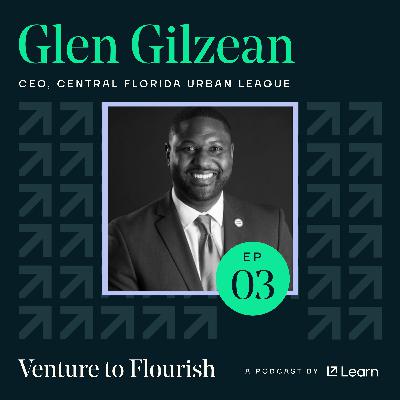
KEY QUOTES & BIG IDEASGlen on solving societal challenges (~8:20)“Each entity is a leg on the barstool. You have to have all three [...] Government can't fix its way out through public policy. Nonprofits can't service their way out of the issues that we're facing. And for-profits, can't do it by themselves. [...] We’ve been able to create that synergy in the state of Florida.”Glen on trust in education (~19:00)“Grandma is really plugged in with her neighborhood church or community center. […] if Grandma is making the decision for grandson or granddaughter’s educational future, that’s who you have to target.”Glen on the Fatherhood Initiative (~23:45)“[…] we are able to provide the necessary job training, job skills, and life skills needed to help that father (and sometimes moms) […] help their family”Glen on flourishing (~24:55)“In order to flourish and get out of generational poverty, you need the three E’s: [education, employment, and entrepreneurship]”Glen on structural inequality (~26:00)“I’ve had a student tell me, ‘Mr. Glenn, I didn’t know that Orlando had tall buildings’, and they literally live five miles away from downtown. […] I’m blessed that I’ve had mentors that have allowed me to stretch my thinking and grow outside of my little zip code”Glen on education equity (~28:00)“Education is the #1 civil rights issue, period. […] Education gives people the equity that’s needed to grow”Glen on school choice (~29:20)“At the local level, we realize how important school choice is. [….] in the state of Florida, all 8 Urban League affiliates are fully supportive of education freedom and school choice, because we understand how important it is, knowing that we represent predominantly African Americans and our elementary schools are failing”***GO DEEPER:Read: School Choice Blooms in the Desert (WSJ)Listen: Enabling Environments for Success with Okey Enelamah
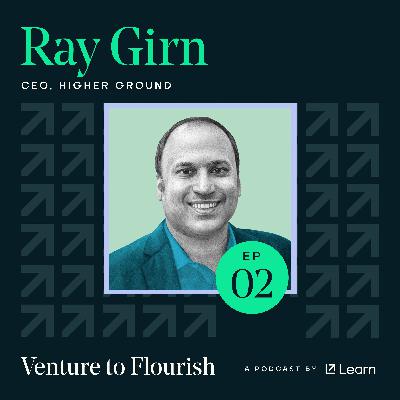
Ray on the purpose of education and its challenges:I think that the story of the last couple of hundred years has been the story of a lack of insight and a lack of awareness of how we accomplish the purpose of education, which in my view is imparting a definite set of content and skills that adult human life requires, that a human success in adulthood requires while respecting the individuality and the agency and the self-creation of each human being.Ray on what is education:Education is neither indoctrination nor creation nor opinion. It is discovery. It is discovery, it is truth seeking, it's discovery about an independent world out there, how it works. The world of nature, the world of human beings, the world of industry and technology.Ray on the distinctions between education and learning:I think that there's a distinction between education and learning that is not well understood. Education is the attempt to systematize the process of human development, of growing up from a child into an adult. So a lot of people, first of all, do not even believe that we should be systematizing it. They don't believe in a system of learning. And so there's a lot of skepticism from the best people that learning can be systematized. I think it has to be.Ray on what is human flourishing:So the simplest way that I would put it is making the most out of your life. You have this one life to live, view it as something precious and make the most out of it. And the kind of bedrock principle, even underneath our values, is that the individual human life fully lived is an end in itself, is its own reward. That process of life, that joy of life is the end, at least for us. That doesn't mean an individual can't decide that they want to, the form in which way they want to accomplish that. That's really up to them. But what we are trying to do is give every child the tools, the skills, the knowledge, the inspiration, the environment that he or she needs to make the most of our life.Ray on his three underlying pedagogical principles:One is, we call it a culture of knowledge. So truth seeking, a respect and reverence for the role of knowledge in life. A desire to get to the bottom of things, to understand, to discover, to know. Having that internalized is really important to the good life. The second is a culture of work, which means a love of activity, a love of the doing, a capacity to pursue goal-directed action, to choose goals and to pursue them. A life of purpose, a life in which motion and activity is the core. And then the third we call it is a culture of humanism. A love of the good, a love of the beautiful, a love of humanity. Keep Going: Read: How these schools create problem-solving optimists Watch: Ray Girn’s HGE 2019 Leadership Summit Keynote address
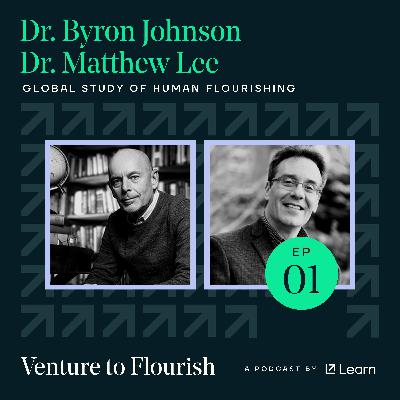
KEY QUOTES & BIG IDEASMatt Lee on what is flourishing: “So flourishing we understand as complete wellbeing. And it's not just about the wellbeing of an individual, who might not be contributing to the greater good. It's not just happiness or positive affect or feeling good. It's about how individuals and their communities are mutually enriching each other.” Matt Lee on the value of studying flourishing: “We've got a larger narrative that helps us make sense of our suffering so we can feel a sense of joy even if we or our loved ones are suffering. I think what flourishing offers us is a way to think about happiness and wellbeing and joy and health and related topics as a holistic kind of integration of all of these things.”Matt Lee on connection during crisis:“What people find sometimes is that the depth of relationship in the midst of suffering that is so deep, and it's almost, one author calls it a "paradise of unbroken solidarities", and the natural disaster washes away the social disaster of everyday life. And loneliness has gone, lack of meaning, lack of purpose is gone. And sometimes you find that people, they're a little bit sad when the lights come back on. I don't want to go back to the mundane, disconnected life. And so nobody's advocating for promoting suffering or causing these things to happen. But it does suggest something about the way we've organized our interactions that we've got such epidemic levels of loneliness and depression and anxiety, and that when the switch is flipped, and you see what happens when people have to work together and they do that they find that they're released from that prison.”Byron Johnson on the need for more social study of faith:“There's a lot of evidence that shows just being a regular attender is good for you, good for you physically helps you to live longer. And so there are these utilitarian ways in which you could look at, Okay, so if I wanna live longer, I should actually be a regular attender at worship services. That's actually pretty accurate. And so I think there are these benefits that people really don't know about that are byproducts of faith….I think that the academy is overrepresented by people of little faith or no faith, candidly. And so some of this is a direct result of that. I think there is a lack of understanding. And so what people don't have knowledge of, they just don't understand. And so that's why when people like us publish some of these papers, it's like, what? The findings are that clear? It's just shocking to them because they don't really understand how that works.”Matt Lee on flourishing in education:"We know from Gallup data that students become less engaged over time, the highest levels of engagement are in elementary school when they're playing together, when they're using creative arts, you learn the alphabet by using finger paints or something. And then we move the arts out of the core classes and it becomes more competitive and more individualistic. So we lose engagement over time so that by the time you're in high school, only four out of 10 students are engaged. And by the time you become a teacher, only three out of 10 teachers are engaged. So there's something about the culture that we're creating as we move students away from the warm, friendly, playful, enjoyable, deeply connected kindergarten experience and into the solitary individualistic competitive experience."Byron Johnson on importance of studying hope:"We live in a world where over the last 15 years there's been a dramatic rise in unhappiness, and it's kind of frightening actually. And so if you can say there's a rise in despair and it's happening around the world, what's the opposite of despair? And I would argue hope is the opposite of despair. So why is it that so many people are hopeless in the world? What might we find that distinguishes people who have hope versus people that have despair? And if we can unravel that, what might we be able to provide to the world, no matter where you live?... Wouldn't it be great to know, look, if this is where you are, if you took this scale and look where you are, you're at the bottom end of this despair measure and nothing good comes from that, how do we move you six places to the right of despair toward hope? And what if we could develop apps that could be used around the world that would interact with people and help them make right steps that would prevent suicides or suicidal ideation, that would prevent overdoses, et cetera. If we could do this, what a great gift to the world. And I know that sounds grandiose, but the whole project is really."***GO DEEPER:Read: The Global Flourishing Study (Harvard) Read: “Bowling Alone: The Collapse and Revival of American Community” by Robert PutnamWatch: The Global Flourishing Study Launch (Youtube)Watch: Flourishing and the Global Flourishing Study presentation by Tyler J. VanderWeele (Youtube)
Comments


Download from Google Play

Download from App Store
 United States