


 Claim Ownership
Dev Propulsion Labs
Subscribed: 6Played: 25
Subscribe

© Evil Martians 2023
Description
Dev Propulsion Labs is a podcast about the business of developer tools. Hosts from the Evil Martians team interview prominent dev tools founders with the goal of sharing knowledge in the maturing developer tool and commercial open source industry.
32 Episodes
Reverse
In this episode of Dev Propulsion Labs, Stas Kelvich, co-founder of Neon and member of technical staff at Databricks, shares his physics background and what led him to become a key Postgres contributor. He also explains how the $1B Databricks acquisition came together in just 30 days and what's happened to Neon after that. Plus, Stas reflects on how the agent wave changed Neon's infrastructure demands overnight and what the future of databases looks like in an AI-first world. Follow us on X: https://x.com/dpl_pod Episode notes: https://evilmartians.com/events/podcast-stas-kelvich-neon Recorded at Chroma. Vector, full-text, regex, and metadata search. Develop locally and scale to petabytes in the cloud backed by object storage. Serverless search and retrieval that is fast, cheap, and reliable. https://www.trychroma.com Evil Martians is the go-to agency for early-stage developer tools startups: https://evilmartians.com/devtools Links: Neon: https://neon.com Stas Kelvich on X: https://x.com/kelvich Evil Martians on X: https://x.com/evilmartians Victoria Melnikova on X: https://x.com/vmelnikova_en

In this episode of Dev Propulsion Labs, Harjot Gill, co-founder and CEO at CodeRabbit, shares what it actually takes to build a fast-growing AI devtool. He tells us the story of how going viral in Japan organically showed him there was a market need and what they did after. Harjot also explains why AI code generation doesn't make code review obsolete, how open source became CodeRabbit's best GTM channel, and why the old startup playbooks no longer apply. Follow us on X: https://x.com/dpl_pod Episode notes: https://evilmartians.com/events/podcast-harjot-gill-coderabbit Evil Martians is the go-to agency for early-stage developer tools startups: https://evilmartians.com/devtools Links: CodeRabbit: https://coderabbit.ai Harjot Gill on X: https://x.com/harjotsgill Evil Martians on X: https://x.com/evilmartians Victoria Melnikova on X: https://x.com/vmelnikova_en

David Gomes, product engineer at Cursor, explains why the best engineers are fully adopting AI while half the world's developers haven't started. He also reveals why having a diverse team is more important than a business-focused one. Plus, David breaks down his career path and the differences between working in SF vs Europe.Episode notes: https://evilmartians.com/events/podcast-david-gomes-cursorFollow us on X: https://x.com/dpl_podRecorded at Chroma. Vector, full-text, regex, and metadata search. Develop locally and scale to petabytes in the cloud backed by object storage. Serverless search and retrieval that is fast, cheap, and reliable. https://www.trychroma.comLinks:Cursor: https://cursor.comDavid Gomes on X: https://x.com/davidgomesDavid's blog: https://davidgomes.comEvil Martians on X: https://x.com/evilmartiansVictoria Melnikova on X: https://x.com/vmelnikova_en

In this episode of Dev Propulsion Labs, Monica Sarbu, founder of Xata, explains why they shifted from targeting builders to serving enterprise teams with their Postgres modernization platform. She also shares why Xata is remote-first, how twice-yearly offsites help build culture, and why having a diverse team leads to better products.

In this episode of Dev Propulsion Labs, Reo.dev co-founder Piyush Agarwal explains why go-to-market is still the hardest problem in developer tools and how companies can have millions of users and still not know their real customers. He also touches on why timing beats volume when selling to developers and how three months of customer interviews shaped Reo.dev.Follow us on X: https://x.com/dpl_podEpisode notes: https://evilmartians.com/events/podcast-piyush-agarwal-reo-devRecorded at Chroma. Vector, full-text, regex, and metadata search. Develop locally and scale to petabytes in the cloud backed by object storage. Serverless search and retrieval that is fast, cheap, and reliable. https://www.trychroma.comEvil Martians is the go-to agency for early-stage developer tools startups: https://evilmartians.com/devtoolsLinks:Reo: https://reo.devPiyush Agarwal on X: https://x.com/Piyush_nhsEvil Martians on X: https://x.com/evilmartiansVictoria Melnikova on X: https://x.com/vmelnikova_en

In this episode of Dev Propulsion Labs, David Cramer, founder of Sentry, shares how he built a self-sufficient developer tool used by 4 million+ developers without partnerships or enterprise sales. He also explains why "20-year-olds should stop starting companies" and breaks down delegating CEO/CTO roles while maintaining influence.Follow us on X: https://x.com/dpl_podEpisode notes: https://evilmartians.com/events/podcast-david-cramer-sentryRecorded at Chroma. Vector, full-text, regex, and metadata search. Develop locally and scale to petabytes in the cloud backed by object storage. Serverless search and retrieval that is fast, cheap, and reliable. https://www.trychroma.comEvil Martians is the go-to agency for early-stage developer tools startups: https://evilmartians.com/devtoolsLinks:Sentry: https://sentry.ioDavid Cramer on X: https://x.com/zeegEvil Martians on X: https://x.com/evilmartiansVictoria Melnikova on X: https://x.com/vmelnikova_en
In this episode of Dev Propulsion Labs, Abhi Aiyer, CTO and co-founder of Mastra, talks about the power of community and explains why they raised their seed round from 120+ founders. He also gets into how making moves beats perfect execution and his hiring process. Lastly, Abhi shares why TypeScript is winning the AI war and how education became their secret weapon.Follow us on X: https://x.com/dpl_pod Episode notes: https://evilmartians.com/events/podcast-abhi-aiyer-mastra00:00 Introduction and birthday celebration00:49 TypeScript AI Conf and major announcements02:53 Education as a pillar for framework adoption04:30 Converting open source to paid customers06:55 Optimizing onboarding and developer experience08:45 Handling user feedback and criticism09:51 Moving fast in the AI wave and the pressure of getting ahead of the curve11:56 YC experience and the agents batch15:19 Why TypeScript for AI agents19:40 Why Mastra decided to do a coalition from builders (120+ people)22:23 Building culture through friendships25:25 The toughest part of being a founder and CTO27:54 Working in an uncertain environment and planning a roadmap31:49 The devtools community at SF32:48 Advice for new builders35:31 Hardest-earned founder lessons38:30 The YC revelation: location and community matters40:20 Mastra in five years41:13 Warm fuzzies: first agent in 5 minutes41:46 Getting started with MastraEvil Martians is the go-to agency for early-stage developer tools startups: https://evilmartians.com/devtoolsRecorded at Chroma. Vector, full-text, regex, and metadata search. Develop locally and scale to petabytes in the cloud backed by object storage. Serverless search and retrieval that is fast, cheap, and reliable. https://www.trychroma.comLinks:Mastra: https://mastra.aiAbhi Aiyer on X: https://x.com/abhiaiyerEvil Martians on X: https://x.com/evilmartiansVictoria Melnikova on X: https://x.com/vmelnikova_en

In this episode of Dev Propulsion Labs, WorkOS founder Michael Grinich reveals why product always beats sales methodology in enterprise, how being the "plumbing" behind AI companies became his life's work, and why forcing yourself to talk to users is the only algorithm that burns out bad ideas. He shares why WorkOS built in stealth while talking to everyone, the moment he fired his entire marketing team, and how infrastructure companies survive by being better than all their customers combined.Episode notes: https://evilmartians.com/events/podcast-michael-grinich-workosFollow us on X: https://x.com/dpl_podRecorded at Chroma. Vector, full-text, regex, and metadata search. Develop locally and scale to petabytes in the cloud backed by object storage. Serverless search and retrieval that is fast, cheap, and reliable. https://www.trychroma.comEvil Martians is the go-to agency for early-stage developer tools startups: https://evilmartians.com/devtoolsLinks:WorkOS: https://workos.com/Michael Grinich on X: https://x.com/grinichEvil Martians on X: https://x.com/evilmartiansVictoria Melnikova on X: https://x.com/vmelnikova_en
In this episode of Dev Propulsion Labs, Daytona CEO Ivan Burazin reveals why he walked away from $300K ARR to rebuild his company from scratch for the age of AI agents. He explains why agents will outnumber humans "to the power of ten," how Daytona creates composable computers that agents can spin up on demand, and what it means to race competitors while the entire market moves at breakneck speed. Ivan shares hard-won lessons from 16 years building cloud development environments, starting with Codeanywhere in 2009 - a decade before the market was ready.Episode notes: https://evilmartians.com/events/podcast-ivan-burazin-daytonaFollow us on X: https://x.com/dpl_podRecorded at Chroma. Vector, full-text, regex, and metadata search. Develop locally and scale to petabytes in the cloud backed by object storage. Serverless search and retrieval that is fast, cheap, and reliable. https://www.trychroma.comEvil Martians is the go-to agency for early-stage developer tools startups: https://evilmartians.com/devtoolsLinks:Daytona: https://www.daytona.io/Ivan Burazin on X: https://x.com/ivanburazinEvil Martians on X: https://x.com/evilmartiansVictoria Melnikova on X: https://x.com/vmelnikova_enEvil Martians for devtools: https://evilmartians.com/devtools

In this episode of Dev Propulsion Labs, Supabase CEO Paul Copplestone reveals why hiring ex-founders with beaten-down egos builds better products, how internal meme workshops became part of their culture, and why vibe coding isn't a bubble that will burst. He shares the accidental origin of Launch Weeks, explains why Supabase is building for a 30-year timeline, and breaks down how they scaled to 5 million developers across 40 countries with barely any meetings.Episode notes: https://evilmartians.com/events/podcast-paul-copplestone-supabaseFollow us on X: https://x.com/dpl_podRecorded at Chroma. Vector, full-text, regex, and metadata search. Develop locally and scale to petabytes in the cloud backed by object storage. Serverless search and retrieval that is fast, cheap, and reliable. https://www.trychroma.com Evil Martians is the go-to agency for early-stage developer tools startups: https://evilmartians.com/devtoolsLinks:Supabase: https://supabase.comPaul Copplestone on X: https://x.com/kiwicoppleEvil Martians on X: https://x.com/evilmartiansVictoria Melnikova on X: https://x.com/vmelnikova_enEvil Martians for devtools: https://evilmartians.com/devtools

Sam Lambert of PlanetScale reveals how they stayed up during the AWS outage that took down millions of sites, helped grow Vitess usage 61,000% in four years, and why "tier zero" infrastructure demands extreme fault tolerance. He shares the journey from 750-user consultancy to "growing like crazy", why operational excellence beats feature velocity, and what it actually costs to build databases that never go down.Episode notes: https://evilmartians.com/events/podcast-sam-lambert-planetscaleFollow us on X: https://x.com/dpl_podRecorded at Chroma. Vector, full-text, regex, and metadata search. Develop locally and scale to petabytes in the cloud backed by object storage. Serverless search and retrieval that is fast, cheap, and reliable. https://www.trychroma.comEvil Martians is the go-to agency for early-stage developer tools startups: https://evilmartians.com/devtoolsLinks:PlanetScale: https://planetscale.com/Sam Lambert on X: https://x.com/isamlambertEvil Martians on X: https://x.com/evilmartiansVictoria Melnikova on X: https://x.com/vmelnikova_en

Resend founder Zeno Rocha reveals how he built an $18M Series A email API company by obsessing over brand, giving away React Email for free, and rejecting the "ship crap fast" mentality. He shares why seeking rejection accelerates sales, how zero-ego hiring beats talent, and why most dev tools fail by hiding behind GitHub stars instead of charging money.Episode notes: https://evilmartians.com/events/podcast-zeno-rocha-resendFollow us on X: https://x.com/dpl_podRecorded at Chroma. Vector, full-text, regex, and metadata search. Develop locally and scale to petabytes in the cloud backed by object storage. Serverless search and retrieval that is fast, cheap, and reliable. https://www.trychroma.comEvil Martians is the go-to agency for early-stage developer tools startups: https://evilmartians.com/devtoolsLinks:Resend: https://resend.com/Zeno Rocha on X: https://x.com/zenorochaEvil Martians on X: https://x.com/evilmartiansVictoria Melnikova on X: https://x.com/vmelnikova_en

In this episode of Dev Propulsion Labs, Chroma co-founder Jeff Huber explains why "consensus is a death blow" for great products and reveals his framework for commercializing open source: keep the engine open, monetize the car. He breaks down context engineering, why RAG became industry brain rot, and how small opinionated teams with low egos build the best developer tools.Follow us on X: https://x.com/dpl_podEpisode notes: https://evilmartians.com/events/podcast-jeff-huber-chromaEvil Martians is the go-to agency for early-stage developer tools startups: https://evilmartians.com/devtoolsRecorded at Chroma. Vector, full-text, regex, and metadata search. Develop locally and scale to petabytes in the cloud backed by object storage. Serverless search and retrieval that is fast, cheap, and reliable. https://www.trychroma.comLinks:Chroma: https://x.com/trychromaJeff Huber on X: https://x.com/jeffreyhuberEvil Martians on X: https://x.com/evilmartiansVictoria Melnikova on X: https://x.com/vmelnikova_en

Join us for a conversation with Sarah Wooders, CTO & co-founder of Letta AI, as she reveals why LLMs are not there yet and how stateful agents will unlock the next generation of AI applications. From Berkeley PhD to YC alum to building the infrastructure for truly intelligent agents.Key insights from this episode.On the core problem with LLMs:"It's kind of like if you've seen the movie Memento... if you have a person that just forgets every single day or forgets every five minutes... That's basically what LLMs are."Why 2025 feels like the early Internet:"I feel like with AI, this is our version of that. There's just so much opportunity. Everything is so undefined. There's a ton of white space... so much low hanging fruit."The difference between real agents and marketing fluff:"A lot of people just added LLMs into [existing workflows] and then called them an agent... that's inherently still very different from something that's like an agent that has identity, that works autonomously, that learns."On building in the AI boom vs 2020:"Right now is a much better time to be building a startup... the amount of value that's just being created and that you can capture is so much more."What's still missing in AI infrastructure:"MCP is super early... there's a ton of differences in how people implement the protocol. Auth hasn't really been figured out. There's a big lack of standardization."Why open source matters for AI tools:"We want to do that agentic orchestration in an open way... allowing developers to have as much control as possible over their context window, being able to see what tokens are going in and out."Links:Letta AI: https://letta.comSarah Wooders on X: https://x.com/sarahwoodersEvil Martians on X: https://x.com/evilmartiansVictoria Melnikova on X: https://x.com/vmelnikova_enEvil Martians is the go-to agency for early-stage developer tools startups: https://evilmartians.com/devtools#AI #Agents #LLM #Startups #OpenSource #AItooling #StatefulAgents

Join us for an incredible conversation with Adam Frankl - author, advisor, investor, and the final boss of development marketing. In this episode, we dive deep into the biggest challenges facing developer tool startups in 2025 and how to overcome them.On the AI boom opportunity:2025 has gotta be the best year ever for starting a developer tool startup because there is so much chaos, and that's what makes this exciting.The #1 mistake founders make:Problem not product. Become an expert on the problem. Talk about the problem. Write about the problem... Too many founders they wanna talk about the product. They want to demo the product... And quite frankly, no one is interested.Why you need to be obsessed:You have to pick a problem that the problem also picks you. It's the type of problem that you just can't sleep at night because you're thinking about it... You know when the problem is the right problem because it seizes a hold of your brain.The social media strategy that works:Your mechanistic goal is you wanna be posting about this problem every day. Because you want to be the authority on this problem. Authority author, it's the same root. To be an authority, you have to write.On enterprise sales in 2025:Budgets are being cleared for AI investments, and this is astonishing... top executives are basically clearing budget line items say we're gonna invest in AI.Why San Francisco matters:The reason you come to Silicon Valley is the best customers are here. And you're not gonna be closing these tech 100 companies if you are in Tokyo or Lisbon.The game-changing AI workflow:Make a recording. Make a transcript... And then use an LLM to anonymize but consolidate transcripts. And that can be extraordinarily powerful.Links:- Adam's book: "Developer Facing Startup" (Amazon #1 bestseller): https://www.amazon.com/Developer-Facing-Startup-market-developer-facing/dp/B0D4KGHQML- Alchemist Accelerator: https://www.alchemistaccelerator.com/- Evil Martians on X: https://x.com/evilmartians- Victoria Melnikova on X: https://x.com/vmelnikova_enEvil Martians is the go-to agency for early-stage developer tools startups: https://evilmartians.com/devtools#DeveloperTools #StartupMarketing #AI #Enterprise #SanFrancisco #DevTools
Jason Bosco, CEO and co-founder of TypeSense, shares how he and his co-founder built a profitable search engine serving 10 billion searches monthly without taking VC funding. From Dollar Shave Club VP of Engineering to bootstrapped founder, Jason reveals the unconventional path to building sustainable developer tools.Key insights from this episode:"If it is hard for you as a founder to convince someone to pay you, it's never gonna get easier from there." Find what people are willing to pay for early - don't build first and monetize later."We're opinionated and we want search to work out of the box right from the get-go." TypeSense chose simplicity over configurability, targeting 80% of use cases with zero-config search versus Elasticsearch's thousands of parameters."We don't want the gamble on TypeSense the company to end up affecting TypeSense the product." Jason explains why they chose profitability over VC funding to build a multi-generational product without the pressure of 10x returns."Doing dev tools in closed source is like playing it on hard mode." Open source creates better feedback loops with developers, leading to faster product iteration and stronger community adoption.Links:- TypeSense: https://typesense.org/- TypeSense Cloud: https://cloud.typesense.org/- Jason Bosco on X: https://x.com/jasonbosco- Evil Martians on X: https://x.com/evilmartians- Victoria Melnikova on X: https://x.com/vmelnikova_enEvil Martians is the go-to agency for early-stage developer tools startups: https://evilmartians.com/devtools

Anna Veronika Dorogush, founder and CEO of Recraft, reveals how she built one of the world's leading AI image generation platforms by solving real professional design problems instead of chasing AI hype. Some key insights:"My whole back-end team is medalists and finalists of World Championship in programming." Strong people attract strong people, creating a talent density that enables a small team to compete with giants."We are just focused on producing the best models in image generation space for designers, for professional use cases." While others built general AI image generators, Recraft targeted designers' specific needs: brand consistency, style control, and professional workflows. "That's the major differentiator between ourselves and other AI native tools is we are building our technology from scratch in-house. And that allows us to solve for professional tasks." Training proprietary models in-house allows solving for your users' exact problems (controlling styles, brand colors, fonts)."At the first stage, think investors mostly are evaluating founders and founding teams. After that, investors are evaluating product market fit and retention and later, monetization starts to be very important. We've raised three rounds so far and on every one of those rounds, different things were considered very important." Links:Recraft: https://www.recraft.ai/Anna Veronika on X: https://x.com/avwritingEvil Martians on X: https://x.com/evilmartiansVictoria Melnikova on X: https://x.com/vmelnikova_enEvil Martians is the go-to agency for early-stage developer tools startups: https://evilmartians.com/devtools

Evil Martians is the go-to agency for early-stage developer tools startups: https://evilmartians.com/devtoolsLinks:- tambo ai: https://tambo.co/- Michael Magán on X: https://x.com/mrmagan_- Evil Martians on X: https://x.com/evilmartians- Victoria Melnikova on X: https://x.com/vmelnikova_en
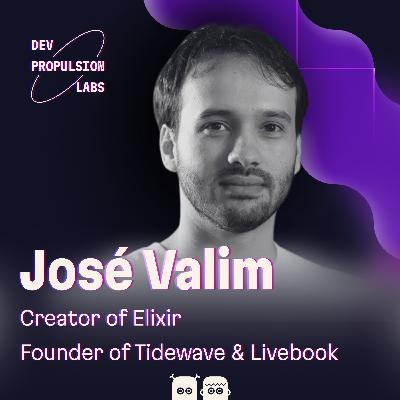
José Valim, creator of Elixir and founder of Dashbit, shares how he built one of the most loved programming languages by following curiosity over market trends.Key insights for devtool founders:- Build for yourself first - José's "selfish" approach of creating tools he actually wants to use led to authentic adoption and marketing. When you can explain genuine technical trade-offs instead of chasing trends, developers listen.- Decentralize early - Without Google/Apple-level resources, Elixir succeeded by empowering the community to own different domains (web, ML, embedded) rather than centralizing control.- Make pivotal technical bets - Targeting the battle-tested Erlang VM and enabling the Phoenix framework were key architectural decisions that paid off long-term.- Marketing = explaining trade-offs - Skip the sales pitch. Show developers exactly what they get and what they give up. José's rule: "If all we have is opinions, I prefer mine."- Enable ecosystem growth - Dashbit's consulting reveals adoption friction points, which feed back into language improvements and new open-source projects.Current focus: José is building Tidewave, exploring higher-level AI development tools that understand web frameworks, not just code.Companies using Elixir: Discord, Remote, Supabase, Fly.io, Apple, Toyota, BBC, PepsiCo, MozillaEvil Martians is the go-to agency for early-stage developer tools startups: https://evilmartians.com/devtoolsLinks:- Elixir: https://elixir-lang.org/- Tidewave: https://tidewave.ai/- Livebook: https://livebook.dev/- José Valim on X: https://x.com/josevalim- Evil Martians on X: https://x.com/evilmartians- Victoria Melnikova on X: https://x.com/vmelnikova_en

Adam Wenchel has been building AI infrastructure since before it was cool. As CEO and co-founder of Arthur AI, he's spent six years solving the "last mile problem" - getting AI from impressive demos to reliable production systems. In this conversation, we dive deep into why Adam open sources million-dollar tools, how his enterprise experience at Capital One shaped his approach to developer empathy, and his provocative prediction that we'll soon need fewer developers but better "code bot coaches."What we cover:- Why the gap between 90% demo accuracy and 99% production reliability is make-or-break for AI adoption- The strategic decision to open source Arthur Shield and Bench instead of keeping them proprietary- How working inside a 50,000-person company taught him to build better developer tools- Whether AI will eliminate junior developers (and why the answer isn't what you think)- The future of software development: from 50-person teams to 5 expert coaches- What makes the perfect developer tool (hint: simplicity + a sprinkle of cleverness)Adam's journey from acquiring a 5-person startup to Capital One to building Arthur offers rare insights into both enterprise AI deployment and the evolving landscape of developer productivity. If you're building AI tools, selling to enterprises, or wondering how to future-proof your development career, this conversation is packed with actionable wisdom.Links:- Website: https://www.arthur.ai/- GitHub: https://github.com/arthur-ai/arthur-engine- Adam Wenchel on X: https://x.com/apwenchel- Evil Martians on X: https://x.com/evilmartians- Victoria Melnikova on X: https://x.com/vmelnikova_en

Comments

Download from Google Play

Download from App Store
 United States