


 Claim Ownership
Homegrown Hustle
Subscribed: 1Played: 24
Subscribe

© Matthew Eickman
Description
"Homegrown Hustle" is your window into the journeys of local business leaders, hosted by Matthew Eickman. This podcast goes beyond the surface, exploring the motivations and commitments of entrepreneurs. It bridges the gap between business leaders and their communities through storytelling, offering insights to inspire aspiring entrepreneurs and strengthen local business connections. Join us to uncover the personal stories and passions behind successful businesses.
129 Episodes
Reverse
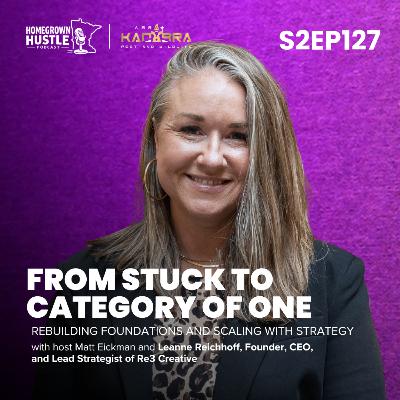
SUMMARY:In this high-level conversation, host Matt Eickman sits down with Leanne Reichhoff, Founder, CEO, and Lead Strategist of Re3 Creative, to unpack the deeper mechanics of business stagnation, strategic clarity, and scalable growth.Leanne reveals why her ideal clients are businesses that have plateaued after decades of “winging it,” and how true transformation begins not with tactics—but with foundational alignment: audience clarity, positioning, and operational discipline. The episode explores the psychological and structural constraints that hold companies back, including leadership blind spots, lack of delegation, and the dangerous comfort of autopilot.From building her first website for $250 to leading a high-level strategic firm, Leanne shares a raw and honest journey of entrepreneurship—balancing motherhood, burnout, and business growth—while emphasizing the necessity of boundaries, team development, and authentic brand storytelling in an AI-saturated world.This episode is a masterclass in evolving from operator to strategist, and from commodity to “category of one.”KEY TAKEAWAYS:Businesses plateau not due to lack of tactics, but lack of foundational clarity“Autopilot” is the silent killer of differentiation and long-term growthDelegation is not optional—it is the gateway to scalable leadershipHigh-performing teams require both accountability and developmental leadershipAuthenticity in branding is a competitive advantage in the age of AIMost business problems originate at the leadership level—not the teamBoundaries are essential for sustainable entrepreneurship and personal alignmentTesting (not guessing) is the backbone of effective marketing strategyGreat strategy transforms marketing from output to problem-solvingThe goal is not to compete—but to become the only optionCHAPTERS:00:00 – Introduction to Leanne Reichhoff & Re3 Creative01:00 – Why 20+ Year Businesses Get Stuck02:10 – The Illusion of “Having It Figured Out”02:46 – Leanne’s Background: From Canada to Entrepreneurship04:18 – Early Work Ethic & First Business Experiences05:21 – The $250 Website That Started It All06:16 – Learning Skills & Reinventing Early Work07:13 – The Reality of Building a Business While Raising 4 Kids08:01 – Hustle Culture vs. Healthy Boundaries09:11 – Recognizing Burnout Through Family Impact10:03 – Implementing Boundaries & Redefining Priorities12:30 – The Power and Pain of Delegation14:01 – From Micromanagement to Leadership16:00 – Letting Go of Tasks to Step Into Strategy17:18 – Solving Problems vs. Delivering Services18:03 – Leadership, Culture & Team Development20:14 – Coaching vs. Micromanaging Teams22:17 – Hiring for Growth vs. Experience23:17 – Building Creative Thinking Within Teams24:13 – Strategy First: Why Most Marketing Fails26:04 – Authenticity vs. AI-Generated Content27:28 – Removing Objections in the Customer Journey28:05 – The Value of External Perspective & Consulting29:11 – Leadership Blind Spots & Business Constraints30:30 – Who Re3 Creative Serves31:39 – Why They Refuse to Work With Competitors32:07 – Cross-Industry Insights & Innovation33:05 – The Problem With Templated Marketing33:55 – Data-Driven Marketing: Testing 150+ AdsGUEST RESOURCES:Facebook: https://www.facebook.com/re3creativeInstagram: https://www.instagram.com/re3creative/Linkedin: https://www.linkedin.com/in/leanne-reichhoff/Website: re3creative.com#HomegrownHustle #Entrepreneurship #BusinessStrategy #MarketingStrategy #Leadership #ScalingBusiness #FounderJourney #Branding #DigitalMarketing #StartupGrowth #BusinessGrowth #LeadershipDevelopment #EntrepreneurLife #WorkLifeBalance #Delegation #CEOmindset #AuthenticBranding #AIinMarketing #ContentStrategy #GrowthMindset
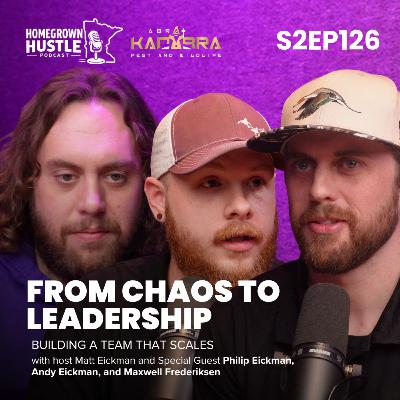
In this deeply reflective and operationally rich episode of Homegrown Hustle, host Matt Eickman is joined by core leadership members of Abra Kadabra, Philip Eickman, Andy Eickman, and Maxwell Frederiksen to unpack the real, often unpolished journey of building a scalable leadership team inside a growing service business.This conversation goes far beyond surface-level leadership advice. It dissects the psychological, structural, and cultural evolution required to transition from a founder-led operation into a team-driven organization. The group explores the messy middle—where roles are unclear, systems are nonexistent, and growth demands a reinvention of identity.Through candid storytelling, they reveal how leadership is not appointed but assumed, how personal development becomes the limiting factor in organizational growth, and how intentional investment in people creates exponential returns. This episode serves as a blueprint for entrepreneurs navigating the inflection point between hustle and structure.KEY TAKEAWAYS:Leadership is taken, not given—it emerges through action, not titlesGrowth requires founders to step out of operations and into visionEarly-stage companies often operate in productive chaos, but scaling demands structureThe transition from technician to leader is one of identity, not just responsibilityInvesting in leadership development creates long-term organizational leveragePersonal growth (books, mentors, learning) is a non-negotiable for leadership evolutionSaying “yes” too often as a leader can cripple scalability and team autonomyFamily dynamics in business require intentional communication boundariesHigh-performing cultures are built through ownership mentality, not complianceStrategic coaching and external expertise accelerate organizational maturityCHAPTERS:00:00 – From Chaos to Structure02:30 – The Founder Bottleneck05:00 – Why People Join (Opportunity vs. Stability)08:30 – From Job Mindset to Ownership Thinking10:30 – Personal Development as a Growth Engine12:30 – Evolving Roles Inside a Growing Company14:30 – Navigating Family Dynamics in Business17:30 – Leadership Is Taken, Not Given19:30 – The Identity Shift Into Leadership21:30 – Mentorship and Continuous Learning23:30 – The “Superman Trap” in Leadership25:30 – Stepping Out of the Field27:30 – Investing in Coaching and Expertise29:30 – What It Means When a Company Invests in YouGUEST RESOURCES:Website: https://abrakadabraenvironmental.com/Facebook: https://www.facebook.com/AbraKadabraEnvironmentalServices/X: https://x.com/abrakadabraenviLinkedin: https://www.linkedin.com/company/abra-kadabra-environmental-services/posts/?feedView=allYoutube: https://www.youtube.com/channel/UCzvPeOgKnlaSF4e48nfu-mw#HomegrownHustle #Entrepreneurship #LeadershipDevelopment #BusinessGrowth #StartupJourney
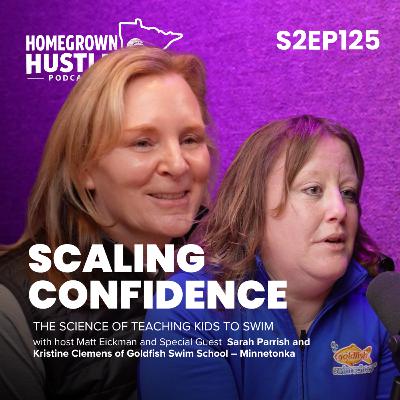
SUMMARY:In this high-level conversation, host Matt Eickman sits down with Sarah Parrish and Kristine Clemens of Goldfish Swim School – Minnetonka to unpack the intersection of child development, entrepreneurship, and experiential learning design. This episode goes far beyond swimming lessons—it explores how structured play, cognitive psychology, and systems-driven business models converge to build not only water safety skills, but lifelong confidence in children.Sarah and Kristine break down the operational frameworks behind franchise success, the pedagogy of guided play, and how mission-driven leadership translates into scalable impact. From hiring philosophy and culture design to parent communication systems and retention psychology, this episode serves as a masterclass in building a values-aligned, high-performance service business in a competitive local market.KEY TAKEAWAYS:The “Science of SwimPlay®” model blends guided play with cognitive development principles to accelerate skill acquisitionEarly childhood confidence is directly linked to safe risk exposure and structured repetitionOperational excellence in franchise models depends on consistency, culture replication, and local leadership autonomyCustomer retention in service businesses is driven more by emotional trust than transactional outcomesHiring for energy, empathy, and adaptability often outperforms hiring for technical skill aloneParent communication systems are a critical, often overlooked, growth leverScalable businesses require documented systems—but human connection remains the differentiatorCommunity integration is essential for long-term brand equity in local marketsTeaching safety skills can double as identity-shaping experiences for childrenLeadership alignment between partners is foundational to sustainable growthCHAPTERS:00:00 – Introduction & Guest Backgrounds03:45 – The Goldfish Swim School Model Explained08:20 – The Science of SwimPlay® Philosophy14:10 – Building Confidence Through Guided Play20:35 – Franchise Systems vs. Local Ownership Autonomy27:50 – Hiring, Training, and Culture Development35:15 – Parent Experience & Communication Strategy42:40 – Retention Psychology in Youth Programs49:05 – Scaling Operations Without Losing Personal Touch55:30 – Community Engagement & Brand Trust01:01:10 – Lessons in Leadership & PartnershipWebsite: https://www.goldfishswimschool.com/minnetonkaFacebook: https://www.facebook.com/goldfishminnetonka/Instagram: https://www.instagram.com/goldfish_minnetonka?igsh=MTkyYm5paTBudGJwcg==#HomegrownHustle #EntrepreneurshipPodcast #SwimSchool #ChildDevelopment #BusinessSystems #FranchiseLife #LeadershipMatters #StartupGrowth #SmallBusinessOwners #ParentingTips #ConfidenceBuilding #ServiceBusiness #PodcastMarketing #GrowthMindset #CommunityBusiness
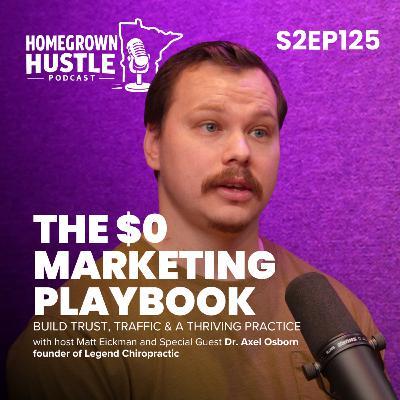
SUMMARY:In this high-level conversation, Dr. Axel Osborn, founder of Legend Chiropractic Excelsior, joins host Matt Eickman to unpack the intersection of neurological chiropractic care, human physiology, and modern small-business growth strategy. Dr. Osborn articulates a systems-level understanding of the human body—framing health through neural communication, cellular regeneration, and functional optimization—while simultaneously revealing a deeply pragmatic approach to entrepreneurship.This episode moves beyond traditional healthcare discussions into the mechanics of sustainable business growth: community-driven marketing, search engine optimization (SEO), behavioral trust economics, and the psychology of customer acquisition. By integrating clinical precision with grassroots marketing strategies, Dr. Osborn demonstrates how small businesses can compete in saturated markets without large advertising budgets.The discussion ultimately reframes business success as an emergent property of value creation, authentic connection, and consistent micro-optimizations—both biologically within the human body and structurally within a company.KEY TAKEAWAYS:Neurologic chiropractic care focuses on optimizing brain-body communication to enhance total system function, not just symptom relief.The human body operates through billions of neural signals per minute, making structural alignment critical to cellular health and regeneration.Chiropractic education often lacks real-world business training, forcing practitioners to self-educate or seek mentorship.Community-based marketing consistently outperforms paid advertising for local businesses in early growth stages.CHAPTERS:00:00 – Introduction to Dr. Axel Osborn & Legend Chiropractic01:00 – What is Neurologic Chiropractic Care?02:30 – Philosophy of Self-Healing & Holistic Health Systems04:10 – The Gap Between Medical Training & Business Reality06:00 – Learning Business Through Mentorship & Masterminds07:30 – How to Get Your First Customers (Grassroots Marketing)08:20 – Community Events as a High-ROI Growth Strategy10:00 – Relationship Capital vs Transactional Thinking12:50 – Building a Community Events SEO Page (Case Study)15:00 – How Value-First Content Drives Traffic & Clients16:40 – Understanding Google Search Console & Keyword Data18:00 – Market Competition & Local Search Dynamics22:20 – Why People Need Chiropractic Care (Biological Lens)23:00 – Cellular Regeneration & Neural Communication Explained25:00 – Chiropractic’s Impact on Digestion & Organ Function27:40 – Daily Movement, Posture & Desk Job Optimization30:30 – “Sitting is the New Smoking” Explained33:00 – Google Business Profile: The Most Underrated Tool36:00 – SEO, Content Strategy & Local Search Dominance 38:00 – DIY Marketing vs Hiring Experts43:00 – Defining Business Vision & Lifestyle Design45:00 – Building a Relationship-Centered Practice Model46:20 – Advice for New Chiropractors & Entrepreneurs49:00 – The Power of Referrals & Customer Experience50:00 – How to Ask for Reviews & Build Social ProofGUEST RESOURCES:Facebook: https://www.facebook.com/LegendChiropracticInstagram: https://www.instagram.com/legendchiropractic/Youtube: https://www.youtube.com/@legendchiropracticWebsite: https://legendchiropracticmn.com/
SUMMARY:In this episode of Homegrown Hustle, entrepreneur, breaks down the entrepreneurial mechanics behind building a scalable service business in the pressure washing industry. What begins as a seemingly simple local service—cleaning driveways and commercial properties—reveals itself to be a sophisticated system of operations, brand positioning, client acquisition, and operational leverage.Michael shares how he transitioned from working in the business to working on the business, designing repeatable systems that allow a pressure washing company to evolve from a side hustle into a high-margin service enterprise. Through a combination of strategic marketing, operational discipline, and a deep understanding of local market dynamics, Michael explains how entrepreneurs can transform a blue-collar service into a resilient and scalable business model.The conversation dives into the economics of local service businesses, the psychology of homeowners and commercial property managers, and the operational frameworks required to maintain quality while scaling. Michael also discusses the role of branding, digital visibility, and customer trust in an industry often viewed as commoditized.For entrepreneurs interested in building a service-based company—or optimizing one they already own—this episode offers a practical and intellectually rigorous look at how disciplined execution turns pressure into profit.KEY TAKEAWAYS:Service businesses scale through systems, not labor. Sustainable growth requires repeatable processes that reduce owner dependency.Local market dominance is built through trust and visibility. Reputation, reviews, and consistent branding create defensible market positioning.Operational efficiency is the hidden driver of profitability. Route planning, equipment maintenance, and scheduling dramatically impact margins.Perceived value outweighs commoditization. Strategic branding and professionalism allow service companies to command premium pricing.Entrepreneurial growth requires identity shifts. Founders must transition from technician to operator to strategist.Customer psychology drives service adoption. Homeowners and property managers prioritize reliability, communication, and visible results.Blue-collar industries contain untapped entrepreneurial opportunity. Many markets remain fragmented and underserved by professionalized operators.CHAPTERS:00:00 — From Side Hustle to Service Empire 03:42 — Discovering the Opportunity in Pressure Washing 08:15 — The Economics of Local Service Businesses 13:50 — Building Systems That Allow a Company to Scale 18:27 — Branding in a “Commoditized” Industry 23:04 — Customer Psychology and Trust Signals 28:19 — Operational Efficiency and Profit Margins 33:45 — Transitioning From Operator to CEO 38:10 — Lessons Learned From Growing PressureTitans 42:30 — Advice for Entrepreneurs Entering Service IndustriesGUEST RESOURCES:Website: https://www.pressuretitans.com/Instagram: https://www.instagram.com/pressuretitans/Linkedin: https://www.linkedin.com/in/michael-o-keeffe-0146b435b/Facebook: https://www.facebook.com/profile.php?id=61558085784690Youtube: https://www.youtube.com/@PressureTitans
SUMMARY:What happens when a passion for the outdoors collides with entrepreneurial thinking? In this episode of Homegrown Hustle, host sits down with Matthew Thompson, Executive Director of Wayzata Sailing, to unpack how a grassroots sailing organization transformed into a thriving nonprofit serving thousands of participants each year.Matt shares how he accidentally stepped into leadership just a few years out of college with little formal business training—and then proceeded to triple the organization’s size. Through iterative decision-making, calculated experimentation, and community-driven programming, he built a sustainable model that blends nonprofit mission with business discipline.The conversation explores the realities of nonprofit leadership, including managing boards, balancing revenue streams, navigating donor expectations, and scaling seasonal teams to over 70 staff members. Matt also reveals how experimentation—from fishing camps to paddleboarding to STEM programming—has fueled growth and unlocked unexpected opportunities, including inspiring young entrepreneurs.At its core, this episode examines how action, experimentation, and community partnerships can transform a small organization into a powerful local ecosystem.KEY TAKEAWAYS:Passion can evolve into a profession when individuals lean into what they love and build systems around it.Iterative decision-making is a powerful leadership framework—commit, test, adjust, and improve.Nonprofits must operate like businesses to survive, balancing mission with revenue generation.Community programming can create unexpected innovation pipelines, even inspiring youth entrepreneurship.Scaling an organization requires rethinking hiring models, focusing on complementary skill sets instead of “perfect candidates.”Smart experimentation means accepting small losses in pursuit of long-term learning and growth.Operational sustainability often relies on creative revenue streams, not just donations.Leadership evolves from doing everything yourself to building teams and delegating responsibility.Community impact grows exponentially when organizations expand access to experiences people can’t easily get elsewhere.CHAPTERS:00:00 – The “Matt Party” Icebreaker00:33 – Meet Matthew Thompson01:30 – The Origins of Wayzata Sailing02:47 – Mission: Accessibility in Sailing04:25 – Becoming Executive Director (Without Business Training)05:05 – The Power of Iterative Decision Making06:00 – How Nonprofits Actually Work07:24 – Rethinking Donor Value09:26 – Scaling to 70+ Seasonal Staff11:45 – Training the Next Generation of Instructors13:03 – The Safest Sport That Feels Risky14:17 – Hiring for Complementary Skill Sets16:39 – Leadership Structure as the Organization Grew18:52 – The Unique Revenue Model of Sailing Camps20:23 – Running the Organization Like a Business21:32 – Escaping the Nonprofit Marketing Trap22:39 – Why Nonprofits Must Experiment23:58 – Community Programming as a Growth Engine25:45 – Testing New Ideas in Small Batches27:18 – The Fishing Camp That Took Off29:09 – Inspiring Youth Entrepreneurship30:57 – Scaling to 2,000 Annual Participants31:59 – The Future of Wayzata Sailing33:14 – Creative Date Nights on the Lake34:25 – Managing a Fleet of BoatsGUEST RESOURCES:Linkedin: https://www.linkedin.com/in/thomps-matthew-minneapolisWebsite: https://www.wayzatasailing.org/Instagram: https://www.instagram.com/wayzatasailing/Facebook: https://www.facebook.com/wayzatasailing/
SUMMARY:In this globally grounded and philosophically rich episode of Homegrown Hustle, host Matt Eickman sits down with Dr. Brad Canham to unpack a remarkable journey to Greenland during a period of geopolitical tension and environmental extremity.Fresh from teaching and networking in Nuuk, Dr. Canham explores what entrepreneurship looks like in one of the most isolated and interdependent economies on Earth. From meetings with major fishing executives to spontaneous small-commitment networking, he demonstrates how opportunity emerges not despite uncertainty—but because of it.Drawing on Inuit cultural narratives like the “Mother of the Sea,” Midwest entrepreneurial identity, and actuation theory’s “crazy quilt” model, Dr. Canham reframes business as participation in a living system rather than conquest of a market.This is entrepreneurship as philosophy. As ecology. As geopolitics. As personal courage.KEY TAKEAWAYS:Opportunity is most visible in environments of high uncertainty—if you train yourself to see it.Entrepreneurial ecosystems require balance; over-optimization in one node destabilizes the whole.Greenland’s fishing economy models interdependence better than many U.S. venture ecosystems.You do not need ownership to create value (e.g., Greenland’s land-leasing system).“Small commitments” build trust networks that unlock exponential opportunity.Authentic networking outperforms scripted positioning over time.Businesses tied to natural rhythms (weather, seasons, cycles) outperform rigid calendar-based strategies.Force, power, and strength may shape geopolitics—but empathy and interdependence sustain civilizations.You can choose your version of entrepreneurship; the Silicon Valley model is not the only model.CHAPTERS:00:00 – Welcome to Homegrown Hustle00:43 – Why Greenland? Entering Uncertainty02:11 – Opportunity in High Uncertainty03:17 – Inside Greenland’s Fishing Economy06:10 – Icebergs & Elemental Silence10:35 – The Mother of the Sea & Entrepreneurial Balance14:02 – State-Owned Venture Funds & Slower Growth Models18:50 – Walking the Talk in the Classroom20:33 – The Power of Small Commitments23:39 – Authentic vs Scripted Networking29:00 – Weather, Rhythm, and Business Adaptability32:03 – Two Visions of the Future35:12 – Force, Power, Strength… and EmpathyGUEST RESOURCES:Linkedin: https://www.linkedin.com/in/bradcanham/Website: https://marketvines.com/
SUMMARY:In this episode of the Homegrown Hustle, host Matt Eickman sits down with Michelle Fuller, founder of Owl's Eye Art Collective in Saint Paul’s Lowertown Arts District.Michelle shares her journey from a digital creative background into building a physical, community-driven art studio that prioritizes accessibility, collaboration, and hands-on experience. Living with dyslexia and learning disabilities, she reveals how art became her primary language for connection—and how she’s now creating space for others to do the same.This PhD-level conversation explores the economics of local art, the psychology of creativity, experiential business models, community-building through art classes and events, and the intersection of entrepreneurship and creative identity. From screen printing and mosaic classes to art crawls and brewery pop-ups, Michelle explains how immersive artistic experiences can revitalize local economies and combat cultural commodification in the age of Amazon.If you’re an entrepreneur, creative, or community builder, this episode reframes art not as decoration—but as infrastructure.KEY TAKEAWAYS:Art is not just product—it is experience design and community architecture.Local art ecosystems strengthen regional economies through collaboration and cultural gravity.Experiential businesses outperform transactional models in meaning, memory, and loyalty.Accessibility in art education creates empowerment and long-term creative confidence.Entrepreneurship itself is an art form—business owners are creative architects.Community-based art spaces can counteract digital isolation and passive consumption.Membership models and collaborative teaching expand creative collectives sustainably.Art fosters neurodivergent communication and inclusive social connection.Events like art crawls and street festivals create measurable economic ripple effects.Hustle is resilience—creative entrepreneurship requires emotional endurance and long-term vision.CHAPTERS:00:00 – Welcome to Homegrown Hustle00:22 – Meet Michelle Fuller & Owl’s Eye Art Collective01:00 – Art as Communication & Accessibility02:00 – Walk-In Art Studio Model & Free Craft Nights03:39 – Third Spaces, Breweries & Community Activation04:28 – Mosaic, Screen Printing & Cyanotype Classes05:10 – Growing Up in an Artistic Family06:44 – Art School & Creative Foundations08:03 – Lowertown Arts Scene & First Fridays09:14 – Why Local Artists Struggle to Monetize11:02 – Art Crawls, Festivals & Economic Impact13:03 – What Is Art? (Philosophical Framework)14:53 – Advice for Artists Wanting to Start a Studio16:46 – Building Confidence Through Creative Process17:03 – Art Kits, Memberships & Scalable Models18:03 – BYOB Art Parties & Experiential Business20:17 – Why Adults Need Creative Outlets21:35 – Entrepreneurship as Art22:03 – Funding the Vision & Building a Collective23:16 – The Cultural Impact of Art in Minnesota25:27 – Corporate Alignment & Community Art26:26 – The Future of Owl’s Eye Art Collective27:31 – What Hustle Means to MichelleGUEST RESOURCES:Linkedin; https://www.linkedin.com/in/michellefuller0406/Website; https://www.owlseyeart.com/Facebook: https://www.facebook.com/profile.php?id=61559456606935Instagram; https://www.instagram.com/owlseyeartcollective/
SUMMARY:In this PhD-level masterclass on modern marketing communications, Dr. Mike Porter, Clinical Professor of Marketing at the University of St. Thomas, joins host Matt Eickman to deconstruct the strategic realities behind social media. Moving beyond surface-level tactics, Dr. Porter reframes social media within the PESO model (Paid, Earned, Shared, Owned) and challenges entrepreneurs to rethink how awareness, persuasion, and conversion truly function.This episode explores the psychological architecture of communication, the economics of attention, generational segmentation, voice consistency, authenticity, influencer dynamics, reputation management, competitor response strategy, and the difference between tactical noise and strategic intent.For entrepreneurs who feel pressured to “be everywhere” on social, this conversation provides clarity: social media is not the destination — it is a conduit. The objective is not virality. The objective is movement — from awareness to belief to action — within a system you control.KEY TAKEAWAYS:The PESO Model (Paid, Earned, Shared, Owned) provides a strategic framework for placing social media in context — and social should ultimately drive to owned assets.Social media is shared space, not controlled space. You control what you post — not how others respond.Not every business needs every platform. Start with your audience, not the algorithm.Messaging must evolve across segments, but voice must remain consistent.Authenticity outperforms polish. A genuine imperfect message to the right audience beats a perfect message to the wrong one.Awareness → Opinion → Belief → Action is the persuasion pathway. Social typically operates in the awareness and early persuasion stages.You cannot fully educate in one social post — use social as a bridge to deeper owned content.There is a strategic difference between doing nothing and choosing to do nothing.Anticipate competitor response and detractors before entering a conversation.Businesses can separate brand promotion content from industry reputation-building content.Analytics are accessible — but business owners don’t have to master them personally. Leverage young talent or strategic partnerships.Perfection is not required. Alignment is.CHAPTERS:00:00 – Introduction: Why Social Media Isn’t What You Think It Is01:17 – The PESO Model Explained (Paid, Earned, Shared, Owned)04:00 – Audience First: Platform Choice as a Strategic Decision06:45 – Messaging Across Segments Without Losing Brand Voice09:52 – Authenticity vs. Artifice in Social Communication14:03 – Large Companies & The Authenticity Dilemma16:10 – The Awareness → Belief → Purchase Continuum20:29 – Competitors, Detractors & Strategic Response Planning23:20 – Education vs. Entertainment in Social Media26:01 – Journalism, Bias & Credibility in the Digital Age27:23 – Building Industry Reputation Alongside Brand Reputation30:01 – Tactical Questions vs. Strategic Thinking31:31 – Analytics for Entrepreneurs: Start Small, Think Smart33:44 – Final Thoughts: Alignment Over PerfectionGUEST RESOURCES:Linkedin: https://www.linkedin.com/in/dr-mike-porter-apr-fellow-prsa-he-him-2a033/Website: https://researchonline.stthomas.edu/esploro/profile/mike_porter/overview
SUMMARY:In this deep-dive episode of Homegrown Hustle, host Matt Eickman sits down with Dr. Mike Porter, Clinical Professor of Marketing at the University of St. Thomas, to unpack the real mechanics of reputation management—beyond buzzwords and surface-level branding.Drawing from decades of experience in public relations, marketing strategy, and MBA education, Dr. Porter explains why reputation is not what you say—it’s what stakeholders believe, and how businesses of all sizes must strategically manage perceptions across customers, employees, media, competitors, and even regulators.This episode explores the PESO Model (Paid, Earned, Shared, Owned media), the difference between brand and reputation, how word-of-mouth actually works, why targeting everyone is a losing strategy, and how reputation directly translates into financial goodwill and long-term business value. Essential listening for founders, executives, marketers, and anyone building something that needs trust to scale.KEY TAKEAWAYS:Reputation is the management of stakeholder perceptions, not marketing slogansBrand is what you want people to believe; reputation is what they actually believeEvery employee influences reputation—not just customer-facing rolesThe PESO Model explains how paid, earned, shared, and owned media must work togetherWord-of-mouth must be earned, engineered, and supported by strategyTargeting everyone weakens reputation—focus on high-value stakeholdersEarned media and third-party credibility outperform self-promotionReputation directly impacts business valuation and goodwillBuying a business means inheriting its reputation—good or badPersonal reputation compounds over time, especially in tight business ecosystemsCHAPTERS:00:00 – Welcome to Homegrown Hustle00:41 – Meet Dr. Mike Porter & His Background01:22 – What Is Reputation Management?02:41 – Defining Stakeholders (It’s More Than Customers)04:12 – The PESO Model Explained (Paid, Earned, Shared, Owned)06:17 – Employees, Culture, and Internal Reputation07:02 – Why Word-of-Mouth Is Not a Strategy by Itself08:16 – Strategy vs. Tactics in Marketing Communication10:15 – Reputation for New Businesses: You Never Start at Zero12:24 – Why You Shouldn’t Try to Influence Everyone13:19 – Traditional PR vs. Influencers and Social Media15:00 – Credibility, Earned Media, and Third-Party Trust17:01 – Driving Traffic to Owned Media for Conversion18:21 – Creating an Environment That Enables Sales19:52 – Scaling Marketing as Businesses Grow21:34 – Reputation, Relationships, and Market Dynamics23:39 – Personal Reputation in Business Communities25:04 – Buying a Business and Inheriting Reputation26:15 – Goodwill, Valuation, and Reputation as an Asset27:19 – Learning From Lost Customers28:26 – Prioritizing the Stakeholders That Matter Most29:43 – Brand vs. Reputation (Mic Drop Moment)30:03 – Closing Thoughts & What’s NextGUEST RESOURCES:Linkedin: https://www.linkedin.com/in/dr-mike-porter-apr-fellow-prsa-he-him-2a033/Website: https://researchonline.stthomas.edu/esploro/profile/mike_porter/overview
SUMMARY:In this episode of Homegrown Hustle, host Matt Eickman welcomes back Dr. Brad Canham for a deep, practitioner-meets-academic breakdown of why traditional business plans often fail entrepreneurs—and what to do instead. Anchored in the Business Model Canvas, the conversation explores effectuation, customer discovery, value propositions, and the emotional realities behind purchasing decisions. Dr. Canham bridges entrepreneurship theory with real-world application, demonstrating how founders can move faster, learn earlier, and design businesses around customers rather than assumptions. From pricing psychology and qualitative customer interviews to organizational power dynamics and scaling realities, this episode reframes entrepreneurship as action-oriented sensemaking—not prediction.KEY TAKEAWAYS:Traditional multi-page business plans are often obsolete before they’re finished; early-stage founders need action, not over-planningThe Business Model Canvas offers a holistic, one-page framework that aligns customer needs with business capabilitiesEntrepreneurship operates through effectuation—building with available means and small commitments rather than fixed end goalsThe value proposition sits at the center of the business and must prioritize customer problems, not founder passionCustomer discovery conversations should focus on emotional, social, and functional pain—not sellingPricing clarity emerges through real dialogue, not competitor copying or internal assumptionsQualitative insights (language, emotion, behavior) often outperform quantitative data in early validationAs companies scale, organizational structure and power dynamics can suppress critical frontline knowledgeMature businesses benefit from traditional planning—but only after stability and scale are achievedCHAPTERS:00:00 – Welcome Back & The State of Entrepreneurship02:45 – Why Business Plans Fail Early-Stage Founders04:40 – Introduction to the Business Model Canvas06:30 – Effectuation vs. Prediction: How Entrepreneurs Actually Build08:25 – Understanding the Value Proposition (The Center of the Canvas)11:10 – Entrepreneurship vs. Corporate Management14:05 – From Startup to Scale-Up: When Structure Becomes Necessary17:15 – Cost Structure, Pricing, and Customer Willingness to Pay20:00 – Customer Discovery: Talking Without Selling23:30 – Emotional & Social Drivers Behind Buying Decisions27:00 – Truth, Attention, and Ethical Marketing30:20 – Educating the Unaware Customer34:45 – Crafting Value Propositions That Convert38:10 – Founder Bias, Power Dynamics, and Subjugated Knowledge43:30 – Creating Feedback Loops Inside Growing Organizations46:00 – Final Framework & Closing ThoughtsGUEST RESOURCES:Linkedin: https://www.linkedin.com/in/bradcanham/
SUMMARY:In this high-level conversation, host Matt Eickman sits down with Umut Kaplan, Director of Business Development at Coccinella, to unpack what real growth looks like behind the scenes. Moving beyond surface-level sales tactics, Umut explores strategic partnerships, long-term value creation, and the mindset required to scale organizations sustainably. Drawing from real-world leadership experience, the episode dissects how modern business development intersects with culture, systems thinking, and disciplined execution. This conversation is a masterclass in intentional growth for operators, founders, and executives navigating complexity at scale.KEY TAKEAWAYS:Business development is a long-term value creation function, not just salesSustainable growth requires alignment between strategy, culture, and executionStrategic partnerships outperform transactional relationships over timeLeadership clarity directly impacts scalability and team performanceSystems thinking is essential when operating in high-growth environmentsGrowth without operational discipline introduces hidden riskThe best BD leaders think like owners, not closersCHAPTERS:00:00 The Importance of Thoughtful Gifting02:51 Origin Story of Coach Nella05:39 Cultural Exchange and Its Impact08:49 Family Background and Entrepreneurial Spirit11:31 Understanding Olive Oil Consumption14:27 Quality vs. Quantity in Olive Oil17:25 Educating Consumers Through Tasting Events19:31 Exploring the Olive Oil Industry22:28Quality Standards in Olive Oil Production25:49 The Evolution of Olive Oil Offerings29:24 Corporate Gifting and Customer Relationships34:02 The Importance of Personalization in Gifting39:04 Standards of Excellence in Business43:57 Lessons from Family Values48:39 Starting a Product Business: Key Insights53:13 The True Meaning of Hustle58:06 Building Relationships and TrustGUEST RESOURCES:Linkedin: https://www.linkedin.com/in/umut-kaplan-0222ba149/Instagram: https://www.instagram.com/coccinella_usa/?hl=enWebsite: https://www.coccinellastore.com/Facebook: https://www.facebook.com/CoccinellaUSA/
SUMMARY:This conversation explores the themes of entrepreneurship, innovation, and the cultural dynamics that influence Dr. Brad Canham and Matt Eickman. The speakers discuss the importance of excellence, the role of impatience in driving innovation, and the impact of AI on society. They emphasize the need for experiential learning in entrepreneurship education and the significance of teamwork and ethics in achieving business success. The discussion also touches on the challenges of navigating uncertainty and the importance of reflection in personal and professional growth.KEY TAKEAWAYS:Entrepreneurship is driven by a desire for excellence.Innovation requires an open-minded perspective.Impatience can lead to rapid innovation.AI is fundamentally changing our cultural landscape.Experiential learning is crucial in entrepreneurship education.Teamwork is essential for business success.Ethics and practical wisdom are vital in decision-making.Reflection helps individuals process experiences and learn.Navigating uncertainty is a core entrepreneurial skill.Creating learning opportunities is essential in uncertain times.CHAPTERS:00:00 The Drive for Excellence in Entrepreneurship03:00 The Role of Ideology in Innovation06:04 Cultural Perspectives on Innovation and Work Ethic08:59 Defining Innovation vs. Invention11:48 The Impact of AI on Society14:53 Navigating Change in a Rapidly Evolving World18:02 The Adoption Curve of New Technologies20:59 Experiential Learning in Entrepreneurship Education22:10 Experiential Learning in Entrepreneurship23:58 The Role of Collaboration in Learning26:15 Understanding Different Types of Knowledge28:10 Navigating Ethical Dilemmas30:15 Learning from Experience32:13 Disturbing the Status Quo33:59 The Importance of Reflection36:20 Managing Reactions and Responses40:23 Opportunities in UncertaintyGUEST RESOURCES:Linkedin: https://www.linkedin.com/in/bradcanham/Website: https://marketvines.com/
SUMMARY:In this episode of Homegrown Hustle, host Matt Eickman sits down with Joshua Swisher of Northface Construction to peel back the layers of what truly protects a home in the harsh Minnesota climate. Far from just a discussion about shingles, the conversation dives into the "symptoms" of home failure—most notably ice dams—and why they are actually heat, air, and moisture problems rather than simple roofing issues. Joshua shares his expertise on the evolution of building codes, the high-leverage power of attic insulation, and how a proactive approach to home efficiency can offset massive financial risks.The duo also explores the "gap" in the traditional roofing industry: wildlife and pest exclusion. Joshua explains why standard code-compliant roofs are often still vulnerable to animal entry and highlights the massive opportunity for education and cross-industry partnerships between roofers and wildlife experts. Whether you are a new homeowner trying to navigate your first winter or a seasoned contractor looking to provide more value, this episode offers a masterclass in building for longevity and peace of mind.KEY TAKEAWAYS:Ice dams are symptoms, not the problem: They are caused by inefficient heat and moisture management within the home's attic and eaves.The 1% deductible trap: Many homeowners don't realize their deductible is often 1% of the home's insured value, not 1% of the total loss, leading to higher out-of-pocket costs.Efficiency as risk mitigation: High-leverage upgrades like spray foam and updated insulation (R-values) significantly lower operating costs and the risk of interior damage.Quality underlayment is king: A roof’s ability to withstand hydrostatic pressure during an ice dam depends more on the quality of the install and underlayment than the shingles themselves.The Wildlife Exclusion Opportunity: Most roofing manufacturers don't prioritize animal-proofing, creating a niche for contractors to offer "premium pest packages" through specialized partnerships.Code is the baseline, not the ceiling: Building to current industry standards doesn't always guarantee protection against wildlife or extreme weather.CHAPTERS:[00:00] Introduction to Homegrown Hustle and Guest Joshua Swisher.[00:23] The Ice Dam Myth: Why it’s a heat and moisture issue.01:10] The staggering cost of ice dams: Emergency services vs. long-term fixes.[02:49] Insurance Realities: Understanding modern deductibles and insured value.[04:46] The Life Cycle of Homeownership: Navigating costs in the first year.[05:39] 1980: The pivotal turning point in energy building codes.[06:41] Joshua’s "Wholesale Spray Foam" strategy for maximum efficiency.[07:11] Identifying a crisis: Dealing with active leaks.[08:50] Best Practices: Screwing through shingles and maintaining warranties.[09:50] Hydrostatic Pressure: How water moves sideways during an ice dam.[10:30] Beyond Code: The importance of ice and water shields.[11:49] The "Through the Roof" protocol for watertight installs.[13:10] Bridging the Gap: Why roofers don't typically wildlife-proof.[15:17] The Education Opportunity: Upselling longevity and brand trust.[18:16] System Warranties: GAF products and the Golden Pledge standard.[20:30] Scaling the Team: Internal vs. external installer management.[21:14] Closing: Hustling through the holidays and final thoughts.GUEST RESOURCES:Facebook - https://www.facebook.com/NorthfaceConstructionLinkedin - https://www.linkedin.com/company/northfaceconstruction/ Instagram - https://www.instagram.com/northface.construction/Website - https://northfaceconstruction.com/
SUMMARY:In this technically rich and practitioner-level conversation, home inspection expert Reuben Saltzman joins host Matt Eickman to dismantle common myths around ice dams, attic insulation, ventilation, and pest intrusion. Moving beyond surface-level homeowner advice, this episode explores the building science behind why homes fail in winter—highlighting how heat transfer, air leakage, disturbed insulation, and animal activity interact to create cascading structural problems. From one-and-a-half-story homes and rodent-driven thermal failures to Minnesota energy code requirements, Saltzman delivers a no-nonsense, systems-based framework for understanding—and preventing—ice dams, attic mold, and moisture damage before they become catastrophic.KEY TAKEAWAYS:Ice dams are caused by two conditions only: heat reaching the roof deck and snow accumulation—everything else is secondary.One-and-a-half-story homes are inherently vulnerable to ice dams and are often cost-prohibitive to fully fix.Air sealing—not insulation or ventilation—is the primary driver in preventing attic-related failures.Adding insulation without air sealing can actually increase the risk of frost, mold, and ice dams.Pest activity (especially squirrels and mice) significantly degrades insulation performance and accelerates heat loss.Roof ventilation treats symptoms, not causes, and has minimal correlation with ice dam prevention.Snow removal via roof raking is the only universally effective short-term ice dam prevention strategy.Minnesota energy code legally requires air sealing before adding attic insulation—yet many contractors ignore it.Homeowners often delay action until interior water damage appears, despite earlier warning signs.CHAPTERS:00:00 – What actually causes ice dams 02:00 – Why winter is the best time to fix attic issues 03:20 – The structural damage progression of ice dams 06:00 – Why roofs leak under pooled water 08:00 – Why one-and-a-half-story homes are fundamentally flawed 09:10 – Roof raking: the simplest prevention method 10:45 – How rodents destroy insulation efficiency 12:30 – What a “perfect” attic should look like 14:15 – Insulation depth, settling, and real-world standards 16:00 – Why almost every attic has mice 17:30 – Air sealing vs. insulation: the real hierarchy 21:20 – Minnesota energy code and contractor shortcuts 23:50 – Pest control: reactive vs. preventative thinking 28:15 – Ice dam safety and homeowner injury risks 30:30 – Why ventilation is wildly overvalued 34:15 – The myth of “heat rises” in attic airflow 35:15 – Fitness, family, and closing reflectionsGUEST RESOURCES:Facebook: https://www.facebook.com/MinnesotaHomeInspectionsInstagram: https://www.instagram.com/structuretechhomeinspections/Linkedin: https://www.linkedin.com/in/reubensaltzman/Youtube: https://www.youtube.com/user/inspectorreubenWebsite: https://structuretech.com/
SUMMARY:In this high-signal episode, host Matt Eickman sits down with Tim Brown, CEO and Founder of Hook Agency, to dissect what actually drives scalable growth in home service businesses heading into 2026. Moving beyond surface-level marketing tactics, Tim reframes growth as a leadership, systems, and mindset challenge—where marketing only amplifies what already exists operationally.The conversation explores agentic AI as an operational advantage (not a silver bullet), the compounding power of Google Business Profile dominance, and why referral ecosystems outperform paid leads at scale. Tim introduces the concept of the “Local Referral Mafia,” a grassroots growth engine rooted in trust, proximity, and social proof. Equally important, the episode dives deep into CEO psychology—letting go of control, allowing failure, shifting from operator to investor, and using leadership as a form of time compression.This episode is a masterclass in modern growth: blending AI, local SEO, referrals, pricing strategy, and executive self-development into a coherent framework for building durable, scalable companies.KEY TAKEAWAYS:Marketing does not fix broken operations; it only accelerates what already existsGoogle Business Profile optimization is one of the highest ROI growth levers in local marketsConsistency beats novelty—layer marketing channels instead of constantly switching tacticsReferrals close at the highest rate and require intentional systems, not luckThe “Local Referral Mafia” creates defensible, low-cost lead arbitrageAgentic AI is best used first for internal automation, not customer-facing shortcutsLeadership is the primary bottleneck to scale, not tactics or toolsAllowing team failure is a prerequisite for sustainable growthCEOs must shift from operator mindset to shareholder mindsetSelf-development is not optional—it defines the ceiling of the businessCHAPTERS:00:00 – Influencer Economics in Home Services02:10 – The Future of Marketing Agencies & Agentic AI06:30 – Nine Years of Growth at Hook Agency09:55 – Niches, Focus, and the 2026 Plumbing Play11:10 – Layering Marketing Instead of Channel Jumping14:20 – Private Equity, Paid Traffic, and Playing a Different Game17:20 – Google Business Profile as a Growth Weapon20:00 – The Local Referral Mafia27:45 – The CEO as Chief Energy Officer29:15 – Letting Go of the Truck32:20 – Leadership, Failure, and Self-Development38:30 – Who Not How, Gap vs Gain, and Time Compression41:05 – Thinking Like a Shareholder44:45 – Agentic AI: Reality vs Hype47:30 – AI, SEO, and the Decline of Clicks54:30 – Pricing With Marketing Spend Built In56:20 – Zero-Budget Growth Strategies01:01:40 – Final Advice for Founders Entering 2026GUEST RESOURCES:Website: https://hookagency.com/website-design/Youtube: https://www.youtube.com/hookagencyInstagram: https://www.instagram.com/hookagency/ | https://www.instagram.com/timishness/Facebook: https://www.facebook.com/hookagency/Linkedin: https://www.linkedin.com/company/hook-agency/#HomeServiceMarketing #LeadershipOverLeads #HookAgency #TimBrown #MattEickman #HomegrownHustle #CEOPlaybook #LocalSEO #ReferralMarketing #AgenticAI #FounderMindset #ScaleWithSystems #MarketingStrategy #Entrepreneurship #BusinessGrowth
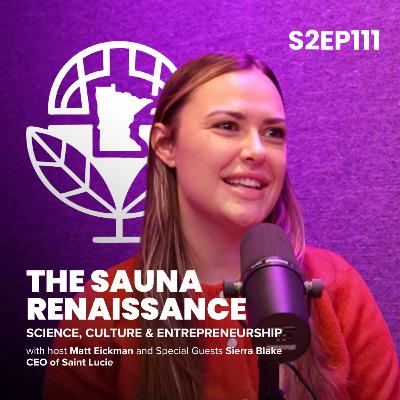
SUMMARY:In this episode of Homegrown Hustle, host Matt Eickman sits down with Sierra Blake, Adjunct Professor at Augsburg University and Founder/CEO of Saint Lucie, the company behind the rapidly emerging “sauna serum.” Sierra unpacks the neuroscience, physiology, and cultural anthropology behind sauna and cold-plunge practices—tracing them from ancient rituals to modern wellness movements fueled by COVID-era behavioral shifts. She breaks down her journey “from research to ritual” as she moved from academic study and IRB-approved research design to the creation of a startup at the beginning of a national sauna renaissance. The conversation spans addiction recovery research, business development, community-based entrepreneurship, product innovation, and the sociocultural forces shaping the explosive growth of bathing culture in the U.S. A masterclass in evidence-based wellness meets practical entrepreneurship.KEY TAKEAWAYS:Sauna and cold exposure have ancient multicultural origins rooted in ritual, community, and spiritual practices.Modern sauna growth surged post-COVID due to shifts in health behaviors, isolation, and the search for new third-spaces.Scientific research (especially Finnish longitudinal studies) shows significant reductions in all-cause mortality and cardiovascular events—but more controlled studies are needed.Entrepreneurship thrives at the intersection of academic curiosity, personal experience, and unmet need.The sauna industry in the U.S. is in its early stages, filled with collaboration, idea-sharing, and rapid innovation rather than competition.Saint Lucie sauna serum was developed to solve real, unaddressed problems (dry hair/skin during heat exposure).Execution—not ideas—is the differentiator between those who succeed and those who don’t.Community groups and founder circles play a critical role in supporting new entrepreneurs in emerging industries.Behavioral psychology reveals how large-scale events (like COVID-19) permanently reshape leisure, wellness, and consumption patterns.“Hustle,” as defined by Sierra, is continually pushing buttons, pulling levers, and doing your best—a process of ongoing experimentation and forward motion.CHAPTERS:00:00 – Introduction01:47 – The Research Journey03:30 – First Sauna Experiences05:15 – The IRB Study06:45 – Ancient Sauna Origins09:24 – The Modern Sauna Boom11:18 – The Finnish Study14:40 – COVID & Health Behavior Shifts17:00 – Third Spaces & Bathing Culture21:00 – The Sauna Economy23:45 – Creating St. Lucie26:45 – Product Development31:00 – First Sales33:10 – Community & Collaboration36:45 – Competitors & Market Validation39:20 – Entrepreneurial Conditioning44:00 – Founder Mastermind Groups46:30 – Future of Sauna Culture49:25 – Pricing & Buying Saint Lucie52:15 – How to Use the Serum54:20 – Who Buys the Product55:30 – Defining HustleGUEST RESOURCES:Facebook: https://www.facebook.com/profile.php?id=61565143112373Instagram: https://www.instagram.com/shopsaintlucie/?hl=enInstagram: https://www.instagram.com/__sierrablake/Linkedin; https://www.linkedin.com/in/sierracanham/Website: http://www.shopsaintlucie.com#HomegrownHustle #SaunaCulture #ColdPlunge #EntrepreneurLife #SaunaSerum #SaintLucie #WellnessScience #StartupJourney #FounderMindset #BathingCulture #MinnesotaBusiness #ContrastTherapy #HealthOptimization #HustleMindset
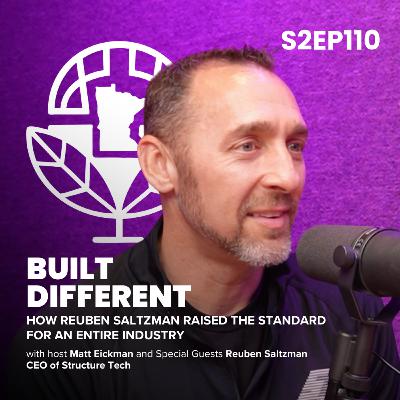
SUMMARY:In this master-level episode of Homegrown Hustle, host Matt Eickman sits down with Reuben Saltzman, CEO of StructureTech and co-host of the long-running podcast Structure Talk. Reuben unpacks two decades of scaling a service business from a family operation to a nationally respected authority—anchored in craftsmanship, systems, obsessive consistency, and unwavering customer standards.This conversation is a blueprint for any entrepreneur in the home-service space: building trust through education, productizing expertise, navigating scope creep, managing price integrity, and creating content that compounds for years. Reuben’s journey demonstrates exactly what it takes to become a market leader when there is no industry playbook—so you build your own.KEY TAKEAWAYS:Consistency is a business superpower — blogs, podcasts, and educational content compound over time like interest.Expertise grows in public — you don’t need to be “the most knowledgeable,” you need to be the one willing to publish.Price integrity separates professionals from commodities — cheap competition isn’t your customer.Systems beat heroics — growth comes from duplicating yourself, not doing everything yourself.Scope creep is real — consumer expectations rise faster than pricing, demanding constant operational adaptation.Content is farming, not fishing — the ROI shows up years later, not after a few posts.Home services thrive on trust — clarity, simple language, and education matter more than jargon.Leadership evolves — once your team buys into excellence, you can’t lower standards without breaking the culture.Podcasting unlocks new distribution — people consume audio when they won’t read long-form content.Hustle = intentionality — winning the day starts with structure, not scrolling..CHAPTERS:00:00 – Who Is Reuben Saltzman?02:45 – Learning the Craft & Leadership at Home Depot.05:30 – Joining StructureTech & The Early Days07:15 – The Aha Moment: Scaling or Drowning09:30 – Hiring the First Team Members12:40 – Why StructureTech Became the Standard16:00 – Going Beyond Standards & Facing Criticism17:40 – Content as a Growth Engine20:30 – The Star Tribune Era24:00 – Consumers vs. Agents: Who Really Drives Demand?29:00 – Industry Pain Points: Scope Creep & Pricing33:50 – Staying Premium in a Discount World36:30 – Autonomy, Mastery, Purpose: How Reuben Leads.39:00 – Dealing With Negative Comments & Trolls41:20 – Communicating Without Jargon43:50 – Overcoming Fear in Content Creation46:00 – Podcasting: Lessons From 7+ Years49:30 – Why Podcasts Scale Thought Leadership52:00 – The Burden of Being a Market Leader53:20 – Farming vs. Fishing in Business56:00 – Consistency, Quitting, and Building Durable Brands57:40 – What Hustle Means to Reuben59:45 – How to Find ReubenGUEST RESOURCES:Facebook: https://www.facebook.com/MinnesotaHomeInspectionsInstagram: https://www.instagram.com/structuretechhomeinspections/Linkedin: https://www.linkedin.com/in/reubensaltzman/Youtube: https://www.youtube.com/user/inspectorreubenWebsite: https://structuretech.com/
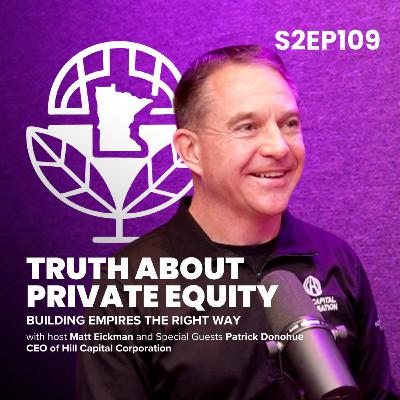
SUMMARY:In this deep-dive conversation, Patrick Donohue — CEO and Founder of Hill Capital Corporation — unpacks the misunderstood world of private equity, predatory FinTech lending, and the capital gap crushing America’s small businesses. Patrick explains the power of magnetic vision, the role of community in entrepreneurial success, and why upcoming economic “choppy waters” represent opportunity, not fear. The episode closes with timeless wisdom from James J. Hill and Charlie Munger — foundational principles Patrick uses to build resilient companies and resilient entrepreneurs.KEY TAKEAWAYS:The term “private equity” is often misunderstood — it includes angel investing, venture capital, and buyouts.Many small businesses sit in a “capital gap” between bank lending and venture capital expectations.Predatory FinTech lending is exploding, often using misleading interfaces and triple-digit effective interest rates.Leverage (debt) is the hidden danger behind many PE roll-ups and bankruptcies.Entrepreneurs must understand psychological tactics used during deals, including deal fatigue and retrading.Hill Capital’s “Hill Note” gives owners capital without forcing a sale or exit timeline.The #1 factor Hill Capital evaluates is the people — grit,CHAPTERS:00:00 – Introduction Why Patrick Donohue embodies the entrepreneurial ethos of the Midwest.01:00 – The Empire Builder Mindset Lessons from James J. Hill, humility, and multi-generational business values.03:30 – Midwest vs. East Coast Entrepreneurship Legacy building, family focus, and contrasting operational mindsets.05:00 – What Private Equity Really Is Breaking misconceptions and explaining the broad umbrella of PE.07:00 – Why Private Equity Is Flooding Home Services The influx of institutional capital and why it’s suddenly everywhere.09:00 – The Hidden Danger: Leverage How leveraged buyouts set companies up for bankruptcy.12:00 – Psychological Warfare in M&A Deal fatigue, retrading, and incentives to distort the truth.15:00 – When Private Equity Does Work The rare but real success stories — and what makes them possible.17:30 – The Hill Capital Difference Why the Hill Note exists and the capital gap it solves.19:30 – What Hill Looks for in a Business People, grit, rational growth, and alignment.22:00 – Rethinking Valuation Why valuation shouldn’t dominate early conversations.23:30 – Magnetic Vision The strategy that attracts the right people and repels the wrong ones.26:30 – Hill Capital’s Vision for 2040 500 investments and $1B deployed — and why scale matters.28:30 – Technology vs. Humanity in Finance Why algorithms alone can ruin small businesses.30:00 – The Predatory FinTech Crisis How slick UI/UX is trapping entrepreneurs in 100%+ APR loans.35:00 – The Coming Choppy Waters Why turbulence creates opportunity and how to prepare.38:00 – Why the Hill Note Doesn’t Require an Exit Critical differences from VC and angel funding.40:00 – Multi-Generational Business Growth Why longevity creates compounding advantages.41:30 – Hill’s Guiding Quotes James J. Hill and Charlie Munger frameworks for life and business.45:00 – Entrepreneur Jubilee + 1 Million Cups Community-building, connectivity, and peer learning.49:30 – How to Connect with Patrick Website, email, and LinkedIn.50:30 – What Hustle Means to Patrick Learning mindset + Munger’s rule: “It is immoral to be stupider than you need to be.”GUEST RESOURCES:Linkedin: https://www.linkedin.com/in/patrickedonohue/Website: https://www.hillcapitalcorp.com/Facebook: https://www.facebook.com/hillcapitalcorp
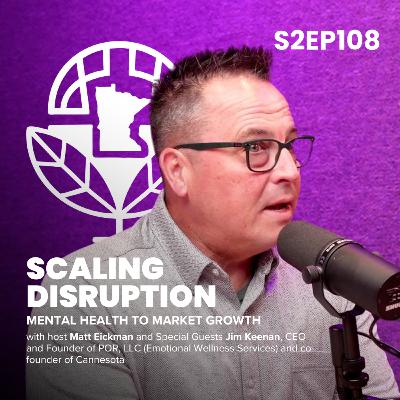
SUMMARY:In this episode of the Homegrown Hustle, host Matt Eickman sits down with Jim Keenan, CEO and Founder of POR, LLC (Emotional Wellness Services) and co-founder of Cannesota. We unpack Jim’s journey from clinician to entrepreneur—how he built a multi-service behavioral health company, leveraged those fundamentals into new ventures, and now navigates growth, regulation, and innovation in emerging markets. With PhD-level insight, Jim and Matt explore the intersection of mental-health services, business scalability, leadership mindset, and industry disruption. Expect deep dives into strategic timing, culture building, regulatory navigation, mission-driven entrepreneurship, and the hard lessons of launching complementary businesses across sectors.KEY TAKEAWAYS:Transitioning from practitioner to founder: stepping out of “doing the work” into leading the work.Building mission-driven culture in service-oriented businesses and sustaining it during scale-up.Choosing the right moment for diversification and how mental-health services principles apply to other industries.Navigating heavily regulated sectors: regulatory strategy, compliance, and growth channelling.Leveraging relationships, trust, and referral ecosystems as core growth engines in service enterprises.Dealing with failure, pivoting without losing integrity, and learning from operational mis-steps.Implementing systems and infrastructure early to support scale, without losing agility or mission focus.Practical tactics for founders: hiring for culture fit, investing in leadership development, building data systems, and balancing mission + margin.CHAPTERS:0:00 – Introduction: Matt Eickman and guest Jim Keenan3:15 – Jim’s early career: clinician roots, founding POR, LLC11:40 – Defining mission and vision: how POR’s culture was built19:55 – The shift: from service-provider to CEO-entrepreneur27:30 – Launching Cannesota: timing, market conditions, regulatory context35:10 – Regulatory dynamics: what to know in emerging industries43:05 – Building a referral & relationship ecosystem – lessons from mental-health services50:45 – Scaling challenges: infrastructure, leadership, systems58:20 – Failure & pivot stories: what didn’t work and why1:06:10 – Tactical advice for founders: culture, hiring, data, growth1:14:30 – Future vision: where Jim is headed next, advice for listeners1:18:50 – Close & key take-away recap46:00 Defining Hustle47:27 Balancing Family and Business52:31 Finding a Business MentorGUEST RESOURCES:Facebook: http://facebook.com/jameswkeenanhttps://www.facebook.com/POREmotionalWellnessWebsite: https://poremotionalwellness.com/#HomegrownHustle #FounderJourney #MissionDrivenBusiness #ScalingUp #MentalHealthEntrepreneur #RegulatoryStrategy #BusinessCulture #GrowthMindset #ServiceBusiness #EmergingIndustry


Download from Google Play

Download from App Store
 United States
Our commitment to customer satisfaction, professional service, and reliable results sets us apart in Kansas City. We are proud to be a trusted name for both residential and commercial pest control. https://www.cybo.com/US-biz/titan-pest-and-wildlife-solutions-kc_10