


 Claim Ownership
Mouthy Money: Building wealth with long term investing and saving strategies
Subscribed: 3Played: 216
Subscribe

© Mouthy Money | UK finance podcast on building wealth
Description
Edmund Greaves and Chris Tuite host Mouthy Money - a UK finance podcast on building wealth with long term investing and saving strategies. From the stock market for beginners, to mortgage rates, fears of economic recession, whether to invest in gold and silver or what the consumer price index is, we look at complicated financial topics through a personal lens. With regular financial expert guests to unpick knotty issues, we've got you covered with weekly episodes.
125 Episodes
Reverse

In this episode of the Mouthy Money podcast, Edmund Greaves and Chris Tuite break down how the escalating Iran crisis could ripple through energy markets, inflation, interest rates and ultimately your mortgage.While we’re not a geopolitics show, the financial consequences of global instability are impossible to ignore. Rising oil and gas prices are already shifting market expectations around Bank of England rate cuts. That matters if you're remortgaging, buying your first home, or watching swap rates nervously.We explain the chain reaction from the Middle East conflict to UK mortgage pricing and what it means for homeowners right now.Key topics covered:▉ Why the Iran conflict is pushing up global energy prices▉ How gas supply disruption affects UK inflation▉ Why markets are downgrading expectations for rate cuts▉ What swap rates are — and why mortgage lenders care▉ What this means for people remortgaging in 2026▉ Whether investors should panic about market volatility▉ Lessons from Ukraine, Covid and previous energy shocks▉ How to stay calm and stick to a long-term financial planIf you're concerned about mortgage rates, rate cuts, or the cost of living returning, this episode explains the mechanics.Chapters00:00 – Introduction: Why this crisis matters for your money01:30 – What’s happening in Iran and why markets reacted03:00 – Stock markets and investment portfolios06:00 – Energy prices and the return of cost-of-living fears09:20 – Inflation risk and the Bank of England10:45 – Swap rates explained (and why mortgages follow them)13:30 – Remortgaging in 2026: what to watch16:00 – Investment strategy during volatility18:30 – Final thoughts: stick to your planIf you’re remortgaging soon or worried about where rates are heading, let us know in the comments.MOUTHY MONEY*Our substack* mouthymoney.substack.co.uk *Get in touch* editors@mouthymoney.co.uk *Apple Podcasts* https://podcasts.apple.com/us/podcast/mouthy-money/id1712308475*Spotify* https://open.spotify.com/show/72bQEJnPAWJprmy0B9Yy4u?si=SkMD_90qSs-K3QNb8b-6YQ DISCLAIMERThis video is produced for general informational purposes only. It should not be construed as investment, legal, tax, mortgage or other forms of financial advice. If in any doubt about the themes expressed, consider consulting with a regulated financial professional for your own personal situation. Past performance is no guarantee of future results. Investments can go down as well as up and you may get back less than you started with. Investments are speculative and can be affected by volatility. Never invest more than you can afford to lose. For more information visit www.fca.org.uk/investsmart. Please note, video captions are auto-generated and may not be 100% accurate.

In Episode 2 of Investing Stakes, Edmund Greaves and Chris Tuite review their live £500 investment portfolios on the Stratiphy platform, two weeks after launch.One portfolio is up 3.13%. The other is trailing the market. But the real story isn’t short-term returns, it’s what’s happening beneath the surface of global markets.If you want to explore Stratiphy or build your own rules-based portfolio, you can use our referral link:🔗 https://www.stratiphy.io/referrals?code=INVESTINGSTAKESDisclosure: This is a referral link. We may receive a benefit if you sign up using it.In this episode we cover:◼️ How many stocks you actually need for diversification◼️ Why returns diminish beyond 15–30 holdings◼️ Momentum vs moving average strategies explained◼️ The “SaaSpocalypse” hitting tech and AI stocks◼️ US vs UK vs Europe performance in 2025◼️ Whether global index funds are too exposed to AmericaPlus: gold miners, energy stocks, Alphabet, Nvidia earnings, and what comes next.If you’re investing in global index funds, considering momentum strategies, or wondering whether tech stocks are entering a dangerous phase, this episode considers what’s actually happening without hype.Stratiphy uses systematic investment strategies based on momentum and moving averages to remove guesswork from portfolio management. Edmund and Chris are investing real money and tracking performance over time.Subscribe to follow the full series as the portfolios evolve.This series is produced in partnership with Stratiphy.*About Stratiphy*Stratiphy is an investing app that helps everyday investors build and track systematic strategies using algorithmic investing and backtesting.Learn more about Stratiphy here: https://www.stratiphy.io/referrals?code=INVESTINGSTAKESImportant: This content is for information and discussion only and is not financial advice. Capital is at risk and past performance is not a reliable indicator of future results.*Chapters*00:00 – How Many Stocks Do You Really Need? (10 vs 30 vs 300)00:38 – Introducing Investing Stakes Episode 203:04 – Two Weeks In: Portfolio Performance Update05:22 – What’s Inside the Momentum Portfolio?08:47 – Why Alphabet Appears Twice (Concentration Risk Explained)10:42 – Does Diversification Stop Working After 30 Stocks?13:17 – Momentum vs Moving Averages: How Strategy Rotation Works17:32 – Global Market Update: Why the US Is Flat in 202520:31 – Are Global Index Funds Too Exposed to the US?23:30 – How Institutional Rebalancing Drives Market Momentum27:10 – The “SaaSpocalypse”: Why Tech Stocks Are Suddenly Falling30:05 – Alphabet, AI & Big Tech: Winners or Overvalued?31:17 – The Case for Tangible Assets Over AI Stocks32:53 – What’s Next: Nvidia Earnings & Portfolio ChangesMOUTHY MONEY*Our substack* mouthymoney.substack.co.uk *Get in touch* editors@mouthymoney.co.uk DISCLAIMERThis video is produced for general informational purposes only. It should not be construed as investment, legal, tax, mortgage or other forms of financial advice. If in any doubt about the themes expressed, consider consulting with a regulated financial professional for your own personal situation. Past performance is no guarantee of future results. Investments can go down as well as up and you may get back less than you started with. Investments are speculative and can be affected by volatility. Never invest more than you can afford to lose. For more information visit www.fca.org.uk/investsmart. Please note, video captions are auto-generated and may not be 100% accurate.
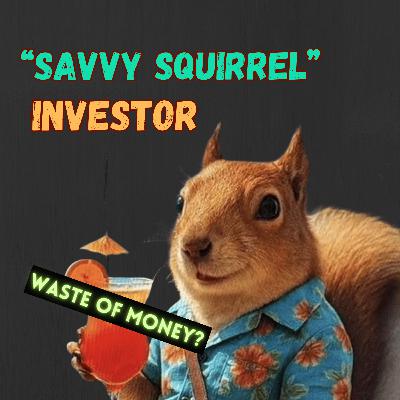
Why are so many Brits still afraid to invest? And can an AI squirrel really change that?In this episode of the Mouthy Money podcast, Edmund Greaves and Chris Tuite look at the Government’s push to get more people investing, including a controversial marketing campaign reportedly built around a “savvy” AI-generated squirrel. Will a multi-million pound advertising drive boost retail investing in the UK, or is it missing the real barriers holding people back?We explore:▇ Why investing in the stock market still feels intimidating to many people▇ The psychology of “investophobia” and risk aversion▇ Why most people are already investors through their workplace pension▇ The cultural stigma around being an “investor”▇ Cash ISAs vs Stocks & Shares ISAs and whether tax policy can shift behaviour▇ Why pensions are often described as “free money”▇ The legacy of the 1980s TellSid campaign and what modern campaigns can learn from it▇ How index funds, diversification and long-term investing actually work▇ Practical ways to overcome inertia and start investingWe also debate whether the UK needs clearer messaging, stronger financial education, or even a government-backed investment fund to kickstart a new investment culture.Subscribe for straight-talking conversations about personal finance, investing, pensions, ISAs and building long-term wealth.Chapters00:00 – The government wants more people investing02:00 – The £7–10m AI squirrel campaign explained05:30 – TellSid vs modern financial marketing08:00 – Investophobia: why people fear the stock market11:30 – Risk warnings, paralysis and choice overload14:00 – The cultural cringe around being an “investor”17:30 – You’re already an investor (thanks to your pension)21:00 – How capitalism rewards investors23:30 – Index funds, diversification and long-term returns25:30 – Cash ISAs, tax policy and behaviour change27:30 – “Free money”: the workplace pension argument29:30 – What would actually get Britain investing?31:00 – Final thoughts and practical takeawaysMOUTHY MONEY*Our substack* mouthymoney.substack.co.uk *Get in touch* editors@mouthymoney.co.uk DISCLAIMERThis video is produced for general informational purposes only. It should not be construed as investment, legal, tax, mortgage or other forms of financial advice. If in any doubt about the themes expressed, consider consulting with a regulated financial professional for your own personal situation. Past performance is no guarantee of future results. Investments can go down as well as up and you may get back less than you started with. Investments are speculative and can be affected by volatility. Never invest more than you can afford to lose. For more information visit www.fca.org.uk/investsmart. Please note, video captions are auto-generated and may not be 100% accurate.
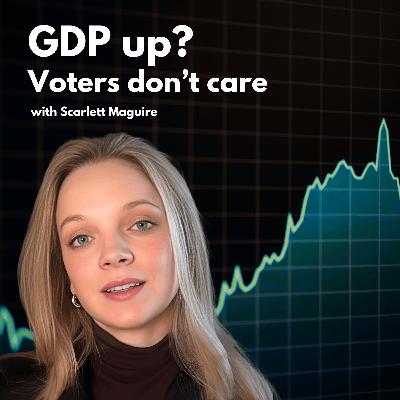
Politicians keep telling us the economy is improving. GDP is growing. Inflation is falling. So why does it still feel like we’re getting poorer?In this episode of Mouthy Money, we dig into the widening gap between headline economic data and everyday reality. Polling expert Scarlett Maguire, founder of Merlin Strategy, explains why voters don’t associate economic growth with improvements in their own lives - and why energy bills, housing costs, food prices and tax matter far more than GDP figures.We explore why anger at regulators and utility companies is rising, why demands for direct Government intervention are growing and how this disconnect is fuelling political instability on both the left and the right.Even if growth returns, will people actually feel better off?*Chapters*00:00 GDP Growth vs Cost of Living Crisis (UK Economy Explained)01:15 Who Is Scarlett Maguire? Political Polling & Economic Research02:10 Why UK Voters Don’t Care About GDP Growth04:30 What “Cost of Living” Really Means (Housing, Energy, Food, Tax)07:20 Inflation Falling – Why Prices Still Feel High09:05 Has the Pandemic Made Britain Poorer?12:40 Economic Anxiety and the Rise of Populism15:10 The Misery Index: Inflation + Unemployment Explained17:45 Why UK Energy Bills Are So High20:50 Ofgem, Price Caps and Energy Market Regulation23:35 Should the Government Cut Energy Bills?25:15 Why Brits Don’t Invest (Savings, Pensions, Risk)28:05 Are We Heading for UK Economic Recovery?31:00 Youth Unemployment and the Housing Crisis33:30 What Happens If Growth Returns – Will Voters Feel It?MOUTHY MONEY*Our substack* mouthymoney.substack.co.uk *Get in touch* editors@mouthymoney.co.uk DISCLAIMERThis video is produced for general informational purposes only. It should not be construed as investment, legal, tax, mortgage or other forms of financial advice. If in any doubt about the themes expressed, consider consulting with a regulated financial professional for your own personal situation. Past performance is no guarantee of future results. Investments can go down as well as up and you may get back less than you started with. Investments are speculative and can be affected by volatility. Never invest more than you can afford to lose. For more information visit www.fca.org.uk/investsmart. Please note, video captions are auto-generated and may not be 100% accurate.

After securing £50,000 on BBC Dragon’s Den, fintech founder Jinesh Vohra joins us to discuss a question facing millions of homeowners: should you be paying off your mortgage early?In this episode, we explore the fundamentals of mortgage overpayments, how interest is front-loaded in the early years of a loan, and whether it makes more sense to reduce debt or focus on long-term investing — particularly in today’s UK interest rate environment.Jinesh explains how his app, Sprive, helps homeowners chip away at their mortgage using cashback, spare cash automation and smarter refinancing. We also go behind the scenes of Dragon’s Den — what the Dragons look for in a fintech business, and why trust is critical in UK finance.If you’re thinking about building wealth, managing debt strategically, or balancing mortgage overpayments with long-term investing, this episode will help you think more clearly about your options.We cover:• The case for (and against) paying off your mortgage early• How amortisation works and why early overpayments matter• Mortgage freedom vs long-term investing• Financial trust in fintech• What really happens on Dragon’s DenMOUTHY MONEY*Our substack* mouthymoney.substack.co.uk *Get in touch* editors@mouthymoney.co.uk DISCLAIMER_This video is produced for general informational purposes only. It should not be construed as investment, legal, tax, mortgage or other forms of financial advice. If in any doubt about the themes expressed, consider consulting with a regulated financial professional for your own personal situation. Past performance is no guarantee of future results. Investments can go down as well as up and you may get back less than you started with. Investments are speculative and can be affected by volatility. Never invest more than you can afford to lose. For more information visit www.fca.org.uk/investsmart. Please note, video captions are auto-generated and may not be 100% accurate._

Solo living leaves people with far less disposable income, lower investing rates and weaker financial safety nets. But why does being single cost so much more? In this episode of Mouthy Money, we count the costs of the “single person financial penalty”.With insights from Hargreaves Lansdown’s Helen Morrissey, we look at what singles (and couples) can do to protect their financial futures.*On this episode*▉ Singles have far less disposable income because costs can’t be shared.▉ Thin monthly margins make saving and investing feel risky.▉ Lower savings mean less protection against redundancy or illness.▉ Talking about money improves financial resilience — even if you’re single.▉ Divorce, separation, and bereavement can suddenly trigger the same penalty.▉ Relying on a partner’s pension is risky if circumstances change.▉ Cohabiting without legal protections can lead to major financial losses.▉ Everyone should plan for retirement as an individual first.*Let us know what you think?* Does the single person financial penalty affect you?*Chapters*00:00 – The single person financial penalty explained01:40 – Why living alone costs so much more03:15 – Disposable income gap: £23 vs £28005:20 – Safety nets, job loss, and financial vulnerability07:20 – Why singles invest less (and fear risk more)10:20 – UK savers vs investors: pensions and misconceptions13:55 – Breakups, divorce, and becoming single later in life16:05 – Pension complacency and cohabitation risks18:15 – How to plan like a financially independent adultMOUTHY MONEY*Our substack* mouthymoney.substack.co.uk *Get in touch* editors@mouthymoney.co.uk DISCLAIMERThis video is produced for general informational purposes only. It should not be construed as investment, legal, tax, mortgage or other forms of financial advice. If in any doubt about the themes expressed, consider consulting with a regulated financial professional for your own personal situation. Past performance is no guarantee of future results. Investments can go down as well as up and you may get back less than you started with. Investments are speculative and can be affected by volatility. Never invest more than you can afford to lose. For more information visit www.fca.org.uk/investsmart. Please note, video captions are auto-generated and may not be 100% accurate.

The FIRE Movement (Financial Independence Retire Early) is focused on helping you quit your day job as fast as possible. But is that even a desirable outcome?From people who regret the financial pain that FIRE demands, to those who miss their careers it might be time to rethink its goals.Fidelity’s Andrew Oxlade joins the podcast to discuss FIRE and his alternative: CHILL. He thinks people should focus on finding work that gives them joy and purpose, while also planning their finances sensibly for the long-term.Let us know what you think? Are you a hardcore FIRE fan or is it too much like hard work? Let us know below. On this episode▉The FIRE movement encourages extreme saving for early retirement.▉ Time is a crucial factor in investment success.▉ Balancing present enjoyment with future savings is essential.▉ Challenging the notion that retirement is the ultimate goal.▉ Career happiness can lead to a longer, more fulfilling life.▉ The anti-FIRE movement promotes finding joy in work.▉ Investing early maximizes the benefits of compounding.▉ Pensions and ISAs offer different advantages for savings.▉ Cultural attitudes towards work and retirement need to evolve.▉ Flexibility in work can enhance life satisfaction. Chapters00:00 Introduction to the FIRE Movement02:23 Understanding the FIRE Movement09:02 The Role of Time in Financial Planning11:22 Challenges of the FIRE Movement in the UK12:49 Critique of the FIRE Philosophy16:46 Alternative Perspectives on Career and Retirement23:42 Personal Reflections on Retirement GoalsMOUTHY MONEYGet in touch editors@mouthymoney.co.uk DISCLAIMERThis video is produced for general informational purposes only. It should not be construed as investment, legal, tax, mortgage or other forms of financial advice. If in any doubt about the themes expressed, consider consulting with a regulated financial professional for your own personal situation. Past performance is no guarantee of future results. Investments can go down as well as up and you may get back less than you started with. Investments are speculative and can be affected by volatility. Never invest more than you can afford to lose. For more information visit www.fca.org.uk/investsmart. Please note, video captions are auto-generated and may not be 100% accurate.FIRE movement, financial independence, retire early, investing, retirement planning, personal finance, savings, financial goals, work-life balance, longevity

What would happen to the global financial system if governments disclosed evidence of extraterrestrial life?In this episode of the Mouthy Money podcast, Edmund Greaves and Chris Tuite explore a surprisingly serious question sparked by a real report from a former Bank of England analyst.The discussion considers the idea of an “ontological shock”. A moment so disruptive it forces society to rethink reality itself and why alien disclosure could trigger the biggest financial crisis in history. From market panic and bank runs to the collapse of entire industries, the pair examine how advanced alien technology could instantly rewrite the rules of energy, defence, AI and even capitalism itself.Using aliens as an extreme thought experiment, the episode considers how central banks manage risk, why not all threats can be planned for, and where preparation turns into over-engineering. Along the way, they draw parallels with COVID, black swan events, climate risk and technological disruption - asking what this means for investors, institutions, and ordinary savers.Serious, speculative and deliberately provocative, this episode isn’t really about aliens. It’s about risk, uncertainty, and how fragile the systems we rely on really are.Read editor Edmund Greaves's full article here:https://www.mouthymoney.co.uk/investing/should-the-bank-of-england-prepare-for-aliens-a-thought-experiment-in-extreme-risk/ Chapters00:00 – Should the Bank of England prepare for aliens?01:55 – The real report that sparked this discussion04:00 – What is an “ontological shock”?06:50 – Would alien disclosure trigger a financial crisis?11:30 – Technology, energy, and instant market winners & losers16:30 – Panic, bank runs, and insider information20:00 – Can you prepare for unknown unknowns?24:40 – Are we over-managing risk in finance?26:45 – What this really means for investors29:00 – Final thoughts: aliens as a risk thought experimentCONNECT WITH USThank you for watching our video! If you enjoyed this, please give it a LIKE, SHARE it with your friends, and SUBSCRIBE to our channel for more about money.Discover more at https://www.mouthymoney.co.uk and subscribe to our weekly newsletter too.Have questions or suggestions? Drop them in the comments below - we’d love to hear from you! Or contact us at editors@mouthymoney.co.uk DISCLAIMERThis video is produced for general informational purposes only. It should not be construed as investment, legal, tax, mortgage or other forms of financial advice. If in any doubt about the themes expressed, consider consulting with a regulated financial professional for your own personal situation. Past performance is no guarantee of future results. Investments can go down as well as up and you may get back less than you started with. Investments are speculative and can be affected by volatility. Never invest more than you can afford to lose. For more information visit www.fca.org.uk/investsmartPlease note, video captions are auto-generated and may not be 100% accurate.
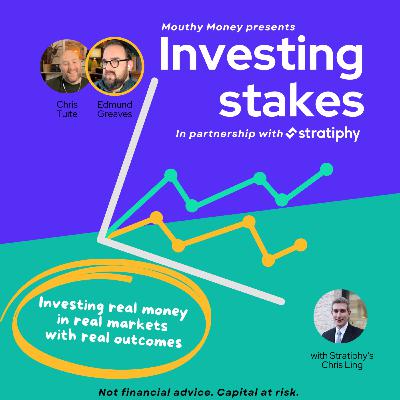
Welcome to Investing Stakes. Our new monthly series where Edmund Greaves and Chris Tuite invest £500 of their own money and track the results in public over a five-year horizon, in partnership with Stratiphy.In Episode 1, Ed and Chris set out their strategies (momentum vs moving averages), choose sectors and debate the big themes shaping markets - including AI, healthcare innovation, defence spending and energy - with Stratiphy Chief Investment Officer Chris Ling.What you’ll get in this series (monthly):• Our latest performance: what’s up, what’s down, and why• The decisions we’re making next (and what we’re avoiding)• Clear explanations of investing fundamentals and market context• A closer look at systematic/quant approaches (signals, backtests, and portfolio changes)In this episode:• The market backdrop and what’s driving volatility• Tech vs no-tech: the core disagreement• Why we’re doing “skin in the game” investing publicly• How Stratiphy strategies work (momentum, moving averages, MACD)• ISA vs GIA considerations (and why it matters)About StratiphyStratiphy is an investing app that helps everyday investors build and track systematic strategies using tools such as signals and backtesting.Learn more about Stratiphy here: https://www.stratiphy.io/This series is produced in partnership with Stratiphy. Important: This content is for information and discussion only and is not financial advice. Capital is at risk and past performance is not a reliable indicator of future results.Chapters00:00 Introduction to Investing Stakes01:17 The Importance of Skin in the Game05:39 Introducing Chris Ling from Stratify07:38 Current Market Landscape and Geopolitical Concerns14:02 Understanding Stratify's Unique Investment Strategies21:48 Hosts' Investment Plans and Sectors of Interest28:03 The Energy Debate: Investment Perspectives31:15 Financial Services: A Resurgence on the Horizon?34:49 Industrials and Defense: Investing in Uncertainty40:38 Tech Stocks: Overvalued or Here to Stay?50:24 Investment Projections: Looking AheadAll views expressed are those of the presenters and guests and do not constitute financial advice. Your capital is at risk, investments can go down as well as up. Past performance is not indicative of future results.CONNECT WITH USThank you for watching our video! If you enjoyed this, please give it a LIKE, SHARE it with your friends, and SUBSCRIBE to our channel for more about money.Discover more at https://www.mouthymoney.co.uk and subscribe to our weekly newsletter too.Have questions or suggestions? Drop them in the comments below - we’d love to hear from you! Or contact us at editors@mouthymoney.co.uk DISCLAIMERThis video is produced for general informational purposes only. It should not be construed as investment, legal, tax, mortgage or other forms of financial advice. If in any doubt about the themes expressed, consider consulting with a regulated financial professional for your own personal situation. Past performance is no guarantee of future results. Investments can go down as well as up and you may get back less than you started with. Investments are speculative and can be affected by volatility. Never invest more than you can afford to lose. For more information visit www.fca.org.uk/investsmartPlease note, video captions are auto-generated and may not be 100% accurate.

Are you one of the 1.8 million homeowners planning to remortgage this year? In our latest podcast, Paul Thomas shares insights on the 2026 mortgage market and what rate cuts might mean for you. With some bullish forecasts, could we see rates drop as low as 2.75%? Paul explains:-There is a consensus that mortgage rates may decrease this year.-Economic indicators like inflation and employment significantly impact mortgage rates.-Homeowners should not panic about recent low property sales in their area.-Remortgaging can be beneficial, but timing and market conditions matter.-It's essential to explore multiple mortgage options before making a decision.-Staying with the same lender can simplify the remortgaging process.-Don't leave remortgaging decisions until the last minute.-The housing market may improve as economic conditions stabilize.-Understanding the mortgage market dynamics is crucial for homeowners.-There are reasons to be hopeful for better mortgage rates in the near future.Chapters00:00 Introduction to the Mortgage Market Discussion02:57 Current Trends in Mortgage Rates05:32 The Impact of Economic Indicators on Mortgages08:30 Understanding Remortgaging and Its Challenges11:05 Navigating the Mortgage Market: Tips for Homeowners13:46 Future Outlook for Mortgage Rates and Housing Market16:45 Practical Steps for Remortgaging19:28 Final Thoughts and ConclusionCONNECT WITH USThank you for watching our video! If you enjoyed this, please give it a LIKE, SHARE it with your friends, and SUBSCRIBE to our channel for more about money.Discover more at https://www.mouthymoney.co.uk and subscribe to our weekly newsletter too.Have questions or suggestions? Drop them in the comments below - we’d love to hear from you! Or contact us at editors@mouthymoney.co.uk DISCLAIMERThis video is produced for general informational purposes only. It should not be construed as investment, legal, tax, mortgage or other forms of financial advice. If in any doubt about the themes expressed, consider consulting with a regulated financial professional for your own personal situation. Past performance is no guarantee of future results. Investments can go down as well as up and you may get back less than you started with. Investments are speculative and can be affected by volatility. Never invest more than you can afford to lose. For more information visit www.fca.org.uk/investsmartPlease note, video captions are auto-generated and may not be 100% accurate.

Having a financial survival kit is critical in a world that is becoming less safe and the future direction of economies becomes more uncertain. So what should you have in it?In this week’s episode, Ed and Chris consider some of the basics you need for a financial survival kit, plus one other that most people forget: life insurance and income protection.The guys welcome onto the show Cavendish Online’s Ollie Popham to look at how life insurance and income protection work and how it can form a key part of your financial emergency preparedness. Income protection in particular is poorly understood but can be extraordinarily beneficial for those who might not even think they need it. This is especially the case for those of us who think we’ll never fall ill or be unable to work - something that affects way more people than you might imagine. Ed urges everyone to at least try going through the process to see what cover they might be able to get and how much it would cost. The price of such products might surprise you, especially if you’re young, fit and otherwise healthy now. If you’d like to learn more about Cavendish Online and the brokering they offer for protection products, check out their website: https://www.cavendishonline.co.uk/Chapters00:00 Introduction and New Beginnings02:48 The Concept of Financial Survival Kits05:30 The Importance of Insurance in Financial Planning08:07 Understanding Life and Income Protection Insurance11:09 Navigating the Costs of Income Protection13:44 The Role of Cavendish Online in Insurance16:44 Personal Experiences with Insurance19:15 The Value of Comprehensive Coverage22:04 Final Thoughts and RecommendationsCONNECT WITH USThank you for watching our video! If you enjoyed this, please give it a LIKE, SHARE it with your friends, and SUBSCRIBE to our channel for more about money.Discover more at https://www.mouthymoney.co.uk and subscribe to our weekly newsletter too.Have questions or suggestions? Drop them in the comments below - we’d love to hear from you! Or contact us at editors@mouthymoney.co.uk DISCLAIMERThis video is produced for general informational purposes only. It should not be construed as investment, legal, tax, mortgage or other forms of financial advice. If in any doubt about the themes expressed, consider consulting with a regulated financial professional for your own personal situation. Past performance is no guarantee of future results. Investments can go down as well as up and you may get back less than you started with. Investments are speculative and can be affected by volatility. Never invest more than you can afford to lose. For more information visit www.fca.org.uk/investsmartPlease note, video captions are auto-generated and may not be 100% accurate.
Comedian Mark Watson shares a brutally honest look at the money, risk and resilience behind a career in comedy: from surviving £100 gigs to navigating tax, kids and the cost of living crisis.In this episode of the Mouthy Money podcast, guest editor Vix Leyton joins host Chris Tuite while normal host Edmund Greaves is on paternity leave, and they’re joined by comedian and author Mark Watson.Mark breaks down the financial reality behind a career in comedy: early years living on the bare minimum, taking side jobs, and treating every £100 gig as immediate rent money. He tackles a common myth head-on, being on TV or radio doesn’t automatically mean you’re wealthy and explains how many comics run at a loss for years once you factor in travel and unpaid/low-paid gigs.Mark describes the “grown-up” financial turning points for freelancers: getting an accountant, taking tax and VAT seriously, and learning to budget around irregular income where payments can arrive months late (or not at all). Mark’s practical advice: pay for professional financial help because creative income is messy, and don’t mentally spend money until it’s in your account. His broader philosophy is blunt: life will drain money into boring necessities anyway, so if you can, enjoy some of it now.Chapters00:00 The reality of irregular income and early financial survival as a comedian00:34 Podcast introductions and Mark Watson’s career background02:05 Breaking into comedy: low pay, free work, London costs, and early sacrifices04:51 Turning point: tax, VAT, accountants, and learning to budget with erratic income06:52 Parenthood, financial anxiety, and long-term money vigilance08:42 Should you pursue a career in the arts during a cost-of-living crisis?12:05 Grassroots comedy, struggling venues, and the impact of hospitality decline14:51 Corporate gigs, appearances, and how business budgets really behave18:43 Advice for turning passion projects into careers: resilience and realism22:00 Podcasting, creators, and the myth of overnight success23:10 Practical financial advice: accountants, spending, and “surprise money”24:54 Teaching kids (and adults) real-world financial literacy27:02 Light relief: space travel, value for money, and cultural tangents29:14 Mental traps around expected income and financial disappointment32:50 Where to find Mark Watson, current projects, and closing reflectionsCONNECT WITH USThank you for watching our video! If you enjoyed this, please give it a LIKE, SHARE it with your friends, and SUBSCRIBE to our channel for more about money.Discover more at https://www.mouthymoney.co.uk and subscribe to our weekly newsletter too.Have questions or suggestions? Drop them in the comments below - we’d love to hear from you! Or contact us at editors@mouthymoney.co.uk Mark Watson; Mouthy Money podcast; Vix Leyton; comedian finances; freelance budgeting; creative industries money; cost of living crisis UK; Edinburgh Fringe costs; comedy gigs pay; VAT for freelancers; irregular income; accountant for creatives; corporate event comedy; making money in comedy; financial advice for freelancers; side hustles creative careers; stand-up comedy career.DISCLAIMERThis video is produced for general informational purposes only. It should not be construed as investment, legal, tax, mortgage or other forms of financial advice. If in any doubt about the themes expressed, consider consulting with a regulated financial professional for your own personal situation. Past performance is no guarantee of future results. Investments can go down as well as up and you may get back less than you started with. Investments are speculative and can be affected by volatility. Never invest more than you can afford to lose. For more information visit www.fca.org.uk/investsmartPlease note, video captions are auto-generated and may not be 100% accurate.
With Ed on paternity leave, Chris is joined by Vix Leyton (Spendology podcast host and consumer finance expert at Think Money) as guest editor, alongside writer and comedian Siân Docksey, for an open, practical conversation about money, creativity and confidence.At the centre of the episode is Siân’s “Money Coven” - a simple weekly Zoom and WhatsApp accountability group created during a tough financial period. No jargon or hacks, just honesty, consistency and support. The result: debt tackled, income improved and a healthier relationship with money.Together, they cover:Why money is still taboo, particularly in the UKFinancial confidence, shame and genderThe realities of self-employment and creative careersSaving, automation and low-stress investingWhy money works best as a tool for life, not a moral testSmart, funny and reassuring, this episode shows how talking about money and not doing it alone can make a real difference.👉 Follow @vixleyton and @SianDocksey on InstagramChapters00:00 Introduction and Guest Introductions01:56 The Importance of Financial Confidence for Women04:55 Cultural Attitudes Towards Money10:21 Personal Experiences with Financial Setbacks15:07 Building a Supportive Financial Community20:48 The Impact of Accountability on Financial Health25:21 Navigating Financial Vulnerability27:11 Understanding Money as a Tool30:40 The Emotional Side of Money34:26 Advocating for Financial Transparency in the Arts38:11 Building a Sustainable Creative Career41:09 Knowing Your Worth and Asking for Itfinance, financial confidence, women in finance, personal finance, community support, financial setbacks, arts industry, money management, investing, financial transparencyCONNECT WITH USThank you for watching our video! If you enjoyed this, please give it a LIKE, SHARE it with your friends, and SUBSCRIBE to our channel for more about money.Discover more at https://www.mouthymoney.co.uk and subscribe to our weekly newsletter too.Have questions or suggestions? Drop them in the comments below - we’d love to hear from you! Or contact us at editors@mouthymoney.co.uk DISCLAIMERThis video is produced for general informational purposes only. It should not be construed as investment, legal, tax, mortgage or other forms of financial advice. If in any doubt about the themes expressed, consider consulting with a regulated financial professional for your own personal situation. Past performance is no guarantee of future results. Investments can go down as well as up and you may get back less than you started with. Investments are speculative and can be affected by volatility. Never invest more than you can afford to lose. For more information visit www.fca.org.uk/investsmartPlease note, video captions are auto-generated and may not be 100% accurate.
What do you aspire to financially? It could be becoming a millionaire or just owning your own home. But whatever your aspirations are, it feels like it is getting harder and harder to feel like we’re on the right path to that.This week, Chris and Ed dig into the challenges facing people who aspire to make more of their money, from graduates who have the tax system set up against them to those who want to invest but find themselves without the resources to do that.The guys also consider why people hold so much cash despite knowing investing is a better use of their wealth and why there’s room to be positive, even if you’ve only got £50 a month to set aside.Do you feel like we’re at an end to the era of aspiration? Do you still have hope for the future? Let us know in the comments 👇Keywordsaspiration, economic challenges, student debt, investment, financial security, wealth building, economic growth, personal finance, financial education, future planningCONNECT WITH USThank you for watching our video!If you enjoyed this, please give it a LIKE, SHARE it with your friends, and SUBSCRIBE to our channel for more about money.Discover more at https://www.mouthymoney.co.uk and subscribe to our weekly newsletter too.Have questions or suggestions? Drop them in the comments below - we’d love to hear from you! Or contact us at editors@mouthymoney.co.uk DISCLAIMERThis video is produced for general informational purposes only. It should not be construed as investment, legal, tax, mortgage or other forms of financial advice. If in any doubt about the themes expressed, consider consulting with a regulated financial professional for your own personal situation. Past performance is no guarantee of future results. Investments can go down as well as up and you may get back less than you started with. Investments are speculative and can be affected by volatility. Never invest more than you can afford to lose. For more information visit www.fca.org.uk/investsmartPlease note, video captions are auto-generated and may not be 100% accurate.
Where next for bitcoin? We’re joined by Daniel Parkinson ‘the Bitcoin IFA’ to review the digital asset’s story of 2025 and where it goes next in 2026.From regulatory shenanigans in the UK to treasury company uncertainty and the whipsaw of recent cycles, Dan explains his thoughts on what could happen to the price given all we know about markets, money printing and investor behaviour.How do you feel about bitcoin’s prospects for the year ahead? Let us know in the comments. 👇Bitcoin, cryptocurrency, digital assets, investing, financial regulation, FCA, market cycles, cryptocurrency investments, Mouthy Money podcast.Chapters00:01 Introducing the episode, co-host Chris, and returning guest Dan (“Bitcoin IFA”) to talk about Bitcoin’s year and what’s next.02:17 FCA lifting its own ban on Bitcoin/Ethereum ETNs, patchy platform access, harsh risk warnings, and Dan even failing the eligibility “tick-box” test.[05:55 ISA chaos: HMRC’s six-month window, forced move to Innovative Finance ISAs, platforms not offering them, and fears of forced selling or loss of tax benefits.08:51 Chris’s Bitcoin journey, institutional signals, UK rule changes, 2025 all-time highs near ~$120k, and feeling far more confident holding Bitcoin long term.11:13 Short-term drawdown since the peak, Dan’s cycles framework (daily/weekly/four-year), expectations for a weekly low and a four-year low in late 2026, and lump-sum vs DCA.19:18 Tech stock froth (e.g. 600x P/E Palantir), Bank of England valuation worries, and the “inherent value” debate comparing Bitcoin, gilts, gold, stocks, and the rubber dinghy analogy.22:30 Bitcoin treasury companies like Strategy: leverage worries, FUD every cycle, dividend buffers, and how traditional finance struggles to understand new Bitcoin-centric models.25:06 Why straightforward Bitcoin exposure (on-chain or ETN) beats opaque corporate wrappers, plus the “vault vs engine/playpen” portfolio idea and where high-volatility crypto fits.29:20 “Bitcoin is dead” headlines, missed early-adopter stories, on-chain whale and OG selling, 95% of Bitcoin mined, future halvings, and the long-term scarcity thesis.35:23 Ongoing money printing, the Fed ending QT, expected liquidity tailwind into markets, and a hopeful close looking ahead to 2026 and the future of Bitcoin.Keywords Bitcoin, cryptocurrency, digital assets, investing, financial regulation, FCA, market cycles, cryptocurrency investments, Mouthy Money podcast.CONNECT WITH USThank you for watching our video! If you enjoyed this, please give it a LIKE, SHARE it with your friends, and SUBSCRIBE to our channel for more about money.Want to listen to our regular episodes on the go? We’re on Spotify and Apple Podcasts:🔗https://open.spotify.com/show/72bQEJnPAWJprmy0B9Yy4u?si=0b1b07fa0e2a4dda 🔗 https://podcasts.apple.com › podcast › mouthy-moneyDiscover more at https://www.mouthymoney.co.uk and subscribe to our weekly newsletter too.Have questions or suggestions? Drop them in the comments below - we’d love to hear from you! Or contact us at editors@mouthymoney.co.uk DISCLAIMERThis video is produced for general informational purposes only. It should not be construed as investment, legal, tax, mortgage or other forms of financial advice. If in any doubt about the themes expressed, consider consulting with a regulated financial professional for your own personal situation. Past performance is no guarantee of future results. Investments can go down as well as up and you may get back less than you started with. Investments are speculative and can be affected by volatility. Never invest more than you can afford to lose. For more information visit www.fca.org.uk/investsmartPlease note, video captions are auto-generated and may not be 100% accurate.
The 2025 Budget has finally landed - Ed and Chris unpick three key areas you need to be aware of for your money and long-term wealth.What’s your take on the big moves? Let us know in the comments. 👇The announcements include big threshold freezes to income taxes and a sneaky student loan earnings threshold freeze. Savers have also been hit with hikes to dividend taxes, savings taxes and pension salary sacrifice allowances. Meanwhile the Cash ISA allowance cut has finally been confirmed, leaving savers less space to shelter their cash from tax.And finally, the guys consider the implications of the new ‘mansion tax’ which will just make the already broken council tax system even worse, all while generating an embarrassingly small amount of money.CONNECT WITH USThank you for watching our video! If you enjoyed this, please give it a LIKE, SHARE it with your friends, and SUBSCRIBE to our channel for more about money.Discover more at https://www.mouthymoney.co.uk and subscribe to our weekly newsletter too.Have questions or suggestions? Drop them in the comments below - we’d love to hear from you! Or contact us at editors@mouthymoney.co.uk DISCLAIMERThis video is produced for general informational purposes only. It should not be construed as investment, legal, tax, mortgage or other forms of financial advice. If in any doubt about the themes expressed, consider consulting with a regulated financial professional for your own personal situation. Past performance is no guarantee of future results. Investments can go down as well as up and you may get back less than you started with. Investments are speculative and can be affected by volatility. Never invest more than you can afford to lose. For more information visit www.fca.org.uk/investsmartPlease note, video captions are auto-generated and may not be 100% accurate.
What does it mean to be “rich” in Britain in 2025?In this episode of the Mouthy Money podcast, editor Edmund Greaves and co-host Chris Tuite examine how people in the UK think about wealth, why many don’t feel rich even on high incomes, and what this means for policy, politics and personal finances.Drawing on recent research reported in The Times, they discuss why around 90% of people earning £100,000–£125,000 a year don’t consider themselves rich, and how cost of living pressures, inflation and stagnant wage growth have reshaped what “wealthy” feels like. They contrast subjective feelings of comfort or precarity with objective indicators such as income, home ownership, pensions and savings.SOURCESWealth report in the Times: https://www.thetimes.com/money/family-finances/article/what-it-takes-to-be-rich-in-britain-today-gxw3grh3fIFS report on trends in income and wealth inequality: https://ifs.org.uk/publications/trends-income-and-wealth-inequalities Fairness Foundation on wealth inequality: https://acss.org.uk/wp-content/uploads//Wealth-inequality-and-growth-in-the-UK-policy-briefing-Nov-2025.pdf Kings College London report on wealth taxes:https://www.kcl.ac.uk/news/wealth-tax-rich-list-could-raise-billions ‘The housing theory of everything’: https://worksinprogress.co/issue/the-housing-theory-of-everything/CONNECT WITH USThank you for watching our video! If you enjoyed this, please give it a LIKE, SHARE it with your friends, and SUBSCRIBE to our channel for more about money.Want to listen to our regular episodes on the go? We’re on Spotify and Apple Podcasts:🔗https://open.spotify.com/show/72bQEJnPAWJprmy0B9Yy4u?si=0b1b07fa0e2a4dda 🔗 https://podcasts.apple.com › podcast › mouthy-moneyDiscover more at https://www.mouthymoney.co.uk and subscribe to our weekly newsletter too.Have questions or suggestions? Drop them in the comments below - we’d love to hear from you! Or contact us at editors@mouthymoney.co.uk 🔎 Keywords Mouthy Money podcast, UK wealth 2025, rich in Britain, cost of living crisis UK, wealth inequality UK, wealth gap, baby boomer wealth, inheritance, inheritance tax, wealth tax, top 1 percent, social mobility UK, squeezed middle, housing crisis UK, house prices, renting vs owning, pensions, intergenerational inequality, AI and jobs, future of work, personal debt UK, credit card debt, student overdraft, financial education, tax system UK, fiscal policy, neoliberalism, social contract, consumer choice, money mindset, financial security, Edmund Greaves, Chris Tuite.DISCLAIMERThis video is produced for general informational purposes only. It should not be construed as investment, legal, tax, mortgage or other forms of financial advice. If in any doubt about the themes expressed, consider consulting with a regulated financial professional for your own personal situation. Past performance is no guarantee of future results. Investments can go down as well as up and you may get back less than you started with. Investments are speculative and can be affected by volatility. Never invest more than you can afford to lose. For more information visit www.fca.org.uk/investsmartPlease note, video captions are auto-generated and may not be 100% accurate.
For generations, owning a home has been at the heart of the British dream, the ultimate sign of financial success and stability. But in 2025, is property still the sure-fire investment it’s cracked up to be? In this episode of the Mouthy Money Podcast, hosts Edmund Greaves and Chris Tuite are joined by Marianna Hunt, Associate Director at Fidelity International, to dig into the numbers behind the nation’s love affair with bricks and mortar.Marianna shares eye-opening new research revealing that UK property has lost money in real terms over the past few years when inflation is factored in. She explains why the old mantra of “my home is my pension” could leave people exposed and why a mix of pensions, ISAs, and global investments may be a smarter way to build long-term wealth.Together, the trio explore how cultural attitudes, rising interest rates and shifting affordability have reshaped the property market. They also discuss the emotional side of home ownership, from the security it brings to the stress of tying up all your savings in one asset.💬 In this episode:Why property isn’t the guaranteed win many believeHow homeownership fits into a balanced financial planThe real returns on property vs global stocksWhy Brits invest so little outside of housingSimple, practical tips for diversifying your moneyIf you’ve ever wondered whether buying a house is the best route to financial freedom, or if your “property-as-pension” plan still stacks up, this is essential listening for anyone thinking seriously about money, housing and their future.⏱️ Chapters00:00 - Intro03:09 - Chris and Ed’s view of their properties08:50 - The truth about property as an investment12:45 - “My property is my pension”?16:10 - Diversifying beyond bricks and mortar19:50 - Why Brits love property so much25:40 - Building a balanced financial plan30:10 - Final thoughtsCONNECT WITH USThank you for watching our video! If you enjoyed this, please give it a LIKE, SHARE it with your friends, and SUBSCRIBE to our channel for more about money.Discover more at https://www.mouthymoney.co.uk and subscribe to our weekly newsletter too.Have questions or suggestions? Drop them in the comments below - we’d love to hear from you! Or contact us at editors@mouthymoney.co.uk DISCLAIMERThis video is produced for general informational purposes only. It should not be construed as investment, legal, tax, mortgage or other forms of financial advice. If in any doubt about the themes expressed, consider consulting with a regulated financial professional for your own personal situation. Past performance is no guarantee of future results. Investments can go down as well as up and you may get back less than you started with. Investments are speculative and can be affected by volatility. Never invest more than you can afford to lose. For more information visit www.fca.org.uk/investsmartPlease note, video captions are auto-generated and may not be 100% accurate.
Brewdog is perhaps the poster child of the crowdfunding movement in the UK. Popularised under the ‘Equity for Punks’ schemes, after years of free beer cases one investor has now been left with a sour taste in his mouth.Anthony Morrow, a respected founder, business owner and investor shares his experiences as a Brewdog crowdfunder and on other schemes such as burritos and Deliveroo.He thinks that anyone thinking about the offer of crowdfunding should be very careful and aware of the drawbacks. Ed and Chris share their experiences too. Ed has invested at one time in the Monzo crowdfund campaign, but is still waiting to see if his ‘on paper’ gains come to fruition. Chris, meanwhile, has never crowdfunded but intends to invest in his local community pub when he gets the opportunity. The guys share their wider thoughts on whether crowdfunding is worthwhile, or if it is a way for companies to capture online audiences who think they have a stake in the business, only to be sold down the river by venture capitalists behind the scenes.They also look at the wider implications for equity markets in the UK, including why initial public offerings (IPOs) aren’t necessarily a good time to buy, instead they should be understood as an exit point for successful founders and early-stage investors.But ultimately, they agree that public and open investment markets are better for the health of businesses and private investors looking to their long-term portfolio growth.Let us know what you think in the comments and don’t forget to like and subscribe for more about money and wealth!CHAPTERS00:00 Introduction02:26 Brewdog a case study in crowdfunding11:57 The risks and rewards of crowdfunding16:13 IPOs and the realities of investing in public markets23:12 the future of crowdfunding and investing in themCONNECT WITH USThank you for watching our video! If you enjoyed this, please give it a LIKE, SHARE it with your friends, and SUBSCRIBE to our channel for more about money.Want to listen to our regular episodes on the go? We’re on Spotify and Apple Podcasts:🔗https://open.spotify.com/show/72bQEJnPAWJprmy0B9Yy4u?si=0b1b07fa0e2a4dda 🔗 https://podcasts.apple.com › podcast › mouthy-moneyDiscover more at https://www.mouthymoney.co.uk and subscribe to our weekly newsletter too.Have questions or suggestions? Drop them in the comments below - we’d love to hear from you! Or contact us at editors@mouthymoney.co.uk DISCLAIMERThis video is produced for general informational purposes only. It should not be construed as investment, legal, tax, mortgage or other forms of financial advice. If in any doubt about the themes expressed, consider consulting with a regulated financial professional for your own personal situation. Past performance is no guarantee of future results. Investments can go down as well as up and you may get back less than you started with. Investments are speculative and can be affected by volatility. Never invest more than you can afford to lose. For more information visit www.fca.org.uk/investsmartPlease note, video captions are auto-generated and may not be 100% accurate.
It’s easy to be drawn into ideas that promise high returns and low effort or risk - but for the most part this is either deluded or a straightforward scam.Pushing back against the more toxic types of online ‘hustle culture’ means redefining what our income is and how we use it to ensure long-term wealth growth. This means thinking of our income as an asset to be used, valued, nurtured and grown - instead of hoping for a miracle down the road.A concept made famous by American financial influencers such as Dave Ramsey the idea that ‘income is your most valuable asset’ can help us to ensure we’re not then giving that asset away - be it through debt, overspending or bad investments.Instead its about ensuring that your income is working as hard as possible to achieve your long-term goals. As our routine mantra on the podcast goes - this means making a plan and sticking to it. Let us know your thoughts in the comments. How do you ensure your income is working as hard as possible for your long-term future financial health?00:00 Introduction to income as an asset01:47 Understanding hustle culture07:42 The philosophy behind income as an asset idea09:37 Realistic wealth building strategies13:37 Practical aspects of managing income18:54 Stability and decision making with money20:31 Celebrating small victories and continuous learningTAKEAWAYS-Income is an asset that should be leveraged for wealth.-Simply earning income won't make you a millionaire.-Establish a clear understanding of your income.-Think strategically about using income for investments.-Income should not just cover bills but build wealth.-Long-term wealth requires active management of income.-Investing income wisely is crucial for financial growth.-Understanding income's role can change financial perspectives.-Wealth building is a proactive process, not passive.-Income management is key to financial success.CONNECT WITH USThank you for watching our video! If you enjoyed this, please give it a LIKE, SHARE it with your friends, and SUBSCRIBE to our channel for more about money.Discover more at https://www.mouthymoney.co.uk and subscribe to our weekly newsletter too.Have questions or suggestions? Drop them in the comments below - we’d love to hear from you! Or contact us at editors@mouthymoney.co.uk DISCLAIMERThis video is produced for general informational purposes only. It should not be construed as investment, legal, tax, mortgage or other forms of financial advice. If in any doubt about the themes expressed, consider consulting with a regulated financial professional for your own personal situation. Past performance is no guarantee of future results. Investments can go down as well as up and you may get back less than you started with. Investments are speculative and can be affected by volatility. Never invest more than you can afford to lose. For more information visit www.fca.org.uk/investsmartPlease note, video captions are auto-generated and may not be 100% accurate.

Comments

Download from Google Play

Download from App Store
 United States