


Productly Speaking: Real Stories for Product Managers
Subscribed: 1Played: 0
Subscribe

© Product Management Stories by Productly Speaking
Description
Productly Speaking is a product management podcast featuring product managers and builders telling real product stories. We dive into the human side of product work, exploring lessons learned, challenges faced, and how people actually approach product strategy in the real world.
28 Episodes
Reverse
AI is transforming the way we work, but building great AI products takes more than hype. In this episode of Productly Speaking, Karl Abbott talks with Dina Atia, an AI Product Manager at Microsoft, about how to navigate the noise and focus on what really matters: solving real user problems. Dina shares practical insights on managing expectations, balancing bold visions with incremental progress, and the skills PMs need to thrive in this fast-moving space. From rapid prototyping to aligning metrics with user value, this conversation is your guide to building smarter AI solutions. What You’ll Learn in This Episode: How to identify real user needs in an era of AI hype Why managing expectations is a PM superpower The role of rapid prototyping in shaping better products How to align evaluation metrics with what truly matters to users What skills will set PMs apart in the next wave of AI Key Quotes: “Not understanding the problem is a huge one… especially in the AI space.” “AI isn’t thinking. It’s predicting the next word.” “Bring back engineers being lazy! What is the minimum we can do to solve this problem?” “Nobody achieves anything significant alone.” Resources & References: Gartner Hype Cycle: https://www.gartner.com/en/research/methodologies/gartner-hype-cycle Freytag’s Pyramid: https://writers.com/freytags-pyramid Tools mentioned: GitHub Copilot: https://github.com/features/copilot Lovable: https://lovable.dev/ V0: https://v0.app/ Cursor: https://cursor.com/ Connect with Dina Atia: https://www.linkedin.com/in/dinaatia/
Episode Summary In this episode of Productly Speaking, host Karl Abbott speaks with Jake Bowen‑Bate about the realities of building products in fast-moving environments. Jake shares how dogfooding can sharpen your intuition, but also how it can blind you to key market expectations. His reflections illuminate the balance between internal expertise, competitive awareness, emotional design, and the cultural conditions that enable great product decisions. What You’ll Learn in This Episode Why dogfooding is valuable, but sometimes not enough How using a competitor’s products can uncover hidden blind spots What it means to design for emotion, not just functionality How to maintain alignment in complex organizations Why decision-making speed and clarity matter more than perfection How culture, curiosity, and communication shape product outcomes Key Quotes “We as product managers… should probably be trying to use where we can our own products that we're building… But when I started using our biggest competitor… I suddenly realized a lot of things that I had probably just missed.” “When they spoke to me about features, it was very easy for me to dismiss those as nice-to-haves… When actually, I quickly realized once I started using them that I got a very strong emotional attachment to them.” “If the decision is made, communicated, and explained, it can be a pretty mediocre decision because it’s still better than a decision that hasn’t been made, communicated, or explained.” Resources Mentioned Inspired — Marty Cagan (https://app.thestorygraph.com/books/dec05575-b75f-4127-b00f-0b44af6f1724) Crossing the Chasm — Geoffrey Moore (https://app.thestorygraph.com/books/db6bfb5d-0747-4576-a487-47989e928167) Jake’s website: https://jakebowen-bate.co.uk/ Jake on LinkedIn: https://www.linkedin.com/in/jakebowenbate/
Episode Summary: In this episode of Productly Speaking, host Karl Abbott talks with Katie Tamblin, consultant, trainer, and author of The Lean Agile Dilemma. Katie explains why lean and agile principles, born in startup environments, often fail in large, mature organizations. From the illusion of agility to the harsh realities of replatforming, Katie shares candid stories and practical lessons learned from decades of experience in product management and data strategy. If you’ve ever wondered why MVPs don’t work when replacing legacy systems, or how internal politics and investor pressure distort product strategy, this conversation is for you. Featured Quote: "Lean and Agile were designed for building software for the first time that no one’s using yet. Chunky corporates are managing decades of existing products and data—that’s a completely different beast." – Katie Tamblin What You’ll Learn in This Episode: Why lean and agile principles break down in large organizations The MVP myth in replatforming (and Katie’s “tent in the garden” analogy) How data migration becomes the biggest gremlin in product transformations The illusion of agility and why sprints don’t guarantee success Practical advice for PMs in startups vs. complex enterprises Resources & Links: Katie’s Book: The Lean Agile Dilemma (https://link.springer.com/book/10.1007/979-8-8688-0321-5) Katie’s Website: www.katietamblin.com Subscribe to Productly Speaking: www.productlyspeaking.com
Episode Summary: In this episode of Productly Speaking, host Karl Abbott sits down with Lee Fischman—seasoned developer, product manager, executive, and author of How to Excel at Digital Product Management. Lee shares decades of experience across industries from fintech to healthcare, and dives deep into what makes a great product manager beyond the usual playbook. We explore the mindset that drives success, why humility and empathy are non-negotiable, and how overlooked skills like communication and copywriting can make or break your career. Lee also unpacks why so many digital products fail, the hidden costs of customer acquisition, and how strategic pivots can turn failure into a breakthrough. Plus, we talk about the evolving role of AI in product teams and why smaller, faster squads might be the future. If you’ve ever wondered how to rise above the chaos, collaborate across silos, and build products that truly resonate, this conversation is packed with insights you won’t want to miss. What You’ll Learn in This Episode: Why humility is the cornerstone of effective product management. The real definition of a product manager’s role—and why it varies so widely. Common reasons digital products fail (and how to avoid them). How to pivot when your product isn’t gaining traction. Why design and marketing are critical skills for PMs. Practical advice for navigating challenging team dynamics. How AI is reshaping product teams and what that means for PMs. Strategic thinking tips without relying on rigid frameworks. The importance of communication and storytelling in product work. Key Quotes: “A product manager’s job is to move her product forward to best serve the interests of its users and the business. Inside the organization, she represents the product.” “You don’t get paid to manage chaos. You get paid for the skills you bring while facing a chaotic situation.” “Product management is about people—the people who use your product, the folks you work with, the men and women you report to. If you want to excel, double down on all the ways you work with and value people.” “You can build your own market, but then some advancement’s going to come in where all of a sudden that’s no longer a need what you service. If you don’t stay ahead and reinvent yourself over and over, you find yourself in a bad spot.” Resources & Links: Lee Fischman on LinkedIn: https://www.linkedin.com/in/lee-fischman/ Lee’s Book: How to Excel at Digital Product Management (https://www.amazon.com/Excel-Digital-Product-Management-comprehensive/dp/B0DPVNX178/) Lee’s Medium: https://medium.com/@lee.fischman
Welcome to Season 4 of Productly Speaking! In this short kickoff episode, host Karl Abbott introduces the theme for the season:Why do products fail and what can we learn from those failures?We’ll explore the hidden risks, organizational dynamics, and human factors that shape product success or lead to disaster.If you’re a product manager, founder, or anyone building products, this season will challenge your assumptions and help you think differently about success and failure! Subscribe so that you don't miss an episode!
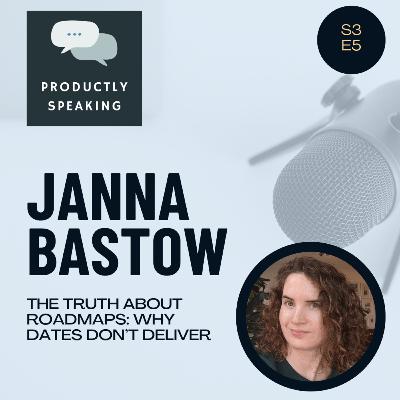
In this insightful episode, Karl Abbott sits down with Janna Bastow, co-founder of ProdPad and founder of Mind the Product, to explore the evolution of product roadmaps. Janna shares the origin story of the Now-Next-Later Roadmap, a flexible and strategic alternative to traditional date-driven roadmaps. Together, they unpack how this approach empowers product teams to communicate more honestly, prioritize effectively, and adapt to change. Key Topics Discussed The Birth of Now-Next-Later Why Traditional Roadmaps Fail Strategic Communication Balancing Flexibility and Commitment The “So What?” Test Janna’s Journey from PM to CEO AI and the Future of Product Management Key Quotes “Roadmapping is a strategic communication exercise—not a delivery promise.” “If everything on your roadmap has a date, you’re not doing product management—you’re doing project delivery.” “AI won’t replace product managers, but it will replace the grunt work.” “Good product management isn’t just done by a product manager sitting in the corner… it’s their job to surround themselves with people in the team and ask really good questions and be transparent about the direction of the product.” Learn More ProdPad Mind the Product Connect with Janna LinkedIn - https://www.linkedin.com/in/jannabastow/

In this episode, Karl Abbott sits down with Reese Gifford to explore the complexities and opportunities of managing products in the open-source ecosystem. Drawing from her experience as VP of Product at Mozilla and her current role at Microsoft, Reese shares insights on community engagement, monetization strategies, and the evolving landscape of open-source software in the age of AI and cloud computing. Key Topics Discussed: Reese’s Journey to Mozilla Challenges of Open Source Product Management Revenue Models for Open Source Community Engagement Security & Compliance The Role of AI Future of Open Source Key Quotes: “Open source has gone from a niche grassroots movement to the foundation of modern software development.” “Product management in open source is harder—your stakeholder base is vast and deeply involved.” “The community has a massive influence… decisions have to be driven from a consensus of multiple stakeholders, including external contributors.” Advice for Aspiring Open Source PMs: Embrace the complexity of community-driven development. Communicate clearly with both internal teams and external contributors. Understand that prioritization decisions require diplomacy and transparency. Connect with Reese: LinkedIn: https://www.linkedin.com/in/marissaponikvar/
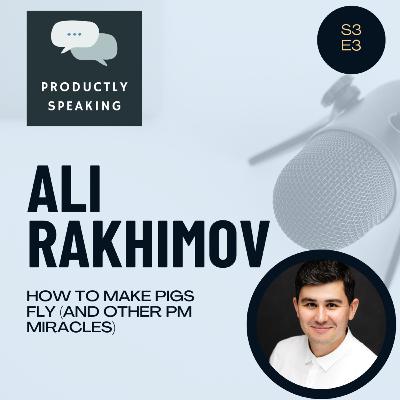
In this insightful and entertaining episode, Karl Abbott sits down with Ali Rakhimov, author of Make Pigs Fly: Product Manager’s Bathroom Book. Ali shares his unconventional journey into product management, his philosophy of “blue-collar product management,” and how storytelling, curiosity, and resilience shape great product leaders. Key Topics Discussed Ali’s Origin Story Blue-Collar Product Management Communication & Storytelling The Power of Idioms Features vs. Outcomes Building Confidence The Role of Humor Product Management Beyond Tech About the Book Title: Make Pigs Fly: Product Manager’s Bathroom Book Where to Buy: Ali’s Website Amazon IngramSpark Key Quotes “I didn’t stumble into product management—I tripped, fell, and landed face-first into it.” “You don’t need to speak louder—you just need to translate better.” “Good PMs ship features. Great PMs ship belief.” “You have to be fearless. You have to be hungry. That’s how you grow.” Connect with Ali LinkedIn: https://www.linkedin.com/in/arakhimov/

In this insightful episode, Karl Abbott sits down with Flora Taagen, a product manager on the Azure Linux team at Microsoft. Flora shares her unconventional journey into product management, the lessons she’s learned along the way, and her perspective on the evolving nature of work and technology in 2025. Topics Covered Flora’s Path to Product Management Transferable Skills from Unexpected Places Advice for Aspiring PMs Remote Work vs. Distributed Teams AI’s Impact on Product Management Looking Ahead Key Quotes “I think that empathy and creative problem solving and satisfying customer needs are all deeply transferable skills.” “I found it very valuable to spend the first few minutes of my one-on-ones with my fully remote colleagues, just chatting and catching up and not jumping straight into work.” “Even if some team members are physically in person in a conference room together, I really appreciate when everyone still joins the Teams call individually and turns on their camera.” Resources Mentioned Cracking the PM Interview by Gayle Laakmann McDowell & Jackie Bavaro Cloud Native Computing Foundation (CNCF) for open source contributions Microsoft Teams, GitHub Copilot, and other AI productivity tools Connect with Flora LinkedIn – Flora Taagen -- https://www.linkedin.com/in/florataagen/

In this episode of Productly Speaking, Karl Abbott chats with Adil Hussain, a product manager at the Financial Times, about his unconventional path into product management, the lessons he's learned from working across public and private sectors, and his passion for mentoring aspiring PMs. They explore how AI is reshaping the role, the importance of community and real-world learning, and how the UK’s Government Digital Service (GDS) offers a global model for accessible, user-centered design. Topics Covered Adil’s Journey into Product Management Public vs. Private Sector Product Work Mentorship and Community Building The Evolving Role of the Product Manager AI in Product Management Resources Mentioned GOV.UK Design System UK Government Digital Service (GDS) GDS Service Standard GDS Product Management Capability Framework Key Quotes “Product management for me is about solving those problems in the right way and also making sure that we're building really good user experiences.” “I come across people that I mentor, that I teach or just have normal conversations with who aspire to break into product… and don’t realize they’re already doing product-style thinking.” “Being able to tell good stories as a product manager and being able to tell a narrative… it’s very, very important.” Connect with Adil Interested in Adil’s bootcamp or mentorship? Reach out to him on LinkedIn - https://www.linkedin.com/in/adilh1/
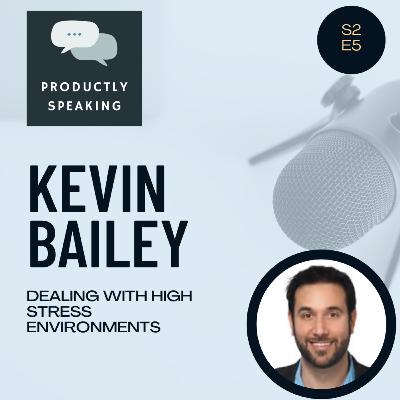
In this episode of Productly Speaking, we dive into the challenges of high-stress environments and how to avoid negativity and burnout. Our guest, Kevin Bailey, founder and CEO of DreamFuel Coaching, shares his journey from leading Indiana's fastest-growing tech startup to founding a company focused on mental performance coaching. Kevin discusses the importance of mental health, the concept of perceived stress, and practical tools to maintain peak performance. Key Topics Covered: Introduction to Kevin Bailey Kevin's Entrepreneurial Journey Dealing with Burnout Understanding Perceived Stress Tools for Mental Performance Flow States and Productivity Managing Negative Thoughts Building Grit and Resilience Quotes: "The vast majority of our stress is perceived stress. If you're, you know, on a bench press or something trying to put up your max weight, that's going to be real stress in the moment. But the vast majority of our stress is fear of the future, rumination on the past." "In order to be able to get into flow state, you have to be able to recognize what pulls you out of flow state." Guest Information: Kevin Bailey: Founder and CEO of DreamFuel Coaching Website: https://www.dreamfuel.com/ LinkedIn: Kevin Bailey Podcast: The DreamFuel Show Call to Action: Visit DreamFuel's website to learn more about their coaching services. Connect with Kevin Bailey on LinkedIn for insights on mental performance. Subscribe to The DreamFuel Show for more discussions on mental health and performance.
In this episode, Karl and Richard Cawkill delve into the critical intersection of sales and product management. They discuss the challenges and synergies between these two roles, emphasizing the importance of collaboration for business growth. Richard shares his unique insights from his dual roles at ProdPad and the Sustainable Watch Company, offering valuable perspectives on how sales and product teams can work together more effectively. Key Topics Discussed: Sales and Product Management Dynamics Richard's Experience and Insights Challenges in Sales and Product Collaboration The Role of AI in Sales and Product Collaboration Richard's Entrepreneurial Journey Quotes: "Product and sales are so heavily dependent on each other. It's almost like a classic brother-sister relationship." "The importance of feedback can unlock a lot of opportunities for both product market fit and sales dialogues." Call to Action: Follow Richard Cawkill on LinkedIn for more insights on sales and product management. Check out the Sustainable Watch Company for eco-friendly timepieces.
In this episode, we dive into the vital relationship between product marketing and product management. Our guest, Austin Fuller, a go-to-market expert with over a decade of experience in technology, shares his insights on how these two disciplines intersect and why getting this relationship right is crucial for business success. Key Topics Discussed: Defining Product Marketing Techniques in Product Marketing Differences in Feedback from Prospects vs. Customers Types of Product Marketing Roles Importance of Customer Feedback Aligning Sales, Product, and Marketing Product Lifecycle and Marketing Focus Challenges and Solutions in Product Marketing Memorable Quotes from Austin Fuller: "Product marketing is taking your understanding of the product and the magic of the product and taking an understanding of the market and connecting the two." "A lack of alignment with product and marketing creates a lot of dysfunction for the customer. Expectations for the customer become misaligned with what you can deliver, which results in churn." "It becomes difficult to launch products and features when product and marketing aren't working well together." Call to Action:Follow Austin Fuller on LinkedIn.
Episode Summary: In this episode of Productly Speaking, Karl sits down with Keith Allen Johns, a seasoned career, business, and life coach. Keith shares his journey from climbing the corporate ladder to the C-suite and eventually transitioning to coaching. The conversation delves into the challenges of product management, focusing on handling stress and influencing without authority. Keith offers valuable insights and practical tools for becoming more self-aware, managing stress, and effectively influencing others. Key Topics Discussed: Challenges in Product Management Handling Stress Influencing Without Authority Keith’s Coaching Approach Keith’s Personal Insights Memorable Quotes from Keith Allen Johns: "The change you want to see in your life can all be driven from the inside out." "How you choose to handle stress is a choice." "Influence begins with understanding the motivations and drives of the people you work with." Call to Action: Listeners are encouraged to connect with Keith Allen Johns on LinkedIn or visit his website at www.keithallenjohns.com to learn more about his coaching programs and upcoming events.
In this episode of Productly Speaking, Karl sits down with Michael Palmer and Evie Brockwell, hosts of the Product Confidential Podcast, to discuss various aspects of product management. The conversation covers stakeholder management, product market fit, career growth, and the role of AI in product management. Key Topics: Stakeholder Management Product Market Fit Career Growth Advice for New Product Managers The Role of AI in Product Management Quotes: "If you're a product manager and you're not speaking to users, are you really a product manager?" - Michael Palmer "The best experiments are the ones if they don't work, because you can learn everything about why someone might have hated that and then work out how to grow and improve." - Evie Brockwell Resources Mentioned: Marty Cagan's book "Inspired" Product Confidential Podcast Call to Action: Follow Evie Brockwell on LinkedIn for updates on her workshops and coaching programs. Check out the Product Confidential Podcast on Spotify for more authentic product management conversations.

In the Season 1 Finale of “Productly Speaking”, we talk about what happened when Karl went ice skating for the first (and last) time and how this became lived experience that led to truly understanding the importance of accessibility in product design. This type of lived experience and a strong desire to tinker are key to product management. After this discussion, we delve into empathy, contrasting emotional empathy with empathic concern and addressing the challenges of burnout. We discuss the criticality of having a healthy work-life balance and the need to value self-empathy and avoid self-gaslighting. We highlight some of our favourite learnings from the season, including understanding customer feedback, picking the right customers, and figuring out how to achieve product market fit. We then touch on imposter syndrome and the importance of authenticity in leadership. We also talk about teamwork, remote work, and using the two-hour design sprint to help bring people together. If that weren't enough, we also talk about the ever-present but elusive inspiration and readiness required for product managers to seize opportunities. Lastly, we discuss the critical role that product managers play in understanding the jobs to be done and bringing value to the table. Enjoy this whirlwind journey as we look back on Season 1 of "Productly Speaking".
Show Notes
In this episode of “Productly Speaking”, we discuss the relationships between product management, engineering, and design. Joined by Johannes Marbach, an engineer, and Callum Upfield, a designer, we delve into several key aspects such as feedback dynamics, role definitions, communication, PRDs, team structure and effective collaboration. The insights surfaced on this podcast episode come from much learned experience and represent valuable perspectives from the world of product development. While there is no coffee talk in this episode, we do discuss Fig Jam, which is a critical ingredient in Fig Cakes.
Show Notes
In this episode of “Productly Speaking”, Teresa Cain shares her insights on her creation of the 2 Hour design sprint. We explore how design thinking benefits product managers and how Teresa's condensed two-hour design sprints can be an excellent implementation of design thinking. Despite the shorter timeframe, participants can achieve meaningful outcomes by preparing beforehand. Teresa also discusses fostering an inclusive organizational culture, compares two-hour sprints with the traditional five-day format, and highlights the importance of customer empathy. Additionally, she addresses challenges related to remote or hybrid teams and provides strategies for driving alignment. We also discuss the origin of the two-hour design sprint and Teresa's journey from writer to product manager.
Show Notes
In this episode of “Productly Speaking”, we discuss John Cutler's journey into product management, his contributions to the product management community through The Beautiful Mess, and his thoughts on self-gaslighting and the doubt loop. We also talk about his audience, where he finds his inspiration from, his thoughts on getting started creating content for the PM community, and the different voices that are already out there. This is an exciting discussion that's like drinking a large cup of bulletproof coffee with a side of wisdom, resilience, and a dash of humour.
Show Notes: https://www.productlyspeaking.com/2024/04/02/episode-5-navigating-the-beautiful-mess-with-john-cutler/
In this episode, we explore the journey of becoming a successful product manager through Adam’s career transition from technical support to product management. Key insights include the necessity of embracing ambiguity, understanding people, and the significance of customer feedback, especially from those who are constructively critical. The discussion highlights the art of building products from scratch and the delicate balance of feature prioritization. Adam reflects on the lessons learned from prioritizing features that didn’t resonate with the market and emphasizes the importance of talking to less satisfied customers to gain valuable insights. The episode also delves into the strategic aspects of defining an ideal customer profile, the risks and rewards of joining a startup, and the complexities of transitioning from a single product to a multi-product company. Additionally, it covers the importance of storytelling and communication in product management, concluding with final thoughts on the subject.
Click Here for the Show Notes

Comments

Download from Google Play

Download from App Store
 United States