DiscoverLooks Like New
Looks Like New
Claim Ownership

Looks Like New

Author: Media Economies Design Lab @ CU Boulder

Subscribed: 6Played: 108
Share

Description

Looks Like New is the podcast that asks old questions about new technology. Each month, we speak with someone who works with technology in ways that challenge conventional narratives and dominant power structures. The name comes from the phrase “a philosophy so old that it looks like new,” repeated throughout the works of Peter Maurin, the French-American agrarian poet.

Looks Like New is a production of the Media Enterprise Design Lab at the University of Colorado Boulder. It airs on the fourth Thursday of every month on KGNU radio at 6 p.m., or online as a podcast at lookslikenew.net.
77 Episodes
Reverse
In this month’s episode, MEDLab’s Stephanie Abdalla interviews Dr. Nick Couldry about the intricate relationship between media, power, and societal structures. Their conversation touches on data colonialism, the importance of building solidarities within and beyond academia, and the need to analyze emerging technologies through a critical lens. Dr. Couldry is Professor Emeritus of Media, Communications and Social Theory and a Professorial Research Fellow at the London School of Economics and Political Science. A leading sociologist of media and culture, his work has been central to understanding how media and communications concentrate symbolic power and what that means for human solidarity. His recent research focuses on the ethics, politics, and social implications of Big Data and everyday data practices. He is the author or editor of 17 books, including Data Grab: The New Colonialism of Big Tech and How to Fight Back (with Dr. Ulises Mejias) and The Space of the World: Can Human Solidarity Survive Social Media and What if It Can’t?
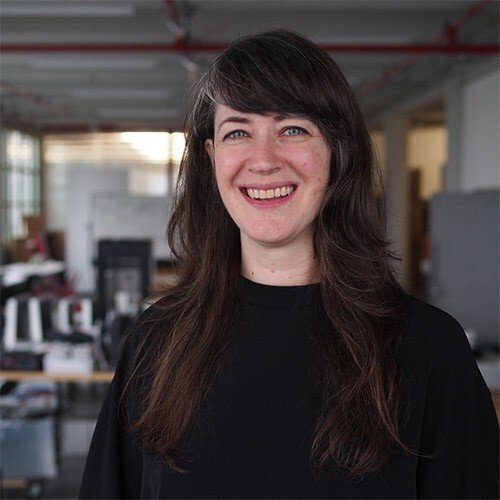
In this month’s episode of Looks Like New, hosted by MEDLab’s associate director Júlia Martins Rodrigues, we speak with Camila Galaz, an interdisciplinary artist, editor, and researcher whose work explores the intersections of technology, memory, and historical storytelling. Galaz is the founder of Structured Knowledge, a nonfiction narrative consultancy helping creatives and thinkers translate complex ideas into meaningful public-facing work. She is also co-creator of Our Friend the Computer, a globally ranked podcast uncovering underrepresented histories of computing; an editor at the Millennium Film Journal; and co-founder of Superkilogirls, a creative research lab examining the material infrastructures of computing and their entanglement with women’s labor. Her projects have been supported by the New Museum, the Nieuwe Instituut, Creative Australia, the National Gallery of Victoria, and the Media Archaeology Lab at the University of Colorado Boulder. In this episode, Galaz reflects on how storytelling, archives, and experimental media can reveal the hidden human histories behind our digital world.
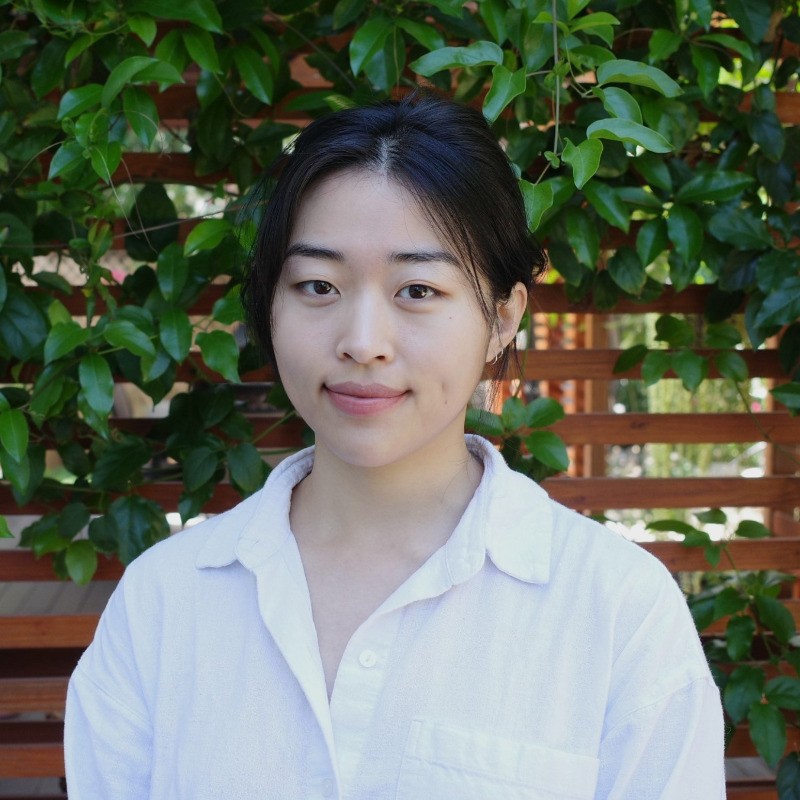
Who will own the future of gig work? In this month's episode of Looks Like New, MEDlab Associate Director Júlia Martins speaks with Minsun Ji, Executive Director of the Rocky Mountain Employee Ownership Center, about empowering workers to reclaim control over their economic futures. Minsun and her team are pioneering efforts to democratize work ownership, including the launch of Colorado's first driver-owned ride-share cooperative. Together, they examine the unique challenges of competing in the ride-share market, the innovative strategies behind worker cooperatives, and why these models are essential for building resilient local economies.
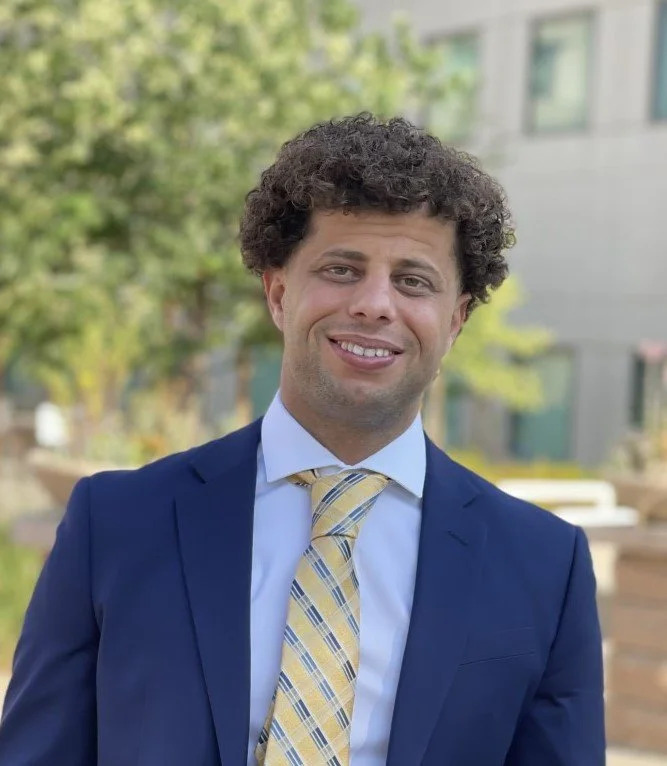
In this episode of Looks Like New, host Júlia Martins Rodrigues speaks with Warren Liu, a Media Studies doctoral student. Liu examines how video games shape culture—both by reflecting colonial legacies and by offering space to challenge them. Their conversation explores how games can spark decolonial thinking and open new paths for cultural exchange. From reclaiming narratives and traditions to reimagining design and player agency, they discuss how gaming can become a tool for inclusivity, empathy, and social change.
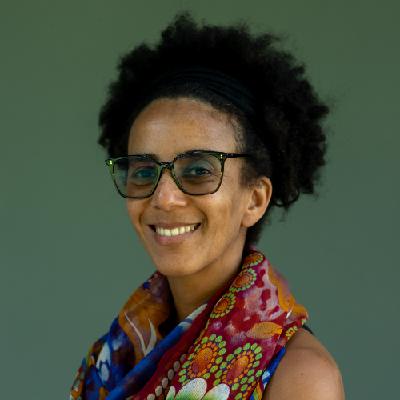
Who gets to participate in society—and how do we build systems that serve everyone, not just the privileged few? In this episode of Looks Like New, MEDLab's Júlia Martins Rodrigues speaks with Dr. Nicol Turner Lee, a leading expert at the intersection of technology and social justice, about what happens when entire communities are left behind in our rapidly digitizing world. As Director of the Center for Technology Innovation and founder of the AI Equity Lab, Turner Lee has dedicated her work to making AI and internet access more inclusive, ethical, and equitable—from the U.S. to the Global South. We explore insights from her groundbreaking book Digitally Invisible and discuss how we can rethink AI governance to create a more just digital future.
Are you being trained?

Are you being trained?

2025-05-2954:34

AI is advancing at lightning speed—so fast that questions of ownership and data use often get left behind. What control do we really have over our data in these massive language models? And how can we rethink governance for AI? On this episode of Looks Like New, MEDLab fellow Andy DiLallo speaks with Berlin-based artist, musician, and technologist Mat Dryhurst. Known for his work on collective ownership and digital governance. We hear how DIY music culture shaped Mat’s approach to technology, the importance of transparency in AI, and the role institutions can play in building ethical, trustworthy AI frameworks.
It’s easy to look at today’s pop culture and advertising and feel nostalgic for earlier generations—but were those eras really so different? What trends have remained consistent throughout our history? In this month’s episode of Looks Like New, hosted by MEDlab’s associate director Júlia Martins Rodrigues, we hear from Art Bamford, Ph.D., lecturer in Media Studies at the University of Colorado Boulder, a fellow at the Center for Media, Religion, and Culture, and co-author of Every Parent's Guide to Navigating Our Digital World. Art Bamford is currently researching the influence of Protestant revivalism on modern American advertising and public relations. In this episode, he shares fascinating insights into the historical relationship between celebrity, advertising, and scandal—and how these forces have shaped enduring trends in pop culture.
In the digital age, it's hard to resist free conveniences—but are they really free? So much of our data is constantly being bought and sold without our knowledge, making it crucial to find safe alternatives to keep our private information truly private. On this month's episode of Looks Like New, hosted by MEDlab fellow Stephanie Abdalla, Anna Muller joins us all the way from Brazil to discuss the importance of data control, especially for individuals with uteruses. Anna Muller brings a wealth of knowledge to the conversation. She is a biomedical specialist in neuroscience and behavior, a health instructor focused on fertility, perception, and hormonal health, as well as a speaker and content producer specializing in menstrual education. Together, Stephanie Abdalla and Anna Muller dive into the world of fertility tracking apps, the risks and realities of data control, and possible safer alternatives—drawing from history, academic discourse, and personal insight.
Writing code can be like casting a spell: magic words, written in a special language, bring new worlds into existence. But spells can have consequences. Who is responsible for how technology impacts society? This month on Looks Like New, MEDlab research fellow Adina Glickstein talked to Coraline Ada Ehmke. Who is dedicated to helping technologists make sense of – and take accountability for – the ethical implications of their work. Ehmke developed the Contributor Covenant, a code of conduct that is widely used across digital communities, as well as the Hippocratic License, a software license designed to protect human rights. She previously appeared on Looks Like New to explore why software development communities need ethical standards. This month, Ehmke returns to Looks Like New to talk about her work as a tech ethicist, experimental musician, and occult practitioner. As the Executive Director of the Organization for Ethical Source, Ehmke considers software’s real-world impacts and works to promote the fundamental rights and well-being of diverse communities affected by technology. Ehmke’s writing appeared in the MEDLab publication “Change is in the Cards,” a zine that explores open-source governance through the lens of tarot. The zine is freely available for download here Curious to hear more about Ehmke’s work as a tech ethicist? Listen to her previous appearance on Looks Like New here
Political discourse around social media has become increasingly significant, particularly during the recent presidential transition. Debates about TikTok’s viability, new censorship policies on Meta platforms, and the ongoing turbulence on X underscore the growing importance of decentralized media development. On this month's episode of Looks Like New, we're bringing you a conversation between guest mentors from MEDlab's Open Social Incubator, where community organizers from all over the world come together to explore alternatives to dominant corporate platforms. These innovators prioritize community building, safety features, and governance structures in their designs. The discussion featured Rudy Fraser, founder of BlackSky on Bluesky; Evan Henshaw-Plath also known as Rabble, a former Twitter developer now working on Nostr; and Christine Lemmer-Webber, a leading author of the ActivityPub protocol, software developer, and Executive Director of the Spritely Institute. These speakers, alongside audience questions, shared insights into the challenges and opportunities of creating open social software. They explored ways to prevent the re-centralization of power and ensure the protection of marginalized users.
How connected is the struggle for racial justice and the fight for a democratic economy? How has racism hindered the fight, and how can activists work together for a better future on both fronts? This month on, Looks Like New, MEDlab director Nathan Schneider hosted a group conversation of 100+ guests to understand these questions. This event hosted Jason Spicer, an assistant professor at Baruch College’s Marxe School of Public and International Affairs, and findings from his recently published book, Co-Operative Enterprise in Comparative Perspective: Exceptionally Un-American. This presentation is followed by a response from Jessica Gordon Nembhard of John Jay College, whose book Collective Courage is the definitive history of the African-American cooperative. This event seeks to broadcast just how much racism has actively held back the future of a democratic economy. Both Jason Spicer and Jessica Gordan Nembhard stress how important knowing the connection between a democratic economy and the struggle for racial justice is.
In an ever more messy online media environment, it can be hard to know where to let ourselves be truly creative. This month on Looks Like New, MEDLab community fellow Andy DiLallo spoke with Yancey Stricker, best known as a co-founder and former CEO of Kickstarter. Strickler's story started on a farm in Virginia before he became a music journalist and founder of a leading tech company. Most recently, he co-founded Metalabel, a new platform that fosters creative expression and meaningful collaboration among artists. He has also been a leading storyteller about life online, including through his influential 2019 essay, "The Dark Forest Theory of the Internet."
Whether or not we have children of our own, many of us have wondered how we approach their privacy in the digital world. What's the best way we can approach this increasingly important question? In this episode, MEDLab research fellow Antoinette Kendrick speaks with danah boyd, a leading researcher, scholar, and thought leader in the fields of technology, social media, and youth culture. She is a Partner Researcher at Microsoft Research, founder of the non-profit organization Data & Society, and a Visiting Distinguished Professor at Georgetown University. Her book It's Complicated: The Social Lives of Networked Teens is a foundational text on youth digital culture ,examining the ways teens use social platforms and the societal expectations that follow. 
Every one of us has felt the impact of the shortcomings within our current economic system. Where did this system go wrong? More importantly, what can we do to make it right?  To answer these questions we spoke to Marjorie Kelly, a Distinguished Senior Fellow with the Democracy Collaborative, author of The Making of a Democratic Economy (co-authored with Ted Howard), Owning our Future: The Emerging Ownership Revolution, and The Divine Right of Capital. For years Kelly has been a thought leader in the next generation of employee ownership, impact investing, and the construction of a community-rooted democratic economy.   In this episode, we explore Marjorie Kelly’s long list of experiences and unique perspectives on the economic situation we all find ourselves in. MEDLab director  Nathan Schneider moderates a discussion with Marjorie Kelly and a cast of live audience members about our unique socio-economic challenges and what we can do about them. 
Within a rapidly evolving digital landscape, it can be difficult to identify the more harmful effects of digital media use on children. This month we interviewed Antoinette Kendrick, a second-year doctoral student and Instructor in CU Boulder’s department of Media Studies. She received her bachelor's degree in psychology and her master's degree in social work from the University of Oklahoma. Her research focuses on the social impact of digital media use on children and how we can enable effective strategies for teaching media literacy. On the episode, we discuss how Antoinette's background in social work informs her approach to media literacy for youth. Tune in to listen as we discuss platform politics, how we can curtail exposure to graphic media, and reforms for educating children on digital media literacy.
This month we interviewed Dr. Shamika Klassen, a User Interface Scientist and recent graduate of C.U. Boulder’s Department of Information Science. Dr. Klassen is interested in creating technologies that put humans first, particularly those who are traditionally marginalized. On this episode, Dr. Klassen discusses with us her how she arrived at her dissertation research topic and process of conducting the research. Tune in to listen as we discuss Afro Futurism, Ethical Speculative Projects, and Black Mirror.
Dr. Christopher Bell is a culture consultant at Skydance, Disney, and Pixar as well as a Associate Professor of Media Studies at C.U. Boulder, "Harry Potter" scholar, and all around nerd. His TED Talk, "Bring on the female superheroes," asked where were all the strong women in modern media? And where were all the toys, games, and costumes to accompany such characters? In this episode of "Looks Like New" Dr. Bell discusses how modern technology allows scholars and academics to turn to audiences beyond the classroom, both directly through content of his own making and as the informed voice of accountability in his role as culture consultant.
Online technologies have often taken on a life of their own when a community forms around them. Users put their tools to use in ways the designers never expected. What would it mean to truly hand ownership and control of tools to the people who rely on them most? This month, we turn to Anjali and James Young, the founders of Collab.Land, a piece of software used by thousands of online communities. In 2023, they distributed control of their product to their users, thanks to a blockchain-based token and a cooperative company. But this was not a straightforward process. They explain their hopes and their challenges in attempting this "exit to community."
A new kind of social media is emerging that is open, interoperable, and not controlled by any one company. One iteration of it is called Bluesky. Bluesky lets you follow feeds specific to your interests, and each feed is created, curated, and run by individuals or groups. Rather than relying on corporate engineers, this is everyone's opportunity to try their hand in building their own algorithm and cultivating an online experience. This month's guest, Rudy Fraser, is the founder of Papertree, a resource that provides joint money accounts for communities. Papertree started as a crowdfunding system to help neighborhoods provide financial assistance for groceries to community members. Rudy chose to build Blacksky, his own feed on Bluesky, to create a space for Black internet users to build a safe and supportive community online. Listen to this month's episode to learn more about the emerging opportunities in social media through Rudy's experience building Blacksky—and how novel moderation systems are reaching for new ways of connecting people online.
On this episode we have the privilege of hosting a distinguished returning guest, who’s groundbreaking research has reshaped the landscape of media studies; the Provost Professor of Communication, Journalism, Cinematic Arts, Education, and East Asian Languages and Cultures at the University of Southern California, Dr. Henry Jenkins. What does it mean to be a fan in the digital age? What do fan practices look like? In this episode Dr. Jenkins takes us through fan activism to purchasing practices in China as he discusses research on emerging fan cultures. In this episode we will learn all about the new landscape of global fandom in an increasingly digitally mediated world.
loading
Comments