


 Claim Ownership
CHART Talks
Subscribed: 0Played: 3
Subscribe

© CHART
Description
CHART Talks is a podcast featuring conversations with artists, and panel discussions with experts from diverse fields, all recorded live at Charlottenborg in the heart of Copenhagen during CHART.
40 Episodes
Reverse
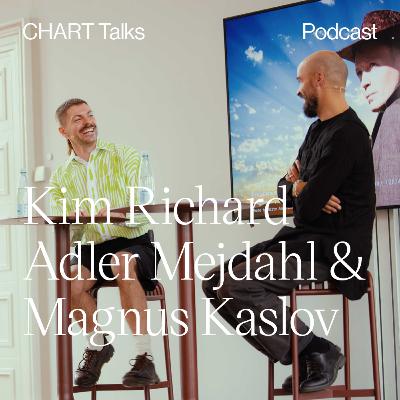
In this episode we are delighted to present a conversation between Danish artist Kim Richard Adler Mejdahl and Magnus Kaslov, curator at SMK, the National Gallery of Denmark, and also previously curator at the Museum of Contemporary Art in Roskilde.Together, they explore Mejdahl's practice, where nostalgia and trauma intertwine through a distinctive blend of “sticky bubble gum nostalgia” and “gothic horror tragedy.” Central to the discussion are his previous works Provinsbøssernes Drøm (Hillbilly Faggot Dream), Rat Palace, Ode, and Hour of Moth. Music is discussed as a driving force in the creative process, often acting as the starting point and emotional backbone of the work. Ultimately, the talk traces how personal experiences, especially growing up with and losing a father, are transformed into art pieces, revealing both the pain and the liberating power of shaping one’s life into creative expression.
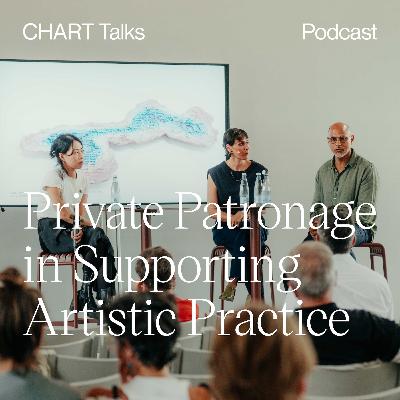
In this episode of the CHART Talks Podcast, we share a panel discussion exploring the role that private patronage can play in times of uncertainty. Moderated by Astrid Wang, curator at the non-profit exhibition space MILAAP, the conversation also includes Khurram Jamil, founder of MILAAP, and the artist Nazgol Ansarinia, whose solo exhibition 'Dissolving Substances' was showing at MILAAP at the time of recording.The discussion considers private patronage as a flexible and independent model for supporting artistic practice, in comparison with institutional frameworks that often shape contemporary exhibition-making. The conversation covers how collectors can create platforms that amplify underrepresented voices and foster dialogue between the global south and the Nordics. Through Ansarinia’s research into water infrastructures in Tehran (set against the drying of Lake Urmia) the participants consider questions of access, ownership and the tension between public and private resources. Together, they explore how private initiatives can function as sites of exchange and visibility, and how independent support structures differ from institutional models in process, responsibility and reach.
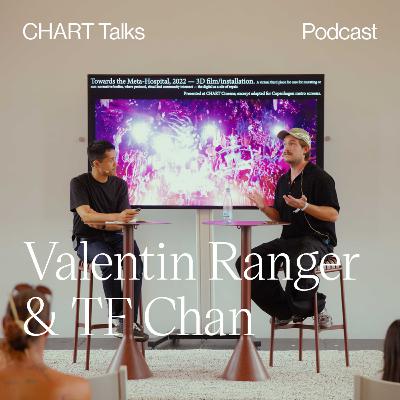
In this episode, we present a conversation between French artist Valentin Ranger and TF Chan, author and director of Collect, to discuss his artistic journey, influences, and ongoing projects. Recorded live during the CHART 2025 Talks Programme, they discussed Ranger’s work spanning drawings, paintings, 3D films, and sculptural installations. Ranger's practice, rooted in theatre and shaped by personal experiences of illness and recovery, creates spaces of care, tenderness, and transformation, offering a sensitive vision of regeneration, contagion, and solidarity. Together, they explored Ranger's creation of dreamlike worlds that reflect the human body, his central subject. Through richly detailed virtual spaces, Ranger stages hybrid avatar characters and pulsating cellular forms, exploring communication between bodies and the inner landscapes. The conversation discusses Ranger's videowork “Metahospital,” which at the time was on show at CHARTs Cinema and in the Copenhagen Metro. View the work here.
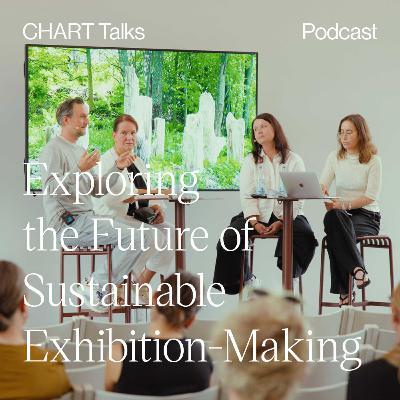
For this episode of the third season of the CHART Talks Podcast, we are delighted to share a recording of a panel discussion moderated by Aino Frilander, author and journalist at the Helsingin Sanomat featuring, Finnish artist Hans Rosenström, Arja Miller, Director of HAM and Kati Kivinen, Head of Exhibitions at HAM and Head Curator of the Helsinki Biennial 2025. The panellists reflected on how sustainability in large-scale exhibitions extends beyond environmental concerns to include social, cultural, and economic responsibility. Through examples from site-sensitive artworks, collaborations between international artists and local artisans, and the careful adaptation of works to protected natural environments, they discussed how curatorial decisions can balance artistic vision, ecological limits, and visitor experience.
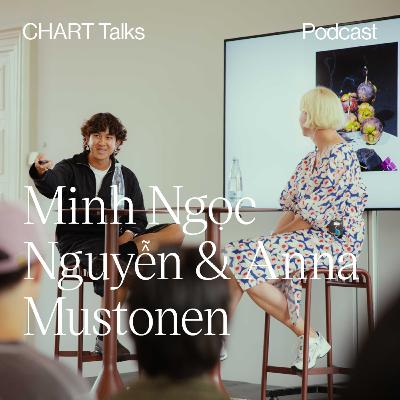
In this episode, we present a conversation between Danish/Vietnamese artist Minh Ngọc Nguyễn and Anna Mustonen, Chief Curator at Kiasma in Finland - which currently holds four of Nguyễn’s works in its collection. Recorded live during the CHART 2025 Talks Programme, they explored Nguyễn’s artistic practice, which began in commercial photography before moving into contemporary art.Nguyễn reflected on his fascination with photography’s ability to shape how we perceive culture and identity. The conversation addressed representations of Southeast Asian and Vietnamese identity in Western media, where imagery has often been oversimplified, exoticised, or fetishised, shaping both public perception and lived experience. He spoke about using photography to process and challenge these visual histories, taking ownership of such imagery and redefining it on his own terms as part of building a new visual lexicon.
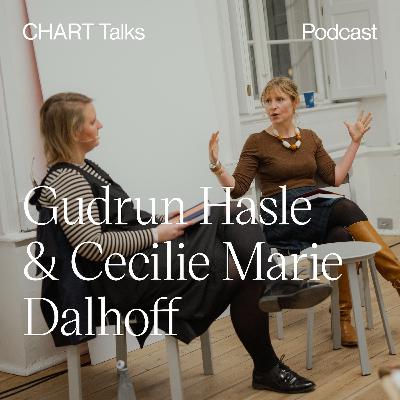
Listen back to a conversation between Gudrun Hasle and Cecilie Marie Dalhoff, recorded live as part of the Talks Programme at CHART Book & Print Fair 2025.For this episode of the CHART Talks podcast, we are happy to share a recording of a conversation between the artist Gudrun Hasle and Cecile Marie Dalhoff, Art Historian and Curator at Museum Jorn.Together they reflect on the new publication: 'Gudrun Hasle: Sketchbooks' which collects the artist's sketchbooks from the past two decades. Across its pages unfold notes, drawings, misspellings, and personal reflections that together trace how private thoughts evolve into ideas, images, and artworks.The conversation explores the significance of Gudrun Hasle’s sketchbooks as both private and public documents, the ethics and intimacy of sharing unedited personal material, and the ways lived experience, motherhood, and artistic process shape a visual language over time.*This talk is in Danish
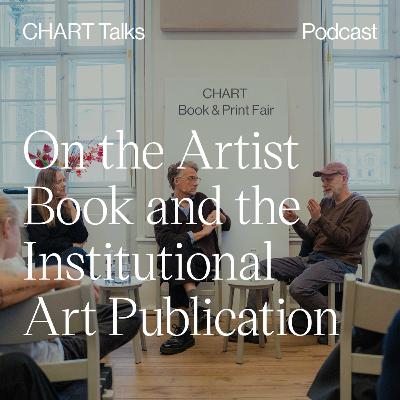
In this episode of the CHART Talks Podcast, we share a panel discussion recorded at CHART Book & Print Fair 2025 that explores the relationship as well as the differences between the artist book and the institutional art publication. Moderated by graphic designer Claus Due, founder of Studio Claus Due, the conversation brings together artist Tal R and Lærke Rydal Jørgensen, Head of Publications at Louisiana Museum of Modern Art, to reflect on the different roles books play within artistic and institutional contexts. The discussion considers the artist book as a personal, experimental and often democratic art form, alongside the exhibition catalogue as a lasting document of a temporary exhibition. While catalogues serve as permanent records that consolidate research, curatorial knowledge and editorial practice, they also offer visitors a tangible memory of the exhibition experience. Together, the speakers examine how printed matter can function as artwork, mediation and archive, and how artist books and institutional publications differ in process, intention and reach.*The talk is in Danish.
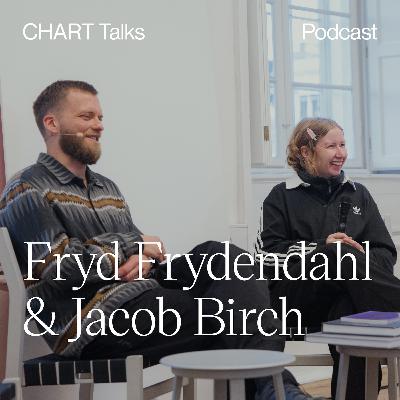
Listen back to a conversation between Fryd Frydendahl and Jacob Birch, recorded live as part of the Talks Programme at CHART Book & Print Fair 2025.For the seventh episode of the third season of the CHART Talks podcast, we are happy to share a recording of a conversation between the artist and photographer Fryd Frydendahl and Jacob Birch, graphic designer, publisher and founder of Spine Studio and Marrow Press. Together, they reflect on the collaborative process they used to produce the books They didn't want to pierce the sun, Nephews and Salad Days, focusing on how books can emerge through dialogue rather than from a fixed body of material. From creating images and layouts on the go during a shared journey in Texas to treating the book as an evolving dialogue over many years, they discuss collaboration as a method for thinking, making, and navigating change and uncertainty. Fryd Frydendahl and Jacob Birch reflect on their shared projects as spaces for experimentation, where personal relationships and chance encounters influence design decisions and shape the final work. They explore how book design can intersect with lived experience and the complex relationship between commercial work and artistic practice.*This talk is in Danish
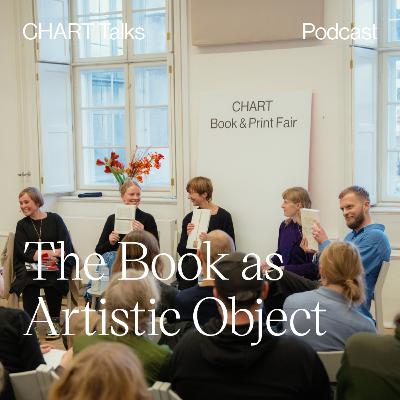
In this episode of the CHART Talks Podcast, we share a panel discussion from CHART Book & Print Fair 2025 exploring the book as a cultural, curatorial, and creative medium. Moderated by Louise Sidenius, founder of Sideniūs Studio, part of Forening for Boghaandværk and featuring Cecilie Høgsbro, Head of Publishing at Statens Museum for Kunst; Anni Vestergaard, graphic designer and founder of design studio Anni's (Alberto Giacometti: Hvad øjet ser, Gold, SMK Forlag); Laura Silke, graphic designer at Stanza (Viscose Journal Vol. 06: TEXT, Silver, self-published); and Jacob Haagen Birch, founder and graphic designer at Spine Studio (Inuuteq Storch – Rise of the Sunken Sun, Bronze, Strandberg Publishing).Featuring the award winning designers and editors behind Forening for Boghaandværk’s Best Book Design of the Year, the conversation reflects on artist books and catalogues as lasting extensions of exhibitions. Together, they discuss conceptual design processes, collaboration between artists and designers, material choices, and the evolving role of the book in both physical and digital contexts.*The talk is in Danish.
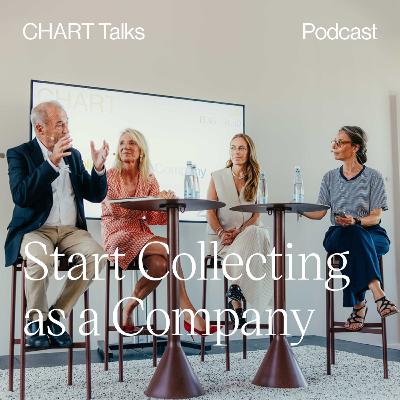
In this episode of the CHART Talks Podcast, we are delighted to share a recording of a panel discussion moderated by Mette Marcus, founder of Connecting Dots and Kunstkonsortiet (The Art Consortium) featuring Julie Quottrup Silbermann, Director of CHART, Leif Djurhuus, Danish lawyer and owner of The Djurhuus Collection, and Tina Grønning, owner of Vincit Law Firm who combines her legal expertise with advising on how integrated art can strengthen identity, strategy, and the overall experience of built environments.Together, the panel explores the value of art in corporate spaces and offers strategies and best practices for building and managing corporate art collections that meaningfully enhance organisational culture and identity. The conversation covers how to get started, key considerations before investing, and the role of art in shaping collective identity, engaging employees, and creating a lasting cultural legacy.
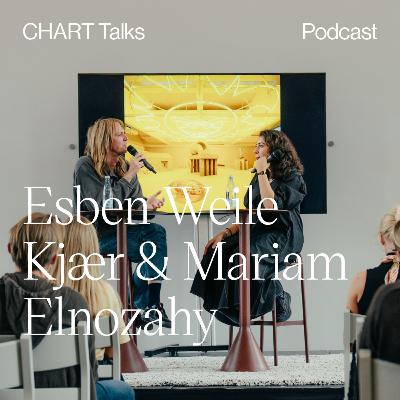
As part of the CHART 2025 Talks Programme, we were delighted to present a conversation between Danish artist Esben Weile Kjær and Mariam Elnozahy, curator, researcher, writer, and Artistic Director at Konsthall C, Stockholm. They explored Weile Kjær’s artistic practice, which thrives on contrasts—between materials, spaces, and the expectations we bring to them. From crafting bronze sculptures that mimic plastic (and vice versa) to investigating the social dynamics of clubbing, they discussed his use of materials as a form of performativity to examine different phenomena. Weile Kjær reflected on his work with materials "in drag,” challenging notions of truth and intention while creating atmospheric spaces by combining music with other materials in performative ways. They also explored how he disrupts architectural norms and uses text, image, music, and sculpture as tools in his expansive, cross-disciplinary practice. Click here to access the presentation discussed during the conversation.
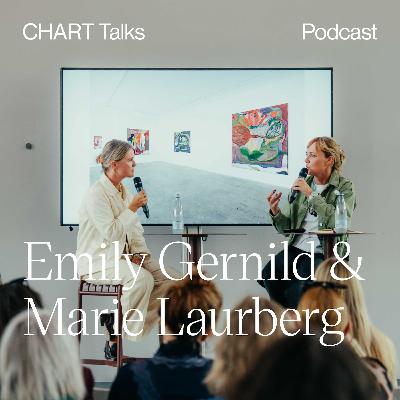
As part of the Talks Programme at CHART 2025, we were delighted to present a conversation between Danish artist Emily Gernild and Marie Laurberg, Artistic Director and CEO at Copenhagen Contemporary in Denmark and Founder of the support program for artists, CC Commissions, and the Beckett-Prize.Drawing on Gernild’s reflections, the conversation traces her path to becoming a painter: from early detours through theology to discovering a practice rooted in everyday objects, colour, and form. She discusses challenging the perception of painting, especially floral motifs, as something simple or feminine, and speaks to her belief in the deep exchange between material and spirit. Laurberg and Gernild explore the shift from canvas to linen, the quiet rituals of the studio, and the symbolic presence of lemons throughout her work, while also questioning whether today’s visual culture has become too banal in the imagery we consume.
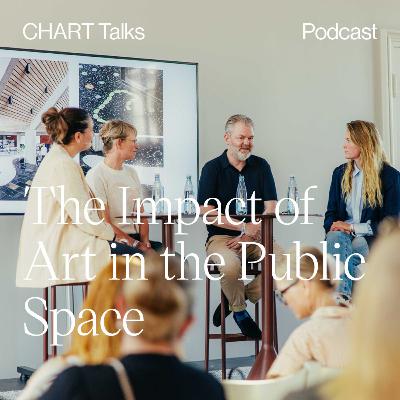
At CHART 2025, we were pleased to present a panel discussion exploring the role of art in public spaces, focusing on the creation and commissioning process of public art. The panel consists of Danish artist Pernille With Madsen, Michael Thouber, Director of the New Carlsberg Foundation and former Director of Kunsthal Charlottenborg, Diana Velasco, Art Consultant at Kunst på Arbejde and served for five years as Program Lead for the Art in Metro initiative at Metroselskabet (supported by Statens Kunstfond, Det Obelske Familiefond and Villum Fonden), moderated by Milena Høgsberg, former Director and Chief Curator of Wanås Konst.The conversation examined the practicalities of applying for public art funding, the balance between aesthetics and functionality, and the complex logistics of working with contractors, sub-contractors, and multiple stakeholders. The panellists reflected on the power of public commissions—how they can embody state representation, shape collective identity, and evolve in meaning over time. Through examples such as The Little Mermaid, Poul Gernes’ decoration of Ordrup Gymnasium, Bruce Nauman’s Square Depression, and Svend Wiig Hansen’s Oceania, they discussed how involving users in the creative process fosters a sense of ownership assuring preservation from future generations. Click here to access the presentation discussed during the conversation.
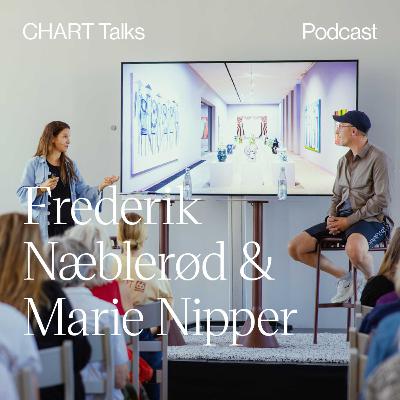
At CHART 2025, we were delighted to present a conversation between Danish artist Frederik Næblerød and Marie Nipper, Director of ARKEN Museum of Modern Art, Ishøj, Denmark. At the time, Næblerød’s works were the focus of a major solo exhibition at the museum, during which his studio was temporarily relocated to the institution.Together they discuss Næblerød's major solo exhibition at the museum 'All Walks of Life' and explore his work across diverse media including painting, drawing, ceramics and bronze sculpture. Tracing his practice from a background in graffiti, through his time at art school up to his most recent body of work, the talk considers how Næblerød uses an experimental approach to create vibrant energetic compositions that still feel true to life. Næblerød also reflected on his intuitive artistic approach, drawing not from theory or art history but from everyday encounters, like the faces and colours from a simple trip to the supermarket.Click here to access the presentation discussed during the conversation.
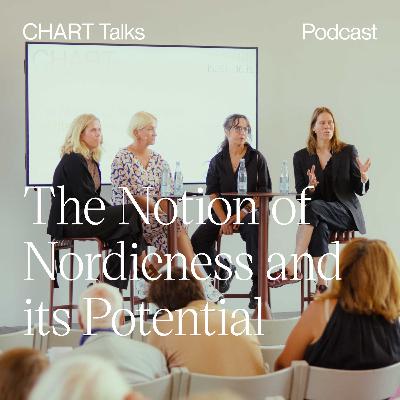
In this episode, we share a panel discussion exploring the notion of Nordic art, its values, and its future role within the global art world. Moderated by Helga Christoffersen, Curator-at-Large and Curator of the Nordic Art and Culture Initiative at Buffalo AKG Art Museum, the conversation also includes Anna Mustonen, Chief Curator at Kiasma in Finland and Curator of the Nordic Countries Pavilion at the 61st International Art Exhibition in Venice, Swedish/Czech artist Klara Kristalova, represented at the Nordic Pavilion in 2026, and Auður Jörundsdóttir, Director at Icelandic Art Center in Reykjavík.The conversation begins with a behind-the-scenes discussion of the development process for the 2026 presentation at the Pavilion of the Nordic Countries at the Venice Biennale. From this example of Nordic collaboration within the contemporary art world, the panel expands the discussion to a broader context. Together they reflect on how global perceptions of Nordic art have shifted since the 1990s, and consider the opportunities for sharing and collaboration within the current geopolitical moment. The conversation also addresses tensions within the idea of a shared Nordic identity, noting that for some people it remains a category they actively seek to escape.
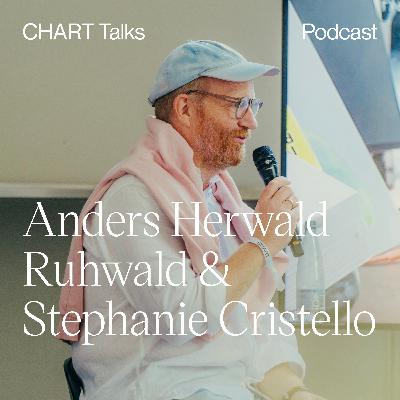
In this episode Anders Herwald Ruhwald and Stephanie Cristello discuss the interplay between form and content in Ruhwald's latest book project Mineral Skin, which features documentation of Ruhwald's practice alongside accompanying text by Cristello.Together the pair reflect on their collaboration, and the way in which Mineral Skin conforms to and breaks with the conventions of traditional book making. The conversation then broadens into a wider discussion of the role of language in Ruhwald's work and the different ways in which art, materiality and form can intersect in contemporary practice.Anders Herwald Ruhwald is a Danish-American artist based between Chicago and Detroit. His work is held in the permanent collections of The Art Institute of Chicago, The Los Angeles County Museum of Art, The Victoria & Albert Museum and Musee des Arts decoratifs, among others. Stephanie Cristello, is a contemporary art critic, curator, and author based in Chicago.
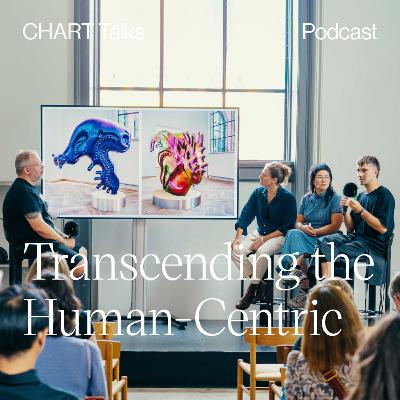
In this episode, we dive into the dynamic collaboration of the project "We Are All Hybrids", with artist duo Rhoda Ting & Mikkel Bojesen and Luke Holman from the Globe Institute.Blending art, science, and technology, this project delves into speculative futures, asking how art can guide us towards an affirmative shift beyond the Anthropocene. Inspired by animals and species from Holman’s research in Skagerrak and the Little Belt in Denmark, as well as Icelandic waters, the sculptures bring to life the shared DNA across species, exploring marine environments and the ongoing evolution of life forms. Moderated by Kasper Opstrup, PhD, from the University of Copenhagen, who specialises in intersections of art, literature, and radical countercultures, the discussion reveals how this unique collaboration was born and how it reimagines our relationship with the natural world.Click here to access the presentation to view the discussed artworks.
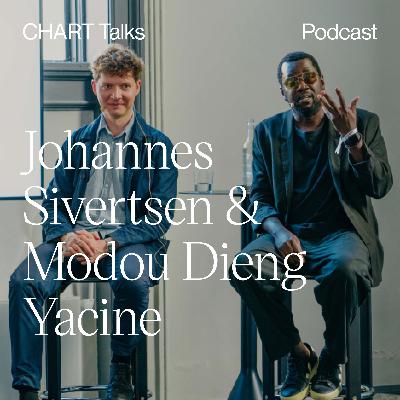
In this episode, we dive into the collaboration between artists Johannes Sivertsen and Modou Dieng Yacine, who creatively explore themes of territory, identity, and belonging. Through painting and photography, Sivertsen and Dieng Yacine examine the lasting impacts of colonial history and the sense of being "in-between" that shapes their identities. They reflect on how representation (or lack thereof) in their homelands affects what—and who—is remembered. Sivertsen points to the gaps left by an incomplete history, while Yacine explores how our understanding of architecture changes in light of the legacy of colonialism. Central to their project is the figure of Louis Faidherbe—a French governor behind brutal military campaigns in West Africa–whose legacy is historicised in Paris, where the pair met, as well as in Saint-Louis, Senegal, where Dieng Yacine grew up. Joined by Marie-Ann Yemsi, independent curator and board member at Palais de Tokyo in Paris, the conversation uncovers the unique origins of this collaboration, how they shaped it together, and the fresh perspectives it brings to identity and history. The conversation invites us to reflect on how we learn about the world and the way we understand the connections between different cities.Click here to access the presentation to view the discussed artworks.
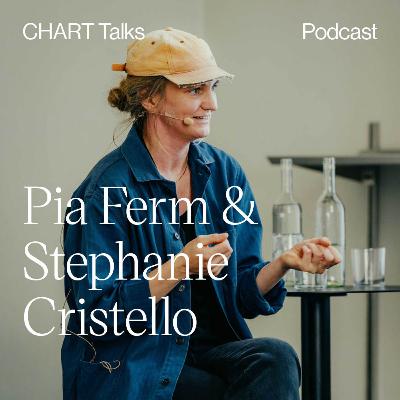
In this episode, we explore the textured and layered world of artist Pia Ferm, who exhibited a solo booth with Saskia Neuman Gallery at CHART 2024. Known for her work with fiber, textile, and stone, Ferm draws from landscapes to blend figuration and abstraction, crafting each piece through weaving, tufting, and carving—sometimes building her own looms.Joining her is contemporary art critic and curator Stephanie Cristello, who brings insight into Ferm’s exploration of material, form, and the concept of time. Their conversation examines how fiber and stone communicate in relief, the visible marks of creation, and how the body’s movements are both present and elusive in each work.Click here to access the presentation to view the discussed artworks.
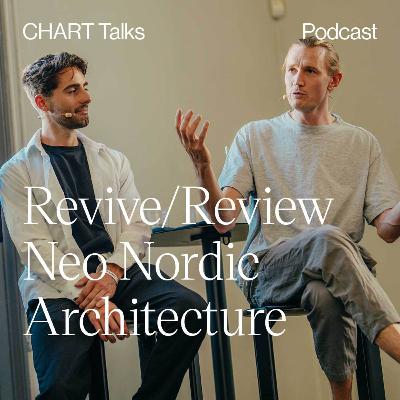
In this episode, join us for a conversation with the Jury for CHART Architecture 2024 and a member of the winning team behind Breeze Pavilion, as they share insights into the unique approach and values shaping New Nordic Architecture.The panel features Jonas Sarantaris from the Breeze Pavilion team, Søren Pihlmann, Founder of pihlmann architects, and Jakob Brandtberg Knudsen, Dean of Architecture at the Royal Danish Academy and is moderated by Tyra Dokkedahl, architect, journalist and founder of Seriously Fun.Together, they discuss what makes Nordic architecture distinct, delving into the essential principles of sustainability, integration with surroundings, functionality, cultural context, human-centered design, and innovation. Sarantaris introduces the Breeze Pavilion team’s creative process, from material choices to construction methods, and how they embraced a Danish perspective in crafting this year’s pavilion.Click here to view the presentation discussed in the talk.

Comments

Download from Google Play

Download from App Store
 United States