


 Claim Ownership
The Middle Ground Podcast
Subscribed: 1Played: 1
Subscribe

© Imam Marc Manley
Description
This podcast will explore ideas important and pertinent to Muslims everywhere, especially in America, tackling challenges and hoping to inspire as we navigate this worldly life.
imammarcmanley.substack.com
imammarcmanley.substack.com
50 Episodes
Reverse
﷽ Many Muslims today speak of “love”: for Allāh, for the Prophet ﷺ, etc. And while having love for Allāh and the Prophet ﷺ are indeed noble ambitions it would also seem that the current emphasis on love has come at the cost how we see obedience. It would seem for some Muslims today that talk of fearing Allāh and striving for obedience is akin to negativity. Others have conflated love with mercy. But the Qur’ān, however, addresses these qualities quite differently and separately.If we examine how the Qur’ān commands us to fear Allāh, such admonitions are unencumbered and straightforward. In contrast love is conditional: “If you love Allah, then follow the Prophet ﷺ.” — ‘Āl ‘Imrān v. 31or that there are those that Allāh loves, and those He doesn’t:“Surely Allah loves those who always turn to Him in repentance and those who purify themselves.” — al-Baqarah v. 222and“Surely He [Allāh] does not like the wasteful.” — al-Aʿrāf v.31In other words love—especially love to Allāh and/or His Prophet ﷺ is proven through devotional commitment (ittibāʿ) and obedience (ṭāʿah), not merely self-selecting sentiment.As for mercy (raḥmah), Allāh says that it encompasses everything:“My mercy encompasses everything.” — al-Aʿrāf v. 156In fact, Allāh’s mercy—in this life—extends even to those who don’t believe in Him or even reject Him outright. Yes, Allāh shows mercy to the believer and the non-believer alike (though not necessarily equally). In fact, as we leaned in our Satuday ʿaqīdah class, Allāh’s mercy can be understood as having two branches if you will: the aforementioned all-encompassing mercy for everything and everyone in this life, and a specially mercy reserved for those who believe in Him for the Next Life. The point being here is that we should not collapse mercy into love.Imam’s Corner is a reader-supported publication. To receive new posts and support my work, consider becoming a free or paid subscriber.A great example of this is the sotry of Qarūn (Korah, in the Bible). His story illustrates how misplaced love—especially of wealth—can blind judgment. Those around him admired him, even coveting to be in his place. But when Allāh caused the earth to swallow him, they realized that Allāh alone expands and constricts provision. In fact, in the Qālūn (Madanī) reading of the 82nd verse, we see an additional highlight that differs from the Ḥafṣ reading,وَيَقْدِرُ ۖ لَوْلَآ أَن مَّنَّ ٱللَّهُ عَلَيْنَا لَخَسَفَ بِنَا ۖ“Had it not been for the grace of Allah, He could have surely caused the earth to swallow us up!”in the reading according to Qālūn, it becomes,وَيَقْدِرُ ۖ لَوْلَآ أَن مَّنَّ ٱللَّهُ عَلَيْنَا لَخُسِفَ بِنَا ۖ“Had it not been for the grace of Allāh we would have been swallowed up by the earth!” (passive)In the latter case, the verb in the passive voice underscores our powerlessness and the need for fear in order to sober and reorientate our hearts. Get full access to Imam’s Corner at imammarcmanley.substack.com/subscribe
﷽ So much of today’s “spiritual” discourse turns faith into a dopamine-trap where we seek to obtain, or in some cases, avoid, a certain mood. On this treadmill of mood chasing fear is always “bad,” love is always “good.” But what we are in need of today isn’t just obtaining the perfect “vibe” but instead, we need to be taught the skills which are necessary and conducive to contemplation and reflection. We need to return to a knowledge-based engagement with the Book of Islām which means we’re going to have to study. Systematic study. Yes, we’re going to have to learn the language of revelation—Arabic—because everything in our Dīn flows from the Qur’ān in its language (as well as the Sunnah). These sciences of revelation are not the tools of gatekeepers; they are the tools by which we can authentically and effectively contemplate (tadabbur) and reflect (tafakkur) with consistency and discipline, not just sentiment.Imam’s Corner is a reader-supported publication. To receive new posts and support my work, consider becoming a free or paid subscriber.It goes without saying that we all need an emotional bond with the Qur’ān but feelings built on hawa (emotions/passions) and speculation won’t suffice in and of themselves. Real attachment grows out of consistent and rigorous learning. Beware of performative “piety” that entertains yet leaves you without acquiring the tools to learn. Seek teachers who impart methods, not just stories. The onus is on you to choose paths and mentors that raise the waterline of knowledge so you can truly engage this Book with is “guidance for the God-fearing” (hudan lil-Muttaqīn).This short talk is meant as an invitation, not an admonition. A pray that we can all build a sturdy foundation of knowledge from which love can spring deep from within that well. Get full access to Imam’s Corner at imammarcmanley.substack.com/subscribe
﷽Welcome to Episode 46 of the Middle Ground Podcast. In this episode I want to discuss a new (and disturbing) trend I’ve noticed in the social media landscape, namely Muslims making videos in which they claim the non-practicing Muslims are somehow actually “doing Islām more” than those who do. Can this be true? You can listen to the audio podcast or watch the video below.Imam’s Corner is a reader-supported publication. To receive new posts and support my work, consider becoming a free or paid subscriber. Get full access to Imam’s Corner at imammarcmanley.substack.com/subscribe
﷽ Welcome to Episode 45 of the Middle Ground Podcast. For this episode I’m sharing an excerpt from my Saturday class on ʿaqīdah, otherwise known as “creed”; i.e., the things we Muslims must believe in and things we must reject. But the study of ʿaqīdah is much more than a list of do’s and don’ts. It should ultimately impact our character as well. I share a anecdote of a lesson I recently learned while visiting my 92-year-old father in the hospital.Imam’s Corner is a reader-supported publication. To receive new posts and support my work, consider becoming a free or paid subscriber. Get full access to Imam’s Corner at imammarcmanley.substack.com/subscribe
﷽ Welcome to Episode 44 of the Middle Ground Podcast. Today, while driving to Jumu’ah, I wanted to share some thoughts of mine on the state of Muslim thinking and politics particularly as it relates to Zohran Mamdani’s bid for NYC mayor and the need for American Muslims to mature in their religious, and political, thinking.Imam’s Corner is a reader-supported publication. To receive new posts and support my work, consider becoming a free or paid subscriber. Get full access to Imam’s Corner at imammarcmanley.substack.com/subscribe
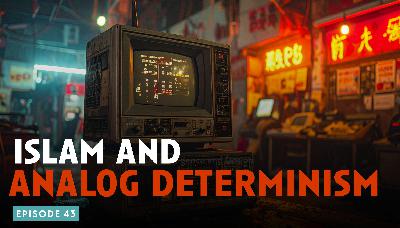
﷽ Welcome to Episode 43 of the Middle Ground Podcast. Today I want to discuss the current paradox we’re living in: the paradox of “infinite” digital options. This paradox has left many (if not most) us more distracted, less fulfilled, and suffering from a kind of spiritual malnutrition. Friedrich Nietzsche, the 19th Century philosopher, presaged the age of the “smart”-phone by warning of the dangers of losing our will to exert ourselves against external forces. What he foretold of nihilism now manifests as endless scrolling: a flood of content that means nothing, an curated attrition.Our minds and more specifically, our hearts, overwhelmed by choice and a dearth of serendipity, have succumbed, resigning us to a doom of passive consumption. We confuse abundance with freedom, but true freedom requires boundaries. Algorithms, despite the ubiquitous presence, are neither neutral or natural; they inform our desires and corral us into predictable patterns like lambs for the slaughter.But Nietzsche’s vision of the Übermensch is not the answer. After all, he is famously attributed to the statement, “Gott ist tot/God is dead”. What we need today is not the Übermensch but the muḥsin, the one who creates values and lives by them, striving for God’s pleasure as if he sees God, though in spite of not being able to do so, the muḥsin knows God sees him. In todays context this will undoubtedly include a reclaiming of our attention. We must strive to align our habits, digital, analog, and otherwise, with our highest values, namely Islām, not our lowest impulses.What I’m advocating for here, with all due respect to Cal Newport, shouldn’t be misconstrued as a kind of digital minimalism; it's precisely an Islāmic and spiritual resistance. The Qur'ān isn't an echo chamber; it's a resonance chamber. Echoes repeat cacophonously. Resonance transforms you.We must build a digital philosophy grounded in Islām: rooted in submission (Islām), faith (Īmān), and excellence (Iḥsān). This means creating principles for tech use that serve our goal of achieving Jannah (Paradise), not endless, short-lived dopamine hits.In an age where every scroll is tracked, then perhaps the revolutionary act is to stop and choose. Real freedom is not infinite content; it is deliberate attention, guided by purpose.Recommended Actions:* Digital Intention Journal: Before opening any app, write down your purpose and time limit. Reflect after.* Algorithmic Sabbaticals: One day a week, consume only human-recommended content.* Information Sanctuaries: Designate time for deep, distraction-free engagement with one source.* Digital Containers: Set fixed times (e.g., 30 mins a.m./p.m.) for digital use.* Create Islamic Digital Principles: Define three tech-use rules aligned with Islām, Īmān, and Iḥsān.* Weekly Discovery Day: Seek novelty outside the algorithm: libraries, friends, strangers, random tools.* Choose Content in Advance: Decide what to watch/read before opening apps.* Reframe Tech Use as Worship: Ask: does this tool help me emulate the Prophet?* Reclaim Will to Power: Choose what nourishes you—not what hooks you.* Embrace Constraints: Boundaries don’t limit creativity; they make it possible. Get full access to Imam’s Corner at imammarcmanley.substack.com/subscribe
﷽ Welcome back to the Middle Ground Podcast with Episode 42. Here, Imam Marc Manley takes into an important—and uncomfortable topic—that continues to stir headlines and town hall debates across America: Sharī’ah law. The issue here is not the fears and concerns of non-Muslims; as Imam Marc states, it’s not the obligation of Muslims to make non-Muslims comfortable with Muslims and Islām. Instead, the problem is the caricature of sharī’ah that’s being presented as factual in political campaigns and viral fear-mongering social media videos. This episode endeavors to unpack what Sharī’ah really means for Muslims, especially Muslims living in a non-Muslim society and how Sharī’ah shapes the personal lives of Muslims (and maybe even influencing not public laws), challenging the caricature and assumption that Sharī’ah is something always to be “imposed” upon others (a misconception even some Muslims have bought into).Imam’s Corner is a reader-supported publication. To receive new posts and support my work, consider becoming a free or paid subscriber.You’ll hear a candid conversation on the difference between divine and secular law, as well as how fear of Islam shapes not just social opinions but public and governmental policy, and what it means to confidently assert your faith without compromise. Whether you’re Muslim, Christian, or just trying to make sense of religion in modern America, this is one you don’t want to miss. Get full access to Imam’s Corner at imammarcmanley.substack.com/subscribe
Get full access to Imam’s Corner at imammarcmanley.substack.com/subscribe
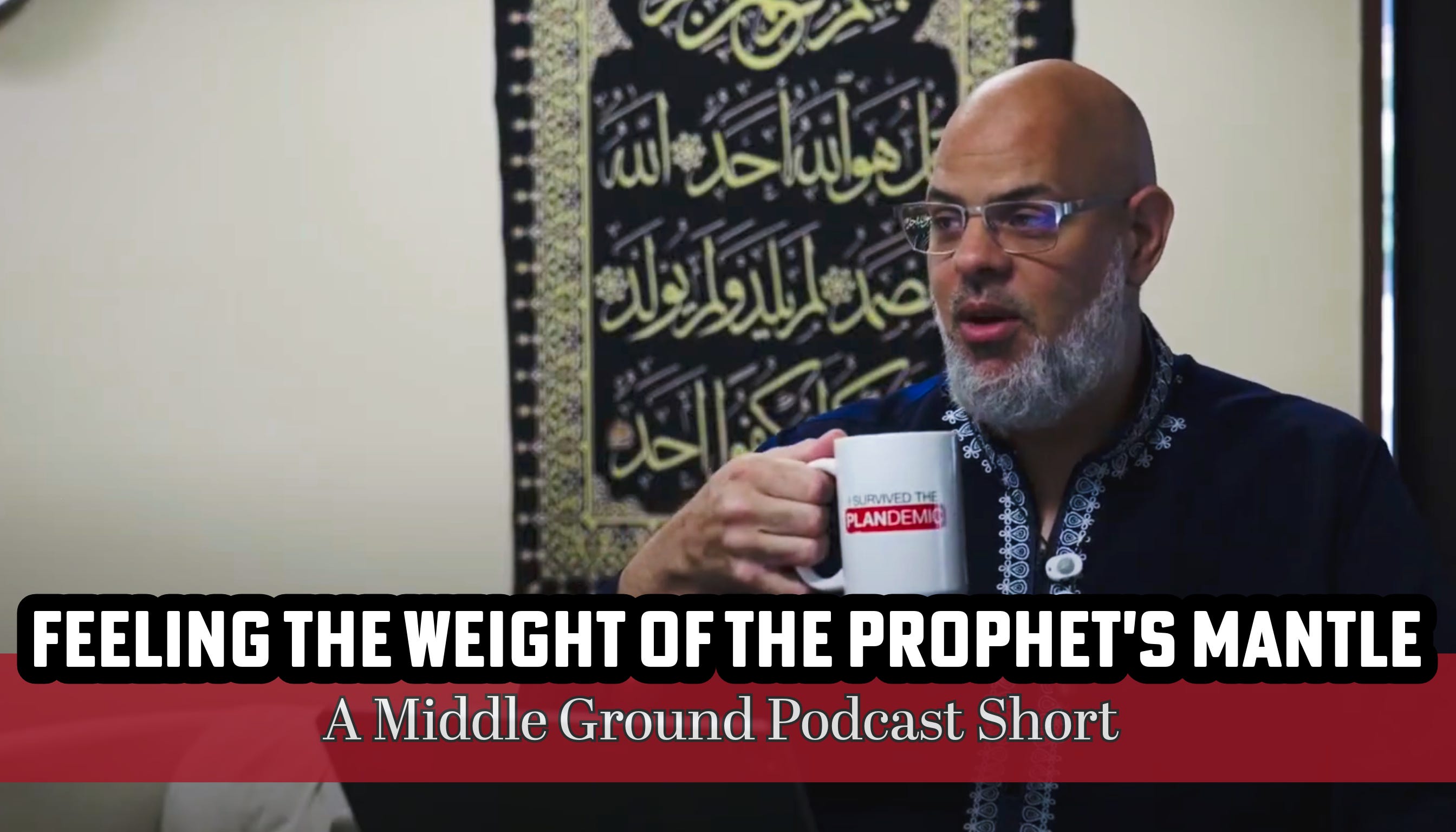
﷽ Before starting my Saturday Qur’ān class, Understanding the Qur’ān, where we read from Ibn Juzayy’s tafsīr, I shared a reflection on what it’s like to give a khuṭbah on the minbar, week after week. That there’s a weighty feeling of responsibility that comes with opening your mouth in not just a public space but most importantly a sacred one. Even after having given a khuṭbah nearly ever single Friday for over a decade, I still wrestle with the weight and the significance of standing in the place where the Prophet Muḥammad ﷺ stood and preached. This is compounded now with the ever increasing tendency, at least in America (if not in the greater West) of the “speakerfication” of religious sermons in our community and not for least because when someone listens to one of my khuṭbahs—and takes what I say to heart—and then acts on those words, it leaves me feeling inadequate and hesitant to speak. Every time.Imam’s Corner is a reader-supported publication. To receive new posts and support my work, consider becoming a free or paid subscriber.As I said, we live in an age where the word “speaker” has come to replace khaṭīb or preacher. This shift may have been understandable in the early years of the Muslim community in America, when many came from cultural Muslim backgrounds with little to no formal training. But after decades of growth, and with a new generation of Western Muslims who have pursued formal study both at home and abroad, this terminology—and the mindset behind it—feels outdated.Yet the old mentality persists. Along with reducing the khaṭīb to a “speaker,” the khuṭbah itself has been downgraded to motivational talks, TED-style sermons, or worse: political pandering and incoherent rambling. As someone raised in the ’70s, the word “speaker” meant Cerwin Vegas or JBLs—equipment, not people. Today, the criteria for assuming the mantle of the Prophet ﷺ can be as superficial as having a large social media following or the right connections to the masjid board.I don’t say this to be harsh, but because of some recent experiences that both I and another brother were witness to. This brother shared with me disturbing feedback from a khuṭbah he attended where the khaṭīb made deeply troubling remarks. I also recently attended one myself that left me questioning where we are as a community. Who is being allowed to shape the minds and hearts of Muslims every Friday? Has our reverence for what it means to speak with authenticity and accountability fallen this low?Giving a khuṭbah isn’t just a speech. It’s not “content” and furthermore, it’s a responsibility, an obligation to know what the khuṭbah is, something which the Qur’ān is not silent about. Allāh says in the Sixty Second Chapter,يَـٰٓأَيُّهَا ٱلَّذِينَ ءَامَنُوٓا۟ إِذَا نُودِىَ لِلصَّلَوٰةِ مِن يَوْمِ ٱلْجُمُعَةِ فَٱسْعَوْا۟ إِلَىٰ ذِكْرِ ٱللَّهِ وَذَرُوا۟ ٱلْبَيْعَ ۚO believers! When the call to prayer is made on Friday, then proceed with haste to the remembrance of Allāh, leaving off all business matters.The khuṭbah and the prayer are jointly referred to as dhikr Allāh, “the Remembrance of Allāh”. Many have the skewed view that the khuṭbah is some kind of weekly alternative to the normal prayer which is conducted silently. But Friday (Yawm al-Jumu’ah) has its own uṣūl, its own foundations, of which the khuṭbah is foundationally a part of, not alternatively.My point is that I’ve seen an attitude develop amongst this generation of Muslims where the khuṭbah is not regarded with the same reverence and regard as the prayer. This, along with other factors, has led to a degrading of the khuṭbah. This is of special concern in that what young Muslims are seeing—online or in-person—isn’t knowledge-based. Arguments about abstract theological debates from centuries ago or political grievances, especially those that have no real bearing on our lives today, have no place on the minbar. We need to ask ourselves: Are people bored of serious scholarship and spiritual effort because the people who represent it seem more interested in spectacle than sincerity? And have we contributed to that, creating a culture where nobody wants to get up for Fajr and study, not because they’re lazy, but because they’ve never been invited into something worth sacrificing for?This is why the minbar matters and why I feel its prophetic weight every Friday. Get full access to Imam’s Corner at imammarcmanley.substack.com/subscribe
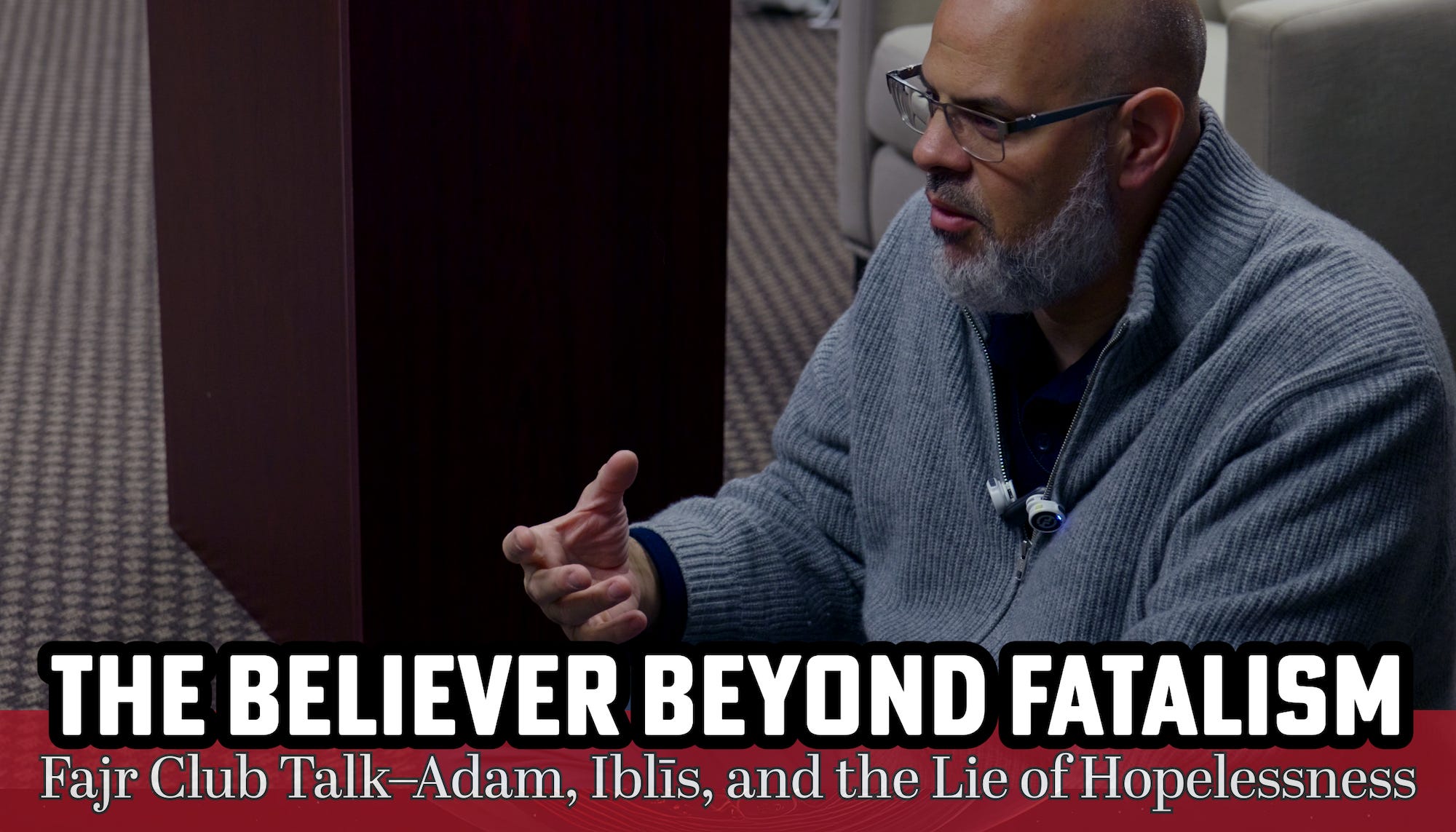
﷽ Modern life pushes us into two extremes: a hamster wheel of "progression" or paralyzing fatalism. Islam offers a different paradigm. We discussed, as part of our Saturday morning Fajr Club, how believers can hold space for both divine decree and improvised action, rooted in sincerity and gratitude. Get full access to Imam’s Corner at imammarcmanley.substack.com/subscribe
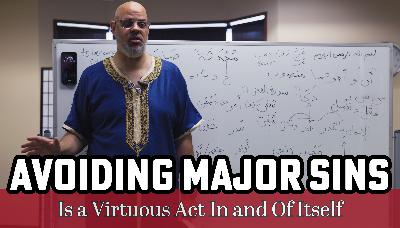
﷽ Many of us focus on repentance, but did you know there’s a reward simply for avoiding major sins? Allāh says in Sūrah al-Shūrā,وَمَا عِندَ ٱللَّهِ خَيْرٌۭ وَأَبْقَىٰ لِلَّذِينَ ءَامَنُوا۟ وَعَلَىٰ رَبِّهِمْ يَتَوَكَّلُونَ - وَٱلَّذِينَ يَجْتَنِبُونَ كَبَـٰٓئِرَ ٱلْإِثْمِ وَٱلْفَوَٰحِشَ وَإِذَا مَا غَضِبُوا۟ هُمْ يَغْفِرُونَ“What is with Allah is far better and more lasting for those who believe and put their trust in their Lord; who avoid major sins and shameful deeds, and forgive when angered…” – al-Shūrā v. 36-37This is an excerpt from Sunday Arabic class, The Arabic Reader, where we were studying a passage from Ibn Abī Zayd al-Qayrawānī’s al-Risālah that shows how the deliberate and intentional efforts to stay away from major sins can lead to Allāh forgiving our minor ones.Imam’s Corner is a reader-supported publication. To receive new posts and support my work, consider becoming a free or paid subscriber. Get full access to Imam’s Corner at imammarcmanley.substack.com/subscribe

﷽ The following is an excerpt from my Sunday Arabic class, The Arabic Reader. I wanted to illustrate how pre-modern scholars of the Qur’ān, in this case Ibn Abī Zayd al-Qayrawānī, the author of the famous al-Risālah, commented on how everything “flows into existence according to the decree of Allāh”, itself a commentary on the Qur’ānic motif of "flowing rivers" in paradise. I illustrate how this resonates with ideas in quantum physics. So what can classical Islamic thought teach us, or rather, physicists!, about the nature of existence?Imam’s Corner is a reader-supported publication. To receive new posts and support my work, consider becoming a free or paid subscriber.You can also watch on YouTube: Get full access to Imam’s Corner at imammarcmanley.substack.com/subscribe
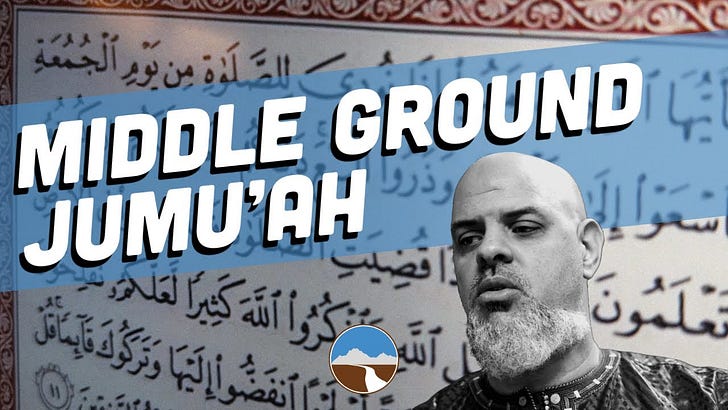
Imam’s Corner is a reader-supported publication. To receive new posts and support my work, consider becoming a free or paid subscriber.﷽ Inadequacies – we all have them. And Shayṭān, the Accursed Devil, uses these to discourage us from repenting to our Lord, Who is Merciful, and demoralize us from persevering through our faults, sins, and mistakes, making us think that we’ll never make it. But our beloved Guide and Messenger ﷺ warned us from thinking just our deeds alone could save us when he said, “The deeds of anyone of you will not save you" They said, "Even you will not be saved by your deeds, O Allah's Messenger?" He said, "No, even I unless and until Allah bestows His Mercy on me. Therefore, do good deeds properly, sincerely and moderately, and worship Allah in the forenoon and in the afternoon and during a part of the night, and always adopt a middle, moderate, regular course whereby you will reach your target ( meaning Jannah/Paradise)”. – See Ṣaḥīḥ al-Bukhārī (English and Arabic).So know that what you do in worship to your Creator is appreciated, accounted for, and weighed and considered. And that it just may to you and I our entire lives, striving mightily, no matter how week we get, to achieve the ultimate goal:“And whoever obeys Allah and His Messenger, has truly achieved a great triumph – وَمَن يُطِعِ ٱللَّهَ وَرَسُولَهُۥ فَقَدْ فَازَ فَوْزًا عَظِيمًا ٧١” – Sūrah al-Aḥzāb v. 71.May Allāh accept from us and forgive us our shortcomings, overlook our sins and mistakes, and make us from the People of Paradise. Āmīn.You can watch the full khuṭbah here: Get full access to Imam’s Corner at imammarcmanley.substack.com/subscribe
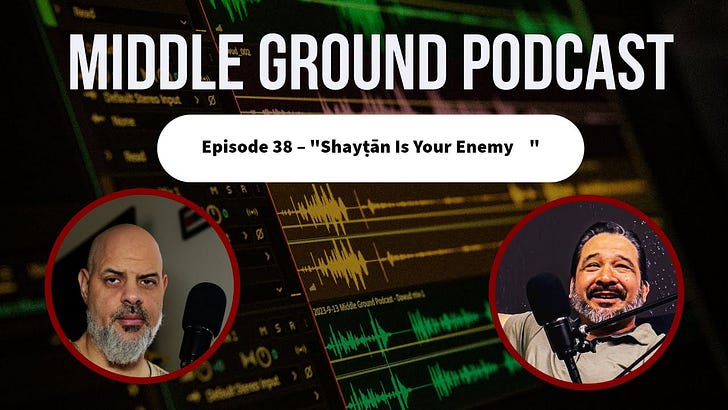
﷽ Welcome to Episode 38 of the Middle Ground Podcast. Hosts Imam Marc Manley and brother Dawud Aleman. In this episode we reflect on the duality that on one hand Allāh tells us that Shaytan (Satan) is our "clear enemy" (عُدُوٌّ مُبِيْنٌ) and yet he remains hidden to us, at least directly. We also talk about the effects of “blue light” and what it means to be “alternative” as it relates to medical practices.Imam’s Corner is a reader-supported publication. To receive new posts and support my work, consider becoming a free or paid subscriber.You can also watch the episode on YouTube: Get full access to Imam’s Corner at imammarcmanley.substack.com/subscribe
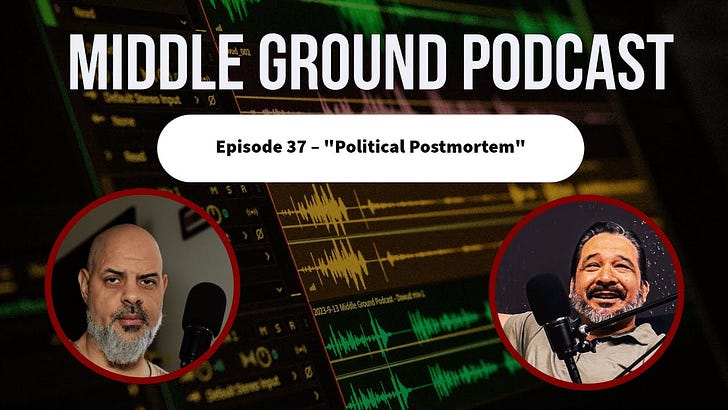
﷽ Welcome to Episode 37 of the Middle Ground Podcast. Hosts Imam Marc Manley and brother Dawud Aleman.In this episode we what's ahead for Muslims in America now that the election is over. Will Trump fulfill his promises, for good or bad, or is he a lame duck president?Imam’s Corner is a reader-supported publication. To receive new posts and support my work, consider becoming a free or paid subscriber.You can also watch this episode on YouTube: Get full access to Imam’s Corner at imammarcmanley.substack.com/subscribe
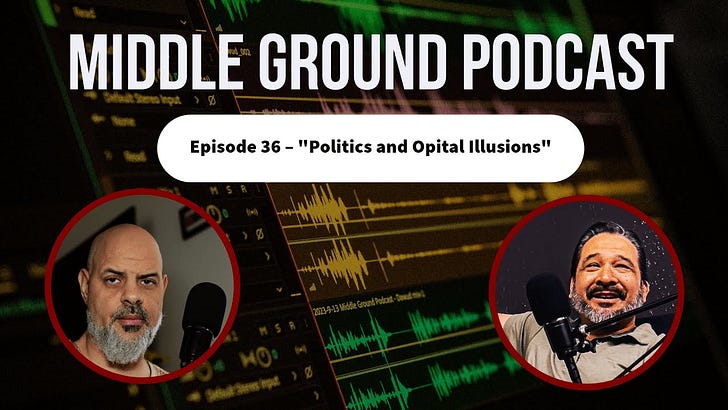
﷽ Welcome to Episode 36 of the Middle Ground Podcast. Hosts Imam Marc Manley and brother Dawud Aleman.In this episode we ask the question: if much of politics is about "the optics" then what happens if it's just an optical illusion?Imam’s Corner is a reader-supported publication. To receive new posts and support my work, consider becoming a free or paid subscriber.You can also watch this episode on YouTube: Get full access to Imam’s Corner at imammarcmanley.substack.com/subscribe
﷽ Welcome to Episode 35 of the Middle Ground Podcast. Hosts Imam Marc Manley and brother Dawud Aleman.Values. They sound good but are they really as permanent and unchangeable as we think? And what's the difference between values and character?Imam’s Corner is a reader-supported publication. To receive new posts and support my work, consider becoming a free or paid subscriber.You can also watch the episode on YouTube: Get full access to Imam’s Corner at imammarcmanley.substack.com/subscribe
﷽ Welcome to Episode Thirty Four of the Middle Ground Podcast. We’re your hosts Imām Marc and brother Dawud Aleman. Narratives. Arabic. Question: Can a Muslim cry? Can we do yoga or mindfulness meditation? What are the limits in Islam? Brother Dawud and myself explore the limits, if any, of emotional expression as Muslims.Imam’s Corner is a reader-supported publication. To receive new posts and support my work, consider becoming a free or paid subscriber.This episode can also be found on YouTube: Get full access to Imam’s Corner at imammarcmanley.substack.com/subscribe
﷽ Ever wonder why there seems to be two systems of classification for Arabic dictionaries? Pre-modern dictionaries have one system (the “bāb and faṣl” system, as we’ll see) and modern dictionaries have another. Imam’s Corner is a reader-supported publication. To receive new posts and support my work, consider becoming a free or paid subscriber.In modern dictionaries like Arabic-English Lexicon (1863), better know as Lane’s Lexicon, by British orientalist, Edward William Lane, or Arabisches Wörterbuch (1952), know in English as A Dictionary of Modern Written Arabic (1961), or simply, Hans Wehr, by German orientalist, Hans Bodo Wehr, where the sorting and classification proceeds in alphabetical form, from the first, second, and third letters (and forth or fifth in those rarities). For example, a-l-f (أ+ل+ف) would precede q-f-l (ق+ف+ل) if one were looking up the words ‘ulfah (ألفة/”affection”) and qaffāl (قفّال/”locksmith”) respectively in those dictionaries. But in classical dictionaries like al-Ṣiḥāḥ, by Transo-Turkic lexicographer Abū Naṣr al-Jawharī, the last letter of the root (the “bāb”) is how words/roots are sorted. So for instance, b-ḥ-t (ب+ح+ت) would precede n-a-t (ن+ع+ت) if one were looking up the words na’t (نعت/”characteristic”) and baḥt (بحت/”pure”) respectively:يسلّط هذا المعجم الضوء على أحد أنظمة التأليف المعجميّ عند العرب أي نظام الباب والفصل أي أن الحرف الأخير من المادّة الأصليّة هو الباب وأن الحرف الأول منها هو الفصل، وأن الباب هو الأصل وأن الفصل هو الفرع، ويشير إلى أن هذا النظام أوْقع المؤلفين في مشكلة بالنسبة إلى الألفاظ المعتلَّة الأواخر إذ لم يستطيعوا أحياناً التمييز بين ما كان واويَّ الأصل أو يائيّة.“This dictionary sheds light on one of the systems of lexicographic compilation used by the Arabs, specifically the system of ‘bāb and faṣl.’ In this system, the last letter of the root word is the ‘bāb’ (the sorting letter), and the first letter is the ‘faṣl’ (secondary sorting letter). The ‘bāb’ is considered the primary category, while the ‘faṣl’ is a secondary one. The text also points out that this system led to difficulties for the compilers, particularly regarding words with weak or defective (مُعْتَلَّة/muʿtallah) endings, as they were sometimes unable to distinguish between roots ending in a ‘wāw’ or a ‘yā’”. — from Dr. Hishām Ṭa Ha Shallāsh’s Muʿjam al-Afʿāl al-Wāwiyyah al-Yā'iyyah (Compendium of of Verbs Ending with Wāw and Yā’) Get full access to Imam’s Corner at imammarcmanley.substack.com/subscribe
 1
1﷽Welcome to Episode Thirty Three of the Middle Ground Podcast. We’re your hosts Imām Marc and brother Dawud Aleman. Narratives. Arabic. All Muslims prize this language. Everyone wants to learn it. But for so many of us, Arabic remains an elusive goal despite the Qur'an being revealed in it. Why?Imam’s Corner is a reader-supported publication. To receive new posts and support my work, consider becoming a free or paid subscriber.This episode can also be found on YouTube:In shā’ Allāh we hope to start our new class, Facilitating the Learning of Arabic for Devotional Studies – The Arabic Reader (تَيْسِيْرُ تَعَلُّمِ اللُّغَةِ العَرَبِيَّةِ لِلدِّراسَةِ التَّعَبُّدِيَّةِ - القارئ العربي) soon. Get full access to Imam’s Corner at imammarcmanley.substack.com/subscribe

Comments

Download from Google Play

Download from App Store
 United States