


Divergent Dialogues
Subscribed: 8Played: 168
Subscribe

© Caitlin Hughes and Teena Mogler
Description
Welcome to "Divergent Dialogues," a podcast where your hosts, Caitlin and Teena—both Accredited Mental Health Social Workers and Neurodivergent-affirming therapists—draw upon their extensive professional expertise and lived experiences. Divergent Dialogues provides quality education from the heart about Neurodivergent life from a practice, research and lived experience lens.
49 Episodes
Reverse
This conversation forms part of a creative research contribution to Neurodiversity: Towards a Critical Turn in Neurodiversity Studies. It explores podcasting as a neurodivergent way of doing research — one that values voice, connection, and shared meaning. Through dialogue between seven neurodivergent podcasters, we will reflect on how podcasting helps us share knowledge differently: through conversation, emotion, and lived experience rather than traditional academic writing.You can read the journal article here: https://doi.org/10.1177/27546330261437265Caitlin Hughes (she/they) is a queer, nonbinary, multi-exceptional Australian social worker, researcher, educator, and advocate. Late-identified as Autistic, ADHD, Gifted, and PDA, Caitlin co-hosts the Divergent Dialogues podcast and brings a lived experience-led perspective to their work. They are committed to fostering epistemic healing through relational ethics, narrative reclamation, and accessible, lived experience–driven knowledge creation.Sheldon Gay (he/him) is a Black Gifted speaker and podcast host of I Must Be BUG'N (Black Underrepresented/Unidentified Gifted and otherwise Neurodivergent). Sheldon is guided by the belief that learning to deeply and wholly Love oneSelf, cape and kryptonite, is the path to finding, creating, and maintaining Love everywhere we go.Marni Kammersell (she/her) is a American late-identified neurodivergent (Autistic, ADHD, PDA, gifted) parent of neurodivergent children. She is an educator, researcher, writer, and consultant, and co-hosts the PDA: Resistance and Resilience podcast. Marni is dedicated to honoring neurodivergent experience through relational, self-directed, and nervous-system-informed knowledge practices.bee mayhew (she/her) is a multiply neurodivergent (late-identified AuDHD, former gifted kid) writer, narrative collaborator, and communication coordinator for PDN Media. She co-hosts cosmic cheer squad podcast and has a background as a hospitality specialist and business owner. Bee’s work centers on collective narrative-building and neurodivergent storytelling through activist, community-rooted practice.Teena Mogler (she/her) is an Australian AuDHD social worker, researcher, educator, and advocate, as well as co-host of the Divergent Dialogues podcast. As a mother to neurodivergent children, Teena is passionate about amplifying neurodivergent voices and disrupting epistemic injustice through lived experience-led, neuroaffirming, and critically reflexive knowledge practices.Emma Nicholson (she/her) is a neurodivergent Australian Senior Business Analyst, creative and advocate, identifying as gifted, Dyscalculic, with all five overexcitabilities (psychomotor, sensual, intellectual, imaginational, and emotional), as well as bisexual and Heathen. She co-hosts the Positive Disintegration Podcast and serves as Vice President of the Dąbrowski Center. She is driven by an unkillable passion to demystify positive disintegration and share hard-won truths to help others feel seen and supported.Chris Wells (they/them) is a multi-exceptional, nonbinary, and neurodivergent writer, podcaster, and developmental theorist specialising in Dąbrowski’s theory of positive disintegration. They co-host the Positive Disintegration, cosmic cheer squad, and PDA: Resistance and Resilience podcasts, and are the founding president of the Dąbrowski Center and co-creator of the Positive Disintegration Network. Chris brings lived experience and a deep commitment to reframing neurodivergence through a developmental and relational lens.
What happens when AI is built with neurodivergent people, not about us?Caitlin and Teena are joined by Laetitia Andrac (CEO/co-founder of Understanding Zoe) for a grounded, hope-filled conversation about AI, ethics, and easing the invisible work carried by neurodivergent families.Together, we explore how AI can support scripting, communication, advocacy, and admin, while staying mindful of risks like bias and deficit-based language. Laetitia shares findings the 2025 Making the Invisible Visible report that includes research with data from 1,091 families, including the reality that many parents are carrying an extra 33 hours per week—with around 10 hours often swallowed by admin.We also unpack what “non-negotiables” look like for ethical AI in care spaces: privacy and security, lived experience design, and using AI as an extension of human connection, not a replacement.If AI can take some of the hidden load, families can reclaim time for what matters most: connection.In this episode, we cover:AI as a “second brain” (and why critical thinking still matters)Bias in AI outputs and why neuroaffirming design is essentialThe hidden load of parenting neurodivergent kids (and what the data says)NDIS prep, advocacy, and practical ways AI can supportEthics + privacy: frameworks, data protection, and trustThe emerging “AI gap” and equity in accessA sneak peek at Understanding Zoe’s upcoming app update (including support for adults)Laetitia Andrac is CEO and co-founder of Understanding Zoe, an AI-powered platform providing neuroaffirmative support for families raising neurodivergent children. A neurodivergent woman and mother of two neurodivergent daughters, Laetitia brings over 15 years of experience in strategy and innovation, including her role as former General Manager at Telstra and as a strategy consultant with Monitor-Deloitte. She's a bestselling author, international speaker, and host of The Neurodivergent Pulse Podcast. Understanding Zoe recently completed Australia's largest study on neurodivergent families (1,091 participants), published as the white paper "Making the Invisible Visible" in November 2025. Through her work, Laetitia champions moving from deficit to strength-based models, creating neuroaffirming systems rather than compliance-based solutions.Website: www.understandingzoe.comLinkedIn (personal): https://www.linkedin.com/in/laetitiaandrac/LinkedIn (company): https://www.linkedin.com/company/understandingzoe/Instagram: https://www.instagram.com/understanding.zoe/Email: laetitia@understandingzoe.comFor more information about our podcast hosts check out the links below:Caitlin HughesCathartic CollaborationsSocial media: @cathartic.collaborationsTeena MoglerBalance Centre for Mental HealthSocial media: @balancecentreformentalhealthReady to enhance your listening experience and make the most of each episode? Become a paid subscriber and gain access to our specially tailored Episode Guides: https://divergentdialogues.substack.com/What’s inside?Clear, Concise Summaries: Easily revisit episode highlights to ensure you’ve got the essentials covered, all presented in a straightforward, digestible format.Reflective Questions: Explore thought-provoking prompts that honour diverse thinking styles. Whether you prefer quiet contemplation or lively discussion, these questions invite you to delve deeper at your own pace.Supportive Activities: Discover exercises and gentle strategies designed to foster learning, personal growth, and emotional wellbeing. Build on your unique strengths and nurture a sense of self-understanding.By joining our community of paid subscribers, you’ll unlock practical tools to help you on your journey to understanding and embracing your neurodivergence.
In this thoughtful and heartfelt conversation, we’re joined by autistic advocate, podcast host and dad, Michael Coles, for a discussion about the lived experience of neurodivergent parenting. Together, we explore the complexities and joys of raising neurodivergent children as neurodivergent adults, especially through the lens of fatherhood.Michael shares how his self-understanding evolved through parenting, the sensory and emotional dynamics of a neurodivergent household, and the ongoing process of self-compassion, co-regulation and community connection.We discuss:The reality of differing neurotypes within the same familyChallenges and wins with school systems and advocacyThe power of support networks and peer connectionThis episode is a gentle yet powerful reminder that neurodivergent parents are doing brave, beautiful work…often while healing themselves. Whether you’re a parent, professional, or simply seeking deeper understanding, there’s wisdom here for all of us.Michael Coles is an autistic advocate, speaker, and host of The Deep Dive Podcast. Drawing on lived experience and professional practice, Michael explores topics including autistic burnout, neurodiversity in the workplace, and inclusive systems that genuinely support neurodivergent people. His work focuses on bridging understanding between autistic and non-autistic communities, with a strong emphasis on safety, dignity, and sustainable participation.Website: http://www.deepdiveau.netLinktree: http://linktr.ee/michaelcolesInstagram & TikTok: @thedeepdiveauYouTube and Facebook: @TheDeepDiveAUThere is a substack that you can subscribe to, but email Michael for the link admin@deepdiveau.netFor more information about our podcast hosts check out the links below:Caitlin HughesCathartic Collaborations - https://www.catharticcollaborations.c...Social media: @cathartic.collaborationsTeena MoglerBalance Centre for Mental Health - https://www.balancecentreformentalhea...Social media: @balancecentreformentalhealthReady to enhance your listening experience and make the most of each episode? Become a paid subscriber and gain access to our specially tailored Episode Guides: https://divergentdialogues.substack.com/What’s inside?Clear, Concise Summaries: Easily revisit episode highlights to ensure you’ve got the essentials covered, all presented in a straightforward, digestible format.Reflective Questions: Explore thought-provoking prompts that honour diverse thinking styles. Whether you prefer quiet contemplation or lively discussion, these questions invite you to delve deeper at your own pace.Supportive Activities: Discover exercises and gentle strategies designed to foster learning, personal growth, and emotional wellbeing. Build on your unique strengths and nurture a sense of self-understanding.By joining our community of paid subscribers, you’ll unlock practical tools to help you on your journey to understanding and embracing your neurodivergence.
In this episode, we explore the powerful intersection between trauma, neurodivergence, and healing. Together, we unpack the impact of late identification, the limitations of diagnostic boxes, and the deep relief that comes from finally having language for your experience.We discuss how trauma often presents differently in neurodivergent individuals, why talk therapy isn’t always enough, and how body-based approaches like EMDR and IFS can support authentic, sustainable healing.This is a conversation for anyone who’s ever felt like they didn’t quite fit—and is ready to start where they are.Themes: late diagnosis, masking, PDA, trauma-informed care, nervous system safety, somatic therapyVera (she/they) is a Senior Clinical Psychologist and Board-Approved Supervisor based in Sydney, Australia. They work with adults who are survivors of trauma, supporting them through the healing process with a person-centred, culturally sensitive, and neuro-affirming approach. Drawing on trauma-informed modalities such as Internal Family Systems, EMDR, and somatic practices, Vera helps clients reconnect with their inner wisdom and sense of Self. As a late-identified neurodivergent person with lived experience of high-masking, Vera values authenticity and understands the challenges of living at the intersection of multiple identities. Through both their clinical work and personal growth journey, they aim to increase the awareness of trauma healing and the importance of doing "the work" to live a fulfilling life. For more information about Vera check out:https://loapac.org/rap/vera-yeoVera's blog post explaining what trauma is: https://www.sydneypsychhub.com.au/unravelling-_trauma/Books Vera mentioned in the episode: The Body Keeps The Score by Bessel Van Der KolkIt Didn't Start With You by Mark Wolynn Vera suggested affordable trauma-informed online trainings: https://www.nicabm.com/For more information about our podcast hosts check out the links below:Caitlin HughesCathartic Collaborations - https://www.catharticcollaborations.com.auSocial media: @cathartic.collaborationsTeena MoglerBalance Centre for Mental Health - https://www.balancecentreformentalhealth.com.au.Social media: @balancecentreformentalhealthReady to enhance your listening experience and make the most of each episode? Become a paid subscriber and gain access to our specially tailored Episode Guides: https://divergentdialogues.substack.com/What’s inside?Clear, Concise Summaries: Easily revisit episode highlights to ensure you’ve got the essentials covered, all presented in a straightforward, digestible format.Reflective Questions: Explore thought-provoking prompts that honour diverse thinking styles. Whether you prefer quiet contemplation or lively discussion, these questions invite you to delve deeper at your own pace.Supportive Activities: Discover exercises and gentle strategies designed to foster learning, personal growth, and emotional wellbeing. Build on your unique strengths and nurture a sense of self-understanding.By joining our community of paid subscribers, you’ll unlock practical tools to help you on your journey to understanding and embracing your neurodivergence.
In this candid and deeply affirming conversation, we explore the layered experience of internalised ableism and the lifelong journey toward self-acceptance as Autistic individuals. Through personal reflections, shared insights, and the powerful inclusion of an audiobook excerpt by guest author Annie Kotowicz, we unpack how diagnosis, identity, boundaries, and belonging evolve over time. Caitlin and Teena show up with honesty, compassion, and vulnerability—offering a grounded perspective on what it means to live authentically as late-diagnosed Autistic person.Annie Kotowicz is an autistic author on a mission to: Describe the beautiful view from her brain, Help other autistics see the beauty of their own brains, and Show why neurodiversity is a beautiful thing. She studied Art and English at Trinity Western University, which led to various jobs in graphic design, editing, and website development. After an autism diagnosis in 2017, she created the blog Neurobeautiful to process her ongoing discoveries about autism and neurodiversity. Since then, she has become a Chief Technology Officer, Special Education Teacher, and member of Mensa. What I Mean When I Say I’m Autistic is her first book. She has also written articles and poetry for Edutopia, NeuroClastic, and Spaces Literary Journal. Annie is happiest when writing, dancing, practicing parkour, drawing Celtic knots, or organizing her cozy and colorful home near Washington, D.C.Website: https://neurobeautiful.com/book Email: mybrainisbeautiful@gmail.comFor more information about our podcast hosts check out the links below:Caitlin HughesCathartic Collaborations - https://www.catharticcollaborations.com.auSocial media: @cathartic.collaborationsTeena MoglerBalance Centre for Mental Health - https://www.balancecentreformentalhealth.com.au.Social media: @balancecentreformentalhealthReady to enhance your listening experience and make the most of each episode? Become a paid subscriber and gain access to our specially tailored Episode Guides: https://divergentdialogues.substack.com/What’s inside?Clear, Concise Summaries: Easily revisit episode highlights to ensure you’ve got the essentials covered, all presented in a straightforward, digestible format.Reflective Questions: Explore thought-provoking prompts that honour diverse thinking styles. Whether you prefer quiet contemplation or lively discussion, these questions invite you to delve deeper at your own pace.Supportive Activities: Discover exercises and gentle strategies designed to foster learning, personal growth, and emotional wellbeing. Build on your unique strengths and nurture a sense of self-understanding.By joining our community of paid subscribers, you’ll unlock practical tools to help you on your journey to understanding and embracing your neurodivergence.
In this episode, we dive into a conversation with Cammy Griffin, a passionate researcher and organiser of the upcoming Neurodivergent Minds Conference on the Sunshine Coast. Together, we explore the evolving field of neurodiversity-affirming practice, grounded in lived experience, evidence-based research, and a strong commitment to accessibility. Cammy shares insights from her PhD research on speech pathology practices that centre neurodivergent voices, the intersectionality within neurodivergent identities, and the importance of systemic shifts in healthcare and support systems. This episode champions humility, flexibility, and power-sharing in professional practice and highlights how professionals must be willing to adapt, learn, and listen. We’re thrilled to share that Caitlin and Teena will also be attending the Neurodivergent Minds Conference and Caitlin will be presenting!Cammy is a neurodivergent paediatric speech pathologist on the Sunshine Coast. She is undertaking a PhD on Neurodiversity-Affirming Speech Pathology Practice and has a passion for supporting individuals of all neurotypes to achieve their goals and live fulfilling lives.Find out more about Neurodivergent Minds Conference and Cammy here:www.neurodivergentmindsconference.com.au https://www.instagram.com/neurodivergentmindsconfau/ https://www.instagram.com/letstalkneuropositivity/For more information about our podcast hosts check out the links below:Caitlin HughesCathartic Collaborations - https://www.catharticcollaborations.com.auSocial media: @cathartic.collaborationsTeena MoglerBalance Centre for Mental Health - https://www.balancecentreformentalhealth.com.au.Social media: @balancecentreformentalhealthReady to enhance your listening experience and make the most of each episode? Become a paid subscriber and gain access to our specially tailored Episode Guides: https://divergentdialogues.substack.com/What’s inside?Clear, Concise Summaries: Easily revisit episode highlights to ensure you’ve got the essentials covered, all presented in a straightforward, digestible format.Reflective Questions: Explore thought-provoking prompts that honour diverse thinking styles. Whether you prefer quiet contemplation or lively discussion, these questions invite you to delve deeper at your own pace.Supportive Activities: Discover exercises and gentle strategies designed to foster learning, personal growth, and emotional wellbeing. Build on your unique strengths and nurture a sense of self-understanding.By joining our community of paid subscribers, you’ll unlock practical tools to help you on your journey to understanding and embracing your neurodivergence.
In this episode, we sit down with Dr. Margaret "Pegi" Price who brings lived experience and legal acumen to the topic of divorce and parenting plans involving neurodivergent children. Drawing from her own journey as a parent of an autistic child and her career in law, Pegi shares the realities families face when the legal system isn't built to accommodate neurodivergent needs. Together, we explore what it means to create supportive, future-focused parenting plans, how to advocate for fair financial contributions, and the long-term impact of unequal caregiving responsibilities. From managing transitions between households to navigating denial of diagnosis, this episode is filled with wisdom for parents, professionals, and allies alike. We also unpack: The risks of "cookie cutter" legal forms for neurodivergent families Why crisis planning is crucial for families with neurodivergent children How to honour neurodivergent children’s autonomy, routines, and emotional safety post-separation The hidden cost of invisible labour and caregiving work Whether you're currently navigating separation or supporting someone who is, this episode offers clarity, compassion, and practical strategies grounded in justice and neuroaffirming support.Dr. Margaret ‘Pegi’ Price is a Professor and Academic Program Director for the Master of Public Administration Program at National University. She has held teaching and department head positions at several colleges and universities in the Midwest. She received a National Teacher of the Year award in 1992. She earned her Juris Doctorate at the University of Florida in Gainesville, Florida, where she was a Senior Editor of the Law Review and inducted into Phi Delta Phi, the legal honors society. She earned the rst perfect score in the history of the University of Florida in the Law Review annual writing competition. She completed her B.A. in History at the University of North Florida in Jacksonville, Florida, where she received multiple academic honors. With over 25 years of experience practicing law—including civil trial work and serving as a prosecutor—Dr. Price has also acted as an expert witness or consultant in more than 75 lawsuits involving special needs, making her a champion for justice and equity.Books authored by Dr. Margaret “Pegi” Price:The Special Needs Child and Divorce: A Practical Guide to Handling and Evaluating CasesDivorce and the Special Needs Child: A Guide for ParentsFor more information about our podcast hosts check out the links below:Caitlin HughesCathartic CollaborationsSocial media: @cathartic.collaborationsTeena MoglerBalance Centre for Mental HealthSocial media: @balancecentreformentalhealthSubscribe nowReady to enhance your listening experience and make the most of each episode? Become a paid subscriber and gain access to our specially tailored Episode Guides.What’s inside?Clear, Concise Summaries: Easily revisit episode highlights to ensure you’ve got the essentials covered, all presented in a straightforward, digestible format.Reflective Questions: Explore thought-provoking prompts that honour diverse thinking styles. Whether you prefer quiet contemplation or lively discussion, these questions invite you to delve deeper at your own pace.Supportive Activities: Discover exercises and gentle strategies designed to foster learning, personal growth, and emotional wellbeing. Build on your unique strengths and nurture a sense of self-understanding.By joining our community of paid subscribers, you’ll unlock practical tools to help you on your journey to understanding and embracing your neurodivergence.Dive Deeper Into Divergent Dialogues: Exclusive Episode Guide PDFs for Neurodivergent Minds
In this deeply resonant conversation, we explore how Gifted identity is shaped through mirroring, the profound importance of safe, attuned relationships, and the nuanced challenges of living as neurodivergent individuals in a world built for sameness. Together, we reflect on the journey of self-acceptance, the role of humour and play as relational tools, and the healing power of co-created spaces that honour difference. We dive into existential perfectionism and the ongoing dance between the pathology paradigm and the neurodiversity paradigm. This episode is a grounded, compassionate invitation to embrace your full self—with curiosity, courage, and community.Key Themes Explored:Authenticity & relational safety: how feeling seen supports nervous system regulation and deeper self-understanding.Self-acceptance journeys: reframing the need for external validation and embracing curiosity when building connections across neurotypes.Emotional safety for gifted folks: unpacking internalised shame and societal expectations, and finding joy in interests.Humour as both shield and bridge: playfulness as a tool for navigating uncertain social terrain.Living biculturally: straddling the pathology paradigm and neurodiversity paradigm as clinicians with lived experience.Gordon’s group work: insight into creative and therapeutic spaces for identity exploration through poetry and connection.Gordon Smith is a Licensed Clinical Mental Health Counselor, Coach, Creative, and work in progress at giftedandgrowing.org. A Clinician in his 25th year of practice, Gordon has centered his practice entirely on gifted adolescents and adults since 2017. Gordon’s mission is to help gifted and otherwise neurodivergent people become fully themselves through self-knowing, self-acceptance, self-care, and self-advocacy. He offers individual counseling and coaching as well as many varied group coaching and creative experiences. He is passionate about community building and the depathologization and decolonization of gifted consciousness. He is a gifted, multiply neurodivergent, multipotentialite living in Asheville, North Carolina, where he has been a community organizer in countless roles. In addition to his individual counseling and coaching services, Gordon leads groups centered in gifted self-development and creative consciousness. He’s also a poet, organizer of the Big Asheville Science Salon, disc golfer, chess player, party planner, fellow at Camp Yunasa, traveler and bon vivant.To learn more about Gordon and his work check out:Gifted and Growing - https://giftedandgrowing.org/Gifted Adults Group Experience - https://giftedandgrowing.org/groups/gifted-adults-group-experience/Turning the Jewel: Story and Self - https://giftedandgrowing.org/groups/age-of-intuition-suite-offering/Magnum Opus - https://giftedandgrowing.org/groups/age-of-intuition-suite-magnum-opus/Decolonizing Therapy by Dr. Jennifer Mullan - https://www.decolonizingtherapy.com/bookLaura Hope-Gill Substack - https://substack.com/@laurahopegillDive Deeper Into Divergent Dialogues: Exclusive Episode Guide PDFs for Neurodivergent MindsReady to enhance your listening experience and make the most of each episode? Become a paid subscriber on Substack and gain access to our specially tailored Episode Guides: https://divergentdialogues.substack.com/For more information about our podcast hosts check out the links below:Caitlin HughesCathartic CollaborationsSocial media: @cathartic.collaborationsTeena MoglerBalance Centre for Mental HealthSocial media: @balancecentreformentalhealth
⚠️ Content WarningThis podcast episode discusses domestic and sexual violence against autistic people. It includes references to abuse, trauma, and systemic harm. Please prioritise your wellbeing — feel free to pause, skip sections, or step away at any time.In this deeply insightful episode of Divergent Dialogues, we sit down with Jessica Fox, an Autistic doctoral researcher, to explore the intersecting experiences of Autistic women, domestic violence, sexual violence and trauma. Together with Caitlin and Teena, Jessica unpacks the prevalence of interpersonal violence, the impact of systemic failures, and the barriers Autistic individuals face when navigating social expectations and accessing support. Drawing from both lived experience and academic research, the conversation moves through themes of social isolation, gender oppression, neuroaffirming practice, and the triple empathy problem. We also discuss the power of community, the importance of autistic representation in research, and the need to centre consent and mutual understanding in therapeutic and relational contexts.Whether you're a professional, lived experience advocate, or community member, this episode is an essential listen for anyone working toward justice, safety, and equity for Neurodivergent women.Topics Covered:High rates of domestic and sexual violence among Autistic womenSocial masking, boundary challenges, and consent complexitiesSystemic and structural risk factorsThe value of neuroaffirming and feminist approachesJess is an autistic doctoral researcher at the Queensland University of Technology and a strong advocate for the human rights and wellbeing of autistic people. Jess is particularly passionate about autistic-led research and community building. Jess is an interdisciplinary researcher who is currently studying autistic women’s experiences of interpersonal violence and trauma. Before undertaking her PhD, Jess worked with autistic young people in school settings. Jess is also passionate about her work in supporting autistic adults through peer mentoring and mutual aid networks.Links to Jess’s research touching on the topics discussed:Neuro-queering feminism: Creating space within feminism to address autistic experiences of gender oppression: https://journals.sagepub.com/doi/10.1177/09593535241306532The Impact of Intersectional Disadvantage on Autistic Women's Experiences of Interpersonal Violence: A Narrative Review: https://www.liebertpub.com/doi/10.1089/aut.2023.0100 – feel free to get in touch with Jess at jessicafox.hdr@qut.edu.au if you need access to this.Dive Deeper Into Divergent Dialogues: Exclusive Episode Guide PDFs for Neurodivergent MindsReady to enhance your listening experience and make the most of each episode? Become a paid subscriber on Substack and gain access to our specially tailored Episode Guides: https://divergentdialogues.substack.com/What’s inside?Clear, Concise Summaries: Easily revisit episode highlights to ensure you’ve got the essentials covered, all presented in a straightforward, digestible format.Reflective Questions: Explore thought-provoking prompts that honour diverse thinking styles. Whether you prefer quiet contemplation or lively discussion, these questions invite you to delve deeper at your own pace.Supportive Activities: Discover exercises and gentle strategies designed to foster learning, personal growth, and emotional wellbeing. Build on your unique strengths and nurture a sense of self-understanding.By joining our community of paid subscribers on Substack, you’ll unlock practical tools to help you on your journey to understanding and embracing your neurodivergence.For more information about our podcast hosts check out the links below:Caitlin HughesCathartic Collaborationshttps://catharticcollaborations.com.au/Social media: @cathartic.collaborationsTeena MoglerBalance Centre for Mental Healthhttps://www.balancecentreformentalhealth.com.auSocial media: @balancecentreformentalhealth
In this episode, we (Caitlin and Teena) explore the importance of creating safe, collaborative spaces in therapy where neurodivergent clients feel truly seen and supported. We unpack common barriers people face when approaching therapy and share ways to prepare for a first session so it feels less daunting. Together, we highlight the power of client autonomy, the need for therapists to adapt with openness, and the value of mutual respect in the therapeutic process. In this episode, we cover:The importance of client comfort and preparation in therapyWhy a collaborative, flexible approach is keyRespecting client autonomy and lived experienceDive Deeper Into Divergent Dialogues: Exclusive Episode Guide PDFs for Neurodivergent MindsReady to enhance your listening experience and make the most of each episode? Become a paid subscriber on Substack and gain access to our specially tailored Episode Guides: https://divergentdialogues.substack.com/What’s inside?Clear, Concise Summaries: Easily revisit episode highlights to ensure you’ve got the essentials covered, all presented in a straightforward, digestible format.Reflective Questions: Explore thought-provoking prompts that honour diverse thinking styles. Whether you prefer quiet contemplation or lively discussion, these questions invite you to delve deeper at your own pace.Supportive Activities: Discover exercises and gentle strategies designed to foster learning, personal growth, and emotional wellbeing. Build on your unique strengths and nurture a sense of self-understanding.By joining our community of paid subscribers on Substack, you’ll unlock practical tools to help you on your journey to understanding and embracing your neurodivergence.For more information about our podcast hosts check out the links below:Caitlin HughesCathartic Collaborationshttps://catharticcollaborations.com.au/Social media: @cathartic.collaborationsTeena MoglerBalance Centre for Mental Healthhttps://www.balancecentreformentalhealth.com.auSocial media: @balancecentreformentalhealth
In this episode, we sit down with Marni Kammersell, to explore alternative education models and how they support neurodivergent children. From forest schools to unschooling and self-directed learning, we discuss the importance of flexibility, autonomy, and embracing diverse learning preferences.We also dive into the social benefits of gaming for neurodivergent individuals, reflecting on how video games can support regulation, connection, and skill development—when approached with balance and understanding. Finally, we explore parenting neurodivergent children, empowering autonomy and decision-making from an early age.Topics covered:Forest schools & nature-based learning – Pros & considerations for neurodivergent kidsGaming & neurodivergence – How it fosters social connection & emotional regulationHomeschooling & unschooling – Self-directed education and why it works for some neurodivergent learnersEmpowering autonomy – Encouraging independence and self-advocacy in neurodivergent childrenMarni Kammersell is a neurodivergent educator, consultant, and parent to three neurodivergent kids. She specializes in helping families create liberatory, neuro-affirming educational environments and is passionate about self-directed education, the neurodiversity paradigm, and non-coercive relationships. A doctoral student researching neurodivergence and self-directed learning, Marni has over 15 years of experience in alternative education, including homeschooling, unschooling, democratic schools, and forest schools.Learn more about Marni’s work here: https://wanderingbrightly.com/For more information about our podcast hosts check out the links below:Caitlin HughesCathartic Collaborationshttps://catharticcollaborations.com.au/Social media: @cathartic.collaborationsTeena MoglerBalance Centre for Mental Healthhttps://www.balancecentreformentalhealth.com.auSocial media: @balancecentreformentalhealthDive Deeper Into Divergent Dialogues: Exclusive Episode Guide PDFs for Neurodivergent MindsReady to enhance your listening experience and make the most of each episode? Become a paid subscriber on Substack and gain access to our specially tailored Episode Guides: https://divergentdialogues.substack.com/What’s inside?Clear, Concise Summaries: Easily revisit episode highlights to ensure you’ve got the essentials covered, all presented in a straightforward, digestible format.Reflective Questions: Explore thought-provoking prompts that honour diverse thinking styles. Whether you prefer quiet contemplation or lively discussion, these questions invite you to delve deeper at your own pace.Supportive Activities: Discover exercises and gentle strategies designed to foster learning, personal growth, and emotional wellbeing. Build on your unique strengths and nurture a sense of self-understanding.By joining our community of paid subscribers on Substack, you’ll unlock practical tools to help you on your journey to understanding and embracing your neurodivergence.
In this deeply reflective conversation, Caitlin and Teena unpack the systemic barriers that autistic individuals and ADHDers often face when navigating mental health care and assessment pathways. Drawing from both lived experience and professional expertise, they explore the confusing, costly, and often invalidating processes involved in accessing support. The episode shines a light on the importance of neuro-affirming, autism-specific training for GPs and mental health professionals, and discusses how therapy environments can be better tailored to meet neurodivergent needs. It ends on a hopeful note, acknowledging the challenges of creating systemic change while affirming the power of small, individual actions toward a more inclusive, understanding society.Dive Deeper Into Divergent Dialogues: Exclusive Episode Guide PDFs for Neurodivergent MindsReady to enhance your listening experience and make the most of each episode? Become a paid subscriber on Substack and gain access to our specially tailored Episode Guides: https://divergentdialogues.substack.com/What’s inside?Clear, Concise Summaries: Easily revisit episode highlights to ensure you’ve got the essentials covered, all presented in a straightforward, digestible format.Reflective Questions: Explore thought-provoking prompts that honour diverse thinking styles. Whether you prefer quiet contemplation or lively discussion, these questions invite you to delve deeper at your own pace.Supportive Activities: Discover exercises and gentle strategies designed to foster learning, personal growth, and emotional wellbeing. Build on your unique strengths and nurture a sense of self-understanding.By joining our community of paid subscribers on Substack, you’ll unlock practical tools to help you on your journey to understanding and embracing your neurodivergence.For more information about our podcast hosts check out the links below:Caitlin HughesCathartic Collaborationshttps://catharticcollaborations.com.au/Social media: @cathartic.collaborationsTeena MoglerBalance Centre for Mental Healthhttps://www.balancecentreformentalhealth.com.auSocial media: @balancecentreformentalhealth
In this episode of Divergent Dialogues, we sit down with Chris Payten, a 29-year-old entrepreneur with over a decade of experience in holistic health. From navigating a turbulent childhood to building his own business at just 17, Chris shares how his journey led him from personal training to breathwork, a practice that has transformed his mental health and now helps others.Together with Caitlin and Teena, the conversation delves into the neurodivergent experience, exploring the challenges and strengths of ADHD and autism. We discuss the importance of self-acceptance, early diagnosis, and holistic therapy—considering both cognitive and physiological aspects of well-being. Chris also introduces the science behind conscious breathing, explaining how breathwork can regulate the nervous system and support neurodivergent minds.We also unpack the complexities of neurodivergent relationships, communication styles, and executive function challenges. Chris offers insights into how breathwork can reduce stress, improve focus, and support emotional regulation. Plus, he generously provides access to his free breathwork course, available via the episode show notes.Chris Payten is a 29-year-old entrepreneur with over a decade in Holistic Health. Overcoming a turbulent childhood, he has transformed thousands of lives through Personal Training, Nutrition, NLP, Hypnosis, and Breathwork. As co-founder of Infinity Training & Coaching, one of Australia's fastest-growing Breathwork Certification companies, he is on a mission to empower millions to achieve peak performance and purpose.Chris’s Instagram: https://www.instagram.com/chrispayten_/Infinity Training & Coaching Instagram: https://www.instagram.com/infinitytrainingandcoaching/Infinity Training and Coaching Website: https://infinitytrainingandcoaching.com/home-9123Beyond Your Breath Perth event: https://infinitytrainingandcoaching.com/landing-pageFor more information about our podcast hosts check out the links below:Caitlin HughesCathartic Collaborationshttps://catharticcollaborations.com.au/Social media: @cathartic.collaborationsTeena MoglerBalance Centre for Mental Healthhttps://www.balancecentreformentalhealth.com.auSocial media: @balancecentreformentalhealthDive Deeper Into Divergent Dialogues: Exclusive Episode Guide PDFs for Neurodivergent MindsReady to enhance your listening experience and make the most of each episode? Become a paid subscriber on Substack and gain access to our specially tailored Episode Guides: https://divergentdialogues.substack.com/What’s inside?Clear, Concise Summaries: Easily revisit episode highlights to ensure you’ve got the essentials covered, all presented in a straightforward, digestible format.Reflective Questions: Explore thought-provoking prompts that honour diverse thinking styles. Whether you prefer quiet contemplation or lively discussion, these questions invite you to delve deeper at your own pace.Supportive Activities: Discover exercises and gentle strategies designed to foster learning, personal growth, and emotional wellbeing. Build on your unique strengths and nurture a sense of self-understanding.By joining our community of paid subscribers on Substack, you’ll unlock practical tools to help you on your journey to understanding and embracing your neurodivergence.
How do hormones impact neurodivergent brains? In this episode of Divergent Dialogues, Caitlin and Teena dive into the intricate relationship between hormones, Autism, ADHD, and menstrual health. They explore how hormonal fluctuations affect mood, cognition, and sensory experiences for neurodivergent individuals. The duo also sheds light on PMDD (Premenstrual Dysphoric Disorder), advocating for greater research and awareness.They also discuss medication management challenges related to hormonal cycles and highlight the importance of advocating for individualised treatment plans. The conversation wraps up with practical advice on approaching healthcare professionals about neurodivergent experiences and the necessity of finding practitioners who truly listen and adapt to personal needs.If you’ve ever struggled with managing hormones, menstrual-related challenges, or navigating healthcare as a neurodivergent person, this episode is packed with insight, validation, and practical strategies.Dive Deeper Into Divergent Dialogues: Exclusive Episode Guide PDFs for Neurodivergent MindsReady to enhance your listening experience and make the most of each episode? Become a paid subscriber on Substack and gain access to our specially tailored Episode Guides: https://divergentdialogues.substack.com/What’s inside?Clear, Concise Summaries: Easily revisit episode highlights to ensure you’ve got the essentials covered, all presented in a straightforward, digestible format.Reflective Questions: Explore thought-provoking prompts that honour diverse thinking styles. Whether you prefer quiet contemplation or lively discussion, these questions invite you to delve deeper at your own pace.Supportive Activities: Discover exercises and gentle strategies designed to foster learning, personal growth, and emotional wellbeing. Build on your unique strengths and nurture a sense of self-understanding.By joining our community of paid subscribers on Substack, you’ll unlock practical tools to help you on your journey to understanding and embracing your neurodivergence.For more information about our podcast hosts check out the links below:Caitlin HughesCathartic Collaborationshttps://catharticcollaborations.com.au/Social media: @cathartic.collaborationsTeena MoglerBalance Centre for Mental Healthhttps://www.balancecentreformentalhealth.com.auSocial media: @balancecentreformentalhealth
In this episode of Divergent Dialogues, Caitlin and Teena sit down with special guest Meghan to explore the journey of transitioning from traditional workplaces to self-employment as neurodivergent professionals. Together, they discuss the challenges of setting boundaries, managing burnout, and building a sustainable business that aligns with their unique strengths and values.Meghan shares her inspiring journey—from starting her first business at just 10 years old to becoming a leading voice in the neurodiversity movement. The conversation covers the realities of self-employment, the importance of authenticity and self-care, and practical strategies for navigating business as a neurodivergent entrepreneur.In this episode, you'll hear about:The challenges neurodivergent professionals face in traditional workplacesWhy self-employment can be empowering and challengingPractical strategies for setting boundaries and avoiding burnoutThe role of vulnerability and authenticity in supporting clientsFuture goals and community-building effortsWhether you’re a neurodivergent professional, entrepreneur, or simply curious about creating a more inclusive work environment, this episode offers valuable insights and actionable takeaways.Meghan Bonde is a leader in the neurodiversity movement, a Tedx speaker, the founder of intensityhub.com, and a Neurodivergent business coach who supports professionals to attract clients by designing systems to work the way they are wired. As a speech language pathologist, educational leader, and chair of the Colorado Neurodiversity Chamber of Commerce, she has facilitated transformational learning for thousands of leaders. She enjoys dance classes and dancing for a local band's concerts.Watch Meghan’s Tedx talkDiscover your intensity profileFor more information about our podcast hosts check out the links below:Caitlin HughesCathartic CollaborationsSocial media: @cathartic.collaborationsTeena MoglerBalance Centre for Mental HealthSocial media: @balancecentreformentalhealth
In this episode of Divergent Dialogues, we unpack the systemic gender biases that continue to impact neurodivergent people and explore the barriers that make accessing a diagnosis so challenging. Social conditioning often encourages girls and gender-diverse individuals to suppress their natural ways of thinking, behaving, and expressing themselves to meet rigid societal expectations. As a result, instead of being recognised as neurodivergent, they are frequently undiagnosed or misdiagnosed leaving their true needs unaddressed.
In this conversation, we also highlight the importance of safe, neuroaffirming spaces where individuals can explore their identity without fear of judgment. Self-identification is valid, and many people who recognise their own neurodivergence have spent significant time researching, reflecting, and connecting with others before coming to this understanding. However, the healthcare system often dismisses self-identified neurodivergent people, making access to affirming support even more difficult.
This episode is a compassionate, necessary conversation about breaking down stigma, challenging outdated diagnostic models, and advocating for a world that truly sees and supports all neurodivergent experiences.
Dive Deeper Into Divergent Dialogues: Exclusive Episode Guide PDFs for Neurodivergent Minds
Ready to enhance your listening experience and make the most of each episode? Become a paid subscriber on Substack and gain access to our specially tailored Episode Guides: https://divergentdialogues.substack.com/
What’s inside?
Clear, Concise Summaries: Easily revisit episode highlights to ensure you’ve got the essentials covered, all presented in a straightforward, digestible format.
Reflective Questions: Explore thought-provoking prompts that honour diverse thinking styles. Whether you prefer quiet contemplation or lively discussion, these questions invite you to delve deeper at your own pace.
Supportive Activities: Discover exercises and gentle strategies designed to foster learning, personal growth, and emotional wellbeing. Build on your unique strengths and nurture a sense of self-understanding.
By joining our community of paid subscribers on Substack, you’ll unlock practical tools to help you on your journey to understanding and embracing your neurodivergence.
For more information about our podcast hosts check out the links below:
Caitlin Hughes
Cathartic Collaborations
https://catharticcollaborations.com.au/
Social media: @cathartic.collaborations
Teena Mogler
Balance Centre for Mental Health
https://www.balancecentreformentalhealth.com.au/
Social media: @balancecentreformentalhealth
Become a paid subscriber and gain access to our Episode Guide PDFs. Scroll down for more information.
In this episode of Divergent Dialogues, Caitlin, Teena, and Bee open up about the realities of neurodivergent parenting, offering a candid and heartfelt look into their experiences. From the fun and excitement of their children’s daily lives to the challenges of maintaining routines during holidays, the trio shares relatable moments that resonate deeply.
They dive into topics like the transformative journey of discovering their own neurodivergence, and the importance of balancing everyone’s needs in a neurodivergent household. Bee’s unique approach of trusting intuition and rejecting societal norms, paired with Teena’s perspective as a therapist, provides listeners with practical and affirming advice.
The conversation also highlights the power of emotional expression, boundary-setting, and open communication in fostering secure, empathetic, and self-advocating children. Finally, the group explores the importance of a supportive community—or “village”—for raising neurodivergent kids.
✨ Whether you’re a parent, ally, or neurodivergent individual, this episode offers warmth, wisdom, and hope for building a more understanding and inclusive world.
Bee is a former restaurateur and hospitality professional with over 25 years experience balancing motherhood with the demands of small business life. Her voracious appetite for growth and development in leadership roles took her down a path of self directed inquiry into community advocacy that spans interests ranging from Worker Self Directed Enterprises and Cultural Anthropology to Attachment Theory and social work and beyond. Bee is a freelance writer, podcast co-host of Cosmic Cheer Squad Podcast and partner in the Positive Disintegration Network. She is an advocate for joy, rest and healing through her work regardless of job title. Bee is currently a full time unschooling mom of two neurodivergent kids, and (still a mom) to one who lives on their own in Texas and launched pragmagination.com as an aggregate for her various works-in-progress.
For more information about our podcast hosts check out the links below:
Caitlin Hughes
Cathartic Collaborations
Social media: @cathartic.collaborations
Teena Mogler
Balance Centre for Mental Health
Social media: @balancecentreformentalhealth
Dive Deeper Into Divergent Dialogues: Exclusive Episode Guide PDFs for Neurodivergent Minds
Ready to enhance your listening experience and make the most of each episode? Become a paid subscriber and gain access to our specially tailored Episode Guides.
What’s inside?
Clear, Concise Summaries: Easily revisit episode highlights to ensure you’ve got the essentials covered, all presented in a straightforward, digestible format.
Reflective Questions: Explore thought-provoking prompts that honour diverse thinking styles. Whether you prefer quiet contemplation or lively discussion, these questions invite you to delve deeper at your own pace.
Supportive Activities: Discover exercises and gentle strategies designed to foster learning, personal growth, and emotional wellbeing. Build on your unique strengths and nurture a sense of self-understanding.
By joining our community of paid subscribers, you’ll unlock practical tools to help you on your journey to understanding and embracing your neurodivergence.
In this empowering episode of Divergent Dialogues, Caitlin and Teena share practical strategies for managing Rejection Sensitivity Dysphoria (RSD) while navigating relationships, friendships, and social expectations as neurodivergent individuals.
Drawing from personal experiences and professional insights, they explore:
The importance of setting and maintaining personal boundaries.
How self-compassion can help in distinguishing perceived rejection from reality.
Tips for communicating needs and clarifying misunderstandings without fear of conflict.
The role of therapeutic approaches in reducing the intensity of RSD responses.
The journey of embracing authenticity while navigating changing relationships.
Caitlin and Teena remind listeners that it's okay to prioritise nourishing connections and embrace their unique communication styles. Whether you're new to RSD or looking for fresh approaches to coping, this episode is packed with actionable strategies and heartfelt encouragement.
For more information about our podcast hosts check out the links below:
Caitlin Hughes
Cathartic Collaborations
Social media: @cathartic.collaborations
Teena Mogler
Balance Centre for Mental Health
Social media: @balancecentreformentalhealth
In this thought-provoking episode of Divergent Dialogues, Caitlin and Teena delve into Rejection Sensitivity Dysphoria (RSD), a profound emotional experience that resonates with many neurodivergent individuals. They explore the intense reactions to perceived or actual rejection and criticism, unpacking how RSD can ripple into social interactions and relationships.
Through personal reflections and professional insights, they discuss:
The challenges of navigating relationships with heightened sensitivity.
The influence of societal messaging and gender on perceptions of rejection.
Practical strategies for fostering clear communication, setting boundaries, and creating mutual understanding in relationships.
Whether you’re navigating your own RSD or supporting someone who is, this episode offers a compassionate lens and actionable takeaways to deepen understanding and connection.
For more information about our podcast hosts check out the links below:
Caitlin Hughes
Cathartic Collaborations
https://catharticcollaborations.com.au/
Social media: @cathartic.collaborations
Teena Mogler
Balance Centre for Mental Health
https://www.balancecentreformentalhealth.com.au/
Social media: @balancecentreformentalhealth
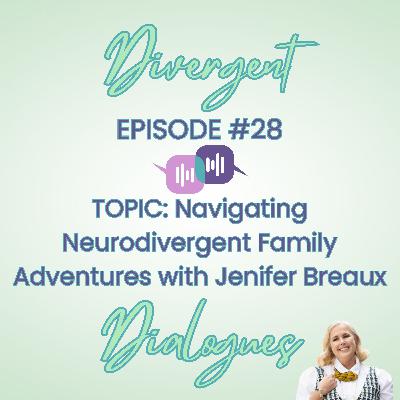
Join Caitlin, Teena, and special guest Jenifer Breaux as they dive into the intersection of neurodiversity and travel. From navigating family trips with neurodivergent children to reframing vacation expectations, this episode is packed with practical tips and inspiring stories.
Discover how Jenifer empowers families to explore the world with confidence. Learn about the magic of social stories, sensory-friendly accommodations, and finding balance between adventure and downtime. Plus, hear about her free ebook, "The Ultimate Top 10 Travel Tips," and how her business, JB Travel Pros, makes travel dreams come true!
Jenifer Breaux is a retired army veteran who served almost three decades. During her time in the army she served the United States all over the world. Through those experiences she gained a love of service and travel. She excelled in her training and retired with honor. Six years ago she opened a franchise of Dream Vacations called JB Travel Pros, where she helps people travel the world with excitement. From coast to coast, Jenifer designs luxury experiences that bring her client's dreams to life. Her love for globe trotting is something she shares with her family, as well. As the mother of two amazing young men who both are on the autism spectrum. Jenifer has become an advocate for families and caregivers of special needs children.
For more information about Jenifer check out her website:
https://www.iamjeniferbreaux.com/
For more information about our podcast hosts check out the links below:
Caitlin Hughes
Cathartic Collaborations
Social media: @cathartic.collaborations
Teena Mogler
Balance Centre for Mental Health
Social media: @balancecentreformentalhealth

Comments

Download from Google Play

Download from App Store
 United States