


 Claim Ownership
The Happiness Practices with Phil Gerbyshak
Subscribed: 45Played: 765
Subscribe

© Phil Gerbyshak (he/him)
Description
🎧 Welcome to The Happiness Practices — your weekly dose of joy, resilience, and intentional living. 🎧
In a world where burnout is the norm, stress is worn like a badge of honor, and joy feels like a luxury—we’re here to remind you of one powerful truth: Happiness is an inside job.
Hosted by internationally recognized happiness expert, speaker, and author Phil Gerbyshak, The Happiness Practices podcast delivers practical, proven, and powerful strategies to help busy business owners, corporate professionals, and growth-minded individuals reclaim their happiness, build resilience, and lead more fulfilling lives—starting right now.
Every episode is a deep breath and a reset button. Whether you're hustling through back-to-back meetings, managing a team, running your own business, or just trying to keep it together—this show is your weekly permission slip to slow down, reflect, and take charge of your emotional well-being.
🌟 What You’ll Get Every Week:
Bite-sized, actionable Happiness Practices to help you feel more grounded, grateful, and energized
Inspiring interviews with thought leaders, mental wellness experts, and real people who've reclaimed their joy
Reflections on the science of happiness, positive psychology, and what really matters in a chaotic world
Stories from Phil's life and listeners just like you—people who’ve found ways to create happiness from the inside out
Tools to help you prevent burnout, boost your mood, and improve your relationships at work and home
💡 This podcast is for you if…
You’re a high-achiever who feels like happiness keeps getting pushed down your to-do list
You’re feeling disconnected, discouraged, or like life is passing you by
You want real, grounded strategies—not fluff—to help you reconnect with your joy
You believe in personal growth and want to feel better on purpose
🎙️ Why Phil?
Phil Gerbyshak is more than a happiness junkie—he’s been where you are. A successful sales leader, entrepreneur, and coach, Phil has lived the stress, burned out more than once, and come back stronger every time. Through speaking on stages around the world and helping thousands of professionals reignite their spark, he discovered that happiness isn’t something you wait for—it’s something you practice.
His mission? To fuel joy, reduce burnout, and make happiness something you do, not just something you feel. That’s what The Happiness Practices is all about.
🔁 Tune in weekly for the reminders, tools, and encouragement you need to live more intentionally—because happiness isn’t a destination. It’s a habit. A mindset. A daily choice.
Subscribe now, share with a friend, and start practicing your happiness—one episode at a time.
✨ The Happiness Practices Podcast
Practical. Powerful. Personal. Because your happiness matters.
happyaf.substack.com
In a world where burnout is the norm, stress is worn like a badge of honor, and joy feels like a luxury—we’re here to remind you of one powerful truth: Happiness is an inside job.
Hosted by internationally recognized happiness expert, speaker, and author Phil Gerbyshak, The Happiness Practices podcast delivers practical, proven, and powerful strategies to help busy business owners, corporate professionals, and growth-minded individuals reclaim their happiness, build resilience, and lead more fulfilling lives—starting right now.
Every episode is a deep breath and a reset button. Whether you're hustling through back-to-back meetings, managing a team, running your own business, or just trying to keep it together—this show is your weekly permission slip to slow down, reflect, and take charge of your emotional well-being.
🌟 What You’ll Get Every Week:
Bite-sized, actionable Happiness Practices to help you feel more grounded, grateful, and energized
Inspiring interviews with thought leaders, mental wellness experts, and real people who've reclaimed their joy
Reflections on the science of happiness, positive psychology, and what really matters in a chaotic world
Stories from Phil's life and listeners just like you—people who’ve found ways to create happiness from the inside out
Tools to help you prevent burnout, boost your mood, and improve your relationships at work and home
💡 This podcast is for you if…
You’re a high-achiever who feels like happiness keeps getting pushed down your to-do list
You’re feeling disconnected, discouraged, or like life is passing you by
You want real, grounded strategies—not fluff—to help you reconnect with your joy
You believe in personal growth and want to feel better on purpose
🎙️ Why Phil?
Phil Gerbyshak is more than a happiness junkie—he’s been where you are. A successful sales leader, entrepreneur, and coach, Phil has lived the stress, burned out more than once, and come back stronger every time. Through speaking on stages around the world and helping thousands of professionals reignite their spark, he discovered that happiness isn’t something you wait for—it’s something you practice.
His mission? To fuel joy, reduce burnout, and make happiness something you do, not just something you feel. That’s what The Happiness Practices is all about.
🔁 Tune in weekly for the reminders, tools, and encouragement you need to live more intentionally—because happiness isn’t a destination. It’s a habit. A mindset. A daily choice.
Subscribe now, share with a friend, and start practicing your happiness—one episode at a time.
✨ The Happiness Practices Podcast
Practical. Powerful. Personal. Because your happiness matters.
happyaf.substack.com
453 Episodes
Reverse

It’s kind of funny when I think about it—throughout my entire career, I’ve taught people how to use tools. Tech tools, communication tools, leadership frameworks, sales systems—you name it. And while the tools keep evolving arp speed, the way I teach them hasn’t changed a bit. I teach people, not platforms. I bring a human-first approach to everything I do. Whether it's helping someone close a sale, lead a team, or troubleshoot a network issue, I instill a deep sense of humanity into the process. Because it’s never really about the tool—it’s about the person using it.That’s been true for the last 20 years. And it will be even more important in the next 20.The world has changed a lot since I first dialed into the internet using a modem, taught others how to use Netscape, or delivered top-secret messages while serving in the Navy. And it’ll keep changing faster than ever. But one thing hasn’t changed—and won’t: People still crave real connection, clear communication, and contagious energy that lifts them up.So what’s next?I’ve spent the last few decades teaching, selling, leading, speaking, writing, coaching, and creating. Now, I’m setting my sights on the next 20 years with a clear mission, a bold vision, and a whole bunch of momentum.🚀 My Mission: To Amplify Human Potential Through Communication, Connection, and Contagious PositivityWhether I’m on stage, behind a mic, in a classroom, on a Substack post, or having coffee with someone who’s just trying to figure out what’s next—I’m here to light people up and help them believe in what’s possible.I do that through:- Words that move people — written, spoken, posted, or podcasted.- Tools that teach — because we don’t need more theory, we need practices that work in real life.- Moments that matter — the 15-minute break at Multnomah Falls, the compliment to a stranger, the vulnerability shared in a training room.My mission is to show up fully, share generously, and help people become the most energized, inspired, and effective version of themselves—without burning out in the process.🔭 My Vision: To Be a Global Voice of Human-Centered Success in a Technology-Driven WorldWe’re entering a world of AI-generated content, remote work, automation, and hyper-productivity.Here’s what I see:- More noise, less clarity- More hustle, less heart- More tech, less humanThat’s where I come in. In the next 20 years, I’m building a body of work that helps people stay grounded, connected, and happy in a rapidly shifting world. I’ll be:- 🎙 Speaking to organizations hungry for energy, engagement, and empathy- 🧠 Training teams to thrive with less burnout and more brilliance- 📚 Writing books and articles that feel like a deep breath of clarity- 📺 Streaming content that teaches and inspires in under 10 minutes- 🧰 Creating tools to help people build practices, not just chase goals- 💡 Mentoring leaders to lead from the front—with kindness and courageBecause if we’re going to thrive in the future, we need more than just faster tech. We need better humans. That’s my jam.🎯 What Stays the SameThere are a few constants that will continue to shape everything I do:- Written Communication — because great writing creates great thinking.- Verbal Communication — because how we say it is as important as what we say.- Public Speaking — because transformation needs a microphone.- Teaching and Training — because we’re all still learning.- Sales Enablement and Coaching — because relationships move the needle.- Emotional Intelligence — because humanity is still the most valuable skill we’ve got.I don’t just want to do this work. I want to teach others how to do it too—so they can pass it on, ripple it out, and build teams, families, and lives filled with purpose.🌍 Legacy, Not Just LongevityI’m not in this to go viral.I’m in this to make a dent. To build a library of wisdom. To leave behind a body of work that helps people choose connection over chaos, humanity over hustle, and purpose over performance pressure.I want people to look back at something I wrote, something I said, or something I taught and say:“That helped me. That made me feel like I could do something meaningful—and still be me.”If you’ve ever read something I shared, listened to a podcast episode, heard me speak, or even just exchanged a high-five on LinkedIn—thank you. I’m not doing this for you—I’m doing it with you.🙌 Want to Be Part of the Next 20?Here’s how we roll into the future together:- Subscribe to The Happiness Practices – get the tools I use and teach to stay energized and inspired- Bring me in to speak – your audience needs more fire and more heart- Start your own happiness practice – because your joy is your responsibility- Connect with me on LinkedIn – let’s build a better network of good humans doing great things- Tell someone you appreciate them today – because that stuff multipliesFinal ThoughtThe next 20 years of Phil Gerbyshak won’t be built on trends or tactics.They’ll be built on timeless truths and transformative practices.I’m not trying to be everything to everyone. I’m trying to be something meaningful to those who want to lead, live, and love with purpose.Let’s make the next 20 years the best, most human, most joyful years yet.Let’s go. This is a public episode. If you'd like to discuss this with other subscribers or get access to bonus episodes, visit happyaf.substack.com/subscribe
From the military to tech, sales to social media, and now teaching, my career path has been anything but conventional. Along the way, I’ve learned invaluable lessons that have shaped my ability to reinvent myself time and time again. Here are 10 key lessons I’ve learned throughout my journey—from Navy cryptologist to sales leader to educator—and how each experience contributed to my ongoing reinvention.Lesson 1: Sometimes the Most Unlikely Beginnings Lead to the Most Rewarding CareersI started my career in the Navy in 1992, where my job as a cryptologist and delivering messages by hand might not have seemed like the perfect foundation for the corporate world. But it taught me how to handle responsibility, work under pressure, and solve problems—all skills that would serve me throughout my career. From living on a Coast Guard base in the San Francisco Bay area to spending a year in Korea teaching English to a young Korean boy, I learned early on that diverse experiences can provide the foundation for something much bigger.The lesson here? Don’t underestimate the value of seemingly unrelated experiences. Every chapter adds a layer to your skills, resilience, and perspective, even if it doesn’t immediately seem relevant to where you want to go.Lesson 2: Be Open to Opportunities and Embrace the Learning ProcessAfter moving to Milwaukee in 1996, I started college to become a teacher, but I didn’t stop there. I also delivered pizzas and became a peer trainer teaching faculty and students about new technology. Those experiences taught me that no matter your role, you can always learn and grow.What I realized is that even early in your career, the opportunities you take can be just as valuable as the degree or job you’re aiming for. The key is to be open, ask questions, and be curious about everything around you.Lesson 3: Don't Be Afraid to Take Risks—Even When It Means Leaving CollegeIn 1998, I made a bold decision. I dropped out of college to pursue a “real job” in tech support, which eventually led to my first sales job selling high-speed internet. At the time, the internet wasn’t nearly as fast as we now think of it, and there was a lot of skepticism around the promises we made to customers. But I learned that taking risks and stepping outside my comfort zone would be necessary to continue growing.The lesson here? Calculated risk-taking is vital to career growth. Sometimes, leaving the traditional path can open doors to opportunities that might not be on your radar otherwise.Lesson 4: Show Up and Be Ready to Learn—Even When It’s HardBy 2000, I had transitioned into a stockbroker role and was working on a trading team. I was also responsible for teaching others how to use our online trading platform. After 9/11, I realized that technology was my true calling, so I transitioned into IT. Within two years, I earned my first management role, and eventually worked my way up to a VP of IT position.The key takeaway? Show up fully, be ready to learn, and always look for ways to add value. This is how you rise through the ranks and start shaping your own career trajectory.Lesson 5: Leadership is About Stepping Up—Even When You’re Not Fully ReadyIn 2003, I finished my degree in computer science and took on a leadership role. About a year later, my manager decided to leave, and I was given the opportunity to lead the team. Even though I wasn’t entirely prepared, I stepped up and said yes. That decision was pivotal in my career. It taught me that leadership often comes when you least expect it—and when it does, you need to be willing to take that leap of faith.Sometimes, leadership isn’t about having all the answers; it’s about being willing to step up and figure it out.Lesson 6: Your Experience and Knowledge Are Valuable—Don’t Be Afraid to Share ThemIn 2005, I started my blog, sharing lessons I had learned along the way. I was reading books and consuming other blogs, and I wanted to contribute to the broader conversation. It was a humbling experience, but it also taught me that sharing your expertise—even when you're not a household name yet—can make a huge impact.In 2007, I joined David Zinger to write the Slacker Manager blog, co-authoring content on employee engagement and leadership. This experience taught me the power of collaboration and how sharing knowledge publicly can boost your credibility and open doors.Lesson 7: Self-Belief Is the First Step to Reinvention—Everything Else FollowsIn 2010, I decided to leave my corporate job, something I had been contemplating for years. People doubted I was really going to leave, and many thought I would fail. But I printed business cards, started networking as a consultant, and landed several consulting gigs with small businesses.The key lesson? Self-belief is the foundation of reinvention. When you believe in your ability to solve problems and create value, you can step into new opportunities, even if others doubt you or question your decisions. Your belief in yourself is what will propel you forward.Lesson 8: Clarity of Offer is Key to Digital Leadership and Sales SuccessIn 2013, I worked for a Silicon Valley software company and led the social media strategy. We made three major changes to our product’s strategy within 18 months, and as a result, our product didn’t sell well. Meanwhile, a more established product with a clear, defined space in the market continued to do well.This taught me that clarity is essential. If your audience doesn’t understand what you’re offering or why they need it, they won’t buy. A clear, consistent message is key to success in sales and leadership.Lesson 9: Tenacity and Simplicity Are Keys to Teaching the UnbelievableIn 2015, I returned to the world of speaking and training, teaching salespeople how to leverage social media. At the time, many people were skeptical about social media as a business tool, and it was up to me to show them its value. I had to simplify complex ideas and be persistent in explaining them until others understood.This experience reinforced the lesson that teaching something new or controversial takes tenacity, courage, and the ability to break down complex ideas into simple, actionable steps. Persistence pays off when you're teaching others to see what they can’t yet fully grasp.Lesson 10: Flexibility and Hustle Are Essential for Navigating Life’s Unexpected TurnsIn 2022, I joined Bamboo HR in Sales Enablement, but by mid-2023, we moved to Ohio, and I had to give up that role. I pivoted again, working as a substitute teacher while I looked for a full-time position in education.What this taught me was that you have to be flexible when life throws curveballs, and you have to be willing to do whatever it takes to stay true to your goals. Whether it’s working a second job to keep things afloat or stepping into a completely different field, staying adaptable and persistent is key to navigating life’s unexpected changes.Happiness Practices with Phil Gerbyshak is a reader-supported publication. To receive new posts and support my work, consider becoming a free or paid subscriber.Throughout my career, these 10 lessons have been my guiding principles. From learning to step up as a leader before I felt ready, to teaching and simplifying complex ideas, to staying adaptable and flexible, each lesson has helped me reinvent myself at different stages of my career.The road to reinvention is rarely straight, but if you’re willing to embrace these lessons and keep moving forward, you can build a career that’s uniquely yours, no matter where you start or where life takes you next. This is a public episode. If you'd like to discuss this with other subscribers or get access to bonus episodes, visit happyaf.substack.com/subscribe

"A meatball sundae is messy, disgusting, and ineffective. It's the result of combining two perfectly good items that don't go well together." Seth Godin In this conversation I had with Seth Godin back in 2008, we talked about how we can AVOID the meatball sundae, the title of and topic of a book he published 10 years ago, that is STILL relevant today. I hope you enjoy it. Get a copy of Meatball Sundae on Amazon, for about the price of 10 meatballs are a really good sundae. Just don't eat them together. ★ Support this podcast ★ This is a public episode. If you'd like to discuss this with other subscribers or get access to bonus episodes, visit happyaf.substack.com/subscribe

In a world where adulting seems to dominate every hour of the day—deadlines, responsibilities, bills—it’s easy to forget that play isn’t just for kids. But when it comes to relationships, a playful spirit might just be the secret ingredient to lasting love.Playfulness in romance isn’t about acting childish or dodging serious conversations. It’s about injecting joy, curiosity, and spontaneity into the everyday. It’s about sharing inside jokes that make no sense to anyone else, laughing at each other’s ridiculous impressions, and building a connection that can weather the storms of life by dancing in the rain, metaphorically or literally.What Exactly Is Playfulness in a Relationship?Playfulness is the art of keeping things light. It’s not a rejection of maturity but rather a bold commitment to finding joy together. It might look like tickle fights in the kitchen, goofy texts in the middle of the workday, or creating absurd nicknames that only you and your partner could ever understand.Research shows that couples who share these light-hearted moments report higher satisfaction, stronger emotional bonds, and even greater resilience in times of stress. In other words, a well-timed joke or a burst of shared silliness can be just as powerful as a heartfelt conversation.I find in my current relationship, and in relationships in the past, the more we are laughing, the better our relationship is doing. The less laughing, things got worse or they were already bad and we just stopped trying (that’s past relationships - we are trying to play all the time in my current relationship). The Science Says: Play Is Serious BusinessPlayfulness might sound like fluff, but psychologists have found that it does some heavy lifting behind the scenes in relationships.According to several studies, playfulness strengthens emotional bonds by creating positive associations. When partners laugh and joke together, their brains release dopamine—the feel-good chemical that enhances connection and trust. It also helps defuse tension during conflict, offering a “reset” button when conversations get heated or misunderstandings pop up.Play also opens up space for creativity in communication. When partners feel safe enough to be silly or spontaneous, they’re more likely to approach problems with an open mind and a collaborative spirit. This is critical when you’ve got kids as they present a challenge into themselves.How to Invite More Play Into Your RelationshipSo how does one actually be more playful in a relationship? It doesn’t require a clown suit or a full-time comedy routine. It just takes intention and a willingness to break out of autopilot.Here are a few simple ways to get started:1. Embrace the Art of the Inside Joke Every couple has their own language—those shared references, silly phrases, or code words that trigger a smile or an eye roll. Cultivate those. They create a sense of intimacy that feels like a shared secret.2. Create Micro-Moments of Fun You don’t need to book a weekend getaway to bring in some levity. Make funny faces across the dinner table. Add a ridiculous twist to your daily routines. Challenge each other to a sock-sliding contest down the hallway. It’s the little things that add up.3. Don’t Take the Mundane So Seriously Not everything has to be optimized, scheduled, or turned into a life lesson. Dance while doing the dishes. Narrate your errands in the voice of a sports commentator. Be willing to let go of being “normal” in favor of being fully present and absurdly joyful.4. Reconnect With Childhood Joys Board games, old cartoons, blanket forts—there’s magic in revisiting the things you loved as a kid. Shared nostalgia not only sparks playfulness but can also lead to surprisingly meaningful conversations about who you were and who you’ve become.5. Keep the Flirt Alive Flirting isn’t just for the early days. It’s a playful way to say, “I still choose you.” That wink across the room, the spontaneous compliment, the playful teasing—it’s all part of keeping the spark burning bright.The Role of "Ludus Love"Psychologists have identified a type of love known as "Ludus," which centers around play, teasing, and lighthearted flirtation. While it’s often associated with more casual relationships, elements of Ludus can be essential even in long-term partnerships. By incorporating humor, spontaneity, and a touch of the unexpected, couples can avoid the trap of predictability and keep things feeling fresh.Playfulness, when paired with trust and emotional safety, can create a dynamic where joy becomes part of the foundation—not just a fleeting mood, but a shared value.What Playfulness Isn’tIt’s important to clarify what playful love doesn’t mean. It’s not sarcasm at your partner’s expense. It’s not ignoring hard conversations or using jokes to avoid accountability. True playfulness comes from a place of connection, not criticism. It’s about lifting each other up, not tearing each other down under the guise of “just kidding.”Why It Matters More Than EverIn an age of chronic stress and over-scheduled calendars, couples often slip into routine. Days blur into weeks, and romance becomes another task to manage. But play cuts through that fog. It reminds us that love doesn’t have to be so serious all the time. That joy isn’t a luxury—it’s a necessity.When couples laugh together, they stay connected. They remember why they chose each other in the first place. They build memories that are filled not just with milestones, but with moments—spontaneous, weird, wonderful moments that don’t need to be captured for social media to matter.The TakeawayPlayfulness is more than a nice-to-have. It’s a relational superpower. Whether it’s through a goofy dance, a made-up game, or a shared laugh at the end of a long day, injecting a little fun into your relationship can deepen your bond, improve communication, and keep the romance alive.So lighten up. Let go of the need to always be productive or polished. Make room for play. Because sometimes, the key to lasting love isn’t grand gestures—it’s being willing to be a little ridiculous, together.ReferencesAun, Wong, (2002); Antecedents and Consequences of Adult Play in Romantic Relationships; Personal Relationships 9(3), 279-286. https://doi.org/10.1111/1475-6811.00019Baxter, (1992); Forms and Functions of Intimate Play in Personal Relationships; Human Communication Research, 18(3), 336–363. https://doi.org/10.1111/j.1468-2958.1992.tb00556.xBrauer, Proyer, Chick, (2021); Adult playfulness: An update on an understudied individual differences variable and its role in romantic life; Social and Personality Compass; 15(4). https://doi.org/10.1111/spc3.12589 This research paper is summarized in the article How Playfulness Improves Relationships; Psychology Today, August 15, 2024Gold, Timmons, et al (2024); A day in the life: Couples’ everyday communication and subsequent relationship outcomes; Journal of Family Psychology, 38(3), 453–465 https://doi.org/10.1037/fam0001180 This research paper is summarized in the article How Playfulness Keeps a Romance Alive; Psychology Today, April 18, 2024.Metz, McCarty, (2007); The “Good-Enough Sex” model for couple sexual satisfaction; Sexual and Relationship Therapy 22(3), 351–362https://doi.org/10.1080/14681990601013492 Proyer, Ruch, (2011); The virtuousness of adult playfulness: the relation of playfulness with strengths of character; Psychology of Well-Being 1(4). https://doi.org/10.1186/2211-1522-1-4 This is a public episode. If you'd like to discuss this with other subscribers or get access to bonus episodes, visit happyaf.substack.com/subscribe
![The Best Present Is Your Presence [audio]](https://substackcdn.com/feed/podcast/1027940/post/161900202/3f93bd904dbeabb866b860f0b03cb3cb.jpg "The Best Present Is Your Presence [audio]")
"The Best Present is Your Full Presence" argues that giving someone complete and undivided attention is a powerful and often overlooked ability. The author posits that in a world filled with distractions, intentional presence communicates value and can positively impact relationships and well-being. By silencing distractions and focusing fully on the present moment, individuals can reduce burnout, build trust, increase happiness, and become more effective in various roles. Ultimately, the text champions presence as a valuable gift that requires conscious effort but yields significant positive results in personal and professional interactions.Thanks for reading Happiness Practices with Phil Gerbyshak! This post is public so feel free to share it. This is a public episode. If you'd like to discuss this with other subscribers or get access to bonus episodes, visit happyaf.substack.com/subscribe
![5 Simple Ways to Be Happier at Work This Week [9:15 audio]](https://substackcdn.com/feed/podcast/1027940/post/161801276/3f93bd904dbeabb866b860f0b03cb3cb.jpg "5 Simple Ways to Be Happier at Work This Week [9:15 audio]")
This week’s article, "5 Simple Ways to Be Happier at Work This Week," presents practical strategies for enhancing workplace satisfaction. I suggest small, actionable steps that individuals can implement immediately. These hacks include starting the day with a small accomplishment, connecting with colleagues, taking brief "joy breaks," focusing on progress over perfection, and identifying moments of meaning. I emphasize that consistent practice of these habits can lead to a more joyful and productive work experience. The article encourages readers to proactively cultivate happiness rather than viewing it as an elusive outcome. Ultimately, it frames workplace happiness as a series of conscious choices and small, positive actions. This is a public episode. If you'd like to discuss this with other subscribers or get access to bonus episodes, visit happyaf.substack.com/subscribe
![10 Ways to Make It Great [audio]](https://substackcdn.com/feed/podcast/1027940/post/162143221/3f93bd904dbeabb866b860f0b03cb3cb.jpg "10 Ways to Make It Great [audio]")
Almost 20 years ago I wrote a book called 10 Ways To Make It Great!, about some of the things you could do to take control of your life and create (make) the life you were living (it) better (great). The title of the book came from the 10 chapters and this idea - and naturally, I included one additional chapter about going the extra mile, because why the heck not? Anyway, I decided to upload the book to Google Notebook LM and see what it would create for an audio excerpt of the book. It turned out pretty good, if I do say so myself. Here’s what Google Notebook LM had to say about what it created:This collection of excerpts from Phil Gerbyshak's book, "10 Ways to Make It Great!", offers practical advice and actionable steps for personal and professional growth. Gerbyshak encourages readers to take control of their lives and make choices that lead to greatness rather than simply having a "nice" day. The text covers diverse topics including self-discovery through assessments, utilizing the 80/20 rule for increased effectiveness, the importance of continuous learning through reading and other methods, and building strong relationships. The author also emphasizes the significance of recharging and reflecting, finishing what you start, and consistently going the extra mile to achieve goals and make a positive impact.I hope you enjoy it. And you’re welcome to buy 10 Ways to Make It Great! on Amazon if you want the full version. This is a public episode. If you'd like to discuss this with other subscribers or get access to bonus episodes, visit happyaf.substack.com/subscribe
![Seizenso: The Funeral While You're Still Alive [audio]](https://substackcdn.com/feed/podcast/1027940/post/161794898/3f93bd904dbeabb866b860f0b03cb3cb.jpg "Seizenso: The Funeral While You're Still Alive [audio]")
I’m testing out creating an AI audio version (9:19 in length) on Wednesday of my Monday article for you so you can get another take on what I’m writing about, or to enjoy in a different way in case you prefer audio to text. Let me know what you think as I’ll be continuing this for a while until I get enough feedback or until I determine it’s not useful. This week is Seizenso, the funeral while you’re still alive. I hope you enjoy it.Happiness Practices with Phil Gerbyshak is a reader-supported publication. To receive new posts and support my work, consider becoming a free or paid subscriber. This is a public episode. If you'd like to discuss this with other subscribers or get access to bonus episodes, visit happyaf.substack.com/subscribe

Market volatility. Sustainability demands. Hybrid working. Opportunities and hazards of fast-changing technology and regulations. Companies and nonprofits face more daunting challenges than ever. How can we collaborate in our organizations—and with outside partners—to solve problems, innovate, and succeed?The new book, Smarter Collaboration: A New Approach to Breaking Down Barriers and Transforming Work, offers groundbreaking solutions. Join us for a conversation with Dr. Heidi K. Gardner as we talk about the insights from this book and much more! ★ Support this podcast ★ This is a public episode. If you'd like to discuss this with other subscribers or get access to bonus episodes, visit happyaf.substack.com/subscribe

In a recent conversation between Michelle D’Atillo of Sōsh and yours truly, Phil Gerbyshak, we talked about resilience: how to be more resilient and what to do when it all goes sideways, so you can strengthen that resilience muscle. With permission, I’m sharing the conversation from the Get Sosh Social Soup podcast with you in its entirety. I hope you enjoy it and it helps you in your happiness practice. This is a public episode. If you'd like to discuss this with other subscribers or get access to bonus episodes, visit happyaf.substack.com/subscribe
Give this a listen and let me know what you think about the ideas in my new book, The Happiness Practices. I fed it into Google Notebook so this is completely AI generated. I think it came out pretty darn good. Let me know what you think. This is a public episode. If you'd like to discuss this with other subscribers or get access to bonus episodes, visit happyaf.substack.com/subscribe

Episode Highlights:In this episode, I sit down with Rochelle Melander, a writer, teacher, and creativity coach, to explore journaling, creativity, and leveling up in your personal and professional life. Rochelle shares actionable insights from her books, Level Up and Mightier Than the Sword, offering inspiration for anyone looking to ignite their creativity or reconnect with their inner child.Key Takeaways:* Rochelle’s book Level Up is packed with practical exercises to help you journal and level up your life, no matter where you're starting.* Mightier Than the Sword is a must-read for kids or anyone wanting to rediscover their playful, imaginative side.* Journaling isn’t about perfection—it’s about showing up and exploring your thoughts. Rochelle offers unique tools to make journaling approachable for everyone.* Creativity isn’t just for writers—Rochelle shares tips on how journaling can help professionals, parents, and kids alike unlock their best ideas.* The conversation emphasizes the power of storytelling and journaling as tools for transformation, healing, and growth.Quotes from Rochelle Melander:* “Journaling is not about being perfect. It’s about showing up for yourself and your thoughts.”* “Level Up is a toolkit for anyone who wants to create a more inspired and meaningful life.”* “Kids have so much creativity—it’s just waiting to be unleashed. That’s why I wrote Mightier Than the Sword.”* “Storytelling is a superpower. It’s how we connect, heal, and grow.”* “If you’re struggling to journal, start small. You’d be surprised how much you can uncover with just a few minutes a day.”Connect with Rochelle:* Books: Level Up | Mightier Than the Sword* Website: Rochelle’s Official Site This is a public episode. If you'd like to discuss this with other subscribers or get access to bonus episodes, visit happyaf.substack.com/subscribe
One of the most resilient people I know is Jason Mefford. He handles change like few people I know. As I’m going through a lot of changes lately, I felt it would be good to have a chat with him about how not just to change, but how to embrace change. I hope it helps you as much as it has helped me. In this enlightening conversation, Phil Gerbyshak and Jason Mefford dive into the challenges and opportunities that come with embracing change. Jason shares profound insights on how to approach life's transitions with mindfulness, resilience, and balance. They also discuss his work with Dr. Kathy Gruver and the fascinating intersection of elemental archetypes, such as fire and earth, in personal development.Episode Highlights:* Mindfulness and Presence: Jason emphasizes the importance of being present and how "you are where your attention is."* Embracing Elemental Archetypes: Learn about the unique collaboration between Jason and Dr. Kathy Gruver, exploring the dynamics of fire and earth in navigating change.* Resilience in Uncertainty: Discover practical strategies for building resilience during uncertain times.* Balancing Professional and Personal Growth: Jason shares how embracing change holistically can lead to breakthroughs in both life and career.* The Power of Letting Go: Jason delves into why letting go of control is often the first step in embracing transformation.Quotes from Jason:* "You are where your attention is. If your mind is somewhere else, so are you."* "Change is like the elements—sometimes you're the fire sparking something new, and other times, you're the earth holding everything together."* "Resilience isn’t about never falling; it’s about learning how to bounce back better every time."* "When you stop clinging to what you can’t control, you create space for what truly matters."* "Life isn’t about resisting the waves of change but learning how to ride them with grace."Get more from Jason Mefford on his website. This is a public episode. If you'd like to discuss this with other subscribers or get access to bonus episodes, visit happyaf.substack.com/subscribe
In this engaging episode, Phil Gerbyshak sits down with Wayne Turmel, co-author of The Long-Distance Leader, to discuss the intricacies of leading remote teams effectively. With insights from both the first and second editions of the book, Wayne shares practical advice for leaders navigating the challenges of remote work.The episode dives into topics such as:* The evolution of leadership strategies between the first and second editions of the book.* Why the second edition is a must-read, even if you’ve already devoured the first.* How leaders can adapt their skills to foster trust and accountability in a virtual environment.* Actionable tips for improving communication and collaboration across distances.* The critical importance of empathy and clarity when leading remote teams.You’ll leave this episode with actionable insights and an appreciation for the thoughtful updates Wayne and his co-author Kevin Eikenberry have made in their latest edition.Resource Mentioned:Grab your copy of The Long-Distance Leader at https://longdistanceworklife.com/LDL .Connect with Wayne Turmel:* Website: longdistanceworklife.comPull Quotes:* Wayne Turmel: "The first edition was a starting point, but the second edition brings new clarity to what leaders truly need in today’s remote world."* Wayne Turmel: "Leading from a distance isn’t about control; it’s about building trust and creating alignment across miles."* Wayne Turmel: "Empathy and communication are the backbone of effective long-distance leadership—it’s about connection, not just logistics." This is a public episode. If you'd like to discuss this with other subscribers or get access to bonus episodes, visit happyaf.substack.com/subscribe
The research on mentoring is clear. Those who are mentored, out-earn and outperform those who are not. They make higher salaries, get promoted more often, have greater job and career satisfaction and lower rates of burnout. For organisations that invest in mentoring their employees, they benefit from higher productivity and greater loyalty. Mentoring works as a great retention tool. But despite all this, only 76% of people understand the undisputed benefits of having a mentor, and only 37% of people actually have one.But how do you do mentoring well, both as a mentor and in building a mentoring programme in your organisation? Join me for a conversation with Dr. Ruth Gotian, co-author of The Financial Times Guide to Mentoring. This is a public episode. If you'd like to discuss this with other subscribers or get access to bonus episodes, visit happyaf.substack.com/subscribe
This is a conversation between Lisa Haneberg, one of my favorite writers and thinkers, and yours truly. It’s a far from ordinary conversation, and I know you’ll be entertained if you listen to the whole thing. Enjoy!PhilEpisode Highlights:* Lisa discusses her new book, Far From Ordinary: Predicaments, Misadventures, and Eliminations, a collection of personal stories, fictional pieces, and reflections on life’s unpredictable moments.* The conversation dives into Lisa’s philosophy on adventure, storytelling, and finding purpose through creative expression.* Lisa shares memories from a life lived with intention, including a memorable cross-country motorcycle tour, her journey into fiction writing, and her connection to Albuquerque’s inspiring landscapes.Key Quotes from Lisa Haneberg:* On Living Adventurously"Happiness to me is living an adventurous life every day, in small and big ways."* Embracing the Unknown"My secret to success from an adventure standpoint is to commit before I know if I can do it."* Advice on Following Your Own Path"Make sure the context matches your intentions... Don’t follow someone else’s trail."* Reflecting on Misadventures"It’s the misadventures in life that we overcome that often fuel our remembrances."Topics Discussed:* Commitment to Adventure: Lisa encourages listeners to dive into new experiences without knowing all the answers. Her commitment to a 9,400-mile motorcycle book tour is a testament to her adventurous spirit.* Power of the ‘What If’ Question: Lisa suggests making time for “What if” questions daily to uncover paths that align with personal passions, challenging listeners to ask, "What if I took an hour just to do something I've always wanted to try?"* The Value of Storytelling: Lisa’s book, Far From Ordinary, is a journey through life’s unusual twists, where the “almost disasters” often become the most memorable and cherished stories.* Advice for Creating Personal Adventure: Lisa stresses the importance of aligning life choices with one’s core intentions and values, avoiding societal expectations or others’ definitions of success and excitement.Where to Find Lisa’s Work:Listeners can dive into Lisa's world by picking up a copy of Far From Ordinary or exploring her fiction on LisaHaneberg.com. Whether it’s for adventurous insights or a dose of quirky mystery, Lisa’s stories offer an escape from the ordinary and a chance to reflect on the richness of life.This episode is a reminder to embrace life’s unpredictability and to look for adventure in every day. Perfect for anyone seeking inspiration to make bold commitments and explore personal passions! This is a public episode. If you'd like to discuss this with other subscribers or get access to bonus episodes, visit happyaf.substack.com/subscribe
Click above to listen to the podcast conversation.What does it take to become a bookable speaker? In this conversation, Christa Haberstock, founder of the See Agency and someone who has decades of experience booking speakers, shares the secrets to becoming a bookable speaker. Rather than go in depth into what we discussed in text, I encourage you to give this a listen if you want to become a bookable speaker. I’ll warn you: It’s not easy work that Christa suggests, but it is work that has worked for the speakers Christa has worked with. This is a public episode. If you'd like to discuss this with other subscribers or get access to bonus episodes, visit happyaf.substack.com/subscribe
In this episode of The Happiness Practices, Phil Gerbyshak sits down with Jack Craven, author of The Aliveness Mindset, to explore what it truly means to live a life of passion, purpose, and joy. They delve into the seven core mindsets that form the foundation of Jack's philosophy and discuss practical steps to cultivate a more fulfilling life. Jack shares personal stories of transformation, actionable strategies for embracing aliveness, and how to overcome common obstacles like fear, perfectionism, and the inner critic.Key Takeaways:* Aliveness Mindset Defined:* Jack describes the Aliveness Mindset as a holistic approach to living "all in." This mindset is about being fully committed to what matters most and aligning personal, professional, and community priorities with a sense of purpose and joy.* The Importance of Ownership:* Jack opens up about his journey toward ownership, beginning with a personal story of burnout while running a family business. He discusses the powerful shift that came when he started taking responsibility for his own happiness, leading to greater personal freedom and fulfillment.* Confronting the Inner Critic:* Both Jack and Phil talk about the pervasive nature of the inner critic and the power of shifting toward an "inner coach." Jack shares techniques to develop a kinder, more supportive internal dialogue that can be a game-changer in both personal and professional settings.* Seven Core Mindsets of Aliveness:* Jack details the seven mindsets that form the basis of his philosophy: Ownership, Openness, Awareness, Authenticity, Courage, Tenacity, and Love.* Ownership: Taking full responsibility for one’s life and outcomes.* Openness: Approaching life with curiosity and an open heart.* Awareness: The foundation of change, enabling a clearer understanding of patterns, behaviors, and emotions.* Authenticity: Living true to oneself without imposing judgment on others.* Courage: Embracing challenges head-on and learning from them.* Tenacity: The resilience needed to push through difficulties and setbacks.* Love: Showing love not just through words, but by being present and attentive to others.* The Power of Self-Talk:* Jack emphasizes how critical self-talk is for personal growth and happiness. He encourages listeners to replace negative self-talk with affirmations, modeled after how one’s best mentors would speak. This reframing helps build confidence and resilience.* Anchoring Mindsets for Daily Practice:* Jack shares his "anchoring mindsets"—traits he embodies daily: play, connect, learn, and impact. He explains how anchoring these traits helps cultivate consistent aliveness.* Strategies for Overcoming Fear and Building Courage:* Jack discusses how he draws inspiration from courageous individuals throughout history, such as Ernest Shackleton, and how witnessing others' bravery can help reframe personal fears into more manageable challenges.* Living Authentically:* Jack and Phil explore what it means to be truly authentic without being overbearing. Jack offers advice on aligning words and actions with an open heart, ensuring that interactions are both genuine and compassionate.* The Role of Love in Aliveness:* Love, as Jack defines it, isn’t limited to personal relationships but extends to professional settings through acts of attentiveness and empathy. He encourages listeners to give their full attention as a form of love, which fosters deeper connections at work and in life.* Getting Started with the Aliveness Mindset:* Jack recommends starting by reflecting on past moments of feeling truly alive and identifying traits that made those experiences special. He suggests incorporating small, intentional actions each day to increase aliveness incrementally.Quotes from the Episode:* "It’s a lot easier to change yourself than it is to change the rest of the world." – Jack Craven* "Self-compassion is not a weakness; it’s the foundation of sustainable growth." – Jack Craven* "Awareness is the first step to change." – Jack Craven* "Courage is needed when you’re in fear—it’s the push you need to take that extra step forward." – Jack CravenResources Mentioned:* Books:* The Aliveness Mindset by Jack Craven* The 15 Commitments of Conscious Leadership by Diana Chapman and Jim Dethmer* Strength to Strength by Arthur Brooks* The Expectation Effect by David Robson* Self-Compassion by Kristin Neff* Authors/Researchers:* Carol Dweck, Ethan Kross, Jim Loehr* Jack’s Website: JackCraven.com - Learn more about the Aliveness Mindset, join the newsletter, and get a copy of the book.How to Connect with Jack Craven:* Website: JackCraven.com* LinkedIn: LinkedIn.com/in/JackCraven1* Newsletter: Sign up at JackCraven.com for exclusive content, resources, and insights on living with aliveness. This is a public episode. If you'd like to discuss this with other subscribers or get access to bonus episodes, visit happyaf.substack.com/subscribe
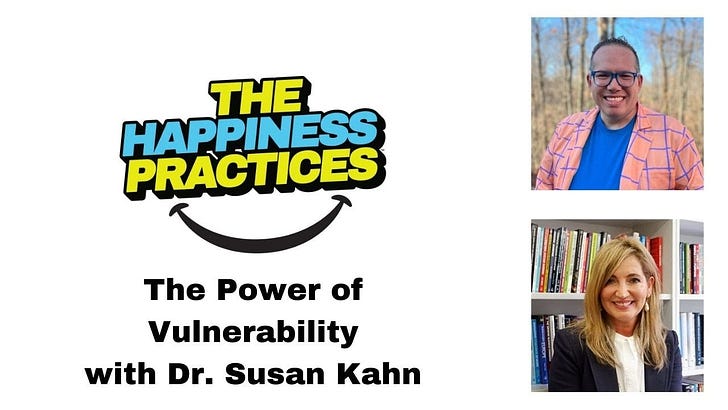
Episode Overview:In this episode, Phil Gerbyshak sits down with Dr. Susan Kahn to dive into the theme of vulnerability and its transformative power in both personal and professional life. Susan shares her insights into how embracing vulnerability can lead to deeper connections, greater self-awareness, and ultimately, a more fulfilling and resilient life. Drawing from her experience as a psychologist and author, she provides practical guidance on how to use vulnerability as a strength rather than a weakness.Key Topics Discussed:* The Definition of Vulnerability: Susan clarifies what vulnerability truly is, moving away from the misconception of it being a weakness. Instead, it's about authenticity, self-acceptance, and embracing imperfection.* Vulnerability and Leadership: They explore how vulnerability in leadership helps build trust, create more genuine connections, and foster an environment where others feel safe to share their struggles.* Knowing When to Be Vulnerable: Susan offers strategies on when and how to reveal vulnerability effectively, stressing the importance of “revealing your scars, not your wounds.”* Practical Steps to Embrace Vulnerability: Simple but powerful exercises to start small in moments of uncertainty, encouraging honesty and openness in everyday interactions.3 Pull Quotes from Susan Kahn:* "When we reveal a little of our vulnerability, we’re able to make deeper connections. It reminds us that as human beings, we all share the commonality of being flawed and imperfect."– Susan talks about how showing vulnerability helps us build genuine relationships by recognizing our shared humanity.* "First of all, we need to accept ourselves as being flawed. Only then can we look at others with the generosity to see that they, too, are imperfect."– Susan emphasizes the importance of self-acceptance as the foundation for accepting and connecting with others.* "Reveal your scars, not your wounds. Sometimes, we need the psychological safety of trusted individuals to heal first before we can share our vulnerabilities with others."– Susan shares her wisdom on knowing when it's appropriate to be vulnerable, underscoring the value of healing before sharing.Actionable Insights:* Start Small: Next time you’re in a meeting or conversation, admit when you don’t know something instead of pretending to have all the answers. This small act of vulnerability can open up space for others to do the same.* Build a Support Network: Surround yourself with people who encourage you to be authentic and vulnerable. A strong support network makes it easier to embrace your imperfections and grow.* Focus on Self-Acceptance: Work on accepting your own flaws and mistakes. This not only builds your own happiness but also fosters more meaningful relationships with others.Final Thoughts:This episode is a masterclass in how vulnerability can become a superpower. Whether you're a leader looking to inspire your team or someone striving for more authentic relationships, Susan Kahn's insights provide a practical roadmap for embracing vulnerability in your life.To learn more about Susan Kahn’s work, visit drskahn.com and pick up her book Reinvent Yourself.Listen to the audio above or watch our conversation below. This is a public episode. If you'd like to discuss this with other subscribers or get access to bonus episodes, visit happyaf.substack.com/subscribe

In this insightful episode of The Happiness Practices, host Phil Gerbyshak welcomes Tamsen Webster, author of Say What They Can't Unhear, for an engaging conversation about connection, storytelling, and transformational change. Tamsen shares her journey as a master storyteller, exploring the importance of building bridges of belief and creating arguments that resonate with your audience on a deeper level. She also delves into the personal aspects of her life, from overcoming anxiety to her work as a Weight Watchers leader, and how her experiences have shaped her approach to lasting change.Together, Phil and Tamsen discuss how stories shape our decisions, why making lasting change requires more than just motivation, and the science behind belief and action. Tamsen also introduces her concept of creating “thousands of little yeses” to inspire transformational change, both in business and personal settings. This episode is packed with actionable advice on how to communicate more effectively, build meaningful connections, and lead change in a way that sticks.NOTE: After you listen to the episode above (or below in the video), Tamsen has a free resource for you: The Compact Case. It's a simple worksheet that helps readers follow the guidance of the book to develop their own case for change. Then go get your copy of the book at https://littlechangebook.com Key Discussion Points:* The Power of ConnectionTamsen shares how her love for connecting ideas, people, and shiny new insights fuels her work. Her philosophy that true connection stems from compatibility, whether between ideas or people, helps explain her unique approach to communication.* The Genesis of Say What They Can't UnhearPhil and Tamsen dive into her latest book and the process behind it. Tamsen reveals her passion for lasting, transformational change, sparked from her own experiences overcoming panic attacks and working in change management and marketing. She explains how the book was born out of her belief that real change happens on an individual level before it can affect larger systems.* A Story is an ArgumentOne of the central ideas from Tamsen’s book is that every story is an argument. She discusses how stories create an internal narrative for the decisions we make, and why the key to inspiring lasting change is building a stronger story than the one already in place.* Building Bridges of BeliefTamsen introduces her powerful concept of “building bridges of belief,” emphasizing the importance of meeting people where they are in their belief system, instead of asking them to take a leap of faith. She explains how this strategy, combined with “thousands of little yeses,” can create incremental but impactful change.* Smart, Capable, and GoodA core concept in Tamsen’s work is that people want to be seen as smart, capable, and good. Phil and Tamsen discuss how understanding this simple but profound idea can shift the way we approach communication and change, both personally and professionally.* Lessons from Weight WatchersTamsen reflects on her 13 years as a Weight Watchers leader and how the lessons she learned about helping people achieve personal transformation have informed her professional work in storytelling and communication.* Practical Tools for Messaging and ChangeAs a bonus, Tamsen gives listeners a preview of her upcoming Message Design Institute, where she’ll teach practical methods for applying the principles of effective messaging and transformational change in both professional and personal contexts.Quotes from the Episode:* “The longer someone holds a belief, the stronger that belief becomes, and our job isn’t to change that belief, but to build on it.” – Tamsen Webster* “A story is an argument. It's a case for how to get what you want or need.” – Tamsen Webster* “Change can only happen when the story behind it is stronger than the one that stands in its way.” – Tamsen Webster* “Little yeses, not big leaps of faith, are the foundation for transformational change.” – Tamsen Webster* “We have to start by seeing people as smart, capable, and good—before we ask anything of them.” – Tamsen WebsterCall to Action:Feeling inspired to make a lasting change? Be sure to pre-order Say What They Can't Unhear at LittleChangeBook.com and check out Tamsen’s Message Design Institute launching soon at MessageDesignInstitute.com for more practical tools on transformational communication.Connect with Tamsen Webster:* Website: TamsenWebster.com* Pre-order Say What They Can’t Unhear: LittleChangeBook.com This is a public episode. If you'd like to discuss this with other subscribers or get access to bonus episodes, visit happyaf.substack.com/subscribe

Comments

Download from Google Play

Download from App Store
 United States