


 Claim Ownership
The Golden Age of Orthodontics
Subscribed: 39Played: 788
Subscribe

© 2024
Description
Are you an Orthodontist wondering how to grow your practice in this fast-paced, competitive marketplace that seems to be changing every day? The Golden Age of Orthodontics, formerly The Survival Guide for Orthodontists podcast, is dedicated to making you the authority in orthodontics to prospective new patients in your community. Dr. Leon Klempner and Amy Epstein, co-founders of People & Practice, know the business of orthodontics. They bring you insights, tips and guest interviews focused on helping you thrive in a massively disrupted industry. Put more patients in chairs by competing on expertise and trust, not the lowest fees.
Dedicated to making you the authority in orthodontics.
Dedicated to making you the authority in orthodontics.
88 Episodes
Reverse

How do you grow an orthodontic practice without letting it take over your life?Dr. Courtney Dunn, co-founder of a four-location orthodontic practice and founder of Women in Orthodontics, joins Dr. Leon Klempner and Amy Epstein to discuss the leadership, delegation and efficiency strategies that have helped her scale both her practice and her career.Courtney explains why orthodontists need to become more comfortable giving up control, how her practice measures clinical efficiency before investing in new technology, and why the right office manager can fundamentally change how a practice operates. She also shares her experience using Solventum Clarity aligners and pre-cured attachments, including the potential impact on bonding time, tracking and refinements.The conversation also explores mentorship, professional support networks and why the market you choose can have a major impact on practice growth.Key takeaways:Delegation is essential to scaling an orthodontic practice without creating owner burnout.Measure treatment efficiency and ROI before adopting new technology simply because it is available.Solventum’s Clarity attachment technology has helped Courtney’s practice streamline bonding and, anecdotally, reduce refinements and treatment time.A true office manager can take meaningful operational responsibility off the orthodontist’s plate.Mentorship, community and realistic expectations can help practice owners make better long-term decisions.

Why do some orthodontic practices continue to grow while others plateau?In this episode of The Golden Age of Orthodontics, Dr. Leon Klempner and Amy Epstein welcome back orthodontic consultant Jill Allen, founder of Jill Allen & Associates, for a practical conversation about what separates growing practices from those struggling to gain momentum.Jill breaks down the four key sources of practice growth: dental referrals, community relationships, online visibility, and internal patient referrals, and explains how the balance between them changes as a practice matures. The discussion also explores why data, office culture, patient experience, and consistent communication all play a role in generating more starts.They also dig into one of the most common mistakes practices make: investing more money in marketing before fixing the systems responsible for converting inquiries into consultations and consultations into starts. From unanswered leads to weak follow-up and overlooked observation patients, small breakdowns inside the practice can quietly limit growth even when marketing is working.Whether you are building a startup, managing an established orthodontic practice, or trying to break through a plateau, this episode offers a clear framework for identifying where growth is coming from and where opportunities may be slipping away.Key takeawaysThe four primary sources of orthodontic practice growth and how their importance changes as a practice maturesWhy data, patient experience, and office culture are critical to generating referrals and converting more startsHow stronger relationships with referring dentists and patients can create more sustainable growthWhy practices should fix conversion and follow-up “leaks” before increasing their marketing spend

In this episode of The Golden Age of Orthodontics, Dr. Leon Klempner and Amy Epstein sit down with board-certified orthodontist, inventor and entrepreneur Dr. Marc Lemchen to explore how robotics can improve efficiency, support orthodontic teams and create a more memorable patient experience. Drawing on more than five decades in orthodontics, Dr. Lemchen shares the thinking behind innovations such as Dolphin Imaging, EasyRx and Zeno Robotics, along with the lessons he has learned about introducing new technology into a practice.The conversation also examines the role robotics can play in addressing staffing challenges, reducing repetitive work and giving team members more time to focus on patients. Dr. Lemchen discusses Zeno Steril, the robotic sterilization system recognized with the 2026 AAO Ortho Innovator Award, and explains why the most valuable technology is not simply impressive to look at, but meaningfully improves consistency, workflow and the overall patient experience.Five takeawaysTechnology can help an orthodontic practice stand out by giving patients a memorable experience they are more likely to discuss and share.Robotics can reduce the time team members spend walking, retrieving items and completing repetitive tasks, allowing them to stay focused on patient care.Automated sterilization may improve workflow consistency, documentation and reliability while reducing dependence on manual processes.Practices are more likely to see meaningful efficiency gains when they fully adopt a technology rather than using it selectively.The strongest return on technology comes from combining measurable workflow improvements with a better, more personal patient experience.Supercharge your orthodontic marketing: www.pplpractice.com
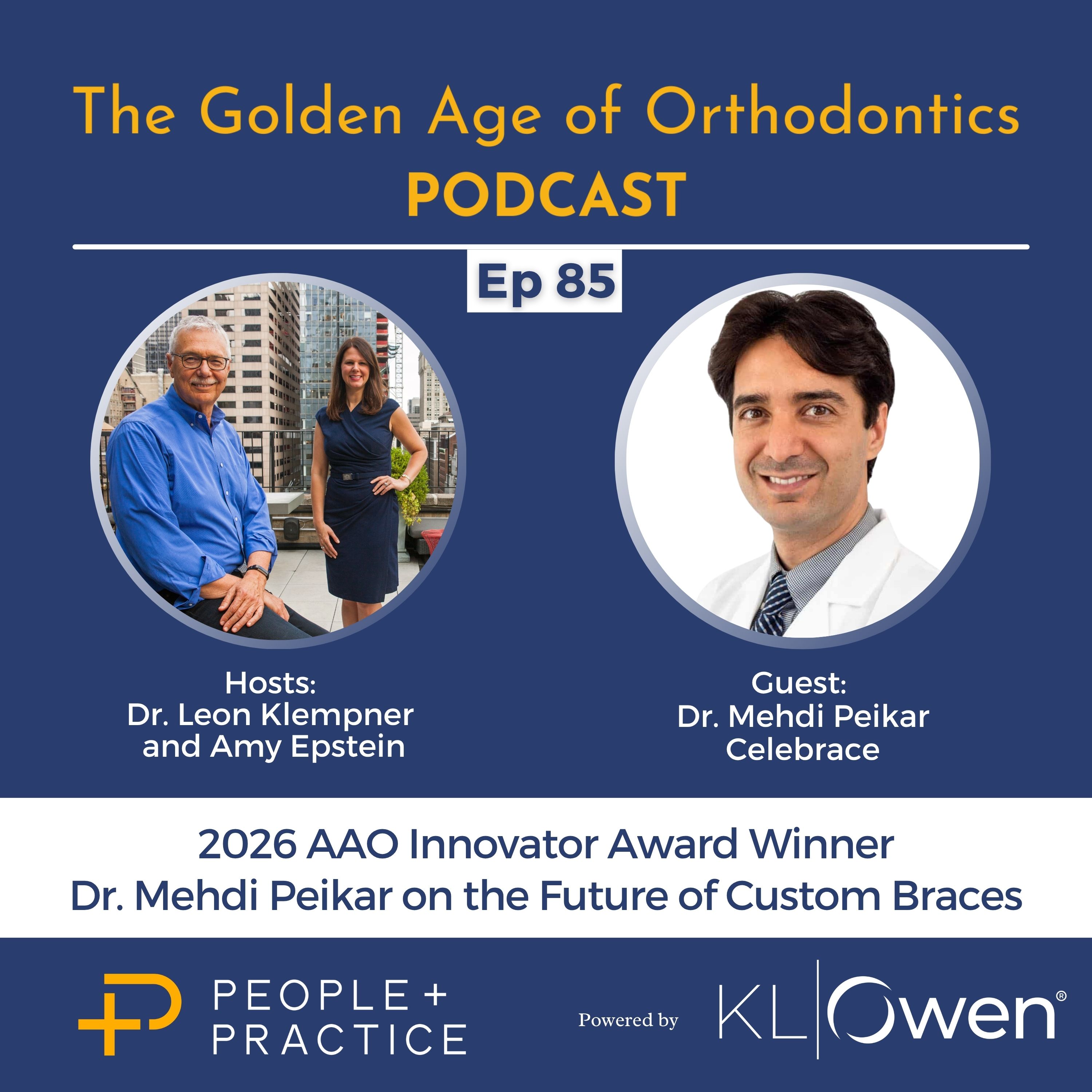
Orthodontics is entering a new era of personalization, precision, and digital efficiency. In this episode of the Golden Age of Orthodontics, Dr. Leon Klempner and Amy Epstein sit down with 2026 AAO Innovator Award winner Dr. Mehdi Peikar, founder of CeleBrace, to explore how artificial intelligence and fully customized braces are changing the future of treatment.Drawing on his unique background in orthodontics, biomechanics, engineering, and physics, Dr. Peikar shares the clinical challenges that inspired the development of CeleBrace and explains how digital workflows can bring the same level of planning and personalization to fixed appliances that orthodontists have come to expect from aligner therapy. The conversation covers everything from AI-assisted treatment planning and bracket positioning to the advantages of fully customized prescriptions, indirect bonding, and digital case presentation.The discussion also explores the business side of innovation, including how digital treatment systems can improve efficiency, reduce appointments, shorten treatment times, and create a more compelling patient experience. Dr. Peikar shares what he has learned from treating thousands of cases with CeleBrace and why he believes customization will play a central role in the next phase of orthodontic care.In this episode, you'll learn:Why Dr. Peikar believes orthodontics is rapidly moving toward fully digital workflowsHow AI supports treatment planning, bracket positioning, and appliance designWhat makes a fully customized bracket system different from traditional prescriptionsHow digital indirect bonding can improve efficiency and reduce treatment visitsWays technology can enhance patient education and case acceptanceWhat orthodontists are reporting after implementing custom digital bracesHow personalized treatment systems may help practices differentiate themselves in a competitive marketWhy Dr. Peikar sees customization as the future of fixed appliance therapy

Clinical innovation in orthodontics is moving faster than ever, but many practices are still relying on workflows built for a different era. In this episode of The Golden Age of Orthodontics, Dr. Leon Klempner and Amy Epstein sit down with Jake Gulick, president of Greyfinch, to discuss how outdated systems, disconnected tools, and manual processes may be quietly limiting practice efficiency and growth.Jake shares his perspective from nearly two decades in the orthodontic technology space, from helping scale Cloud9Ortho in its early years to leading innovation at Greyfinch, and explains how modern cloud-based practice management systems, AI-assisted workflows, automation, and smarter integrations are reshaping the operational side of orthodontics. The conversation explores how practices can reduce workflow friction, improve patient communication, gain better visibility into marketing performance, and rethink long-standing processes that no longer serve today’s digital orthodontic practice.In this episode, you’ll learn:Why many orthodontic practices are still operating with outdated workflow modelsHow AI can improve efficiency without replacing the human side of the practiceThe difference between cloud-based and truly browser-based softwareHow automation can streamline patient follow-up and case acceptanceWhy disconnected systems create hidden operational frictionThe importance of workflow design when implementing new technologyHow practices can better track marketing performance and patient conversion dataWhy practice management software should evolve alongside modern orthodonticsGo to www.pplpractice.com for more!

Comments

Download from Google Play

Download from App Store
 United States