


 Claim Ownership
WILDCIDE
Subscribed: 11Played: 357
Subscribe

© Copyright 2023 All rights reserved.
Description
Wildcide is a unique true crime podcast that blends the most outrageous real-life cases with expert insights from professionals across the criminal justice field. Hosted by sisters Chelsea, an allied health professional, and Bailey, an experienced therapist, the show delves deep into the psychological and sociological dimensions of each case. With their combined expertise, they aren’t afraid to tackle complex, hard-hitting topics while weaving in just enough light-heartedness to balance the intensity. This approach hopefully helps keep our show engaging and relatable, creating a close-knit community of listeners affectionately known as the Wildciders.
163 Episodes
Reverse
At first, they were called tragic accidents. Sudden, devastating events that seemed to end in the water, in the chamber, in the final moments no one could take back. But as investigations unfolded, the questions began to change — from what happened to who was responsible, who made the decisions that led there, and who failed when lives were still hanging in the balance. In this episode, we explore the Byford Dolphin disaster and the Paria diving disaster through the lens of negligence, corporate responsibility, and systemic failure. While Paria would later raise the question of corporate manslaughter, both cases reveal how preventable deaths can grow out of unsafe systems, ignored risks, delayed action, and choices made long before the disaster itself. Because sometimes the real story is not just how people died. It is how those deaths became possible in the first place — and what happened after.
In Part 2 of this case, the investigation into Jeremy Skibicki reveals the full scope of what happened inside a small apartment in Winnipeg and how multiple women became connected to one of the most disturbing serial murder cases in modern Canadian history. As investigators reconstruct timelines, search landfills for evidence, and piece together Skibicki’s confession, the case expands far beyond a single murder investigation and becomes a national conversation about missing and murdered Indigenous women, systemic failures, and the value placed on vulnerable lives.
This episode covers the discovery of multiple victims, the role of forensic and digital evidence, Skibicki’s confession, the landfill search controversy, and the 2024 trial that ultimately led to his conviction for four counts of first-degree murder. But even after the verdict, the story was not over. Because one victim was still known only as Buffalo Woman — and it would take years before she would finally be given her name back.
This is Part 2 of the Jeremy Skibicki case — a story about violence, vulnerability, justice, and the women whose lives should never be reduced to a headline.
Three women vanish from the same area of Winnipeg within weeks of each other. At first, their disappearances don’t raise widespread alarm—lost phones, unstable housing, and the realities of life on the margins make it easy for cases like these to slip through the cracks. But their families knew something wasn’t right.
Then, on a cold morning in May 2022, a man searching through a dumpster makes a discovery that changes everything. Human remains. As investigators work to identify the victim, they uncover a name: Rebecca Contois. And with that confirmation, the case shifts from a missing persons investigation to something far more disturbing. Because Rebecca isn’t the only woman who’s gone missing.
Morgan Harris. Marcedes Myran. And Buffalo Woman, a victim who would remain unidentified for three years after her murder. All Indigenous. All last seen in the same area. All disappearing within weeks of another.
As detectives begin retracing Rebecca’s final movements, their investigation leads them to a quiet apartment building just steps from where her remains were found. Inside, they begin to uncover something that suggests this may not be an isolated crime—but part of a much darker pattern.
By the end of Part 1, investigators are no longer asking whether a murder occurred.
They’re asking how many.
Resources:
Hope for Wellness Help Line for Indigenous Peoples: 1-855-242-3310
National Domestic Violence Hotline (U.S.): 1-800-799-7233
StrongHearts Native Helpline: 1-844-7NATIVE
If this case moved you, consider learning more about the crisis of Missing and Murdered Indigenous Women, Girls, and Two-Spirit People and supporting organizations doing this work.
MMIWG2S+ National Action Plan: Government of Canada
National Inquiry into Missing and Murdered Indigenous Women and Girls Final Report
Assembly of Manitoba Chiefs
Native Women’s Association of Canada
Manitoba Keewatinowi Okimakanak
Canadian Human Rights Commission resources on MMIWG
Winnipeg Bear Clan Patrol
Siloam Mission, Winnipeg
N’Dinawemak – Our Relatives’ Place, Winnipeg
A trusted pastor. A small Pennsylvania church. And a string of tragedies.
When a man named Joseph Mesante walked into a church office in Reeders, Pennsylvania and ended his life, the story seemed heartbreakingly simple: a husband devastated by the discovery of his wife’s affair with their pastor, Arthur “A.B.” Schirmer.
But Joseph's suicide was the unfortunate catalyst to a horror story.
As investigators began looking more closely at the pastor’s life, disturbing questions surfaced about another tragedy just months earlier—the death of Schirmer’s wife in what had been ruled a car accident. Then detectives uncovered an even older case: the mysterious death of Schirmer’s first wife years before.
What initially appeared to be unrelated tragedies started forming a chilling pattern.
In this episode, we unpack the case of Arthur Schirmer, a minister who spent decades guiding people through their darkest moments—while hiding secrets that would eventually lead to a murder conviction and a life sentence.
Resources
If you or someone you know is struggling with thoughts of suicide or the impact of betrayal trauma, help is available.
Suicide & Crisis Support
• 988 Suicide & Crisis Lifeline – Call or text 988 (U.S.)
• 988lifeline.org – Chat and resources for immediate support
• Crisis Text Line – Text HOME to 741741 to connect with a trained crisis counselor
Betrayal Trauma & Relationship Support
• APSATS (Association of Partners of Sex Addicts Trauma Specialists)
https://www.apsats.org
• Bloom for Women – Educational resources and support for betrayal trauma
https://bloomforwomen.com
• RAINN (Rape, Abuse & Incest National Network)
https://www.rainn.org
National Sexual Assault Hotline: 800-656-HOPE
Mental Health Support
• National Alliance on Mental Illness (NAMI)
https://www.nami.org
HelpLine: 800-950-NAMI
History doesn’t always change because of grand decisions. Sometimes it changes because of a wrong turn… or a forgotten petri dish.
In today's Shortcide, Bailey tells the unbelievable story of how a driver’s accidental turn down the wrong street placed Archduke Franz Ferdinand directly in front of Gavrilo Princip—triggering a chain reaction that would lead to World War I, the rise of Hitler, and the deadliest century in human history.
Then Chelsea explores the opposite side of fate: how a contaminated lab plate and one curious scientist led to the discovery of penicillin—an accident that would go on to save millions of lives.
Two tiny moments. One that helped unleash global war.
And one that quietly helped save the world.

Domestic violence is rarely as simple — or as obvious — as people expect it to be.
In this special Wildcide interview episode, Bailey and Chelsea sit down with domestic violence expert and therapist Jennifer Salmons for an honest, deeply practical conversation about how abusive relationships actually develop, why victims stay, and what outsiders often misunderstand about abuse dynamics.
Moving beyond headlines and true crime narratives, Jennifer draws from decades of frontline experience working not only with survivors, but also directly with domestic violence offenders. Together, the conversation explores how abuse typically begins long before physical violence appears, the behavioral patterns that signal escalating control, and the psychological and social factors that can make someone vulnerable to remaining in a harmful relationship.
The discussion breaks down common myths — including the belief that abuse is always obvious, that apologies signal real change, or that leaving is simply a matter of willpower. Jennifer explains the stages of abuse, the role of manipulation and intimidation, and why safety planning with trained domestic violence professionals is often critical when someone decides to leave.
This conversation shifts the focus from crime stories to prevention, awareness, and understanding — offering insight for survivors, loved ones, and anyone wanting to better recognize the realities of domestic violence.
About Our Expert:
Beginning as a volunteer and advocate on a domestic violence hotline in Charleston, Illinois in the early 1990s, Jennifer Salmons went on to develop three domestic violence offender intervention programs over the course of her career. During the 1990s, she created two offender programs in Illinois operating in compliance with the protocols and standards of the Illinois Coalition Against Domestic Violence to ensure accountable and effective intervention.
In 2000, she brought her expertise in offender programming and coalition-based standards to Kansas City, Missouri, where she developed the first domestic violence offender program in the area. She later served as a board member of the Missouri Coalition Against Domestic Violence and contributed to the statewide committee responsible for developing Missouri’s standards and program protocols for domestic violence offender treatment.
Throughout her career, Jennifer has provided extensive training to law enforcement, prosecutors, hospitals, advocates, and court professionals, strengthening coordinated community responses and advancing system-wide accountability in addressing domestic violence.
If you'd like to contact Jennifer directly, email her: jennifer@therapybyjennifer.com
Domestic Violence Resources:
If you or someone you know may be experiencing domestic violence, confidential support is available 24/7.
National Domestic Violence Hotline
Call: 1-800-799-SAFE (7233)
TTY: 1-800-787-3224
Text: START to 88788
Website & Live Chat: https://www.thehotline.org
StrongHearts Native Helpline (for Native American and Alaska Native survivors)
Call or Text: 1-844-762-8483
Website: https://strongheartshelpline.org
National Resource Center on Domestic Violence (NRCDV)
Educational resources and safety planning information
https://nrcdv.org
National Network to End Domestic Violence (NNEDV)
Find state coalitions and local domestic violence programs
https://nnedv.org
RAINN (Rape, Abuse & Incest National Network)
Sexual assault support hotline
Call: 800-656-HOPE (4673)
Website & Chat: https://www.rainn.org
Local Services Directory
Find shelters, advocacy programs, and local support by ZIP code
https://www.thehotline.org/get-help
Emergency Assistance
If you are in immediate danger, call 911 or your local emergency number.
Tracey Thurman did everything a victim is told to do. She left her abusive husband. She reported threats. She obtained a restraining order. She called the police again and again — documenting a danger everyone could see coming.
On June 10, 1983, after months of ignored warnings, Tracey was brutally attacked outside her home while help arrived too late to stop the violence. What followed wasn’t just a criminal case, but a constitutional battle that forced America to confront how domestic violence victims were treated by the justice system.
Her lawsuit against the Torrington Police Department changed policing nationwide, transforming domestic violence from a “private matter” into a public responsibility.
This case isn’t only about violence — it’s about warning signs, institutional failure, and the moment one survivor reshaped the law for millions who came after her.
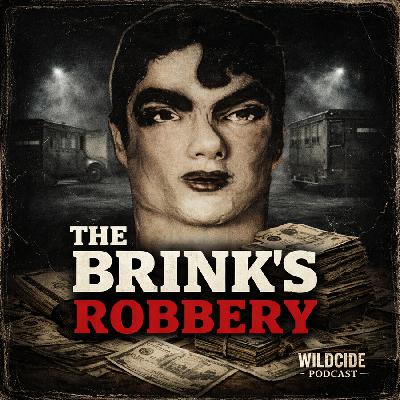
Boston, January 17, 1950. Just after 7 p.m., a group of masked men walked calmly into the Brink’s Armored Car Company building and carried out what would soon be called the “Crime of the Century.”
There was no chaos. No gunfire. No panic. The robbers moved with precision — wearing disguises, speaking little, and tying up employees before disappearing into the night with nearly $2.8 million in cash, checks, and securities, the largest robbery in American history at the time. Within minutes, they were gone… leaving almost no evidence behind.
What followed was one of the longest and most complex investigations the FBI had ever faced. Thousands of leads went nowhere, suspects stayed silent, and for years the robbery looked like the perfect crime. As the statute of limitations crept closer, the case finally cracked — not because of forensic breakthroughs, but because loyalty inside the group began to collapse.
The Brink’s robbery wasn’t just a historic heist. It changed how law enforcement approached organized crime, insider planning, and long-term investigations — proving that even the most meticulous plans can unravel when human nature gets involved.
Bailey explores the psychology of group loyalty, rationalization, and delayed guilt, while Chelsea examines postwar America, organized crime culture, and why this robbery captured the nation’s imagination. Because sometimes the real story isn’t how criminals escape… it’s why they eventually turn on each other.
In 1992, a respected small-town physician was accused of sexually assaulting one of his patients during a routine appointment. The allegation shocked the tight-knit Canadian community — but what happened next was even more unbelievable. Despite a DNA test meant to settle the case once and for all, the results seemed to clear the doctor. The charges were dropped. Life moved on.
But the victim never stopped fighting.
Years later, new evidence surfaced that would unravel one of the most audacious deceptions in true crime history — exposing a calculated plan that fooled investigators, prosecutors, and even medical professionals. In this episode, we unpack the disturbing case of Dr. John Schneeberger: a story of power, manipulation, and a scheme so brazen it sounds like fiction — until you realize it wasn’t.
References:
Rapist, M.D. Crime Magazine
Candice Fonagy Archives - Forensic Files Now
Dr. Schneeberger Case Study - Edubirdie
Deport doctor, his ex-wife says - The Globe and Mail
Canada (Minister of Citizenship and Immigration) v. Schneeberger (F.C.)
The Case of Dr. John Schneeberger | PDF | Deviance (Sociology) | Public Law
Sask. doctor sentenced for rape | CBC News
Glitter, gasoline, and a whole lot of bad luck.
In this eerie Shortcide episode, Bailey and Chelsea unravel two of the most famously cursed objects in modern lore: a diamond drenched in tragedy, and a Porsche with a fatal appetite for chaos.
Chelsea races into the doom-laced legacy of James Dean’s Porsche 550 Spyder, lovingly nicknamed Little Bastard. After Dean’s fatal crash, the wrecked car became a harbinger of death and destruction for anyone who dared own a piece of it.
Then, Bailey dives deep into the twisted tale of the Hope Diamond, once known as the French Blue—a jewel that sparkled in royal courts and ruined nearly everyone who touched it. From lost heads to financial ruin, postal workers to heiresses, this cursed gem left a trail of disaster for centuries.
Some objects are beautiful. Others are built to kill.
These did both.
After 9/11, America was desperate for heroes.
Jonathan Keith Idema was more than willing to step into the role.
What followed was a decades-long con built on stolen valor, inflated credentials, intimidation, and a relentless trail of lawsuits, fraud charges, and outright lies. He claimed to be Special Forces. He claimed to hunt terrorists. He claimed to work alongside the U.S. government.
None of it was true.
Idema’s story is a case study in deception—how confidence can replace evidence, how lies compound over time, and how systems fail when charisma collides with fear. From fake credentials and federal fraud convictions to the creation of an illegal prison in Kabul, this episode traces the steady escalation of a man who decided the rules no longer applied to him.
And the consequences were very real.
It starts in the most familiar place imaginable: a doctor’s office. A patient in pain. A prescription that feels like relief. But behind that quiet moment was a pharmaceutical company running a million-dollar playbook.
Today's case dives into the rise and collapse of Insys Therapeutics, a drug company that built its empire around Subsys—a fentanyl spray approved for a narrow purpose: breakthrough cancer pain in opioid-tolerant patients.
What follows is a white-collar crime case with a body count hiding in the margins: doctors allegedly rewarded through “speaker programs,” prescriptions pushed far beyond cancer care, and an internal reimbursement operation that allegedly helped manipulate insurance approvals using scripts and misrepresentation—so Subsys could get paid for even when it shouldn’t have been approved.
How did Insys build an entire enterprise designed to turn medical decisions into revenue? This case reveals that in America, millions of deaths can hide behind the facade of white-collar crimes.
In the mid-2000s, Albuquerque, New Mexico was gripped by a fear it couldn’t quite name. People were being found dead inside their homes — with no connections and without clear motives. At first, the cases appeared unrelated. Different neighborhoods. Different victims. Different MO. No obvious pattern. Just a growing sense that something was wrong.
It begins with Carlos Esquibel, a 37-year-old designer whose welcoming nature would prove fatal, followed just days later by Josephine Selvage, an 81-year-old retired schoolteacher with Alzheimer’s who was attacked inside the only place she knew as safe. Two years later, the city was shaken again by the brutal murders of Tak and Pung Yi — beloved elders in Albuquerque’s Korean American community — a case so desperate for answers that the wrong men were arrested and imprisoned.
But the true turning point comes six days after a wedding.
Scott Pierce and Katherine Bailey were newlyweds, settling into their first home together, building an ordinary, hopeful future. In the early hours of one June morning, that future was destroyed when a gunman entered their home looking for someone else. Scott was killed defending his wife. Katherine survived — and immediately became both a widow and a suspect.
What followed was a rapid investigation, a seemingly neat explanation, and a case that appeared closed. Until it wasn’t.
When long-untested DNA from the Yi murders was finally processed, it revealed a truth far more disturbing than anyone expected: all of these deaths were connected. The evidence pointed not to a single motive or moment of rage, but to a man who moved through homes at night, escalated without hesitation, and left devastation behind while systems lagged just long enough to fail.
At the center of it all was Clifton Bloomfield — a man who blended into everyday life while committing serial violence, whose crimes reframed everything investigators thought they understood.
Nightmare in Albuquerque is a case that forces an uncomfortable question to linger long after the episode ends: How many lives are shaped — or ended — not just by violence, but by when the truth finally arrives?
HAPPY NEW YEAR WILDCIDERS! We begin 2026 with a WILD Shortcide.
In today's Shortcide, we’re diving into two of the most impossibly timed brushes with fate you’ve probably never heard of.
Bailey tells the story of a stranger who makes a split-second decision on a train platform… and ends up saving the life of someone tied to one of the most infamous chapters in American history. No one knew the full weight of it in the moment—not even the guy who did the saving.
Meanwhile, Chelsea shares a jaw-dropping tale of survival that defies all logic. Think: being in the wrong place at the wrong time… twice. And still walking away.
Two lives. Two absurd twists of fate. And one big question: what are the odds?
In this exclusive Wildcide interview, Bailey gets the opportunity to sit down with hijacker Martin J. McNally and the directors of the new Netflix documentary Skyjacker, Eli Kooris and Joshua Shaffer. Together, they unpack the unbelievable real story behind the hijacking of Flight 119, the 320-mph parachute jump that stunned the nation, and the decades inside federal prison that followed. Martin reflects openly on the choices that defined his life, while Eli and Joshua share what it took to bring this larger-than-life case to the screen. This is the conversation that completes our two-part series — raw, candid, and stranger than fiction.
In Part 2, we pick up where we left off: Martin McNally has made it out of the sky alive — bruised, concussed, and unaware that the FBI is already tracing the fingerprints that will lead straight to him. Within days, Martin is captured, sentenced to life in federal prison, and shipped to USP Marion — the most secure prison in America.
And inside those walls, he meets someone who will change everything: fellow skyjacker Garrett Brock Trapnell, a charismatic con man whose influence sparks not one, but two of the most shocking escape attempts in U.S. history.
First comes the daring helicopter hijacking led by Barbara Oswald, a military veteran and mother of five who believes she’s rescuing the men she loves. Then comes her daughter, 17-year-old Robin Oswald, who boards a TWA flight with what she claims is dynamite strapped to her chest — demanding Trapnell’s release in one of the strangest hijackings of the era.
Bailey and Chelsea break down the psychology of manipulation, the sociological forces that made hijackers into folk antiheroes, and the human cost paid by the women who got pulled into these men’s orbit.
This is the conclusion of a story about obsession, charisma, desperation, and the final unraveling of America’s Golden Age of Hijacking.
Go to: American Skyjacker for more information.
Want to recommend a wild case or just give s a shout?Contact us at Wildcidepodcast@gmail.com
For Wildcider Merch, visit www.wildcidepodcast.com
Find us on Facebook@ Wildcide Podcast. Follow us on Instagram @wildcidepodcast
PS: Don’t forget Wildcide Wednesdays- new episodes drop every Wednesday at 6am EST. Interviews will drop every other Friday at 6am EST.
Background music by Brad Parsons at Train Sound Studio. Art for the podcast was created by Kelly Steen.
References:
True crime ‘American Skyjacker’ retells St. Louis hijacking | STLPR
BOARDING: ST. LOUIS TO TULSA THE UNBELIEVABLY TRUE STORY OF AMERICAN AIRLINES FLIGHT 119 - Criminal Defense Lawyer | McAlester | Wagner & Lynch
Martin J. McNally - Prison Escape - Gangland Wire
D.B. Cooper, Martin McNally, and the Golden Age of Skyjacking | OUPblog
The Final Flight of Martin McNally - St. Louis Riverfront Times
Long before TSA lines and shoe removal, American skies lived through the *Golden Age of Hijacking*. Between 1968 and 1972, more than 130 airliners were commandeered — and one bored ex–Navy airplane electrician from Detroit decided he could turn that chaos into his big score.
Part 1 traces how Martin J. McNally became obsessed with D.B. Cooper, studied parachutes in the library, and convinced himself he could hijack a jet, get rich, and vanish. Under the fake name “Robert Wilson,” he boards *American Airlines Flight 119* with a sawed-off rifle hidden in a briefcase and turns a short hop from St. Louis to Tulsa into an 11-hour hostage crisis watched across the country.
As passengers slide down emergency chutes, FBI agents actually climb aboard to teach a hijacker how to wear his parachute, and a furious businessman floors his Cadillac straight into a taxiing 727, Bailey and Chelsea pull apart the psychology and sociology of a time when hijacking felt almost… normal. Part 1 ends in the dead of night, with McNally hanging off the rear stairs of a Boeing 727 at 300 miles an hour, a half-million dollars tied to his waist — and a jump that won’t go the way he planned.
Go to: American Skyjacker for more information.
A key witness disappears. A body is found. A grand jury convenes. And suddenly the man who ruled Bridger Valley through fear is no longer hunting—he’s being hunted.
This episode takes you inside Hickey’s bombshell confession, the federal takedown of Hopkinson’s criminal network, the high-security trial that shook Wyoming, and the appeals battle that dragged on for years.
This is the downfall of a rural crime boss, the story the valley whispered about for decades—and the case that still stands as the most dangerous, far-reaching prosecution in Wyoming history.
Thanks for listening! If you want to support us, subscribe, rate and review on your favorite podcast listening app!
Want to recommend a wild case or just give s a shout?Contact us at Wildcidepodcast@gmail.com
For Wildcider Merch, visit www.wildcidepodcast.com
Find us on Facebook@ Wildcide Podcast. Follow us on Instagram @wildcidepodcast
PS: Don’t forget Wildcide Wednesdays- new episodes drop every Wednesday at 6am EST. Interviews will drop every other Friday at 6am EST.
Background music by Brad Parsons at Train Sound Studio. Art for the podcast was created by Kelly Steen.
In Part 1 of our two-part deep dive into the Hopkinson case, we trace the origins of one of Wyoming’s most shocking criminal sagas. Beginning in the quiet, rural Bridger Valley—where authority flows through family networks and reputation—we follow the early life of Mark Hopkinson, a charismatic local favorite whose charm masked a growing pattern of manipulation, violence, and unchecked entitlement.
What starts as a simple water-and-sewer dispute soon spirals into intimidation, threats, and the deadly bombing that kills attorney Vincent Vehar and his family. At the same time, investigators uncover another hidden crime: the murder of 15-year-old Kellie Wyckhuyse, buried beneath a web of lies crafted by Mark and his inner circle.
As alliances fracture and witnesses begin to crack, federal authorities reopen a forgotten bomb plot that pulls the entire valley into a larger investigation. Part 1 ends with Mark behind bars—but far from powerless—as he begins orchestrating a new series of events from inside a California penitentiary.
This episode sets the stage for a devastating second half, where loyalty collapses, secrets surface, and Mark’s reach proves more dangerous than anyone imagined.
This Thanksgiving, we’re serving up something sweeter than Aunt Carol’s mystery casserole. When a beloved Texas fruitcake company started bleeding money, nobody expected the sticky fingers behind the mess to belong to the accountant who made the dough.
Join us as we unwrap the embezzlement scandal that turned corporate holiday cheer into a true crime feast- complete with shady spreadsheets, fancy cars and one heck of a fruitcake crumble.
It’s a slice of crime that’s nutty, rich and perfect for the holidays.

Comments

Download from Google Play

Download from App Store
 United States