


 Claim Ownership
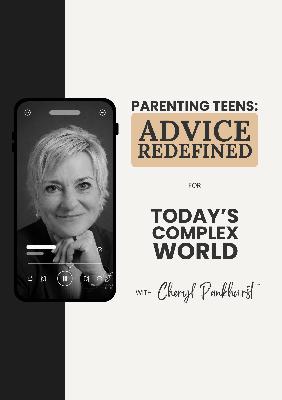
Parenting Teens: Advice Redefined for Today's Complex World
Subscribed: 6Played: 155
Subscribe

Description
"Discover ''Parenting Teens : Advice Redefined for Today's Complex World" with Special Education Specialist / Educator Cheryl, as we dive into real and raw conversations about sex, drugs, screens, social media, LGBTQ+ issues, mental health, and more. This podcast is your guide to reimagining better relationships with teens by doing the essential inner work. Join us for engaging, vibrant, and empathetic discussions that foster trust and understanding in today's complex parenting landscape. Embrace the change,we just can’t parent the way our parents did”
Questions this podcast will answer;
How can parents tap into their own inner work to support their parenting journey?
How to support and navigate their teens journey through Divorce and Co-parenting?
How can parents talk to their teens about sex and healthy relationships?
What are effective strategies for managing teens' screen time and social media usage?
What should parents know about supporting their LGBTQ+ teens?
How can parents identify and address mental health issues in their teenagers?
What are the best ways to discuss drug and substance abuse prevention with teens?
How can parents build stronger, more communicative relationships with their teens?
What techniques can help parents navigate teenage peer pressure and bullying?
How can parents support their teens' academic success and motivation?
What are the signs and solutions for teenage stress and anxiety?
How can parents foster independence while maintaining boundaries with their teens?
I am so grateful for you taking your time to listen and I would love your input, feedback , suggestions for topics. We are in this together.
Connect with me
support@cherylpankhurst.com
linkedin.com/in/cheryl-ann-pankhurst-1b611855
https://www.instagram.com/cheryl.a.pankhurst/ https://www.facebook.com/cheryl.a.pankhurst
https://open.spotify.com/show/4QwFMJMDDSEXJb451pCHO9?si=9c1a298387c84e13
https://youtube.com/playlist?list=PLYv9FQy1X43wwoYg0zF8zAJw6-nCpHMAk&si=7p-e4UlU2rsG3j_t
Optin-podcast subscriber
https://www.cherylpankhurst.com/teen-minds-redefined-podcast
How to work with me!
https://www.cherylpankhurst.com/consulting
Editing credit Gabbi Greco
Questions this podcast will answer;
How can parents tap into their own inner work to support their parenting journey?
How to support and navigate their teens journey through Divorce and Co-parenting?
How can parents talk to their teens about sex and healthy relationships?
What are effective strategies for managing teens' screen time and social media usage?
What should parents know about supporting their LGBTQ+ teens?
How can parents identify and address mental health issues in their teenagers?
What are the best ways to discuss drug and substance abuse prevention with teens?
How can parents build stronger, more communicative relationships with their teens?
What techniques can help parents navigate teenage peer pressure and bullying?
How can parents support their teens' academic success and motivation?
What are the signs and solutions for teenage stress and anxiety?
How can parents foster independence while maintaining boundaries with their teens?
I am so grateful for you taking your time to listen and I would love your input, feedback , suggestions for topics. We are in this together.
Connect with me
support@cherylpankhurst.com
linkedin.com/in/cheryl-ann-pankhurst-1b611855
https://www.instagram.com/cheryl.a.pankhurst/ https://www.facebook.com/cheryl.a.pankhurst
https://open.spotify.com/show/4QwFMJMDDSEXJb451pCHO9?si=9c1a298387c84e13
https://youtube.com/playlist?list=PLYv9FQy1X43wwoYg0zF8zAJw6-nCpHMAk&si=7p-e4UlU2rsG3j_t
Optin-podcast subscriber
https://www.cherylpankhurst.com/teen-minds-redefined-podcast
How to work with me!
https://www.cherylpankhurst.com/consulting
Editing credit Gabbi Greco
140 Episodes
Reverse
Connect with Cheryl!
Let’s Chat https://tidycal.com/cherylpankhurst/consultation-chat
Sleep support
DIRECT LINK TO COACHING WITH CHERYL
email : support@cherylpankhurst.com
Website cherylpankhurst.com
SOCIALS:
linkedin.com/in/l. R.cheryl-ann-pankhurst-1b611855
https://www.instagram.com/cheryl.a.pankhurst/ https://www.facebook.com/cheryl.a.pankhurst
PODCAST- “PARENTING TEENS ADVICE REDEFINED FOR TODAY’S WORLD
THE PODCAST
https://open.spotify.com/show/4QwFMJMDDSEXJb451pCHO9?si=9c1a298387c84e13
https://youtube.com/playlist?list=PLYv9FQy1X43wwoYg0zF8zAJw6-nCpHMAk&si=7p-e4UlU2rsG3j_t
Optin-podcast subscriber
https://www.cherylpankhurst.com/teen-minds-redefined-podcast
Join our Podcast Private Facebook Group!
https://www.facebook.com/groups/httpswww.facebook.comgroups1258426648646523
Get a taster of what’s it like to work with me!
MINI-COURSE
Introduction: Cheryl Pankurst introduces the episode's focus on divorce and co-parenting, sharing her personal journey and insights.
Key Tips for Co-Parenting:
Recognize the different stages of processing divorce for you, your ex, and your children.
Avoid burdening your children with adult issues; find your own support system.
Maintain consistency in rules and boundaries across both households.
Keep communication open with your children, asking them about their feelings and needs.
Creating a Supportive Environment:
Tips for residing close to each other to minimize disruption for your children.
Encourage open conversations with your teens about their experiences and feelings.
li
#CoParenting #HolidayStress #DivorcedFamilies #BlendedFamilyChristmas
– Key Takeaways
Holiday stress multiplies for split families – money, gifts, and juggling two households can feel overwhelming for everyone involved.
“Two Christmases” isn’t automatically a perk for teens – many see it as confusing, lonely, or a sign their family isn’t whole.
Never unload your adult stress on the kids – regardless of age, children should not be your therapist or emotional vent.
Start conversations with empathy – ask open‑ended questions like, “How are you feeling about Christmas?” or “Is anything worrying you that I can help with?”
Anticipate hidden anxieties – teens may worry about:
Gift‑budget comparisons (e.g., “I bought a better present for dad than for mom”).
One parent being alone on Christmas Eve.
Not waking up in their own bed or facing blended‑family dynamics.
Model self‑care without guilt – share your own solo plans (movie night, walk, etc.) so teens don’t feel responsible for your feelings.
Co‑create new traditions – let teens help design a special “parent‑only” or blended‑family activity that feels theirs.
Use flexible scheduling – set up a group chat poll to find a date that works for everyone; the celebration doesn’t have to be on December 25.
Give teens decision‑making power – when they pick the time, place, or format, resentment drops dramatically and they feel respected.
Read teen “acting out” as communication – misbehavior often signals a loyalty tug‑of‑war between households; pause, breathe, and ask what they need.
Remember the weight they carry – even older teens feel the emotional load of split holidays; acknowledging this validates their experience.
End with a positive mindset – celebrate small wins, thank yourself for trying, and remind teens (and yourself) that the effort is seen and appreciated.
Connect with Cheryl!
The Good Divorce Show Episode https://open.spotify.com/episode/2hIILoayZV2oQu5zEzJdcP?si=wl8O0S9YSCCwkUSJQAYcrQ
Let’s Chat https://tidycal.com/cherylpankhurst/consultation-chat
#RealTimeMonitoring, #TeenSafety
Jeff Gottfurcht and Derek Jackson are the Co-Founders of Cyber Dive, a technology company redefining digital parenting through products that empower families and recovery communities in a hyper-connected world. As CEO, Jeff leads the company’s vision and strategy, drawing on 14 years of experience as a Senior Vice President at two top global financial firms. Derek, Cyber Dive’s COO, guides product development and operations, informed by his background as a U.S. Army Captain and military intelligence officer specializing in counterterrorism and digital threat analysis. Together, they combine strategic foresight, operational precision, and a shared commitment to creating technology that strengthens families and fosters real-world impact.
Important Links / How to find you
Cyber Dive Website: https://www.cyberdive.co/ Cyber Dive Instagram: https://www.instagram.com/cyberdiveco/ Cyber Dive TikTok: https://www.tiktok.com/@cyberdiveco Cyber Dive LinkedIn: https://www.linkedin.com/company/cyberdiveco Derek LinkedIn: https://www.linkedin.com/in/dqjackso/ Derek Instagram: https://www.instagram.com/dqjackso/ Derek TikTok: https://www.tiktok.com/@dqjackso Jeff LinkedIn: https://www.linkedin.com/in/jeffreygottfurcht/
#RuleOf72, #CompoundInterest, #EarlySaving, #CollegeSavings,
📄 Bullet‑Point Show Notes (Takeaways)
Why Scott Yamamura does this work – turned personal intimidation about money into confidence; now helps everyday earners simplify finance.
Money scripts are powerful – family “under‑cover” messages (e.g., “money is like underwear”) shape kids’ future habits.
Financial Epiphany #1 – The Rule of 72
Divide 72 by an average 7.2 % return → 10 years to double money.
Use this as a mental ruler for all financial decisions (college, retirement, savings).
Financial Epiphany #2 – Your Multiplying Power
Your 20‑year “athlete window” (early 20s) is the most potent time to grow wealth.
Even small, consistent contributions compound dramatically over a career.
Financial Epiphany #3 – Power‑Halving Curve
Multiplying ability halves every decade (16 → 8 → 4 → 2 → 1).
Creates urgency: act now before the curve drops.
The “Day of Reckoning” – Mid‑life financial pressure (retirement, caring for aging parents) hits when you haven’t saved enough; the three rules help avoid this crisis.
Start teaching teens early
Open a custodial account (Charles Schwab, Fidelity, Vanguard).
Let kids pick 1‑3 stocks they know (Amazon, Netflix, Disney, etc.) and watch real‑world results.
Use a spend‑save‑give jar (e.g., 10 % give, 20 % save, 70 % spend) to build habits.
You don’t need a big bankroll – $50‑$100 can launch a lifelong investing habit; start with a low‑cost S&P 500 index fund (Warren Buffett’s favorite).
Investing isn’t gambling – It’s a vote of confidence in the economy and innovation; it multiplies who you already are.
Free resources from Scott
FinancialEpiphany.com – podcast, blog, free “Money Basics” PDF (debt‑free, first investment, retirement calculator).
Scott Yamamura is a financial coach and the author of Financial Epiphany, with 25 years of experience studying the art of communication. In his full-time role managing the video communications of a Fortune 15 company, he simplifies complex ideas for more than 300,000 employees worldwide—an approach he now brings to the world of personal finance. Scott is passionate about cutting through the noise, providing everyday earners the clarity and confidence to unlock their “multiplying power with money” through three breakthrough rules of thumb.
financialepiphany.com
https://www.amazon.com/Financial-Epiphany-Discover-Multiply-Reimagine/dp/B0DN8WQDPC/ref=sr_1_1?crid=WWUXFWQ60MSD&dib=eyJ2IjoiMSJ9.91Y_a7va4WqCQ_GDMGJCnW1sNuHZ4b6-XcMNr2Vzb8fGjHj071QN20LucGBJIEps.86OW4acS2bqQNQWBL7scqjxj_ftAc_Z8FoPxEZu8zhU&dib_tag=se&keywords=financial+epiphany+scott+yamamura&q
Free Parent Advocacy Call – 30‑minute clarity session (no sales pitch).
👉 Book your spot:
https://tidycal.com/cherylpankhurst/consultation-chat
Key Takeaways – “Welcome to Friday (WTF) – End‑of‑Semester Panic Episode”
It’s not a discipline or laziness issue – the root cause is executive‑functioning, communication overload, and overwhelm, especially for neuro‑divergent or highly‑sensitive teens.
Accommodations are a right, not a favor – teens may refuse them to avoid stigma or because they fear looking “different”; the need for support is mandatory, not optional.
Shift from “advocating for your teen” to “advocating with your teen.”
CC them on emails, seat them at parent‑teacher meetings, and teach them to ask for what they need.
Regulate yourself first – never reply to a panic‑inducing email within the first 10 minutes; pause, breathe, and reset your nervous system before engaging.
Start the conversation with open‑ended questions.
Ask “What’s been happening from your side?” rather than a simple yes/no; this keeps the dialogue alive and prevents shut‑downs.
Create a structured communication plan with the school.
Weekly check‑ins, pre‑test alerts, clear expectations for response times.
Re‑activate accommodations together.
Review the IEP/504 plan with your teen, discuss why each accommodation is needed, and practice self‑advocacy.
Diagnose the specific breakdown – ask:
Is the problem starting the task, staying on task, organizing, or understanding the material?
Tailor solutions (e.g., break tasks into steps, provide reminders, offer extra time).
The parent’s role is a lighthouse, not a lawyer.
Provide structure, keep all voices heard, and avoid “fire‑fighting” with angry emails or calls.
Free 30‑minute Parent Advocacy Clarity Call is offered to pinpoint the exact breakdown and give a concrete next step—no sales pitch, just actionable support.
Connect with Cheryl!
The Good Divorce Show Episode https://open.spotify.com/episode/2hIILoayZV2oQu5zEzJdcP?si=wl8O0S9YSCCwkUSJQAYcrQ
Let’s Chat
@learningwithde.tara, www.innovativecollegiateconsultants.com
Key Takeaways from the Podcast Episode
Neurodivergence is a Super‑Power: Different brain wiring isn’t a deficit; it offers unique strengths that can be leveraged when the right supports are in place.
The K‑12 → College Transition Is a Critical Gap: Structured school routines disappear in post‑secondary life; students need executive‑function coaching, accommodation management, and real‑world skill development to thrive.
Adaptability Is the Most Valuable Skill: Being able to adjust to new roommates, schedules, and group‑work dynamics is essential for success in college and beyond.
Give Teens Choices Early: Regularly offering options (study location, sleep schedule, class selection) builds decision‑making muscles and reduces overwhelm later.
Teach “Want vs. Need” Language: Re‑frame requests as “what I need to be successful.” It clarifies accommodations and empowers self‑advocacy.
Stop Speaking for Your Child: Let teens handle communications with professors, accessibility offices, employers, and health providers. Natural consequences teach responsibility.
Practice Self‑Advocacy Skills:
Draft emails requesting accommodations.
Role‑play conversations with mentors or coaches.
Use the “Ask, Explain, Request” formula (e.g., “I need to sit front‑row to follow the lecture”).
Universal Design Benefits Everyone: Simple strategies like writing deadlines on a board, providing visual schedules, and minimizing distractions work for neurotypical and neurodivergent learners alike.
Body‑Doubling & Study Partnerships Boost Focus: Working alongside a parent, peer, or study group dramatically improves concentration for many neurodivergent students.
Manage Digital Distractions: Turn off notifications, place phones in another room, and use timed work intervals (e.g., Pomodoro) to maintain focus.
Practical Organization Hacks:
Use a physical alarm clock separate from a smartphone.
Prepare snacks in advance for tight class‑to‑class gaps.
Keep a visual “to‑do” board for assignments and appointments.
Leverage Campus Resources: The Accessibility Office is the go‑to ally for accommodation paperwork, advocacy help, and navigating faculty communication.
Parental Role Shifts to Coaching, Not Controlling: From high school onward, parents should act as mentors who model decision‑making and problem‑solving rather than solving problems for their teen.
Upcoming Resource: Dr. Tara Williams’s book (release May) will detail neurodivergent journeys and practical strategies; more info and free consultations are available at innovativecollegiateconsultants.com.
1. Celebrating Turning 61
Personal reflection on age – “I’m 61,” disbelief and acceptance.
Shift from “lonely” to “alone, not lonely” – embracing solo moments.
Birthday rituals – dinner for one, old‑fashioned cocktail, writing a poem.
Family presence – spending much of the day with her mother’s procedure and caring for her.
2. Mind‑set Shifts & Reframing
Reframing frustration
Seeing irritation as a learning cue.
“If I don’t learn, the lesson will return.”
Embracing the “dark”
Accepting resistance, anger, disappointment as teachers.
Alternative to aging
Dad’s mantra: “What’s the alternative?” → Choosing to own 61 instead of fearing another option.
3. Life After Retirement
Freedom & Energy
Better health, more stamina, thriving mission‑driven life.
New professional ventures
Podcast hosting, consulting, advocacy, co‑authoring a book.
Time management
No longer feeling “scattered”; having the time to pursue passions.
4. The Podcast Journey
Purpose & Joy
Connecting with global listeners, cultivating friendships.
Format & Content
Solo episodes, mid‑week interviews, sharing personal growth stories.
Audience Takeaway
Encouraging listeners to reframe, celebrate, and pursue self‑designated happiness.
5. Self‑Discovery & Self‑Love
Enjoying One’s Own Company
Solo movies, dinner, no compromise on choices.
Body & Confidence
No longer worrying about thighs or food choices; embracing a minimalist confidence.
Shedding Unnecessary “Masks”
Letting go of habits/identities that never truly defined her.
6. Burning Down & Rebuilding
Metaphor of “burning everything down”
Drastic reset: clearing outwhat no longer serves.
Preserving valuable remnants
Retaining wisdom, experience, and useful “remnants” from the past.
Application to Relationships & Situations
Identifying misaligned people, values, or commitments; deciding to “burn” them away.
7. Values, Alignment & Relationships
Core Values Identification
Spirituality, family, faith, etc., as non‑negotiable anchors.
Evaluating Compatibility
Spotting misaligned partners, friends, or family members early.
Actions Over Words
“Show me, not just tell me”; believing first impressions (Oprah/Maya reference).
8. Gratitude & Minimalism
Find Chris Parker here;
http://cgparker.com
http://easyprey.com
http://privacycrisis.com
📌 Topic
🧩 Core Insight
🔧 Quick Action
The biggest unseen privacy risk
Teens think the curated feeds they see are “real life.” This fuels unrealistic self‑image and makes them vulnerable to emotional manipulation.
Do a “Reality‑Check” session—show the behind‑the‑scenes of a polished post (lights, retakes, filters).
When to talk about privacy
Start the conversation before the crisis, not after. Kids are exposed to sophisticated scams at younger ages than we think.
Schedule a monthly “Digital‑Safety Check‑In” (15 min) with your teen.
Age and device guidelines
Ideal: 21 y/o for full autonomy, but realistic milestones:
• Grade 9 – texting only
• Age 16 – limited social‑media with parental controls
Set up built‑in parental controls, enable two‑factor authentication (2FA) on every account.
Neuro‑divergent teens
Literal thinking can be a super‑power, but scammers will exploit that straightforwardness.
Teach a simple “Ask‑Why” script: “Who are they? Why do they want this? What’s the outcome?”
Digital footprint & data mining
Every search, click, and ad view feeds a profile that predicts behavior (e.g., Target’s pregnancy model).
Use incognito/Brave for casual browsing, and clear cookies regularly.
Credit‑freeze for kids
A child’s SSN can be used to open accounts that sit dormant for years.
Freeze your child’s credit now—unfreeze only when they need a legitimate account.
Protect the email—“the key to the kingdom”
A compromised email = full‑house takeover (bank, socials, password resets).
Use a dedicated, high‑security email for all family accounts; enable 2FA + a password manager.
Screen‑time & doom‑scrolling
It’s not about “how many minutes” but about intentional use.
Set a timer, then log the purpose (e.g., “Check basketball scores”). If you can’t name a purpose, close the app.
Connect with Cheryl!
The Cleansing Within Program
https://www.practicewithpresence.com/cleansing-within/?sa=sa0019992619598254bda4daae3980777062778b19
Key Takeaways
You’re not starting from zero – every new chapter begins with the wisdom and experience you’ve already earned.
“It’s never too late” applies to all ages and any area of life: parenting, health, career, spirituality, learning, and personal growth.
Small, time‑boxed actions (1 minute, 30 seconds) are the most effective way to build new habits—movement, meditation, learning, or reaching out.
Own your mistakes and reset boundaries openly; saying “I made a mistake” is more powerful than “Because I said so.”
Shift from reaction to intention – replace yelling with a pause (deep breaths, water, step away) and model calm communication for your teen.
Movement = permission, not punishment – start with a minute of activity and let curiosity drive you to do more.
Redefine meditation: any focused activity (knitting, walking, reading) can be mindfulness.
Apologies must be backed by behavior change; genuine accountability fuels real transformation.
Self‑compassion & body gratitude influence how your kids view themselves—model grace, not criticism.
Your evolution becomes a permission slip for others; they learn by watching you, not just by listening.
Intentional resetting (as many times as needed) is the path to continual reinvention—not perfection.
These takeaways reinforce the episode’s core message: you can always start again, guided by the insight you’ve already gained.
Connect with Cheryl!
The Cleansing Within Program
https://www.practicewithpresence.com/cleansing-within/?sa=sa0019992619598254bda4daae3980777062778b19
The Good Divorce Show Episode https://open.spotify.com/episode/2hIILoayZV2oQu5zEzJdcP?si=wl8O0S9YSCCwkUSJQAYcrQ
Let’s Chat https://tidycal.com/cherylpankhurst/consultation-chat
http://www.kidsthesedaysbook.com
🛠️ Quick Tips for Parents (Take‑away Action Items)
Start the “Youth‑Engagement Conversation” – Ask your teen: “What part of today felt most alive? What felt like a waste of time?”
Swap “Compliance” for “Co‑Creation” – Re‑frame rules as agreements: “Let’s decide together how we’ll handle homework this week.”
DIY Advocacy – Identify one school policy (e.g., cell‑phone usage) you can discuss with a teacher. Bring a teen‑suggested solution.
Leverage Strengths, Not Labels – If your teen mentions a diagnosis, ask: “What does this tell us about how you learn best?”
Micro‑Disruptions in the Classroom – Encourage teachers (or your own home‑learning) to let students choose one project topic each month.
today we’re stepping directly into a conversation that so many parents whisper about but rarely name out loud: the school system.
The one we grew up in.
The one our kids are sitting in right now.
And the one that — for too many teens — simply doesn’t match who they are, how they learn, or what they need to thrive.
For decades, we’ve been taught not to question it. But when a system is outdated, when it’s built for a world and a learner that no longer exist… we have to talk about it.
And today, we are.
I’m joined by Nevin Harper and Will Dobud, authors of the incredible book Kids These Days — a book that doesn’t just diagnose what’s going on with youth, but shines a bright light on the systems shaping them.
Together, we’re going to unpack what’s broken, what’s possible, and how every one of us — parents, educators, advocates — can begin disrupting the system in small, meaningful ways.
Key Takeaways
Behaviour is a message—not a mistake. Teens use their bodies when words fail.
Dysregulation = Survival Mode. “Can’t regulate” = the brain’s fight‑or‑flight alarm; it isn’t a conscious choice.
A simple rating system (1‑5) gives teens a predictable way to signal distress before crisis.
Empathy beats judgment. Whenever you see a teen dysregulate, ask: “What is my child trying to tell me?”
You don’t have to navigate this alone. Coaching, community, and clear communication tools are available.
Connect with Cheryl!
The Cleansing Within Program
https://www.practicewithpresence.com/cleansing-within/?sa=sa0019992619598254bda4daae3980777062778b19
The Good Divorce Show Episode https://open.spotify.com/episode/2hIILoayZV2oQu5zEzJdcP?si=wl8O0S9YSCCwkUSJQAYcrQ
Let’s Chat https://tidycal.com/cherylpankhurst/consultation-chat
Sleep support
DIRECT LINK TO COACHING WITH CHERYL
email : support@cherylpankhurst.com
#SelfAdvocacy, #Advocacy, #PersonalBoundaries, #TruthTelling
Key Takeaways
Advocacy ≠ Aggression – It’s about clear, honest communication that protects your own well‑being.
The “Peace‑Keeper” Trap – Most parents default to “keeping the peace” for everyone else, forgetting they have the same right to be heard.
Spot the Gap – Social media shows the end result, not the messy process. Recognize that the journey (including the storm) is where real growth happens.
Your Body Gives You the Answer – When you set a boundary and feel calm rather than guilty, your nervous system is confirming you did the right thing.
Low‑Volume Courage – You don’t need to raise your voice; a single, firm sentence can be enough:
“I won’t participate in this dynamic anymore.”
“That’s not respectful to me.”
“I need this to change.”
Modeling for Teens – Kids learn boundary‑setting by watching you. When you stand up for yourself, you teach them to do the same.
“Storm‑Love” Exercise – Close eyes, hand on heart, say: “I love this storm. I love this arc. I love it all.” Use this to stay present and turn turbulence into growth.
The Calm Compass – If after a conversation you feel quiet confidence, not shame, you’ve aligned with your true self.
Community Call‑to‑Action
1️⃣ Share this episode with a parent who needs a confidence boost.
2️⃣ Post your own boundary‑setting moment on Instagram or TikTok using #WTFParenting and tag @CherylPankhurst.
3️⃣ Leave a Voice‑Mail or comment with your story—Cheryl will reply personally and may feature it in a future episode.
Connect with Cheryl!
The Cleansing Within Program
https://www.practicewithpresence.com/cleansing-within/?sa=sa0019992619598254bda4daae3980777062778b19
The Good Divorce Show Episode https://open.spotify.com/episode/2hIILoayZV2oQu5zEzJdcP?si=wl8O0S9YSCCwkUSJQAYcrQ
Let’s Chat
Key Takeaways:
Understanding Birth Trauma: Sharon King specializes in helping individuals heal from pre and perinatal birth trauma, offering insights into its impact on both mother and baby.
The Power of Energy Psychology: Through techniques like EFT (Emotional Freedom Technique) and tapping, Sharon helps individuals regulate emotions and release trauma stored in the body.
Rewriting Birth Stories: Sharon explains how she guides individuals, like Caroline, through the process of revisiting and transforming past birth experiences, allowing them to rewrite their stories and heal emotional wounds.
Connecting with Younger Selves: By tapping into their younger selves' experiences, individuals can uncover deep-seated traumas and address them, fostering healing and emotional growth.
🇺🇸 United States
**Dial or text **988 — the 988 Suicide & Crisis Lifeline for anyone experiencing emotional distress, suicidal thoughts, or mental health crises. It routes you to trained counselors 24/7. connectsafely.org+15en.wikipedia.org+15youthhubs.ca+15wired.com
Childhelp National Child Abuse Hotline: 1‑800‑4ACHILD (1‑800‑422‑4453) — for children and teens in abusive situations. verywellmind.com+2stopitnow.org+2apa.org+2
Boys Town National Hotline: 1‑800‑448‑3000 — general crisis support for kids, teens, and parents. stopitnow.org
National Runaway Safeline: 1‑800‑RUNAWAY — for runaways or youth considering running away. cmha.ca+15stopitnow.org+15youthhubs.ca+15
Crisis Text Line: text HOME to 741741 — free, confidential text support available in both the U.S. and Canada. wolfsonchildrens.com+7en.wikipedia.org+7apa.org+7
🇨🇦 Canada
**Dial or text **9‑8‑8 — Canada’s new Nationwide Suicide Crisis Helpline, launched November 30, 2023. It’s available 24/7 in English and French and is operated by CAMH and Kids Help Phone for all Canadians. kidshelpphone.ca+7en.wikipedia.org+7canada.ca+7
Kids Help Phone (for ages 5–29):
Call 1‑800‑668‑6868
Text CONNECT to 686868
Online chat via their website — available 24/7 in English and French
Iuri Melo is a Licensed Clinical Social Worker with 20 years of experience and the proud father of five. He’s the co-founder of SchoolPulse, a nationwide student support service that delivers positivity, optimism, and growth mindset tools to students, parents, and faculty via text and email. After several teen suicides in his community, Iuri co-created SchoolPulse in 2017 to proactively support student well-being. He’s also the author of Mind Over Grey Matter and the teen best-seller Know Thy Selfie, and the developer of “Adventure Based Therapy.” With over 300 schools in 25+ states, Iuri’s mission to “bless the human family” is inspiring students every day through kindness, psychology, and powerful weekly v
Why Susan’s Mission Matters
30 years in physical therapy → single mom of an autistic daughter → retired to focus on elevating autism families.
Believes “we all rise together”; every piece of the support puzzle matters.
The “Abyss” Explained
Chronological age ≠ developmental age; a 17‑year‑old may function at a 13‑14 level.
After graduation, structured school supports (IEPs, schedules, bells) disappear, leaving parents to rebuild the framework from scratch.
Start Planning in Middle School
Shift from “survive today” to “prepare for tomorrow.”
Early conversation prevents last‑minute scrambling for services.
Three Must‑Do Actions for Parents of 8th‑Graders
Ask “Why?” – Clarify the purpose behind every skill (e.g., budgeting, measuring discounts).
Identify Functional Goals – Focus on real‑world tasks rather than abstract academic benchmarks.
Map Interests to Opportunities – Turn a hobby (e.g., fishing, chess, art) into a pathway for employment or volunteer work.
Social‑Skill Strategies
Encourage participation in clubs, ROTC, or interest‑based groups to create a sense of belonging.
If a club doesn’t exist, create one (e.g., a student‑run chess club).
Behavior ≠ Manipulation
Use visual cues (color‑coded post‑its, timers, charts) to teach self‑regulation.
Teach children to communicate needs through simple signals instead of “behaving out.”
The “Swiss‑Cheese” Planning Model
Every child’s support plan has unique “holes.”
Custom‑tailor accommodations; avoid one‑size‑fits‑all templates.
Finding & Securing Resources
Network relentlessly – other parents are often the fastest source of up‑to‑date info on vouchers, housing, and programs.
Example resources mentioned:
Special‑needs housing vouchers (VA) – limited and appear sporadically.
“Surfer’s Healing” (free surf therapy for autistic youth on the Atlantic coast).
State‑by‑state resource directories (in development on Susan’s website).
Next Steps for Parents
Build a local or online parent support group.
Track deadlines for vouchers and program openings.
Use visual tools (post‑its, timers) to embed daily routines.
Call to Action
Free 30‑minute Clarity Call with Cheryl (Insight to Impact Coaching) – book now to map your teen’s transition plan.
Download the “Transition Tracker” PDF (goal‑setting, budgeting, daily schedule templates) – available in the show notes.
Join the “Parents of Teens on the Spectrum” Facebook Group for real‑time support and resource alerts.
Susan Tatem is the founder and CEO of Bright Path 4 Autism, an autism advocate, coach, speaker, international bestselling author, TV host (Puzzled Parents), and YouTuber (@PuzzledParentsUnlocked). Drawing on nearly 30 years in healthcare and her lived experience raising her daughter with autism, she transforms parents of kids with autism from overwhelm and
Bio*
Brett Aldrich is an Ayurvedic Counselor, Breathwork Practitioner, and founder of Seed the Spirit in Portland, Maine, whose work blends decades of service with deep holistic training. Her career has taken her from supporting survivors of trauma and children with developmental needs to guiding others in Ayurveda, breathwork, and yoga. A graduate of the Kripalu School of Ayurveda and affiliated with the Global Professional Breathwork Alliance, Brett helps people create lasting physical, emotional, and spiritual balance and transformation through simple, sustainable practices.
Important Links / How to find you
https://www.facebook.com/p/Seed-The-Spirit-LLC-61575858674934/
https://seedthespirit.com
🚀 New Podcast Episode Alert – Parenting Teens Advice Redefined 🚀
I’m thrilled to share the latest conversation I had with Brett Aldrich, Ayurvedic counselor, breath‑work practitioner, and founder of Seed the Spirit (Portland, ME). 🎙️
If you’re a parent of a teen (or anyone who feels stuck in the endless fight‑or‑flight loop), this episode offers a fresh, “be more, do less” mindset that can transform how you show up for yourself—and for your kids.
🎯 3 Key Takeaways
Know Your Element, Balance Your Life – Ayurveda teaches that we’re each a unique blend of fire, water, earth, air, and ether. By recognizing which element dominates your current state, you can make simple, intentional choices (e.g., cooler foods, water‑based activities, grounding in earth) to restore inner equilibrium.
Micro‑Moments of Breath = Macro‑Shift in Stress – A 2‑minute diaphragmatic breath (belly → chest → clavicle) can reset the nervous system, nourish the brain, and give you the pause you need before reacting. Consistency beats intensity—tiny, daily breath‑work beats marathon sessions you can’t stick to.
Model Calm, Not Perfection – Kids mirror what they see. By openly acknowledging your own stress, taking a brief breath, and saying, “I need five minutes to reset,” you teach your teen a concrete tool for self‑regulation.
Connect with Cheryl!
The Cleansing Within Program
https://www.practicewithpresence.com/cleansing-within/?sa=sa0019992619598254bda4daae3980777062778b19
The Good Divorce Show Episode https://open.spotify.com/episode/2hIILoayZV2oQu5zEzJdcP?si=wl8O0S9YSCCwkUSJQAYcrQ
Connect with Cheryl!
The Cleansing Within Program
https://www.practicewithpresence.com/cleansing-within/?sa=sa0019992619598254bda4daae3980777062778b19
The Good Divorce Show Episode https://open.spotify.com/episode/2hIILoayZV2oQu5zEzJdcP?si=wl8O0S9YSCCwkUSJQAYcrQ
Let’s Chat https://tidycal.com/cherylpankhurst/consultation-chat
Sleep support
DIRECT LINK TO COACHING WITH CHERYL
email : support@cherylpankhurst.com
Website cherylpankhurst.com
#ParentingTeens, #RescueDogs, #MorningRoutine, #CreativeExpression, #VeganLifestyle
Ordinary moments = big proof – A quiet night with pets, a well‑tended plant, or a favorite record can be stronger than any graduation speech.
Adult‑teen responsibilities are love in action – Early‑morning grind, pet care, medication management = resilience & character.
Objects tell a story – Heirlooms, music, art, and even a sky‑diving certificate = tangible evidence of the values you’ve instilled.
Step back, observe, don’t fix – Seeing your teen’s world through their eyes reveals the depth of your influence.
You’re not alone – This messy, beautiful journey is shared by thousands of parents—reach out, connect, and lean on the community.
📌 Action Items for Listeners
Do the “Home‑Tour Challenge”: Spend 5 minutes walking through your teen’s room/apartment. Note three items that speak to who they are and why they matter.
Write a gratitude note (or a quick journal entry) about one ordinary moment you witnessed today.
Join the conversation:
🌐 Visit CherylPankhurst.com – free resources, blog, and coaching options.
📧 Subscribe to the Parenting Teens Advice Redefined newsletter for weekly tips.
🎧 Leave a 1‑minute review on Apple Podcasts, Spotify, or Google Podcasts (it helps other parents find us!).
Share this episode with a fellow parent who’s navigating teen or young‑adult life. Tag them and use the hashtags below!
Connect with Cheryl!
The Cleansing Within Program
https://www.practicewithpresence.com/cleansing-within/?sa=sa0019992619598254bda4daae3980777062778b19
The Good Divorce Show Episode https://open.spotify.com/episode/2hIILoayZV2oQu5zEzJdcP?si=wl8O0S9YSCCwkUSJQAYcrQ
Let’s Chat
Dr. Will Dobud is a social worker, researcher, and educator who has worked with adolescents and families in the United States, Australia, and Norway. Will is from Washington, D.C., and divides his time between the United States and Australia each year. Will is an award-winning researcher and educator who has received recognition for excellence in research, teaching, and crime prevention. Dr. Dobud is a Senior Lecturer in Social Work at Charles Sturt University, Australia's largest social work school. Will is an invited international speaker who conducts workshops for therapists and families around the globe. Will's research focuses on improving therapy outcomes for teenagers and promoting safe, ethical practices. He has investigated and written about America's Troubled Teen Industry, especially wilderness therapy. He has worked alongside advocates, survivors, researchers, and clinicians to protect youth from institutionalization and harm.
www.kidsthesedaysbook.com www.willdobud.com Social Media: X = @willdobud Facebook: @WillDobudPhD Instagram @kids_these_days_book @WillDobud LinkedIn: Will Dobud
Tammy J. Cohen is a speaker, author, podcaster, and founder of Women Beyond the Table, a network helping women thrive in business and life. She leads TC Brand Consulting, aligning entrepreneurs with their authentic messaging. Tammy authored "Text Messages to My Sons," inspiring parent-child connections in a digital age. She hosts the Women Beyond the Table podcast and lives in Manhattan with her husband and three sons. Tammy holds an MBA from Baruch College’s Zicklin School of Business.
Important Links / How to find you
https://tammyjcohen.com/ linkedin.com/in/tammy-j-cohen-915815143
https://www.instagram.com/tammyjcohen/
Additional Links to Tammy!
Here is the discount link for your audience to purchase the book. They need to enter the code
Discount Code to purchase the Book https://indiepubs.com/products/text-messages-to-my-sons-new-edition.
CODE TEXTMOM
However, Amazon is still running a campaign for the print version and e-book - the print copy is 22% off and the e-book is $ 0.99. This is excellent pricing so that Amazon may be preferable.
I do not know how much longer they will run it, but here is the link Https://amzn.to/4kXX3g3
Last but not least, I have attached a free download that includes the book's introduction, forward, and several messages so your audience can see if this is something they are interested in.
It is also available on my website; they would need to scroll and click on the " download " button for a free preview button
https://tammyjcohen.com/text-messages-to-my-sons-a-guide-to-using-mobile-devices-to-connect-and-communicate-deeply-with-your-kids/
Connect with Cheryl!
The Cleansing Within Program

Comments

Download from Google Play

Download from App Store
 United States