


Bridging the Gap: Insights & Innovations in Construction
Subscribed: 37Played: 1,333
Subscribe

© Copyright 2023 All rights reserved.
Description
Join the innovation adventure that spotlights MEP and the construction industry – advancements in technology, distinctive perspectives, the soft skills required for successful digital transformation, and stories about the problem-solving mindset that continues to shape this great industry and propel it forward. The Bridging the Gap Podcast gives voice to the incredible things happening in and around construction while championing the fact that this is a great industry to be in.
The host, Todd Weyandt, seeks out enlightening conversations with industry experts who are changing the technological landscape. Engaging a full spectrum of voices, he champions an industry dialogue that supports companies as they try new things, advance and thrive.
He is on a mission to embrace and share the innovations transforming the AEC, MEP and manufacturing industries.
The Bridging the Gap Podcast is brought to you by Applied Software. With solutions for the modern project, Applied is on a mission to transform industries by empowering clients and championing innovation with real-world expert consultants.
Bringing you a comprehensive array of solutions for AEC, MEP and manufacturing, the experts of Applied have a singular focus – helping you achieve higher performance. Visit asti.com today.
The host, Todd Weyandt, seeks out enlightening conversations with industry experts who are changing the technological landscape. Engaging a full spectrum of voices, he champions an industry dialogue that supports companies as they try new things, advance and thrive.
He is on a mission to embrace and share the innovations transforming the AEC, MEP and manufacturing industries.
The Bridging the Gap Podcast is brought to you by Applied Software. With solutions for the modern project, Applied is on a mission to transform industries by empowering clients and championing innovation with real-world expert consultants.
Bringing you a comprehensive array of solutions for AEC, MEP and manufacturing, the experts of Applied have a singular focus – helping you achieve higher performance. Visit asti.com today.
356 Episodes
Reverse

Drywall prefabrication is still in its growth phase.
In this episode of Prefab, Unfiltered, recorded live at Advancing Prefabrication, Todd Weyandt sits down with Kiryl Turbal to explore how drywall prefab can scale through tighter BIM workflows, better coordination, and a value stream mindset.
While electrical and mechanical trades have matured in prefabrication, drywall remains an evolving space. Success depends on treating prefab operations as strategic value streams, aligning design and field teams earlier, and acknowledging the real time required for coordination.
This conversation dives into BIM-to-fabrication workflows, communication gaps between modelers and foremen, the role of repetition in building maturity, and how AI and data security may influence future drywall prefab operations.
If you are involved in prefabrication, drywall construction, BIM coordination, modular construction, or industrialized building strategies, this episode offers practical insight into scaling an emerging prefab trade.
You’ll Learn
Why drywall prefabrication requires a value stream mindset
How BIM-to-fabrication workflows can improve drywall productivity
Why coordination takes longer than most schedules allow
The communication gaps between modelers and field crews
How repetition and documented lessons drive prefab maturity
Where drywall prefab stands compared to electrical and mechanical trades
Meet Our Guest
Kiryl Turbal is Prefabrication Project Manager at TG McCorkney, where he focuses on drywall prefabrication and BIM-driven construction workflows. With a background in structural engineering and more than a decade in design, he brings technical rigor and process discipline to prefab operations.
His work centers on improving coordination, tightening BIM-to-fabrication processes, and building scalable workflows that support drywall prefab growth.
Todd Takes
Treat Prefabrication as a Value Stream, Not a Cost Center.
Prefab operations should be measured by throughput and value creation, not overhead. When leadership treats drywall prefab as strategic, scale becomes possible.
Coordination Always Takes Longer Than We Admit.
BIM-to-fabrication workflows require time and discipline. When coordination is compressed unrealistically, friction follows. Prefab maturity requires honest scheduling.
Repetition Builds Maturity.
Drywall prefabrication is still evolving. Capturing lessons learned and standardizing workflows creates repeatability and long-term scale.
More Resources
Thanks for listening! Please be sure to leave a rating and/or review and follow up our social accounts.
Bridging the Gap Website
Bridging the Gap LinkedIn
Bridging the Gap Instagram
Bridging the Gap YouTube
Todd’s LinkedIn
Kiryl’s LinkedIn
TJ McCartney’s Website
Thank you to our sponsors!
Graitec North America
Graitec North America LinkedIn
Autodesk’s Website
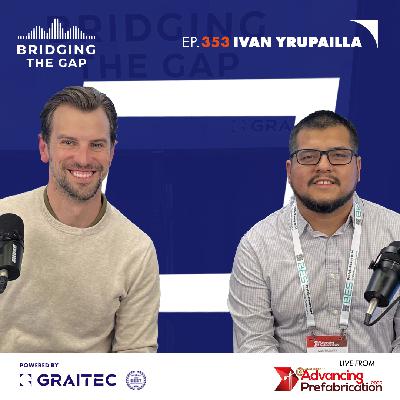
Automation is not hype. It is strategy.
In this episode of Prefab, Unfiltered, recorded live at Advancing Prefabrication, Todd Weyandt sits down with Ivan Yrupailla to explore how automation, AI, robotics, and structured systems are reshaping prefabrication operations.
As contractors push more work into controlled shop environments, success depends on more than software. It requires disciplined inventory control, defined production logic, supply chain visibility, and clear process design. Without strong operational foundations, automation simply accelerates inefficiency.
This conversation dives into how prefab teams can build scalable systems that improve speed, predictability, and competitive advantage.
If you are involved in prefabrication, modular construction, construction automation, robotics, or supply chain strategy, this episode delivers a forward-looking but practical perspective on what the next decade of industrialized construction may require.
You’ll Learn
The difference between automation and artificial intelligence in prefab
Why process logic must come before robotics implementation
How inventory control and supply chain visibility drive production efficiency
The role first-line operators play in improving systems
Why automation may become a competitive necessity in construction
How robotics could reshape prefabrication production lines
Meet Our Guest
Ivan Urquaya is Director of Materials and Prefabrication at Ambient Mechanical, where he oversees supply chain strategy, inventory systems, safety stock management, and production flow within prefabrication operations.
His work focuses on building scalable operational systems that allow contractors to move more work into controlled environments while improving predictability and performance. With a forward-looking perspective on automation and robotics, Ivan brings a systems-driven mindset to industrialized construction.
Todd Takes
Automation Is Not AI. It Is Discipline.
Technology does not fix broken systems. Before implementing robotics or AI in prefabrication, teams must understand their processes, bottlenecks, and production logic. Automation scales systems. It does not correct poor ones.
First-Line Operators Drive Real Improvement.
The people closest to production often see inefficiencies first. Successful prefab operations create real feedback loops between leadership and shop-level teams to continuously improve workflows.
The Competitive Window Is Closing.
Automation in prefabrication is becoming a strategic advantage. Contractors who invest in structured operational systems will gain speed, cost, and predictability advantages. Those who delay risk falling behind as industrialized construction matures.
More Resources
Thanks for listening! Please be sure to leave a rating and/or review and follow up our social accounts.
Bridging the Gap Website
Bridging the Gap LinkedIn
Bridging the Gap Instagram
Bridging the Gap YouTube
Todd’s LinkedIn
Ivan’s LinkedIn
AMPAM’s Website
Thank you to our sponsors!
Graitec North America
Graitec North America LinkedIn
Autodesk’s Website

Building components in a warehouse does not automatically make you a manufacturer.
In this episode of Prefab, Unfiltered, recorded live at Advancing Prefabrication, Todd Weyandt sits down with Jon Benson to explore what it truly means to transition from traditional construction to productized manufacturing in modular construction and prefabrication.
As industrialized construction matures, the conversation is shifting from “offsite construction” to serialization, guardrails, and repeatable systems. Scaling prefab requires more than space and labor. It requires product discipline, standardized workflows, and the willingness to protect the system.
This conversation dives into how modular construction companies can move beyond project-by-project customization and into scalable manufacturing models that protect margin, schedule, and quality.
If you are involved in prefabrication, modular construction, industrialized construction, or productized building systems, this episode offers a strategic look at what real manufacturing maturity requires.
You’ll Learn
The difference between construction in a warehouse and true manufacturing
Why serialization and productization are critical to scaling prefab
How guardrails protect repeatability and profitability
When to say no in order to protect standardization
Why buyer maturity influences prefab adoption
How product thinking reshapes modular construction strategy
Meet Our Guest
Jon Benson brings more than two decades of experience in modular construction and industrialized manufacturing. With a background rooted in OEM and manufacturing environments, he has helped guide the evolution from offsite construction toward serialized, product-based building systems.
His perspective centers on discipline, repeatability, and aligning operational capability with market demand to create scalable prefab strategies.
Todd Takes
Prefabrication Is Not Manufacturing Until It Is Serialized.
True manufacturing requires repeatability, standardization, and product discipline. Without serialization and guardrails, prefabrication remains project-based and difficult to scale.
Productization Requires Saying No.
Mature prefab operations protect their systems. Not every customization should be accepted. Guardrails preserve margin, schedule, and quality across projects.
Buyers Matter as Much as Builders.
Scaling modular construction depends on procurement alignment. When owners and contractors understand and commit to standardized systems, prefab can move from one-off solutions to scalable programs.
More Resources
Thanks for listening! Please be sure to leave a rating and/or review and follow up our social accounts.
Bridging the Gap Website
Bridging the Gap LinkedIn
Bridging the Gap Instagram
Bridging the Gap YouTube
Todd’s LinkedIn
Jon’s LinkedIn
TAS Energy’s Website
Thank you to our sponsors!
Graitec North America
Graitec North America LinkedIn
Autodesk’s Website
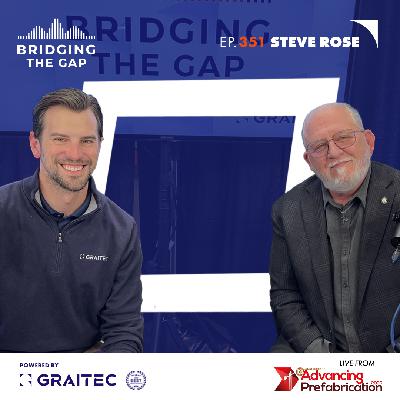
Prefabrication does not scale by accident. It scales through leadership, systems, and alignment.
In this episode of Prefab, Unfiltered, recorded live at Advancing Prefabrication, Todd Weyandt sits down with Steve Rose to explore what it really takes to grow prefabrication from a single fabrication shop into a regional operation.
As owners push for faster project delivery in data centers and mission-critical construction, contractors are being asked to scale prefabrication at an accelerated pace. But scaling is not just about square footage or automation. It requires workforce development, operational discipline, and clear communication across the shop, field, and back office.
This conversation unpacks how prefabrication has evolved from a contractor-driven margin strategy to an owner-driven speed-to-market mandate and what leaders must do to adapt.
If you are involved in prefabrication, modular construction, electrical contracting, or industrialized construction strategy, this episode offers a seasoned perspective on scaling the right way.
You’ll Learn
How prefabrication has shifted from margin protection to owner-driven speed
What it takes to scale from one fabrication shop to multiple regional facilities
Why workforce development is central to prefab growth
How to define success across shop, field, and leadership teams
The role communication plays in scaling industrialized construction
Why alignment matters more than automation
Meet Our Guest
Steve Rose brings more than four decades of experience in the electrical trade, workforce development, and prefabrication. An early adopter of fabrication and packaging strategies, he has helped scale operations from single-shop environments to regional fabrication networks.
His leadership perspective bridges field experience, shop operations, and executive strategy, offering a grounded view of what it takes to grow prefabrication sustainably and effectively.
Todd Takes
Prefabrication Has Shifted from Margin Play to Market Mandate.
Prefab once focused on contractor efficiency. Today, it is often driven by owners demanding faster delivery in data center and mission-critical construction. That shift raises expectations and accelerates the need for scalable fabrication systems.
Scaling Prefabrication Is a Leadership Challenge.
Opening additional fabrication facilities requires more than capital investment. It demands alignment across teams, clear metrics of success, disciplined systems, and leaders who understand both manufacturing and field execution.
Communication Is the Most Underrated Lever.
Technology alone does not drive prefab adoption. Clear communication between shop, field, and leadership teams builds trust and momentum. Industrialized construction scales when people are aligned.
More Resources
Thanks for listening! Please be sure to leave a rating and/or review and follow up our social accounts.
Bridging the Gap Website
Bridging the Gap LinkedIn
Bridging the Gap Instagram
Bridging the Gap YouTube
Todd’s LinkedIn
Steve’s LinkedIn
NetZero Plus Electrical Training Institute
Thank you to our sponsors!
Graitec North America
Graitec North America LinkedIn
Autodesk’s Website

Prefabrication does not fail because of technology. It fails because of systems and culture.
In this episode of Prefab, Unfiltered, recorded live at Advancing Prefabrication, Todd Weyandt sits down with Jim Wallner to explore what it really takes to scale prefabrication inside an electrical contractor.
Moving work into a shop is not the same as building a manufacturing operation. Scaling prefab requires systems, realistic goals, inventory discipline, and field trust. Without those foundations, even the best intentions can create resistance and friction.
This conversation dives into the operational realities of industrialized construction, how to avoid forcing prefab onto crews, and why sometimes the right strategic decision is to say no.
If you are involved in prefabrication, modular construction, electrical contracting, or manufacturing-based construction delivery, this episode offers a grounded and practical perspective on what actually works.
You’ll Learn
Why forcing prefabrication creates field resistance
The difference between construction thinking and manufacturing thinking
How to set achievable prefab goals
When not to fabricate and why that discipline matters
How grassroots shop training builds long-term adoption
What systems are required to scale industrialized construction
Meet Our Guest
Jim Wallner began his career in sales and manufacturing before transitioning into the electrical trade at Staff Electric. He later shifted his focus toward growing and systematizing the company’s fabrication operations.
With experience on both the manufacturing and field sides of the business, Jim brings a practical and disciplined perspective to scaling prefabrication inside a real-world contracting environment. His approach centers on achievable goals, strong systems, and earning buy-in through results.
Todd Takes
You Cannot Force Prefabrication.
Prefab adoption must be earned. When leadership mandates fabrication without proving value to the field, resistance grows. Prefabrication scales when it consistently makes installation easier and more predictable.
Manufacturing Thinking Requires Systems.
Construction rewards speed. Manufacturing rewards discipline. Scaling prefabrication requires documentation, inventory management, realistic production planning, and repeatable workflows. Without systems, efficiency does not appear.
Sometimes the Right Answer Is No.
Not every project should be fabricated. Strategic discipline means knowing when prefab adds value and when it introduces unnecessary risk. Scaling prefab is about doing the right work in the shop, not simply doing more work there.
More Resources
Thanks for listening! Please be sure to leave a rating and/or review and follow up our social accounts.
Bridging the Gap Website
Bridging the Gap LinkedIn
Bridging the Gap Instagram
Bridging the Gap YouTube
Todd’s LinkedIn
Jim’s LinkedIn
Staff Electric’s Website
Thank you to our sponsors!
Graitec North America
Graitec North America LinkedIn
Autodesk’s Website
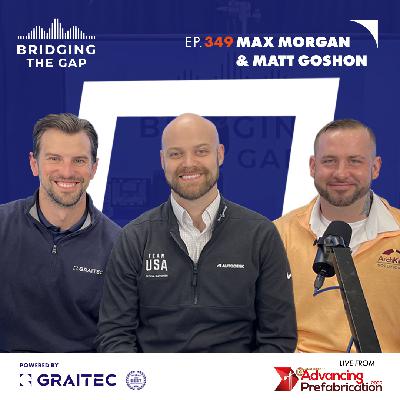
BIM does not fail because of software. It fails when the field does not trust it.
In this episode of Prefab, Unfiltered, recorded live at Advancing Prefabrication, Todd Weyandt sits down with Max Morgan and Matt Goshon to explore how BIM, VDC, and prefabrication connect to real jobsite execution.
As data center construction accelerates and modular construction strategies scale, digital workflows must translate into buildable outcomes. That requires early collaboration, clear communication, and a shared source of truth across project teams.
This conversation dives into how to earn field buy-in, prove prefab value early, and align BIM, project management, and installation crews from day one.
If you are working in prefabrication, modular construction, BIM, VDC, or mission-critical construction, this episode delivers practical insight into making digital construction execution real and repeatable.
You’ll Learn
Why field trust is critical to successful BIM and prefabrication
How to prove prefab value early in a project lifecycle
The importance of a shared source of truth across project teams
How early collaboration reduces friction between design and installation
Why standardization drives repeatability in modular construction
Meet Our Guests
Max Morgan began his career as a union wireman before transitioning into BIM and VDC, bringing firsthand field experience into digital modeling and prefabrication strategy. His work focuses on connecting constructability with modeling to ensure real-world installation success.
Matt Goshon brings a background in analytics and systems thinking into the prefabrication and BIM environment. His experience centers on aligning data, workflows, and field execution to create scalable and repeatable digital construction processes.
Together, they operate at the intersection of BIM, VDC, and electrical prefabrication, with a strong focus on field alignment and operational trust.
Todd Takes
BIM Only Works When the Field Trusts It.
Advanced modeling tools are not enough. Prefabrication scales when digital teams earn credibility through accuracy, responsiveness, and constructability. Trust must be built early and consistently.
Prove Value Early or Lose Momentum.
First deliverables matter. When prefab packages save time and reduce rework, adoption accelerates. When they create friction, confidence drops quickly. Early wins drive long-term success.
One Source of Truth Changes Everything.
Disconnected systems create confusion. Alignment across BIM, prefabrication, and project management requires shared information and standardized workflows. That alignment enables repeatable outcomes across projects.
More Resources
Thanks for listening! Please be sure to leave a rating and/or review and follow up our social accounts.
Bridging the Gap Website
Bridging the Gap LinkedIn
Bridging the Gap Instagram
Bridging the Gap YouTube
Todd’s LinkedIn
Matt’s LinkedIn
Max’s LinkedIn
Archkey’s Website
Thank you to our sponsors!
Graitec North America
Graitec North America LinkedIn
Autodesk’s Website

In celebration of Women in Construction Week, this episode explores how the construction industry is evolving, technically, culturally, and professionally.
Concrete is often misunderstood as simple. In reality, it is chemistry, data, performance modeling, and long-term durability engineering. This conversation pulls back the curtain on the science behind the material that quite literally shapes our world and highlights the next generation of technical leadership helping move the industry forward.
You’ll Learn
Why concrete is far more scientific and complex than most people realize
How R&D teams test and scale new materials responsibly
The real tension between innovation and field adoption
What early-career leadership growth looks like in a technical role
How visibility and credibility shape long-term career opportunity
Why modern construction requires broader skill sets than ever before
Meet Our Guest
Lauren Kinslow is a Quality Engineer at Titan America, where she evaluates and tests new materials to assess performance and ensure quality standards.
She holds a degree in Chemical Engineering from the Virginia Tech College of Engineering and is committed to continuous learning and professional development. Lauren maintains multiple industry certifications, including:
ACI Concrete Strength and Aggregate Testing Technician
NRMCA Certified Concrete Technologist Levels 1 and 2
She is currently a member of the Virginia Ready Mixed Concrete Association’s Concrete Leadership Program and is set to graduate in May 2026.
Todd Takes
Culture Shifts Through Reinforcement
Lasting change happens through consistency, competence, and trust built over time.
Innovation Is About Adoption
New ideas only matter when they are proven, trusted, and implemented in the field.
The Mold Has Broadened
Today’s construction industry demands analytical thinkers, scientists, data-driven leaders, and problem solvers alongside traditional field expertise.
More Resources
Thanks for listening! Please be sure to leave a rating and/or review and follow up our social accounts.
Bridging the Gap Website
Bridging the Gap LinkedIn
Bridging the Gap Instagram
Bridging the Gap YouTube
Todd’s LinkedIn
Lauren’s LinkedIn
Titan America’s Website
Thank you to our sponsors!
Graitec North America
Graitec North America LinkedIn
Autodesk’s Website

BIM is powerful. But a model that cannot be built creates downstream friction.
In this episode of Prefab, Unfiltered, recorded live at Advancing Prefabrication, Todd Weyandt sits down with Jared Sutliff to explore the gap between BIM, VDC, prefabrication, and field execution.
As data center construction accelerates and AI reshapes workflows, the pressure to make prefabrication repeatable and scalable is increasing. But success depends on more than modeling sophistication. It requires constructability, cultural buy-in, and early collaboration between designers, subcontractors, and field teams.
This conversation dives into what it really takes to make BIM buildable and prefabrication executable at scale.
If you are involved in prefabrication, modular construction, BIM, VDC, or mission-critical project delivery, this episode delivers practical insight from the front lines.
You’ll Learn
Why a detailed BIM model does not automatically translate to constructability
How prefabrication depends on early collaboration between engineers and subcontractors
The impact of data center construction on prefab workflows
Why AI and automation must align with field realities
How repeated modeling mistakes can scale across projects
What cultural buy-in looks like when implementing prefab strategies
Meet Our Guest
Jared Sutliff brings deep experience at the intersection of BIM, VDC, and electrical prefabrication. With a background in multimedia design and 3D modeling, he transitioned into construction technology and co-founded BIM Technology Management, focusing on constructability, coordination, and scalable prefab workflows.
His work centers on aligning digital modeling with real-world installation, particularly in data center and mission-critical environments where repetition and precision are essential.
Todd Takes
A Model Is Only Valuable If It Can Be Built.
BIM and VDC continue to evolve, but digital sophistication alone does not guarantee success. Prefabrication scales when modeling decisions reflect real jobsite constraints and installation sequencing. Buildable models drive repeatable outcomes.
Prefabrication Requires Cultural Buy-In.
Technology adoption without field alignment creates friction. Prefab success depends on leadership support, crew involvement, and clear communication across departments. It is not a software rollout. It is an operational shift.
Early Collaboration Prevents Scaled Mistakes.
In repetitive environments like data centers, small coordination issues can multiply across floors and facilities. Early collaboration between engineers, subcontractors, and suppliers reduces rework and compounds efficiency.
More Resources
Thanks for listening! Please be sure to leave a rating and/or review and follow up our social accounts.
Bridging the Gap Website
Bridging the Gap LinkedIn
Bridging the Gap Instagram
Bridging the Gap YouTube
Todd’s LinkedIn
Jared’s LinkedIn
BIMTM Website
Thank you to our sponsors!
Graitec North America
Graitec North America LinkedIn
Autodesk’s Website
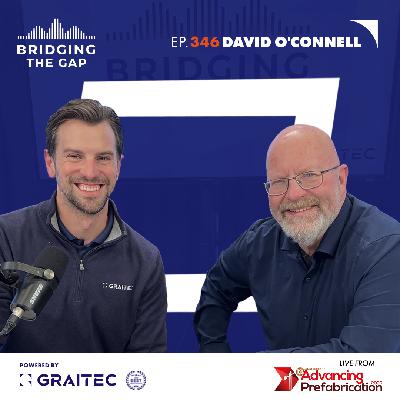
Prefabrication works differently in highly regulated environments.
In this episode of Prefab, Unfiltered, recorded live at Advancing Prefabrication, Todd Weyandt sits down with David O’Connell to explore how prefabrication, modular construction, and industrialized strategies perform inside life sciences, pharmaceutical manufacturing, and cleanroom construction.
When time to market can mean tens of millions of dollars per day, construction strategy becomes a business-critical decision. But in regulated environments, every weld, inspection, and document must meet strict compliance standards.
This conversation unpacks where prefabrication truly adds value in pharma and semiconductor projects, where full modular building approaches struggle, and why regulatory alignment is often the deciding factor.
If you are involved in life sciences construction, cleanroom facilities, modular construction, or industrialized project delivery, this episode delivers a grounded and practical perspective.
You’ll Learn
Why full building modular often struggles in life sciences construction
Where prefabrication works best in pharmaceutical and cleanroom environments
How regulatory inspections shape prefab strategy
Why partnering with agencies having jurisdiction is critical
How time to market drives construction decisions in drug manufacturing
The financial impact of schedule acceleration in regulated facilities
Meet Our Guest
David O’Connell brings decades of experience across semiconductor, life sciences, and pharmaceutical construction. With a background shaped by multiple generations in construction and deep experience delivering highly technical facilities, he has worked at the intersection of prefabrication, regulatory compliance, and time-critical project delivery.
His perspective bridges traditional construction methods and modern industrialized strategies, particularly in cleanroom environments and drug manufacturing facilities where documentation, inspection, and compliance are paramount.
Todd Takes
Prefabrication Has to Respect Regulation.
In pharmaceutical and life sciences construction, compliance is non-negotiable. Prefabrication does not remove regulatory scrutiny. It demands earlier coordination and stronger documentation. Inspectors and agencies must be brought in as partners, not treated as obstacles.
Not Everything Should Be Modular.
Full building modular has not consistently succeeded in highly regulated environments. Prefabrication often works best in repeatable components such as utility racks, panels, and cleanroom assemblies. Industrialized construction is not all or nothing. Strategic application matters.
Time to Market Changes the Equation.
In pharmaceutical manufacturing, delayed production can mean millions of dollars per day. That reality shifts the conversation from cost savings to schedule certainty and risk mitigation. Prefabrication becomes a strategic lever for accelerating capacity while maintaining compliance.
More Resources
Thanks for listening! Please be sure to leave a rating and/or review and follow up our social accounts.
Bridging the Gap Website
Bridging the Gap LinkedIn
Bridging the Gap Instagram
Bridging the Gap YouTube
Todd’s LinkedIn
David’s LinkedIn
Verista’s Website
Thank you to our sponsors!
Graitec North America
Graitec North America LinkedIn
Autodesk’s Website

Prefabrication is no longer a technology conversation. It is an owner conversation.
In this episode of Prefab, Unfiltered, recorded live at Advancing Prefabrication, Todd Weyandt sits down with Emily Mills Marineau to explore how owners evaluate prefab, modular construction, and offsite strategies through the lens of risk-adjusted return.
The biggest misconception in prefabrication is that the value is simply cost savings. In reality, owners prioritize certainty, schedule predictability, and reduced variability across the project lifecycle.
This conversation unpacks what it takes for prefabrication to move from curiosity to confidence and why the first prefab project inside any organization carries disproportionate weight.
If you care about prefabrication, modular construction, owner strategy, risk management, or construction innovation, this episode offers an executive-level perspective on what truly drives adoption.
You’ll Learn
Why owners prioritize certainty over lowest cost in prefabrication
How risk-adjusted return shapes modular construction decisions
Why first prefab projects must be executed with precision
The hidden impact of labor shortages on offsite construction
Why documenting lessons learned is critical for scaling prefab
Meet Our Guest
Emily Mills Marineau brings a strategic owner-side perspective to prefabrication and industrialized construction. With a background that includes M&A experience at Apple and leadership roles within construction innovation, she focuses on how procurement models, contracts, and risk frameworks influence prefab adoption.
Her work centers on aligning executive leadership, project teams, and delivery partners around scalable prefabrication strategies that prioritize certainty, quality, and long-term performance.
Todd Takes
Owners Do Not Want Cheaper. They Want Certainty.
The true value of prefabrication and modular construction is not lowest cost. It is reduced variability, schedule confidence, and predictable execution. When we frame prefab around savings alone, we undersell its strategic value.
The First Prefab Project Cannot Fail.
Initial prefab projects shape long-term perception. If the first effort struggles, adoption stalls. Strong planning, aligned partnerships, and realistic expectations are essential for building internal confidence.
Labor and Documentation Are the Quiet Barriers.
Technology is advancing quickly. Workforce shortages and inconsistent knowledge capture are not. If prefabrication is going to scale across healthcare, multifamily, and commercial construction, the industry must improve both labor strategy and institutional learning.
More Resources
Thanks for listening! Please be sure to leave a rating and/or review and follow up our social accounts.
Bridging the Gap Website
Bridging the Gap LinkedIn
Bridging the Gap Instagram
Bridging the Gap YouTube
Todd’s LinkedIn
Emily’s LinkedIn
Juno’s Website
Thank you to our sponsors!
Graitec North America
Graitec North America LinkedIn
Autodesk’s Website

Prefabrication has moved beyond proof of concept.
In this kickoff episode of Prefab, Unfiltered, recorded live at Advancing Prefabrication, Todd Weyandt explores what it really means to enter the execution era of prefab.
The debate is no longer about whether prefabrication or modular construction works. It’s about scale, repeatability, and partnership. From data centers driving massive MEP prefabrication growth to owners rethinking procurement and risk models, the industry is shifting from experimentation to operational maturity.
In this episode, we unpack:
Why data centers are accelerating prefab adoption
How scale changes the economics of modular construction
What true construction partnership actually looks like
Why culture and contracts may be the next barriers to innovation
If you care about prefabrication, offsite construction, BIM-to-fabrication workflows, or the future of construction innovation, this conversation sets the tone for what comes next.
The execution era has begun.
MEET OUR GUEST
Amy Marks is a leading voice in prefabrication and industrialized construction, with more than a decade of experience advancing offsite construction, modular strategies, and large-scale MEP prefabrication.
She has played a significant role in helping owners, contractors, and manufacturers move beyond transactional project delivery and toward scalable, repeatable partnership models. Her work has been especially influential in mission-critical sectors such as data centers, where standardization and scale are reshaping how projects are delivered.
Amy focuses not only on components and assemblies, but also on the culture, procurement models, contracts, and executive alignment required to make prefabrication successful at scale.
Todd Takes
Prefabrication Has Entered the Execution Era
For years, the industry focused on proving that prefabrication works. That debate is over. Prefab works. Modular construction works. Offsite strategies work.
The real question now is whether we can execute consistently and at scale. Can we repeat results across projects? Can we move from isolated success stories to operational maturity?
The future of prefabrication is no longer about experimentation. It is about discipline, ecosystem alignment, and getting better with every project.
Prefab is no longer experimental. It is professional.
Partnership Is a Business Model, Not a Buzzword
The construction industry talks about partnership often, especially in prefabrication and modular construction. But there is a difference between transactional vendors and true partners.
If five companies are bidding every project, that is procurement. It is not partnership.
Real partnership involves shared risk, shared reward, executive-level communication, transparency when challenges arise, and a long-term commitment to scale together. In data center construction and other high-volume sectors, partnership is becoming structural, not optional.
When both sides are fully invested, prefabrication scales.
Scale Changes Everything
Scale is the unlock for industrialized construction.
When companies move beyond living project to project, they gain the breathing room to invest in systems, standardization, workforce development, and repeatable prefab workflows. Data centers are currently driving that scale, especially across MEP prefabrication and modular assemblies.
The lessons being learned in data center construction today will influence healthcare, semiconductor, commercial, and even housing in the years ahead.
Scale creates maturity.
Maturity creates repeatability.
Repeatability drives the future of prefabrication.
More Resources
Thanks for listening! Please be sure to leave a rating and/or review and follow up our social accounts.
Bridging the Gap Website
Bridging the Gap LinkedIn
Bridging the Gap Instagram
Bridging the Gap YouTube
Todd’s LinkedIn
Amy’s LinkedIn
Compass Datacenters
Thank you to our sponsors!
Graitec North America
Graitec North America LinkedIn
Autodesk’s Website
Prefab, Unfiltered | The Execution Era Begins (Series Preview)
Prefabrication is entering its execution era.
Recorded live at Advancing Prefabrication, this special Bridging the Gap series explores what’s actually working in prefab, modular construction, and offsite construction and what still needs to change to scale successfully.
In Prefab, Unfiltered, host Todd Weyandt sits down with owners, VDC leaders, fabrication experts, and construction executives to discuss the real state of prefabrication today. These candid conversations dive into:
How owners evaluate prefab and modular strategies
Where BIM and VDC workflows break down between model and manufacturing
Closing the gap between shop and field execution
Standardization, repeatability, and scaling prefab programs
Aligning construction leadership around offsite construction strategy
This series moves beyond theory and buzzwords. It focuses on execution from digital coordination to fabrication planning to jobsite integration.
If you care about prefabrication, modular construction, BIM, VDC, or the future of construction innovation, this series delivers real-world insight from leaders operating at the front lines.
The execution era has begun.

Join Hari Sunderraj and Rachel Tuller for a candid conversation on how Autodesk is advancing AI, automation, and connected construction—and what those investments mean for the future of the AECO industry.
Recorded during Graitec Innovate2Build, this episode explores how Autodesk is shifting from point solutions to a platform-driven approach—and why culture, data, and ecosystem thinking are critical to making that shift successful.
From the power of integrated platforms to the evolving role of partners in driving adoption and outcomes, this conversation focuses on what it really takes to move from vision to value in a connected construction world.
You’ll Learn:
Why culture—not technology alone—is the biggest unlock for connected construction
How Autodesk is embedding AI and automation across the project lifecycle
What “power in the platform” really means for customers and partners
Why starting with why leads to better adoption and business outcomes
How the channel helps translate innovation into real-world productivity gains
What leaders can learn from other industries that have already gone through digital transformation
MEET OUR GUEST
Hari Sunderraj, Vice President of Sales, Autodesk
Hari leads Autodesk’s emerging business sales globally, focusing on high-growth areas including construction, manufacturing, and infrastructure. He brings a platform-first perspective on how data, AI, and automation can drive safer, more efficient, and more sustainable project delivery.
Rachel Tuller, Vice President, Global Channels, Autodesk
Rachel leads Autodesk’s global partner ecosystem and plays a key role in shaping how partners help customers adopt and scale connected construction solutions. With deep experience across industries, she brings a strong point of view on outcomes-driven transformation and the power of the platform.
TODD TAKES
Culture unlocks the platform
The shift from point solutions to an integrated platform isn’t a technology problem—it’s a culture one. Connected construction only becomes real when organizations align leadership, teams, and mindset around shared data, shared outcomes, and a willingness to evolve how decisions get made.
There’s real power in the platform
AI, automation, and connected data only deliver value when they work together as part of a unified platform. When data flows across design, build, and operations, teams stop reacting and start predicting—unlocking safer, faster, and more scalable outcomes powered by platforms like Autodesk.
Start with the why—and stay curious
The most successful transformations begin by understanding real pain points, not by pushing tools. Leaders and partners who start with why, stay naturally curious, and learn from other industries are the ones turning innovation into repeatable, measurable impact.
More Resources
Thanks for listening! Please be sure to leave a rating and/or review and follow up our social accounts.
Bridging the Gap Website
Bridging the Gap LinkedIn
Bridging the Gap Instagram
Bridging the Gap YouTube
Todd’s LinkedIn
Thank you to our sponsors!
Graitec North America
Graitec North America LinkedIn
Autodesk’s Website
Being proactive in AEC has always been the goal but until now, it’s been hard to achieve at scale. In this episode of Bridging the Gap, host Todd Weyandt is joined by David Spergel of Graitec to explore how AI is reshaping workflows to help project teams anticipate risk, surface intent earlier, and make better decisions across the project lifecycle.
The conversation dives into how shared project artifacts, like drawings and PDFs, are evolving into intelligent layers that connect design teams, project managers, and the field. Rather than reacting to issues after they appear, AI-powered workflows help teams reduce ambiguity, improve communication, and move work forward with greater clarity and confidence.
This episode offers a hopeful, practical look at how AI supports people, not by replacing expertise, but by enabling more proactive, aligned, and predictable project delivery.
You’ll Learn:
How AI workflows are helping project teams shift from reactive problem-solving to proactive decision-making
Why shared project artifacts like drawings and PDFs are evolving into intelligent layers that connect design, construction, and the field
How surfacing intent and context earlier reduces coordination gaps, RFIs, and late-stage surprises
Ways AI improves communication and collaboration without replacing human expertise or forcing new workflows
What proactive, AI-enabled project delivery looks like and why it leads to more predictable outcomes
MEET OUR GUEST
David Spergel is an AEC technology leader with deep experience helping design and construction teams improve how they collaborate, communicate, and execute projects using digital tools. His background spans software enablement, workflow optimization, and customer-facing strategy, with a strong focus on how platforms like Bluebeam support real-world project delivery. David brings a practical, people-first perspective to emerging technologies, translating AI and data-driven workflows into clear, adoptable processes that help teams reduce risk, break down silos, and make better decisions across the project lifecycle.
TODD TAKES
AI isn’t a threat. It’s a force multiplier for people.
In AEC, AI isn’t replacing expertise. It’s removing the tedious, time-consuming work that pulls teams away from judgment, creativity, and problem-solving. When the noise is reduced, people can focus on decisions that actually move projects forward.
The industry’s real opportunity is turning shared artifacts into shared understanding.
Drawings, markups, and documents already hold enormous intent and context. When that information becomes easier to interpret and act on, teams spend less time searching for answers and more time aligning across design, construction, and the field.
Better data leads to better conversations and better outcomes.
When information is surfaced proactively instead of reactively, collaboration improves. Fewer misunderstandings, fewer late surprises, and clearer accountability create momentum toward predictability, trust, and stronger project delivery.
Thanks for listening! Please be sure to leave a rating and/or review and follow up our social accounts.
Bridging the Gap Website
Bridging the Gap LinkedIn
Bridging the Gap Instagram
Bridging the Gap YouTube
Todd’s LinkedIn
Thank you to our sponsors!
Graitec North America
Graitec North America LinkedIn
Autodesk’s Website
Other Relevant Links:
David Spergel’s LinkedIn

Prefabrication only reaches its full potential when it’s treated as a system, not a shortcut. In this episode of Bridging the Gap, we explore what it really takes to scale prefab beyond one-off projects and into a repeatable delivery model.
The discussion dives into how standardization can unlock flexibility, why prefab strategy must be defined early, and how digital tools like BIM, automation, and emerging AI capabilities can enable more predictable outcomes. We also unpack one of the biggest challenges facing industrialized construction today: owning and managing data across the full lifecycle.
If you’re thinking about prefab as a long-term strategy—not just a construction tactic—this episode offers a grounded, practical perspective.
You’ll Learn:
What “systematizing prefab” means beyond standardizing components
Why repeatability is the key to scaling prefab successfully
How early decisions shape prefab outcomes downstream
Where digital tools truly add value in prefab workflows
Why data ownership and lifecycle continuity remain major gaps
How standardization can support customization rather than limit it
MEET OUR GUEST
Our guest is a leader working at the intersection of healthcare, technology, and industrialized construction. With a background spanning marketing, IT, systems engineering, and modular delivery, he brings a unique perspective on how prefabrication can improve speed, quality, and predictability—especially in highly standardized environments like healthcare. His work focuses on building the process infrastructure required to make prefab repeatable, scalable, and digitally connected.
TODD TAKES
Prefab Only Scales When You Stop Treating It Like a Project
Prefab falls short when it’s approached as a one-off solution instead of an operating model. The real breakthroughs happen when organizations step back and think in terms of delivery strategy, repeatability, and long-term systems. When prefab becomes infrastructure rather than an experiment, speed, predictability, and quality follow.
Standardization Doesn’t Kill Flexibility, It Enables It
There’s a persistent myth that standardization leads to cookie-cutter outcomes. In reality, a strong standardized foundation creates more flexibility, not less. When the core system is consistent, teams can adapt interiors, workflows, and use cases to real-world needs without reinventing the wheel every time.
Digital Tools Matter, But Ownership Matters More
Construction has no shortage of powerful digital tools. The real gap is ownership and continuity of data across the lifecycle. Without clear responsibility for the digital thread from design through manufacturing and operations, handoffs break down and value gets lost. Technology enables scale, but systems thinking makes it sustainable.
More Resources
Thanks for listening! Please be sure to leave a rating and/or review and follow up our social accounts.
Bridging the Gap Website
Bridging the Gap LinkedIn
Bridging the Gap Instagram
Bridging the Gap YouTube
Todd’s LinkedIn
Thank you to our sponsors!
Graitec North America
Graitec North America LinkedIn
Autodesk’s Website
Other Relevant Links:
Grant Geiger’s LinkedIn
EIR Healthcare Website

How can AI actually help construction teams make better decisions (without adding complexity or losing the human element)?
In this episode of Bridging the Gap, Todd Weyandt sits down with Shelley Copsey, CEO of FYLD, to explore how AI-driven insights are transforming safety and decision-making in construction. Shelley shares how FYLD helps teams move beyond lagging indicators and manual reporting by turning frontline data into actionable intelligence, right when it matters most.
The conversation dives into why predictive safety is the future of construction, how real-time insights empower workers instead of policing them, and what it takes to build trust when introducing AI on the jobsite.
In this episode, you’ll learn:
How AI turns frontline construction data into real-time, actionable insights
Why predictive safety beats reactive reporting every time
How to introduce AI in a way that builds trust with field teams
What “human-centered AI” really looks like in construction
MEET OUR GUEST
Shelley Copsey is co-founder and CEO of FYLD. In her role, she leads a scaling company empowering major infrastructure companies to drive highly efficient field workforce operations, driven by data and enabling each and every day's operations to be safely delivered to plan. She has over 25 years of experience in the intersection of physical infrastructure and digital technologies, as well as the human transformation required to deliver on the promise of emerging technologies.
TODD TAKES
Digital Powers Better Job Operations
Technology isn’t just about automating tasks—it’s about creating smarter, safer, and more productive job sites. With real-time data, teams can anticipate risks, streamline workflows, and deliver higher quality outcomes without the traditional trade-off between speed, safety, and cost.
Tech Supports, Not Replaces, People
AI and digital platforms work best when they elevate the workforce, not replace it. Technology puts power in the hands of field teams, giving them visibility, communication, and support that strengthens trust and culture across the organization.
From Blame to Lessons Learned
Construction has often defaulted to a blame game when delays or incidents happen. But the real transformation happens when mistakes become learning opportunities. By capturing and analyzing data, companies can reframe setbacks into insights that improve planning, execution, and safety for the future.
More Resources
Thanks for listening! Please be sure to leave a rating and/or review and follow up our social accounts.
Bridging the Gap Website
Bridging the Gap LinkedIn
Bridging the Gap Instagram
Bridging the Gap YouTube
Todd’s LinkedIn
Thank you to our sponsors!
Graitec North America
Graitec North America LinkedIn
Autodesk’s Website
Other Relevant Links:
Shelley’s LinkedIn
FYLD
As we wrap up 2025, Todd Weyandt takes a step back to reflect on what this year really taught the construction industry beyond the buzzwords. From the shift away from tech hype toward real-world application, to why culture and leadership matter more than ever, this solo episode connects the dots between the lessons of 2025 and the trends shaping 2026.
If you’re wondering what’s coming next and why it matters...this episode is for you.
More Resources
Thanks for listening! Please be sure to leave a rating and/or review and follow up our social accounts.
Bridging the Gap Website
Bridging the Gap LinkedIn
Bridging the Gap Instagram
Bridging the Gap YouTube
Todd’s LinkedIn
Thank you to our sponsors!
Graitec North America
Graitec North America LinkedIn
Autodesk’s Website

Technology was supposed to make construction faster, smarter, and more efficient but in many cases, it’s added friction instead of removing it. In this episode, we explore how the right technology, paired with the right culture, can eliminate inefficiencies and unlock real innovation across construction businesses.
The conversation dives into why technology should exist to serve people, not the other way around, and how contractors can rethink adoption to focus on problem-solving, creativity, and long-term impact. This episode challenges the idea that construction is “slow to innovate” and reframes what meaningful innovation actually looks like in the field and the back office.
You’ll Learn:
Why technology should remove barriers, not create new ones
How to align tools, teams, and culture for real impact
Where inefficiencies hide and why fixing them matters more than adding features
Why construction innovation depends more on mindset than software
How the next generation of contractors is reshaping the industry
MEET OUR GUEST
Connor Watumull is a construction technology leader focused on improving how contractors operate by eliminating friction in the systems that support their teams. With a background in software and engineering, Connor brings a practical, people-first perspective to innovation—one rooted in solving real problems, not chasing shiny tools. His work centers on helping construction businesses build stronger teams, operate more efficiently, and create lasting impact in the communities they serve.
TODD TAKES
Tech Should Clear the Path for People
Technology isn’t the end goal—it’s the means to free people from repetitive, manual tasks. When tech removes barriers, it unlocks creativity and problem-solving, which is where construction teams thrive. The best technology makes life easier, not harder.
Right Tech, Right Problem, Right Culture
Adoption only sticks when the technology solves the right problem and is supported by the right culture. A shiny new tool without cultural alignment or clear purpose will just create friction. Success comes from pairing practical solutions with a culture that embraces innovation.
Fix the Inefficiencies First
Construction is built on solving problems, but inefficiencies—especially in the back office can slow progress. The mindset should be to constantly seek out gaps, pain points, and bottlenecks, then apply technology to close them. That’s where true progress happens.
More Resources
Thanks for listening! Please be sure to leave a rating and/or review and follow up our social accounts.
Bridging the Gap Website
Bridging the Gap LinkedIn
Bridging the Gap Instagram
Bridging the Gap YouTube
Todd’s LinkedIn
Thank you to our sponsors!
Graitec North America
Graitec North America LinkedIn
Autodesk’s Website
Other Relevant Links:
Connor’s LinkedIn
Miter’s Website

What happens when a modular construction company leads with people first? Jon Scott of Creative Modular Construction joins the show to share how their motto—“We build people. We build buildings.”—is more than a slogan; it’s the engine behind their remarkable growth.
Jon walks through how CMC develops leaders on the shop floor, supports individuals from all backgrounds, and creates a culture where trust, purpose, and personal transformation translate directly into performance.
We also discuss how CMC’s people-first mindset has made it easier to adopt new processes and technologies (like Strucsoft) as they scale, blending craftsmanship, innovation, and culture into a resilient modular workflow.
You’ll Learn:
How CMC builds a people-first culture that drives productivity and retention
• Why investing in personal growth leads to stronger teams and better outcomes
• How trust and purpose accelerate technology adoption and process improvements
• What culture-building looks like in a fast-paced modular fabrication environment
• How CMC is evolving its workflows as it scales its modular operations
A powerful episode for anyone interested in modular construction, leadership development, or building high-performing teams through culture.
MEET OUR GUEST
Jonathan Scott serves as the Lead Draftsman at Creative Modular Construction, where he oversees the design and drafting behind a wide range of modular building projects. With a deep understanding of construction, engineering coordination, and practical field needs, Jonathan is the bridge between imagination and execution—translating concepts into clear, buildable plans that crews can trust. He’s passionate about improving processes, solving complex layout challenges, and helping push the modular industry forward through smarter design. Outside of work, Jonathan enjoys life with his family and doing outreach in his community, and brings a grounded, faith-driven perspective to both his personal and professional life.
TODD TAKES
Building People Builds Performance
CMC’s commitment to “building people” isn’t just a cultural slogan—it’s a strategic advantage. When you invest in purpose, stability, and real community, people show up differently. They’re engaged, they grow, and the work improves. Culture isn’t an add-on for them; it’s the engine behind everything they do.
Trust Is the Foundation of Tech Adoption
Introducing new tools like Strucsoft can be uncomfortable, but CMC’s people leaned in because they trust the leadership guiding those decisions. That trust removes friction and accelerates adoption. When your team believes you’re making choices that truly help them, change becomes something they embrace—not resist.
When Purpose Meets Technology, Growth Takes Off
The jump from producing two buildings in three days to three buildings in a single day is incredible. It’s what happens when a clear mission, a supportive culture, and the right digital tools align. CMC shows that innovation isn’t just about software—it’s about creating a system where people and technology elevate each other.
More Resources
Thanks for listening! Please be sure to leave a rating and/or review and follow up our social accounts.
Bridging the Gap Website
Bridging the Gap LinkedIn
Bridging the Gap Instagram
Bridging the Gap YouTube
Todd’s LinkedIn
Thank you to our sponsors!
Graitec North America
Graitec North America LinkedIn
Autodesk’s Website
Other Relevant Links:
Creative Modular Construction Website

What happens when product data finally becomes as smart as the models it lives in? This week’s episode features Ben Glunz of Anguleris and BIMsmith in an explorative conversation about how connected product data, structured specs, and intelligent digital content are reshaping design workflows from the ground up.
Ben breaks down why architects and engineers still struggle to access trustworthy, build-ready manufacturer data, and what’s changing as AI, cloud platforms, and digital twins bring real-time information into the design process. This episode is a must-listen for architects, spec writers, BIM managers, manufacturers, and anyone curious about the future of product data, interoperability, and AI-driven design.
You’ll learn:
Why AEC’s product data ecosystem is overdue for transformation
How structured, validated content accelerates design decisions
Where AI can meaningfully support spec writing and model intelligence
MEET OUR GUEST
Benjamin Glunz, Assoc. AIA, is an architect-turned-technologist and the Founder and CEO of Anguleris, a global leader in construction technology. With a passion for bridging the gap between building product manufacturers and AEC professionals, Ben spearheaded the development of BIMsmith®, an industry-leading product research and specification platform, and Swatchbox®, the leading material sample platform for architects and designers. Under his leadership, Anguleris has expanded its reach internationally, establishing European headquarters in London and offices in Milan and acquiring platforms like Modlar® and Concora to further enhance its offerings.
TODD TAKES
Legacy Can Spark Innovation
Deep roots in construction don’t have to lock us into old ways—they can be the spark for new ideas. When experience meets curiosity, it creates the foundation to reimagine how the industry works and to move it forward in bold ways.
Circularity Beats Recycling
Sustainability goes beyond recycling. A circular approach prevents waste before it starts by keeping resources in use and extending their life cycle. It’s about building smarter systems that maximize value while minimizing impact.
Innovation Should Feel Like a Jetpack, Not a Replacement
The best technology doesn’t replace people—it empowers them. Innovation should remove the drudgery, free up creativity, and accelerate progress. When disruption feels like a jetpack instead of a threat, that’s when real transformation happens.
More Resources
Thanks for listening! Please be sure to leave a rating and/or review and follow up our social accounts.
Bridging the Gap Website
Bridging the Gap LinkedIn
Bridging the Gap Instagram
Bridging the Gap YouTube
Todd’s LinkedIn
Thank you to our sponsors!
Graitec North America
Graitec North America LinkedIn
Autodesk’s Website
Other Relevant Links:
Ben’s LinkedIn
Anguleris
BIMSmith


Download from Google Play

Download from App Store
 United States
Really enjoyed this interview. Thanks for having me!