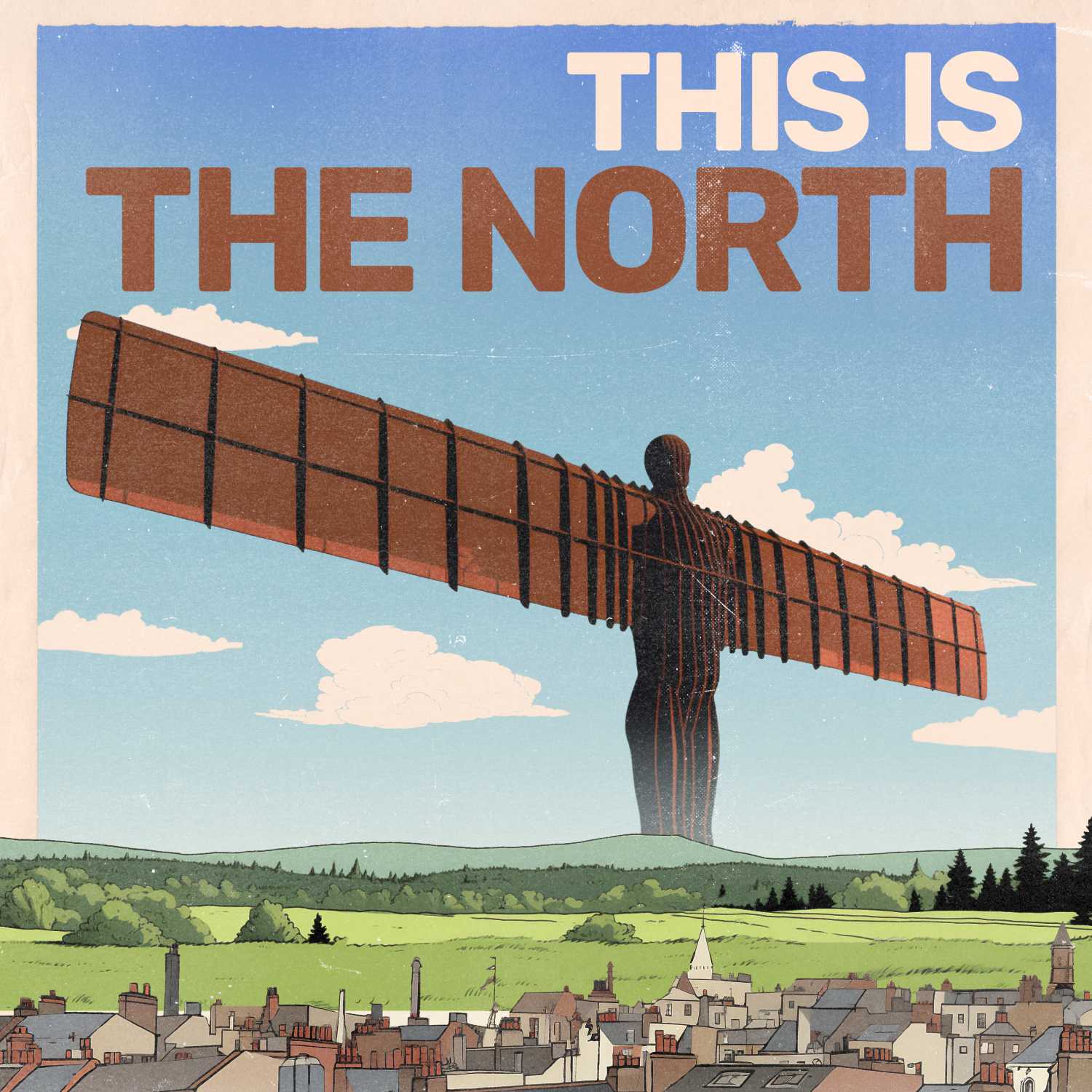
DiscoverThis Is The North
This Is The North
Claim Ownership

This Is The North

Author: Alison Dunn

Subscribed: 10Played: 84
Share

Description

The North has a rich history of world-changing industry, invention and social progress. It is also home to persistent inequalities in opportunity, wealth and health.


So what happened? What can we learn from the past, what is changing now, and what would it take to build a stronger future for the North?


This Is The North explores the evidence behind those questions. Hosted by Alison Dunn MBE, charity chief executive and social justice advocate, the podcast brings together academics, business leaders, community voices and charity leaders to understand the forces shaping the region and the choices available to us.


We explore the North’s green energy and industrial transition, housing and affordability, jobs and skills, and the people, industries and ideas that can help shape its future. We ask what the evidence tells us, who is affected, what is already working, and what needs to change.


This Is The North comes from the North, is about the North, and believes the region should help define its own future.


This Is The North: Evidence and ideas for a stronger North.


Connect with Alison: https://www.linkedin.com/in/alisondunncag/


Hosted on Acast. See acast.com/privacy for more information.

56 Episodes
Reverse
Welcome to the This Is The North Podcast, your source of transformative conversations. An intentional challenge to the systems holding back the North of England. Hosted by Alison Dunn MBE, an award-winning charity chief executive and former solicitor. This podcast is supported by the Society Matters Foundation and is dedicated to curating and sharing knowledge, powering the change we need for a more equal and inclusive society.Content note: this episode covers domestic abuse, coercive control, sexual violence and strangulation. Support organisations are listed below.In this episode, Alison is joined by Dr Harriet Smailes, a sexual violence and domestic abuse practitioner and researcher.Harriet has worked in the sector since 2017 and co-authored the Institute for Addressing Strangulation's 2025 survey of 16 to 34-year-olds. Alison opens with the official estimate at the time of recording, that 3.8 million people aged 16 and over experienced domestic abuse in England and Wales in the year ending March 2025. The Office for National Statistics has since put the following year at 4.7 million. Harriet explains what a headline figure misses, how coercive control can start with something that looks like a gift, and why a perpetrator isolates someone from the people most likely to notice a change. For anyone worried about a friend, her advice is to make the first conversation about them.The pair then look at what leaving involves, with the North in mind: the cost of living alone, service thresholds that rise as budgets tighten, the distance to help in rural areas, and the in-laws who can be the only family a person has left. Alison asks what we should be asking in place of "why don't they just leave?". Harriet's answer is "why doesn't that person stop perpetrating abuse?". That brings the conversation to men, the "not all men" response, a box of chocolates in which one in ten is poisoned, and Gisèle Pelicot's insistence that shame has to change sides.The final section covers pornography, social media and consent. Harriet shares the survey's finding that 16 to 34-year-olds in the UK are more likely than not to have experienced strangulation during sex, and explains what pressure on the neck does to the brain and body. They close on what gives Harriet hope.On 6 November, after we recorded, it became a criminal offence in England and Wales to possess or publish pornography that shows strangulation.Timestamps:00:00 The question we should be asking00:42 Why the official figure is only part of the picture02:22 How coercive control starts08:38 The cycle of apology and blame10:07 How to check in on a friend12:26 What leaving involves17:16 Why doesn't that person stop?18:21 Finding help in rural areas19:35 What employers and universities can do21:02 Why the gendered picture matters24:06 Not all men, and the box of chocolates27:06 From bystanders to allies28:57 Gisèle Pelicot and shame changing sides32:41 Pornography, social media and consent34:20 Strangulation during sex and its risks39:29 Why is anybody consenting to this?41:42 The government's strategy and reasons for hopeHarriet's question moves the attention from the person being harmed to the person doing the harm, and to everyone around them who has decided it isn't their problem. If you've been affected by anything in this episode:National Domestic Abuse Helpline (Refuge): 0808 2000 247Men's Advice Line (Respect): 0808 801 0327Rape Crisis 24/7 Support Line: 0808 500 2222Galop, for LGBT+ people: 0800 999 5428In an emergency, call 999. Host: Alison DunnGuest: Dr Harriet SmailesThis podcast is produced by Purpose MadeFurther Links:ONS, Crime in England and Wales: year ending June 2026 (both figures)IFAS report, Strangulation During Sex in the UK (2025) Hosted on Acast. See acast.com/privacy for more information.
Welcome to the This Is The North Podcast, your source of transformative conversations. An intentional challenge to the systems holding back the North of England. Hosted by Alison Dunn MBE, an award-winning charity chief executive and former solicitor. This podcast is supported by the Society Matters Foundation and is dedicated to curating and sharing knowledge, powering the change we need for a more equal and inclusive society.In this episode, Alison is joined by Jo Feeley, founder and Chief Executive of Trend Bible, the Newcastle-based agency that forecasts the future of life at home for some of the world's biggest brands. Jo grew up in a tiny village outside Hexham, trained in fashion at Kingston, flew to New York on her student grant and walked out of an interview at American Eagle Outfitters with a job, and was Head of Trends at Tesco before setting up on her own. She has spent 26 years in the field and recently published her first book, Trend Leader.The conversation starts with what trend forecasting actually is. Jo calls it a field of imagination: part behavioural science, understanding what shifts people's mindset enough to change how they live, and part creative act, imagining a future well enough that a company can plan for it.Then Alison raises the Stanley cup, which she expected to be a fad and which is still everywhere. Jo has seen fads last a decade. She ladders up from the cup to the hydration trend behind it, the move away from plastic, and a generation that now expresses identity through the visible things it carries. She also describes the companies that pay for a forecast, decide not to act on it, and call her back twelve months later once a competitor has moved.The heart of the episode is the phrase on the wall of Trend Bible's office: Shoreditch to Shields Road. A trend is only mass market once 70 per cent of the population has adopted it. Jo's competitors in Shoreditch watch the front end of that journey. She needs to see it reach the shelf in Morrisons in Byker. The same logic keeps bias out of her forecasts: instinct is a mirror of your own experience, so every report starts with a panel of people with lived experience of the subject.Jo is also clear-eyed about the North East. The self-sufficiency narrative risks making the region inward-looking, and every success she has had came from reaching out: her first pitch was in Australia, her first sales in America. In the quickfire round she names the next home trend and explains why she thinks the AI hype train is overselling how much will change in two years.Timestamps: 00:00 Big ideas can come from anywhere07:01 Trend forecasting is a field of imagination11:41 Why a fad can last a decade18:40 What the Stanley cup says about identity21:27 Vinted, Shein and the end of owning things23:37 From rural Hexham to fashion school26:52 Moving to New York32:56 Shoreditch to Shields Road35:46 Instinct is a mirror40:20 The North's strength is in reaching outward42:34 The next home trend44:40 The AI hype trainWhen Jo left London, people asked her how many trends start in Newcastle. A trend that starts in Shoreditch and stays there is a niche. The future is the one that reaches Shields Road, and Jo chose to watch for it from here.Host: Alison DunnGuest: Jo FeeleyThis podcast is produced by Purpose Made.Links: Trend Leader: How to spot and back winning ideas to accelerate your career and create a better future: https://www.amazon.co.uk/Trend-Leader-winning-accelerate-career/dp/1781339295Trend Bible's Website: https://www.trendbible.com/ Hosted on Acast. See acast.com/privacy for more information.
Welcome to the This Is The North Podcast, your source of transformative conversations. An intentional challenge to the systems holding back the North of England. Hosted by Alison Dunn MBE, an award-winning charity chief executive and former solicitor. This podcast is supported by the Society Matters Foundation and is dedicated to curating and sharing knowledge, powering the change we need for a more equal and inclusive society.In this episode, Alison is joined by Michelle Percy, Chief Executive of Develop North and a leader whose career has spanned property development, local government, and regional investment. Michelle grew up in Whitley Bay after her family moved from Glasgow, worked paper rounds and Saturday jobs before going into secretarial training, and built a career in the built environment without going to university. She became a chartered surveyor through life experience roughly a decade ago, and she now runs a London Stock Exchange-listed company that directs the majority of its investment into the North East of England.The conversation opens with something most of us have never thought about. Michelle started a pension at 18 on her father's advice and like most of us, didn't look at it. When she finally asked where it was invested, the answer was everywhere except the region she had lived and worked in her entire adult life. For a country where the average worker's pension leaves their payslip each month and disappears into funds managed from London, that is not just Michelle's story. It is almost everyone's.From there the conversation moves into the built environment and what it actually means to build a place rather than just construct buildings. Michelle draws on her experience with the Stephenson Quarter and Ouseburn to explain why successful regeneration depends on long-term leadership, collaboration between public and private sectors, and designing spaces that work for every generation. She is clear that gentrification happens when places are designed to look the same as everywhere else, and that the antidote is local provenance, community leadership, and commitment that outlasts any single funding cycle.Devolution, Michelle says, will not deliver growth on its own. What will make the difference is restructuring the financial models that currently concentrate capacity and spending in the civil service in London. She critiques the legacy of PFI contracts that expire and leave the public sector with the liability, and sets out the case for evergreen investment vehicles that are designed to last for generations rather than the length of a contract.Michelle also raises a question that deserves more airtime than it usually gets. Ten million men in the UK hold investments. The figure for women is 6.7 million. The reasons are structural, from caring responsibilities to the widening pay gap, but Michelle argues that the caution many women feel about investing can itself become a source of financial vulnerability over time. She is honest about her own experience: she did not follow her father's advice to grow her pension, and she is learning now what she wishes she had understood decades ago.Timestamps: 00:00 Intro02:43 Why the North East is home09:34 Resisting gentrification15:38 Public and private sectors28:50 Capital concentration39:43 Closing thoughtsThe thread running through the whole conversation is ownership. Who owns the buildings, who owns the decisions, and who owns the money that could change a region. Michelle Percy's argument is that the capital already exists in the pensions and savings of people living in the North East, and that the job now is to build the structures that keep it here.Develop North is one attempt at that. The wider question, about whether devolution and regional investment can redirect the flow of capital that has been heading south for decades, belongs to all of us.Host: Alison Dunn Guest: Michelle Percy This podcast is produced by Purpose Made. Hosted on Acast. See acast.com/privacy for more information.
Welcome to the This Is The North Podcast, your source of transformative conversations. An intentional challenge to the systems holding back the North of England. Hosted by Alison Dunn MBE, an award-winning charity chief executive and former solicitor. This podcast is supported by the Society Matters Foundation and is dedicated to curating and sharing knowledge, powering the change we need for a more equal and inclusive society.In this episode, Alison is joined by Bianca Robinson, leader of CEO Sleepout UK, the charity that asks business leaders to spend a night outdoors to raise money and attention for the frontline organisations tackling homelessness in their own towns and cities. Bianca has slept out more than a hundred times herself, and she has been saying the same thing for nine years: we blame society, but we are society.The conversation starts with a number that reframes the whole subject. Rough sleeping is the visible edge of homelessness, and it is a small part of it. Around 385,000 people in the UK are homeless, enough to fill Wembley Stadium four and a half times over, and 175,000 of them are children. Most are in temporary accommodation, on sofas, or in places that are unsafe, and they never appear in a doorway or a headline.New Prime Minister Andy Burnham has pledged to end rough sleeping. Bianca is optimistic, and she is clear about the conditions. It is achievable if Housing First is delivered at scale: a permanent home first, wraparound support for people whose needs are complex, and the agencies around them working together rather than in sequence. She points to Greater Manchester, where Housing First achieved an 85 per cent retention rate, moved 466 people into sustainable accommodation and expanded to more than 600 places, and where regional collaboration made the difference. Finland offers the longer-run evidence that the model holds.Then the barriers, and this is where the conversation turns on the rest of us. There are not enough homes. Council housing has not been replenished for decades. New building runs into NIMBYism and the uncomfortable question of the green belt. Properties sit empty or are held by investors, and the funding conversation now includes serious voices calling for a wealth tax. Alison and Bianca work through each of these without pretending any of them is simple, or that the answer belongs to someone else's postcode.Bianca also explains where homelessness actually begins, and where it can be stopped earlier: rent arrears, domestic abuse, release from prison, young people leaving care, the asylum process, mental health and addiction. She takes on the stereotypes about who ends up on the street, the myths about asylum seekers, and the role of trauma in addiction, and describes how CEO Sleepout turns a single night into sustained funding for the people doing the work on the ground.Timestamps:00:00 Homelessness is much bigger than rough sleeping01:03 The Prime Minister's pledge, and why Bianca is hopeful02:46 What Housing First actually means05:59 The 382,000 people you never see12:19 Empty homes, investors and the tax question15:34 Why council housing has to come back17:52 Finland and Manchester show it works20:05 What CEO Sleepout does with a night outdoors25:00 Changing who we think homeless people are29:12 Prevention, and the myths34:31 Angela Rayner and the politics of housing36:36 Closing thoughtsEnding rough sleeping has been promised before. The difference this time, in Bianca's telling, is that the evidence already exists, some of it in Greater Manchester, about what works. What remains is the decision to build the homes, fund the support, and get the agencies in a room together. None of that is beyond the North, and none of it is someone else's problem.Host: Alison DunnGuest: Bianca RobinsonThis podcast is produced by Purpose Made. Hosted on Acast. See acast.com/privacy for more information.
Welcome to the This Is The North Podcast, your source of transformative conversations. An intentional challenge to the systems holding back the North of England. Hosted by Alison Dunn MBE, an award-winning charity chief executive and former solicitor. This podcast is supported by the Society Matters Foundation and is dedicated to curating and sharing knowledge, powering the change we need for a more equal and inclusive society.In this episode, Alison is joined by Keith Merrin, Director of North East Museums, the organisation responsible for twelve museums across Tyneside and Northumberland, from the Hancock and the Discovery Museum to a former coal mine at Woodhorn and the Roman forts at either end of Hadrian's Wall.Keith grew up in Jarrow in the 1980s, when worklessness was as high as it had been at the time of the Jarrow March, and the town's story was one of loss. It took him years to learn that in the seventh century Jarrow had been one of the most important centres of learning in Western Europe. That gap, between the story a place is told and the story it actually owns, runs through the whole conversation.Keith describes how the job has changed. One of his duty managers, thirty years in post, puts it simply: "We're much more like community centres now." That means sessions with refugee and asylum seeker communities who arrive in the North East knowing nothing about where they've landed, memory boxes taken into care homes with staff trained to carry the work on, and the women at the Shipley Art Gallery passing on the craft of clippy mats. It also means confronting the harder history in the collections themselves, objects gathered during the British Empire whose significance to communities living in the North East today demands more thought than the Victorians ever gave it. Keith is direct about repatriation: his organisation would consider returning an object if a source community asked, and in twenty years it has happened once.The conversation gets specific about money. Most of Keith's museums are free, and free is not enough. He cites National Trust research showing members visiting less often even with entry covered, because the bus fare, the coffee and the gift shop have turned a free day out into something many families cannot afford. Alison shares her own experience of leaning on museums and libraries during the hardest years of raising her family, when free programmes were, in her words, the lifeblood of her parenting. Keith explains the poverty-proofing work with Children North East and the pay-it-forward café tokens his team quietly moves between sites so that nobody has to prove hardship to accept one.Then there is the imbalance. The national museums, most of them in London, receive the most public funding and have the greatest capacity to raise their own, while councils across England have cut culture spending to the point where many spend nothing on museums at all.Timestamps: 00:00 Why museums matter now01:26 Jarrow, and the story it wasn't told03:01 The Pitmen Painters05:12 The Enigma machine and a North Shields hero09:36 Empire, collections and repatriation13:35 Five challenges facing the North East20:03 A sector under pressure23:48 The North South funding gap31:48 What excites Keith about the futureThis conversation is a reminder that museums are not warehouses for the past. They are where a region keeps the evidence of what it has been and what it could be, and the barriers that keep people out of them, financial, cultural and psychological, are barriers to identity itself. Keith Merrin grew up in a town that was never told its own greatest story. His job now is making sure that stops happening.Host: Alison Dunn Guest: Keith MerrinThis podcast is produced by Purpose Made. Hosted on Acast. See acast.com/privacy for more information.
loading
Comments